21st Century Learning and Teaching
791.5K views | +11 today
21st Century Learning and Teaching
Related articles to 21st Century Learning and Teaching as also tools...
Curated by Gust MEES
Your new post is loading...

Popular Tags

Rescooped by Gust MEES from Leadership
April 5, 2016 10:41 AM
Scoop.it!

The Best Leaders Have the Best Systems

The Best Leaders Have the Best Systems | 21st Century Learning and Teaching | Scoop.it
For a leader to be effective, he or she needs to create and implement systems. This post details three reasons why systems are critical for success.


  1. Most people aren’t great at developing systems.
  2. To work, most systems have to be personal.
  3. You can’t grow without systems.


Learn more / En savoir plus / Mehr erfahren:


http://www.scoop.it/t/21st-century-learning-and-teaching/?tag=LeaderShip


https://gustmees.wordpress.com/2015/07/19/learning-path-for-professional-21st-century-learning-by-ict-practice/


Via Kevin Watson, Marc Wachtfogel, Ph.D.
Gust MEES's insight:
For a leader to be effective, he or she needs to create and implement systems. This post details three reasons why systems are critical for success.


  1. Most people aren’t great at developing systems.
  2. To work, most systems have to be personal.
  3. You can’t grow without systems.


Learn more / En savoir plus / Mehr erfahren:


http://www.scoop.it/t/21st-century-learning-and-teaching/?tag=LeaderShip


https://gustmees.wordpress.com/2015/07/19/learning-path-for-professional-21st-century-learning-by-ict-practice/


Scooped by Gust MEES
March 11, 2016 8:23 AM
Scoop.it!

10 Phrases Leaders With High Moral Character Always Use | #LEADERShip

10 Phrases Leaders With High Moral Character Always Use | #LEADERShip | 21st Century Learning and Teaching | Scoop.it
They won't avoid tough topics. They will say what needs to be said.


Learn more / En savoir plus / Mehr erfahren:


http://www.scoop.it/t/21st-century-learning-and-teaching/?tag=LeaderShip


Gust MEES's insight:
They won't avoid tough topics. They will say what needs to be said.


Learn more / En savoir plus / Mehr erfahren:


http://www.scoop.it/t/21st-century-learning-and-teaching/?tag=LeaderShip


WikiBlinks's curator insight, March 13, 2016 3:22 AM
They won't avoid tough topics. They will say what needs to be said.


Learn more / En savoir plus / Mehr erfahren:


http://www.scoop.it/t/21st-century-learning-and-teaching/?tag=LeaderShip


Dr. Deborah Brennan's curator insight, March 14, 2016 9:42 AM
They won't avoid tough topics. They will say what needs to be said.


Learn more / En savoir plus / Mehr erfahren:


http://www.scoop.it/t/21st-century-learning-and-teaching/?tag=LeaderShip


Fernando de la Cruz Naranjo Grisales's curator insight, March 16, 2016 7:21 AM
They won't avoid tough topics. They will say what needs to be said.


Learn more / En savoir plus / Mehr erfahren:


http://www.scoop.it/t/21st-century-learning-and-teaching/?tag=LeaderShip


Scooped by Gust MEES
February 18, 2016 6:30 PM
Scoop.it!

What Do Tough Times Say About You? | Motivation | Courage | Reality | Values | Character | LEADERship

What Do Tough Times Say About You? | Motivation | Courage | Reality | Values | Character | LEADERship | 21st Century Learning and Teaching | Scoop.it
It’s one thing to have a bad day, yet another to fall on tough times. These are the times that show what you’re made of. What do tough times say about you?


Learn more:


http://www.scoop.it/t/21st-century-learning-and-teaching/?tag=Growth+Mindset


http://www.scoop.it/t/21st-century-learning-and-teaching/?tag=Comfort+Zone


http://www.scoop.it/t/21st-century-learning-and-teaching/?tag=Character


Gust MEES's insight:
It’s one thing to have a bad day, yet another to fall on tough times. These are the times that show what you’re made of. What do tough times say about you?


Learn more:


http://www.scoop.it/t/21st-century-learning-and-teaching/?tag=Growth+Mindset


http://www.scoop.it/t/21st-century-learning-and-teaching/?tag=Comfort+Zone


http://www.scoop.it/t/21st-century-learning-and-teaching/?tag=Character


derangedmanaged's comment, February 19, 2016 1:49 AM
Its nice
venygamurao's curator insight, February 19, 2016 6:58 AM

I admire seeing and talking to people give their best efforts handing over their experiences through seminars, workshops and now in social medias. Yes, in tough times our character is tested and evaluated after. There may be tips, guide or suggestions on how you will perk it up or do it in practice. No matter how your parents raised, guided and trained you, it will always be your decision and actions speak for yourself. 


Adele Taylor's curator insight, February 20, 2016 3:30 AM

It has always been a showing of your true character when you fall upon hard times, how you handle those situations...

Scooped by Gust MEES
December 13, 2015 8:51 AM
Scoop.it!

The Best Leaders Are Critical Thinkers - Lolly Daskal | Leadership

The Best Leaders Are Critical Thinkers - Lolly Daskal | Leadership | 21st Century Learning and Teaching | Scoop.it

What makes some leaders stand out from the rest?

It has to do with their ability to think decisively.

The best leaders evaluate their options, weigh in on the alternatives, connect the dots, and look for potential in order to make informed decisions.

Here are some of the things great critical thinkers make a habit of:

Leading with questions. Open-ended questions, in particular, help you get to the heart of the matter. Start with Why?, How?, What?, and Where?

Embracing different points of view. As a leader, you need to be able to take advantage of the diversity in your team (and board, if you have one) to help you see things from different perspectives. The best leaders see and make use of the insights that everyone has to offer. They honor different opinions and ideas, because they know those differences lead to better decisions.

Leading with agility. As the old saying goes, the only constant is change—and the variables are always shifting and adjusting. Leading through change requires an open mind that can see opportunity in every situation.

Keeping an open mind. In the complex world of business, a leader with an open mind will find potential by sizing up all the answers, holding on to differences of opinion, and taking in all the variables to see clearly.

The leader who thinks critically and manages ambiguity will be the one who leads where others cannot.

Lead From Within: Be the leader who knows that nothing is as it seems. There is always uncertainty; there is always ambiguity. Be clever enough to size things up, connect the dots, see the potential, and act decisively when no one else can.


Learn more:


http://www.scoop.it/t/21st-century-learning-and-teaching/?tag=Critical-Thinking


Gust MEES's insight:

What makes some leaders stand out from the rest?

It has to do with their ability to think decisively.

The best leaders evaluate their options, weigh in on the alternatives, connect the dots, and look for potential in order to make informed decisions.

Here are some of the things great critical thinkers make a habit of:

Leading with questions. Open-ended questions, in particular, help you get to the heart of the matter. Start with Why?, How?, What?, and Where?

Embracing different points of view. As a leader, you need to be able to take advantage of the diversity in your team (and board, if you have one) to help you see things from different perspectives. The best leaders see and make use of the insights that everyone has to offer. They honor different opinions and ideas, because they know those differences lead to better decisions.

Leading with agility. As the old saying goes, the only constant is change—and the variables are always shifting and adjusting. Leading through change requires an open mind that can see opportunity in every situation.

Keeping an open mind. In the complex world of business, a leader with an open mind will find potential by sizing up all the answers, holding on to differences of opinion, and taking in all the variables to see clearly.

The leader who thinks critically and manages ambiguity will be the one who leads where others cannot.

Lead From Within: Be the leader who knows that nothing is as it seems. There is always uncertainty; there is always ambiguity. Be clever enough to size things up, connect the dots, see the potential, and act decisively when no one else can.


Learn more:


http://www.scoop.it/t/21st-century-learning-and-teaching/?tag=Critical-Thinking


Willex Okumu's curator insight, December 13, 2015 12:45 PM

This piece is a must read for leaders who are autocratic and imagine they know it all.

Simon Awuyo's curator insight, December 13, 2015 2:01 PM

I have always tried to avoid responsibilities in leadership and the appointments caught up with me. I now have an idea why many have called me a good leader. I s now time for me to come out boldly.

carmendsw's curator insight, December 14, 2015 9:32 AM

"Leading through change requires an open mind that can see opportunity in every situation." #agile #learning4change

Scooped by Gust MEES
November 18, 2015 6:42 AM
Scoop.it!

4 Mistakes Really Nice Leaders Make

4 Mistakes Really Nice Leaders Make | 21st Century Learning and Teaching | Scoop.it

We all want to be liked and accepted in both our personal and professional lives. But when it comes to effective leadership, a high need to be liked most often leads to disaster.


I’ve encountered many leaders who were genuinely “nice” people, and would do absolutely anything to support their people and make them happy. Sounds like a wonderful person to work for, right? In reality, these leaders had significant problems on their teams, and very low morale.

Leaders who place a high value on making everyone happy often sacrifice good decisions to do so. There is a difference between doing what is nice, and doing what is right. When leaders fail to do what’s right, they are not acting in the best interest of the organization and its employees. They lose the respect of their staff, create people problems, and cause morale to plummet.


Learn more:


http://www.scoop.it/t/21st-century-learning-and-teaching/?tag=Criticism


http://www.scoop.it/t/21st-century-learning-and-teaching/?tag=critical+thinking


http://www.scoop.it/t/21st-century-learning-and-teaching/?tag=Growth+Mindset


http://www.scoop.it/t/21st-century-learning-and-teaching/?tag=LeaderShip


Gust MEES's insight:

We all want to be liked and accepted in both our personal and professional lives. But when it comes to effective leadership, a high need to be liked most often leads to disaster.


I’ve encountered many leaders who were genuinely “nice” people, and would do absolutely anything to support their people and make them happy. Sounds like a wonderful person to work for, right? In reality, these leaders had significant problems on their teams, and very low morale.

Leaders who place a high value on making everyone happy often sacrifice good decisions to do so. There is a difference between doing what is nice, and doing what is right. When leaders fail to do what’s right, they are not acting in the best interest of the organization and its employees. They lose the respect of their staff, create people problems, and cause morale to plummet.


Learn more:


http://www.scoop.it/t/21st-century-learning-and-teaching/?tag=Criticism


http://www.scoop.it/t/21st-century-learning-and-teaching/?tag=critical+thinking


http://www.scoop.it/t/21st-century-learning-and-teaching/?tag=Growth+Mindset


http://www.scoop.it/t/21st-century-learning-and-teaching/?tag=LeaderShip

No comment yet.
Scooped by Gust MEES
November 2, 2015 3:57 PM
Scoop.it!

Why are the best players sitting on the bench? | CTQ

Why are the best players sitting on the bench? | CTQ | 21st Century Learning and Teaching | Scoop.it

Teacher expertise.


Why? Here are a few reasons from the researchers on why teacher expertise in education policy (development, implementation, reflection, etc.) is important:


  • Reform can be problematic if teachers do not have a voice in education policy changes and the policy agenda (Wells, 2012; Bangs & Frost, 2012).
  • Teacher voice and teacher leadership is vital for the success of reform movements (Little, 1988; Organisation for Economic Co-operation and Development, 2011; Wells, 2012; York-Barr & Duke, 2004).
  • There is a chasm between current education policy and what teachers know and experience as practitioners (Bangs & Frost, 2012).
  • There is a huge gap between policy and practice in education (Berry et al., 2013).
  • We have a history of failed education reforms and policies with very little teacher input, and if there is teacher input, it may not be in meaningful ways. Think “rubber stamp” (Goldstein, 2014; Ravitch, 2011; anyone who looks at the history of education).


Teachers are the experts who will help identify the problem, the root cause of the problem, and the possible policy solution(s).

So the checklist? It’s a great start. But I have a to ask a question that could make it even stronger.

In the words of Goldstein (2013), “Why are the best players in the game of education reform sitting on the bench?” 

Gust MEES's insight:

Teacher expertise.

Why? Here are a few reasons from the researchers on why teacher expertise in education policy (development, implementation, reflection, etc.) is important:


  • Reform can be problematic if teachers do not have a voice in education policy changes and the policy agenda (Wells, 2012; Bangs & Frost, 2012).
  • Teacher voice and teacher leadership is vital for the success of reform movements (Little, 1988; Organisation for Economic Co-operation and Development, 2011; Wells, 2012; York-Barr & Duke, 2004).
  • There is a chasm between current education policy and what teachers know and experience as practitioners (Bangs & Frost, 2012).
  • There is a huge gap between policy and practice in education (Berry et al., 2013).
  • We have a history of failed education reforms and policies with very little teacher input, and if there is teacher input, it may not be in meaningful ways. Think “rubber stamp” (Goldstein, 2014; Ravitch, 2011; anyone who looks at the history of education).


Teachers are the experts who will help identify the problem, the root cause of the problem, and the possible policy solution(s).

So the checklist? It’s a great start. But I have a to ask a question that could make it even stronger.

In the words of Goldstein (2013), “Why are the best players in the game of education reform sitting on the bench?” 


No comment yet.
Scooped by Gust MEES
October 19, 2015 8:47 AM
Scoop.it!

Teacherpreneurs: Changing education from the inside out | CTQ

Teacherpreneurs: Changing education from the inside out | CTQ | 21st Century Learning and Teaching | Scoop.it

What if teachers could lead without leaving the classroom—and in doing so, incubate and execute their own policy and pedagogical ideas?

In recent years, the Center for Teaching Quality has supported two dozen teacherpreneurs — expert teachers who typically have a reduced teaching load of 50% — to lead bold reforms at the school, district, state and national levels. In partnership with districts (and with philanthropic financial support), teacherpreneurs like Noah Zeichner, Ali Wright, Jessica Cuthbertson and Julie Hiltz have achieved remarkable results for students, schools and the profession.

These classroom experts have generated powerful proof points for CTQ’s bold brand of teacher leadership, documented in a series of case studies. Their experiences have also yielded “lessons learned” that we can share with others interested in this model:


Extra time yields extraordinary results. 


The best teacherpreneurs “lead from the middle.


Technology keeps teacher leaders connected with the world while based in the classroom.


Relationships matter.


Blurring the lines between policy and practice makes each stronger.


When educators can teach and lead, they and their schools benefit.


Learn more:


Gust MEES's insight:

What if teachers could lead without leaving the classroom—and in doing so, incubate and execute their own policy and pedagogical ideas?

In recent years, the Center for Teaching Quality has supported two dozen teacherpreneurs — expert teachers who typically have a reduced teaching load of 50% — to lead bold reforms at the school, district, state and national levels. In partnership with districts (and with philanthropic financial support), teacherpreneurs like Noah Zeichner, Ali Wright, Jessica Cuthbertson and Julie Hiltz have achieved remarkable results for students, schools and the profession.

These classroom experts have generated powerful proof points for CTQ’s bold brand of teacher leadership, documented in a series of case studies. Their experiences have also yielded “lessons learned” that we can share with others interested in this model:


Extra time yields extraordinary results. 


The best teacherpreneurs “lead from the middle.


Technology keeps teacher leaders connected with the world while based in the classroom.


Relationships matter.


Blurring the lines between policy and practice makes each stronger.


When educators can teach and lead, they and their schools benefit.


Learn more:


Patricia Carmichael's curator insight, October 22, 2015 7:51 PM

Toyota had this idea many years ago - creative thinking time - what teachers have always wanted ...It actually does work!

Tony Palmeri's curator insight, October 24, 2015 10:12 AM

I chose this resources because I was interested in the concept of "teacherpreneurs". The opportunity to be afforded the time to engage in policy development and leadership roles is certainly terrific. I've always felt the influence from the ground level (teachers) is seldom felt. Instead, influence remains with the research community and union organizations. Of the specific points described in this article is that "The best teacherpreneurs lead from the middle". Teachers respond to others who are dealing with the same pressures and stresses associated with teaching. 

Shelly Reckow VanVoorst's curator insight, October 25, 2015 5:57 PM

I scooped this article because more and more the topic of teacherpreneurs is coming up.  I like the idea of teachers as leaders, and even helping with policies.  It will be interesting to see if this expands more in the future. I hope that teachers reading this article watch this course of study/action closely and take part in it when they can, as we need more teachers to move into leadership and even into advocacy roles for education.

Scooped by Gust MEES
October 12, 2015 11:20 AM
Scoop.it!

Creating Harmony: How Music Can Support Social Emotional Development | #EQ | Emotional Intelligence | Happiness

Creating Harmony: How Music Can Support Social Emotional Development  | #EQ | Emotional Intelligence | Happiness | 21st Century Learning and Teaching | Scoop.it
Making music with your child can be so much fun for both of you, whether you’re singing along to the radio in the car, jamming on plastic bowl “drums,” or dancing to songs on your iPod. The simple and enjoyable act of making music with your child naturally fosters important social and emotional skills, such as self-regulation, self-confidence, leadership skills, social skills, and socio-emotional intelligence.


Learn more:


http://www.scoop.it/t/21st-century-learning-and-teaching/?tag=Music


http://www.scoop.it/t/21st-century-learning-and-teaching/?tag=EQ


Gust MEES's insight:
Making music with your child can be so much fun for both of you, whether you’re singing along to the radio in the car, jamming on plastic bowl “drums,” or dancing to songs on your iPod. The simple and enjoyable act of making music with your child naturally fosters important social and emotional skills, such as self-regulation, self-confidence, leadership skills, social skills, and socio-emotional intelligence.


Learn more:


http://www.scoop.it/t/21st-century-learning-and-teaching/?tag=Music


http://www.scoop.it/t/21st-century-learning-and-teaching/?tag=EQ


MarkCapecchi's curator insight, October 18, 2015 10:08 PM

The effects on the brain when making music are incredible!  

Scooped by Gust MEES
August 11, 2015 7:48 AM
Scoop.it!

What Ethical Leaders Believe | pdf | Ethics | Leadership

Learn more:


http://www.scoop.it/t/21st-century-learning-and-teaching/?tag=Ethics


http://www.scoop.it/t/21st-century-learning-and-teaching/?tag=LeaderShip


Gust MEES's insight:

What Ethical Leaders Believe | pdf | Ethics | Leadership


Learn more:


http://www.scoop.it/t/21st-century-learning-and-teaching/?tag=Ethics


http://www.scoop.it/t/21st-century-learning-and-teaching/?tag=LeaderShip


No comment yet.
Scooped by Gust MEES
July 10, 2015 9:49 AM
Scoop.it!

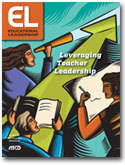
Educational Leadership | Leveraging Teacher Leadership | EL Study Guide

Educational Leadership | Leveraging Teacher Leadership | EL Study Guide | 21st Century Learning and Teaching | Scoop.it
Teachers lead learning in their classrooms every day, but teacher leadership often extends beyond the classroom. Teachers lead their colleagues in professional learning and growth. They lead their communities in bringing change to schools. They might focus on leading within their schools and localities, or they might use social media to share their ideas with fellow educators around the world. But such leadership can be a challenge.


Administrators and policymakers need to listen to teacher voices and give teachers room to lead. This issue of Educational Leadership looks at how teachers are leading today and considers how schools can best leverage the leadership skills of teachers.


Learn more:


- http://www.scoop.it/t/21st-century-learning-and-teaching/?tag=LeaderShip


Apollo B. Gabazira's curator insight, July 11, 2015 3:47 AM

Teachers leading beyond the classroom talks a lot to the 'space & trust' administrators accord teachers - as well 'triggering leadership-DNA' amongst teacher ranks. The latter needs training as well as coaching & mentoring 

María Dolores Díaz Noguera's curator insight, July 12, 2015 2:51 PM

Liderazgo...Educational Leadership | Leveraging Teacher Leadership | EL Study Guide | @scoopit via @knolinfos http://sco.lt/...
Rescooped by Gust MEES from iGeneration - Humane Use of Technology in an AI world (Pedagogy & Digital Innovation)
June 20, 2015 10:38 AM
Scoop.it!

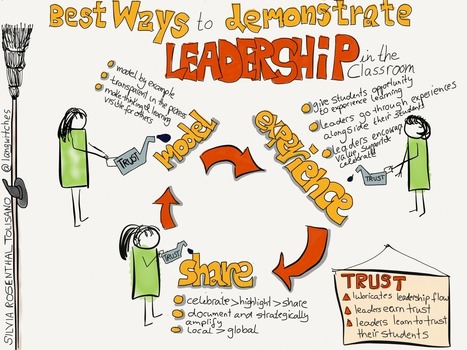
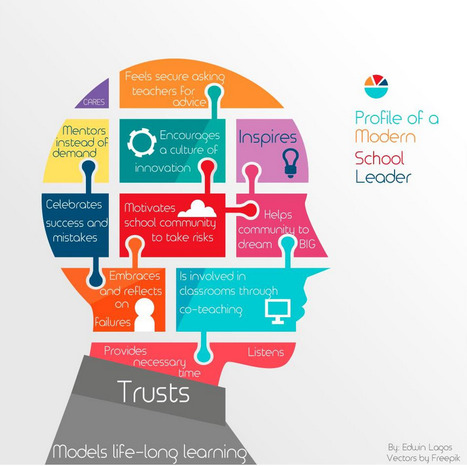
What are the Best Ways a Teacher can Demonstrate Leadership in the Classroom?

What are the Best Ways a Teacher can Demonstrate Leadership in the Classroom? | 21st Century Learning and Teaching | Scoop.it

How does leadership look like in the classroom? What are the best ways a teacher can demonstrate leadership in the classroom?

Read more at: http://langwitches.org/blog/2015/06/16/what-are-the-best-ways-a-teacher-can-demonstrate-leadership-in-the-classroom/


Via Dr. Tom D'Amico (@TDOttawa)
Gust MEES's insight:

How does leadership look like in the classroom? What are the best ways a teacher can demonstrate leadership in the classroom?

Read more at: http://langwitches.org/blog/2015/06/16/what-are-the-best-ways-a-teacher-can-demonstrate-leadership-in-the-classroom/


Sm_english's curator insight, June 18, 2015 3:44 AM

With all these qualities we could add understanding...if a teacher understands his/her students needs, moods and situations this puts him/her as a leader

Sonia Santoveña's curator insight, June 18, 2015 5:34 AM

añada su visión ...

Patricia Thomson's curator insight, June 24, 2015 3:54 AM

Discusses four essential components to good teaching.
Scooped by Gust MEES
June 8, 2015 8:01 PM
Scoop.it!

Are the Directors on-Board the Cyber Security Train? | eLeadership | eSkills | Digital CitiZEN

Are the Directors on-Board the Cyber Security Train? | eLeadership | eSkills | Digital CitiZEN | 21st Century Learning and Teaching | Scoop.it

Cyber security is no longer the sole responsibility of the technical people, or even the CIO.


Following the Target breach (where immense pressure was placed to replace most of the board members after the breach), and board members of Target and Wyndham Worldwide (hotel chain) face derivative lawsuit related to the data breaches. Recent survey reveal that nearly half (45%) of senior management acknowledge that the C-suite and senior leadership themselves are responsible for protecting their companies against cyber-attacks, and the U.S. Securities and Exchange Commission recently published a paper on the Role of the Boards of Directors in Overseeing Cyber-Risk Management, where it recommends:

Cyber-risk must be considered as part of the board’s overall risk oversight: “boards that choose to ignore, or minimize, the importance of cyber security oversight responsibility, do so at their own peril.”

Boards should assess the corporation’s cyber security measures including corporate policies and annual budgets for privacy and IT security programs. And perhaps, more critically, highlights the significance of cyber-risk education for directors, ensuring that the board be at least adequately represented by members with a good understanding of information technology issues that pose risks to the company.


Learn more:


- http://www.sec.gov/News/Speech/Detail/Speech/1370542057946


- https://gustmees.wordpress.com/2012/10/11/learning-basics-of-cyber-security-by-easy-to-follow-steps/


- https://gustmees.wordpress.com/2012/11/29/cyber-hygiene-ict-hygiene-for-population-education-and-business/


- https://gustmees.wordpress.com/2012/07/11/cyberhygiene-hygiene-for-ict-in-education-and-business/


Gust MEES's insight:

Cyber security is no longer the sole responsibility of the technical people, or even the CIO.


Following the Target breach (where immense pressure was placed to replace most of the board members after the breach), and board members of Target and Wyndham Worldwide (hotel chain) face derivative lawsuit related to the data breaches. Recent survey reveal that nearly half (45%) of senior management acknowledge that the C-suite and senior leadership themselves are responsible for protecting their companies against cyber-attacks, and the U.S. Securities and Exchange Commission recently published a paper on the Role of the Boards of Directors in Overseeing Cyber-Risk Management, where it recommends:

Cyber-risk must be considered as part of the board’s overall risk oversight: “boards that choose to ignore, or minimize, the importance of cyber security oversight responsibility, do so at their own peril.”

Boards should assess the corporation’s cyber security measures including corporate policies and annual budgets for privacy and IT security programs. And perhaps, more critically, highlights the significance of cyber-risk education for directors, ensuring that the board be at least adequately represented by members with a good understanding of information technology issues that pose risks to the company.


Learn more:


- http://www.sec.gov/News/Speech/Detail/Speech/1370542057946


- https://gustmees.wordpress.com/2012/10/11/learning-basics-of-cyber-security-by-easy-to-follow-steps/


- https://gustmees.wordpress.com/2012/11/29/cyber-hygiene-ict-hygiene-for-population-education-and-business/


- https://gustmees.wordpress.com/2012/07/11/cyberhygiene-hygiene-for-ict-in-education-and-business/


Eric Nelson's curator insight, June 9, 2015 3:03 AM

Ignore it at your own peril

Scooped by Gust MEES
June 6, 2015 4:47 PM
Scoop.it!

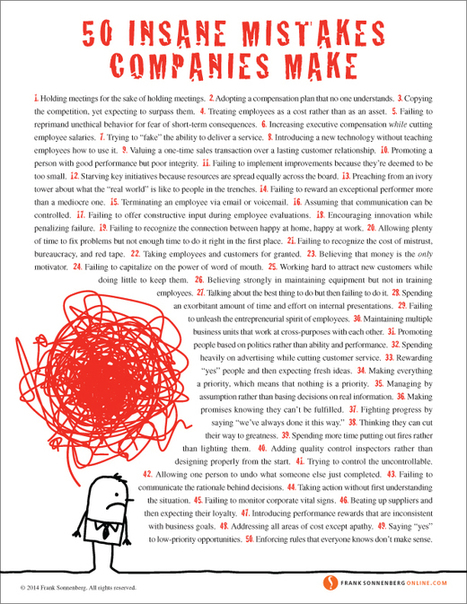
50 Insane Mistakes Companies Make | Leadership | eLeadership | eSkills | professional!?

50 Insane Mistakes Companies Make | Leadership | eLeadership | eSkills | professional!? | 21st Century Learning and Teaching | Scoop.it
Everyone makes mistakes, but some are real whoppers. They can torpedo any great organization. Here are 50 insane mistakes companies make.


Learn more:


- http://www.scoop.it/t/21st-century-learning-and-teaching/?tag=LeaderShip


- - http://www.scoop.it/t/21st-century-learning-and-teaching/?tag=Frank+SONNENBERG


Gust MEES's insight:
Everyone makes mistakes, but some are real whoppers. They can torpedo any great organization. Here are 50 insane mistakes companies make.


Learn more:


- http://www.scoop.it/t/21st-century-learning-and-teaching/?tag=LeaderShip


- - http://www.scoop.it/t/21st-century-learning-and-teaching/?tag=Frank+SONNENBERG


No comment yet.
Scooped by Gust MEES
March 12, 2016 8:56 AM
Scoop.it!

The NEW Organization: Different By Design | LEARNing To LEARN [pdf] | DELOITTE-2016

Deloitte’s Human Capital professionals leverage research, analytics, and industry insights to help design and execute the HR, talent, leadership, organization, and change programs that enable business performance through people performance. Visit the “Human Capital” area of www.deloitte.com to learn more.


Learn more:


https://gustmees.wordpress.com/2014/10/03/design-the-learning-of-your-learners-students-ideas/


Gust MEES's insight:

Deloitte’s Human Capital professionals leverage research, analytics, and industry insights to help design and execute the HR, talent, leadership, organization, and change programs that enable business performance through people performance. Visit the “Human Capital” area of www.deloitte.com to learn more.


Learn more:


https://gustmees.wordpress.com/2014/10/03/design-the-learning-of-your-learners-students-ideas/


Juan Quiñones's curator insight, March 13, 2016 6:25 PM

Deloitte’s Human Capital professionals leverage research, analytics, and industry insights to help design and execute the HR, talent, leadership, organization, and change programs that enable business performance through people performance. Visit the “Human Capital” area of www.deloitte.com to learn more.


Learn more:


https://gustmees.wordpress.com/2014/10/03/design-the-learning-of-your-learners-students-ideas/


Cabot Solutions's curator insight, March 14, 2016 1:43 AM

Deloitte’s Human Capital professionals leverage research, analytics, and industry insights to help design and execute the HR, talent, leadership, organization, and change programs that enable business performance through people performance. Visit the “Human Capital” area of www.deloitte.com to learn more.


Learn more:


https://gustmees.wordpress.com/2014/10/03/design-the-learning-of-your-learners-students-ideas/


Fernando de la Cruz Naranjo Grisales's curator insight, March 16, 2016 7:21 AM

Deloitte’s Human Capital professionals leverage research, analytics, and industry insights to help design and execute the HR, talent, leadership, organization, and change programs that enable business performance through people performance. Visit the “Human Capital” area of www.deloitte.com to learn more.


Learn more:


https://gustmees.wordpress.com/2014/10/03/design-the-learning-of-your-learners-students-ideas/


Scooped by Gust MEES
February 27, 2016 9:14 PM
Scoop.it!

8 Reasons Why Being Selfish is a Dead End Strategy | Character | LEADERship | Moral

8 Reasons Why Being Selfish is a Dead End Strategy | Character | LEADERship | Moral | 21st Century Learning and Teaching | Scoop.it
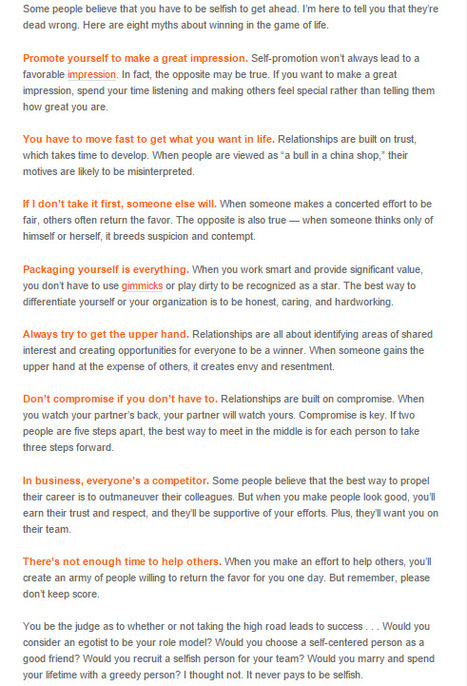
Some people believe that you have to be selfish in order to achieve success. Here are eight common myths about winning in the game of life.


Learn more:


http://www.scoop.it/t/21st-century-learning-and-teaching/?tag=Frank+SONNENBERG


http://www.scoop.it/t/21st-century-learning-and-teaching/?tag=Character


Gust MEES's insight:
Some people believe that you have to be selfish in order to achieve success. Here are eight common myths about winning in the game of life.


Learn more:


http://www.scoop.it/t/21st-century-learning-and-teaching/?tag=Frank+SONNENBERG


http://www.scoop.it/t/21st-century-learning-and-teaching/?tag=Character


Mary Martínez's curator insight, February 28, 2016 12:07 AM
Some people believe that you have to be selfish in order to achieve success. Here are eight common myths about winning in the game of life.


Learn more:


http://www.scoop.it/t/21st-century-learning-and-teaching/?tag=Frank+SONNENBERG


http://www.scoop.it/t/21st-century-learning-and-teaching/?tag=Character


Fernando de la Cruz Naranjo Grisales's curator insight, March 14, 2016 4:14 PM
Some people believe that you have to be selfish in order to achieve success. Here are eight common myths about winning in the game of life.


Learn more:


http://www.scoop.it/t/21st-century-learning-and-teaching/?tag=Frank+SONNENBERG


http://www.scoop.it/t/21st-century-learning-and-teaching/?tag=Character


Scooped by Gust MEES
December 17, 2015 8:49 AM
Scoop.it!

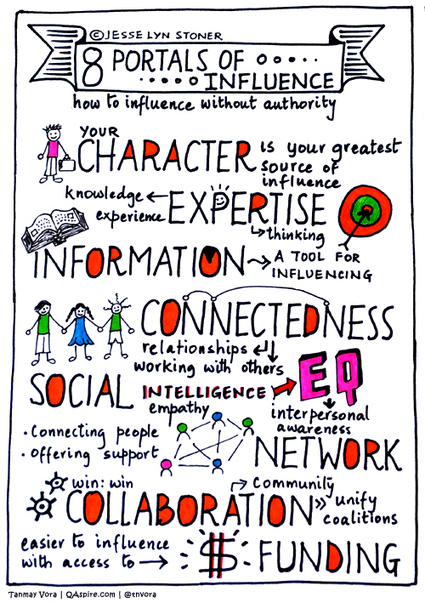
Sketch Note: How to Influence Without Authority | Leadership | EQ

Sketch Note: How to Influence Without Authority | Leadership | EQ | 21st Century Learning and Teaching | Scoop.it

My work in corporate quality functions in the past involved influencing cross-functional teams (as an internal consultant) on processes and methods when I had no direct reporting relationships with them. I knew that only technical expertise was not enough and I wished I had some guidance on how to.


Learn more:


http://www.scoop.it/t/21st-century-learning-and-teaching/?tag=EQ


http://www.scoop.it/t/21st-century-learning-and-teaching/?tag=LeaderShip


Gust MEES's insight:

My work in corporate quality functions in the past involved influencing cross-functional teams (as an internal consultant) on processes and methods when I had no direct reporting relationships with them. I knew that only technical expertise was not enough and I wished I had some guidance on how to.


Learn more:


http://www.scoop.it/t/21st-century-learning-and-teaching/?tag=EQ


http://www.scoop.it/t/21st-century-learning-and-teaching/?tag=LeaderShip


Patricia Clason's curator insight, March 12, 2016 8:38 AM

Valuable tips for all business relationships!!


Scooped by Gust MEES
December 11, 2015 8:12 PM
Scoop.it!

Bluffing Your Way to the Top | Camouflage

Bluffing Your Way to the Top | Camouflage | 21st Century Learning and Teaching | Scoop.it
Remember the days when you were in school, and you studied your tail off for an exam? You celebrated when you received your grade only to find out that one of your classmates, who had partied the night before, blew the socks off the exam because he had gotten a hold of the test questions beforehand.

Well, you thought that after you graduated, you had left all that baggage behind. Then you find out that these same characters are soaring through the corporate ranks because — you guessed it — they’ve learned how to “play the system.”

Well, I’ve got a message for these counterfeit superstars: If you think you can bluff your way through life, you’ve got something coming.

Eventually, people see right through these shortcuts to success. In fact, these counterfeit superstars are living on borrowed time. The day will come when their ways will come back to bite them. GOTCHA!

Despite the fact that the majority of people play by the rules and try to do the right thing, there are a number of bad actors in every organization who have no problem advancing their careers on the backs of others.


Related music:


https://www.youtube.com/watch?v=VgRXdozljRs


Gust MEES's insight:
Remember the days when you were in school, and you studied your tail off for an exam? You celebrated when you received your grade only to find out that one of your classmates, who had partied the night before, blew the socks off the exam because he had gotten a hold of the test questions beforehand.

Well, you thought that after you graduated, you had left all that baggage behind. Then you find out that these same characters are soaring through the corporate ranks because — you guessed it — they’ve learned how to “play the system.”

Well, I’ve got a message for these counterfeit superstars: If you think you can bluff your way through life, you’ve got something coming.

Eventually, people see right through these shortcuts to success. In fact, these counterfeit superstars are living on borrowed time. The day will come when their ways will come back to bite them. GOTCHA!

Despite the fact that the majority of people play by the rules and try to do the right thing, there are a number of bad actors in every organization who have no problem advancing their careers on the backs of others.


Related music:


https://www.youtube.com/watch?v=VgRXdozljRs


No comment yet.
Rescooped by Gust MEES from Supports for Leadership
November 10, 2015 9:41 AM
Scoop.it!

How Provocative dare you be? - Coaching through Change Problems

How Provocative dare you be? - Coaching through Change Problems | 21st Century Learning and Teaching | Scoop.it
Provocative coaching is a great tool during change processes. Dare you disrupt your client to help them find a resourceful response to the change problem?


“Content is verbal and already known. I advise you to not get drawn into the story the client tells. Instead, look at how they are and who they are. The information you need to help them get unstuck is IN the process.


Points excerpted:

Look for nonverbal cues. Don’t always listen to what the client says!Keep your attention with them completely: notice their nonverbal communication, and their patterns of telling their story, their patterns of behaving. The key is to interrupt their patterns – to distract them – to take them out of their current state of mind – to help them see the situation with fresh eyes and wake up and learn.”“When you’re thinking what to do next – you’re away from the present. Stay aware in the here and now with your client.”The three demons that jeopardize a person’s effectiveness: muscle tension, inner noise and tunnel vision. 

To serve the client and nothing but the client – we must provoke a resourceful response – to let them find and appreciate what is true and what is helpful in their change process.

 
Learn more:


Via Deb Nystrom, REVELN, Mark E. Deschaine, PhD
Gust MEES's insight:
Provocative coaching is a great tool during change processes. Dare you disrupt your client to help them find a resourceful response to the change problem?


“Content is verbal and already known. I advise you to not get drawn into the story the client tells. Instead, look at how they are and who they are. The information you need to help them get unstuck is IN the process.


Points excerpted:

Look for nonverbal cues. Don’t always listen to what the client says!Keep your attention with them completely: notice their nonverbal communication, and their patterns of telling their story, their patterns of behaving. The key is to interrupt their patterns – to distract them – to take them out of their current state of mind – to help them see the situation with fresh eyes and wake up and learn.”“When you’re thinking what to do next – you’re away from the present. Stay aware in the here and now with your client.”The three demons that jeopardize a person’s effectiveness: muscle tension, inner noise and tunnel vision. 

To serve the client and nothing but the client – we must provoke a resourceful response – to let them find and appreciate what is true and what is helpful in their change process.

 
Learn more:
PresentationLoad's comment, November 9, 2015 5:26 AM
Nice! Change Management is realisable with PowerPoint too: http://blog.presentationload.de/grundlagen-des-change-managements/
Scooped by Gust MEES
October 29, 2015 8:39 AM
Scoop.it!

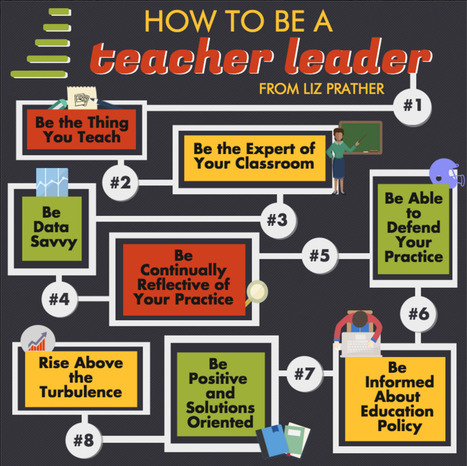
How To Be a Teacher Leader | CTQ | LEARNing To Learn

How To Be a Teacher Leader | CTQ | LEARNing To Learn | 21st Century Learning and Teaching | Scoop.it
  • Be the thing you teach.
  • Be the expert of your classroom.
  •  Be data savvy.
  • Be continually reflective on your practice.
  • Be able to defend your practice.
This directive is similar to the data-savvy and expert points, but teacher leaders need to be able to explain their craft. Your administrator will be trotting all kinds of people through your classroom.  As a teacher leader, you might be a maverick, doing things a little differently than the rest of the herd. Be prepared to defend that road less traveled.  Know why you do the things you do.  Then, as a leader, share everything you know.
Gust MEES's insight:
  • Be the thing you teach.
  • Be the expert of your classroom.
  •  Be data savvy.
  • Be continually reflective on your practice.
  • Be able to defend your practice.
This directive is similar to the data-savvy and expert points, but teacher leaders need to be able to explain their craft. Your administrator will be trotting all kinds of people through your classroom.  As a teacher leader, you might be a maverick, doing things a little differently than the rest of the herd. Be prepared to defend that road less traveled.  Know why you do the things you do.  Then, as a leader, share everything you know.
Pantelopoulou Dimitra's curator insight, October 30, 2015 1:54 AM

Be the thing you teach.

María Dolores Díaz Noguera's curator insight, October 30, 2015 9:01 AM

Aprendiendo a ser líder...How To Be a Teacher Leader | CTQ | LEARNing To Learn | @scoopit via @knolinfos http://sco.lt/...

Angela Ribo's curator insight, October 30, 2015 11:40 AM

Very practical insight.

Scooped by Gust MEES
October 18, 2015 8:46 PM
Scoop.it!

The Best Leaders Are Constant Learners

The Best Leaders Are Constant Learners | 21st Century Learning and Teaching | Scoop.it
Seek, sense, share.


Reinvention and relevance in the 21st century instead draw on our ability to adjust our way of thinking, learning, doing and being. Leaders must get comfortable with living in a state of continually becoming, a perpetual beta mode. Leaders that stay on top of society’s changes do so by being receptive and able to learn. In a time where the half-life of any skill is about five years, leaders bear a responsibility to renew their perspective in order to secure the relevance of their organizations.


Learn more / En savoir plus / Mehr erfahren:


https://gustmees.wordpress.com/2015/07/19/learning-path-for-professional-21st-century-learning-by-ict-practice/


https://globaleducationandsocialmedia.wordpress.com/2014/01/19/pkm-personal-professional-knowledge-management/


https://gustmees.wordpress.com/2015/10/01/success-story-of-life-long-learning-best-practice-ict-eskills-for-jobs/


Gust MEES's insight:
Seek, sense, share.


Reinvention and relevance in the 21st century instead draw on our ability to adjust our way of thinking, learning, doing and being. Leaders must get comfortable with living in a state of continually becoming, a perpetual beta mode. Leaders that stay on top of society’s changes do so by being receptive and able to learn. In a time where the half-life of any skill is about five years, leaders bear a responsibility to renew their perspective in order to secure the relevance of their organizations.


Learn more / En savoir plus / Mehr erfahren:


https://gustmees.wordpress.com/2015/07/19/learning-path-for-professional-21st-century-learning-by-ict-practice/


https://globaleducationandsocialmedia.wordpress.com/2014/01/19/pkm-personal-professional-knowledge-management/


https://gustmees.wordpress.com/2015/10/01/success-story-of-life-long-learning-best-practice-ict-eskills-for-jobs/


Tony Palmeri's curator insight, October 24, 2015 10:53 AM

I chose this resource because I've always held the fundamental belief that leadership must continually model a learning-driven approach if they expect the same from subordinates. I like the Seek-Sense-Share model of personal knowledge mastery described here. In many ways this model mimics the scientific method. As a bona fide science geek, I agree that being curious, identifying questions, seeking resolution, and communicating findings is a knowledge-acquisition protocol that has proven to be very effective. 

Rescooped by Gust MEES from Leadership Style & Teaching Methodology
October 12, 2015 10:03 AM
Scoop.it!

The Innovator's Mindset: Envisioning the Future

The Innovator's Mindset: Envisioning the Future | 21st Century Learning and Teaching | Scoop.it
Innovation is everyone's great desire. We worship innovation. Entrepreneurs embrace it. Careers are made on it. Companies compete over it. The challenge is we may not all be talking about the same thing.


The innovator's mindset embraces these ten strategies I have found in my research:
1. Bring value and meaning that is clearly unique. 
2. Create a culture of inventing that others can build on. 
3. Move with velocity to embrace the new. 
4. Have the courage to create. 
5. Disrupt yourself before others do. 
6. If you don't have passion about an idea, don't do it. 
7. Change something to make it better, bring the value. 
8. Monetizing innovation is called success. 
9. People do the innovating. 
10. Decide what mountain top you want to own, then go for it.


Learn more:


https://gustmees.wordpress.com/2015/07/19/learning-path-for-professional-21st-century-learning-by-ict-practice/


Via Dan Kirsch
Gust MEES's insight:
Innovation is everyone's great desire. We worship innovation. Entrepreneurs embrace it. Careers are made on it. Companies compete over it. The challenge is we may not all be talking about the same thing.


The innovator's mindset embraces these ten strategies I have found in my research:
1. Bring value and meaning that is clearly unique. 
2. Create a culture of inventing that others can build on. 
3. Move with velocity to embrace the new. 
4. Have the courage to create. 
5. Disrupt yourself before others do. 
6. If you don't have passion about an idea, don't do it. 
7. Change something to make it better, bring the value. 
8. Monetizing innovation is called success. 
9. People do the innovating. 
10. Decide what mountain top you want to own, then go for it.


Learn more:


https://gustmees.wordpress.com/2015/07/19/learning-path-for-professional-21st-century-learning-by-ict-practice/


RESENTICE's curator insight, October 19, 2015 3:06 AM

La mentalité de l'enseignant novateur en dix stratégies dont  : la co-animation en classe et l'évaluation ...

Scooped by Gust MEES
July 17, 2015 7:21 PM
Scoop.it!

One Simple Habit that Elevates Leaders | eLEADERship | LEADERship

One Simple Habit that Elevates Leaders | eLEADERship | LEADERship | 21st Century Learning and Teaching | Scoop.it
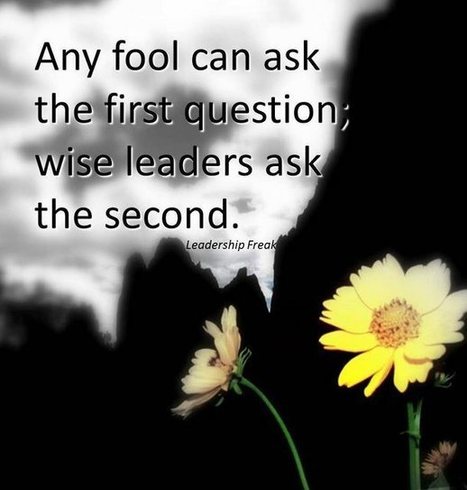
5 reasons we stop with first questions:
  1. Image protection. We don’t want to look like we have something to learn.
  2. Time pressure. We don’t have time to gain wisdom.
  3. Curiosity deficit. We just aren’t curious.
  4. Respect shortage. The person talking is “below” us. They’re younger, less successful, or less experienced.
  5. Self importance. Big headitis destroys leaders.

No one makes you wise.

Learn more:


- http://www.scoop.it/t/21st-century-learning-and-teaching/?tag=LeaderShip


Gust MEES's insight:
5 reasons we stop with first questions:
  1. Image protection. We don’t want to look like we have something to learn.
  2. Time pressure. We don’t have time to gain wisdom.
  3. Curiosity deficit. We just aren’t curious.
  4. Respect shortage. The person talking is “below” us. They’re younger, less successful, or less experienced.
  5. Self importance. Big headitis destroys leaders.

No one makes you wise.

Learn more:


- http://www.scoop.it/t/21st-century-learning-and-teaching/?tag=LeaderShip

Jason Smith's curator insight, July 18, 2015 12:10 PM

Leadership and questioning

Justine Calpito's curator insight, August 4, 2015 8:47 PM

5 reasons we stop with first questions:

Image protection. We don’t want to look like we have something to learn.Time pressure. We don’t have time to gain wisdom.Curiosity deficit. We just aren’t curious.Respect shortage. The person talking is “below” us. They’re younger, less successful, or less experienced.Self importance. Big headitis destroys leaders.

No one makes you wise.

Learn more:


- http://www.scoop.it/t/21st-century-learning-and-teaching/?tag=LeaderShip

Dennis Swender's curator insight, August 10, 2015 12:04 PM

5 reasons we stop with first questions:

Image protection. We don’t want to look like we have something to learn.Time pressure. We don’t have time to gain wisdom.Curiosity deficit. We just aren’t curious.Respect shortage. The person talking is “below” us. They’re younger, less successful, or less experienced.Self importance. Big headitis destroys leaders.

No one makes you wise.

Learn more:


- http://www.scoop.it/t/21st-century-learning-and-teaching/?tag=LeaderShip

Scooped by Gust MEES
July 5, 2015 8:42 AM
Scoop.it!

The four traits of collaborative leadership - Virgin.com

The four traits of collaborative leadership - Virgin.com | 21st Century Learning and Teaching | Scoop.it

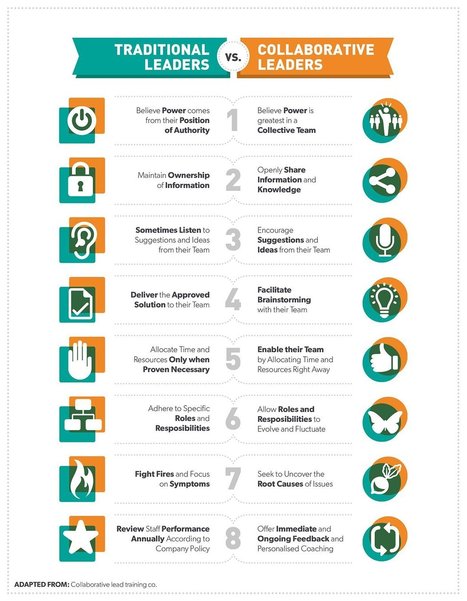
So what does tomorrow’s leader look like? Here are four traits on the rise:


  1. Part of the team. For a millennial workforce, working collaboratively is key – and that includes the chance to challenge and question the boss. Great leaders will spend time meeting their staff and really listening to what they have to say.
  2. Admitting mistakes. Authenticity rules, and that might mean having the courage and conviction to admit lack of knowledge or making the wrong call. Humility is critical, particularly in an age of transparency and public accountability.
  3. Multi-sector experience. Millennials are far more likely to move between jobs and sectors as they develop their career, and they’ll expect their leaders to have the same breadth of experience. The journey from shop floor to CEO isn’t as relevant for tomorrow’s workforce.
  4. Female characteristics. It’s still a shocking truth that 5% of Fortune 500 positions go to women, but the evidence shows that businesses benefit enormously from behavioural traits often considered to be female, such as emotional intelligence, diplomacy and complex social skills. Women make great leaders.
Gust MEES's insight:

So what does tomorrow’s leader look like? Here are four traits on the rise:


  1. Part of the team. For a millennial workforce, working collaboratively is key – and that includes the chance to challenge and question the boss. Great leaders will spend time meeting their staff and really listening to what they have to say.
  2. Admitting mistakes. Authenticity rules, and that might mean having the courage and conviction to admit lack of knowledge or making the wrong call. Humility is critical, particularly in an age of transparency and public accountability.
  3. Multi-sector experience. Millennials are far more likely to move between jobs and sectors as they develop their career, and they’ll expect their leaders to have the same breadth of experience. The journey from shop floor to CEO isn’t as relevant for tomorrow’s workforce.
  4. Female characteristics. It’s still a shocking truth that 5% of Fortune 500 positions go to women, but the evidence shows that businesses benefit enormously from behavioural traits often considered to be female, such as emotional intelligence, diplomacy and complex social skills. Women make great leaders.
Sm_english's curator insight, July 6, 2015 5:17 PM

I strongly belief that this applies also to school principals

Ian Berry's curator insight, July 6, 2015 7:20 PM

Good infographic. Collaborative leadership is a feature of the new world of work.

daniel truran's curator insight, July 7, 2015 4:55 AM

An additional trait I love to see in a collaborative leader is the belief in #HumanNobility : believing that each individual has unlimited potential and that I as a leader need to allow that potential to contribute to the team in a collaborative natural flowing way.

Scooped by Gust MEES
June 11, 2015 9:29 AM
Scoop.it!

10 Communication Secrets of Great Leaders | eLeadership | eSkills | Leadership

10 Communication Secrets of Great Leaders | eLeadership | eSkills | Leadership | 21st Century Learning and Teaching | Scoop.it

No one ever became a great leader without first becoming a great communicator.

Great leaders connect with people on an emotional level every time they speak. Their words inspire others to achieve more than they ever thought possible.

Great communicators are intentional about it, and there are 10 secrets they rely on to deliver a powerful message. Put these secrets to work in your communication and watch your influence soar.

1. They Know Their Audience

2. They Are Experts In Body Language

3. They Are Honest

4. They Are Authentic

5. They Speak With Authority

6. They Speak To Groups As Individuals

7. They Have Ears (And They Use Them)

8. They Use Phrases Like "It's My Fault," "I Was Wrong," and "I'm Sorry"

9. They Solicit Feedback

10. They're Proactive

Leaders with the best communication skills don't waste time playing catch-up. They're quick to head off the rumor mill by sharing bad news in a timely manner. They also give clear, concise goals and directions so people don't waste their time heading in the wrong direction.


Learn more:


- http://www.scoop.it/t/21st-century-learning-and-teaching/?tag=LeaderShip


Gust MEES's insight:

No one ever became a great leader without first becoming a great communicator.

Great leaders connect with people on an emotional level every time they speak. Their words inspire others to achieve more than they ever thought possible.

Great communicators are intentional about it, and there are 10 secrets they rely on to deliver a powerful message. Put these secrets to work in your communication and watch your influence soar.

1. They Know Their Audience

2. They Are Experts In Body Language

3. They Are Honest

4. They Are Authentic

5. They Speak With Authority

6. They Speak To Groups As Individuals

7. They Have Ears (And They Use Them)

8. They Use Phrases Like "It's My Fault," "I Was Wrong," and "I'm Sorry"


9. They Solicit Feedback

10. They're Proactive

Leaders with the best communication skills don't waste time playing catch-up. They're quick to head off the rumor mill by sharing bad news in a timely manner. They also give clear, concise goals and directions so people don't waste their time heading in the wrong direction.


Learn more:


- http://www.scoop.it/t/21st-century-learning-and-teaching/?tag=LeaderShip


Laurie Chiu-Mar's curator insight, June 11, 2015 6:28 PM

Great Leaders are able to share their vision of the future and encourage others to join them in this vision.

Ian Berry's curator insight, June 12, 2015 3:43 AM

Great list. It all begins at number 1

Nadège CORDENTE's curator insight, June 12, 2015 4:32 AM

Cela paraît presque trop simple et pourtant...

Scooped by Gust MEES
June 6, 2015 5:59 PM
Scoop.it!

How to Handle Difficult Conversations at Work | Leadership | eLeadership | eSkills

How to Handle Difficult Conversations at Work | Leadership | eLeadership | eSkills | 21st Century Learning and Teaching | Scoop.it
Start by changing your mindset.


Difficult conversations — whether you’re telling a client the project is delayed or presiding over an unenthusiastic performance review — are an inevitable part of management. How should you prepare for this kind of discussion? How do you find the right words in the moment? And, how can you manage the exchange so that it goes as smoothly as possible?


Learn more:


- http://www.scoop.it/t/21st-century-learning-and-teaching/?tag=Growth+Mindset


- http://www.scoop.it/t/21st-century-learning-and-teaching/?tag=Meetings


Gust MEES's insight:
Start by changing your mindset.


Difficult conversations — whether you’re telling a client the project is delayed or presiding over an unenthusiastic performance review — are an inevitable part of management. How should you prepare for this kind of discussion? How do you find the right words in the moment? And, how can you manage the exchange so that it goes as smoothly as possible?


Learn more:


- http://www.scoop.it/t/21st-century-learning-and-teaching/?tag=Growth+Mindset


- http://www.scoop.it/t/21st-century-learning-and-teaching/?tag=Meetings


Mike Belnap's curator insight, June 7, 2015 10:45 AM

Some really good tips that may come in handy...

#techhrd