21st Century Learning and Teaching
791.6K views | +0 today
21st Century Learning and Teaching
Related articles to 21st Century Learning and Teaching as also tools...
Curated by Gust MEES
Your new post is loading...

Popular Tags

Current selected tag: 'Learning 2 Learn'. Clear
Scooped by Gust MEES
July 13, 2017 3:29 PM
Scoop.it!

Wie Sie NICHT Teil eines Botnetzes werden | #Botnet #DigitalCitiZENship  #CyberSecurity

Wie Sie NICHT Teil eines Botnetzes werden | #Botnet #DigitalCitiZENship  #CyberSecurity | 21st Century Learning and Teaching | Scoop.it

Zombiecomputer und wie Sie sie vermeiden:

Sie haben wahrscheinlich das Wort Botnetz in letzter Zeit mehr als einmal gehört, und das überrascht kaum. Jedes verbundene Gerät kann zombifiziert werden — und Teil eines Botnetzes werden. Das schließt PCs, Smartphones, Tablets, Router, WLAN-Kühlschränke, Smart Toys und viele andere Geräte ein.

In diesem Post erklären wir, was ein Botnetz ist, was es anrichtet und wie Sie Ihre Geräte davor schützen, Teil eines Botnetzes zu werden.

Botnetze: Was sind sie?

Ein Botnetz ist eine Gruppe von Geräten, die mit dem Internet verbundenen sind und mit einer bestimmten Malware infiziert wurden. Die Art von Malware, die Bots, oder Zombies, erstellt, arbeitet verdeckt, erwirbt Administratorenrechte und übergibt den Cyberkriminellen die Kontrolle, ohne sich zu verraten. Das infizierte Gerät funktioniert wie gewöhnlich – aber es folgt auch gleichzeitig den Anweisungen des Kommandeurs des Botnetzes. Zusammen bilden die infizierten Geräte eine starke Infrastruktur, mit der Cyberverbrechen begangen werden können.

Einige Botnetzkommandeure spezialisieren sich nur auf den Support und die Verbreitung des Botnetzes. Sie vermieten diese schädlichen Tools an andere Kriminelle, die mit ihnen Angriffe und andere kriminale Taten durchführen. Hier sind die vier gängigsten Wege, um ein Botnetz zu verwenden.


Learn more / En savoir plus / Mehr erfahren:


http://www.scoop.it/t/securite-pc-et-internet/?&tag=Botnet


http://www.scoop.it/t/21st-century-learning-and-teaching/?&tag=Botnet


https://twitter.com/search?src=typd&q=%23fscd


Gust MEES's insight:

Zombiecomputer und wie Sie sie vermeiden:

Sie haben wahrscheinlich das Wort Botnetz in letzter Zeit mehr als einmal gehört, und das überrascht kaum. Jedes verbundene Gerät kann zombifiziert werden — und Teil eines Botnetzes werden. Das schließt PCs, Smartphones, Tablets, Router, WLAN-Kühlschränke, Smart Toys und viele andere Geräte ein.

In diesem Post erklären wir, was ein Botnetz ist, was es anrichtet und wie Sie Ihre Geräte davor schützen, Teil eines Botnetzes zu werden.

Botnetze: Was sind sie?

Ein Botnetz ist eine Gruppe von Geräten, die mit dem Internet verbundenen sind und mit einer bestimmten Malware infiziert wurden. Die Art von Malware, die Bots, oder Zombies, erstellt, arbeitet verdeckt, erwirbt Administratorenrechte und übergibt den Cyberkriminellen die Kontrolle, ohne sich zu verraten. Das infizierte Gerät funktioniert wie gewöhnlich – aber es folgt auch gleichzeitig den Anweisungen des Kommandeurs des Botnetzes. Zusammen bilden die infizierten Geräte eine starke Infrastruktur, mit der Cyberverbrechen begangen werden können.

Einige Botnetzkommandeure spezialisieren sich nur auf den Support und die Verbreitung des Botnetzes. Sie vermieten diese schädlichen Tools an andere Kriminelle, die mit ihnen Angriffe und andere kriminale Taten durchführen. Hier sind die vier gängigsten Wege, um ein Botnetz zu verwenden.


Learn more / En savoir plus / Mehr erfahren:


http://www.scoop.it/t/securite-pc-et-internet/?&tag=Botnet


http://www.scoop.it/t/21st-century-learning-and-teaching/?&tag=Botnet


https://twitter.com/search?src=typd&q=%23fscd

 

No comment yet.
Rescooped by Gust MEES from Business Improvement

July 13, 2017 9:48 AM
Scoop.it!

10 Social Media Marketing Mistakes And How to Avoid Making Them

10 Social Media Marketing Mistakes And How to Avoid Making Them | 21st Century Learning and Teaching | Scoop.it
We've committed many social media mistakes that have cost us reach, engagement, fans, and customers! Here's what we've learned and how you can avoid them.


Let’s get started…


Learn from These 10 Social Media Mistakes We’ve Made

Here’s a quick overview of the social media mistakes we’ve been making until recently:

  1. Focusing on quantity over quality
  2. Being on all social media platforms
  3. Posting the same content across platforms
  4. Using only landscape images and videos
  5. Sharing only our own content
  6. Not curating user-generated content
  7. Not uploading videos to social media platforms
  8. Not targeting specific audience for our content
  9. Not boosting the right posts
  10. Not replying to questions on social (fast enough)


Learn more / En savoir plus / Mehr erfahren:


http://www.scoop.it/t/21st-century-learning-and-teaching/?&tag=Marketing


Via Daniel Watson
Gust MEES's insight:
We've committed many social media mistakes that have cost us reach, engagement, fans, and customers! Here's what we've learned and how you can avoid them.


Let’s get started…


Learn from These 10 Social Media Mistakes We’ve Made

Here’s a quick overview of the social media mistakes we’ve been making until recently:

  1. Focusing on quantity over quality
  2. Being on all social media platforms
  3. Posting the same content across platforms
  4. Using only landscape images and videos
  5. Sharing only our own content
  6. Not curating user-generated content
  7. Not uploading videos to social media platforms
  8. Not targeting specific audience for our content
  9. Not boosting the right posts
  10. Not replying to questions on social (fast enough)


Learn more / En savoir plus / Mehr erfahren:


http://www.scoop.it/t/21st-century-learning-and-teaching/?&tag=Marketing


No comment yet.
Scooped by Gust MEES
July 6, 2017 11:03 AM
Scoop.it!

WHY is Proactive-Thinking IMPORTANT and a MUST in Modern-Education with and about ICT!?

WHY is Proactive-Thinking IMPORTANT and a MUST in Modern-Education with and about ICT!? | 21st Century Learning and Teaching | Scoop.it

WHY is Proactive-Thinking IMPORTANT and a MUST in Modern-Education with and about ICT!? In the last twenty (20) years Technology has changed a lot; with the internet and the use of ICT by nearly everybody around the world... ICT is present everywhere, nearly anybody is using smartphones, the internet, Social-Media and in the…


Learn more / En savoir plus / Mehr erfahren:


https://gustmees.wordpress.com/2015/03/07/facts-to-convince-someone-for-the-must-of-learning-basics-of-cybersecurity-digital-citizenship/


https://gustmees.wordpress.com/2013/12/21/privacy-in-the-digital-world-shouldnt-we-talk-about-it/


https://globaleducationandsocialmedia.wordpress.com/2014/01/21/why-is-it-a-must-to-have-basics-knowledge-of-cyber-security-in-a-connected-technology-world/


Gust MEES's insight:

WHY is Proactive-Thinking IMPORTANT and a MUST in Modern-Education with and about ICT!? In the last twenty (20) years Technology has changed a lot; with the internet and the use of ICT by nearly everybody around the world... ICT is present everywhere, nearly anybody is using smartphones, the internet, Social-Media and in the…


Learn more / En savoir plus / Mehr erfahren:


https://gustmees.wordpress.com/2015/03/07/facts-to-convince-someone-for-the-must-of-learning-basics-of-cybersecurity-digital-citizenship/


https://gustmees.wordpress.com/2013/12/21/privacy-in-the-digital-world-shouldnt-we-talk-about-it/


https://globaleducationandsocialmedia.wordpress.com/2014/01/21/why-is-it-a-must-to-have-basics-knowledge-of-cyber-security-in-a-connected-technology-world/


No comment yet.
Scooped by Gust MEES
July 3, 2017 8:44 AM
Scoop.it!

Preparing our children for life-long learning | #LEARNing2LEARN #ModernEDU

Preparing our children for life-long learning | #LEARNing2LEARN #ModernEDU | 21st Century Learning and Teaching | Scoop.it
The profound changes ahead demand an education approach that lifts the proficiency of all students.

What might this take? 

If future adults will need to reinvent themselves and constantly adapt to change, then education will need to focus even more on learning how to learn as well as what to learn.

A theme emerging from our investigations is that some of the key skills and attributes of the future are not necessarily the ones that we directly measure in our major assessments.

We are good at assessing literacy and numeracy skills and students' depth of content knowledge in core subjects. These will continue to be critical. But what of broader skills such as resilience, that idea of the growth mindset, the capacity to fail and try again, to persevere?

Do we know enough about the most effective teaching practices, the tools and resources schools need to nurture them and how best to assess their attainment?


Learn more / En savoir plus / Mehr erfahren:


https://gustmees.wordpress.com/2016/02/18/the-new-possibilities-to-learn-and-teach-with-ict/


https://gustmees.wordpress.com/2015/08/01/21st-century-education-is-learning-to-learn-for-life-long-learning-and-nothing-else-matters/


Gust MEES's insight:
The profound changes ahead demand an education approach that lifts the proficiency of all students.

What might this take? 

If future adults will need to reinvent themselves and constantly adapt to change, then education will need to focus even more on learning how to learn as well as what to learn.

A theme emerging from our investigations is that some of the key skills and attributes of the future are not necessarily the ones that we directly measure in our major assessments.

We are good at assessing literacy and numeracy skills and students' depth of content knowledge in core subjects. These will continue to be critical. But what of broader skills such as resilience, that idea of the growth mindset, the capacity to fail and try again, to persevere?

Do we know enough about the most effective teaching practices, the tools and resources schools need to nurture them and how best to assess their attainment?


Learn more / En savoir plus / Mehr erfahren:


https://gustmees.wordpress.com/2016/02/18/the-new-possibilities-to-learn-and-teach-with-ict/


https://gustmees.wordpress.com/2015/08/01/21st-century-education-is-learning-to-learn-for-life-long-learning-and-nothing-else-matters/


Rosemarri Klamn's curator insight, July 3, 2017 2:38 PM
As Gust MEES notes in his blog: “We are good at assessing literacy and numeracy skills and students' depth of content knowledge in core subjects. These will continue to be critical. But what of broader skills such as resilience, that idea of the growth mindset, the capacity to fail and try again, to persevere? Do we know enough about the most effective teaching practices, the tools and resources schools need to nurture them and how best to assess their attainment?”

Gust raises good questions about teaching students to learn. There are a variety of complex and simple policies and practices to answer these questions. One strategy is incorporating universal design for learning (UDL) principles into learning strategies: this helps meet the needs of a variety of learners. UDL researchers promote the concept of developing expert learners; author Katie Novak blogs about expert learners at:

Katie Novak. (2016, July 18). UDL, Expert Learners, and the 36-Ton Machine. Retrieved from: http://katienovakudl.com/udl-expert-learners-and-the-36-ton-machine/

National Center for Universal Design for Learning (NCUDL). (2012). UDL and Expert Learners. Retrieved from: http://www.udlcenter.org/aboutudl/expertlearners

Scooped by Gust MEES
June 30, 2017 10:25 AM
Scoop.it!

Internetabhängigkeit: Fünf Tipps zu Computersucht

Internetabhängigkeit: Fünf Tipps zu Computersucht | 21st Century Learning and Teaching | Scoop.it
Tipps für alle, die sich fragen, ob ihr Gebrauch von PC, Smartphone und Spielkonsole noch normal ist oder schon die Form von Sucht und Abhängigkeit angenommen hat.


Learn more / En savoir plus / Mehr erfahren:


http://www.scoop.it/t/21st-century-learning-and-teaching/?&tag=Internet-Addiction


Gust MEES's insight:
Tipps für alle, die sich fragen, ob ihr Gebrauch von PC, Smartphone und Spielkonsole noch normal ist oder schon die Form von Sucht und Abhängigkeit angenommen hat.


Learn more / En savoir plus / Mehr erfahren:


http://www.scoop.it/t/21st-century-learning-and-teaching/?&tag=Internet-Addiction


No comment yet.
Rescooped by Gust MEES from Digital Delights - Digital Tribes
July 1, 2017 7:16 AM
Scoop.it!

Visible Learning visualized in a beautiful infographic | #ModernEDU #JohnHATTIE

Visible Learning visualized in a beautiful infographic | #ModernEDU #JohnHATTIE | 21st Century Learning and Teaching | Scoop.it
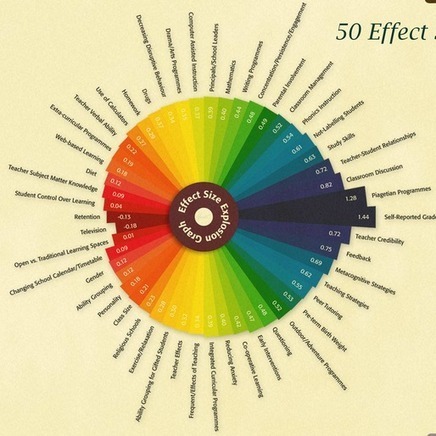
Terry Burr designed that beautiful educational infographic for Osiris Educational and Visible Learning Plus. The infographic is based on data from John Hattie’s research and the work of the Visible Learning Plus team. (c) www.osiriseducational.co.uk / www.visiblelearningplus.co.uk   Visible Learning Infografik Visible…Read more ›


Learn more / En savoir plus / Mehr erfahren:


http://www.scoop.it/t/21st-century-learning-and-teaching/?&tag=John+HATTIE


Via Ana Cristina Pratas
Gust MEES's insight:
Terry Burr designed that beautiful educational infographic for Osiris Educational and Visible Learning Plus. The infographic is based on data from John Hattie’s research and the work of the Visible Learning Plus team. (c) www.osiriseducational.co.uk / www.visiblelearningplus.co.uk   Visible Learning Infografik Visible…Read more ›


Learn more / En savoir plus / Mehr erfahren:


http://www.scoop.it/t/21st-century-learning-and-teaching/?&tag=John+HATTIE


Margarita Saucedo's curator insight, July 3, 2017 10:50 AM
Ejemplo de Infografía:un apoyo visual para la enseñanza
Scooped by Gust MEES
June 25, 2017 11:51 AM
Scoop.it!

The principles of learning to design learning environments | OECD READ edition | #ModernEDU

The principles of learning to design learning environments | OECD READ edition | #ModernEDU | 21st Century Learning and Teaching | Scoop.it

The principles of learning to design learning environments...


Learn more / En savoir plus / Mehr erfahren:


https://gustmees.wordpress.com/2016/02/18/the-new-possibilities-to-learn-and-teach-with-ict/


https://gustmees.wordpress.com/2012/09/23/1798/


Gust MEES's insight:

The principles of learning to design learning environments...


Learn more / En savoir plus / Mehr erfahren:


https://gustmees.wordpress.com/2016/02/18/the-new-possibilities-to-learn-and-teach-with-ict/


https://gustmees.wordpress.com/2012/09/23/1798/


No comment yet.
Scooped by Gust MEES
June 24, 2017 2:04 PM
Scoop.it!

​Raspberry Pi simulator lets you start tinkering without even owning a Pi | #Coding #MakerED

​Raspberry Pi simulator lets you start tinkering without even owning a Pi | #Coding #MakerED | 21st Century Learning and Teaching | Scoop.it
If you want to build your own gadgets using the Raspberry Pi but don't have the kit or even a Pi, there could soon be another way to get started.

Microsoft is building an online Raspberry Pi simulator that allows users to write code to control emulated hardware, and that currently lets users interact with an LED and collect data from a sensor.

The simulator shows a graphic of a Pi wired to a combined humidity, temperature, pressure sensor and a red LED via a breadboard, a plug board that allows circuits to be wired together rapidly. Users can type in a side panel to enter Node.js JavaScript code, which can be used to control the LED and collect dummy data from the simulated sensor. That code can be executed using a command line at the base of the panel.


Learn more / En savoir plus / Mehr erfahren:


http://www.scoop.it/t/21st-century-learning-and-teaching/?&tag=Raspberry+Pi


Gust MEES's insight:
If you want to build your own gadgets using the Raspberry Pi but don't have the kit or even a Pi, there could soon be another way to get started.

Microsoft is building an online Raspberry Pi simulator that allows users to write code to control emulated hardware, and that currently lets users interact with an LED and collect data from a sensor.

The simulator shows a graphic of a Pi wired to a combined humidity, temperature, pressure sensor and a red LED via a breadboard, a plug board that allows circuits to be wired together rapidly. Users can type in a side panel to enter Node.js JavaScript code, which can be used to control the LED and collect dummy data from the simulated sensor. That code can be executed using a command line at the base of the panel.


Learn more / En savoir plus / Mehr erfahren:


http://www.scoop.it/t/21st-century-learning-and-teaching/?&tag=Raspberry+Pi


No comment yet.
Scooped by Gust MEES
June 17, 2017 9:34 AM
Scoop.it!

The Teenage Brain Is Wired to Learn—So Make Sure Your Students Know It | #Design the #LEARNing

The Teenage Brain Is Wired to Learn—So Make Sure Your Students Know It | #Design the #LEARNing | 21st Century Learning and Teaching | Scoop.it

Tools for Self-Directed Learning
As they progress through middle and high school, students are expected to take on increasing responsibility for their learning, with more out-of-class assignments that require independent research, reading for understanding, and wider application of classroom lessons.


Our new book, Teaching Students to Drive Their Brains: Metacognitive Strategies, Activities, and Lesson Ideas, suggests that learning and applying strategies to “explain it to your brain” can help students improve their study habits. We note some of those strategies here.

Don’t just read—learn. There can be a huge difference between reading the words on the page and learning from them. To think through the ideas in a reading assignment and improve recall of what they have read, students might benefit from:

Creating diagrams, pictures, and symbols to represent key ideas as they take notes;
Summarizing passages in their own words (some students might enjoy the challenge of capturing the essence of an assignment in a tweet); and Searching for cues about the most important content. For textbook assignments, students can go back and review features like key terms, subtitles, and informational graphics after their first reading to reinforce crucial facts. When reading fiction or poetry, identifying literary devices such as metaphors and symbols can help uncover deeper meaning.


Learn more / En savoir plus / Mehr erfahren:


https://gustmees.wordpress.com/2014/10/03/design-the-learning-of-your-learners-students-ideas/


http://www.scoop.it/t/21st-century-learning-and-teaching/?&tag=Metacognition


Gust MEES's insight:

Tools for Self-Directed Learning
As they progress through middle and high school, students are expected to take on increasing responsibility for their learning, with more out-of-class assignments that require independent research, reading for understanding, and wider application of classroom lessons.


Our new book, Teaching Students to Drive Their Brains: Metacognitive Strategies, Activities, and Lesson Ideas, suggests that learning and applying strategies to “explain it to your brain” can help students improve their study habits. We note some of those strategies here.

Don’t just read—learn. There can be a huge difference between reading the words on the page and learning from them. To think through the ideas in a reading assignment and improve recall of what they have read, students might benefit from:

Creating diagrams, pictures, and symbols to represent key ideas as they take notes;
Summarizing passages in their own words (some students might enjoy the challenge of capturing the essence of an assignment in a tweet); and Searching for cues about the most important content. For textbook assignments, students can go back and review features like key terms, subtitles, and informational graphics after their first reading to reinforce crucial facts. When reading fiction or poetry, identifying literary devices such as metaphors and symbols can help uncover deeper meaning.


Learn more / En savoir plus / Mehr erfahren:


https://gustmees.wordpress.com/2014/10/03/design-the-learning-of-your-learners-students-ideas/


http://www.scoop.it/t/21st-century-learning-and-teaching/?&tag=Metacognition


No comment yet.
Scooped by Gust MEES
June 15, 2017 6:48 AM
Scoop.it!

Creative People Literally See the World Differently, Mind-Blowing Research Shows | #Creativity

Creative people aren't just different because of the surprising and valuable work they produce. Nor is exceptional creativity all a matter of personality. The differences between the creatively gifted and the rest of us apparently go even deeper, according to mind-blowing recent research.

In fact, creative people actually see the world differently, according to a fascinating recent post on The Conversation by two Australian psychologists.


Learn more / En savoir plus / Mehr erfahren:


https://gustmees.wordpress.com/?s=creativity


http://www.scoop.it/t/21st-century-learning-and-teaching/?&tag=Creativity


Gust MEES's insight:
Creative people aren't just different because of the surprising and valuable work they produce. Nor is exceptional creativity all a matter of personality. The differences between the creatively gifted and the rest of us apparently go even deeper, according to mind-blowing recent research.

In fact, creative people actually see the world differently, according to a fascinating recent post on The Conversation by two Australian psychologists.


Learn more / En savoir plus / Mehr erfahren:


https://gustmees.wordpress.com/?s=creativity


http://www.scoop.it/t/21st-century-learning-and-teaching/?&tag=Creativity


No comment yet.
Scooped by Gust MEES
June 9, 2017 12:34 PM
Scoop.it!

Make a TOR Access Point with Raspberry Pi #piday #raspberrypi @Raspberry_Pi | #Coding

Make a TOR Access Point with Raspberry Pi #piday #raspberrypi @Raspberry_Pi | #Coding | 21st Century Learning and Teaching | Scoop.it
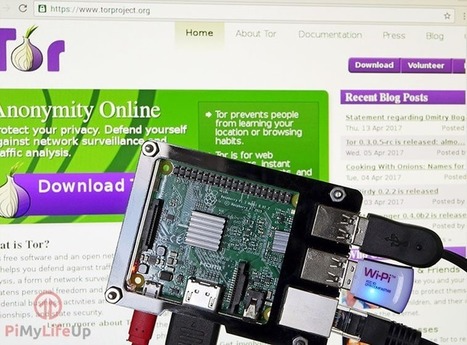
From Pi My Life Up: In this tutorial we will be going through the steps on how to setup a basic Raspberry Pi TOR Access Point. Before you get started with this tutorial you must of already complete…


Learn more / En savoir plus / Mehr erfahren:


http://www.scoop.it/t/21st-century-learning-and-teaching/?&tag=Raspberry+Pi


http://www.scoop.it/t/securite-pc-et-internet/?&tag=Raspberry+PI


Gust MEES's insight:
From Pi My Life Up: In this tutorial we will be going through the steps on how to setup a basic Raspberry Pi TOR Access Point. Before you get started with this tutorial you must of already complete…


Learn more / En savoir plus / Mehr erfahren:


http://www.scoop.it/t/21st-century-learning-and-teaching/?&tag=Raspberry+Pi


http://www.scoop.it/t/securite-pc-et-internet/?&tag=Raspberry+PI


No comment yet.
Rescooped by Gust MEES from Learning & Technology News
June 9, 2017 8:04 AM
Scoop.it!

Today, Kids Need To Learn More Than Facts, But To Solve Problems And Innovate

Today, Kids Need To Learn More Than Facts, But To Solve Problems And Innovate | 21st Century Learning and Teaching | Scoop.it

Traditionally, we went to school to attain knowledge. The smart kids knew that Columbus discovered America in 1492 and that the square root of 64 is eight. They studied diligently at home so that when the teacher asked a question they could shoot their hand up and be praised for their good work.


Today, however, teenagers carry far more information and computing power in their pockets than would ever fit in their heads. So the ability to retain knowledge and manipulate numbers with facility has become, to a large extent, outdated skills. So kids today need to learn how to understand systems and solve problems.


Fortunately, there are an increasing number of programs that are designed to do just that. At the college level, programs like Stanford's d.school teach design thinking and entrepreneurship classes have become standard in business school curriculums. More recently, a wide variety of secondary school level programs have begun to take hold and are giving students a leg up.


Learn more / En savoir plus / Mehr erfahren:


https://gustmees.wordpress.com/2014/10/03/design-the-learning-of-your-learners-students-ideas/


https://gustmees.wordpress.com/2015/07/19/learning-path-for-professional-21st-century-learning-by-ict-practice/


Via Nik Peachey
Gust MEES's insight:

Traditionally, we went to school to attain knowledge. The smart kids knew that Columbus discovered America in 1492 and that the square root of 64 is eight. They studied diligently at home so that when the teacher asked a question they could shoot their hand up and be praised for their good work.


Today, however, teenagers carry far more information and computing power in their pockets than would ever fit in their heads. So the ability to retain knowledge and manipulate numbers with facility has become, to a large extent, outdated skills. So kids today need to learn how to understand systems and solve problems.


Fortunately, there are an increasing number of programs that are designed to do just that. At the college level, programs like Stanford's d.school teach design thinking and entrepreneurship classes have become standard in business school curriculums. More recently, a wide variety of secondary school level programs have begun to take hold and are giving students a leg up.


Learn more / En savoir plus / Mehr erfahren:


https://gustmees.wordpress.com/2014/10/03/design-the-learning-of-your-learners-students-ideas/


https://gustmees.wordpress.com/2015/07/19/learning-path-for-professional-21st-century-learning-by-ict-practice/


Tiffany Wheatley's curator insight, May 30, 2017 1:19 AM
An interesting take on what education should look like today compared to what it used to be. Technology is definitely a key part in the future and the more exposure students have to it now the better prepared they will be.
Kevin Morrison's curator insight, May 30, 2017 11:11 AM
One critical component of this that was not included it to know if the source of the facts they get is trustworthy. More and more what was once a trusted source of information leaves a lot out, or skews the facts making it difficult if not impossible get to the truth!
Barbara Goebel's curator insight, June 6, 2017 11:45 AM
Frankly, this has always been the ultimate goal in the sciences, but the way-stations of memorized facts and processes have led to standard assessments that are low rigor and less than useful in determining student understanding. Let's model the heck out of our world and figure out some solutions!
Rescooped by Gust MEES from Data Science and Computational Thinking [inc Big Data and Internet of Things]
May 29, 2017 2:35 AM
Scoop.it!

People with creative personalities really do see the world differently | #Creativity 

People with creative personalities really do see the world differently | #Creativity  | 21st Century Learning and Teaching | Scoop.it

Our new research found that there are certain aspects of a person’s personality that can influence their creativity.


Psychologists often measure creativity using divergent thinking tasks. These require you to generate as many uses as possible for mundane objects, such as a brick. People who can see numerous and diverse uses for a brick (say, a coffin for a Barbie doll funeral diorama) are rated as more creative than people who can only think of a few common uses (say, for building a wall).


The aspect of our personality that appears to drive our creativity is called openness to experience, or openness. Among the five major personality traits, it is openness that best predicts performance on divergent thinking tasks. Openness also predicts real-world creative achievements, as well as engagement in everyday creative pursuits.


As Scott Barry Kaufman and Carolyn Gregoire explain in their book Wired to Create, the creativity of open people stems from a “drive for cognitive exploration of one’s inner and outer worlds”.


This curiosity to examine things from all angles may lead people high in openness to see more than the average person, or as another research team put it, to discover “complex possibilities laying dormant in so-called ‘familiar’ environments”.


Learn more / En savoir plus / Mehr erfahren:


http://www.scoop.it/t/21st-century-learning-and-teaching/?&tag=Creativity


https://gustmees.wordpress.com/?s=creativity


Via Kim Flintoff
Gust MEES's insight:

Our new research found that there are certain aspects of a person’s personality that can influence their creativity.


Psychologists often measure creativity using divergent thinking tasks. These require you to generate as many uses as possible for mundane objects, such as a brick. People who can see numerous and diverse uses for a brick (say, a coffin for a Barbie doll funeral diorama) are rated as more creative than people who can only think of a few common uses (say, for building a wall).


The aspect of our personality that appears to drive our creativity is called openness to experience, or openness. Among the five major personality traits, it is openness that best predicts performance on divergent thinking tasks. Openness also predicts real-world creative achievements, as well as engagement in everyday creative pursuits.


As Scott Barry Kaufman and Carolyn Gregoire explain in their book Wired to Create, the creativity of open people stems from a “drive for cognitive exploration of one’s inner and outer worlds”.


This curiosity to examine things from all angles may lead people high in openness to see more than the average person, or as another research team put it, to discover “complex possibilities laying dormant in so-called ‘familiar’ environments”.


Learn more / En savoir plus / Mehr erfahren:


http://www.scoop.it/t/21st-century-learning-and-teaching/?&tag=Creativity


https://gustmees.wordpress.com/?s=creativity


Paulette Dotson's curator insight, June 9, 2017 11:21 AM
Everyone interprets the world around us from their perspective.  Science says creative people see the world differently.
Scooped by Gust MEES
July 12, 2017 9:16 AM
Scoop.it!

Exploring Curation as a core competency in digital and media literacy education  | #ModernEDU #LEARNing2LEARN

Exploring Curation as a core competency in digital and media literacy education  | #ModernEDU #LEARNing2LEARN | 21st Century Learning and Teaching | Scoop.it

Article: Exploring Curation as a core competency in digital and media literacy education.


In today’s hypermedia landscape, youth and young adults are increasingly using social media platforms, online aggregators and mobile applications for daily information use. Communication educators, armed with a host of free, easy-to-use online tools, have the ability to create dynamic approaches to teaching and learning about information and communication flow online.


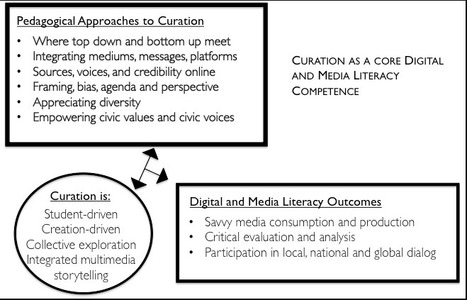
In this paper we explore the concept of curation as a student- and creation-driven pedagogical tool to enhance digital and media literacy education. We present a theoretical justification for curation and present six key ways that curation can be used to teach about critical thinking, analysis and expression online.


We utilize a case study of the digital curation platform Storify to explore how curation works in the classroom, and present a framework that integrates curation pedagogy into core media literacy education learning outcomes.


Learn more / En savoir plus / Mehr erfahren:


https://gustmees.wordpress.com/2013/04/25/learn-every-day-a-bit-with-curation/


http://blog.scoop.it/2011/11/30/lord-of-curation-series-gust-mees/


https://globaleducationandsocialmedia.wordpress.com/2014/01/19/pkm-personal-professional-knowledge-management/


http://www.scoop.it/t/21st-century-learning-and-teaching/?&tag=Curation


https://gustmees.wordpress.com/2015/05/13/andragogy-adult-teaching-how-to-teach-ict/


Gust MEES's insight:

Article: Exploring Curation as a core competency in digital and media literacy education.


In today’s hypermedia landscape, youth and young adults are increasingly using social media platforms, online aggregators and mobile applications for daily information use. Communication educators, armed with a host of free, easy-to-use online tools, have the ability to create dynamic approaches to teaching and learning about information and communication flow online.


In this paper we explore the concept of curation as a student- and creation-driven pedagogical tool to enhance digital and media literacy education. We present a theoretical justification for curation and present six key ways that curation can be used to teach about critical thinking, analysis and expression online.


We utilize a case study of the digital curation platform Storify to explore how curation works in the classroom, and present a framework that integrates curation pedagogy into core media literacy education learning outcomes.


Learn more / En savoir plus / Mehr erfahren:


https://gustmees.wordpress.com/2013/04/25/learn-every-day-a-bit-with-curation/


http://blog.scoop.it/2011/11/30/lord-of-curation-series-gust-mees/


https://globaleducationandsocialmedia.wordpress.com/2014/01/19/pkm-personal-professional-knowledge-management/


http://www.scoop.it/t/21st-century-learning-and-teaching/?&tag=Curation


https://gustmees.wordpress.com/2015/05/13/andragogy-adult-teaching-how-to-teach-ict/


Oskar Almazan's curator insight, July 12, 2017 9:39 AM
In today’s hypermedia landscape, youth and young adults are increasingly using social media platforms, online aggregators and mobile applications for daily information use. Communication educators, armed with a host of free, easy-to-use online tools, have the ability to create dynamic approaches to teaching and learning about information and communication flow online. In this paper we explore the concept of curation as a student- and creation-driven pedagogical tool to enhance digital and media literacy education. We present a theoretical justification for curation and present six key ways that curation can be used to teach about critical thinking, analysis and expression online. We utilize a case study of the digital curation platform Storify to explore how curation works in the classroom, and present a framework that integrates curation pedagogy into core media literacy education learning outcomes.
2
Rosemarri Klamn's curator insight, July 31, 2017 8:01 AM

This concept is new to me, although I have practiced this in different forms. It seems logical to utilize this pedagogical approach to curation for students, parents, and teachers alike. We are all learners in today's rapid pace in technological changes.

Scooped by Gust MEES
July 11, 2017 6:37 AM
Scoop.it!

What Is Differentiated Instruction? | #ModernEDU

What Is Differentiated Instruction? | #ModernEDU | 21st Century Learning and Teaching | Scoop.it
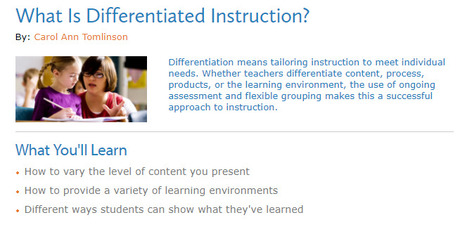
At its most basic level, differentiation consists of the efforts of teachers to respond to variance among learners in the classroom. Whenever a teacher reaches out to an individual or small group to vary his or her teaching in order to create the best learning experience possible, that teacher is differentiating instruction.

Teachers can differentiate at least four classroom elements based on student readiness, interest, or learning profile:
Content – what the student needs to learn or how the student will get access to the information;
Process – activities in which the student engages in order to make sense of or master the content;
Products – culminating projects that ask the student to rehearse, apply, and extend what he or she has learned in a unit; and
Learning environment – the way the classroom works and feels.


Learn more / En savoir plus / Mehr erfahren:


http://www.scoop.it/t/21st-century-learning-and-teaching/?&tag=Differenciated+Instruction


Gust MEES's insight:
At its most basic level, differentiation consists of the efforts of teachers to respond to variance among learners in the classroom. Whenever a teacher reaches out to an individual or small group to vary his or her teaching in order to create the best learning experience possible, that teacher is differentiating instruction.

Teachers can differentiate at least four classroom elements based on student readiness, interest, or learning profile:
Content – what the student needs to learn or how the student will get access to the information;
Process – activities in which the student engages in order to make sense of or master the content;
Products – culminating projects that ask the student to rehearse, apply, and extend what he or she has learned in a unit; and
Learning environment – the way the classroom works and feels.


Learn more / En savoir plus / Mehr erfahren:


http://www.scoop.it/t/21st-century-learning-and-teaching/?&tag=Differenciated+Instruction


No comment yet.
Scooped by Gust MEES
July 3, 2017 9:08 AM
Scoop.it!

The Classroom or Library as a Maker Space | #MakerED #ModernEDU

The Classroom or Library as a Maker Space | #MakerED #ModernEDU | 21st Century Learning and Teaching | Scoop.it
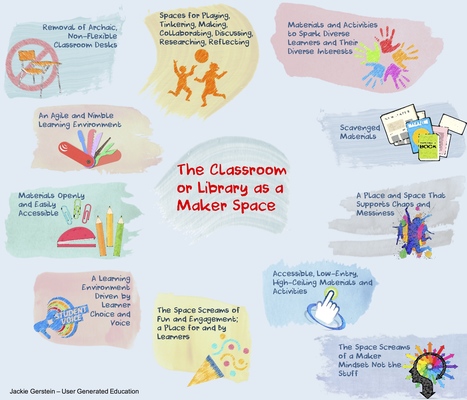
Makerspaces, Maker Education, STEM, and STEAM are gaining lots of traction in Kindergarten though college level education. Articles, resources on social media, and conference presentations on these topics are proliferating at a rate that most educators are now familiar with maker education.

Makerspaces like vocational shops and science labs are great additions to schools. They often contain the tools, machinery, and technologies associated with making – 3D printers, laser cutters, vinyl cutters, high tech robotics, vocational tech machinery. These are great for educational institutions and learners that can afford them.


Learn more / En savoir plus / Mehr erfahren:


https://gustmees.wordpress.com/2014/08/20/maker-space-a-new-trend-in-education-and-a-big-responsibility/


http://www.scoop.it/t/21st-century-learning-and-teaching/?&tag=makerspace


Gust MEES's insight:
Makerspaces, Maker Education, STEM, and STEAM are gaining lots of traction in Kindergarten though college level education. Articles, resources on social media, and conference presentations on these topics are proliferating at a rate that most educators are now familiar with maker education.

Makerspaces like vocational shops and science labs are great additions to schools. They often contain the tools, machinery, and technologies associated with making – 3D printers, laser cutters, vinyl cutters, high tech robotics, vocational tech machinery. These are great for educational institutions and learners that can afford them.


Learn more / En savoir plus / Mehr erfahren:


https://gustmees.wordpress.com/2014/08/20/maker-space-a-new-trend-in-education-and-a-big-responsibility/


http://www.scoop.it/t/21st-century-learning-and-teaching/?&tag=makerspace


Letyquiov's curator insight, July 4, 2017 2:53 PM
Share your insight
Scooped by Gust MEES
July 1, 2017 5:27 PM
Scoop.it!

Agile Manifesto for Software Development | Agile Alliance | Mit agilen Methoden zu MEHR Erfolg

Agile Manifesto for Software Development | Agile Alliance | Mit agilen Methoden zu MEHR Erfolg | 21st Century Learning and Teaching | Scoop.it
We are uncovering better ways of developing software by doing it and helping others do it. Through this work we have come to value:


Individuals and interactions over processes and tools
Working software over comprehensive documentation
Customer collaboration over contract negotiation
Responding to change over following a plan.


That is, while there is value in the items on the right, we value the items on the left more.


Learn more / En savoir plus / Mehr erfahren:


http://www.scoop.it/t/21st-century-learning-and-teaching/?&tag=Agile+Learning


Gust MEES's insight:
We are uncovering better ways of developing software by doing it and helping others do it. Through this work we have come to value:


Individuals and interactions over processes and tools
Working software over comprehensive documentation
Customer collaboration over contract negotiation
Responding to change over following a plan.


That is, while there is value in the items on the right, we value the items on the left more.


Learn more / En savoir plus / Mehr erfahren:


http://www.scoop.it/t/21st-century-learning-and-teaching/?&tag=Agile+Learning


No comment yet.
Scooped by Gust MEES
June 30, 2017 6:57 AM
Scoop.it!

ISTE | Standards For Educators | #ModernEDU

ISTE | Standards For Educators | #ModernEDU | 21st Century Learning and Teaching | Scoop.it

ISTE STANDARDS FOR EDUCATORS

Empower your practice, spark professional learning goals with the ISTE Standards for Educators.


The ISTE Standards for Educators are your road map to helping students become empowered learners. These standards will deepen your practice, promote collaboration with peers, challenge you to rethink traditional approaches and prepare students to drive their own learning. Connect with other educators in the ISTE Standards Community and learn how to use the standards in the classroom with the ISTE Standards for Students ebook.


Learn more / En savoir plus / Mehr erfahren:


http://www.scoop.it/t/21st-century-learning-and-teaching/?&tag=ISTE


Gust MEES's insight:

ISTE STANDARDS FOR EDUCATORS

Empower your practice, spark professional learning goals with the ISTE Standards for Educators.


The ISTE Standards for Educators are your road map to helping students become empowered learners. These standards will deepen your practice, promote collaboration with peers, challenge you to rethink traditional approaches and prepare students to drive their own learning. Connect with other educators in the ISTE Standards Community and learn how to use the standards in the classroom with the ISTE Standards for Students ebook.


Learn more / En savoir plus / Mehr erfahren:


http://www.scoop.it/t/21st-century-learning-and-teaching/?&tag=ISTE


No comment yet.
Scooped by Gust MEES
June 25, 2017 4:35 PM
Scoop.it!

Loben und ein paar Tricks | #Parents #Kids #LEARNing #Motivation

Loben und ein paar Tricks | #Parents #Kids #LEARNing #Motivation | 21st Century Learning and Teaching | Scoop.it

Die meisten Kinder freuen sich vor der Einschulung auf ihren neuen Lebensabschnitt. Aber die Umstellung von der spielerischen Kindergartenzeit zum Lernen in der Schule ist groß. „Es ist keine Seltenheit, dass Kinder sich nach den ersten Wochen oder Monaten überfordert fühlen und eine Lernunlust entwickeln“, sagt Fritz Jansen, Psychologe und Autor.


Es sei sehr wichtig, frühzeitig auf eine Lernunlust zu reagieren und die Kinder aktiv zu unterstützen. Im Alltag ist oft wenig Zeit für Gespräche. Doch für die Lernmotivation ist es von großer Bedeutung, dass die Kinder von ihren Erlebnissen erzählen können.
Eltern sollten sich aufrichtig für die Schule interessieren und nachfragen, statt auszufragen, empfiehlt Hanna Hardeland, Lehrerin und Lerncoach aus Hamburg.


Mit den Eltern das neue Wissen und die Erfahrungen zu teilen, macht Kinder stolz und schenkt ihnen Wertschätzung. Wichtig ist, dass Eltern nicht nur Fehler ansprechen - sondern vor allem viel loben.


Learn more / En savoir plus / Mehr erfahren:


http://www.scoop.it/t/21st-century-learning-and-teaching/?&tag=Psychology


http://www.scoop.it/t/21st-century-learning-and-teaching/?&tag=Research


Gust MEES's insight:

Die meisten Kinder freuen sich vor der Einschulung auf ihren neuen Lebensabschnitt. Aber die Umstellung von der spielerischen Kindergartenzeit zum Lernen in der Schule ist groß. „Es ist keine Seltenheit, dass Kinder sich nach den ersten Wochen oder Monaten überfordert fühlen und eine Lernunlust entwickeln“, sagt Fritz Jansen, Psychologe und Autor.


Es sei sehr wichtig, frühzeitig auf eine Lernunlust zu reagieren und die Kinder aktiv zu unterstützen. Im Alltag ist oft wenig Zeit für Gespräche. Doch für die Lernmotivation ist es von großer Bedeutung, dass die Kinder von ihren Erlebnissen erzählen können.
Eltern sollten sich aufrichtig für die Schule interessieren und nachfragen, statt auszufragen, empfiehlt Hanna Hardeland, Lehrerin und Lerncoach aus Hamburg.


Mit den Eltern das neue Wissen und die Erfahrungen zu teilen, macht Kinder stolz und schenkt ihnen Wertschätzung. Wichtig ist, dass Eltern nicht nur Fehler ansprechen - sondern vor allem viel loben.


Learn more / En savoir plus / Mehr erfahren:


http://www.scoop.it/t/21st-century-learning-and-teaching/?&tag=Psychology


http://www.scoop.it/t/21st-century-learning-and-teaching/?&tag=Research


No comment yet.
Scooped by Gust MEES
June 24, 2017 3:42 PM
Scoop.it!

Sir Ken Robinson: Finding Market Pressures To Innovate Education | #ModernEDU #Innovation

Sir Ken Robinson: Finding Market Pressures To Innovate Education | #ModernEDU #Innovation | 21st Century Learning and Teaching | Scoop.it
I never say that in criticism of teachers or of school principals or even of superintendents. That's something in the culture ─ at least, the political culture ─ of education. There is pressure on the system that gets in the way of what people most urgently need to do in schools to make them more humane and more personal places. There's really a lot more room for innovation in schools than people suspect. A lot of what goes on isn’t required by law; it's more a function of habit and tradition and routine than anything else.”

This habit of tradition and routine is exactly why education has remained woefully behind the times. In the business of education, we don’t have the usual market pressures that require innovation. Public education is a monopoly with no real competition to require forward movement.


Learn more / En savoir plus / Mehr erfahren:


http://www.scoop.it/t/21st-century-learning-and-teaching/?&tag=Sir-Ken-Robinson


Gust MEES's insight:
I never say that in criticism of teachers or of school principals or even of superintendents. That's something in the culture ─ at least, the political culture ─ of education. There is pressure on the system that gets in the way of what people most urgently need to do in schools to make them more humane and more personal places. There's really a lot more room for innovation in schools than people suspect. A lot of what goes on isn’t required by law; it's more a function of habit and tradition and routine than anything else.”

This habit of tradition and routine is exactly why education has remained woefully behind the times. In the business of education, we don’t have the usual market pressures that require innovation. Public education is a monopoly with no real competition to require forward movement.


Learn more / En savoir plus / Mehr erfahren:


http://www.scoop.it/t/21st-century-learning-and-teaching/?&tag=Sir-Ken-Robinson


No comment yet.
Rescooped by Gust MEES from Learning & Technology News
June 24, 2017 11:41 AM
Scoop.it!

Blended and Hybrid Environments are Driving the New Global Movement in Education | #ModernEDU

Blended and Hybrid Environments are Driving the New Global Movement in Education | #ModernEDU | 21st Century Learning and Teaching | Scoop.it
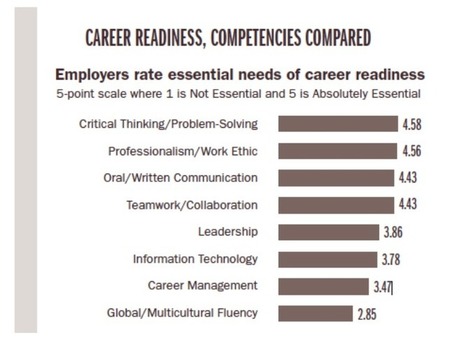
Today’s global employers are searching for employees that have specific skills. Those skills may not be the same needed in 10 years though. In 2009, the US Department of Labor estimated 65% of today’s school children would eventually be employed in jobs that have yet to be created. The number is far higher today. The influx of technology is what has changed the shape of education forever. For this reason, schools must create opportunities for students to engage in higher level thinking skills and experience 21st century skills while using technology.


Learn more / En savoir plus / Mehr erfahren:


http://www.scoop.it/t/21st-century-learning-and-teaching/?&tag=Hybrid-Learning


http://www.scoop.it/t/21st-century-learning-and-teaching/?&tag=Blended+Learning...


http://www.scoop.it/t/21st-century-learning-and-teaching/?&tag=Hybrid+Pedagogy


http://www.scoop.it/t/21st-century-learning-and-teaching?tag=Critical-Thinking


https://gustmees.wordpress.com/2015/05/26/what-are-the-skills-needed-from-students-in-the-future/


Via Nik Peachey
Gust MEES's insight:


Today’s global employers are searching for employees that have specific skills. Those skills may not be the same needed in 10 years though. In 2009, the US Department of Labor estimated 65% of today’s school children would eventually be employed in jobs that have yet to be created. The number is far higher today. The influx of technology is what has changed the shape of education forever. For this reason, schools must create opportunities for students to engage in higher level thinking skills and experience 21st century skills while using technology.


Learn more / En savoir plus / Mehr erfahren:


http://www.scoop.it/t/21st-century-learning-and-teaching/?&tag=Hybrid-Learning


http://www.scoop.it/t/21st-century-learning-and-teaching/?&tag=Blended+Learning...


http://www.scoop.it/t/21st-century-learning-and-teaching/?&tag=Hybrid+Pedagogy


http://www.scoop.it/t/21st-century-learning-and-teaching?tag=Critical-Thinking


https://gustmees.wordpress.com/2015/05/26/what-are-the-skills-needed-from-students-in-the-future/


Nik Peachey's curator insight, June 19, 2017 2:32 AM

Good to see critical thinking so high up the list.

Scooped by Gust MEES
June 17, 2017 8:55 AM
Scoop.it!

What is Self-Management? | #Innovation

What is Self-Management? | #Innovation | 21st Century Learning and Teaching | Scoop.it

Self-Management is an alternative to the traditional, hierarchical method of organizing we see most often in modern organizations. There are a few key ideas that are central to the Self-Management philosophy, namely that:

People are generally happier when they have control over their own life (and work) It doesn't make a lot of sense to give the decision-making authority to the person that furthest (literally) away from the actual work being done.


When you give good people more responsibility, they tend to flourish


The traditional hierarchical model of organizations is not scalable—in fact, it's a recipe for a slow painful death


There's an undeniable link between freedom and economic prosperity in nations around the world—and, further, an undeniable link between lack of freedom and corruption at the national level.


The same is true of human organizations in general.


Learn more / En savoir plus / Mehr erfahren:


http://www.scoop.it/t/21st-century-learning-and-teaching/?&tag=Management


Gust MEES's insight:

Self-Management is an alternative to the traditional, hierarchical method of organizing we see most often in modern organizations. There are a few key ideas that are central to the Self-Management philosophy, namely that:

People are generally happier when they have control over their own life (and work) It doesn't make a lot of sense to give the decision-making authority to the person that furthest (literally) away from the actual work being done.


When you give good people more responsibility, they tend to flourish


The traditional hierarchical model of organizations is not scalable—in fact, it's a recipe for a slow painful death


There's an undeniable link between freedom and economic prosperity in nations around the world—and, further, an undeniable link between lack of freedom and corruption at the national level.


The same is true of human organizations in general.


Learn more / En savoir plus / Mehr erfahren:


http://www.scoop.it/t/21st-century-learning-and-teaching/?&tag=Management


Ian Berry's curator insight, June 17, 2017 10:45 PM
Worth a read What was once organisation now individual I label in self-leadership so as not to confuse it with 21st century management Search management on my blog for more about this http://blog.ianberry.biz/
Scooped by Gust MEES
June 11, 2017 5:44 PM
Scoop.it!

Are We Over-Concerned About Fairness? | #GrowthMindset #LEADERship 

Are We Over-Concerned About Fairness? | #GrowthMindset #LEADERship  | 21st Century Learning and Teaching | Scoop.it

Bigger issues:

#1. Unfairness is necessary. Giving second chances, for example, isn’t fair to those who perform on schedule and within expectation. But, not giving second chances is cruel.

#2. Fairness is merciless. Mercy is not getting what you deserve. In other words, mercy isn’t fair.

#3. Equal opportunity must include reward or lack of reward. Those who seize opportunities earn reward. Those who don’t seize opportunities don’t earn reward. It’s important to note that it’s not necessary to punish those who don’t seize opportunity.

Rewarding teams always includes some unfairness.

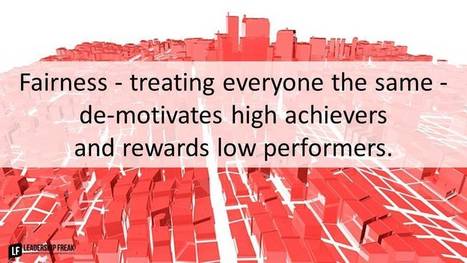
#4. Fairness – treating everyone the same – de-motivates high achievers and rewards low performers.

#5. Fairness, when it means everyone is treated the same, promotes inaction. If you can’t be do something for everyone then you can’t do it for anyone. The result is you don’t do much.


Learn more / En savoir plus / Mehr erfahren:


http://www.scoop.it/t/21st-century-learning-and-teaching/?&tag=Counterfeit+Leadership


http://www.scoop.it/t/21st-century-learning-and-teaching/?&tag=Growth+Mindset


Gust MEES's insight:

Bigger issues:

#1. Unfairness is necessary. Giving second chances, for example, isn’t fair to those who perform on schedule and within expectation. But, not giving second chances is cruel.

#2. Fairness is merciless. Mercy is not getting what you deserve. In other words, mercy isn’t fair.

#3. Equal opportunity must include reward or lack of reward. Those who seize opportunities earn reward. Those who don’t seize opportunities don’t earn reward. It’s important to note that it’s not necessary to punish those who don’t seize opportunity.

Rewarding teams always includes some unfairness.

#4. Fairness – treating everyone the same – de-motivates high achievers and rewards low performers.

#5. Fairness, when it means everyone is treated the same, promotes inaction. If you can’t be do something for everyone then you can’t do it for anyone. The result is you don’t do much.


Learn more / En savoir plus / Mehr erfahren:


http://www.scoop.it/t/21st-century-learning-and-teaching/?&tag=Counterfeit+Leadership


http://www.scoop.it/t/21st-century-learning-and-teaching/?&tag=Growth+Mindset


Koen Mattheeuws's curator insight, June 13, 2017 4:49 AM
Tijdens de vele pittige gesprekken met leerkrachten over evalueren ging het al heel vaak over gelijkheid en eerlijkheid. Op zo'n momenten brak ik al vaak een lans voor billijkheid. Dit artikel komt mij bij een volgende gelijkaardige discussie goed van pas. 
Scooped by Gust MEES
June 7, 2017 2:22 PM
Scoop.it!

Effective Teacher Professional Development | #pdf | #ModernEDU #Coaching #Mentoring

Effective Teacher Professional Development | #pdf | #ModernEDU #Coaching #Mentoring | 21st Century Learning and Teaching | Scoop.it

Teacher professional learning is of increasing interest as one way to support the increasingly complex skills students need to learn in preparation for further education and work in the 21st century. Sophisticated forms of teaching are needed to develop student competencies such as deep mastery of challenging content, critical thinking, complex problem-solving,


effective communication and collaboration, and self-direction. In turn, effective professional development (PD) is needed to help teachers learn and refine the pedagogies required to teach these skills. However, research has shown that many PD initiatives appear ineffective in supporting changes in teacher practices and student learning. Accordingly, we set out to discover the features of effective PD.


This paper reviews 35 methodologically rigorous studies that have demonstrated a positive link between teacher professional development, teaching practices, and student outcomes. We identify the features of these approaches and offer rich  descriptions of these models to inform those seeking to understand the nature of the initiatives.


Learn more / En savoir plus / Mehr erfahren:


https://gustmees.wordpress.com/?s=coaching


https://gustmees.wordpress.com/?s=professional+development


Gust MEES's insight:

Teacher professional learning is of increasing interest as one way to support the increasingly complex skills students need to learn in preparation for further education and work in the 21st century. Sophisticated forms of teaching are needed to develop student competencies such as deep mastery of challenging content, critical thinking, complex problem-solving,


effective communication and collaboration, and self-direction. In turn, effective professional development (PD) is needed to help teachers learn and refine the pedagogies required to teach these skills. However, research has shown that many PD initiatives appear ineffective in supporting changes in teacher practices and student learning. Accordingly, we set out to discover the features of effective PD.


This paper reviews 35 methodologically rigorous studies that have demonstrated a positive link between teacher professional development, teaching practices, and student outcomes. We identify the features of these approaches and offer rich  descriptions of these models to inform those seeking to understand the nature of the initiatives.


Learn more / En savoir plus / Mehr erfahren:


https://gustmees.wordpress.com/?s=coaching


https://gustmees.wordpress.com/?s=professional+development


Rosemary Tyrrell, Ed.D.'s curator insight, June 8, 2017 10:59 AM
A must-read for anyone interested in faculty professional development
 
Scooped by Gust MEES
May 29, 2017 3:41 AM
Scoop.it!

Get the free Official Geocaching app and join the world's largest treasure hunt.

Get the free Official Geocaching app and join the world's largest treasure hunt. | 21st Century Learning and Teaching | Scoop.it
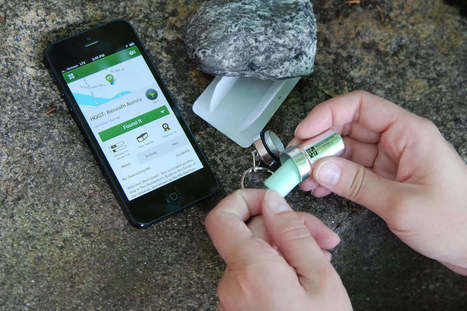
Geocaching is a treasure hunting game where you use a GPS to hide and seek containers with other participants in the activity. Geocaching.com is the listing service for geocaches around the world.


Learn more / En savoir plus / Mehr erfahren:


http://www.scoop.it/t/21st-century-learning-and-teaching/?&tag=GeoCaching


Gust MEES's insight:
Geocaching is a treasure hunting game where you use a GPS to hide and seek containers with other participants in the activity. Geocaching.com is the listing service for geocaches around the world.


Learn more / En savoir plus / Mehr erfahren:


http://www.scoop.it/t/21st-century-learning-and-teaching/?&tag=GeoCaching


No comment yet.