21st Century Learning and Teaching
751.6K views | +13 today
Follow
21st Century Learning and Teaching
Related articles to 21st Century Learning and Teaching as also tools...
Curated by Gust MEES
Your new post is loading...

Popular Tags

Current selected tag: 'Education 3.0'. Clear
Scooped by Gust MEES
July 30, 2017 9:29 AM
Scoop.it!

7 Reasons To Use Social Media In Your School (INFOGRAPHIC) | #ModernEDU

7 Reasons To Use Social Media In Your School (INFOGRAPHIC) | #ModernEDU | 21st Century Learning and Teaching | Scoop.it

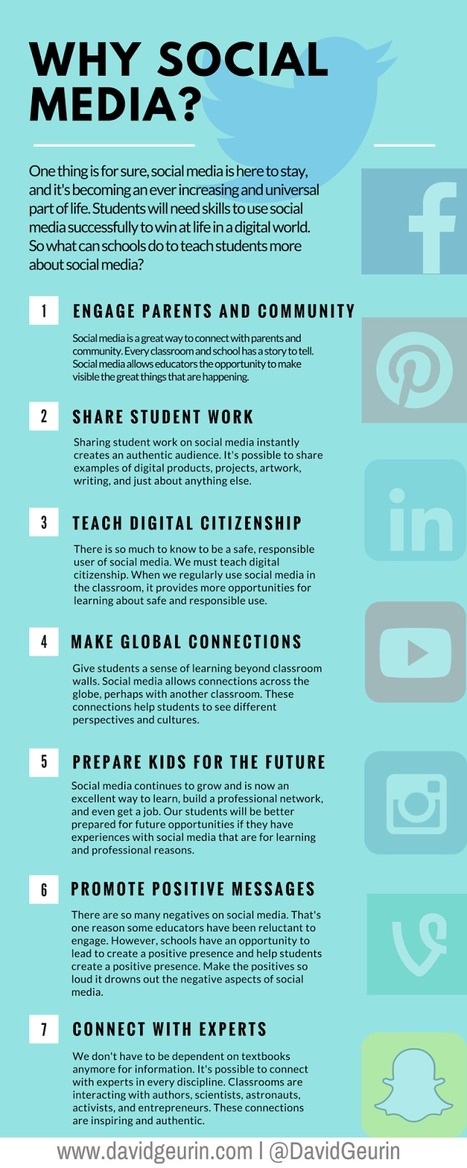
One thing is for sure, social media is here to stay. Never before have people been able to connect, share, and learn from one another as we do now. I can only imagine what might be next! As a result, our students need skills to win at life in a digital world. The ability to use social media to support life goals and possibilities can be a game-changer. I know it has been very powerful for me in my professional life.


Learn more / En savoir plus / Mehr erfahren:


http://www.scoop.it/t/21st-century-learning-and-teaching/?&tag=Social+Media


http://www.scoop.it/t/social-media-and-its-influence


Gust MEES's insight:

One thing is for sure, social media is here to stay. Never before have people been able to connect, share, and learn from one another as we do now. I can only imagine what might be next! As a result, our students need skills to win at life in a digital world. The ability to use social media to support life goals and possibilities can be a game-changer. I know it has been very powerful for me in my professional life.


Learn more / En savoir plus / Mehr erfahren:


http://www.scoop.it/t/21st-century-learning-and-teaching/?&tag=Social+Media


http://www.scoop.it/t/social-media-and-its-influence


Rosemarri Klamn's curator insight, July 31, 2017 7:56 AM

These are compelling reasons to practice social media in schools as it helps engage parents, the community, and the world.  Teaching digital citizenship is another key aspect of responsible use of social media for students and parents!

La French witch's curator insight, August 13, 2017 9:24 PM
7 bonnes raisons d'utiliser les médias sociaux dans ses pratiques d'enseignement, pour une expérience d'apprentissage alliant l'engagement, le partage, le lien entre les acteurs de l'apprentissage, l'ouverture au monde et l'exploitation stratégique (après un tri sélectif) de tout ce que le numérique a de mieux à offrir à l’apprenant. Pour une expérience d'apprentissage stimulante, interactive et moderne, oui au multimédia dans l'enseignement ! 
Diamond Garcia's curator insight, May 14, 2024 7:28 PM
Although this was published almost 10 years ago, the information found in this article still remains true. With social media continuing to be on the rise, it is time that we embrace it. I really enjoy the idea of utilizing social media to connect with experts rather than depend on textbooks (point #7). 
Rescooped by Gust MEES from Learning & Mind & Brain
July 28, 2017 12:35 PM
Scoop.it!

Growth Mindset: A Driving Philosophy, Not Just a Tool

Growth Mindset: A Driving Philosophy, Not Just a Tool | 21st Century Learning and Teaching | Scoop.it
It's important to recognize that a growth mindset is an overall paradigm for personal development rather than a pedagogical tool for measuring academic accomplishment.


5 Growth Mindset Practices

In their groundbreaking book, Professional Learning Communities at Work, Richard DuFour and Robert Eaker say it clearly when pointing out the issue that comes about when change initiatives are considered "a task to complete rather than an ongoing process." If we really want to improve our schools, our work, and the education of our students, we can do so by adopting a new mindset -- for everyone -- that would include:

  1. Being humble enough to accept that there are things about ourselves and our practices that can improve
  2. Becoming part of professional teams that value constructive critique instead of criticism
  3. Treating setbacks as formative struggles within the learning process instead of summative failures
  4. Realizing the restrictive role that timelines can play in reaching high standards, and using foundational philosophies such as Universal Design for Learning (UDL) to map systems so that everyone's growth is supported
  5. Create flexible grouping at all times so that nobody's trapped in any one course level or particular type of work.


Learn more / En savoir plus / Mehr erfahren:


http://www.scoop.it/t/21st-century-learning-and-teaching/?&tag=Growth+Mindset


Via Ana Cristina Pratas, Miloš Bajčetić
Gust MEES's insight:
It's important to recognize that a growth mindset is an overall paradigm for personal development rather than a pedagogical tool for measuring academic accomplishment.


5 Growth Mindset Practices

In their groundbreaking book, Professional Learning Communities at Work, Richard DuFour and Robert Eaker say it clearly when pointing out the issue that comes about when change initiatives are considered "a task to complete rather than an ongoing process." If we really want to improve our schools, our work, and the education of our students, we can do so by adopting a new mindset -- for everyone -- that would include:


  1. Being humble enough to accept that there are things about ourselves and our practices that can improve
  2. Becoming part of professional teams that value constructive critique instead of criticism
  3. Treating setbacks as formative struggles within the learning process instead of summative failures
  4. Realizing the restrictive role that timelines can play in reaching high standards, and using foundational philosophies such as Universal Design for Learning (UDL) to map systems so that everyone's growth is supported
  5. Create flexible grouping at all times so that nobody's trapped in any one course level or particular type of work.


Learn more / En savoir plus / Mehr erfahren:


http://www.scoop.it/t/21st-century-learning-and-teaching/?&tag=Growth+Mindset


Dr. Deborah Brennan's curator insight, July 28, 2017 6:43 PM
Growth mindset applies not just to students, but to teachers and administrators as well.  We must support all individuals as they develop and grow.
Tina Jameson's curator insight, August 3, 2017 6:47 PM
An interesting read - worth reflecting on what we mean by a 'growth mindset'.
Scooped by Gust MEES
July 23, 2017 4:39 PM
Scoop.it!

The First Transistor (Teaching Model): 9 Steps (with Pictures) | #MakerED #Electronics

The First Transistor (Teaching Model): 9 Steps (with Pictures) | #MakerED #Electronics | 21st Century Learning and Teaching | Scoop.it
Didactic model of the "first transistor".In this project the models such as constructing a didactic model of the first transistor for which I made use of the materials that can be easily obtained, in addition to a little painting, the prototype / model I did on a scale a little larger than the original.


But from before, a bit of history.It all started at Bell Labs, where American physicists Jhon Bardeen, Walter Houser Brattain, and William Shockley conducted experiments and observations to try to create a solid-state amplifier, making use of the properties of semiconductor materials, thus replacing the Vacuum used at that time.The above image shows the first transistor created at Bell Labs in Murray Hill, New Jersey, United States in 1947.


Its inventors won the Nobel Prize in Physics in 1956 for "their research on semiconductors, and the discovery of the transistor effect." Now we continue with the instructions...


Learn more / En savoir plus / Mehr erfahren:


https://en.wikipedia.org/wiki/Transistor


http://www.scoop.it/t/21st-century-learning-and-teaching/?&tag=makered


Gust MEES's insight:
Didactic model of the "first transistor".In this project the models such as constructing a didactic model of the first transistor for which I made use of the materials that can be easily obtained, in addition to a little painting, the prototype / model I did on a scale a little larger than the original.


But from before, a bit of history.It all started at Bell Labs, where American physicists Jhon Bardeen, Walter Houser Brattain, and William Shockley conducted experiments and observations to try to create a solid-state amplifier, making use of the properties of semiconductor materials, thus replacing the Vacuum used at that time.The above image shows the first transistor created at Bell Labs in Murray Hill, New Jersey, United States in 1947.


Its inventors won the Nobel Prize in Physics in 1956 for "their research on semiconductors, and the discovery of the transistor effect." Now we continue with the instructions...


Learn more / En savoir plus / Mehr erfahren:


https://en.wikipedia.org/wiki/Transistor


http://www.scoop.it/t/21st-century-learning-and-teaching/?&tag=makered


No comment yet.
Scooped by Gust MEES
July 14, 2017 10:00 AM
Scoop.it!

FIRST Global | International robotics challenge to ignite a passion for  STEM

FIRST Global | International robotics challenge to ignite a passion for  STEM | 21st Century Learning and Teaching | Scoop.it
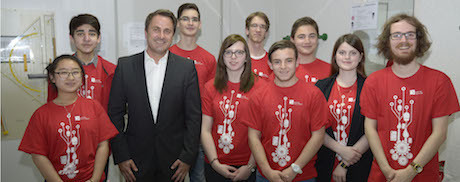
FIRST Global organizes a yearly international robotics challenge to ignite a passion for Science, Technology, Engineering, and Mathematics (STEM) among the more than two billion youths across the world.


The not-for-profit public charity provides the framework for an “olympics”-style robotics challenge where one team from every nation is invited to participate in a global robotics event that builds bridges between high school students with different backgrounds, languages, religions, and customs.


By bringing these future STEM leaders together in an engaging and collaborative competition that drives home the importance, excitement, and applicability of STEM education, FIRST Global inspires students to learn the skills they will need to make the discoveries their parents and grandparents would consider miracles, impossibilities, or just plain science fiction.


Learn more / En savoir plus / Mehr erfahren:


http://www.scoop.it/t/luxembourg-europe/?&tag=First+Global+Challenge+2017


Gust MEES's insight:
FIRST Global organizes a yearly international robotics challenge to ignite a passion for Science, Technology, Engineering, and Mathematics (STEM) among the more than two billion youths across the world.


The not-for-profit public charity provides the framework for an “olympics”-style robotics challenge where one team from every nation is invited to participate in a global robotics event that builds bridges between high school students with different backgrounds, languages, religions, and customs.


By bringing these future STEM leaders together in an engaging and collaborative competition that drives home the importance, excitement, and applicability of STEM education, FIRST Global inspires students to learn the skills they will need to make the discoveries their parents and grandparents would consider miracles, impossibilities, or just plain science fiction.


Learn more / En savoir plus / Mehr erfahren:


http://www.scoop.it/t/luxembourg-europe/?&tag=First+Global+Challenge+2017


No comment yet.
Rescooped by Gust MEES from Business Improvement
July 13, 2017 9:48 AM
Scoop.it!

10 Social Media Marketing Mistakes And How to Avoid Making Them

10 Social Media Marketing Mistakes And How to Avoid Making Them | 21st Century Learning and Teaching | Scoop.it
We've committed many social media mistakes that have cost us reach, engagement, fans, and customers! Here's what we've learned and how you can avoid them.


Let’s get started…


Learn from These 10 Social Media Mistakes We’ve Made

Here’s a quick overview of the social media mistakes we’ve been making until recently:

  1. Focusing on quantity over quality
  2. Being on all social media platforms
  3. Posting the same content across platforms
  4. Using only landscape images and videos
  5. Sharing only our own content
  6. Not curating user-generated content
  7. Not uploading videos to social media platforms
  8. Not targeting specific audience for our content
  9. Not boosting the right posts
  10. Not replying to questions on social (fast enough)


Learn more / En savoir plus / Mehr erfahren:


http://www.scoop.it/t/21st-century-learning-and-teaching/?&tag=Marketing


Via Daniel Watson
Gust MEES's insight:
We've committed many social media mistakes that have cost us reach, engagement, fans, and customers! Here's what we've learned and how you can avoid them.


Let’s get started…


Learn from These 10 Social Media Mistakes We’ve Made

Here’s a quick overview of the social media mistakes we’ve been making until recently:

  1. Focusing on quantity over quality
  2. Being on all social media platforms
  3. Posting the same content across platforms
  4. Using only landscape images and videos
  5. Sharing only our own content
  6. Not curating user-generated content
  7. Not uploading videos to social media platforms
  8. Not targeting specific audience for our content
  9. Not boosting the right posts
  10. Not replying to questions on social (fast enough)


Learn more / En savoir plus / Mehr erfahren:


http://www.scoop.it/t/21st-century-learning-and-teaching/?&tag=Marketing


No comment yet.
Scooped by Gust MEES
July 6, 2017 11:03 AM
Scoop.it!

WHY is Proactive-Thinking IMPORTANT and a MUST in Modern-Education with and about ICT!?

WHY is Proactive-Thinking IMPORTANT and a MUST in Modern-Education with and about ICT!? | 21st Century Learning and Teaching | Scoop.it

WHY is Proactive-Thinking IMPORTANT and a MUST in Modern-Education with and about ICT!? In the last twenty (20) years Technology has changed a lot; with the internet and the use of ICT by nearly everybody around the world... ICT is present everywhere, nearly anybody is using smartphones, the internet, Social-Media and in the…


Learn more / En savoir plus / Mehr erfahren:


https://gustmees.wordpress.com/2015/03/07/facts-to-convince-someone-for-the-must-of-learning-basics-of-cybersecurity-digital-citizenship/


https://gustmees.wordpress.com/2013/12/21/privacy-in-the-digital-world-shouldnt-we-talk-about-it/


https://globaleducationandsocialmedia.wordpress.com/2014/01/21/why-is-it-a-must-to-have-basics-knowledge-of-cyber-security-in-a-connected-technology-world/


Gust MEES's insight:

WHY is Proactive-Thinking IMPORTANT and a MUST in Modern-Education with and about ICT!? In the last twenty (20) years Technology has changed a lot; with the internet and the use of ICT by nearly everybody around the world... ICT is present everywhere, nearly anybody is using smartphones, the internet, Social-Media and in the…


Learn more / En savoir plus / Mehr erfahren:


https://gustmees.wordpress.com/2015/03/07/facts-to-convince-someone-for-the-must-of-learning-basics-of-cybersecurity-digital-citizenship/


https://gustmees.wordpress.com/2013/12/21/privacy-in-the-digital-world-shouldnt-we-talk-about-it/


https://globaleducationandsocialmedia.wordpress.com/2014/01/21/why-is-it-a-must-to-have-basics-knowledge-of-cyber-security-in-a-connected-technology-world/


No comment yet.
Scooped by Gust MEES
July 3, 2017 8:44 AM
Scoop.it!

Preparing our children for life-long learning | #LEARNing2LEARN #ModernEDU

Preparing our children for life-long learning | #LEARNing2LEARN #ModernEDU | 21st Century Learning and Teaching | Scoop.it
The profound changes ahead demand an education approach that lifts the proficiency of all students.

What might this take? 

If future adults will need to reinvent themselves and constantly adapt to change, then education will need to focus even more on learning how to learn as well as what to learn.

A theme emerging from our investigations is that some of the key skills and attributes of the future are not necessarily the ones that we directly measure in our major assessments.

We are good at assessing literacy and numeracy skills and students' depth of content knowledge in core subjects. These will continue to be critical. But what of broader skills such as resilience, that idea of the growth mindset, the capacity to fail and try again, to persevere?

Do we know enough about the most effective teaching practices, the tools and resources schools need to nurture them and how best to assess their attainment?


Learn more / En savoir plus / Mehr erfahren:


https://gustmees.wordpress.com/2016/02/18/the-new-possibilities-to-learn-and-teach-with-ict/


https://gustmees.wordpress.com/2015/08/01/21st-century-education-is-learning-to-learn-for-life-long-learning-and-nothing-else-matters/


Gust MEES's insight:
The profound changes ahead demand an education approach that lifts the proficiency of all students.

What might this take? 

If future adults will need to reinvent themselves and constantly adapt to change, then education will need to focus even more on learning how to learn as well as what to learn.

A theme emerging from our investigations is that some of the key skills and attributes of the future are not necessarily the ones that we directly measure in our major assessments.

We are good at assessing literacy and numeracy skills and students' depth of content knowledge in core subjects. These will continue to be critical. But what of broader skills such as resilience, that idea of the growth mindset, the capacity to fail and try again, to persevere?

Do we know enough about the most effective teaching practices, the tools and resources schools need to nurture them and how best to assess their attainment?


Learn more / En savoir plus / Mehr erfahren:


https://gustmees.wordpress.com/2016/02/18/the-new-possibilities-to-learn-and-teach-with-ict/


https://gustmees.wordpress.com/2015/08/01/21st-century-education-is-learning-to-learn-for-life-long-learning-and-nothing-else-matters/


Rosemarri Klamn's curator insight, July 3, 2017 2:38 PM
As Gust MEES notes in his blog: “We are good at assessing literacy and numeracy skills and students' depth of content knowledge in core subjects. These will continue to be critical. But what of broader skills such as resilience, that idea of the growth mindset, the capacity to fail and try again, to persevere? Do we know enough about the most effective teaching practices, the tools and resources schools need to nurture them and how best to assess their attainment?”

Gust raises good questions about teaching students to learn. There are a variety of complex and simple policies and practices to answer these questions. One strategy is incorporating universal design for learning (UDL) principles into learning strategies: this helps meet the needs of a variety of learners. UDL researchers promote the concept of developing expert learners; author Katie Novak blogs about expert learners at:

Katie Novak. (2016, July 18). UDL, Expert Learners, and the 36-Ton Machine. Retrieved from: http://katienovakudl.com/udl-expert-learners-and-the-36-ton-machine/

National Center for Universal Design for Learning (NCUDL). (2012). UDL and Expert Learners. Retrieved from: http://www.udlcenter.org/aboutudl/expertlearners

Scooped by Gust MEES
June 24, 2017 3:42 PM
Scoop.it!

Sir Ken Robinson: Finding Market Pressures To Innovate Education | #ModernEDU #Innovation

Sir Ken Robinson: Finding Market Pressures To Innovate Education | #ModernEDU #Innovation | 21st Century Learning and Teaching | Scoop.it
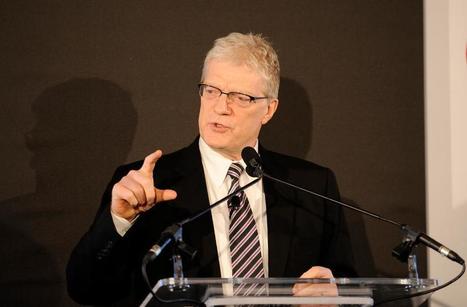
I never say that in criticism of teachers or of school principals or even of superintendents. That's something in the culture ─ at least, the political culture ─ of education. There is pressure on the system that gets in the way of what people most urgently need to do in schools to make them more humane and more personal places. There's really a lot more room for innovation in schools than people suspect. A lot of what goes on isn’t required by law; it's more a function of habit and tradition and routine than anything else.”

This habit of tradition and routine is exactly why education has remained woefully behind the times. In the business of education, we don’t have the usual market pressures that require innovation. Public education is a monopoly with no real competition to require forward movement.


Learn more / En savoir plus / Mehr erfahren:


http://www.scoop.it/t/21st-century-learning-and-teaching/?&tag=Sir-Ken-Robinson


Gust MEES's insight:
I never say that in criticism of teachers or of school principals or even of superintendents. That's something in the culture ─ at least, the political culture ─ of education. There is pressure on the system that gets in the way of what people most urgently need to do in schools to make them more humane and more personal places. There's really a lot more room for innovation in schools than people suspect. A lot of what goes on isn’t required by law; it's more a function of habit and tradition and routine than anything else.”

This habit of tradition and routine is exactly why education has remained woefully behind the times. In the business of education, we don’t have the usual market pressures that require innovation. Public education is a monopoly with no real competition to require forward movement.


Learn more / En savoir plus / Mehr erfahren:


http://www.scoop.it/t/21st-century-learning-and-teaching/?&tag=Sir-Ken-Robinson


No comment yet.
Scooped by Gust MEES
June 15, 2017 6:48 AM
Scoop.it!

Creative People Literally See the World Differently, Mind-Blowing Research Shows | #Creativity

Creative people aren't just different because of the surprising and valuable work they produce. Nor is exceptional creativity all a matter of personality. The differences between the creatively gifted and the rest of us apparently go even deeper, according to mind-blowing recent research.

In fact, creative people actually see the world differently, according to a fascinating recent post on The Conversation by two Australian psychologists.


Learn more / En savoir plus / Mehr erfahren:


https://gustmees.wordpress.com/?s=creativity


http://www.scoop.it/t/21st-century-learning-and-teaching/?&tag=Creativity


Gust MEES's insight:
Creative people aren't just different because of the surprising and valuable work they produce. Nor is exceptional creativity all a matter of personality. The differences between the creatively gifted and the rest of us apparently go even deeper, according to mind-blowing recent research.

In fact, creative people actually see the world differently, according to a fascinating recent post on The Conversation by two Australian psychologists.


Learn more / En savoir plus / Mehr erfahren:


https://gustmees.wordpress.com/?s=creativity


http://www.scoop.it/t/21st-century-learning-and-teaching/?&tag=Creativity


No comment yet.
Scooped by Gust MEES
June 9, 2017 12:34 PM
Scoop.it!

Make a TOR Access Point with Raspberry Pi #piday #raspberrypi @Raspberry_Pi | #Coding

Make a TOR Access Point with Raspberry Pi #piday #raspberrypi @Raspberry_Pi | #Coding | 21st Century Learning and Teaching | Scoop.it
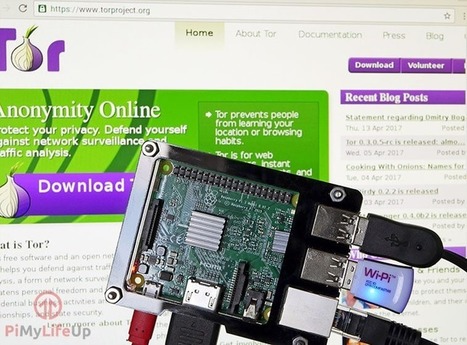
From Pi My Life Up: In this tutorial we will be going through the steps on how to setup a basic Raspberry Pi TOR Access Point. Before you get started with this tutorial you must of already complete…


Learn more / En savoir plus / Mehr erfahren:


http://www.scoop.it/t/21st-century-learning-and-teaching/?&tag=Raspberry+Pi


http://www.scoop.it/t/securite-pc-et-internet/?&tag=Raspberry+PI


Gust MEES's insight:
From Pi My Life Up: In this tutorial we will be going through the steps on how to setup a basic Raspberry Pi TOR Access Point. Before you get started with this tutorial you must of already complete…


Learn more / En savoir plus / Mehr erfahren:


http://www.scoop.it/t/21st-century-learning-and-teaching/?&tag=Raspberry+Pi


http://www.scoop.it/t/securite-pc-et-internet/?&tag=Raspberry+PI


No comment yet.
Rescooped by Gust MEES from Learning & Technology News
June 9, 2017 8:04 AM
Scoop.it!

Today, Kids Need To Learn More Than Facts, But To Solve Problems And Innovate

Today, Kids Need To Learn More Than Facts, But To Solve Problems And Innovate | 21st Century Learning and Teaching | Scoop.it

Traditionally, we went to school to attain knowledge. The smart kids knew that Columbus discovered America in 1492 and that the square root of 64 is eight. They studied diligently at home so that when the teacher asked a question they could shoot their hand up and be praised for their good work.


Today, however, teenagers carry far more information and computing power in their pockets than would ever fit in their heads. So the ability to retain knowledge and manipulate numbers with facility has become, to a large extent, outdated skills. So kids today need to learn how to understand systems and solve problems.


Fortunately, there are an increasing number of programs that are designed to do just that. At the college level, programs like Stanford's d.school teach design thinking and entrepreneurship classes have become standard in business school curriculums. More recently, a wide variety of secondary school level programs have begun to take hold and are giving students a leg up.


Learn more / En savoir plus / Mehr erfahren:


https://gustmees.wordpress.com/2014/10/03/design-the-learning-of-your-learners-students-ideas/


https://gustmees.wordpress.com/2015/07/19/learning-path-for-professional-21st-century-learning-by-ict-practice/


Via Nik Peachey
Gust MEES's insight:

Traditionally, we went to school to attain knowledge. The smart kids knew that Columbus discovered America in 1492 and that the square root of 64 is eight. They studied diligently at home so that when the teacher asked a question they could shoot their hand up and be praised for their good work.


Today, however, teenagers carry far more information and computing power in their pockets than would ever fit in their heads. So the ability to retain knowledge and manipulate numbers with facility has become, to a large extent, outdated skills. So kids today need to learn how to understand systems and solve problems.


Fortunately, there are an increasing number of programs that are designed to do just that. At the college level, programs like Stanford's d.school teach design thinking and entrepreneurship classes have become standard in business school curriculums. More recently, a wide variety of secondary school level programs have begun to take hold and are giving students a leg up.


Learn more / En savoir plus / Mehr erfahren:


https://gustmees.wordpress.com/2014/10/03/design-the-learning-of-your-learners-students-ideas/


https://gustmees.wordpress.com/2015/07/19/learning-path-for-professional-21st-century-learning-by-ict-practice/


Tiffany Wheatley's curator insight, May 30, 2017 1:19 AM
An interesting take on what education should look like today compared to what it used to be. Technology is definitely a key part in the future and the more exposure students have to it now the better prepared they will be.
Kevin Morrison's curator insight, May 30, 2017 11:11 AM
One critical component of this that was not included it to know if the source of the facts they get is trustworthy. More and more what was once a trusted source of information leaves a lot out, or skews the facts making it difficult if not impossible get to the truth!
Barbara Goebel's curator insight, June 6, 2017 11:45 AM
Frankly, this has always been the ultimate goal in the sciences, but the way-stations of memorized facts and processes have led to standard assessments that are low rigor and less than useful in determining student understanding. Let's model the heck out of our world and figure out some solutions!
Rescooped by Gust MEES from Data Science and Computational Thinking [inc Big Data and Internet of Things]
May 29, 2017 2:35 AM
Scoop.it!

People with creative personalities really do see the world differently | #Creativity 

People with creative personalities really do see the world differently | #Creativity  | 21st Century Learning and Teaching | Scoop.it

Our new research found that there are certain aspects of a person’s personality that can influence their creativity.


Psychologists often measure creativity using divergent thinking tasks. These require you to generate as many uses as possible for mundane objects, such as a brick. People who can see numerous and diverse uses for a brick (say, a coffin for a Barbie doll funeral diorama) are rated as more creative than people who can only think of a few common uses (say, for building a wall).


The aspect of our personality that appears to drive our creativity is called openness to experience, or openness. Among the five major personality traits, it is openness that best predicts performance on divergent thinking tasks. Openness also predicts real-world creative achievements, as well as engagement in everyday creative pursuits.


As Scott Barry Kaufman and Carolyn Gregoire explain in their book Wired to Create, the creativity of open people stems from a “drive for cognitive exploration of one’s inner and outer worlds”.


This curiosity to examine things from all angles may lead people high in openness to see more than the average person, or as another research team put it, to discover “complex possibilities laying dormant in so-called ‘familiar’ environments”.


Learn more / En savoir plus / Mehr erfahren:


http://www.scoop.it/t/21st-century-learning-and-teaching/?&tag=Creativity


https://gustmees.wordpress.com/?s=creativity


Via Kim Flintoff
Gust MEES's insight:

Our new research found that there are certain aspects of a person’s personality that can influence their creativity.


Psychologists often measure creativity using divergent thinking tasks. These require you to generate as many uses as possible for mundane objects, such as a brick. People who can see numerous and diverse uses for a brick (say, a coffin for a Barbie doll funeral diorama) are rated as more creative than people who can only think of a few common uses (say, for building a wall).


The aspect of our personality that appears to drive our creativity is called openness to experience, or openness. Among the five major personality traits, it is openness that best predicts performance on divergent thinking tasks. Openness also predicts real-world creative achievements, as well as engagement in everyday creative pursuits.


As Scott Barry Kaufman and Carolyn Gregoire explain in their book Wired to Create, the creativity of open people stems from a “drive for cognitive exploration of one’s inner and outer worlds”.


This curiosity to examine things from all angles may lead people high in openness to see more than the average person, or as another research team put it, to discover “complex possibilities laying dormant in so-called ‘familiar’ environments”.


Learn more / En savoir plus / Mehr erfahren:


http://www.scoop.it/t/21st-century-learning-and-teaching/?&tag=Creativity


https://gustmees.wordpress.com/?s=creativity


Paulette Dotson's curator insight, June 9, 2017 11:21 AM
Everyone interprets the world around us from their perspective.  Science says creative people see the world differently.
Scooped by Gust MEES
May 25, 2017 6:17 PM
Scoop.it!

100+ Makerspace Materials & Products w/ Supply List | #Maker #MakerED

100+ Makerspace Materials & Products w/ Supply List | #Maker #MakerED | 21st Century Learning and Teaching | Scoop.it
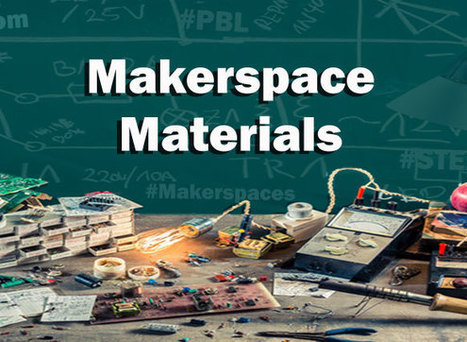
Makerspace Materials & Products. Great Idea Starters and a FREE Supply List. Perfect For Makerspaces or a MakerEd Program at Your School or Library.


Learn more / En savoir plus / Mehr erfahren:


https://gustmees.wordpress.com/2014/08/20/maker-space-a-new-trend-in-education-and-a-big-responsibility/


https://gustmees.wordpress.com/2017/02/09/9553/


http://www.scoop.it/t/21st-century-learning-and-teaching/?&tag=Ideas+for+makerspaces


Gust MEES's insight:
Makerspace Materials & Products. Great Idea Starters and a FREE Supply List. Perfect For Makerspaces or a MakerEd Program at Your School or Library.


Learn more / En savoir plus / Mehr erfahren:


https://gustmees.wordpress.com/2014/08/20/maker-space-a-new-trend-in-education-and-a-big-responsibility/


https://gustmees.wordpress.com/2017/02/09/9553/


http://www.scoop.it/t/21st-century-learning-and-teaching/?&tag=Ideas+for+makerspaces


Kim Auld's curator insight, May 25, 2017 8:07 PM
This is a great starting point for those schools that do not have a Makerspace at their school. 
 
Scooped by Gust MEES
July 28, 2017 12:57 PM
Scoop.it!

9 LED Knight Rider Circuit | LED Running Light | Led Chaser | #Maker #MakerED #MakerSpaces #Electronics

9 LED Knight Rider Circuit | LED Running Light | Led Chaser | #Maker #MakerED #MakerSpaces #Electronics | 21st Century Learning and Teaching | Scoop.it
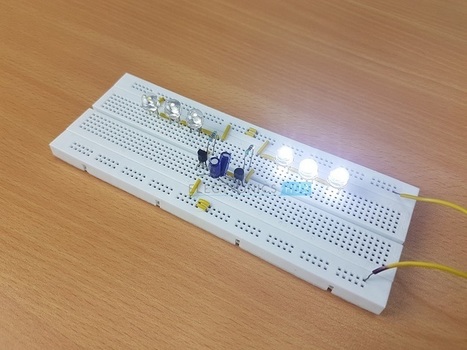
This is a simple circuit consists of 9 LED lights in knight rider scanner mode. Get the circuit diagram and working of this project completely in this post.


Learn more / En savoir plus / Mehr erfahren:

http://www.scoop.it/t/21st-century-learning-and-teaching/?&tag=electronics


Gust MEES's insight:
This is a simple circuit consists of 9 LED lights in knight rider scanner mode. Get the circuit diagram and working of this project completely in this post.


Learn more / En savoir plus / Mehr erfahren:

http://www.scoop.it/t/21st-century-learning-and-teaching/?&tag=electronics


wavysquares's comment, July 29, 2017 2:33 AM
thanks
Scooped by Gust MEES
July 23, 2017 8:52 PM
Scoop.it!

Efficiency - Wikipedia | #Quality #LEARNing2LEARN

Efficiency - Wikipedia

A common but confusing way of distinguishing between efficiency and effectiveness is the saying "Efficiency is doing things right, while effectiveness is doing the right things." This saying indirectly emphasizes that the selection of objectives of a production process is just as important as the quality of that process.

Efficiency is very often confused with effectiveness. In general, efficiency is a measurable concept, quantitatively determined by the ratio of useful output to total input. Effectiveness is the simpler concept of being able to achieve a desired result, which can be expressed quantitatively but doesn't usually require more complicated mathematics than addition.


Efficiency can often be expressed as a percentage of the result that could ideally be expected, for example if no energy were lost due to friction or other causes, in which case 100% of fuel or other input would be used to produce the desired result. This does not always apply, not even in all cases in which efficiency can be assigned a numerical value, e.g. not for specific impulse.


Learn more / En savoir plus / Mehr erfahren:


http://www.scoop.it/t/21st-century-learning-and-teaching/?&tag=efficient+competitive+intelligence


Gust MEES's insight:

Efficiency is very often confused with effectiveness. In general, efficiency is a measurable concept, quantitatively determined by the ratio of useful output to total input. Effectiveness is the simpler concept of being able to achieve a desired result, which can be expressed quantitatively but doesn't usually require more complicated mathematics than addition.


Efficiency can often be expressed as a percentage of the result that could ideally be expected, for example if no energy were lost due to friction or other causes, in which case 100% of fuel or other input would be used to produce the desired result. This does not always apply, not even in all cases in which efficiency can be assigned a numerical value, e.g. not for specific impulse.


Learn more / En savoir plus / Mehr erfahren:


http://www.scoop.it/t/21st-century-learning-and-teaching/?&tag=efficient+competitive+intelligence


No comment yet.
Rescooped by Gust MEES from Education, Curiosity, and Happiness
July 21, 2017 2:35 PM
Scoop.it!

Assessing Student Project Work | #ModernEDU #Rubrics 

Assessing Student Project Work | #ModernEDU #Rubrics  | 21st Century Learning and Teaching | Scoop.it
Project work challenges students to think beyond the boundaries of the classroom, helping them develop the skills, behaviors, and confidence necessary for success in the 21st-century. Designing learning environments that help students question, analyze, evaluate, and extrapolate their plans, conclusions, and ideas, leading them to higher–order thinking, requires feedback and evaluation that goes beyond a letter or number grade. The term “authentic assessment” is used to describe assessment that evaluates content knowledge as well as additional skills like creativity, collaboration, problem-solving, and innovation.

Authentic assessment documents the learning that occurs during the project-building process and considers the real-world skills of collaboration, problem solving, decision making, and communication. Since project work requires students to apply knowledge and skills throughout the project-building process, you will have many opportunities to assess work quality, understanding, and participation from the moment students begin working.


Learn more / En savoir plus / Mehr erfahren:


http://www.scoop.it/t/21st-century-learning-and-teaching/?&tag=rubric


https://www.themespark.net/rubric/545a3834a500ffef33dd248b


Via Jim Lerman, Ivon Prefontaine, PhD
Gust MEES's insight:
Project work challenges students to think beyond the boundaries of the classroom, helping them develop the skills, behaviors, and confidence necessary for success in the 21st-century. Designing learning environments that help students question, analyze, evaluate, and extrapolate their plans, conclusions, and ideas, leading them to higher–order thinking, requires feedback and evaluation that goes beyond a letter or number grade. The term “authentic assessment” is used to describe assessment that evaluates content knowledge as well as additional skills like creativity, collaboration, problem-solving, and innovation.

Authentic assessment documents the learning that occurs during the project-building process and considers the real-world skills of collaboration, problem solving, decision making, and communication. Since project work requires students to apply knowledge and skills throughout the project-building process, you will have many opportunities to assess work quality, understanding, and participation from the moment students begin working.


Learn more / En savoir plus / Mehr erfahren:


http://www.scoop.it/t/21st-century-learning-and-teaching/?&tag=rubric


https://www.themespark.net/rubric/545a3834a500ffef33dd248b


No comment yet.
Scooped by Gust MEES
July 12, 2017 9:16 AM
Scoop.it!

Exploring Curation as a core competency in digital and media literacy education  | #ModernEDU #LEARNing2LEARN

Exploring Curation as a core competency in digital and media literacy education  | #ModernEDU #LEARNing2LEARN | 21st Century Learning and Teaching | Scoop.it

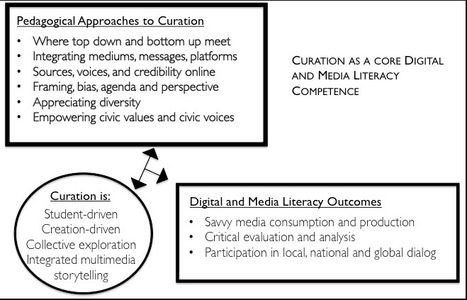
Article: Exploring Curation as a core competency in digital and media literacy education.


In today’s hypermedia landscape, youth and young adults are increasingly using social media platforms, online aggregators and mobile applications for daily information use. Communication educators, armed with a host of free, easy-to-use online tools, have the ability to create dynamic approaches to teaching and learning about information and communication flow online.


In this paper we explore the concept of curation as a student- and creation-driven pedagogical tool to enhance digital and media literacy education. We present a theoretical justification for curation and present six key ways that curation can be used to teach about critical thinking, analysis and expression online.


We utilize a case study of the digital curation platform Storify to explore how curation works in the classroom, and present a framework that integrates curation pedagogy into core media literacy education learning outcomes.


Learn more / En savoir plus / Mehr erfahren:


https://gustmees.wordpress.com/2013/04/25/learn-every-day-a-bit-with-curation/


http://blog.scoop.it/2011/11/30/lord-of-curation-series-gust-mees/


https://globaleducationandsocialmedia.wordpress.com/2014/01/19/pkm-personal-professional-knowledge-management/


http://www.scoop.it/t/21st-century-learning-and-teaching/?&tag=Curation


https://gustmees.wordpress.com/2015/05/13/andragogy-adult-teaching-how-to-teach-ict/


Gust MEES's insight:

Article: Exploring Curation as a core competency in digital and media literacy education.


In today’s hypermedia landscape, youth and young adults are increasingly using social media platforms, online aggregators and mobile applications for daily information use. Communication educators, armed with a host of free, easy-to-use online tools, have the ability to create dynamic approaches to teaching and learning about information and communication flow online.


In this paper we explore the concept of curation as a student- and creation-driven pedagogical tool to enhance digital and media literacy education. We present a theoretical justification for curation and present six key ways that curation can be used to teach about critical thinking, analysis and expression online.


We utilize a case study of the digital curation platform Storify to explore how curation works in the classroom, and present a framework that integrates curation pedagogy into core media literacy education learning outcomes.


Learn more / En savoir plus / Mehr erfahren:


https://gustmees.wordpress.com/2013/04/25/learn-every-day-a-bit-with-curation/


http://blog.scoop.it/2011/11/30/lord-of-curation-series-gust-mees/


https://globaleducationandsocialmedia.wordpress.com/2014/01/19/pkm-personal-professional-knowledge-management/


http://www.scoop.it/t/21st-century-learning-and-teaching/?&tag=Curation


https://gustmees.wordpress.com/2015/05/13/andragogy-adult-teaching-how-to-teach-ict/


Oskar Almazan's curator insight, July 12, 2017 9:39 AM
In today’s hypermedia landscape, youth and young adults are increasingly using social media platforms, online aggregators and mobile applications for daily information use. Communication educators, armed with a host of free, easy-to-use online tools, have the ability to create dynamic approaches to teaching and learning about information and communication flow online. In this paper we explore the concept of curation as a student- and creation-driven pedagogical tool to enhance digital and media literacy education. We present a theoretical justification for curation and present six key ways that curation can be used to teach about critical thinking, analysis and expression online. We utilize a case study of the digital curation platform Storify to explore how curation works in the classroom, and present a framework that integrates curation pedagogy into core media literacy education learning outcomes.
2
Rosemarri Klamn's curator insight, July 31, 2017 8:01 AM

This concept is new to me, although I have practiced this in different forms. It seems logical to utilize this pedagogical approach to curation for students, parents, and teachers alike. We are all learners in today's rapid pace in technological changes.

Scooped by Gust MEES
July 11, 2017 6:37 AM
Scoop.it!

What Is Differentiated Instruction? | #ModernEDU

What Is Differentiated Instruction? | #ModernEDU | 21st Century Learning and Teaching | Scoop.it
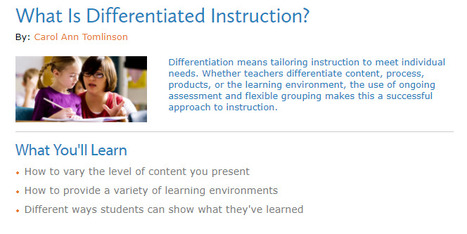
At its most basic level, differentiation consists of the efforts of teachers to respond to variance among learners in the classroom. Whenever a teacher reaches out to an individual or small group to vary his or her teaching in order to create the best learning experience possible, that teacher is differentiating instruction.

Teachers can differentiate at least four classroom elements based on student readiness, interest, or learning profile:
Content – what the student needs to learn or how the student will get access to the information;
Process – activities in which the student engages in order to make sense of or master the content;
Products – culminating projects that ask the student to rehearse, apply, and extend what he or she has learned in a unit; and
Learning environment – the way the classroom works and feels.


Learn more / En savoir plus / Mehr erfahren:


http://www.scoop.it/t/21st-century-learning-and-teaching/?&tag=Differenciated+Instruction


Gust MEES's insight:
At its most basic level, differentiation consists of the efforts of teachers to respond to variance among learners in the classroom. Whenever a teacher reaches out to an individual or small group to vary his or her teaching in order to create the best learning experience possible, that teacher is differentiating instruction.

Teachers can differentiate at least four classroom elements based on student readiness, interest, or learning profile:
Content – what the student needs to learn or how the student will get access to the information;
Process – activities in which the student engages in order to make sense of or master the content;
Products – culminating projects that ask the student to rehearse, apply, and extend what he or she has learned in a unit; and
Learning environment – the way the classroom works and feels.


Learn more / En savoir plus / Mehr erfahren:


http://www.scoop.it/t/21st-century-learning-and-teaching/?&tag=Differenciated+Instruction


No comment yet.
Scooped by Gust MEES
July 3, 2017 9:08 AM
Scoop.it!

The Classroom or Library as a Maker Space | #MakerED #ModernEDU

The Classroom or Library as a Maker Space | #MakerED #ModernEDU | 21st Century Learning and Teaching | Scoop.it
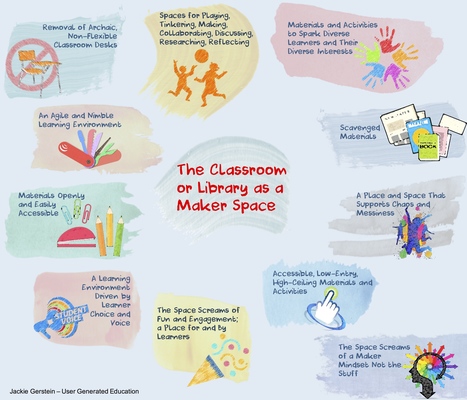
Makerspaces, Maker Education, STEM, and STEAM are gaining lots of traction in Kindergarten though college level education. Articles, resources on social media, and conference presentations on these topics are proliferating at a rate that most educators are now familiar with maker education.

Makerspaces like vocational shops and science labs are great additions to schools. They often contain the tools, machinery, and technologies associated with making – 3D printers, laser cutters, vinyl cutters, high tech robotics, vocational tech machinery. These are great for educational institutions and learners that can afford them.


Learn more / En savoir plus / Mehr erfahren:


https://gustmees.wordpress.com/2014/08/20/maker-space-a-new-trend-in-education-and-a-big-responsibility/


http://www.scoop.it/t/21st-century-learning-and-teaching/?&tag=makerspace


Gust MEES's insight:
Makerspaces, Maker Education, STEM, and STEAM are gaining lots of traction in Kindergarten though college level education. Articles, resources on social media, and conference presentations on these topics are proliferating at a rate that most educators are now familiar with maker education.

Makerspaces like vocational shops and science labs are great additions to schools. They often contain the tools, machinery, and technologies associated with making – 3D printers, laser cutters, vinyl cutters, high tech robotics, vocational tech machinery. These are great for educational institutions and learners that can afford them.


Learn more / En savoir plus / Mehr erfahren:


https://gustmees.wordpress.com/2014/08/20/maker-space-a-new-trend-in-education-and-a-big-responsibility/


http://www.scoop.it/t/21st-century-learning-and-teaching/?&tag=makerspace


Letyquiov's curator insight, July 4, 2017 2:53 PM
Share your insight
Rescooped by Gust MEES from Digital Delights - Digital Tribes
July 1, 2017 7:16 AM
Scoop.it!

Visible Learning visualized in a beautiful infographic | #ModernEDU #JohnHATTIE

Visible Learning visualized in a beautiful infographic | #ModernEDU #JohnHATTIE | 21st Century Learning and Teaching | Scoop.it
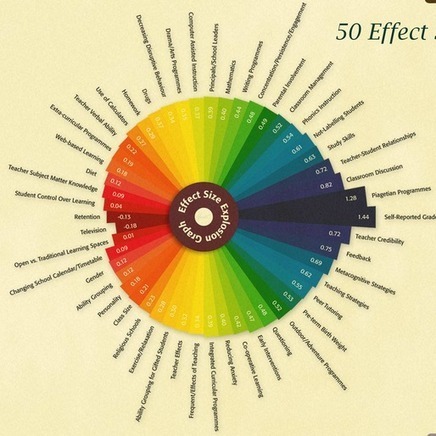
Terry Burr designed that beautiful educational infographic for Osiris Educational and Visible Learning Plus. The infographic is based on data from John Hattie’s research and the work of the Visible Learning Plus team. (c) www.osiriseducational.co.uk / www.visiblelearningplus.co.uk   Visible Learning Infografik Visible…Read more ›


Learn more / En savoir plus / Mehr erfahren:


http://www.scoop.it/t/21st-century-learning-and-teaching/?&tag=John+HATTIE


Via Ana Cristina Pratas
Gust MEES's insight:
Terry Burr designed that beautiful educational infographic for Osiris Educational and Visible Learning Plus. The infographic is based on data from John Hattie’s research and the work of the Visible Learning Plus team. (c) www.osiriseducational.co.uk / www.visiblelearningplus.co.uk   Visible Learning Infografik Visible…Read more ›


Learn more / En savoir plus / Mehr erfahren:


http://www.scoop.it/t/21st-century-learning-and-teaching/?&tag=John+HATTIE


Margarita Saucedo's curator insight, July 3, 2017 10:50 AM
Ejemplo de Infografía:un apoyo visual para la enseñanza
Scooped by Gust MEES
June 17, 2017 9:34 AM
Scoop.it!

The Teenage Brain Is Wired to Learn—So Make Sure Your Students Know It | #Design the #LEARNing

The Teenage Brain Is Wired to Learn—So Make Sure Your Students Know It | #Design the #LEARNing | 21st Century Learning and Teaching | Scoop.it

Tools for Self-Directed Learning
As they progress through middle and high school, students are expected to take on increasing responsibility for their learning, with more out-of-class assignments that require independent research, reading for understanding, and wider application of classroom lessons.


Our new book, Teaching Students to Drive Their Brains: Metacognitive Strategies, Activities, and Lesson Ideas, suggests that learning and applying strategies to “explain it to your brain” can help students improve their study habits. We note some of those strategies here.

Don’t just read—learn. There can be a huge difference between reading the words on the page and learning from them. To think through the ideas in a reading assignment and improve recall of what they have read, students might benefit from:

Creating diagrams, pictures, and symbols to represent key ideas as they take notes;
Summarizing passages in their own words (some students might enjoy the challenge of capturing the essence of an assignment in a tweet); and Searching for cues about the most important content. For textbook assignments, students can go back and review features like key terms, subtitles, and informational graphics after their first reading to reinforce crucial facts. When reading fiction or poetry, identifying literary devices such as metaphors and symbols can help uncover deeper meaning.


Learn more / En savoir plus / Mehr erfahren:


https://gustmees.wordpress.com/2014/10/03/design-the-learning-of-your-learners-students-ideas/


http://www.scoop.it/t/21st-century-learning-and-teaching/?&tag=Metacognition


Gust MEES's insight:

Tools for Self-Directed Learning
As they progress through middle and high school, students are expected to take on increasing responsibility for their learning, with more out-of-class assignments that require independent research, reading for understanding, and wider application of classroom lessons.


Our new book, Teaching Students to Drive Their Brains: Metacognitive Strategies, Activities, and Lesson Ideas, suggests that learning and applying strategies to “explain it to your brain” can help students improve their study habits. We note some of those strategies here.

Don’t just read—learn. There can be a huge difference between reading the words on the page and learning from them. To think through the ideas in a reading assignment and improve recall of what they have read, students might benefit from:

Creating diagrams, pictures, and symbols to represent key ideas as they take notes;
Summarizing passages in their own words (some students might enjoy the challenge of capturing the essence of an assignment in a tweet); and Searching for cues about the most important content. For textbook assignments, students can go back and review features like key terms, subtitles, and informational graphics after their first reading to reinforce crucial facts. When reading fiction or poetry, identifying literary devices such as metaphors and symbols can help uncover deeper meaning.


Learn more / En savoir plus / Mehr erfahren:


https://gustmees.wordpress.com/2014/10/03/design-the-learning-of-your-learners-students-ideas/


http://www.scoop.it/t/21st-century-learning-and-teaching/?&tag=Metacognition


No comment yet.
Scooped by Gust MEES
June 11, 2017 5:44 PM
Scoop.it!

Are We Over-Concerned About Fairness? | #GrowthMindset #LEADERship 

Are We Over-Concerned About Fairness? | #GrowthMindset #LEADERship  | 21st Century Learning and Teaching | Scoop.it

Bigger issues:

#1. Unfairness is necessary. Giving second chances, for example, isn’t fair to those who perform on schedule and within expectation. But, not giving second chances is cruel.

#2. Fairness is merciless. Mercy is not getting what you deserve. In other words, mercy isn’t fair.

#3. Equal opportunity must include reward or lack of reward. Those who seize opportunities earn reward. Those who don’t seize opportunities don’t earn reward. It’s important to note that it’s not necessary to punish those who don’t seize opportunity.

Rewarding teams always includes some unfairness.

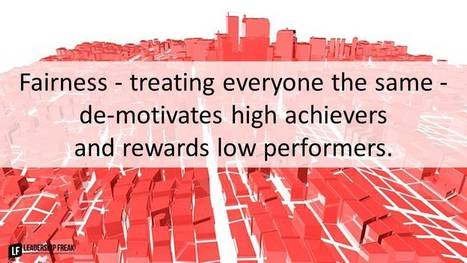
#4. Fairness – treating everyone the same – de-motivates high achievers and rewards low performers.

#5. Fairness, when it means everyone is treated the same, promotes inaction. If you can’t be do something for everyone then you can’t do it for anyone. The result is you don’t do much.


Learn more / En savoir plus / Mehr erfahren:


http://www.scoop.it/t/21st-century-learning-and-teaching/?&tag=Counterfeit+Leadership


http://www.scoop.it/t/21st-century-learning-and-teaching/?&tag=Growth+Mindset


Gust MEES's insight:

Bigger issues:

#1. Unfairness is necessary. Giving second chances, for example, isn’t fair to those who perform on schedule and within expectation. But, not giving second chances is cruel.

#2. Fairness is merciless. Mercy is not getting what you deserve. In other words, mercy isn’t fair.

#3. Equal opportunity must include reward or lack of reward. Those who seize opportunities earn reward. Those who don’t seize opportunities don’t earn reward. It’s important to note that it’s not necessary to punish those who don’t seize opportunity.

Rewarding teams always includes some unfairness.

#4. Fairness – treating everyone the same – de-motivates high achievers and rewards low performers.

#5. Fairness, when it means everyone is treated the same, promotes inaction. If you can’t be do something for everyone then you can’t do it for anyone. The result is you don’t do much.


Learn more / En savoir plus / Mehr erfahren:


http://www.scoop.it/t/21st-century-learning-and-teaching/?&tag=Counterfeit+Leadership


http://www.scoop.it/t/21st-century-learning-and-teaching/?&tag=Growth+Mindset


Koen Mattheeuws's curator insight, June 13, 2017 4:49 AM
Tijdens de vele pittige gesprekken met leerkrachten over evalueren ging het al heel vaak over gelijkheid en eerlijkheid. Op zo'n momenten brak ik al vaak een lans voor billijkheid. Dit artikel komt mij bij een volgende gelijkaardige discussie goed van pas. 
Scooped by Gust MEES
June 7, 2017 2:22 PM
Scoop.it!

Effective Teacher Professional Development | #pdf | #ModernEDU #Coaching #Mentoring

Effective Teacher Professional Development | #pdf | #ModernEDU #Coaching #Mentoring | 21st Century Learning and Teaching | Scoop.it

Teacher professional learning is of increasing interest as one way to support the increasingly complex skills students need to learn in preparation for further education and work in the 21st century. Sophisticated forms of teaching are needed to develop student competencies such as deep mastery of challenging content, critical thinking, complex problem-solving,


effective communication and collaboration, and self-direction. In turn, effective professional development (PD) is needed to help teachers learn and refine the pedagogies required to teach these skills. However, research has shown that many PD initiatives appear ineffective in supporting changes in teacher practices and student learning. Accordingly, we set out to discover the features of effective PD.


This paper reviews 35 methodologically rigorous studies that have demonstrated a positive link between teacher professional development, teaching practices, and student outcomes. We identify the features of these approaches and offer rich  descriptions of these models to inform those seeking to understand the nature of the initiatives.


Learn more / En savoir plus / Mehr erfahren:


https://gustmees.wordpress.com/?s=coaching


https://gustmees.wordpress.com/?s=professional+development


Gust MEES's insight:

Teacher professional learning is of increasing interest as one way to support the increasingly complex skills students need to learn in preparation for further education and work in the 21st century. Sophisticated forms of teaching are needed to develop student competencies such as deep mastery of challenging content, critical thinking, complex problem-solving,


effective communication and collaboration, and self-direction. In turn, effective professional development (PD) is needed to help teachers learn and refine the pedagogies required to teach these skills. However, research has shown that many PD initiatives appear ineffective in supporting changes in teacher practices and student learning. Accordingly, we set out to discover the features of effective PD.


This paper reviews 35 methodologically rigorous studies that have demonstrated a positive link between teacher professional development, teaching practices, and student outcomes. We identify the features of these approaches and offer rich  descriptions of these models to inform those seeking to understand the nature of the initiatives.


Learn more / En savoir plus / Mehr erfahren:


https://gustmees.wordpress.com/?s=coaching


https://gustmees.wordpress.com/?s=professional+development


Rosemary Tyrrell, Ed.D.'s curator insight, June 8, 2017 10:59 AM
A must-read for anyone interested in faculty professional development
 
Scooped by Gust MEES
May 29, 2017 3:41 AM
Scoop.it!

Get the free Official Geocaching app and join the world's largest treasure hunt.

Get the free Official Geocaching app and join the world's largest treasure hunt. | 21st Century Learning and Teaching | Scoop.it
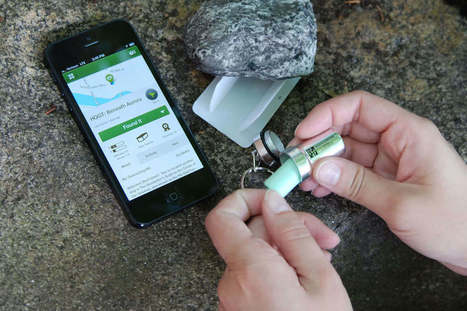
Geocaching is a treasure hunting game where you use a GPS to hide and seek containers with other participants in the activity. Geocaching.com is the listing service for geocaches around the world.


Learn more / En savoir plus / Mehr erfahren:


http://www.scoop.it/t/21st-century-learning-and-teaching/?&tag=GeoCaching


Gust MEES's insight:
Geocaching is a treasure hunting game where you use a GPS to hide and seek containers with other participants in the activity. Geocaching.com is the listing service for geocaches around the world.


Learn more / En savoir plus / Mehr erfahren:


http://www.scoop.it/t/21st-century-learning-and-teaching/?&tag=GeoCaching


No comment yet.
Scooped by Gust MEES
May 27, 2017 11:01 AM
Scoop.it!

Where does machine learning fit in the education sector? | #ModernEDU 

Where does machine learning fit in the education sector? | #ModernEDU  | 21st Century Learning and Teaching | Scoop.it
Those who understand learning and work with young people know that in an uncertain world of rapid change we urgently need to be helping learners to take risks, to work in teams, to develop a greater understanding of the way systems and societies work, and to become more creative. Fundamentally, these things have been washed out of the system in favour of a ‘learn fact, repeat fact’ model.


To get the best out of this technology in the future, educators need to turn the current systems upside down.


In previous technology developments in education – such as multimedia, whiteboards or the internet – initially, most worried that they would upset the world they were used to and feared for their jobs. Only a few imagined how these technologies could change the world and make things better. In reality, new technologies are typically highjacked to inappropriately maintain the status quo and end up powering the exam sausage factory.


Moving forward into 2017, it is not the tech itself that needs to change. In most aspects of our lives, technology has made significant changes (for good and bad), but in education, particularly schools, there is still stubborn resistance.


Learn more / En savoir plus / Mehr erfahren:


https://gustmees.wordpress.com/2015/04/13/dos-and-donts-adapting-to-21st-century-education/


https://gustmees.wordpress.com/2015/07/19/learning-path-for-professional-21st-century-learning-by-ict-practice/


https://gustmees.wordpress.com/2015/12/27/what-are-the-best-ways-of-teaching-and-learning-ideas-and-reflections/


Jan Swanepoel's curator insight, May 28, 2017 12:41 AM
To maximise the use of technology in the future, educators need to embrace these technologies that can change the world and make things better. Moving forward into 2017, it is not the technology itself that needs to change, but rather people's attitudes, particularly in education where there is still often stubborn resistance.
Belinda 's curator insight, June 12, 2017 12:44 AM
Perhaps I am being naive but if 21st Century Teachers are to be teaching 21st Century Students with 21st Century technology in a 21st Century Society isn't it time for a 21st Century Education System?  It seems that exams and assignments necessary to allocate a student a grade that is then provided to parents/caregivers is still what drives the education system.   Schools/Teachers plan their units based on the assessment items and teach students according to 'what is on the exam'. Is quantifying a child's knowledge for statistics as important as generating higher order thinking, creativity, cultural and ethical awareness and active citizenship?  Surely there is another way of reporting on a student's progression during their education?  And this isn't the School/Teachers fault - society has become so set on students being labelled as an 'A' student or B, C, D etc that this is what is expected.   

There is a high amount of anxiety in children from a very young age and I have seen students become quite confused and anxious when there is no 'correct answer' to a question.  Does this stem from crushing the imagination and being told that there is a certain way things must be done?  Why not nurture the creativity in children and we may have them building robots and inventing devices that can change the world by the time they are 10 years old.   

If teachers are to implement the technology to its full advantage then measuring a students' success, knowledge and how to apply this knowledge needs to change in line with the technology.  In such a dramatically changing world, 'assessing' a student hasn't changed for decades - they are still assessed by how much they can cram for an exam and then that information is often forgotten and not used again or when it is required it is re-learnt.  Lets get students creating and using their knowledge more and not be so subject specific - in the real world we use and apply a set of skills not just a subject. So why not start giving students 1-2 projects that encompass a holistic view of the subjects we teach (science, maths, english, humanities, social sciences, art, information technology) and have students use technology to implement the four C's - critical thinking and problem solving, communicating, collaboration, creativity and innovation. While we're at it why not report on the four C's and nothing else.