


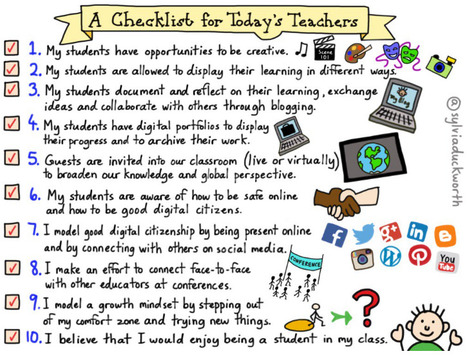
There are countless possibilities and experiments for issuing badges in education, but here are 50 to get you started.
Learn more / En savoir plus / Mehr erfahren:
http://www.scoop.it/t/21st-century-learning-and-teaching/?tag=Badges

 Your new post is loading...
 Scoop.it! There are countless possibilities and experiments for issuing badges in education, but here are 50 to get you started.
Learn more / En savoir plus / Mehr erfahren:
http://www.scoop.it/t/21st-century-learning-and-teaching/?tag=Badges

No comment yet.
Sign up to comment
Scoop.it!

From
etale

For those not familiar with self-directed learning, they sometimes have a stereotype about what it means to be a self-directed learner. One of them includes this vision of the solitary and independent learner who does things her way. She only depends upon herself, not relying upon teachers or others. Yet, in my study of self-directed learning, that tends to be far from true. In fact, many self-directed learners actively seek out different guides and mentors in their pursuit of new learning goals. They own the learning, but they seek out mentors and guides to accomplish their learning goals.
Learn more / En savoir plus / Mehr erfahren:
http://www.scoop.it/t/21st-century-learning-and-teaching/?tag=Heutagogy
Andragogy | Adult Teaching: How-To Teach ICT!? | PracTICE
LEARNing To LEARN For MY Professional Development | I Did It MY Way
https://gustmees.wordpress.com/2012/06/27/how-to-use-twitter-with-success-for-education-and-more/
https://gustmees.wordpress.com/2013/02/20/what-you-should-know-about-twitter-chats/
https://gustmees.wordpress.com/2014/07/10/education-collaboration-and-coaching-the-future/
http://www.scoop.it/t/21st-century-learning-and-teaching/?tag=Peer-to-Peer-Learning
Gust MEES's insight:
For those not familiar with self-directed learning, they sometimes have a stereotype about what it means to be a self-directed learner. One of them includes this vision of the solitary and independent learner who does things her way. She only depends upon herself, not relying upon teachers or others. Yet, in my study of self-directed learning, that tends to be far from true. In fact, many self-directed learners actively seek out different guides and mentors in their pursuit of new learning goals. They own the learning, but they seek out mentors and guides to accomplish their learning goals.
Learn more / En savoir plus / Mehr erfahren:
http://www.scoop.it/t/21st-century-learning-and-teaching/?tag=Heutagogy
Andragogy | Adult Teaching: How-To Teach ICT!? | PracTICE
LEARNing To LEARN For MY Professional Development | I Did It MY Way
https://gustmees.wordpress.com/2012/06/27/how-to-use-twitter-with-success-for-education-and-more/
https://gustmees.wordpress.com/2013/02/20/what-you-should-know-about-twitter-chats/
https://gustmees.wordpress.com/2014/07/10/education-collaboration-and-coaching-the-future/
http://www.scoop.it/t/21st-century-learning-and-teaching/?tag=Peer-to-Peer-Learning

Barbara Goebel's curator insight,
May 29, 2016 9:34 AM
Self-direction must be the most meaningful path to learning. Now, to align motivation with REQUIRED learning. Gimme strategies!
Scoop.it!

When you hear the word blockchain does it make your head spin? Wall Street analysts and fintech experts claim it could make traditional banking obsolete; Airbnb just acquired a team of blockchain experts; and the country of Estonia will use it to secure a million patient health records.
Learn more / En savoir plus / Mehr erfahren:
http://www.scoop.it/t/luxembourg-europe/?tag=Blockchain
http://www.scoop.it/t/21st-century-learning-and-teaching/?tag=blockchain
Gust MEES's insight:
When you hear the word blockchain does it make your head spin? Wall Street analysts and fintech experts claim it could make traditional banking obsolete; Airbnb just acquired a team of blockchain experts; and the country of Estonia will use it to secure a million patient health records.
Learn more / En savoir plus / Mehr erfahren:
http://www.scoop.it/t/luxembourg-europe/?tag=Blockchain
http://www.scoop.it/t/21st-century-learning-and-teaching/?tag=blockchain
Scoop.it!

The Blockchain Futures Lab at Institute for the Future is a research initiative and a community for identifying the opportunities and limits of blockchain technologies as well as their social, economic, and political impacts on individuals, organizations, and communities over the coming decades.
The program brings together the leading developers of blockchain tools and applications with organizations that seek to understand the implications of this highly disruptive technology—and perhaps also to create parts of the new ecosystem of infrastructures and markets that it will drive.
Learn more / En savoir plus / Mehr erfahren:
http://www.scoop.it/t/luxembourg-europe/?tag=Blockchain
http://www.scoop.it/t/21st-century-learning-and-teaching/?tag=blockchain
Gust MEES's insight:
The Blockchain Futures Lab at Institute for the Future is a research initiative and a community for identifying the opportunities and limits of blockchain technologies as well as their social, economic, and political impacts on individuals, organizations, and communities over the coming decades.
The program brings together the leading developers of blockchain tools and applications with organizations that seek to understand the implications of this highly disruptive technology—and perhaps also to create parts of the new ecosystem of infrastructures and markets that it will drive.
Learn more / En savoir plus / Mehr erfahren:
http://www.scoop.it/t/luxembourg-europe/?tag=Blockchain
http://www.scoop.it/t/21st-century-learning-and-teaching/?tag=blockchain
Scoop.it!

From
www
Here's some great news for fans of Scratch, an extremely popular game that teaches kids the conceptual "language" around computer programming, using cartoon-y animated characters. The MIT Scratch Team said Tuesday that it will collaborate with Google to create the next generation of the game.
Learn more / En savoir plus / Mehr erfahren:
https://gustmees.wordpress.com/2014/08/24/coding-a-new-trend-in-education-and-a-big-responsibility/
http://www.scoop.it/t/21st-century-learning-and-teaching/?tag=Coding
http://www.scoop.it/t/21st-century-learning-and-teaching/?tag=Scratch
http://www.scoop.it/t/21st-century-tools-for-teaching-people-and-learners/?tag=Scratch
Gust MEES's insight:
Here's some great news for fans of Scratch, an extremely popular game that teaches kids the conceptual "language" around computer programming, using cartoon-y animated characters. The MIT Scratch Team said Tuesday that it will collaborate with Google to create the next generation of the game.
Learn more / En savoir plus / Mehr erfahren:
https://gustmees.wordpress.com/2014/08/24/coding-a-new-trend-in-education-and-a-big-responsibility/
http://www.scoop.it/t/21st-century-learning-and-teaching/?tag=Coding
http://www.scoop.it/t/21st-century-learning-and-teaching/?tag=Scratch
http://www.scoop.it/t/21st-century-tools-for-teaching-people-and-learners/?tag=Scratch

Vivalist's curator insight,
May 20, 2016 4:04 AM
Great to hear that new development will allow for a richer / wider pool of 'block" to choose from. 
Rosemary Tyrrell, Ed.D.'s curator insight,
June 21, 2016 6:25 PM
Cool! Why play games when you can create them?
Scoop.it!
How can an age-old learning strategy, like social learning, make your eLearning course pop? Read this article and find out the benefits of social learning! What is Social Learning? Before we delve into the benefits of this type of learning, we need to understand what research in social learning tells us. Social learning theory: The social learning theorists Bandura and Walters have described this theory as follows: · Learning is not purely behavioral; rather, it is a cognitive process that takes place in a social context. This points to the learners’ preference to learn in groups. The interchange of knowledge and perspective creates new knowledge that is personal to the learner. · Learning can occur by observing a behavior and by observing the consequences of the behavior (vicarious reinforcement). · Learning involves observation, extraction of information from those observations, and making decisions about the performance of the behavior (observational learning ormodeling). Thus, learning can occur without an observable change in behavior. · Reinforcement plays a role in learning, but is not entirely responsible for learning. · The learner is not a passive recipient of information. Cognition, environment, and behavior all mutually influence each other (reciprocal determinism).
Learn more / En savoir plus / Mehr erfahren:
http://www.scoop.it/t/21st-century-learning-and-teaching/?tag=Social+Learning
Via EDTECH@UTRGV
Gust MEES's insight:
How can an age-old learning strategy, like social learning, make your eLearning course pop? Read this article and find out the benefits of social learning! What is Social Learning? Before we delve into the benefits of this type of learning, we need to understand what research in social learning tells us. Social learning theory: The social learning theorists Bandura and Walters have described this theory as follows: · Learning is not purely behavioral; rather, it is a cognitive process that takes place in a social context. This points to the learners’ preference to learn in groups. The interchange of knowledge and perspective creates new knowledge that is personal to the learner. · Learning can occur by observing a behavior and by observing the consequences of the behavior (vicarious reinforcement). · Learning involves observation, extraction of information from those observations, and making decisions about the performance of the behavior (observational learning ormodeling). Thus, learning can occur without an observable change in behavior. · Reinforcement plays a role in learning, but is not entirely responsible for learning. · The learner is not a passive recipient of information. Cognition, environment, and behavior all mutually influence each other (reciprocal determinism).
Learn more / En savoir plus / Mehr erfahren:
http://www.scoop.it/t/21st-century-learning-and-teaching/?tag=Social+Learning

Tony Guzman's curator insight,
May 23, 2016 2:57 PM
Are you a social learner? What is social learning?
Scoop.it!

Dutzende Großbanken erforschen das Potenzial der Blockchain-Technologie für Finanztransaktionen. Eine Studie weist große Effizienzgewinne nach.
Learn more / En savoir plus / Mehr erfahren:
http://www.scoop.it/t/luxembourg-europe/?tag=Blockchain
http://www.scoop.it/t/21st-century-learning-and-teaching/?tag=blockchain
Gust MEES's insight:
Dutzende Großbanken erforschen das Potenzial der Blockchain-Technologie für Finanztransaktionen. Eine Studie weist große Effizienzgewinne nach.
Learn more / En savoir plus / Mehr erfahren:
http://www.scoop.it/t/luxembourg-europe/?tag=Blockchain
http://www.scoop.it/t/21st-century-learning-and-teaching/?tag=blockchain
Scoop.it!
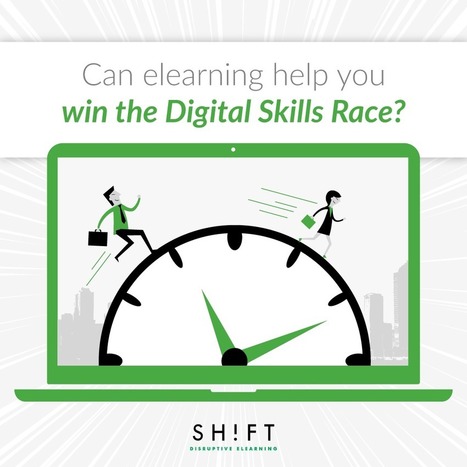
Digital skills call for digital training
Learn more / En savoir plus / Mehr erfahren:
https://gustmees.wordpress.com/2015/05/26/what-are-the-skills-needed-from-students-in-the-future/
https://gustmees.wordpress.com/2016/02/18/the-new-possibilities-to-learn-and-teach-with-ict/
Gust MEES's insight:
Digital skills call for digital training
Learn more / En savoir plus / Mehr erfahren:
https://gustmees.wordpress.com/2015/05/26/what-are-the-skills-needed-from-students-in-the-future/
https://gustmees.wordpress.com/2016/02/18/the-new-possibilities-to-learn-and-teach-with-ict/
Scoop.it!
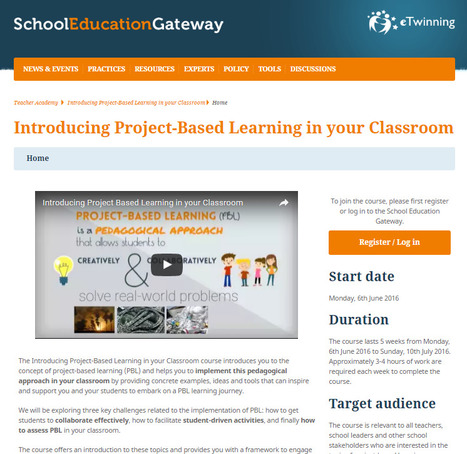
The Introducing Project-Based Learning in your Classroom course introduces you to the concept of project-based learning (PBL) and helps you to implement this pedagogical approach in your classroom by providing concrete examples, ideas and tools that can inspire and support you and your students to embark on a PBL learning journey.
Learn more / En savoir plus / Mehr erfahren:
http://www.scoop.it/t/21st-century-learning-and-teaching/?tag=PBL
https://gustmees.wordpress.com/2016/02/18/the-new-possibilities-to-learn-and-teach-with-ict/
Gust MEES's insight:
The Introducing Project-Based Learning in your Classroom course introduces you to the concept of project-based learning (PBL) and helps you to implement this pedagogical approach in your classroom by providing concrete examples, ideas and tools that can inspire and support you and your students to embark on a PBL learning journey.
Learn more / En savoir plus / Mehr erfahren:
http://www.scoop.it/t/21st-century-learning-and-teaching/?tag=PBL
https://gustmees.wordpress.com/2016/02/18/the-new-possibilities-to-learn-and-teach-with-ict/
Scoop.it!
From
medium
Criticizing education and offering some specific visionary plan for the future is an instant way to get liked by people. Everybody recognizes that the current structure of education isn’t working. Whether it’s the despicable levels of bullying and abuse in K-12 or the monstrous costs of higher education that outpace inflation, everybody can recognize that something is wrong.
These questions, while valuable, miss the broader point of education and the marketplace today. We sit at a pivotal moment in the history of schooling and education. Thanks to a number of market forces, primarily led by leaps in technology and its relation to education costs, it is finally possible to realistically remove education from school (as we know it) for the population at large.
Today, if you wanted to learn something, the iPhone in your pocket has access to more educational resources of every variety than all of the libraries of the Ivy League in 1960. As my friend Steve Patterson (a non-academic philosopher) points out, education has never been more simultaneously centralized and decentralized as it is today. Resources, books, lectures, theses, and every imaginable type of educational opportunity exists on the Internet today — even coaching and mentoring by educational professionals.
Learn more / En savoir plus / Mehr erfahren:
https://gustmees.wordpress.com/2016/02/18/the-new-possibilities-to-learn-and-teach-with-ict/
https://gustmees.wordpress.com/2015/04/13/dos-and-donts-adapting-to-21st-century-education/
Gust MEES's insight:
Criticizing education and offering some specific visionary plan for the future is an instant way to get liked by people. Everybody recognizes that the current structure of education isn’t working. Whether it’s the despicable levels of bullying and abuse in K-12 or the monstrous costs of higher education that outpace inflation, everybody can recognize that something is wrong.
These questions, while valuable, miss the broader point of education and the marketplace today. We sit at a pivotal moment in the history of schooling and education. Thanks to a number of market forces, primarily led by leaps in technology and its relation to education costs, it is finally possible to realistically remove education from school (as we know it) for the population at large.
Today, if you wanted to learn something, the iPhone in your pocket has access to more educational resources of every variety than all of the libraries of the Ivy League in 1960. As my friend Steve Patterson (a non-academic philosopher) points out, education has never been more simultaneously centralized and decentralized as it is today. Resources, books, lectures, theses, and every imaginable type of educational opportunity exists on the Internet today — even coaching and mentoring by educational professionals.
Learn more / En savoir plus / Mehr erfahren:
https://gustmees.wordpress.com/2016/02/18/the-new-possibilities-to-learn-and-teach-with-ict/
https://gustmees.wordpress.com/2015/04/13/dos-and-donts-adapting-to-21st-century-education/
Scoop.it!
Magnete, Murmeln und etwas Physik: Vier faszinierende Video-Minuten | #MakerED #MakerSpaces #Physics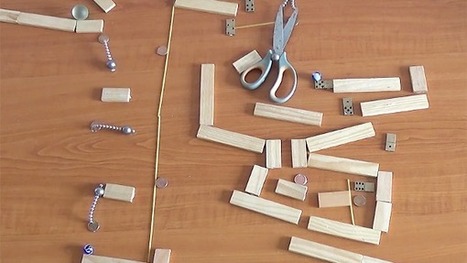
From
www
Man kann es Murmelbahn nennen oder auch Rube-Goldberg-Maschine – ganz egal: Was der YouTuber namens Kaplamino gebaut hat, ist schön anzuschauen und nutzt einige physikalische Effekte souverän aus.
Learn more / En savoir plus / Mehr erfahren:
http://www.scoop.it/t/21st-century-learning-and-teaching/?tag=makerspace
Gust MEES's insight:
Man kann es Murmelbahn nennen oder auch Rube-Goldberg-Maschine – ganz egal: Was der YouTuber namens Kaplamino gebaut hat, ist schön anzuschauen und nutzt einige physikalische Effekte souverän aus.
Learn more / En savoir plus / Mehr erfahren:
http://www.scoop.it/t/21st-century-learning-and-teaching/?tag=makerspace
Scoop.it!

It’s comforting to think that our intelligence isn’t reducible to a single number. Indeed, especially in education circles, the theory of multiple intelligences is widely embraced.
Learn more / En savoir plus / Mehr erfahren:
http://www.scoop.it/t/21st-century-learning-and-teaching/?tag=Howard-GARDNER
Gust MEES's insight:
It’s comforting to think that our intelligence isn’t reducible to a single number. Indeed, especially in education circles, the theory of multiple intelligences is widely embraced.
Learn more / En savoir plus / Mehr erfahren:
http://www.scoop.it/t/21st-century-learning-and-teaching/?tag=Howard-GARDNER
|
Scoop.it!
From
medium
It’s as if we agreed that the purpose of education was simply content distribution and testing, and therefore we don’t really need skilled teachers. We could actually offload that to technology.
For example, in testing, in examinations, in 2016 why are students not allowed to take their computer connected to the internet into the examination room? Why are they not allowed to share their answers with their colleagues? Why are they not allowed to phone their mother or phone a subject specialist? Why do we suddenly pretend that the twenty-first century never happened when a child enters an examination room?
Learn more / En savoir plus / Mehr erfahren:
https://gustmees.wordpress.com/2015/03/04/learning-to-learn-preparation-for-better-learning-how-to/
https://gustmees.wordpress.com/2014/10/03/design-the-learning-of-your-learners-students-ideas/
https://gustmees.wordpress.com/?s=PracTICE
Gust MEES's insight:
It’s as if we agreed that the purpose of education was simply content distribution and testing, and therefore we don’t really need skilled teachers. We could actually offload that to technology.
For example, in testing, in examinations, in 2016 why are students not allowed to take their computer connected to the internet into the examination room? Why are they not allowed to share their answers with their colleagues? Why are they not allowed to phone their mother or phone a subject specialist? Why do we suddenly pretend that the twenty-first century never happened when a child enters an examination room?
Learn more / En savoir plus / Mehr erfahren:
https://gustmees.wordpress.com/2015/03/04/learning-to-learn-preparation-for-better-learning-how-to/
https://gustmees.wordpress.com/2014/10/03/design-the-learning-of-your-learners-students-ideas/
https://gustmees.wordpress.com/?s=PracTICE
Tony Guzman's curator insight,
May 31, 2016 2:45 PM
This blog entry and video interview pose an interesting question: why do we send students to school? To what end? A question well worth considering regardless of the student's age. Thoughts?
Scoop.it!
9 of the Best Snap Circuits Electronics Kits for Bright Sparks | #Maker #MakerED #MakerSpace #EdTech
If your child has shown an interest in electronics, they will love snap circuits. A wonderful educational toy, there is also a lot of fun to be had.
Learn more / En savoir plus / Mehr erfahren:
Gust MEES's insight:
If your child has shown an interest in electronics, they will love snap circuits. A wonderful educational toy, there is also a lot of fun to be had.
Learn more / En savoir plus / Mehr erfahren:

Heraclio Muñoz Cruz's curator insight,
May 26, 2016 9:10 AM
9 mejores kits de circuitos electrónicos
Scoop.it!

From
www
You have completed the training needs analysis. You have documented the results and confirmed with the business unit manager that training is indeed warranted, because you have confirmed a lack of needed skills and knowledge. For part two of my three-part series, I’m sharing 10 tips that will help you design learner-centered training.
Learn more / En savoir plus / Mehr erfahren:
http://www.scoop.it/t/21st-century-learning-and-teaching/?tag=instructional+coaching
https://gustmees.wordpress.com/2014/10/03/design-the-learning-of-your-learners-students-ideas/
Via Edumorfosis, juandoming, michel verstrepen, THE OFFICIAL ANDREASCY, Educational Peaks, Mark E. Deschaine, PhD
Gust MEES's insight:
You have completed the training needs analysis. You have documented the results and confirmed with the business unit manager that training is indeed warranted, because you have confirmed a lack of needed skills and knowledge. For part two of my three-part series, I’m sharing 10 tips that will help you design learner-centered training.
Learn more / En savoir plus / Mehr erfahren:
http://www.scoop.it/t/21st-century-learning-and-teaching/?tag=instructional+coaching
https://gustmees.wordpress.com/2014/10/03/design-the-learning-of-your-learners-students-ideas/
Scoop.it!
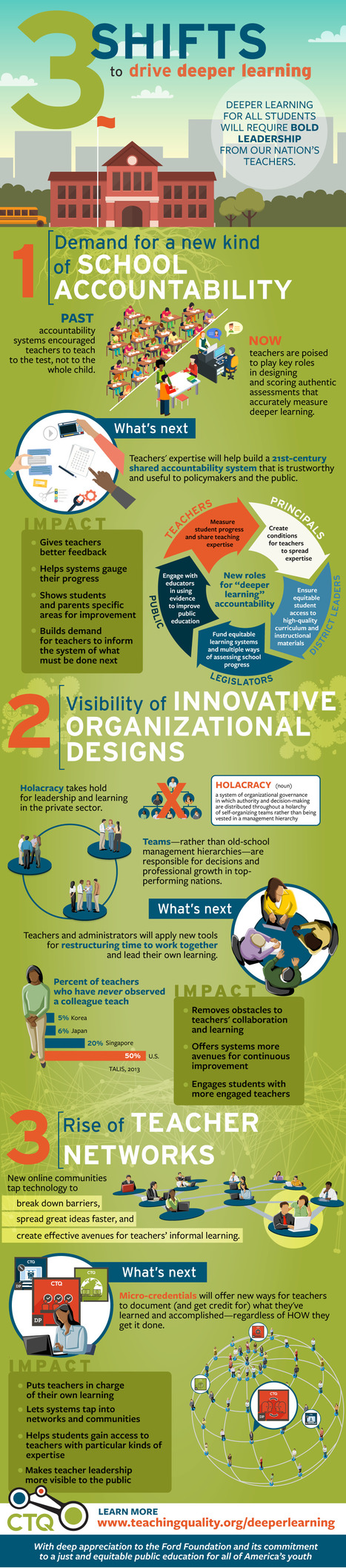
TEACHER LEADERSHIP & DEEPER LEARNING FOR ALL STUDENTS
The infographic below reveals 3 big changes we can leverage now to improve public education for all students.
Learn more / En savoir plus / Mehr erfahren:
http://www.scoop.it/t/21st-century-learning-and-teaching/?tag=LeaderShip
http://www.scoop.it/t/21st-century-learning-and-teaching/?tag=Situational+Leadership+Theory
Gust MEES's insight:
TEACHER LEADERSHIP & DEEPER LEARNING FOR ALL STUDENTS
The infographic below reveals 3 big changes we can leverage now to improve public education for all students.
Learn more / En savoir plus / Mehr erfahren:
http://www.scoop.it/t/21st-century-learning-and-teaching/?tag=LeaderShip
http://www.scoop.it/t/21st-century-learning-and-teaching/?tag=Situational+Leadership+Theory
Scoop.it!
Do you know the answer to the next simple question? "What do you know about web 2.0 technology?" What's so interesting about this video, is the simple fact that none of these so called digital natives are familiar with the term web 2.0. Although they never had a life without technology, they just don't know…
Via Ramiro Aduviri Velasco
Gust MEES's insight:
Do you know the answer to the next simple question? "What do you know about web 2.0 technology?" What's so interesting about this video, is the simple fact that none of these so called digital natives are familiar with the term web 2.0. Although they never had a life without technology, they just don't know…
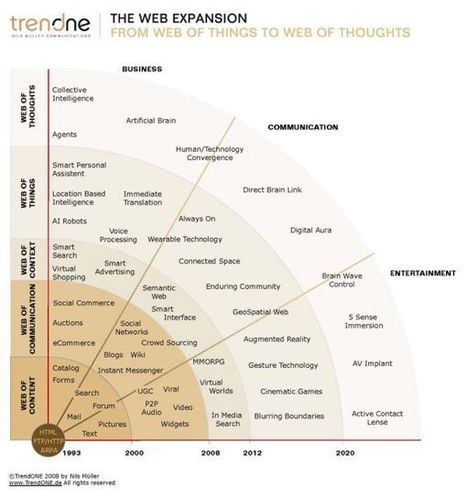
Check it to find out with videos about the differences and WHAT will be NEXT in the future!

Becky Christensen's comment,
July 15, 2016 8:52 AM
This article gives me hope that someday the Internet will be a real resource for specific information without the mountains of unnecessary information that doesn't really apply to my searches.

Edinson Uriarte's curator insight,
November 14, 2016 8:25 AM
Do you know the answer to the next simple question? "What do you know about web 2.0 technology?" What's so interesting about this video, is the simple fact that none of these so called digital natives are familiar with the term web 2.0.
Scoop.it!
Painting on a canvas is so 20th century.
Learn more / En savoir plus / Mehr erfahren:
http://www.scoop.it/t/21st-century-learning-and-teaching/?tag=VR
Gust MEES's insight:
Painting on a canvas is so 20th century.
Learn more / En savoir plus / Mehr erfahren:
http://www.scoop.it/t/21st-century-learning-and-teaching/?tag=VR

Viljenka Savli (http://www2.arnes.si/~sopvsavl/)'s curator insight,
May 22, 2016 4:10 AM
every day we face new steps into VR... Here is another amazing achievement...
Scoop.it!

From
ww2
The Maker Movement has helped spur renewed interest in hands-on learning and the value of spaces where children can explore their own ideas, be creative, and tinker. Some schools have made makerspaces and FabLabs a priority, building making activities into the curriculum and encouraging kids through afterschool activities. In large part, this new excitement has come from a predominantly white, male sensibility and conversations about equity and tinkering tend to focus on questions of access to makerspaces and to tools.
Learn more / En savoir plus / Mehr erfahren:
Gust MEES's insight:
The Maker Movement has helped spur renewed interest in hands-on learning and the value of spaces where children can explore their own ideas, be creative, and tinker. Some schools have made makerspaces and FabLabs a priority, building making activities into the curriculum and encouraging kids through afterschool activities. In large part, this new excitement has come from a predominantly white, male sensibility and conversations about equity and tinkering tend to focus on questions of access to makerspaces and to tools.
Learn more / En savoir plus / Mehr erfahren:

Joyce Valenza's curator insight,
May 19, 2016 7:42 AM
Consider these ideas as you approach making in your library.
Scoop.it!

Blogging Fundamentals is two weeks of bite-size blogging assignments that take you from “Blog?” to “Blog!”
Learn more / En savoir plus / Mehr erfahren:
https://globaleducationandsocialmedia.wordpress.com/2014/07/02/put-your-title-in-here/
http://www.scoop.it/t/21st-century-learning-and-teaching/?tag=Blogging
Gust MEES's insight:
Blogging Fundamentals is two weeks of bite-size blogging assignments that take you from “Blog?” to “Blog!”
Learn more / En savoir plus / Mehr erfahren:
https://globaleducationandsocialmedia.wordpress.com/2014/07/02/put-your-title-in-here/
http://www.scoop.it/t/21st-century-learning-and-teaching/?tag=Blogging
Scoop.it!
|

|
Rescooped by
Gust MEES
from Purposeful Pedagogy
May 14, 2016 9:16 PM
|
Scoop.it!

One of the most difficult parts of our jobs as educators is to create a learning environment where our learners are engaged and meet content and curriculum goals. From my experience, the single most important challenge that needs to be addressed to earn engagement in our classrooms is to develop a culture of learner autonomy--allowing and encouraging learners to take control of their own learning. There are many barriers that we, as educators, must work to clear in order to create a strong culture that allows our learners to feel comfortable with working toward a common goal in the way that works best for them.
- See more at: http://www.personalizelearning.com/2016/02/making-shift-to-our-classroom.html#sthash.Fe2mNysX.dpuf
Learn more / En savoir plus / Mehr erfahren:

Brian shares how he transformed his classroom to a learner-centered environment and what happened in the process with his learners. Here is a glimpse of his journey:
"As teachers, it is difficult to let go of control and to let our learners find the best ways for them to achieve content and curriculum goals. To be clear, our role in the classroom needs to change, and I think the trend in education is moving the correct direction--achieving and creating a learner-driven, personalized atmosphere is the key. Providing learners with the tools to succeed should be the goal, and we should focus on allowing them to use those tools in the way that works best individually. Instead of providing the blueprint for learners to achieve a goal, educators should be allowing and guiding them in designing, developing, and implementing their plan for accomplishing it. When this happens, drastic changes take place regarding engagement in our classrooms and ownership of learning appears, leading to a higher level of achievement."
|
|
Rescooped by
Gust MEES
from Active learning Approaches
May 12, 2016 10:47 AM
|
Scoop.it!
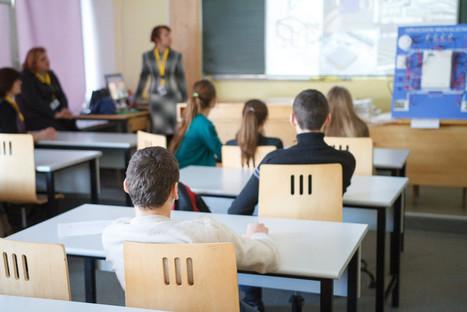
Across Australia some of these ideas are being put into practice. Some schools have dropped the notion of year levels to enable them to meet children at their point of need and acknowledge that not all students learn at the same pace.
Computer programs are enabling instruction tailored to the student by assessing where they are at and providing a tailored curriculum.
Capabilities , such as personal and social capability and critical and creative thinking, are being embedded in the curriculum. Work is under way to develop assessment measures. Teachers across Australia are working on developing new models of practice to support this approach.
We need to accelerate the change. We are wasting too much of students’ learning time and are failing to amplify their talents. To continue along the current path is increasingly unscientific, unjustifiable and plain dull.
Learn more / En savoir plus / Mehr erfahren:
https://gustmees.wordpress.com/2014/10/03/design-the-learning-of-your-learners-students-ideas/












Learn more / En savoir plus / Mehr erfahren:
http://www.scoop.it/t/21st-century-learning-and-teaching/?tag=Badges