Marty's Paper.li Story About a week after starting as Atlantic BT's, largest web dev shop in Triangle area of NC, new Marketing Director my boss & founder / CEO Jon Jordan asked me, "What's this Paper.li" thing.
Jon's displeasure was obvious. I explained how Paper.li is a "get more, do less" content curation tool. Jon said, "It doesn't look like us," and I had to agree. My question back to Jon was, "Is 'looking like us' important," and you can guess his response.
To his credit, Jon asked me to do an analysis before shooting the limping horse. I also related our previous conversation about the "creation of a commons". On my second day as Marketing Director for ABT Jon and Mark Foulkrod, then COO, confessed a concern.
"We think you will steal from us," Mark said straight out (that is the way Mark is). The comment surprised me so I asked the right question. "Why are you worried and what do you think I will 'steal","I asked.
Jon shared the story of a previous employee who "blogged for himself on our dime". I never met the person, but I explained ABT had little or nothing I could "steal".
It was my turn to shock them. I shared how, at that time, ABT's Klout score was 19 while mine was 45. Together, I went on to explain, we were stronger than either apart. We would create a commons mingling my content, ABT's and curating in other content from gurus, thought leaders and ABT customers to create a "rising tide" sure to lift their online reputation boat and mine.
"You will gain more if only due to our starting points," I shared. At the end of my tenure (December 2013) ABT's Klout score was 50, a 233% increase. Mine was 65, a 44% bump.
Paper.li and Scoop.it were MAJOR contributors to the rising tide of ABT's commons. Scoop.it helped test content marketing ideas and Paper.li creates more community faster for LESS work than any tool I know or use (and I use a passel of 'em).
The brilliance behind Paper.li, that they present an algorithm filter of content you've already shared and or mashedup, makes it the GREATEST and most under utilized (and just about the cheapest) content curation tool.
Startups are so WIDGET FOCUSED they don't think about the day they want to share their widget with the world. Paper.li is guaranteed to make "sharing day" easier and for the cost of...well just about NOTHING a startup receives a powerful ally. If you are a starutp or Internet marketer and DON'T use my friends in Switzerland's coolest tool since sliced bread you are nuts.
Oh, btw, when I shared data showing Paper.li was the most powerful community creation tool we had Jon and Mark didn't care if it "looked like us" or not (lol).
** PS. Paper.lis great community manager @Kelly Hungerford just pointed out that if Paper.li had CSS and templating options then ABT's Paper.li would have looked like them. M
Marty, you're awesome! If only we had had custom CSS and branding options back then... we could have branded a paper to fit their look and feel. LOL. You continue to be one of our greatest champions of not only Paper.li, but how Paper.li and Scoop.it can work together in a marketing strategy to build presence, community and get some work done. Thank you for that. In fact, I think a post is in order. You always inspire Marty, thank you!
Just this morning robotic process automation (RPA) firm, Blue Prism, announced enhancements to its platform. A little later the company, which went public on the London Stock Exchange in 2016, announced it was raising £100 million (approximately $130 million) by issuing new stock. The announcement …
We tend to complain about things all the time, but what if it was the other way around? Illustrator Teo Zirinis shows us that your stuff has had enough of your crap and has plenty to complain about too. So you better give them a break!
Funny reminder we take everything for granted these days. What if the shoes were worn by those things we don't think about but can't live without? What if the machines could tell us how they really feel? Gives Internet of Things a new meaning.
Educationalist and historian Tim Leunig takes on Sir Ken Robinson, with a witty and erudite riposte to the famous claim that schools are killing creativity
"Despite rapid innovations in data processing and machine learning, many businesses have yet to make the leap from the Industrial Age to the information age, and the gap between technological and organizational progress is widening. Closing this gap requires much more than short-term fixes, like adopting new technologies. Businesses need to organize around long-term strategies for growth and partnership in a sustainable way. The consequences for not doing so can be dire.
Eastman Kodak is the textbook case for failing to prioritize an innovation agenda; business schools around the world study the ramifications of the company’s ill-fated decision to ignore the digital photography market until it was too late. It’s far from the only case of a failure to embrace a more digital approach; the larger shift to digital is changing the way every industry operates. Some industries, like photography and media, were impacted earlier. Others, like financial services, are only now experiencing this change in earnest. The common thread in each instance is that a failure to recognize signals and prioritize innovation over short-term profits before it’s too late can have existential ramifications and cause negative ripples throughout broader capital markets."
If That doesn't scare the pants off you then we don't know what will. Money and finance are under pressure and it's innovating or die time. Money, as we've known it, is already dead man walking.
Haunting, miserable and heartbreaking failure is nothing anyone every thinks will happen to them. Yet, failure is a necessary step says this Inc process post every startup should read.
Inc's focus is on how bad ideas impact design, but truths shared, far from self-evident, are good to learn. Bad things become good things by recognition and listening. Bad design becomes a good design by tweaking, testing, and more listening.
Haunting miserable failure is a necessary condition of good design. For every charmed life capable of creating winning design from the jump there are thousands that must fail first. The "Charmed" are clearly exceptions to the rule as this Inc post shares.
IOT As Disruption Marketing attribution has been a mess for years and, as this Forbes post shares, it is about to get worse thanks to the Internet of Things (IOT). Not hard to see why either.
More than just a gizillion URLs running around headless and in the middle of an e-commerce merchant's funnel potentially hurts, biut the everyone looks at everything differently thing is a killer. Any marketer who has changed, even slightly, their product listings knows how hard patching old and new data together can become. Now imagine that data quilt when metrics from different paths are encrypted differently.
Going to be a FORTUNE to be made in knitting all this junk together and filtering out the noise. Startups are you listening?
Snapchat Spectacles This Curagami post shares links to 10 recent posts about Snapchat's introduction of their picture taking glasses called Spectacles. From the Ray-Bans design to the vending machine introduction Snapchat is creating some of the best "new marketing" we've seen.
The post shares more on how Snapchat is wiping the stain left after Google Glass away with fun, great marketing and design. Lots of lessons to learn here including don't even try to do everything. Create movements and ask for help instead.
Why Do Mean Fear Asking For Help My friend and Curagami co-founder Phil Buckley wrote Fear, Shame and Asking for Help several years ago. Today "Why Do Men Fear Asking For Help" came us as our #1 searched term. That question's top search position made us ink up our quill and write another post about why men fear asking for help.
It's a longish piece so I'll bottom line it here. Men are condition to NOT ask for help. But there's a problem. Tomorrow's culture, technology, and business will evolve and change faster than anyone can keep up. That means if you don't ask for help you will be crushed.
Or, on the positive side, those who learn to ask for help will achieve Darwinian victory. Their beaks will do the trick. If you want to know what the heck that last sentence was talking about you'll need to read my Curagami post: http://www.curagami.com/men-fear-asking-for-help/
What about you? Why do you think men have such a hard time asking for help? Share here or email martin(at)Curagami.com and I'll add your thoughts into the post.
See I just asked for help because I'm LEARNING :). Marty
Branding In A Revolution How can we market or create markets in the middle of a marketing revolution? The usual suspects are going, going and gone. Can't buy TV and print ads and expect to build a brand these days.
Marketers recognize they are spending their money in all the wrong places, but habits die hard. This Curagami post shares a favorite David Edelman Harvard Business Review article and mashes David's conclusions with Bynder's new Branding Report.
Want to know how to brand in a digital age? We share a few of our favorite branding sources, tips and how tos:
I think Joi Ito's TED talk about NOWISM is correct and a tsunami trend few understand or address. Right after the NOWISM wave comes the, "We are all software creators" wave.
We love this line, "It is decidedly non-trivial for a company in a non-tech traditional industry to start thinking and acting like a software company." Damn skippy it is hard to become a "softwareist".
Software engineers speak a different language, think differently than left brain creatives (most marketing people are left brain creatives) and want to engineer the world.
The subtext of this well written and intelligently conceived post is find blue oceans or die. I'm mixing metaphors since the post doesn't contextualize using Kim's great Blue Ocean Strategies book, but the implication hangs in this post like a line separating winners from losers.
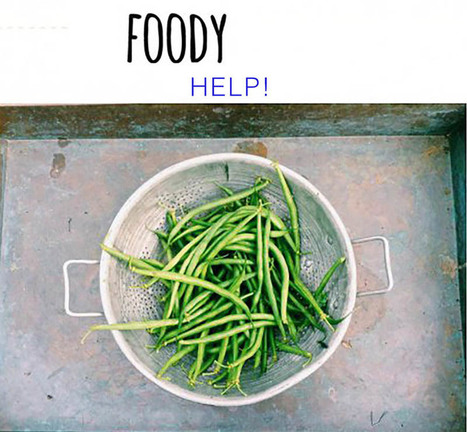
Foodie Help PLEASE We are the furthers thing from a Foodie here at team Curagami. We need help finding the Best Food Porn Wordpress Theme for Peaceful River Farm west of Chapel Hill, North Carolina.
The question is really a bigger question. Any foodie resources from blog templates to writers and your favorite catalogs would be a huge help. Thanks, Marty
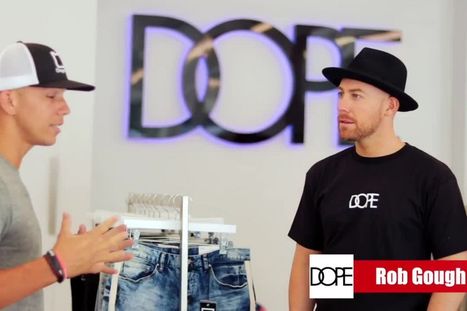
I heard the same message over and over. When Curagami did our VC dog and pony show team and people kept coming up. Dope Founder Rob Grough says the same thing in the most convincing way I've ever heard - mediocre ideas can survive and thrive when great people are involved.
Amen brother Rob.
Hiring must be the least understood most important startup strategy. I didn't hire well and the VC knew it. The failure was all mine and they knew that too.
Even the best ideas, the ideas leading to today's most successful brands, must change tactics, positioning, and people. VC know that change means they can't buy what is in front of them or even the rosy promised future. VC invest in people and in teams.
The hefty investment was led by Sequoia National, with participation from new investors Upfront Ventures, Airbnb, and existing investors NEA and WeWork.
I read this Fast Company post twice and still don't exactly know what The Wing does. Sounds like co-working spaces and entrepreneur support for women and that is nothing but a good idea. Women create most of the small companies in America so anything we can do to accelerate their abilities, creativity, and passion is nothing but a good idea.
I'd add three of my own lessons from my "failed startup":
1. Don't think in terms of success and failure, win and lose. Think about impact, learning, and potential. Startups require a more nuanced sense of win/lose.
2. Don't hire your friends even if they are the right people because you are probably blind to faults, issues, or other "round peg in square hole" problems with friends.
3. Create any startup in collaboration with customers. Don't do the "mad inventor" thing and go off and think you've created a better mousetrap. You won't. Instead, collaborate and build on what you learn from real customers facing immediate problems.
Hot Startups This Year We're half-way through 2017 and its time to showcase some startup stars. We chose a metric called a "valuation step up" to select this list.
This Fortune post is encouraging and informative. Encouraging because fewer startups fail than urban myth predicts and informative because insights shared about learning the rules of the road are accurate to our startups experience.
If you think creating a startup is unstructured and free you'd be wrong, very wrong. Startups have an intricate ballet of rules, gatekeepers, and customs. Ignore any of those things at your startup's absolute peril.
I don't think my startup failed due to impolite attention to rules and regulations. We failed because we didn't have the right people sitting in the right seats on the bus. Friends and business partners can be one and the same, but hiring friends creates more work not less.
When hiring friends you need to guard against your assumptions and playing rough can be harder with friends. Playing rough is needed because every startup is a life or death struggle against time, competition and the evolution of markets. This post shares all of that and more. A good read for any wannabe startup entrepreneur.
SOT Startups Times If Algorithmia's raising $10M without breathing hard isn't a sign of the startup times where AI, algos and math rule we don't know what is.
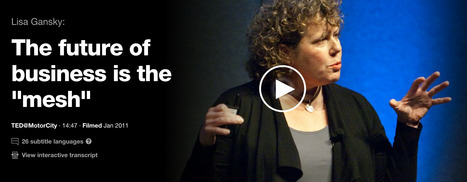
Meshing Explained In 3 Minutes We decided to let the experts speak directly to key concepts of our Five Planning Disruption Tips for SMBs by editing TED Talk videos into 3 minutes of concentrated detail on a speaker such as Lisa Gansky. Gansky covers "startup thinking" via her book The Mesh and our topic Meshing Mashups.
Banksy Marketing Tips The elusive English artist Banksy is nothing if not a master marketer. He has much to teach online marketers too. This Curagami post discusses four Banksy marketing tips including:
* Less is More * Packaging Matters (and Define "packaging" broadly) * Humor is your friend and don't be abusive ever
* Control is an illusion
What marketing tips has Banksy taught you? Share your ideas and we'll include your ideas in the post.
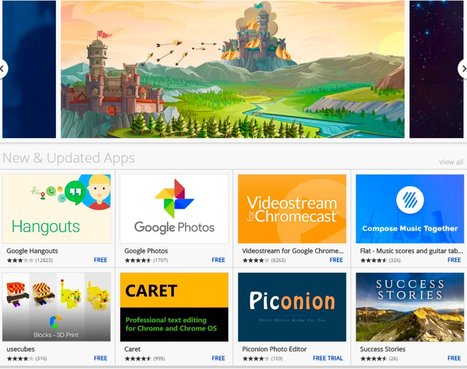
Google Killing Apps Not sure we agree with all the logic here. Google is killing something you don't have to be a programmer to use in favor of things only programmers know how to use.
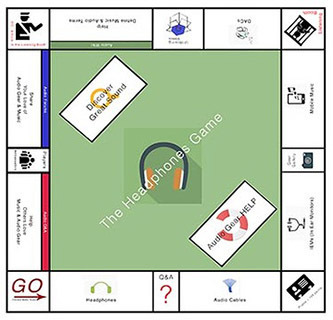
Headphones Game Icons Design Contest We're creating a cool new "Headphones Game" for friends at http://www.Moon-Audio.com. We need KILLER icons, so we're looking for a great designer on 99Designs.
Our Headphones Game icon design contest ends in 4 days. Share your ideas on 99Designs:
To get content containing either thought or leadership enter:
To get content containing both thought and leadership enter:
To get content containing the expression thought leadership enter:
You can enter several keywords and you can refine them whenever you want. Our suggestion engine uses more signals but entering a few keywords here will rapidly give you great content to curate.





 Your new post is loading...