Get Started for FREE
Sign up with Facebook Sign up with X
I don't have a Facebook or a X account


 Your new post is loading...
 Your new post is loading...
Your new post is loading...
 Scoop.it!
Kent College History's insight:
'The English Civil Wars (1642-1651) stemmed from conflict between Charles I and Parliament over an Irish insurrection. The first war was settled with Oliver Cromwell’s victory for Parliamentary forces at the 1645 Battle of Naseby. The second phase ended with Charles’ defeat at the Battle of Preston and his subsequent execution in 1649. Charles’ son, Charles, then formed an army of English and Scottish Royalists, which prompted Cromwell to invade Scotland in 1650. The following year, Cromwell shattered the remaining Royalist forces and ended the “wars of the three kingdoms,” though Charles II eventually ascended to the throne in 1660.'

No comment yet.
Sign up to comment
Scoop.it!
Kent College History's insight:
'English solider and statesman Oliver Cromwell (1599-1658) was elected to Parliament in 1628 and 1640. The outspoken Puritan helped organize armed forces after the outbreak of civil war in 1642, serving as deputy commander of the “New Model Army” that decimated the main Royalist force at the 1645 Battle of Naseby. After the death of Charles I, Cromwell served in the Rump Parliament and set to reform the legal system in part through the establishment of the Blue Laws. He commanded campaigns in Ireland and Scotland in the early 1650s, and served as “lord protector” of England, Wales, Scotland and Ireland from 1653 until his death.'
Scoop.it!
Kent College History's insight:
Not much on Drogheda here - but here is the website of the Cromwell Association.
Scoop.it!
Kent College History's insight:
'One of the most famous disasters in London’s history, the Great Fire of 1666 devastated the heart of England’s capital, destroying more than 13,000 houses and badly damaging landmarks including St Paul’s Cathedral and the Royal Exchange. But how much do you really know about the blaze?'
Scoop.it!

DNA testing has for the first time confirmed the identity of the bacteria behind the Great Plague of London.
Kent College History's insight:
'DNA testing has for the first time confirmed the identity of the bacteria behind London's Great Plague. The plague of 1665-1666 was the last major outbreak of bubonic plague in Britain, killing nearly a quarter of London's population.'
Scoop.it!
Kent College History's insight:
10 minutes on France and the French monarchy in the late C18th. Foreboding chords, ominous gatherings of clouds etc. Subtitles are compellingly idiotic.
Scoop.it!

Find out more about the history of French Revolution, including videos, interesting articles, pictures, historical features and more. Get all the facts on HISTORY.com
Kent College History's insight:
'A watershed event in modern European history, the French Revolution began in 1789 and ended in the late 1790s with the ascent of Napoleon Bonaparte.'
Scoop.it!

Jacques-Louis David, The Tennis Court Oath (1791)
Kent College History's insight:
De-coding Jacques-Louis David's painting, The Tennis Court Oath (1791).
Scoop.it!

Versailles – From Louis XIII to the French Revolution. Nov 17. Pharrell won't make it to Versailles this trip but it's still one of his favorite places in France. Via Stephen Chamberlain
Kent College History's insight:
The Palace of Versailles: a short film on the history of the building including its part in the French Revolution.
Scoop.it!
Share your videos with friends, family and the world
Scoop.it!
http://www.tomrichey.net/euro In the second part of my lecture series on the French Revolution, I discuss the meeting of the Estates General in 1789. If you ...
Kent College History's insight:
The Marseillaise.
Scoop.it!
Kent College History's insight:
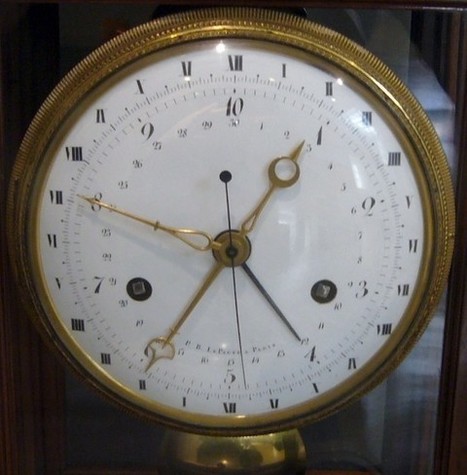
'... in 1793, the French smashed the old clock in favor of French Revolutionary Time: a 10-hour day, with 100 minutes per hour, and 100 seconds per minute.'
Scoop.it!
The 25th April 1792 saw the world’s first use of the guillotine as a method of execution. Nicolas Jacques Pelletier, a French highwayman found guilty of kill...
Kent College History's insight:
The 25th April 1792 saw the world’s first use of the guillotine as a method of execution. Nicolas Jacques Pelletier, a French highwayman found guilty of killing a man during one of his robberies, was the guillotine’s first victim.
|
Scoop.it!

In 1642 war broke out between King and Parliament. Both sides called up men to fight for them as a result of a series of disagreements about religion and the way that the country should be ruled. Durin
Kent College History's insight:
'These sources tell us something about the lives of ... women during the English Civil Wars and focus on the different roles that they played. Each source is an original document, or an extract from one, that was created or received by Parliament at the time.'
Scoop.it!
Kent College History's insight:
'BBC History File documentary on Oliver Cromwell.'
Scoop.it!
Kent College History's insight:
'This was the worst outbreak of plague in England since the black death of 1348. London lost roughly 15% of its population. While 68,596 deaths were recorded in the city, the true number was probably over 100,000. Other parts of the country also suffered.'
Scoop.it!
A HISTORYWORKS PRODUCTION FOR http://www.stuarts-online.com/ Introducing the Stuart Era (1603-1714): an animated film for Stuarts-Online Presented by David Mitchell…
Kent College History's insight:
David Mitchell narrates an outline of Stuart history.
Scoop.it!
Share your videos with friends, family and the world
Kent College History's insight:
A light skip from the Tennis Court Oath to the arrest of the King and Queen at Versailles and their return to Paris. Interesting use of the word 'democracy' towards the end.
Scoop.it!
Kent College History's insight:
'The French Revolution Digital Archive (FRDA) is a multi-year collaboration of the Stanford University Libraries and the Bibliothèque nationale de France (BnF) to produce a digital version of the key research sources of the French Revolution and make them available to the international scholarly community.'
Scoop.it!

Explore the rise and fall of Marie Antoinette, consort to France's King Louis XVI and victim of the French Revolution's guillotine, at Biography.com.
Kent College History's insight:
Biography page for Marie Antoinette. As Thomas Jefferson said, "I have ever believed that if there had been no Queen, there would have been no revolution."
Scoop.it!

Check out 10 surprising facts about the former queen of France.
Kent College History's insight:
'More than 220 years after her execution, learn 10 surprising facts about Marie Antoinette.'
Scoop.it!
Share your videos with friends, family and the world
Kent College History's insight:
Simon Schama on the Tennis Court Oath.
Scoop.it!
Enjoy the videos and music you love, upload original content and share it all with friends, family and the world on YouTube.
Kent College History's insight:
Enlightenment, links with American Revolution, inequality, Versailles, extravagance
Scoop.it!
Share your videos with friends, family and the world
Kent College History's insight:
Sans culottes; Robespierre and Danton; war vs. Austria and Prussia; September massacres; execution of Louis XVI.
Scoop.it!
Kent College History's insight:
Peter Windhorst's French Revolutionary Calendar
|