Follow, research and publish the best content
Get Started for FREE
Sign up with Facebook Sign up with X
I don't have a Facebook or a X account
Already have an account: Login

WW1 teaching resources
2.1K views |
+2 today

Resources for the commemoration of the First World War in 2014-2018. This site provides a range of teaching resources, primary sources, digital content and ideas for how teachers might address this significant historical event in the classroom.
Curated by
Catherine Smyth
 Your new post is loading...
 Your new post is loading...
Your new post is loading...
 Scoop.it!

World War I was Australia's first major military conflict and is often called our 'baptism by fire'. Most Australians thought the war would be over quickly and that soldiering would be a chance to see the world and make England proud of her colony.
Catherine Smyth's insight:
Online primary sources for WW1 from the State Library of Victoria. 
Scoop.it!

Memorials to Australian participation in wars abound in our landscape.
Catherine Smyth's insight:
War memorials are a significant part of Australia's landscape. As places of memory, how do they shape a nation's historical consciousness?
Scoop.it!
Catherine Smyth's insight:
The Book of Remembrance Online is a free, searchable database of staff members and students from the University of Sydney who served in the First World War.
Scoop.it!
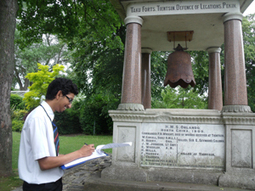
War Memorials Trust's lesson plans for secondary school teachers.
Catherine Smyth's insight:
Primary teachers can adapt some of the ideas in this secondary history resource that focuses on the importance of war memorials. There are 5 sequenced lesson plans.
Scoop.it!

A major award-winning educational site containing text, documents, graphics, timelines, video and audio about Australians in the 1915 World War 1 Anzac landing and campaign
Scoop.it!

This Focus On presents film as a historical source and considers its advantages as evidence for the past. There are activities to investigate aspects of film as evidence. Access these on a pc or via an interactive whiteboard.
Scoop.it!
Catherine Smyth's insight:
A useful planning guide for teaching history.

Catherine Smyth's curator insight,
May 24, 2013 1:50 AM
A useful planning scaffold for developing historical understanding.
Scoop.it!

Education exercise about a soldier's life during the First World War.
Catherine Smyth's insight:
An inquiry-based approach is used in this resource examining the records of a soldier in the First World War.
Scoop.it!
Catherine Smyth's insight:
The centenary of the First World War will be commemorated in 2014. What is commemoration? Why is it important to remember and mark this occasion? This resource from the Open University introduces the notion of history as commemoration and provides practical ideas on how to use written texts, letters, memorials and photographs to construct an historical narrative of past events.
Scoop.it!
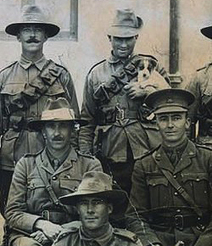
Records of Australian servicemen and women are preserved in the National Archives
Catherine Smyth's insight:
The National Archives of Australia is home to a range of primary sources from 1914-18.

alice fisher's comment,
July 26, 2013 12:23 AM
Hi. Have you tried http://mappingouranzacs.naa.gov.au/ Its due for some changes soon for the centenary, but a great resource for primary sources. It links straight into the NAA collection with a much friendlier interface. Regional students particularly can focus in on soldiers from their town based on birth or enlistment.
Scoop.it!

From
www

A companion website to THE GREAT WAR AND THE SHAPING OF THE 20TH CENTURY, a television series that goes beyond the military and political history of World War I to reveal its ongoing, social, cultural and personal impact.
Catherine Smyth's insight:
An American perspective of The Great War 1914-1918.
Scoop.it!
Catherine Smyth's insight:
Although this blog is UK based, teachers may find some useful tips for conducting a historical inquiry using primary sources.
|
Scoop.it!

The School Paper was a magazine published for use as a teaching text in schools. Here it shows crowds of men coming to enlist in the Army, and supports this with texts denouncing the German enemy and praising military volunteers.
Scoop.it!

Okay. It's more than 2000. It's way more than 2000. I'm just not sure how many it is and 2000 seemed like a safe, round number. You can find the more than 2000 historical maps using two very cool m... Via Maree Whiteley
Scoop.it!
An ABC 3D documentary site about the WW1 ANZAC landing at Gallipoli, on 25 April 1915. Via Louise Zarmati

Ann Eagles's curator insight,
April 2, 2014 10:17 PM
This resource is great for students to explore. The students are able to get a 3D animated version of what happened at Gallipoli. There is a section on the website where there are a selection of soldiers profiles from the different armies.
Teaching Activity: Students have watched the events of Gallipoli on a previous lesson. How did Ellis Ashmead-Barlett's involvement in Gallipoli help to contribute to Australia's identity? The class is split into 4 groups. Each group makes a mind map on each resource to answer the posed question. The groups then do the "gallery walk" (On the Cutting Edge, 2005) where they move around the room and contribute to the answers on each mind map. Each group then presents each mind map's answers to the rest of the class. The students focus on the interview of Les Carlyon, which is in the resource. They further explore Ashmead-Barlett by looking at the sources from Activity 2http://www.anzacday.org.au/education/activities/anzacday/images/anzacday.pdf and and http://www.awm.gov.au/exhibitions/dawn/legend/ashmead.asp. The students look at the account, written by Ashmead-Barlett about the Anzac landing, on page 100 on http://www.ictbin.com/aw/spirit/cambridge-kenwebb-sample_1_730549.pdf .The teacher scaffolds and helps students how to dissect and study the language used in the account. The gallery walk activity is used to encourage collaboration with peers, helps to construct knowledge as each student bring their own prior knowledge to each question, and promotes discussion and "team building" (NSDL, 2008). Literacy strategy: Dissect sentences and research what vocabulary was used to help romanticise the account.
Assessment activity: Students are to write a romanticised version account of a newspaper report, which informs readers of the Gallipoli landing. This is a formal "summative assessment" (Krause, Bochner & Duchesne, 2006, p. 407) as the teacher is checking that students have understood how to write a romanticised newspaper report and that they understand the events at Gallipoli.
Reference: ABC (n.d.). Gallipoli The First Day. An ABC 3D documentary site about WW1 Anzac landing at Gallipoli, on 25 April 1915. Retrieved from http://www.abc.net.au/innovation/gallipoli/
Australian War Memorial. (n.d.). Dawn of the Legend: 25 April 1915. Ellis Ashmead-Barlett. Retrieved from http://www.awm.gov.au/exhibitions/dawn/legend/ashmead.asp
Krause, K., Bochner, S., & Duchesne, S. (2006). Educational psychology for learning and teaching (2nd ed.). South Melbourne: Thomson Learning.
NSDL. (2008). Starting Point: Teaching Entry Level Geoscience. Why Use Gallery Walk? Retrieved from http://serc.carleton.edu/introgeo/gallerywalk/why.html
On the Cutting Edge. (2005). Designing Effective and Innovative Courses. Retrieved from http://serc.carleton.edu/NAGTWorkshops/coursedesign/tutorial/strategies.html
Ryebuck Media and Australian Defence Force. (2003). Anzac Day What does it mean to you today? www.anzacday.org.au. Retrieved from http://www.anzacday.org.au/education/activities/anzacday/images/anzacday.pdf
Webb. (2008). The First World War and the Anzac Legend. Cambridge University Press. Retrieved from http://www.ictbin.com/aw/spirit/cambridge-kenwebb-sample_1_730549.pdf
Scoop.it!

A guide to teaching primary school pupils about war memorials.
Catherine Smyth's insight:
Australian primary teachers can adapt the ideas on this site to teach young children about the importance of war memorials in the local community. This teaching guide contains ideas for integration across different subject areas including history, mathematics, literacy, civics and citizenship and creative arts.
Scoop.it!
Catherine Smyth's insight:
Is the First World War a significant historical event? What is significance?
Scoop.it!

Create an interactive, visually engaging timeline in minutes. Use dynamic visualization tools to display photos, videos, news and blogs in chronological order.

Ness Crouch's curator insight,
August 3, 2015 9:09 PM
Timelines are a way to organise historical information. However, dates alone do not allow students to vlsualise the time being referred to. Dipity is a useful tool to help students associate their visual images of history with the corresponding dates. Timelines should be comparative to help students see what life was life for a range of people at a given time. Understanding historical time includes two important aspects: 1) chronology which is being able to order moments in time; and 2) being able to match moments in time to specific dates. Research suggests children find it easier to sequence historical pictures than assign dates or names to historical periods (Barton, 1994,2002; Barton and Levstik, 1996). As children get older, they become better at ordering historical pictures on the basis of clues in technology, fashion and social roles. Primary children know what dates sound like and usually know what the current year is, but they find it difficult to associate periods in history with specific years.
Scoop.it!
The Memorial exists to help Australians commemorate the sacrifice of those who have served and died in war, and we're also an outstanding historical research...
Scoop.it!

Plans have been announced to commemorate the centenary of the first world war. Take this quiz to test your war knowledge
Catherine Smyth's insight:
Test your knowledge of World War 1 using this quiz from UK's The Guardian.
Scoop.it!
Catherine Smyth's insight:
Primary teachers might find some of the ideas on this site useful in planning teaching and learning activities about the First World War but it is probably more suitable for older students. The graphic organiser in "Gallery 5" provides an overview of the different perspectives to the war from Britain, France, USA and Germany.
Scoop.it!
Catherine Smyth's insight:
First World War from a UK perspective.
Scoop.it!
Catherine Smyth's insight:
The resources in this online exhibiton about the First World War have been organised into six different themes including family stories, people in documents and propaganda.
Scoop.it!
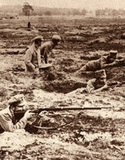
The Newspaper Pictorials: World War I Rotogravures collection tracks American sentiment about the war in Europe before and after the United States became involved.
Catherine Smyth's insight:
Background information and timeline showing key events of the war years 1914-18.
|