
An ABC 3D documentary site about the WW1 ANZAC landing at Gallipoli, on 25 April 1915.
Via Louise Zarmati
Get Started for FREE
Sign up with Facebook Sign up with X
I don't have a Facebook or a X account


|
Rescooped by
Catherine Smyth
from Teaching history and archaeology to kids
onto WW1 teaching resources August 24, 2013 8:55 PM
|
 Scoop.it!
An ABC 3D documentary site about the WW1 ANZAC landing at Gallipoli, on 25 April 1915.


 Your new post is loading...
 Your new post is loading...
Your new post is loading...
Scoop.it!
Catherine Smyth's insight:
The centenary of the First World War will be commemorated in 2014. What is commemoration? Why is it important to remember and mark this occasion? This resource from the Open University introduces the notion of history as commemoration and provides practical ideas on how to use written texts, letters, memorials and photographs to construct an historical narrative of past events.
Scoop.it!
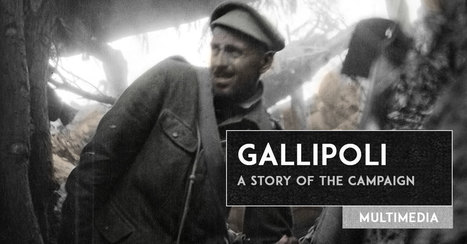
Follow the story of Gallipoli 100 years on, told in four parts - the background to the conflict, an account of the landing, the battles at Lone Pine, the Nek and Chunuk Bair, and the evacuation.
Scoop.it!
Catherine Smyth's insight:
Explore this extensive database of biographies and archival information about the University of Sydney's community members who served in the First World War.
Scoop.it!
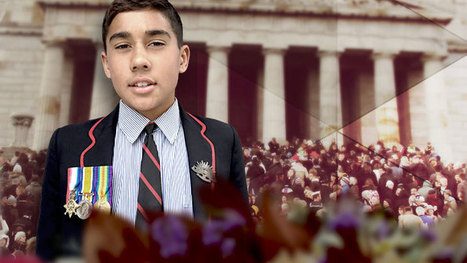
As you saw earlier, Anzac day commemorations were held on Friday. And on that day we were lucky enough to meet a young Aussie with a very special connection to it. His name is Anzac. Here's his story. But first, a warning to Aboriginal and Torres Strait Islander viewers, this story contains images of people who've died.
Catherine Smyth's insight:
Personal stories help young children learn about the past. Use historical narratives in the classroom to humanise significant events like war. In the book "What is History Teaching?, Chris Husbands describes how 'Storied thinking' is a central tool in the teaching and learning of history. Husbands suggests the teacher's role is to:

Catherine Smyth's curator insight,
March 23, 2015 6:59 PM
Personal stories help young children learn about the past. Use historical narratives in the classroom to humanise historic events like war. In the book "What is History Teaching?, Chris Husbands describes how 'Storied thinking' is a central tool in the teaching and learning of history. Husbands suggests the teacher's role is to:
Catherine Smyth's curator insight,
March 23, 2015 7:00 PM
Personal stories help young children learn about the past. Use historical narratives in the classroom to humanise significant events like war. In the book "What is History Teaching?, Chris Husbands describes how 'Storied thinking' is a central tool in the teaching and learning of history. Husbands suggests the teacher's role is to:
Scoop.it!
Catherine Smyth's insight:
Developed by the Department of Veteran's Affairs, this website features resources that can be adapted for the primary classroom.
Scoop.it!
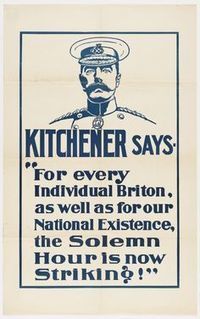
These posters were displayed in public places around Australia encouraging men to enlist. Prints are available from the Library Shop.
Catherine Smyth's insight:
Interested in how WW1 was advertised? Explore this array of Enlistment posters.
Scoop.it!
Catherine Smyth's insight:
Take this short quiz to assess your background knowledge about WWI.
Scoop.it!
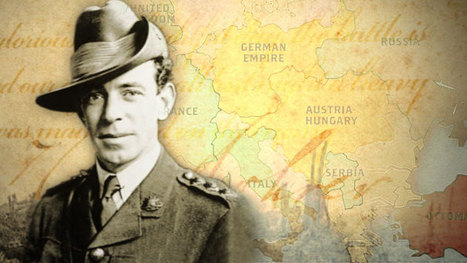
This week marks 100 years since the start of Australia's involvement in the First World War. At the time, very few people realised just how big an impact it would have on our country and the world. But how did it all happen? Here's Matt.
Catherine Smyth's insight:
Useful background information and teaching materials on the commencement of First World War and Australia's involvement in the conflict.

intoHistory's curator insight,
August 7, 2014 3:45 AM
More than 60,000 Australian boys lost their life on the European battle fields 100 years ago... What a price for a peace that took 20 more years to achieve. Appaling tragedy. Respect, gratitude and humility.
Scoop.it!
Catherine Smyth's insight:
A new exhibition of personal diaries from World War 1.

Sue Taylor's curator insight,
March 20, 2016 11:40 PM
A new exhibition of personal diaries from World War 1.
Scoop.it!
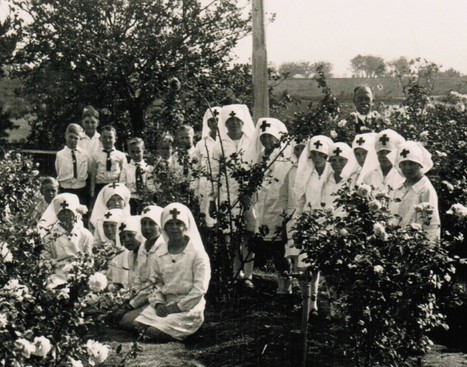
Since World War I, North Ryde Public School has had a Memorial Rose Garden. The rose garden has been located in different places within the school grounds over the years and was used as a focus for ANZAC Day services. This photo of the NRPS Red Cross was taken in in the rose garden in1930. …
Scoop.it!

Audio of the oration by then Prime Minister Paul Keating at the internment of the Unknown Soldier at the Australian War Memorial in November 1993.
Scoop.it!
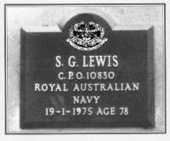
ANZAC is the name given to the Australian and New Zealand Army Corps soldiers who landed on the Gallipoli Peninsula in the East Mediterranean early on the morning of 25 April 1915 during the First World War (1914-1918).
|
Scoop.it!
Hear the poignant personal stories behind battlefield grave markers in Egypt, France and Gallipoli, as well as the stories behind workplace honour rolls, one of the most common, but often hidden, forms of war memorial in Australia.
Scoop.it!

The commercialisation and politicisation of Gallipoli has caused many Australians to be wary of centenary coverage, one historian says.
Catherine Smyth's insight:
The historian Claire Wright argues, "Anzac-ery" surrounding commemorations has moved Anzac from fact to legend, then myth and that many Australians are suffering from 'Gallipoli' fatigue. She also claims Australia is spending more money on its WW1 commemorations than in any country. If this is true, why?
Scoop.it!
Catherine Smyth's insight:
Beautiful reflections by primary students across the country.
Scoop.it!
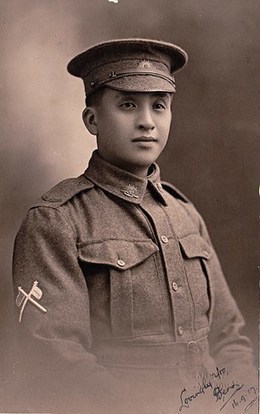
Stories of Chinese Australians who fought during World War I.
Catherine Smyth's insight:
"When World War One was declared, Australia issued a call to arms. The Chinese-Australian community rallied behind the war efforts. Over two hundred Australians of Chinese descent enlisted. One hundred and seven of these were from Victoria. Of those Chinese Australians who fought, forty-one died. No Chinese-Australian nurses who served in the War have been identified to date." (Culture Victoria). The 'Culture Victoria' website hosts a range of primary and secondary sources for teaching history.
Scoop.it!
Catherine Smyth's insight:
The website First World War.com provides a mulitmedia history of World War One.
Scoop.it!
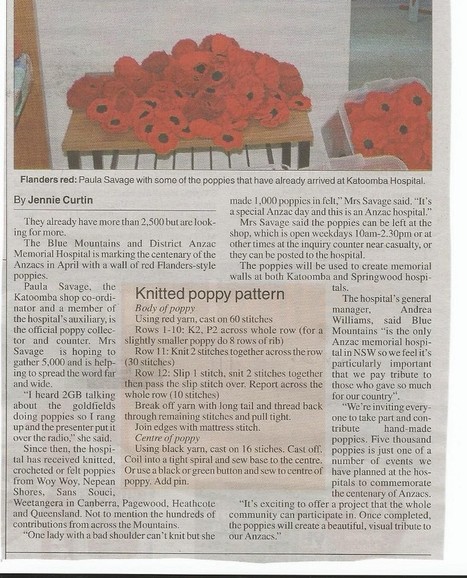
Each year teachers and students in Australian schools prepare for ANZAC DAY. This year will be no different.
Catherine Smyth's insight:
Blogger and educator, Jane Hunter, reflects on how Anzac Day is commemorated in a primary school setting.
Scoop.it!
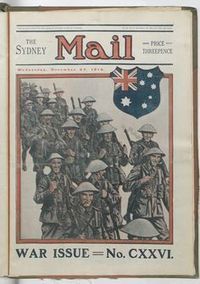
Weekly newspaper the Sydney Mail produced some emotive full-colour covers during World War I. This board contains just some of the highlights. We'll add one every day while our exhibition Life Interrupted is on show at the State Library of New South Wales. The Library has digitised all Sydney Mail covers produced during World War I, and you can see them all here: http://acms.sl.nsw.gov.au/album/albumView.aspx?itemID=1064155&acmsid=0
Catherine Smyth's insight:
Interested in how Sydney newspapers reported WW1? Explore the online digital collection of The Sydney Mail on this State Library NSW Pinterest board.
Scoop.it!
A lesson ideaStudents will think this lesson should make the headlines when they finish researching Ernie Pyle’s work in preparation for writing their own news articles.
Catherine Smyth's insight:
Although this lesson is aimed at a Year 9 -12 level and focuses on World War II, it could be adapted for learning about WWI and modified for younger students. Developed by a classroom teacher, the lesson provides opportunities for students to work like a journalist and use a range of sources to report on an event.
Scoop.it!
Catherine Smyth's insight:
Explore the rich collection of online archives for First World War.
Scoop.it!
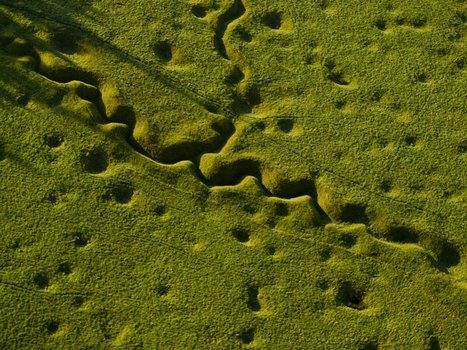
Photographs of the abandoned battlefields reveal the trenches’ scars still run deep
Catherine Smyth's insight:
A geographical perspective of World War 1.

Alyssa Dorr's curator insight,
December 17, 2014 11:19 AM
Europe's landscape is still scared by World War I. Many photographs are shown in this article of abandoned battlefields that reveal the trenches scars. It has been at least a century since the Great War, yet the country is still buried with scars. In this image by Irish landscape photographer Michael St. Maur Sheil, you can trace grass-covered trenches and pockmarks from exploded bombshells. Millions of men were injured or even killed right in this very spot, which was the first major British offensive of the war. Artists take these photographs to document the legacy that was left on that battlefield. Sheil was very famous for photographs such as these. He includes seventy-nine contemporary photographs of World War I battlefields and has them on display in Paris along the wrought-iron fence of Luxembourg Gardens. 
Jacob Conklin's curator insight,
February 12, 2015 6:57 PM
People often forget that the world doesn't reset after a major war. World War I was one of the most destructive wars in Europe's long history, not only in terms of human casualties, but also in terms of physical destruction. The heavy use of trench warfare left an everlasting mark on the landscape. Soldiers dug trenches that were miles long and use them for protection from enemy fire. Any observer can see that bullets do not turn corners and that a soldier can hide within the trench and be impervious to gunfire. There is one major weakness in this tactic that explains the dips in the landscape surrounding the trenches. In order to reach the enemy soldiers, bomb and mortar attacks were very effective. The everlasting geographical scaring of the land tells the history of what took place in an area, from wars in Europe to glacial movement in Alaska. The landscape never forgets. 
Brian Wilk's curator insight,
March 28, 2015 10:11 AM
This particular landscape shows trenches and the remains of bombed out fields where one million British soldiers where either killed or wounded by the Germans. I cannot fathom the heartache and loss that these families must have experienced and in some cases still are. How many future leaders or scientists or Nobel Peace Prize winners were killed here? How might the world be a better place but for the butchering of these soldiers? Multiply that though by the hundreds of wars fought throughout civilization. We could be so far advanced as a society, instead we chose and continue to choose wars that contain costs we can't even quantify. I'd like to see cancer cells being destroyed, not people, housing being built instead of propaganda, education instead of anarchy. No more scars, let's build beautiful monuments to society, like peace.
Scoop.it!
Catherine Smyth's insight:
Language is a window into the past. This site discusses how slang, used by soldiers during WW1, not only shaped Australian identify but also acted as an important coping mechanism for those in the trenches.
Scoop.it!

Australians at War is a website designed to complement the Australians at War TV series, and is dedicated to those Australians who served their nation over the past one hundred years. Via Timothy Joel Dagwell

Timothy Joel Dagwell's curator insight,
April 7, 2014 9:39 AM
During World War II, British Prime Minister Winston Churchill said these famous words, “Never in the field of human conflict was so much owed by so many to so few.” Though the means, and often the ends too, of war are tragic, this quote rings very true for us today who live in the freedom given to us by the few who have laid down their lives for their nation.
This resource is a highly interactive one, which was made to compliment the Australians at War TV series and is dedicated to those who served their nation of the past one hundred years. There is a clear link here, then, between this resource and the subject matter "world achievements by Australians, past and present" of outcome CCS3.1 of the Human Society & its Environment K-6 Syllabus (Board of Studies NSW, 1998, pp. 59-60).
When speaking about the nature and purpose of ICT resources, Gilbert and Hoepper (2011, p. 181) argue that though new technologies can make a substantial contribution to teaching and learning, they must be used judiciously and imaginatively if this potential contribution is to be realised. In light of this argument, one idea for the use of this resource is to split students into small groups of approximately two to three students and have each group investigate a different aspect of the content in the resource (e.g. different years, different people, etc.). Then, after the investigation is complete, have the groups form "expert groups" with students from other groups and share what they have learned.
References: Board of Studies NSW (1998). Human Society and its Environment K-6 Syllabus. Retrieved fromhttp://k6.boardofstudies.nsw.edu.au/go/hsie/
Gilbert, R., & Hoepper, B. (2011). Teaching society and environment. (4th ed.). South Melbourne: Cengage Learning Australia. |



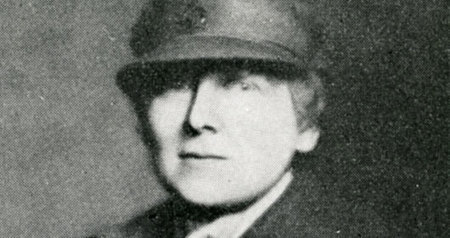
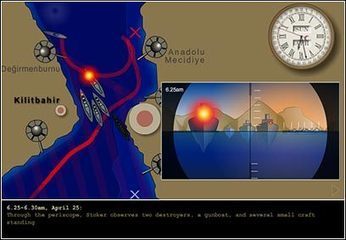
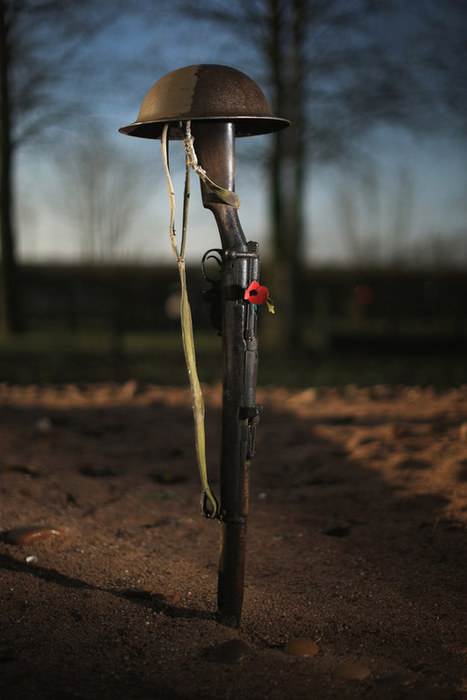
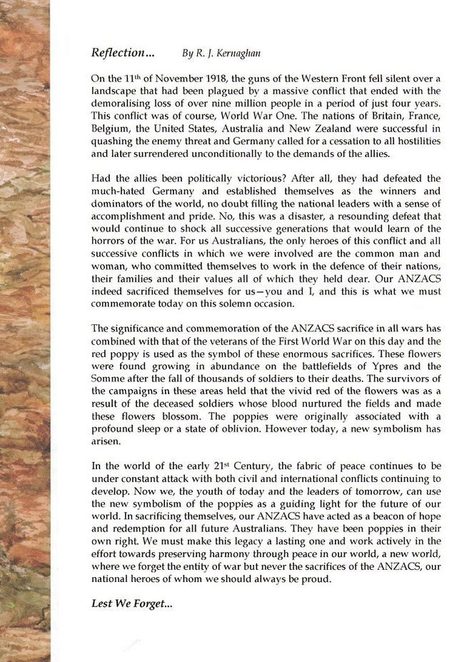
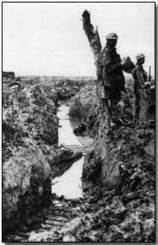
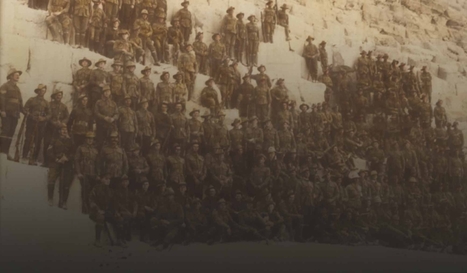


This resource is great for students to explore. The students are able to get a 3D animated version of what happened at Gallipoli. There is a section on the website where there are a selection of soldiers profiles from the different armies.
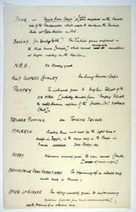
Teaching Activity: Students have watched the events of Gallipoli on a previous lesson. How did Ellis Ashmead-Barlett's involvement in Gallipoli help to contribute to Australia's identity? The class is split into 4 groups. Each group makes a mind map on each resource to answer the posed question. The groups then do the "gallery walk" (On the Cutting Edge, 2005) where they move around the room and contribute to the answers on each mind map. Each group then presents each mind map's answers to the rest of the class. The students focus on the interview of Les Carlyon, which is in the resource. They further explore Ashmead-Barlett by looking at the sources from Activity 2http://www.anzacday.org.au/education/activities/anzacday/images/anzacday.pdf and and http://www.awm.gov.au/exhibitions/dawn/legend/ashmead.asp. The students look at the account, written by Ashmead-Barlett about the Anzac landing, on page 100 on http://www.ictbin.com/aw/spirit/cambridge-kenwebb-sample_1_730549.pdf .The teacher scaffolds and helps students how to dissect and study the language used in the account. The gallery walk activity is used to encourage collaboration with peers, helps to construct knowledge as each student bring their own prior knowledge to each question, and promotes discussion and "team building" (NSDL, 2008). Literacy strategy: Dissect sentences and research what vocabulary was used to help romanticise the account.
Assessment activity: Students are to write a romanticised version account of a newspaper report, which informs readers of the Gallipoli landing. This is a formal "summative assessment" (Krause, Bochner & Duchesne, 2006, p. 407) as the teacher is checking that students have understood how to write a romanticised newspaper report and that they understand the events at Gallipoli.
Reference: ABC (n.d.). Gallipoli The First Day. An ABC 3D documentary site about WW1 Anzac landing at Gallipoli, on 25 April 1915. Retrieved from http://www.abc.net.au/innovation/gallipoli/
Australian War Memorial. (n.d.). Dawn of the Legend: 25 April 1915. Ellis Ashmead-Barlett. Retrieved from http://www.awm.gov.au/exhibitions/dawn/legend/ashmead.asp
Krause, K., Bochner, S., & Duchesne, S. (2006). Educational psychology for learning and teaching (2nd ed.). South Melbourne: Thomson Learning.
NSDL. (2008). Starting Point: Teaching Entry Level Geoscience. Why Use Gallery Walk? Retrieved from http://serc.carleton.edu/introgeo/gallerywalk/why.html
On the Cutting Edge. (2005). Designing Effective and Innovative Courses. Retrieved from http://serc.carleton.edu/NAGTWorkshops/coursedesign/tutorial/strategies.html
Ryebuck Media and Australian Defence Force. (2003). Anzac Day What does it mean to you today? www.anzacday.org.au. Retrieved from http://www.anzacday.org.au/education/activities/anzacday/images/anzacday.pdf
Webb. (2008). The First World War and the Anzac Legend. Cambridge University Press. Retrieved from http://www.ictbin.com/aw/spirit/cambridge-kenwebb-sample_1_730549.pdf