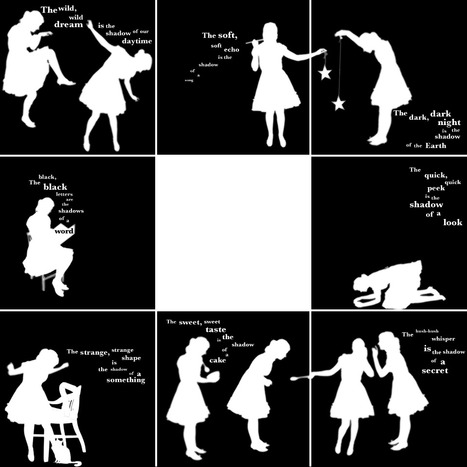
-"If you imagine less, less will be what you undoubtedly deserve. Do what you love, and don’t stop until you get what you love. Work as hard as you can, imagine immensities, don’t compromise, and don’t waste time. Start now. Not 20 years from now, not two weeks from now. Now."-
"The seasonal trope of the commencement address is upon us as wisdom on life is being dispensed from graduation podiums around the world. After Greil Marcus’s meditation on the essence of art and Neil Gaiman’s counsel on the creative life, here comes a heartening speech by artist, strategist, and interviewer extraordinaire Debbie Millman, delivered to the graduating class at San Jose State University. The talk is based on an essay titled“Fail Safe” from her fantastic 2009 anthology Look Both Ways: Illustrated Essays on the Intersection of Life and Design (public library) and which has previously appeared onLiterary Jukebox. The essay, which explores such existential skills as living with uncertainty, embracing the unfamiliar,allowing for not knowing, and cultivating what John Keats has famously termed“negative capability,” is reproduced below with the artist’s permission."
Dr Maggie Butt -- Deputy Dean at Middlesex University -- tells us why she is so excited about this A-level, and explains how it will provide a strong progres...
Why use this Learning Center Approach- well many elementary teachers ask what they can do with only a handful of devices in their classrooms. Similarly, we often discussed the role of Interactive White Boards in a class that should be more student-centric. By taking this center approach, teachers can put the technology in the hands of their students, differentiate their instruction, and create multiple opportunities for learning.
Geoff Livingston: "Stories told across multi-platform media environments — or transmedia stories as they are commonly called on the edge — require more complex writing. A story unfolds across diverse media with readers/viewers opting in to each layer."
Project 1 – Creating a digital story with Book Creator
Goal: Create a digital story integrating text and images using Book Creator.
Apps: I focus on Book Creator. Another popular app is Story Buddy.
Optional Resources: If you like to prepare before starting, check out some of these resources. If you’re someone who likes to just jump in, skip this and start working!
Read the Getting Started Tutorial in Book Creator (you’ll see it when you open the Book Creator app
Check out the Book Creator Help site
Watch a Book Creator Tutorial on Youtube here or here
"In this project I’ll actually be focusing on the students doing the teaching. There are a number of apps out there that allow students to do a screen-capture or screencast, that is, allowing them to create a video of their iPad screen while doing some action. There are lots of applications to do this, but one thing I am aiming to do more of this year is allowing students to show their thinking by doing a screencast.
"If you can imagine walking around a math class and asking every student to explain their thinking behind a math problem, that might be quite hard to accomplish in one period. But, to have each kid solve a problem on their iPad while they talk through it not only allows you to see their thinking at a later time, it also gives the student the chance to rehearse and practice their thinking through oral language. Through the explanation they are cementing their understanding and uncovering uncertainties."
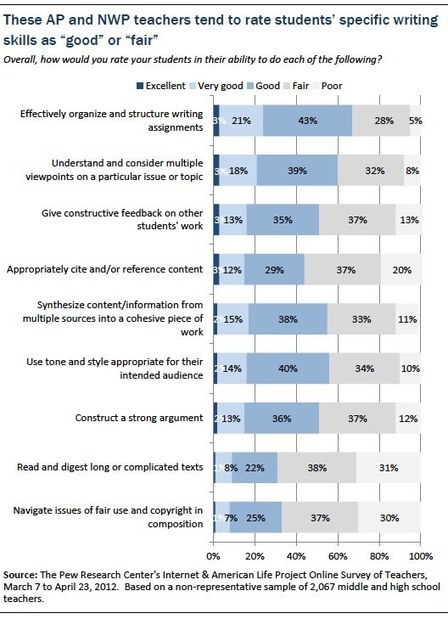
A survey of 2,462 Advanced Placement (AP) and National Writing Project (NWP) teachers finds that digital technologies are shaping student writing in myriad ways and have also become helpful tools for teaching writing to middle and high school students. These teachers see the internet and digital technologies such as social networking sites, cell phones and texting, generally facilitating teens’ personal expression and creativity, broadening the audience for their written material, and encouraging teens to write more often in more formats than may have been the case in prior generations.
Extract evidence from literature or informative texts to analyze, reflect, and assist your research. Use other reading standards for 6th grade for both fiction and non-fiction.
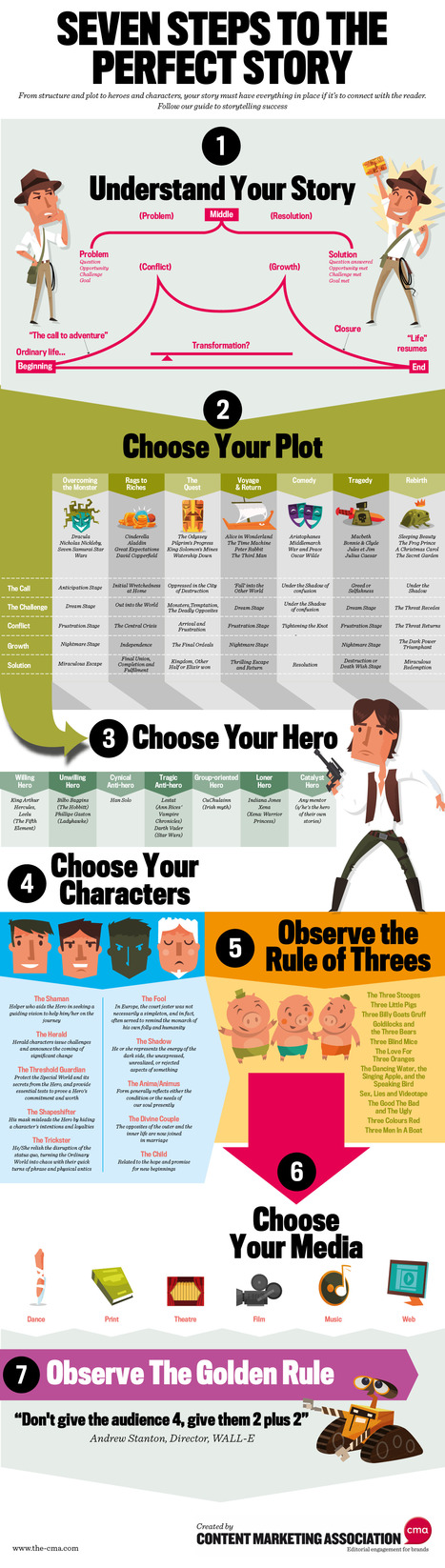
Seven steps to the perfect story is a great visual representation of how to build a story. This clearly explains the process of how students can construct their narrative and the types of characters they will use. I would definitely use this in my classroom to help students understand the process of creating a narrative.
"At the end of each school year, I ask my students to select several different writing assignments produced throughout the year and edit those pieces to reflect their current ability. My hope is that they will see and appreciate their own growth and development as writers in the process. These portfolios took the form of binders, until this year.
"My class is almost entirely paperless now, which is why I decided to transition from a paper to a digital portfolio. Students write everything on Google docs and submit their work digitally, so it didn’t make sense for them to print out their work and create binders. Instead, I had them create a website and publish their revised work online.
"In addition to digital writing, my students have created infographics, multimedia timelines, Google presentations and digital stories. I wanted all of these incredible pieces displayed on their websites."
Michelle Lhooq: 'The increased predominance of mobile devices—not to mention our clingy dependence on them—has sparked a boom of ambitious apps for phones and tablets that are case studies for storytelling in the “digital age.”'
Whenever a message in a bottle is discovered on a beach or floating in the ocean, it feels like something out of a fairy tale. The idea that two people have made a connection that mathematics would say is virtually impossible gives us hope that life is more than a series of random events. Here are five stories of the almost unbelievable connections these messages have brought about.
"Several years ago, I came across the Purposeful Reading Assignment that was reported to encourage students to read, reflect, and write about readings assigned for class. Research (Roberts and Roberts, 2008) and experience tell us that supporting students’ reading, writing, and reflective practices is one of the most challenging aspects of learning and teaching. Although this assignment appeared to be simple, it has proven to be an influential tool for learning and has increased engagement and participation among my students....
"After using the 3-2-1 several times in this course, we discussed its use as a tool for learning. Students were unanimous in their agreement that the three questions made them think deeply and critically about the readings. They reported greater confidence in their capability to discuss the reading and to achieve this they had to read the article for general understanding and then again to enable them to complete the report."
Project 2 – Collaborative Writing with Google Docs
Goal: To create a collaborative writing document
Apps: Google Drive
Optional Resources: If you like to prepare before starting, check out some of these resources. If you’re someone who likes to just jump in, skip this and start working!
Google Drive information from Google
Google Drive app for iPad information
Video tutorial about Google Drive
Google Docs in Plain English (an old resource, but worth a watch)
Remember reflection? That's something we used to do occasionally before we all became addicted to checking our Web-enabled devices every few minutes for our much-needed digital data fixes. Prior to...
:) .. curious, does the constant burst mode style of reading we now getting acustomed to, afforded by our various mobile devices, errode our ability to stop think and reflect? ... i would like to think not.
"Making a mind map should be a spontaneous pre-writing activity. Students start with a topic at the centre and then generate a web of ideas from that, developing and relating these ideas as their mind makes associations.
"Mind maps work well as their visual design enables students to see the relationship between ideas, and encourages them to group certain ideas together as they proceed. Mind maps work especially well when created in groups, since the discussion this engenders aids the production of ideas, and makes the task livelier and more enjoyable."
"Mobile technology has made everything easier and more enjoyable to do. Those who love writing, for instance, can now find new ways to write anywhere they are and share what they have written with all the world and again from anywhere they are with an internet connection.If you have an iPad or you use one with your students , below is a bunch of great apps that can help you pursue your writing passion on the go. You can also share these apps with your students and encourage them to develop a writing habit. Check out the updated list I have for you today and don't forget to share with us your comments and additions. Enjoy"
In a survey of Advanced Placement and National Writing Project teachers, a majority say digital tools encourage students to be more invested in their writing by encouraging personal expression and providing a wider audience for their work.
Bosse Larsson is a Swedish educator/ teacher and a learning designer. He has a long experience of working with creative thinking with students 13-20 years ol...
To get content containing either thought or leadership enter:
To get content containing both thought and leadership enter:
To get content containing the expression thought leadership enter:
You can enter several keywords and you can refine them whenever you want. Our suggestion engine uses more signals but entering a few keywords here will rapidly give you great content to curate.


 Your new post is loading...