Your new post is loading...

|
Rescooped by
Jim Lerman
from Into the Driver's Seat
October 17, 2013 8:17 AM
|
All-day on Saturday, Oct. 19, SimpleK-12 sponsors a free series of 7 online webinars for classroom teachers on Digital Storytelling. Topics include Creativity and Innovation, Publishing Digital Books, Digital Personas with Talking Avatars, Timelines as Story Mechanisms, Talking Pictures, Using iPhones, Maximizing Value from the Teacher Learning Community. Presentations use free resources.
|
|
Scooped by
Jim Lerman
October 15, 2013 12:37 AM
|
"I’m a huge believer that mastering point of view (POV) will solve 99% of common writing problems. If a writer understands POV, then showing comes naturally, description is easier to write, character goals are clear, the stakesare personal, and thus stories feel more organic."
|
|
Scooped by
Jim Lerman
October 15, 2013 12:28 AM
|
Sam Patterson's ISTE 13 presentation on the best digital tools to use to support writer's workshop. Includes full video of preso, just the slides, and notes from the preso. Truly wonderful capture of the info presented. -JL
|
|
Rescooped by
Jim Lerman
from Writing Rightly
October 15, 2013 12:01 AM
|
"Of all the scenes we write, dialogue is the most complex and rich. Most writers I know take several passes to get it right."
Penelope Silver's insight:
"Dialogue is one of those tricky areas that trip up many authors--myself included. As I am writing my first romance novel, I run into areas such as: "How much dialogue is enough? When and where should you insert dialogue? When should you move from narrator consciousness to talking? How long should you make the responses? "Author Roz Morris gives us seven simple steps to writing great dialogue. You would think most would seem obvious, but some of them are real ah ha! moments. I really appreciate these tips: "VISUALS - People move as they talk. They shrug, make faces, cook, clean, etc. Create a picture in your reader's mind. This will create a richer, more dramatic scene. "REACTIONS - Are the characters reacting and talking or does their internal dialogue evaporate when they start being vocal? "DECLUTTER - Think of your reader when you write dialogue. Readers scan through these scenes quickly, and don't need to be told of every breath and blink. Let your scene sit for a few days, and go back at it with fresh eyes to take out the fat. "Head on over to the article to read four more great tips!" ***This review was written by Penelope Silvers for her curated content on "Writing Rightly"*** Link to the original article:http://nailyournovel.wordpress.com/2013/04/28/write-great-dialogue-scenes-in-7-steps
Via Penelope
|
|
Rescooped by
Jim Lerman
from Writing Rightly
October 14, 2013 11:56 PM
|
"Always keep in mind what is expected in the genre you’re writing. If you’re writing a category romance, then the hero and heroine must unite at the end."
Penelope Silver's insight
"Writing endings for our stories could be the easiest thing in the world or the hardest. The best way to begin is to ponder on what kind of ending is expected for the genre in which you are writing. If you are writing a category romance, readers are going to expect the love interests to finally get together and have a happy ending. There have been exceptions (Romeo and Juliet or Love Story). If you are a reader anticipating a romantic story and happy ending, do you want to read a tragic ending? I don't. "The 10 tips presented should give you a great beginning to write your own ending. Check out the article for all the details. 1. Always keep in mind what is EXPECTED in the genre. 2. Avoid the dreaded DEUX EX MACHINE (gods taking care of it). 3. Think APPROPRIATE ending rather than satisfying ending.
4. NO MISERABLE ENDINGS for characters to no real purpose
5. Struggling? Compose an EVENT. Bring most characters together
6. REALLY struggling—go back to the BEGINNING.
7. When the story is over—STOP.
8. BEWARE of TOO MUCH BUILD UP with too quick a resolution.
9. No need to tie up every little plot string, but TIE UP MOST of them
10. EPILOGS: I kind of like them (peek into the future)" ***This review was written by Penelope Silvers for her curated content on "Writing Rightly"*** Link to the original article:http://debravega.wordpress.com/2013/08/18/10-tips-for-writing-endings-to-your-story/
Via Inspire the Muse, Penelope
“ Writing faster than you think possible can unleash creativity and prevent writer's block.”
Via stan stewart
|
|
Rescooped by
Jim Lerman
from game based learning
October 14, 2013 4:04 PM
|
“ See on Scoop.it – Tracking Transmedia Game writing struggles with the contradictions of storytelling because the approach is wrong. The right approach is storysensing, not storytelling…. Dramaturgy (What Stories Are)It all ...”
Via Jeni Mawter, Jeffrey Earp
|
|
Scooped by
Jim Lerman
October 14, 2013 12:24 AM
|
by Med Kharbach
"YouTube is definitely one of the video repositories we teachers and educators use to look for educational video resources to share with our students. But what if the video you find is 30 minutes long and the segment that you want to share from this video is only two minutes long.Would you share the whole video then forward play it to the part you want or is there another simpler way to do it?
"Well, there are several ways to chop YouTube videos and I have already reviewed some of these tools in this post. However, today , I am sharing with you two practical tips I learned from Chris Kesler."
|
|
Scooped by
Jim Lerman
October 13, 2013 11:41 PM
|
by Maria Popova
"As an appreciator of the art of visual storytelling by way of good information graphics – an art especially endangered in this golden age of bad infographics served as linkbait – I was thrilled and honored to be on the advisory “Brain Trust” for a project by Pulitzer-Prize-winning journalist, New Yorkerwriter, and Scientific American neuroscience blog editor Gareth Cook, who has set out to highlight the very best infographics produced each year, online and off. (Disclaimer for the naturally cynical: No money changed hands.)The Best American Infographics 2013(public library) is now out, featuring the finest examples from the past year – spanning everything from happiness to sports to space to gender politics, and including a contribution by friend-of-Brain Pickings Wendy MacNaughton – with an introduction by none other than David Byrne. Accompanying each image is an artist statement that explores the data, the choice of visual representation, and why it works."
|
|
Scooped by
Jim Lerman
October 13, 2013 1:49 AM
|
by Meghan Ward
"Here are 15 ways you can use transmedia storytelling to expand your story’s audience, followed by a list of 25 different media you can use to tell stories."
|
|
Scooped by
Jim Lerman
October 13, 2013 1:38 AM
|
by Miguel Guhlin
"As a writer, I know that reading often preceeds writing. Pre-Writing is essentially our first effort at wrestling with ideas, putting them down in a structure or form that is changeable, malleable and impermanent. There are several ways to accomplish this, and the iPad makes that work possible. Here are some ways that one can iPadify PreWriting:"
|
|
Rescooped by
Jim Lerman
from Learning & Technology News
October 12, 2013 5:35 PM
|
If we look into the not-too-distant future, it appears that -- whether we like it or not -- dictation technologies will have effects on writing instruction. The time has come for us to decide exactly what kind of effects we intend for those to be.
Via Nik Peachey
|
|
Rescooped by
Jim Lerman
from Digital Delights for Learners
October 12, 2013 5:32 PM
|
|
|
|
Rescooped by
Jim Lerman
from Writing_me
October 15, 2013 12:46 AM
|
"Many of us go about our lives constantly surrounded by screens, immersed in various "stories": movies, TV shows, books, plot-driven video games, news articles, advertising, and more. Whether we realize it or not, we're creating new behaviors, routines, mindsets, and expectations around what we watch, read or play—which in turn presents new challenges and opportunities for creators and marketers.
"In other words, while the fundamentals of good storytelling remain the same, technology is changing how stories can be told. But what does that mean exactly?
"Since last year, Latitude, a strategic insights consultancy, has been conducting an ongoing Future of Storytelling initiative to understand what audiences want for the long haul. Below are eight predictions for the future of storytelling based on what we found. (More information about Latitude's multi-phase research project is available here.)
Jim Lerman's insight:
If your are involved with, or interested in, storytelling in any way, this article is essential reading...because it presents a clear picture of ways in which storytelling is very likely to change in the near future.
Via Kamal Bennani, Alessandro Rea
|
|
Rescooped by
Jim Lerman
from Digital Delights
October 15, 2013 12:30 AM
|
What constitutes digital literacies is an interesting topic in contemporary learning environments. When I was teaching in a school I spent much energy trying to convince the “literacy team” that th...
Via Ana Cristina Pratas
|
|
Rescooped by
Jim Lerman
from Teaching Writing
October 15, 2013 12:19 AM
|
Five fantastic online tools educators can use to encourage student storytelling. Start telling vibrant and exciting stories and have fun doing it!
Via José Carlos, Carla Arena, kathymcdonough
|
|
Rescooped by
Jim Lerman
from Writing Rightly
October 14, 2013 11:57 PM
|
These elementary writing prompts are great for getting the students writing, in a non-pressurized, fun way.
Penelope Silver's insight
"Sometimes we all need a little push to get going on a writing spree. Students are just beginning their writing journey, so this article could be a big help for teachers. It gives 52 Elementary Writing Prompts--one for every week of the year--to get their little fingers flying. "I shared it because there are also some great story prompts here for adults. I believe these could be used to jog our memories about certain events in our lives. It just may lead to a short story, and then possibly a book! "Have fun with them, let your imagination run wild, and see where it takes you!" ***This review was written by Penelope Silvers for her curated content on "Writing Rightly"*** Link to the original article:http://www.journalinghelps.com/Elementary-Writing-Prompts.html
Via Penelope
|
|
Rescooped by
Jim Lerman
from Writing Rightly
October 14, 2013 11:50 PM
|
Insights, inspiration, and practical advice for writers
My brain is a storm all right. It is sometimes more like a storm drain; all the ideas go whooshing through. Mind mapping is an amazing tool for harnessing those ideas into usable format. Using Freemind software, I once mind mapped out an entire book in a half hour. I personally love the way it allows your creative mind to flow uninhibited; as you see the ideas pile up, right in front of your eyes, more ideas pop up. Think of mind maps as travel maps. They help you get to where you want to go with your novel. Read the article for more details on how this process actually works. ***This review was written by Penelope Silvers for her curated content on "Writing Rightly"*** Link to the original article:http://www.livewritethrive.com/2013/09/23/harnessing-the-storm-in-your-brain-through-mind-mapping/
Via Penelope
|
|
Rescooped by
Jim Lerman
from The Creative Mind
October 14, 2013 6:58 PM
|
"It is in the movements of emotional crisis that human beings reveal themselves most accurately." "While we refuse to organize the confusions within us we will never have an objective understanding of what is happening outside." "Today a novelist’s preoccupation with inner psychological distortions does not stem from a morbid love of illness but from a knowledge that this is the theme of our new reality."
Via Douglas Eby
|
|
Rescooped by
Jim Lerman
from The 21st Century
October 14, 2013 3:52 PM
|
“ These web-based applications will have you creating animations in no time.”
Via Dr. Susan Bainbridge
|
|
Scooped by
Jim Lerman
October 14, 2013 12:00 AM
|
"This half term I have been working with a year 5 class on a Thursday afternoon. We have been basing our work around the theme from the Film Blackfish about Whales in captivity. In the first week back in September, after discussing the film with the class, the class created an awareness video, which supported the fight to free Orca whales in captivity.
"The amount the children have been blogging about this topic has been amazing! The standard and quality of writing is clear to see as children know that their writing is being read by experts and professionals all over the world - You can read some of their work here." "From this reaction, it has provided the class with an audience and therefore a REAL purpose to write. I had to use this opportunity and the platform of the blog to share children's writing about this topic. "The amount the children have been blogging about this topic has been amazing! The standard and quality of writing is clear to see as children know that their writing is being read by experts and professionals all over the world - You can read some of their work here."
|
|
Scooped by
Jim Lerman
October 13, 2013 2:28 AM
|
Illustration above is J.K. Rowling’s spreadsheet plan for Harry Potter and the Order of the Phoenix.
by Emily Temple
"Writing a novel (or a story, for that matter) is confusing work. There are just so many characters running all over the place, dropping hints and having revelations. So it’s no surprise that many authors plan out their works beforehand, in chart or list or scribble form, in order to keep everything straight. After the jump, you’ll find a mini collection of those planning papers, so you can take a peek into the process of some of your favorite authors, from James Salter to J.K. Rowling."
|
|
Scooped by
Jim Lerman
October 13, 2013 1:47 AM
|
by Bryce Renninger
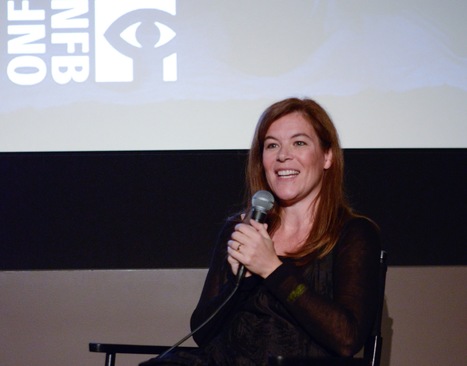
"As transmedia has come and gone as a buzz word and various other words have come to take its place (will we agree on "Interactive storytelling"?), two things remain certain: The National Film Board of Canada has devoted the most resources, time, and energy to ensuring this mode of storytelling evolves and excites, and the work of Katerina Cizek is absolutely unmissable.
"Today, her new interactive documentary "A Short History of the Highrise" has debuted on the website for the New York Times. The new film sucks you in immediately. "A Short History of the Highrise" works as an interactive and more focused companion piece to Gary Hustwit's "Urbanized," the "Helvetica" director's examination of urban design, but more directly, it's the masterpiece behind Cizek's larger "Highrise" project."
|
|
Scooped by
Jim Lerman
October 13, 2013 1:30 AM
|
by Sue Waters
"The aim of this step is to introduce you to a range of easy to use online tools that you can embed into posts and pages. We’ve embedded examples of each tool in this post to help you work out how the tool could be used with your students."
Click on a link below to go to the section you want to work on: - Why educators embed interactive tools
- Tools by activity type
- How to embed media in blog posts
- What now?
|
|
Scooped by
Jim Lerman
October 12, 2013 5:34 PM
|
(This is the final post in a series on this topic. You can see Part One here and Part Two here) Anjilla Young and Lori DiGisi both asked a similar question: What can we do to prepare for the Common Core writing skills in our classrooms?
|