Your new post is loading...

|
Rescooped by
Jim Lerman
from Feed the Writer
April 19, 2014 9:30 PM
|
Did you know that there are only 7 basic plotlines throughout all story telling?
Christopher Booker author of The 7 basic plots distills all of story telling to 7 basic archetypes that make up all of storytelling throughout history.
Sarah McElrath's insight: Written for marketing -- helpful for writers of all sorts.
Via Sarah McElrath
|
|
Rescooped by
Jim Lerman
from Into the Driver's Seat
April 16, 2014 7:19 PM
|
description by Graphite
What's It Like?"Thimble is an online webpage editor and set of remixable projects designed to help kids learn how to write the Web. As part of Mozilla's Webmaker project, Thimble displays two windows at once to show kids how the code they write creates the webpage they see on a browser. As kids edit code in the left-side window, the changes they make to things like color, font, and images immediately take effect on the right. Thimble projects featured on the Webmaker homepage are great for beginners and experienced programmers alike. Comments included in each project explain its code and how to change it. Thimble also lets kids compose their own webpages from scratch when they're ready to work independently. Using Thimble lets kids experience the joy of discovering that they, too, can create and publish webpages using authentic code.
Is It Good For Learning?"Because it's designed to show kids how what they do changes how their webpages look, Thimble a great way to learn code, web design, and problem-solving skills. Thimble gives kids immediate feedback about personally meaningful work. Alerts about "bugs" in the code help kids easily find and fix any errors that keep their webpages from looking just right. Once students get some experience coding, they'll be ready and eager to see how they can use Thimble to publish their classwork and projects online using text and multimedia. The comments in each project and the online community of volunteer Webmaker mentors provide immediate support as students remix projects and begin making their own webpages. As a free, open, and well-supported platform, Thimble, like Scratch, provides one of the most inviting and supportive environments available for kids who want to code and feel like they're a part of the current learn-to-code and social coding movements."
|
|
Scooped by
Jim Lerman
April 13, 2014 8:46 PM
|
by Cameron Chapman
"Twitter is a great way to connect with others who share your interests or offer information you value. There are Twitter users covering virtually every niche out there. Writers and authors are no exception. Below you'll find a listing of more than 100 authors active onTwitter.
"One very apparent trend is that some authors only plug their books or related products in their tweets and never provide any other information. These authors were culled from the list in favor of those writers who are trying to carry on a conversation with their followers and present information they might find valuable, whether it directly benefits them or not. After all, why would I want to follow someone who only tries to sell me something?"
|
|
Scooped by
Jim Lerman
April 10, 2014 12:04 PM
|
by Gerry Petersen-Incorvaia
"The writing process is similar to many of the processes, practices, and thinking found in content areas other than math or ELA. Knowing this helps a teacher assist students in transferring their learning from one content area to another. For example, as an arts teacher who sees students for about 40 minutes once a week, I know I cover the artistic practices listed in the Figure 1. However, I know arts teachers may not have time to do full writing lessons that include all of the writing process steps. By substituting imagination for prewriting; investigation for drafting; and the construction and reflection process for the rough draft, proofreading, revising, and publishing steps in writing, I have linked the writing process with artistic practices. I can easily have students draft a brief reflection to showcase writing during the artistic process. Figure 1 links you to resources for teaching your subject area's specific writing processes and serves as a reference guide to the steps within each subject area's specific approaches to writing." Jim Lerman's insight: Excellent graphic organizers in this article for educators
|
|
Rescooped by
Jim Lerman
from :: The 4th Era ::
April 7, 2014 8:17 PM
|
"We are pleased to announce the Learning Revolution Conference, online and free, April 21 - 25, 2014. Our goal is to bring together people who are thinking about learning from our important learning places: the school, library, museum, work, adult, online, non-traditional, and home learning worlds.
"We want to explore and bridge the conversations about learning that are common to these worlds, including: learning theory, learning practice, learning science, learning space design, and technology for learning. The Internet is shifting the boundaries of these worlds and we believe that they will increasingly overlap and integrate. We also believe that conversations across these boundaries are critical to framing and preparing for the learning revolution starting to take place.
"The first three days of the event will have evening (US Time) keynote speakers. The final two days of the conference will include as well a full set of traditional conference sessions during the day.
"The conference will be held in multiple languages and time zones. Everyone is invited to participate in this FREE event designed to foster conversations about learning from often-separate fields: school, library, museum, work, adult, online, non-traditional, and home education.
"To be kept informed of the latest conference news and updates, please join the Learning Revolution network. You do not need to join this network to attend, but doing so will also allow you to correspond with the presenters and other members, and to comment on sessions and discussions."
|
|
Scooped by
Jim Lerman
April 4, 2014 1:15 PM
|
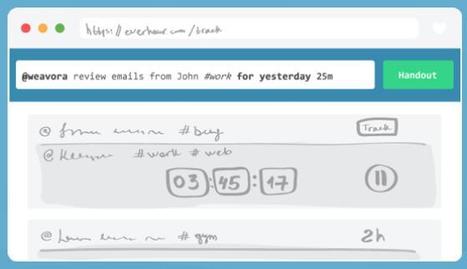
Fabulously simple and handy time management and reporting tool.
via The Scout Report
|
|
Scooped by
Jim Lerman
April 3, 2014 2:31 PM
|
by Michael Fisher
"I’ve been teaching different versions of “Close Reading” to teachers, evolving over time as I strengthen my relationship with Common Core Reading for Literacy/Informational Text Standard 1: “Read closely to determine what the text says explicitly and make inferences from it.” What started out as teaching teachers to write text dependent questions evolved into setting strong purposes for reading, understanding text complexity, relating the close reading to personal experiences and world events, and now, coming full circle back to Notice, Think, and Wonder."
|
|
Scooped by
Jim Lerman
March 22, 2014 12:48 PM
|
Dictation is a free online speech recognition software powered by Google Chrome. You can use Dictation to write emails and documents in the browser with your voice
"Speech Recognition in the Browser With Dictation, you can use the magic of speech recognition to write emails, narrate essays and long documents in the browser without touching the keyboard. To get started, just connect the microphone to your computer and click the Start Dictation button. Dictation uses your browser's local Storage to save all the transcribed text automatically as you speak. That means you can close the browser and it will resume from where you left off. The app internally uses the built-in speech recognition engine of Google Chrome to transform your voice into digital text. Speak in your Native Language You don't have to speak in English as Chrome's engine can recognize quite a few languages including Arabic, Chinese, Spanish, French, German, Italian, Malay, Indonesian and more. Dictation will automatically determine your browser's default launguage and uses it for subsequent transcriptions. Hindi and other Indian languages aren't supported at this time. Written by Amit Agarwal for Digital Inspiration."
Jim Lerman's insight:
This app works very well. It's not quite up to the standards of Dragon Naturally Speaking, but then again, it is free.
|
|
Rescooped by
Jim Lerman
from Into the Driver's Seat
March 20, 2014 8:49 AM
|
by Maureen Kelleher
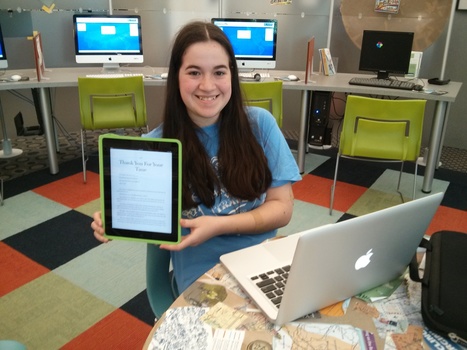
"Rachel Kaplan, a 16-year-old from Northbrook, Ill., a Chicago suburb, started plotting mysteries almost as soon as she could hold a pencil. Her short stories have won regional awards in Scholastic’s annual art and writingcompetition. Last week, she became an e-author, published on Scribd and in the iBooks store.
"Serena Dinh, an 18-year-old college freshman in Albany, N.Y., started playing violin at age 9. A few months ago, she taught herself a little guitar. But it wasn’t until this month that she wrote her first complete, original song.
"Both teens followed their passions at the library, during Teen Tech Week 2014."
|
|
Scooped by
Jim Lerman
March 18, 2014 1:43 PM
|
by Ariel Sacks summary by MiddleWeb SmartBrief
"Learning to write fiction is a valuable skill especially for students of color, for whom children's literature offers few nonwhite characters for them to identify with and whose language-arts classes often are focused on test preparation, middle-grades educator Ariel Sacks writes in this blog post. Along with empowering students, Sacks argues that fiction writing often is a better vehicle for teaching writing skills, such as style and voice, which also are needed for writing nonfiction works."
|
|
Scooped by
Jim Lerman
March 7, 2014 3:15 AM
|
|
|
Rescooped by
Jim Lerman
from :: The 4th Era ::
March 4, 2014 3:52 PM
|
by Michael McLaughlin summary by MiddleWeb SmartBrief
"Students in Kristen Zodrow's class at Basalt Middle School in Colorado are participating in a cultural exchange with students in Pakistan through a partnership with the Global Kids Connect program. The students write letters and posters for their Pakistani pen pals, and they create videos to express their views about honor, ownership and tolerance. "The object is to improve relations and help understand we may have a lot of differences, but we also have a lot in common," said Jodi Fischer, executive director of Global Kids Connect."
|
|
Rescooped by
Jim Lerman
from Into the Driver's Seat
March 2, 2014 4:01 AM
|
by Jennifer Isgitt
"I’m ready to assess my students’ blogs from the first semester. Does anyone else feel like the first time you assess any new assignment that you’re just trudging through murky molasses? I’m so slow at the assessment piece right now.
"I’ve been looking around at student blogging rubrics as I try to decide which components a) I’ve actually taught and b) seem to represent my objectives for blogging as reader response. I know that I should have had a rubric before we even started all of this, but I just jumped into the project with many unknowns.
"I’ve learned that about the only way to force myself to do something new is to just start doing that thing before I have completely concrete plans. My apologies to whichever group of students has to do the project first!...
"I’ve been trying to create a rubric, so I’ve been searching the web to see how other teachers are evaluating their student blogs. Here are four that I like:"
|
|
|
Scooped by
Jim Lerman
April 17, 2014 8:40 AM
|
Jim Lerman's insight:
A high quality archive of ebooks, monographs, chapters, brochures, and articles on social emotional learning from a variety of sources. A great deal of first-rate resources here.
|
|
Rescooped by
Jim Lerman
from AdLit
April 14, 2014 4:19 PM
|
In this video, Eleanor Dougherty, author of the ASCD book Assignments Matter, tells how to help students become better writers.
Via Lynnette Van Dyke
|
|
Rescooped by
Jim Lerman
from Into the Driver's Seat
April 13, 2014 8:32 PM
|
by Mike Fisher
"Too much close reading is boring, say these ELA experts. Invite students to read & write digital microstories. It's fun and they'll strengthen key CCSS skills."
Jim Lerman's insight: Good strategies here along with excellent resources as well as samples demonstrating useful apps.
Thanks to Sarah Tantillo
|
|
Scooped by
Jim Lerman
April 10, 2014 12:01 PM
|
by Jon Kendall
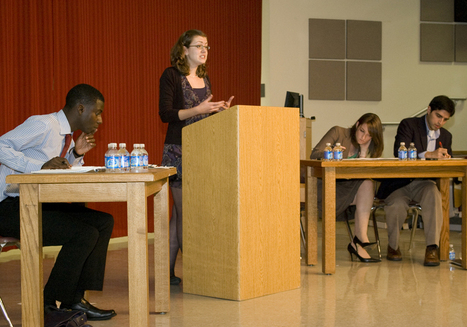
"From the oration that convinced the Athenians to spare the rebellious people of Mytilene, to this month's oral arguments before the Supreme Court, debate has proven itself an indispensable form of truth-seeking and discernment. Liberal democracies worldwide have consistently turned to the intellectual rigor of debate to make decisions that affect the lives of their citizens.
"But debate is not just for discerning policy or settling legal disputes. It can be just as powerful in the classroom for exploring controversies and experimenting with logic and rhetoric. Perhaps most of all, however, debate is highly valuable in preparing students for the kind of writing and research they can expect at the university level."
|
|
Rescooped by
Jim Lerman
from :: The 4th Era ::
April 4, 2014 1:37 PM
|
by Beth Holland description by MiddleWeb SmartBrief
"Teachers can inspire young poets by incorporating multimedia presentations, popular music and student artwork into poetry assignments, former teacher Beth Holland writes. In this blog post, Holland describes a number of ideas for engaging and tech-infused poetry assignments, including creating short films that accompany an original poem, or empowering students to share their poetry with a wider audience by creating an e-book and publishing it to the iTunes Bookstore."
|
|
Scooped by
Jim Lerman
April 4, 2014 1:08 PM
|
"In this activity, using images that depict earthquakes, seafloor ages, topography, and volcanoes, you will make a scientific argument that supports the Theory of Plate Tectonics. You will explore an area that contains a plate tectonic boundary and craft a paper using scientific-discourse categories. The introductory activity uses images captured from the Learning With Data CD-ROM. "
|
|
Rescooped by
Jim Lerman
from The Funnily Enough
March 30, 2014 8:03 PM
|
No one wants to write boring characters, but what qualities do interesting characters have? In this article I explore five qualities that can make your characters jump off the page: exaggeration, exotic setting, active introduction, truth-likeness and empathy.
Via mooderino
|
|
Rescooped by
Jim Lerman
from Into the Driver's Seat
March 21, 2014 11:31 PM
|
description by Internet Scout Project
"The National Writing Project (NWP) does a spot-on job of bringing together a raft of resources for those teaching writing at all levels of interest and instruction. These thirty ideas are a great way to get started, and include tips that originated as full-length articles in various NWP publications. As suggested on its site, "readers will benefit from a variety of eclectic, classroom-tested techniques." The complete list of ideas is offered here, along with links to the aforementioned articles which often include suggestions about classroom implementation. First-time visitors should take a look at tips like "Use the shared events of students’ lives to inspire writing" and "Pair students with adult reading/writing buddies."
|
|
Scooped by
Jim Lerman
March 18, 2014 1:50 PM
|
Review of "The Daily 5: Fostering Literacy Independence in the Middle Grades" by Gail Boushey and Joann Moser. Reviewed by Linda Biondi
"The Daily Five (highlighted at the authors’ website) was created from literacy classroom experiences and motivational research by Gail Boushey and Joan Moser, affectionately called “The Two Sisters” (which they are). Simply put, it is a series of five daily literacy tasks that students complete as the teacher meets and confers with small groups or individuals. The 5 components are: - Read to Self (reading self selected materials independently)
- Read to someone (reading aloud with a partner while practicing strategies and fluency)
- Listen to Reading (hearing good models of fluent reading)
- Work on writing (practicing writing fluency)
- Word Work (phonics and spelling/vocabulary practice)"
|
|
Scooped by
Jim Lerman
March 7, 2014 3:41 AM
|
Jim Lerman's insight:
I tried this out on some longish pieces...1000 words or more. The tool did a very good job of reducing several articles by about 50-60% in size, while preserving very well the meaning of the selection. I did this about 4 times and was quite impressed with the quality of the summaries. This could prove quite useful for students of all ages, as well as busy educators.
|
|
Scooped by
Jim Lerman
March 6, 2014 12:04 PM
|
by Laurie Haag,
"I teach 7th and 8th grade writing, and while I aspire to have writing conferences on a weekly basis, I just can't seem to find the time or format that works for me and my students. I would appreciate any tips as to how others are achieving this in their classrooms."
Jim Lerman's insight:
A number of useful suggestions have been posted in response to Haag's inquiry, something almost every teacher of writing wrestles with.
|
|
Rescooped by
Jim Lerman
from Into the Driver's Seat
March 2, 2014 6:31 PM
|
by Med Kharbach
"Writing workshop relies on a set of core principles and one of these principles is about giving students the chance to publish and share their works with others. Below are some of the web tools you can use to publish your students work. check them out:"
|