Your new post is loading...

|
Rescooped by
Jim Lerman
from Into the Driver's Seat
October 10, 2012 10:15 AM
|
Comic Master allows you to create your own short graphic novel. Review by Jason Tomaszewski for Education World "A single flash-based page comprises the entire site. Users encounter a different version of the page after completing tasks and entering information. As such, there is no real navigation.Users will, however, appreciate the well-designed, interactive nature of the page. As they create comics, users get a sense that they are working alongside the likes of Bob Kane or Stan Lee. "The imagery is all spot-on, and the controls are very easy to use. ComicMaster goes out of its way to avoid association with any known comic properties or companies such as DC or Marvel, but the figures and illustrations are all on par with those of the major players. "The popularity of comic-book heroes is apparent from recent box-office returns, and ComicMaster takes advantage of that popularity by having students create their own heroes and craft original stories for them. "Users go through a step-by-step process that begins with selecting a cell layout and ends with a completely colored comic strip. While the site provides options in terms of character appearance and background design, the story is completely in the hands of students. They can create any kind of scenario, from drama to comedy."
|
|
Rescooped by
Jim Lerman
from Into the Driver's Seat
October 9, 2012 10:37 AM
|
From the website "As part of a project for the PARCC consortium, the Institute for Learning (IFL) at the University of Pittsburgh, was asked to develop English language arts classroom task sets for Grades 3, 6 and 10 that are aligned to the new CCSS and that will prepare students for the new PARCC assessments. We would like you to visit these websites to learn about these classroom task sets. Then, please take a survey about the usefulness of this classroom task set. Your feedback will be used to improve future versions." These are well-designed learning units based on the ELA CCSS and PARCC assessments. As such, for teachers interested in retooling for the PARCC asssessments, the units should prove quite helpful. For curriculum designers, the units offer an interesting template for how to revise local or state curriculum in a practical format, while focused on the new requirements. -JL
|
|
Rescooped by
Jim Lerman
from Into the Driver's Seat
October 8, 2012 8:55 AM
|
By Katherine Schulten "If you’ve been reading this blog for a while now, you may remember that last year at this time we were enthusiastic participants in a collaborative push to get as many people as possible to take to Twitter on Oct. 20, the annual National Day on Writing, and post messages with the hashtag #WhyIWrite. "Thousands did, and it was a thrilling and memorable day for us, as students, teachers, novelists, poets, historians, journalists, comedians and ordinary citizens of all kinds posted thoughts to a vigorous stream. "So, of course, we’re doing it again, except this time our wise collaborator, The National Writing Project, suggested that the hashtag be #WhatIWrite, and that, because Oct. 20 is a Saturday, the day to post to Twitter be Friday, Oct. 19. "So along with the National Writing Project and the National Council of Teachers of English, we invite you (and your students, and everyone else you know) to post on Oct. 19, with the hashtag #WhatIWrite."
|
|
Scooped by
Jim Lerman
October 7, 2012 1:16 AM
|
By Catherine Killingsworth "Over the years, my colleagues and I have tried thousands of different writing prompts–some wildly successful, some total duds. Here are three rather surprising ones that result in exciting, specific, and creative work every time:"
|
|
Rescooped by
Jim Lerman
from Into the Driver's Seat
October 6, 2012 8:26 PM
|
By Connie Malamed "Higher order thinking goes beyond memorizing and recalling facts and data. It even goes beyond comprehension. Higher-order thinking refers to cognitive processes that involve analytical, critical or creative thinking.... "Because test items must be aligned with learning objectives, you’ll need to include higher-order thinking skills from the start. And yes, these may be better measured through open ended questions, essays and discussions. But if you find yourself needing to use multiple choice tests as a necessity, you can make the best of this situation with these three approaches."
|
|
Scooped by
Jim Lerman
October 6, 2012 6:54 PM
|
By Marelisa Fabrega Links to 19 sources of writing prompts. Each one is described briefly. All levels covered here, but leans toward the older student. -JL
|
|
Scooped by
Jim Lerman
October 5, 2012 10:13 AM
|
Many materials and strategies offered here are useful in teaching CCSS-based English Arts/Literacy at the secondary level. -JL Description from The Internet Scout Project "Teaching writing can be a challenge, even for those who have been in front of a class full of students for years. The website of the Writing Center at Colorado State University is a great source of information for people who teach writing. A good place to start is the Teaching Guides area, which includes strategies on Planning & Conducting Classes, Teaching Specific Writing Skills, and Writing Across the Curriculum. Furthermore, the Teaching Activities section includes a range of compelling aides including Argument Quiz Discussion Starter, Evaluating Writing, and A Storyteller's Misguided Guide to Focus. Visitors also should also read the Across the Disciplines journal, which is "devoted to language, learni ng, and academic writing.” Other highlights include The Composition Archives and a crucial guide to dealing with plagiarism. "
|
|
Scooped by
Jim Lerman
October 4, 2012 10:47 PM
|
From the website "This report presents results of the National Assessment of Educational Progress (NAEP) 2011 writing assessment, the first large-scale computer-based assessment in writing. National results for representative samples of students at grades 8 and 12 are reported as average scale scores and as percentages of students performing at three achievement levels: Basic, Proficient, and Advanced. Additional results are reported based on students’ demographic characteristics, educational experiences, and the frequency of engaging in actions available to them in word-processing software. The assessment tasks reflected writing situations common to both academic and workplace settings and asked students to write for several purposes and communicate to different audiences. The results are presented along with sample tasks and student responses. The Technical Notes provide information on NAEP samples and school and student participation rates. The new computer-based writing assessment does not allow us to report trend results. Future NAEP writing assessment results will be compared to the 2011 results. "Twenty-four percent of students at both grades 8 and 12 performed at the Proficient level in writing in 2011. Fifty-four percent of eighth-graders and 52 percent of twelfth-graders performed at the Basic level. Three percent of eighth- and twelfth-graders performed at the Advanced level. At grade 8, average writing scores were higher for Asian students than for other racial/ethnic groups. At grade 12, average writing scores were higher for White students, Asian students, and students of two or more races than for Black, Hispanic, and American Indian/Alaska Native students. At both grades, female students scored higher than male students"
|
|
Rescooped by
Jim Lerman
from The 21st Century
September 28, 2012 4:53 PM
|
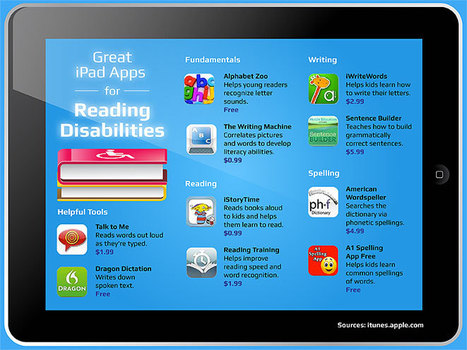
"Whether you’re the parent of a child with a reading disability or an educator that works with learning disabled students on a daily basis, you’re undoubtedly always looking for new tools to help these bright young kids meet their potential and work through their disability. While there are numerous technologies out there that can help, perhaps one of the richest is the iPad, which offers dozens of applications designed to meet the needs of learning disabled kids and beginning readers alike. Here, we highlight just a few of the amazing apps out there that can help students with a reading disability improve their skills not only in reading, writing, and spelling, but also get a boost in confidence and learn to see school as a fun, engaging activity, not a struggle."
Via Dr. Susan Bainbridge
|
|
Scooped by
Jim Lerman
September 26, 2012 2:35 PM
|
Great writing prompt photo, from a large and growing collection. Be sure to look throughout this site; in addition to picture prompts, there are video prompts, random words, resources, and an archive. -JL
|
|
Scooped by
Jim Lerman
September 23, 2012 6:34 PM
|
By Maria Popova "In the winter of 2010, inspired by Elmore Leonard’s 10 rules of writing published in The New York Times nearly a decade earlier, The Guardian reached out to some of today’s most celebrated authors and asked them to each offer his or her 10 rules. My favorite is Zadie Smith’s list — an exquisite balance of the practical, the philosophical, and the poetic:"
|
|
Scooped by
Jim Lerman
September 21, 2012 5:21 PM
|
By Peg Tyre Summary by ASCD SmartBrief "New Dorp High School in Staten Island, N.Y., seemed on the brink of closure in 2009 when principal Deirdre DeAngelis and her staff began focusing on analytic writing throughout the curriculum. Teachers began by showing students the basic parts of speech and essay structure. Test scores have since increased with more students taking college preparatory classes and the graduation rate is expected to reach 80%, increasing from 63% before the writing program started."
|
|
Scooped by
Jim Lerman
September 15, 2012 12:20 AM
|
By Kimberly Fredrick "For students, essays are a necessary evil of the experience of getting an education.For teachers, helping students write their essays can be time consuming, and once the students go home, they may lack the support they have in your classroom. "It doesn’t mean they have to go it alone, though, when there is electronic help available. Check out these top 5 Apple applications for essay writing to make getting organizing and presenting your thoughts in a coherent manner a much easier process."
|
|
|
Rescooped by
Jim Lerman
from Into the Driver's Seat
October 10, 2012 10:15 AM
|
Review by Jason Tomaszewski for Education World "Shakespeare can be pretty heavy even for the seasoned academic, so introducing the dramatic pioneer to elementary-aged students is a bold undertaking. Fortunately, the Folger Library pulls it off. "Site offerings like Cool Facts and Who Am I introduce younger students to Shakespeare’s unique literary style while offering fun tidbits about his life and work. Likewise, Shakespearian dialogue allows students to perform in some of the more famous roles. "Students can explore much more here, from reading excerpts of plays to coloring Shakespearian illustrations. "From the academic to the playful and everything in between, the Folger Library’s Shakespeare for Kids is a tremendous resource."
|
|
Rescooped by
Jim Lerman
from Into the Driver's Seat
October 8, 2012 9:00 AM
|
By Katherine Schulten #NaNoWriMo "We also want to highlight another idea for student writing today, with a guest post from a teacher named Jennifer Ansbach who, for the last seven years, has had her students participate in November’s National Novel Writing Month (or NaNoWriMo, as the cool kids call it), which provides teachers with resources to teach novel writing in the classroom through its Young Writers Program. "We were interested in this idea after we read a piece this summer in The Times’s Room for Debate blog that asked, “Can School Performance Be Measured Fairly?” "One of the nine experts who weighed in included a high school student, Julia Fox, who wrote about her NaNoWriMo experience, contrasting writing a novel with preparing for standardized tests:"
|
|
Scooped by
Jim Lerman
October 7, 2012 1:55 PM
|
By Mark Jacobson The cover story of the October 1, 2012 issue of New York Magazine takes readers on a delicious perambulation across time and space in the Brooklyns of the past 50 or 60 years, as well as the present. Author Jacobson turns numerous memorable phrases and locutions; it's really quite a tour de force (if you like this sort of thing). The article was occasioned by the opening of the Barclays Center, a new indoor sports arena (and home of the Brooklyn Nets)...which serves to punctuate Brooklyn's re-emergence as an epicenter of New York (somehow lost when the Dodgers moved to LA). But I degress. The article is wonderful, but I mention it here because of one particular string of sentences that resonates with me especially well: "Youth occurs in a time of its own, immune to criticism from those claiming to have had better youths. As idotic and priviledged as it might seem on the surface, growing up remains no easy thing. Every passage to adulthood is a hero's journey, to be respected, in its own way." -JL
By Catherine Killingsworth "Organization, grammar, and sentence structure may make a piece of writing intelligible, but they have very little to do with what makes a piece of writing great. "Because at Deep we believe that my students are capable of something much greater than merely intelligible writing, I have invented a new rubric for them that measures artistic merit, rather than mere competence. This rubric requires that their writing be three things:"
Via Lynnette Van Dyke
|
|
Scooped by
Jim Lerman
October 6, 2012 8:21 PM
|
By Amy Rasmussen "American writer, editor, and teacher William Zinsser taught that “writing, and learning, and thinking are the same process.” If this is true, then the not-so-easy task of the teacher is to get students to effectively put their thoughts into words on a page. One relatively simple way to get students engaged in the process is to help them take ownership of online writing; specifically, get students to create and maintain a blog, which will allow for what Zinsser calls the four basic premises of writing: “clarity, brevity, simplicity, and humanity.”
|
|
Scooped by
Jim Lerman
October 5, 2012 10:27 AM
|
Description by The Internet Scout Project "Computers have been in classrooms for decades and continue to implement new and compelling resources expanding their multimedia capabilities. This set of classroom resources from ReadWriteThink brings together several hundred interactive activities for students in grades K-12. First-time visitors should explore the Featured area for helpful activities that address doing research (Inquiry & Analysis) for elementary school children and learning about letters and sounds (Word Wizard). The detailed Refine By area on the left-hand side of the page can filter items by grade level, type of interactive feature, and learning objectives. There is also a detailed search engine and feedback system for each activity. "
|
|
Scooped by
Jim Lerman
October 5, 2012 10:10 AM
|
Description by The Internet Scout Project "The National Writing Project website compiles a wealth of resources that have appeared in the archive as well as its publications over the years. The materials here are divided into eight sections, including Teaching Writing, Teaching Reading, and Standards and Assessment. The Teaching Writing area contains information aplenty on areas such as Grammar and Usage, Special Needs, and Digital Writing. The Digital Writing section includes strategies for working in a technology-rich environment and incorporating short, intense writing activities into the classroom. Another helpful section is the Being a Writer area, which includes Fiction and Poetry Publishi ng Resources and material on starting and maintaining a writers’ group. The site is rounded out by a series of links to additional websites for general consideration."
|
|
Scooped by
Jim Lerman
September 28, 2012 5:14 PM
|
By Arthur Applebee Summary by Accomplished Teacher SmartBrief "The key to improving students' writing abilities may include a blend of curriculum changes and reconsideration of the standardized testing format, suggests Arthur Applebee, a professor of education in New York state. He writes in this opinion article that great writing also depends on teachers' ability to connect classroom assignments with the outside world. "
|
|
Scooped by
Jim Lerman
September 27, 2012 6:30 PM
|
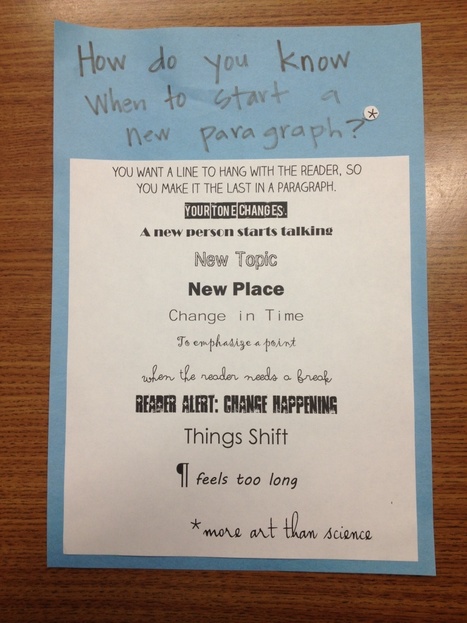
By Ruth Ayers "As Liza Lee Miller said in the comments, “It is an art.” I’ve been paying close attention to my own work with paragraphs and I’ve realized it is truly more art then science. Tara’s comparison resonated with me — knowing where a paragraph starts is like knowing when to shift the gears of a manual transmission. There is an element of “feeling” the paragraph shift while writing. Of course there are the nonnegotiables: new speaker, new time, new setting, new idea. These just aren’t enough, though. There are many other times when a new paragraph begins. Outside of school assignments, I’ve never made a paragraph shift based on the number of sentences."
|
|
Scooped by
Jim Lerman
September 24, 2012 6:16 PM
|
By Andrea Balt "With “deep-bone sadness” that often turned into dark-tongue humor, one of the most unique and unforgettable voices of XXth century American literature, Mr. Vonnegut, serves you the eight, most essential rules to writing a short story. "How this applies to you even if you’re not (technically) a short story writer. "Because see… in the end, you are. Whatever you’re writing—whether it is poetry, a longer piece of fiction, or even non-ficiton, you’re always telling a story. "In fact, it goes even deeper—if you’ll allow me some Vonnegut-inflated, garage philosophy: we live in stories and we can’t understand life outside the story concept."
|
|
Rescooped by
Jim Lerman
from Into the Driver's Seat
September 22, 2012 11:20 AM
|
Shared August 7, 2012, in Missoula, Montana: Interested in helping students become better readers, writers, and critical thinkers?
Via Anne Whaits, Jim Lerman
|
|
Scooped by
Jim Lerman
September 18, 2012 3:02 PM
|
By Linda Yollis Description by eSchool News "Following their advice for a connected students, SmartBlog on Education also provides a list that highlights what Linda Yollis—an elementary school teacher for more than 25 years—calls “meaningful ways to engage and motivate” young students. Yollis began her blog, Mrs. Yollis’ Classroom Blog, in 2008 to share activities with parents, and over time it has become a centerpiece for the classroom: students help manage the blog and are learning the basics of how to comment, and that audience matters."
|