


There are few dull moments for school principals. From training teachers to having heart-to-heart talks with troubled students, principals are the people who keep schools running smoothly on a daily basis.

 Your new post is loading...
 Scoop.it! There are few dull moments for school principals. From training teachers to having heart-to-heart talks with troubled students, principals are the people who keep schools running smoothly on a daily basis. 
No comment yet.
Sign up to comment
Scoop.it!

If you thought ebooks were growing quickly, then you—as the saying goes—ain’t seen nothing yet. A confluence of factors set in motion last week are likely to push ebook sales from explosive to exponential.
Scoop.it!

Scaffolding is a useful way to successfully integrate technology into education. Learn more.
Scoop.it!

How should you start your personal learning network? What are other teachers doing to learn from one another? Why isn't there a simple and easy-to-implement guide to building your very own PLN? Now there is ...
Scoop.it!

Photographer Daniel Kukla who has a background in both biology and anthropology has a new series of work called The Edge Effect where he photographed square mirrors propped on easels in locations around Joshua Tree National Park to catch the reflection of the horizon behind him.
Scoop.it!

We are living in an age when sleep is more comfortable than ever and yet more elusive.
Scoop.it!

There is a growing dependence on the use of digital media from our students and kids. Sometimes it is just unbelievable especially when we, the digital immigrants, compare our childhood and teenagehood to our students, the digital natives. Back then, socializing with neighbouring kids was the major pass time for us but today's kids they socialize more with digital gadgets and spend less time not only with their buddies but even with their own families.
Scoop.it!
MindMapping is one of the most powerful planning tools we can use. Mindjet MindManager has long been the "go-to" mindmapping tool by those in the Know. Steve Dotto delivers a terrific how-to introduction to the world of Mindmapping and to Mindjet Mindmanager
Scoop.it!

This week’s math assignment focused on locating patterns around the house. This reminded me of an old post “Math in My World” that showcased multiple ways to highlight shapes and geometry in the world around us. Via John Evans
Scoop.it!

This infographic takes a look at the earnings of Batman and Spider-man and how it effects their lifestyle.
Scoop.it!

With educational technology, social networking and agile apps are all the rage. Whether it’s a group of students collaborating on a project or a research team seeking out resources around the globe, today’s EdTech essentials are all about keeping in touch. The emerging products, companies and high-tech tools on our list are all designed to make life easier for online teachers, students and researchers. Take a look.
Scoop.it!

Getting kids to really focus on what exactly they are searching for, and then be able to further distill idea into a few key specific search terms is a skill that we must teach students, and we have to do it over and over again.
Scoop.it!

I realized we are entering a phase with technology in instruction where many teachers who have been using it for awhile have integrated it into their teaching style - it's part of our methodology.
|
Scoop.it!

Vancouver has been named the world’s most reputable city, according to an international poll conducted by the Reputation Institute. Three main reputation dimensions were looked at:, Advanced Economy, Appealing Environment and Effective Administration.
Scoop.it!

Some argue that blogging is passé, but nothing could be further from the truth. Available tools enable all of us to express ourselves, share our views and especially knowledge and experience with a much wider audience than ever before. I really believe that everyone should and can blog. Indeed, it’s not surprising to anyone who knows me that that is a reason why Zemanta is part of my life: to make blogging easier for everyone.
Scoop.it!

Catch up on the latest digital media resources with our weekly features roundup.
Scoop.it!

Critical thinking as described in the video below refers to a diverse range of intelectual skills and activities concerned with evaluating information as well as evaluating our thought in a disciplined way.
Scoop.it!

On September 24, the St. John’s University (Queens, NY) community was privileged to hear Dr. Kathleen Fitzpatrick speak on the topic “the future of authorship: writing in the digital age.” Dr. Fitzpatrick is currently on leave from a position as Professor of Media Studies at Pomona College in Claremont, CA, where she teaches such courses as Writing Machines, and Television Authorship.
Scoop.it!
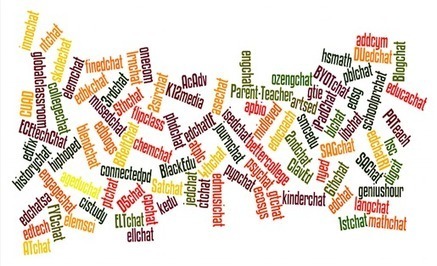
Before the advent of Twitter, most educators I know had limited opportunities to collaborate with colleagues outside their building. Some subscribed to listservs or participated in online forums, but these outlets lacked critical mass; teachers also networked at in-person conferences and training sessions, but these isolated events didn't provide ongoing support. Enter Twitter...
Scoop.it!

Wikis are important learning and teaching tools in the 21st century education. They are basically digital platforms resembling blogs and websites but with an added value which is that of collaboration. A Wiki has a text editor and anyone with basic word processing skills can join in content building provided the wiki is open to public editions or the user has a granted permission to edit and add content to it.
Scoop.it!

Andrea Hernandez, known as edtechworkshop in the blogger- and Twittersphere has written a thought provoking blogpost about Where’s The Authentic Audience? She takes a closer look at the buzz word circulating among blogging educators and classrooms and asks tough questions. What happens when there is no audience coming to your or your students’ blogs?
Scoop.it!

Education Quotes, Quotes for Teachers, Quotes for Students, Quotes about Teaching and Learning, Quotes to inspire!
Scoop.it!

The Internet has delivered an explosion of learning opportunities for today’s students, creating an abundance of information, knowledge, and teachers as well as a starkly different landscape from the one in which our ideas about school were born. Traditional educators, classrooms, and brick-and-mortar schools are no longer necessary to access information. Instead, things like blogs and wikis, as well as remote collaborations and an emphasis on critical thinking skills are the coins of the realm in this new kingdom. Yet the national dialogue on education reform focuses on using technology to update the traditional education model, failing to reassess the fundamental model on which it is built.
Scoop.it!

Twenty-third in science. Thirty-first in math. As the grand old USA lags further behind the rest of the world in education, the temptation to model ourselves after countries that continuously churn out strong students grows.
Scoop.it!

Who says textbook creation has to be a long-term project? A group of Finnish mathematics researchers, teachers, and students are writing an entire math textbook in three days. In fact, they're writing it right now.
|




