


What if you took great works of art, stacked them side by side, and had them tell a story? You’d have a decidedly artful video … and a great teaser for the new artCircles iPad app that brings you collections of images curated by well-known figures if you took great works of art, stacked them side by side, and had them tell a story!

Visual*~*Revolution
98.7K views |
+52 today
Eclectic learning and leading through technology and the arts
Curated by
Andrea Zeitz
 Your new post is loading...
 Scoop.it! 
Spend some substantial amount time in the first class creating rules with your students. It starts with thinking , bonding, and taking responsibility for their own education. 

Audrey's comment,
August 20, 2013 2:44 PM
Yes, it works if the rules are remembered and reinforced throughout the whole school year, audrey@homeschoolsource.co.uk
Scoop.it!

Here is a wonderful interactive image created on Thinglink by J Beam featuring some important tools that support the 21st century thinking. As you can see from the graphic below, there are four main skills associated with the 21st century thinking these are : creating, collaborating, communicating, and critical thinking.

Louise Robinson-Lay's curator insight,
August 18, 2013 2:28 AM
Thinglink is fast becoming a favorite tool. This example is great for those PLT discussions. It contains links to tools that can be used to highlight particular 21st century skills.
Scoop.it!

Children today want quick answers and do not take the time to think things through. This is probably the result of living in today’s age of technological instant gratification. It is becoming increasingly challenging for teachers to successfully grab and hold students’ attention long enough for them to process the information they receive using critical thinking skills.
Audrey's curator insight,
August 15, 2013 4:14 PM
This is why homeschooling is so crucial. If children are given the tools: educational games, toys, books and resources at home, from they get up in the morning they are interacting with a variety of learning resources which develop their brain. Games such as: *Mathlink Cubes an interactive and visual way to get to grips with mathematics - a hands-on manipulative kit can be used to teach a range of maths concepts to all ages;
*Homeschoolsource's classic game of charades is designed especially for children to help them play and learn. This educational game will help children express themselves by acting out a charade.
*Help develop their creativity with geological material such as crystals and gemstones. Or what about the ecology of the solar system or Uncle Milton’s Star Theatre for creating light like Halley’s Comet?
*As they get older you provide word games, lateral thinking puzzles, dictionaries and thesaurus's to develop their verbal thinking and expression and challenge existing views (critical thinking).
*Microscopes and Binoculars illustrate different views of the world. They encourage lateral thinking, leading children to question: “What if?”
With these home resources children will learn to get their own answers and develop critical thinking through interaction with learning tools. At school the teachers will be the ones rushing out to find these homeschoolsources!!!!
Scoop.it!

Teachers on Pinterest is a brand new hub that showcases a variety of lesson plans and teaching tools, and through a partnership with Edutopia, it's hoping to build out a full-bodied community for instructors. It looks really promising with masses of resources organized by year level and curriculum areas.
Audrey's curator insight,
August 14, 2013 3:04 PM
Therefore we need to use 21st century strategies: home school learning, starting with pre-schoolers being given educational toys, games, books and resources which they are able to interact with in their own time without the pressure of classrooms, some of these strategies can be examined at http://www.homeschoolsource.co.uk
Scoop.it!

LOU BEACH is an award-winning illustrator and gallery artist, well known for his record covers and magazine work. A book of his artwork, "CUT IT OUT" was published in 2006. A book of his short fiction, "420 CHARACTERS" was published by Houghton Mifflin Harcourt in Fall 2011. A collaboration with author J.Robert Lennon, "THE GREAT ZOMBINI" is available on Kindle. To read excerpts from "420 CHARACTERS" and to hear them being read by Jeff Bridges, Ian McShane and Dave Alvin, visit www.420characters.net.
Scoop.it!
Cozy Classics is a new board book series presenting well-loved stories through twelve child-friendly words and twelve needle-felted illustrations. Now you can share the classics with children of any age! Cozy Classics is written and illustrated by twin brothers Jack and Holman Wang. The first two titles in the series, Pride & Prejudice and Moby Dick, will be published in the fall of 2012 by Simply Read Books. http://www.theprovince.com/news/Cozy+Classics+have+friendly+twist/8688232/story.html
Scoop.it!

Here are several video presentations and interviews which look at different ideas about education and schooling.

Jim Lerman's curator insight,
July 18, 2013 6:30 PM
Excellent selections. You could probably use one of these for a first day of school faculty meeting.
Scoop.it!

Middle school English language arts teacher Hassan Mansaray shares how he uses an individualized learning model, Readers and Writers Workshop, to reach his students in an expanded learning time program.
|
Scoop.it!
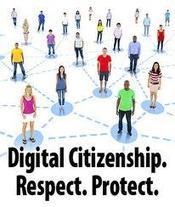
Digital citizenship is not a one time discussion. It is an ongoing process that needs to be taught to all grade levels and to all stakeholders.
Scoop.it!

Lessons, articles and tips for using social media tools in the classroom, from Facebook and Twitter to Instagram and Edmodo.
Scoop.it!
Educators are getting prepared to welcome students back to school this month. Many have spent the summer reading up on new teaching strategies or getting inspired by colleagues across the country. To help get those idea juices flowing, here are some MindShift articles that delve into creative work, tools, and methodologies. Happy back to school!
Scoop.it!

Thanks to Becky Evans for putting together this great presentation
Scoop.it!

Excellent educational content can be found on YouTube. However, not every teacher can access YouTube in his or her classroom. Here are some alternatives. Well done Richard!
Scoop.it!
Common Sense Media and Edmodo partnered to create this Digital Citizenship Starter Kit for your classroom. In it, you’ll find a series of activities and lessons designed to introduce digital citizenship concepts right in Edmodo, to help you get your online classroom community up and running.Common Sense Media and Edmodo partnered to create this Digital Citizenship Starter Kit for your classroom.
Scoop.it!

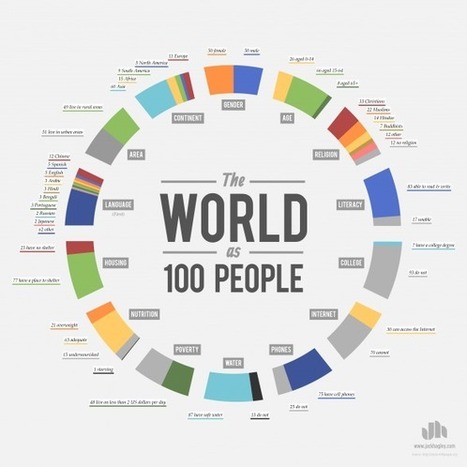
If you’re a visual learner then you know maps, charts and infographics can really help bring data and information to life. Maps can make a point resonate with readers and this collection aims to do just that.
Scoop.it!

Kids (and adults) are not perfect. They make mistakes. They trip up. They recover and show resolve. And they invariably show how remarkable they are on a daily basis by enduring the gantlet of a traditional school setting, marching to the drumbeat of the industrial model of schooling, a model constructed around time, space, order, efficiency and acculturation. Blogger Bruce Dixon quotes author Seth Godin, who writes about "learning from doing things wrong." There is a need for students to learn from wrongdoinginstead of demanding rightdoing from them all the time. Wrongdoing is where the good stuff is.
Scoop.it!

Though some teachers are still adamantly holding onto traditional formal lectures, many others are considering whether this is an ineffective and outdated model that no longer works in the information age.
Scoop.it!

Why use this Learning Center Approach- well many elementary teachers ask what they can do with only a handful of devices in their classrooms. Similarly, we often discussed the role of Interactive White Boards in a class that should be more student-centric. By taking this center approach, teachers can put the technology in the hands of their students, differentiate their instruction, and create multiple opportunities for learning.
Scoop.it!
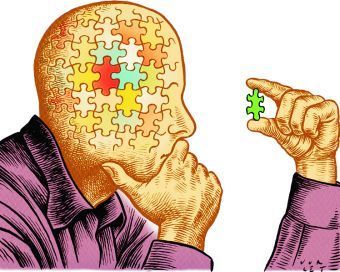
Cybrary Man's great page of critical thinking sites around the Internet.
|









Nice use of multiple single images for a video