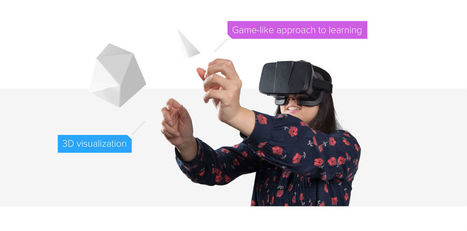
I don’t think anyone believes reality-bending technologies have reached their full potential in education, whatever that potential may look like. Homola doesn't. Though his company is focusing on virtual reality now, he believes that augmented reality will, in the long-term, be the biggest game changer in education because it will be easier to integrate into both pedagogy and everyday life. He has planned to further develop Lifeliqe’s augmented reality capabilities after distributing its VR content to schools.
Keynote presentation from the Vision Summit 2016 by John Riccitiello, CEO of Unity Technologies...gives an overview of the state of the art in VR and AR in February 2016. Preso starts about 2+ minutes into the video. Definitely worth viewing.
At the VRX USA conference in San Francisco on November 9-10 2015, a panel of game experts
Creating a truly immersive and engaging environment where users can lose sense of reality is what VR games are all about. This session gives key insight from some of the industry’s earliest entrants into what makes a VR gaming experience work.
Panelists included:
-Patrick O’Luanaigh, CEO, nDreams -Greg Richardson, CEO, Rumble Entertainment -Danilo Moura, Co-Founder, LOOT Interactive -Spencer Hunt, VP of Games and Interactive Entertainment, Skydance Productions
Chaired by: Ori Inbar, CEO and Co-Founder, AugmentedReality.org
Sony held a corporate strategy meeting with investorsin Tokyo this week, and during the proceedings Sony chief Andrew House cautioned attendees to look at the current state of VR technology as a medium best suited to short, simple and exciting experiences.
“I tend to liken the VR experience more to something like a theme park ride, in that it’s short, but it’s very intense and it’s very enjoyable,” House said in response to a question about people potentially feeling nauseous after playing VR games for a prolonged period.
“The big positive I do see for VR [games] is that unlike conventional game experiences – which tend to be similar to blockbusters in terms of production values and complex game mechanics- they can offer simple mechanics and experiences that are still very, very enjoyable because they can give users something they’ve never done before,” added House. “That, I think, is where its true potential lies.”
Virginia Anderlini is 103 years old, and she is about to take her sixth trip into virtual reality.
In real life, she is sitting on the sofa in the bay window of her San Francisco assisted-living facility. Next to her, Dr. Sonya Kim gently tugs the straps that anchor the headset over Anderlini's eyes.
But in the virtual world, Anderlini is on a Hawaiian beach, and it's sunset, and she is surrounded by a glistening sea and a molten, purple-red sky. If she looks up, she sees the fronds of an enormous palm tree, and falling rainbow specks that dance in the air like the light from a disco ball.
"Hello, it's so nice to see you again," comes Kim's prerecorded voice from inside the headset. "It's such a beautiful day today, isn't it?"
"Oh my goodness!" says Anderlini, sounding delighted. She turns her head slowly from side to side, taking in the details of the virtual landscape: little grass shacks, twists of driftwood, outcroppings of volcanic rock. "Hey, that's really pretty!"
"It took us a decade to understand that the Web is for the sharing of knowledge. Now we all understand that.
Over the next few years we’ll see something similar happen in VR, as we come to understand that VR is for the sharing of experience.
Knowledge and experience are not the same thing. You can transmit knowledge by writing it down. You can not transmit experience through words. Experience must be — experienced.
This is why VR can become the most important cultural advance since writing. That’s not an exaggeration — though it might be a while before we see that proven true.
The Web gave us the capacity to share knowledge on a global scale. VR does the same thing for experience...
Create the opportunities for people to be creative, to connect and share their creations, to learn from one another’s creativity — then create the space to do great things with their creations.
Connect sharing to experience and VR will encompass all under heaven.
19 videos from the 2015 Future of Storytelling conference, focused mainly on storytelling in the VR space. Excellent cross section of thought leaders; most recordings are 4-6 min. in length. -JL
It's still early days, but virtual reality is quickly gaining mainstream attention. Global search interest on Google grew by nearly 4X in the last year.1 What will a future with virtual reality mean for advertisers, creators, and storytellers?
"Felix and Paul Studios is...taking hold of VR cinema and running with it. Its documentary experience Nomads launched on the Oculus Store for Samsung Gear VR last week, though the studio has produced virtual reality films of every stripe for the past three years.
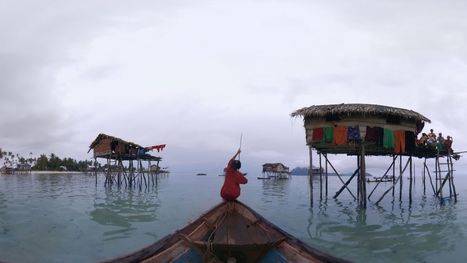
Each Nomads episode chronicles life in a different nomadic tribe: the Maasai of southern Kenya and northern Tanzania, the Bajau, who live on the waters of South East Asia, and Mongolian herders. There's no narrator for these pieces - an app acts as your guide, but once you step into the nomads' worlds, you're on your own. Paul Raphaël, co-founder and creative director at the studio, knows Nomads offers something special. I spoke with him recently about what sets the series apart, how VR is pushing the boundaries of cinematic storytelling, and what the future holds for a medium that's still finding its way."
With Google's new Daydream VR platform—announced earlier this month—the company hadn’t just developed new hardware. Four Google staff members (two engineers, two designers) have spent 30 weeks rapidly prototyping hypothetical experience after hypothetical experience in virtual reality. They've built 60 app experiments so far.
One week, they simulated watering flowers; another, building a dollhouse and teleporting yourself inside. Each Monday, these apps are tested by volunteers who work at Google. And the volunteers are actually recorded on video during testing to capture the nuances of their experience.
Now, the Daydream team has been sharing lessons they’ve learned about designing in VR. Here’s an early list of best practices, compiled largely from the company's panel at the developer conference Google I/O.
As somebody who’s found himself uniquely situated to discuss the intersection of writing, storytelling structure, and virtual reality, I want to share some of the basic ideas I’ve learned (from making content and building a creation tool in the medium) to empower a new crop of filmmakers and storytellers to take the leap toward producing their own narrative adventures in VR.
This is three years’ worth of stuff to cover — three years of learning, speculation, and a whole lot of us talking out of our, ahem, rear-ends. In this series, my goal is to clear up some of the misconceptions about storytelling in virtual reality, share tips for avoiding the mistakes early adopters had to learn the hard way, and ultimately some techniques for creating compelling content. Power to the people!
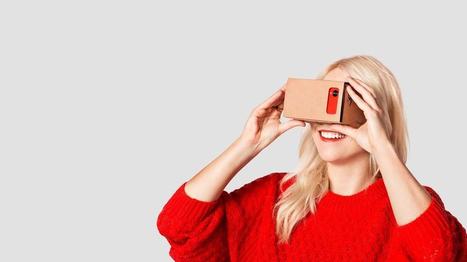
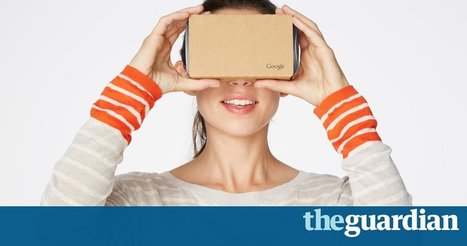
The Android or iPhone handset in your pocket is a VR device in its own right too, especially when paired with a sub-£20 Google Cardboard headset that uses your phone as its screen and works with both Android and iOS.
If you’re getting started with VR on your smartphone, here are 10 of the best apps to explore. They’re regular Android and iOS apps rather than ones requiring Samsung’s Gear VR mobile headset – that’s a separate roundup in its own right for the future.
Building games and content for VR and AR brings challenges most designers have never considered. How can we be sure the player in the right place? How can we create compelling games when moving quickly through a VR environment can be nausea inducing? Old designs and approaches need to evolve and the tools for building great AR and VR experiences will need to change as well. Here, John Riccitiello talks to Dean Takahashi about the challenges and opportunities Unity and its millions of developers face in designing incredible VR and AR experiences.
John Riccitiello, CEO, Unity Technologies in conversation with Dean Takahashi, Lead Writer GamesBeat, VentureBeat
Speaking at the VRX USA conference in San Francisco in November 2015, this video features former Oculus Developer Relations Specialist Shauna Heller talking about applications for virtual reality beyond gaming. For more virtual reality insights like this, join the VR Intelligence community here - www.vr-intelligence.com
After a year and a half working with non-gaming developers at Oculus, Shauna Heller learned a thing or two about how the rest of the world is starting to think about virtual reality. She found the work so compelling and vast she launched her own VR firm to help address what she felt were general misunderstandings of the medium's true potential and to work more closely with non-gaming developers ready to level up. Now, from Fortune 500 companies and brands to historical institutions and public figures, everyone is preparing to dip a toe or dive headlong into the realm of VR. Counseling them on how to make a profound and meaningful entry into the metaverse is Heller's area of experience. In this session she discusses the many verticals for VR beyond gaming and new opportunities to deliver compelling VR content and experiences to users around the world.
How is virtual reality (VR) changing the future of storytelling? Kate explores how viewers are drawn into an immersive story and why virtual reality will change the way future generations conceive of and produce stories.
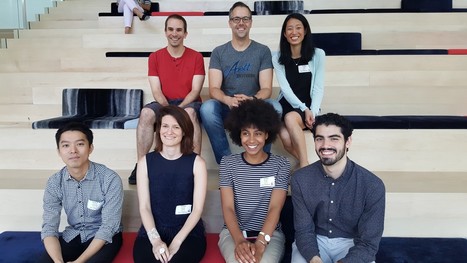
This summer, NYC Media Lab presents the Viacom VR Fellowship with Viacom’s New Experience Team (NEXT). Six fellows from four NYC campuses have been selected to challenge themselves about what works best in VR for their unique storytelling ideas. The Fellowship is Viacom’s second seed project with NYC Media Lab. The Outrage Machine big screen interactive storytelling project with NYU Interactive Telecommunications Program (ITP) was the first project Viacom completed. Seed projects are structured for NYC Media Lab corporate members to plug into the cutting-edge talent and research taking place across NYC’s universities.
Virtual reality is here. For the first time, you can step inside experiences and feel like you're actually there. VR lets you travel to faraway destinations, stand on stage with your favorite artists, and play in new worlds. From Cardboard beginnings to fully immersive experiences, Google is bringing virtual reality to everyone. Join Clay Bavor, Vice President of VR at Google, to find out what a future with virtual reality will mean for all of us creators, storytellers, and dreamers.
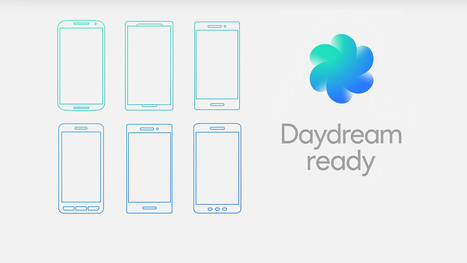
Google’s ambitious Daydream VR platform for Android hinges on a combination of hardware and software to enable a high quality VR experience. To ensure the desired level of performance, Google will certify phones of a certain minimum specification as ‘Daydream Ready’. But the company says that even today’s top phones are unlikely to qualify for the title.
At I/O 2016 last week, Google’s VR chief Clay Bavor introduced the ‘Daydream‘ Android VR platform. The branding is an umbrella which encompasses specially designed phones, headsets, and applications which work together to create a high quality mobile VR experience on Android, one that we suspect will rival Samsung’s bar-setting Gear VR.
"...after desktop computers and mobile smartphones, the next dominant computing interface is likely to arrive soon. All bets point to virtual reality or augmented reality as the likely “next platform” in computing, with augmented reality the favorite given its ability to go with you everywhere (and not isolate you from the world immediately around you). And though augmented reality devices are likely many years away, due to hardware challenges, Snapchat has already demonstrated that smartphones can successfully be leveraged to bring augmented reality experiences to mass consumers in the interim. In fact, their AR products don’t even require people to buy anything new! As a result, I fully expect, and hope, to see more in this space soon — especially from Snapchat. With the world around us as our new, collective canvas, there is plenty of doodling to go around."
Construct3D: a virtual reality application for mathematics and geometry education.
On the usability and likeability of virtual reality games for education: The case of VR-ENGAGE.
Can virtual reality improve anatomy education? A randomised controlled study of a computer‐generated three‐dimensional anatomical ear model.
All three of these studies found that virtual reality was beneficial to students. Each study came to that conclusion in a different context. The first found an improvement in students' comprehension of geometrical concepts. The second found an improvement in students' understanding of geographical concepts and relationships, but only with prior knowledge. And the third study found an improvement in students' understanding of anatomy.
Recognizing that many virtual reality users can struggle with VR sickness while engaged in VR experiences, a team from Columbia Engineering discovered a way to significantly reduce the degree of VR sickness by manipulating users’ field of view (FOV). Professor Steven K. Feiner and Ajoy Fernandes MS’16 observed scenarios when users’ visual and vestibular cues conflicted and users became nauseated, losing a sens of motion, equilibrium, and spatial orientation. The team found that they could reduce these symptoms by subtly decreasing FOV in scenarios likely to increase VR sickness and restoring FOV when the VR experience was less of a threat. Based on their observations, the team was able to develop dynamic FOV software that partially obscure each eye’s view with a virtual soft-edged cutout. Feiner and Fernandes plan next to investigate additional benefits of using FOV restrictors.
Aspirational Drivers Are The Hidden Code In Stories Bringing An Interactive Methodology To Other Media Creating Integral Story Worlds The Emergence of Transmedia Storytelling Inviting Fans To Become Part Of The Story Population Activation Through Transmedia Storytelling Story Worlds Are Becoming More Porous The Trail of Breadcrumbs Transmedia Population Activation: Colombia, Part 1 Transmedia Population Activation: Colombia, Part 2 Transmedia Storytelling Is The Gift That Keeps On Giving We've Returned To A Communal Conversation
VR is still in its infancy, with artists and engineers still learning and discovering every day on their way to unlocking the medium’s true potential. To demystify the new language of VR and walk us through the current state of VR moviemaking and innovation, we spoke to two of the industry’s leading VR storytellers, artists who, with their respective teams, live on the boundary of discovery and innovation in this wild, ever-fluctuating art form.
Our experts:
Saschka Unseld, Pixar vet and current Creative Director of Oculus Story Studio
Maureen Fan, CEO and co-founder of Baobab Studios alongside Dreamworks vet Eric Darnell
So, how can we chase our story more efficiently? Here are three tools for anyone to use, that might put you on the right track – the only thing you need is a willingness to challenge your story as it stands today:
To get content containing either thought or leadership enter:
To get content containing both thought and leadership enter:
To get content containing the expression thought leadership enter:
You can enter several keywords and you can refine them whenever you want. Our suggestion engine uses more signals but entering a few keywords here will rapidly give you great content to curate.


 Your new post is loading...