


Virology News
207.7K views |
+13 today
Topical news snippets about viruses that affect people. And other things. Like Led Zeppelin. And zombies B-)
Curated by
Ed Rybicki
 Your new post is loading...
 Scoop.it! 
John M. Barry, 74, is a historian and author of several books, including "The Great Influenza: The Story of the Deadliest Pandemic in History," about the 1918 flu pandemic. He lives in New Orleans. Q: The 1918 flu killed tens of millions of people, including more than half a million people in... 
Scoop.it!
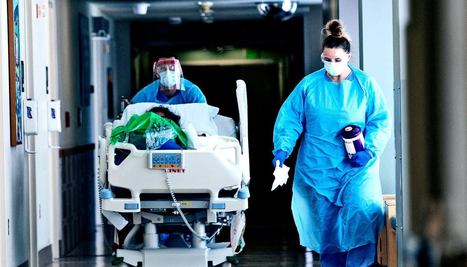
COVID-19 hospitalizations in the United States are longer than in China and patients face higher rates of intensive care unit admission, research shows.
Scoop.it!

The United States plans a massive testing effort involving more than 100,000 volunteers and a half dozen or so of the most promising vaccine candidates in an effort to deliver a safe and effective one by the end of 2020, scientists leading the program told Reuters.
Scoop.it!

A Maryland-based biotechnology company Novavax has announced its plans to start enrolling 130 people to test a new experimental vaccine for COVID-19 disease.
Scoop.it!
US Biotech Firm Kicks Off COVID Vaccine Tests on Humans After Receiving $388Mln From Bill Gates Fund
Should the initial outcomes look promising, the trial of the Novavax experimental inoculation will enter the second phase, expanding well beyond Australia and covering...
Scoop.it!

Boxes with the MIGAL’s Hebrew logo contain small sealed vials of the fake vaccine and a set of counterfeit instructions for use - also in Hebrew.
Scoop.it!

US biotech Novavax has begun a phase 1 study of its coronavirus vaccine, as the number in clinical development reached double figures. ...
Scoop.it!

Researchers say the first human trial of a possible COVID-19 vaccine has been found to be safe and may effectively fight the virus.
Ed Rybicki's insight:
Ad5-vectored vaccine: and what about anti-vector immunity??
Scoop.it!

Enveloped viruses are glycosylated, meaning that their envelope proteins are post-translationally modified by the addition of glycans. Some glycosyltransferases that contribute to terminate glycan chains synthesis are differentially expressed between cell types within or between species, which bears important immunological consequences [1]. A prime example concerns the GGTA1 gene encoding a galactosyltransferase that catalyzes the transfer of a galactose in α1,3 linkage onto subterminal N-acetyllactosamines. This glycosyltransferase is expressed by all mammals except Old World monkeys, apes and humans, due to inactivating mutations that occurred in a common primate ancestor some 20 to 40 million years ago. .. In conclusion, we propose to enhance the innate anti-viral protection conferred by natural anti-glycan antibodies in order to lower both the risk of emergence of coronaviruses, or other enveloped viruses, from a nonprimate mammalian species and the risk of transmission within the human population. This could add-up to other protection and containment measures, mitigating the impact of the epidemic.
Scoop.it!

Pending the results of a Phase III efficacy trial this summer, a vaccine produced by the biotech company Moderna could be ready for approval as soon as the fall.
Scoop.it!

Preclinical testing of a vaccine against Covid-19 conducted by the Gamaleya Scientific Research Institute of Epidemiology and Microbiology of the Russian Health Ministry had shown good results, and human trials are expected to start by June 15, director Alexander Gintsburg told Sputnik news agency.
|
Scoop.it!

Wide-ranging and often 'bizarre' symptoms can persist weeks and even months after first falling ill...
Scoop.it!
The SARS-Cov2 has presented the world with a novel pandemic challenge requiring a rapid response. This article provides a May 2020 snapshot from Professor Paul Young, who is part of a group working with urgency on Australia’s leading COVID-19 candidate vaccine.
Scoop.it!

PNI will handle development of the vaccine and CanSinoBIO will take care of preclinical testing, human clinical trials, regulatory submissions and commercialization.
Scoop.it!

Your COVID-19 vaccine could come from one of these Indian biotech giants...
Scoop.it!

Authorities suspect a woman in Queensland diagnosed with the coronavirus was exposed on the Ruby Princess cruise ship almost 10 weeks before falling ill.
Scoop.it!

India must have a plan for implementing it as it needs 50 to 60 crore vaccines, said Jha.
Scoop.it!

Scientists have hailed a just-announced $37m Government spend toward a Covid-19 vaccine – and now a major clinical research organisation has called for tri...
Scoop.it!
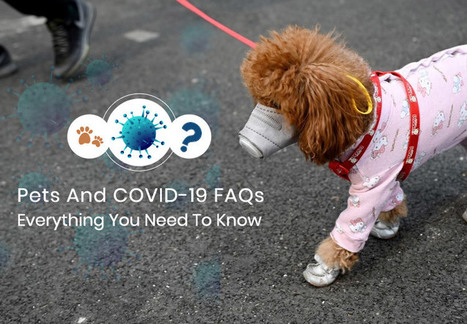
What is the best way to prevent your family (including your pets) from COVID-19? Read our basic guidelines to protect yourself and your pets.
Scoop.it!

While Britain’s pandemic plan assumes a new virus will be unstoppable, Asian countries focused on containment in a bid to minimise mortality...
Scoop.it!

Reported rates of influenza and other infections have fallen sharply, but some communicable diseases may see a rise.
Scoop.it!

From
metro

Health Secretary Matt Hancock has neither confirmed nor denied that a coronavirus vaccine could be compulsary in the UK.
Scoop.it!

Oxfords effort involves its multidisciplinary Vaccine Group, set up in 1994 to study new and improved inoculations, and the Jenner Institute, which works on both human and livestock diseases. It is based on a chimpanzee adenovirus — a common cold virus —which has been genetically changed to stop...
|




