Your new post is loading...

|
Scooped by
Ed Rybicki
March 20, 2012 7:38 AM
|
The enduring quest for a coffee bean without the buzz. Coffee contains some 2,000 chemical compounds that give the drink its enticing aroma and flavour, including caffeine, a stimulant and natural pesticide. Removing the caffeine while leaving all the others intact poses a significant challenge. But I LIKE the buzz.
|
|
Scooped by
Ed Rybicki
March 20, 2012 7:03 AM
|
The outbreak of avian influenza on a turkey farm in the South of the Netherlands has been confirmed to be of a relatively mild variety, H5N2.
|
|
Scooped by
Ed Rybicki
March 20, 2012 6:59 AM
|
Schmallenberg virus worrying Europe's farmers. Virus which leads to deaths and deformities of livestock during pregnancy spreading across continent. The Schmallenberg virus, named after a town in Germany, has become a ...
|
|
Scooped by
Ed Rybicki
March 20, 2012 5:51 AM
|
A newly discovered virus may be one of the causes of a potentially fatal kidney disease in pet cats. Tubulointerstitial nephritis is a disease that inflames the spaces between the kidney tubules, the tubes that carry fluid for filtration inside the organ. Many factors can cause tubulointerstitial nephritis in humans, from infections to autoimmune disorders to certain medications. But in cats, the cause is rarely known.
Now, researchers in Hong Kong believe they've found at least one culprit: a new virus related to measles and mumps dubbed feline morbillivirus. A dog version of this virus causes distemper, which manifests as vomiting, diarrhea, coughing and deadly neurological symptoms.
|
|
Scooped by
Ed Rybicki
March 20, 2012 5:48 AM
|
Chemists have produced the first high resolution structure of a molecule that when attached to the genetic material of the hepatitis C virus prevents it from reproducing. The structure of the molecule, which was published in a paper in this week's early online edition of the journal Proceedings of the National Academy of Sciences, provides a detailed blueprint for the design of drugs that can inhibit the replication of the hepatitis C virus, which proliferates by hijacking the cellular machinery in humans to manufacture duplicate viral particles.
|
|
Scooped by
Ed Rybicki
March 20, 2012 5:15 AM
|
Bevacizumab Active in HIV-Linked Kaposi's SarcomaDoctors LoungeFor patients with HIV-associated Kaposi's sarcoma, bevacizumab is tolerated and induces a response in some patients, according to a study published online March 19 in the Journal of...
|
|
Scooped by
Ed Rybicki
March 20, 2012 5:10 AM
|
What we know today as a computer virus might eventually evolve into the point where it's able to affect human biology. Love it: some day influenza will transmit wirelessly.
|
|
Scooped by
Ed Rybicki
March 20, 2012 3:50 AM
|
The University of Florence has launched an inquiry into the teaching activities of an academic who assisted on a course that denies the causal link between HIV and AIDS, and supervised students with dissertations on the same topic. The Italian university's internal 'special commission' will examine the “teaching behaviour and responsibility” of molecular biologist Marco Ruggiero, a university spokesman told Nature. The move follows a letter to the institution's rector, Alberto Tesi, by an Italian campaign group called the HIV Forum, which represents people infected with HIV and others concerned about the disease. It calls on him to disassociate the university from the “science and activities” of Ruggiero, who, the group says, is “internationally known” for denying the widely accepted link between HIV and AIDS, and promotes a potential cure for HIV involving an enriched probiotic yoghurt for which there is no proven evidence. Very dangerous people...you have to wonder how they maintain such denial in the face of so much evidence?
|
|
Scooped by
Ed Rybicki
March 17, 2012 4:04 PM
|
Survivin is a Mr 16.5 KD antiapoptotic protein that belongs to inhibitor of apoptosis protein family. It is overexpressed among many malignant tumors and embryonic, however, it could not be detectable in most normal adult tissues. This study was designed to explore the anti-tumor effects and mechanisms of recombinant adenovirus encoding survivin encapsulated in cationic liposome.
|
|
Scooped by
Ed Rybicki
March 17, 2012 3:59 PM
|
|
|
Scooped by
Ed Rybicki
March 17, 2012 3:57 PM
|
In Developing Countries, Female Sex Workers 14 Times More Likely to Become Infected by HIV... Female sex workers in low- and middle-income countries are nearly 14 times more likely to be infected by HIV compared to the rest of country’s population, according to an analysis by researchers at the Johns Hopkins Bloomberg School of Public Health. The findings suggest an urgent need to scale up access to quality HIV prevention programs in these countries. The study was published online in The Lancet Infectious Diseases.
|
|
Scooped by
Ed Rybicki
March 13, 2012 3:52 PM
|
Northern hybridization results showed that the 5′ capped RNA3 segments are slightly smaller than the homologous vcRNA3 and are not polyadenylated. These data suggest that FMV generates 5′ capped mRNAs via cap-snatching, similar to strategies used by other negative-sense multipartite ssRNA viruses. Nice one Bryce!! Long, long time since I visited you in Davis....
|
|
Scooped by
Ed Rybicki
March 13, 2012 4:52 AM
|
Results Primary HPV screening was the preferred primary test over the age of 30 in many considered scenarios. Primary cytology screening was preferred only in scenarios with low costs of cytology and in scenarios with a high prevalence of HPV in combination with high costs of HPV testing. Conclusions Most European countries should consider switching from primary cytology to HPV screening for cervical cancer. HPV screening must, however, only be implemented in situations where screening is well controlled. Image by Russell Kightley Media
|
|
|
Scooped by
Ed Rybicki
March 20, 2012 7:20 AM
|
Uptake of the human papillomavirus (HPV) vaccine among the private medical profession has been dismal, leading to unnecessary deaths every day, according to Johannesburg gynaecologist and obstetrician, Dr Peter Koll. “Penetration into the target patient population has been huge elsewhere in the world – up to 80% in some European countries. In SA, it is certainly under 5% and probably as low as 2%,” he said. Considering that one in 20 women in this country who receive the HPV vaccine will be saved from cervical cancer, the second most prevalent cancer among women in SA, Dr Koll finds it hard to understand the lack of will among private doctors to protect their patients from the disease. Of course, the fact it COSTS so much to vaccinate against HPVs could have something to do with the lack of uptake??
|
|
Scooped by
Ed Rybicki
March 20, 2012 7:02 AM
|
The 8 various types of herpes viruses include the following: human simplex virus type 1, herpes virus type 2, varicella zoster virus 3, Epstein – Barr virus, cytomegalovirus, human herpes virus 6 and 7, and human herpes simplex virus type 8.
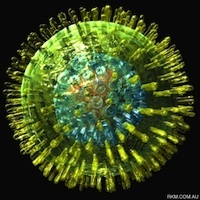
Herpes virus leads to all sort of infectious illnesses and health issues among individuals of all ages. They behave by invading the cells in the body, duplicating themselves, and creating the disease which could either be the harmful kind or the moderate one. Read this article to understand about the different kinds of herpes viruses to be able to know how to keep yourself and your family’ health secured. Image courtesy of Russell Kightley Media
|
|
Scooped by
Ed Rybicki
March 20, 2012 5:53 AM
|
An anti-polio vaccine, being used in India since 1978, could be shelved soon. The India Expert Advisory Group (IEAG) on polio has recommended that the nation should stop the use of trivalent oral polio vaccine (TOPV), and only rely on the oral bivalent variant. Experts say chances of vaccine derived polio virus infection (VDPV) are higher with the use of TOPV (that targets all three strains of polio virus - P1, P2 and P3) against the bivalent vaccine (that targets only P1 and P3). However, the World Health Organization (WHO) will take a final call in April after the meeting of its Strategic Advisory Group of Experts (SAGE) on Immunization. Makes sense: if you have no polio, using a live vaccine that is associated with reversion to virulence is not smart.
|
|
Scooped by
Ed Rybicki
March 20, 2012 5:49 AM
|
Public-health officials are increasingly worried about potential outbreaks of measles, whooping cough and other diseases in parts of the country where vaccination rates are dangerously low. Health experts say a community needs about 95% of its citizens to be immunized against measles to ensure herd immunity, where vaccinating a large percentage of a population keeps even unvaccinated people from getting the disease. Even people who aren't vaccinated, such as newborns, get some protection from herd immunity as the disease remains limited to a small part of the community. Stupidity is obviously contagious....
|
|
Scooped by
Ed Rybicki
March 20, 2012 5:19 AM
|
A deadly bird flu virus that was made transmissible in mammals, touching off public fears of a pandemic, is not as contagious as people had been led to believe. I note in particular: "In addition, he [Ron Fouchier] said, if the ferrets were previously exposed to a run-of-the-mill seasonal flu, they were immune to the bird flu." But this too: "...a member of the biosecurity board, warned that ferrets were not a perfect model for what would happen in humans, and that it was impossible to tell how virulent or contagious the new virus would be in people." So first ferrets show how lethal the virus will be - and then they don't?? Some people want it all ways....
|
|
Scooped by
Ed Rybicki
March 20, 2012 5:13 AM
|
Mayo Clinic researchers have trained mouse immune systems to eradicate skin cancer from within, using a genetic combination of human DNA from melanoma cells and a cousin of the rabies virus. The strategy, called cancer immunotherapy, uses a genetically engineered version of the vesicular stomatitis virus to deliver a broad spectrum of genes derived from melanoma cancer cells directly into tumors. In early studies, 60 percent of tumor-burdened mice were cured in fewer than three months and with minimal side effects. Results of the latest study appear this week in the journal Nature Biotechnology. Viruses against cancer! Love it.
|
|
Scooped by
Ed Rybicki
March 20, 2012 5:09 AM
|
Among other things, Baratunde Thurston is a social and political satirist. So in 2009, when paranoid fervor about the disease formerly known as the Swine Flu was at its height, he masqueraded as the Swine Flu on Twitter and Facebook. With their angry pig icon and badass attitude, Baratunde's swine flu accounts quickly (yes, I said it) went viral, getting write-ups in major media outlets like The Huffington Post and prominent followers like (someone explain this please) Mitt Romney. Much of the experiment's success was the result of Baratunde's energy and inventiveness in enacting the disease across various platforms. Go piggie...!
|
|
Scooped by
Ed Rybicki
March 17, 2012 4:07 PM
|
Respiratory Syncytial Virus (RSV) is a common virus that infects the lungs and breathing passage ways. Though it may only produce minor cold symptoms in adults, it can lead to serious illness in young children and those with compromised immune systems.... According to the Centers for Disease Control, RSV is the leading cause of bronchiolitis, an inflammation of the small airways in the lung, in infants under the age of 1. Most children will have been exposed to RSV by their second birthday.
|
|
Scooped by
Ed Rybicki
March 17, 2012 4:03 PM
|
Late last year came word that a Dutch scientist had genetically tweaked one of the world's most deadly bird flu viruses to make it more contagious to humans. In other words, a doomsday virus in a sneeze that could kill more than half of the people who caught it.That chilling revelation set off an international furor over whether the details of that study and a similar one done by researchers at the University of Wisconsin at Madison should be published in scientific journals. Scientists argued that researchers need those details to better detect and fight a possible epidemic of the virus, known as H5N1. Security experts argued compellingly that the studies should be expunged of key details, lest terrorists use that information to unleash a devastating biological weapon. WHAT. UTTER. AND. COMPLETE. BULLSHIRT. Scare-mongering to the nth degree.
|
|
Scooped by
Ed Rybicki
March 17, 2012 3:58 PM
|
While there has been a great deal of attention focused on making sure children receive required vaccinations, Minnesota medical professionals and health advocates are becoming more concerned about a growing number of people over the age of 18 who are not getting vaccinated.The majority of immunization awareness campaigns urge adults to get their children vaccinated, but the fact is that most people who die from vaccine-preventable diseases are actually adults. In the U.S., approximately 50,000 adults die each year from vaccine-preventable diseases.
|
|
Scooped by
Ed Rybicki
March 17, 2012 3:53 PM
|
The flu season has gotten off to a late start, allowing people more time to get the annual vaccine before the season’s inevitable peak.But the nation’s health authorities and a few scientists in the forefront of vaccine technology say we could be ...
|
|
Scooped by
Ed Rybicki
March 13, 2012 5:03 AM
|
Held every 3 years, Options for the Control of Influenza is the largest international scientific conference exclusively devoted to influenza. Options VIII will showcase recent advances in the basic science and control and prevention of influenza. Whatever your domain of expertise – virology, veterinary medicine, human medicine, public health policy, industry or journalism – Options for the Control of Influenza VIII is the premier conference bringing together experts dedicated to all aspects of influenza. Presentation formats will include keynote addresses, invited lectures, scientific workshops, abstract presentations, satellite meetings and poster sessions. The 2013 conference will allow delegates to experience the beauty and warm hospitality of Cape Town, South Africa. Delegates at Options VIII will experience an unforgettable mix of modern and traditional African ambience. Options VIII will highlight these characteristics along with cultural events strategically placed within the agenda. In addition, delegates will be provided an opportunity to participate in many pre-conference or post-conference tours on their own to encounter nature and history and create memories to treasure. We'll be there...hopefully, reporting on our efforts to establish plant-based influenza vaccine manufacture in South Africa Image by Russell Kightley Media
|