Your new post is loading...

|
Scooped by
Ed Rybicki
March 11, 2024 10:51 AM
|
During the COVID-19 pandemic, nonpharmaceutical interventions (NPIs) were implemented in order to control the transmission of SARS-CoV-2, potentially affecting the prevalence of respiratory syncytial virus (RSV).
|
|
Scooped by
Ed Rybicki
March 11, 2024 10:50 AM
|
Groundbreaking antiviral drugs discovered by University of Alberta scientists offer new hope in the fight against COVID-19 and future pandemics.
|
|
Scooped by
Ed Rybicki
March 11, 2024 10:49 AM
|
News & Events News Releases Leadership Q&A: NIH to bolster RECOVER Long COVID research efforts...
|
|
Scooped by
Ed Rybicki
March 11, 2024 10:48 AM
|
The WHO declared COVID-19 a pandemic on March 11, 2020. Four years later, in 2024, is COVID-19 and SARS-CoV-2 still a pandemic?
|
|
Scooped by
Ed Rybicki
March 9, 2024 3:48 AM
|
Numerous vaccines, such as those for whooping cough and hepatitis B, contain bits of bacterial or viral proteins.
|
|
Scooped by
Ed Rybicki
March 9, 2024 3:47 AM
|
Background The COVID-19 pandemic caused several higher educational institutions to switch from traditional face-to-face to virtual learning medium. This abrupt shift came with new expectations, experiences and challenges to nursing/ midwifery students, particularly new users, and even more so when...
|
|
Scooped by
Ed Rybicki
March 9, 2024 3:46 AM
|
Water determines life: humans are three-quarters water. An international research team led by the University of Amsterdam (UvA) has now discovered how water also determines the structure of the material that holds us together: collagen.
|
|
Scooped by
Ed Rybicki
March 9, 2024 3:44 AM
|
Exploring the moon has become increasingly more of a focal point lately, especially with a series of landers recently launched with various degrees of success. One of the difficulties those landers and any future human missions face is understanding the terrain they are landing on and potentially...
|
|
Scooped by
Ed Rybicki
March 9, 2024 3:43 AM
|
Researchers have discovered a mechanism steering the evolution of multicellular life. They identify how altered protein folding drives multicellular evolution.
|
|
Scooped by
Ed Rybicki
March 7, 2024 9:12 AM
|
The Kepler mission enabled the discovery of thousands of exoplanets, revealing a deep truth about our place in the cosmos: There are more planets than stars in the Milky Way galaxy. The road to this fundamental change in our understanding of the universe, however, required almost 20 years of...
|
|
Scooped by
Ed Rybicki
March 7, 2024 9:09 AM
|
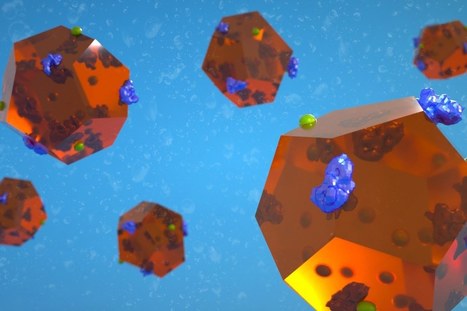
A type of nanoparticle called a metal organic framework (MOF) could be used to deliver vaccines and act as an adjuvant. Researchers find these particles provoke a strong immune response by activating the innate immune system through cell proteins called toll-like receptors.
|
|
Scooped by
Ed Rybicki
March 7, 2024 9:07 AM
|
Tumor-reactive T cell receptors are rapidly identified from lymphocyte scRNA-seq data.
|
|
Scooped by
Ed Rybicki
March 7, 2024 9:07 AM
|
Development of B cell memory is a conundrum that scientists are still exploring. Studies have been conducted in vitro and using advanced animal models to elucidate the mechanism underlying the generation of memory B cells (MBCs), the precise roles of MBCs against pathogens, and their protective...
|
|
|
Scooped by
Ed Rybicki
March 11, 2024 10:50 AM
|
Original Article from The New England Journal of Medicine — Myocarditis after Covid-19 Vaccination in a Large Health Care Organization...
|
|
Scooped by
Ed Rybicki
March 11, 2024 10:50 AM
|
Peptides are short strands of amino acids that are increasingly used therapeutically, as biomaterials and as chemical and biological probes. The capacity to isolate, manipulate and label peptides and larger proteins is limited, however, by the ability to reliably attach functional molecules, such...
|
|
Scooped by
Ed Rybicki
March 11, 2024 10:48 AM
|
Executive summary The 2023-2024 fall and winter virus season, four years since the start of the COVID-19 pandemic, provided ongoing evidence of the changing face of respiratory diseases. COVID-19 remains an important public health threat, but it is no longer the emergency that it once was, and its health impacts increasingly resemble those of other respiratory viral illnesses, including influenza and RSV. This reality enables CDC to provide updated guidance proportionate to the current level of risk COVID-19 poses while balancing other critical health and societal needs.
|
|
Scooped by
Ed Rybicki
March 9, 2024 3:48 AM
|
Compared with patients with MS not infected with COVID-19, those who were did not have a greater risk for relapse or worse EDSS scores...
|
|
Scooped by
Ed Rybicki
March 9, 2024 3:47 AM
|
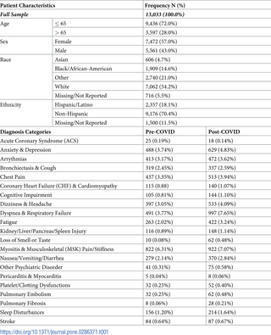
Background Most patients with COVID-19 report experiencing one or more symptoms after acute infection subsides, known as post-acute sequelae of SARS-CoV-2 infection (PASC). Though research has examined PASC after acute COVID-19, few studies have examined PASC over a longer follow-up duration or...
|
|
Scooped by
Ed Rybicki
March 9, 2024 3:46 AM
|
Since its 1976 emergence in Africa, the Ebola virus has proven an especially lethal contagion, killing roughly 50% of the people who contract it. The 2019 FDA approval of a vaccine, combined with the subsequent development of two antibody-based drugs, marked unprecedented progress against one...
|
|
Scooped by
Ed Rybicki
March 9, 2024 3:45 AM
|
COVID-19 vaccines elicit strong T-cell responses, but clonal-resolution analyses of these responses have not previously been performed. To address this gap, a team of researchers investigated the T- cell receptor sequence and tracked it using trammer analysis, uncovering key insights into the...
|
|
Scooped by
Ed Rybicki
March 9, 2024 3:44 AM
|
Too often, the lack of clinical trials means that pregnant women suffer because available medications are prescribed off-label for them or not at all. A new study offers proof of concept for the important parameters to develop pregnancy-safe gene therapies.
|
|
Scooped by
Ed Rybicki
March 9, 2024 3:42 AM
|
Two new studies from UCSF found that SARS-CoV-2 antigens can persist in the body long after the acute phase of COVID-19, up to 14 months in blood and over two years in tissue samples. The presence of viral fragments in tissues, even without reinfection, may contribute to conditions like Long COVID. Hospitalized individuals and those with more severe symptoms were more likely to have detectable antigens. Further research is needed to understand the implications of these findings, including potential risks like heart attack and stroke. The studies highlight the need for continued investigation into the long-term effects of COVID-19 on the body. Source link
|
|
Scooped by
Ed Rybicki
March 7, 2024 9:12 AM
|
A computational model of the more than 26 million atoms in a DNA-packed viral capsid expands our understanding of virus structure and DNA dynamics, insights that could provide new research avenues and drug targets, University of Illinois Urbana-Champaign researchers report in the journal Nature.
|
|
Scooped by
Ed Rybicki
March 7, 2024 9:08 AM
|
New research in PLOS ONE uncovers an important discovery in the study of marine mammal health by being the first study to detect Otariid gammaherpesvirus 1 (OtGHV1) in free-ranging South American pinnipeds, as well as a novel herpesvirus Otariid gammaherpesvirus 8 (OtGHV8) in South American sea...
|
|
Scooped by
Ed Rybicki
March 7, 2024 9:07 AM
|
Three lipid-enveloped viruses (bovine viral diarrhea virus [BVDV], vaccinia virus, and severe acute respiratory syndrome coronavirus 2 [SARS-CoV-2]) were evaluated in side-by-side liquid inactivation efficacy studies of low pH (3.0 to 3.1) treatment and of the non-formulated microbicidal actives...
|


 Scoop.it!