


Every year seems to bring a new twist to the flu season and this year is no exception because, so far, it's been a mild year for the virus.

 Your new post is loading...
 Scoop.it! Every year seems to bring a new twist to the flu season and this year is no exception because, so far, it's been a mild year for the virus. 
No comment yet.
Sign up to comment
Scoop.it!

On the destruction of art and the loss of collective histories
Scoop.it!

LA JOLLA—Using cutting-edge imaging technology, Salk Institute and Harvard Medical School researchers have determined the structure of a protein complex that lets viruses similar to the human immunodeficiency virus (HIV) establish permanent infections within their hosts.
Scoop.it!
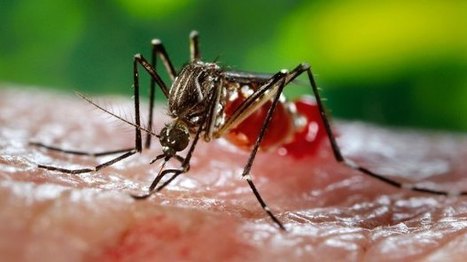
Brazil, Colombia, El Salvador, Suriname, and Venezuela are all reporting an uptick in the number of people diagnosed with Guillain-Barré syndrome (GBS), which can cause temporary but nearly complete paralysis. Health officials suspect Zika virus infection may be related to this surge in GBS cases.
Scoop.it!

Chronic hepatitis B virus (CHB) is currently treated with either interferon-based or nucleot(s)ide-based antiviral therapies. However, treatment with pegylated interferon alpha results in a durable antiviral response in only about 30% patients and is associated with side effects. Most patients receiving nucleot(s)ide analogue treatment do not establish long-term, durable control of infection and have rebounding viremia after cessation of therapy. Thus, novel therapy strategies are necessary to achieve the induction of potent and durable antiviral immune responses of the patients which can maintain long-term control of viral replication. Therapeutic vaccination of HBV carriers is a promising strategy for the control of hepatitis B. Here the authors review new therapeutic vaccination strategies to treat chronic hepatitis B which may be introduced for patient treatment in the future.
Scoop.it!

Russian Ministry of Healthcare said that an Ebola vaccine developed by Russia will be officially unveiled at the UN Office in Geneva on February 15.
Scoop.it!

Cyanobacteria in the oceans are among the world's most important oxygen producers and carbon dioxide consumers. Synechocystis is a spherical single-celled cyanobacterium that measures about three thousandths of a millimetre across. Because Synechocystis needs sunlight to produce energy, it is important for it to find places where the light is neither too weak nor too…
Scoop.it!

The deadly virus affecting oysters in Tasmania's south-east is detected in a population of wild oysters in the Derwent estuary Pacific Oyster Mortality Syndrome, or POMS, has been detected in six Tasmanian commercial growing regions — Lower Pittwater, Upper Pittwater, Pipe Clay Lagoon, Blackman Bay, Little Swanport and Dunalley Bay. It is also believed the infection has hit oyster leases at Bruny Island's Great Bay, but that will not be confirmed until further testing is carried out. The Environment Department has now confirmed the disease has affected a population of wild oysters in the Derwent estuary. Tasmania's Chief Veterinary Officer Rod Andrewartha said the finding could be a positive aspect to the outbreak since wild oysters were considered pests. .
Ed Rybicki's insight:
POMS virus. Really?? Only Australians could say that with a straight face...B-)
Scoop.it!

Farmers are being warned to expect an outbreak of a highly infectious animal disease called bluetongue this summer. The disease, carried by a biting midge, can be fatal to sheep and cows. The return of the disease to central France last year has led to concerns the virus could spread, particularly to southern England. Government vets say there is an 80% chance that infected midges will arrive in the UK this summer. Humans are not affected, but bluetongue has economic impacts for farmers, who can lose livestock and face restrictions on moving animals from farm-to-farm. Government Deputy Chief Vet Simon Hall said robust disease surveillance measures were in place and the situation in France was being carefully monitored.
Ed Rybicki's insight:
And we helped make a vaccine in plants...?
Scoop.it!

Dengue virus (DENV) is a small positive single-stranded RNA enveloped Flavivirus that is formed as a non-infectious particle, which undergoes maturation by cleavage of a protein (prM) on its surface. Different prMs are cleaved at different time-points/locations, resulting in viral heterogeneity both at the population and at the individual particle levels. Bulk analyses cannot capture this heterogeneity. Using our new technology, flow virometry, we analyzed single virions and evaluated the heterogeneity of the surface proteins that determine viral pathogenicity. We showed that uncleaved protein (prM) was present on about 50% of infectious DENV particles produced by BHK-21 cells. In contrast if DENV is produced by LoVo cells, which lack the furin-protease mediating the cleavage of prM, this precursor was present on ~85% of virions. Flow virometry opens the way to analyze individual proteins on individual virions.
Ed Rybicki's insight:
"Flow virometry": I gotta do me some of that....
Scoop.it!

UCT astronomer helps discover hidden galaxies
Scoop.it!
Week 5 Persuasive speech in favor of vaccinations
|
Scoop.it!

Leslie Lobel says it’s unclear whether birth defects in Brazil are linked to Zika, and any panic can cause more harm than the virus itself
Ed Rybicki's insight:
Amen, brother!
Scoop.it!

Despite the breakthroughs in HIV and AIDS research, without an effective vaccine, the world will not get to zero new infections and deaths.
Ed Rybicki's insight:
Nice series of articles - I covered the first one earlier. HIV/AIDS for many of has been a long and sustained learning experience that has paralleled the pandemic: it has provided numerous invaluable insights into the workings of the human immune system, into how retroviruses work, how they evolve - and how to treat the diseases HIV infection leads to, as well as how to develop therapies for those infected. I hope we are past the midpoint of the pandemic curve now: as a young academic, I remember the first reports of AIDS the syndrome, the discovery of the viruses involved. As an old academic who has been involved in research on candidate vaccines against it, I am still hoping that we will conquer the virus in my lifetime.
Scoop.it!

Violence clouds legitimate student issues
Scoop.it!

Hepatitis B virus (HBV) infection remains a major global health problem because current therapies rarely eliminate HBV infections to achieve a complete cure. A different treatment paradigm to effectively clear HBV infection and eradicate latent viral reservoirs is urgently required. In recent years, the development of a new RNA-guided gene-editing tool, the CRISPR/Cas9 (clustered regularly interspaced short palindromic repeats/CRISPR-associated nuclease 9) system, has greatly facilitated site-specific mutagenesis and represents a very promising potential therapeutic tool for diseases, including for eradication of invasive pathogens such as HBV. Here, we review recent advances in the use of CRISPR/Cas9, which is designed to target HBV specific DNA sequences to inhibit HBV replication and to induce viral genome mutation, in cell lines or animal models. Advantages, limitations and possible solutions, and proposed directions for future research are discussed to highlight the opportunities and challenges of CRISPR/Cas9 as a new, potentially curative therapy for chronic hepatitis B infection.
Scoop.it!

Globally, the health community is moving to a point where there could be zero new HIV infections or deaths. But it has been a long road.
Scoop.it!
Pyriproxyfen is an insect growth regulator with a mechanism of action that is highly specific to insects. Pyriproxyfen is used on a wide variety of crops and is recommended by the WHO for addition to drinking water storage vessels to prevent the spread of deadly diseases such as malaria.
Scoop.it!

Four people who had been in contact with Sierra Leone's last known Ebola case were declared free of the disease and released from quarantine Thursday, health authorities said.
Ed Rybicki's insight:
Remember Ebola...?
Scoop.it!

A woman flew home to Moscow from the Dominican Republic, exhibiting no symptoms. Russia has registered its first case of an infection with the Zika virus, the country’s consumer watchdog reported on Monday. Rospotrebnadzor, which polices the health and safety of cargo coming into the country from abroad issued a statement reporting that a woman, returning from vacation in the Dominican Republic has fallen ill with the virus following her arrival in Moscow. She did not exhibit any symptoms until her return home. "At present the patient is at an infectious diseases hospital, her condition is satisfactory,” the watchdog reported. “Medical observation of family members has been established and no clinical manifestations of the virus were registered among them, as they tested negative for the Zika virus."
Ed Rybicki's insight:
Oh, OK, just ONE Zika article then....
Scoop.it!
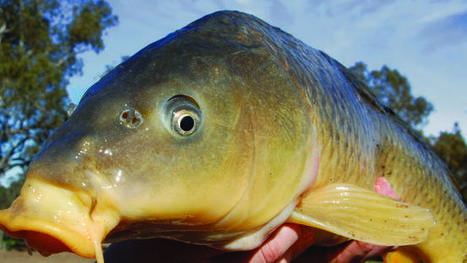
STATE governments have welcomed a potential solution to Australias carp problem, but are yet to commit funding to make it a reality. STATE governments have welcomed a potential solution to Australia’s carp problem, but are yet to commit funding to make it a reality.
Victoria, South Australia and Queensland are instead waiting for further guidance from the Federal Government on moves to introduce a virus to target carp, which now dominate the Murray Darling Basin. Support for the virus – known colloquially as “carp herpes” – gained ground last week after CSIRO scientists revealed they were confident after eight years of testing that it killed only carp
Ed Rybicki's insight:
"confident after eight years of testing that it killed only carp". Really? Confident enough to let it get out??
Scoop.it!

There is no specific treatment for the viral hemorrhagic disease which is transmitted by infected mosquitoes.
Ed Rybicki's insight:
It's getting worse...?
Scoop.it!

In this project our aim was to gain detailed insight into the enteric picornavirus diversity of a single diarrheic chicken introduced recently to a novel location. During the course of our investigation the complete genomes of nearly all picornaviruses found in the studied cloacal sample were determined, characterized and phylogenetically analysed. Using a combination of viral metagenomic and RT-PCR techniques, a total of eight unique picornaviruses were identified which belonged to genera Megrivirus, Sicinivirus, Gallivirus, Tremovirus, Avisivirus, “Orivirus” (two potential genotypes) and an unassigned novel picornavirus (chicken phacovirus 1) (see the figure below). The phacoviruses were also detected in multiple chicken enteric samples from the USA, suggesting a worldwide distribution of these viruses among chicken flocks. The megrivirus-related sequences could not be confirmed by RT-PCR, and one picornavirus called orivirus A1 (genus “Orivirus”) was described earlier by our research group.
Ed Rybicki's insight:
Love it!
Scoop.it!

Research papers published by the journal Nature will be made free to view online in an effort to make it easier for scientists to share their work with their peers and the public.
|




