Your new post is loading...

|
Scooped by
Ed Rybicki
June 7, 2016 6:16 AM
|
Tick-borne viral disease has claimed eight lives this year according to the Ministry of Health
|
|
Scooped by
Ed Rybicki
June 6, 2016 11:27 AM
|
Mycoplasma bovis is a major pathogen affecting cattle causing bronchopneumonia, mastitis, and other disorders. Only autogenous vaccines made specifically for individual farms are available in parts of Europe and the United States. A novel experimental vaccine composed of a field M. bovis isolate combined with saponin and Emulsigen® adjuvants was evaluated. Eighteen 3–4 week old calves were placed in three equal groups: vaccinated (Vac), positive control (PC) and negative control (NC). The Vac calves were subcutaneously injected with 8 ml of the vaccine; the PC and NC calves received phosphate buffered saline (PBS). Three weeks later the Vac and PC calves were challenged with a virulent M. bovis strain, the NC group received PBS. Throughout the study clinical observations, microbiology and immunological tests were carried out. Three weeks post challenge two calves from each group were euthanased for necropsy and histopathological examination. The vaccine effectively stimulated the humoral immune response, with high titres of anti-M. bovis specific antibodies and total Ig concentration. This vaccine also intensified the IgA response. A clinically protective effect of the vaccine was demonstrated as it also reduced the gross pathological lung lesions and nasal shedding of M. bovis.
|
|
Scooped by
Ed Rybicki
June 6, 2016 11:23 AM
|
Egg-drop syndrome (EDS) virus is an avian adenovirus that causes a sudden drop in egg production and in the quality of the eggs when it infects chickens, leading to substantial economic losses in the poultry industry. Inactivated EDS vaccines produced in embryonated duck eggs or cell culture systems are available for the prophylaxis of EDS. However, recombinant subunit vaccines that are efficacious and inexpensive are a desirable alternative. In this study, we engineered chimeric fusion proteins in which the trimeric fiber knob domain lacking the triple β-spiral motif in the fiber shaft region was genetically fused to trimeric coiled coils, such as those of the engineered form of the GCN4 leucine zipper peptide or chicken cartilage matrix protein (CMP). The fusion proteins were expressed predominantly as soluble trimeric proteins in Escherichia coli at levels of 15–80 mg/L of bacterial culture. The single immunization of chickens with the purified fusion proteins, at a dose equivalent to 10 μg of the knob moiety, elicited serum antibodies with high hemagglutination inhibition (HI) activities, similar to those induced by an inactivated EDS vaccine. A dose–response analysis indicated that a single immunization with as little as 1 μg of the knob moiety of the CMP–knob fusion protein was as effective as the inactivated vaccine in inducing antibodies with HI activity. The immunization of laying hens had no apparent adverse effects on egg production and effectively prevented clinical symptoms of EDS when the chickens were challenged with pathogenic EDS virus. This study demonstrates that the knob domain lacking the shaft sequence but fused to a trimeric coiled coil is a promising candidate subunit vaccine for the prophylaxis of EDS in chickens.
|
|
Scooped by
Ed Rybicki
June 4, 2016 8:01 AM
|
The Adenovirus vaccine has been protecting military trainees from infections by Adenovirus serotypes 4 and 7 since October 2011, when the military services resumed its use after a 12-year gap.
|
|
Scooped by
Ed Rybicki
June 4, 2016 7:56 AM
|
Kremlin-backed experts have described condoms as the main cause of Russia HIV epidemic, the Kommersant newspaper reported Tuesday.
|
|
Scooped by
Ed Rybicki
June 4, 2016 7:53 AM
|
Exclusive: The National Aids Trust has sent NHS England a legal letter warning that it will submit court papers next Friday. "I
|
|
Scooped by
Ed Rybicki
June 4, 2016 7:50 AM
|
Shen’s team prepared HaNPV DNA and star-shaped dendrimer complexes and fed them to black cutworm larvae and grasshoppers. HaNPV can only infect cotton bollworms through specific gut cell membrane receptors. Both black cutworm larvae and grasshoppers are consequently immune to HaNPV DNA alone, but when delivered by the dendrimer complex they lose their resistance and die in a short range of time. ‘We have broken the species limitation of insecticidal viruses in pest management,’ says Shen.
|
|
Scooped by
Ed Rybicki
June 4, 2016 7:44 AM
|
New research has revealed the mechanisms of persistent latent infection of the human T-cell leukemia virus type 1 (HTLV-1). This is an important achievement that may contribute to the prevention of refractory leukemia, a form of leukemia in which leukemic cells do not respond well to treatment.
|
|
Scooped by
Ed Rybicki
June 3, 2016 9:57 AM
|
Scientists have now demonstrated a way to equip the body's immune cells with the ability to fight any kind of cancer, providing an early proof-of-concept for a cheap, universal vaccine for the deadly disease.
|
|
Scooped by
Ed Rybicki
June 3, 2016 9:56 AM
|
An HIV drug first approved lessthan three years ago is to be rolled out in Botswana as a coremedicine for newly diagnosed patients, following the largestever tender secured by GlaxoSmithKline's HIV business inAfrica.
|
|
Scooped by
Ed Rybicki
June 3, 2016 6:59 AM
|
Health authorities in the Northern Territory issue an alert for the potentially fatal mosquito-borne virus Murray Valley Encephalitis (MVE).
|
|
Scooped by
Ed Rybicki
June 3, 2016 6:53 AM
|
A tourist who recently visited Key West contracted the dengue virus during their vacation, the Florida Department of Health confirmed Wednesday.
|
|
Scooped by
Ed Rybicki
June 3, 2016 6:07 AM
|
Strategically timed planting and using resistant wheat varieties help decrease virus incidence, according to a virologist. The plant science professor has been working on wheat viruses for more than 25 years. The major culprit in South Dakota is wheat streak mosaic virus.
|
|
|
Scooped by
Ed Rybicki
June 7, 2016 2:51 AM
|
A phase I safety and immunogenicity study investigated South African AIDS Vaccine Initiative (SAAVI) HIV-1 subtype C (HIV-1C) DNA vaccine encoding Gag-RT-Tat-Nef and gp150, boosted with modified vaccinia Ankara (MVA) expressing matched antigens. Following the finding of partial protective efficacy in the RV144 HIV vaccine efficacy trial, a protein boost with HIV-1 subtype C V2-deleted gp140 with MF59 was added to the regimen. A total of 48 participants (12 U.S. participants and 36 Republic of South Africa [RSA] participants) were randomized to receive 3 intramuscular (i.m.) doses of SAAVI DNA-C2 of 4 mg (months 0, 1, and 2) and 2 i.m. doses of SAAVI MVA-C of 1.45 × 10⁹ PFU (months 4 and 5) (n = 40) or of a placebo (n = 8). Approximately 2 years after vaccination, 27 participants were rerandomized to receive gp140/MF59 at 100 μg or placebo, as 2 i.m. injections, 3 months apart. The vaccine regimen was safe and well tolerated. After the DNA-MVA regimen, CD4+ T-cell and CD8+ T-cell responses occurred in 74% and 32% of the participants, respectively. The protein boost increased CD4+ T-cell responses to 87% of the subjects. All participants developed tier 1 HIV-1C neutralizing antibody responses as well as durable Env binding antibodies that recognized linear V3 and C5 peptides. The HIV-1 subtype C DNA-MVA vaccine regimen showed promising cellular immunogenicity. Boosting with gp140/MF59 enhanced levels of binding and neutralizing antibodies as well as CD4+ T-cell responses to HIV-1 envelope. (This study has been registered at ClinicalTrials.gov under registration no. NCT00574600 and NCT01423825.)
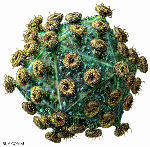
HIV Graphic from Russell Kightley Media
|
|
Scooped by
Ed Rybicki
June 6, 2016 11:24 AM
|
Highlights
•
Influenza vaccination can decrease the risk of influenza illness and related complications among pregnant women and their infants aged <6 months who are too young to receive the vaccine.
•
Pregnancy vaccination strategy is cost-saving during moderate to severe influenza seasons.
•
The cost-effectiveness ratio was reduced (more desirable) when the influenza season was more intense.
|
|
Scooped by
Ed Rybicki
June 6, 2016 11:21 AM
|
Hong Kong has decided to suspend trade in live poultry after a spot check at a local street market revealed the presence of the H7N9 bird flu virus. Hong K
|
|
Scooped by
Ed Rybicki
June 4, 2016 7:57 AM
|
Young women in Sub-Saharan Africa are more than twice as likely to become #HIV positive as young men: https://t.co/nM5cHl5mgm @thegenderwire
|
|
Scooped by
Ed Rybicki
June 4, 2016 7:53 AM
|
It can be difficult to gauge the success of an immunisation programme, but declines in searches for "chickenpox" show they work
|
|
Scooped by
Ed Rybicki
June 4, 2016 7:52 AM
|
Abstract: Porcine epidemic diarrhea virus (PEDV), an enveloped, single-stranded, positive-sense RNA virus belonging to the genus Alphacoronavirus in the family Coronaviridae, can infect pigs of all ages and causes acute and watery diarrhea, vomiting, dehydration, and high mortality in neonatal piglets. This disease was first observed in England in 1971 and was subsequently reported in many swine-producing countries in Europe and Asia. In contrast to the situation in Europe, the disease has remained a major cause of diarrhea outbreaks on swine farms in Asia. Since late 2010, severe porcine epidemic diarrhea (PED) epizootics caused by new variants have been affecting pigs in the People's Republic of China, resulting in substantial economic losses. In April 2013, PEDV was identified for the first time in the United States and resulted in the estimated death of over seven million piglets during a 1-year epidemic. Nowadays, it has spread into North and South America, Asia, and Europe, causing significant economic problems worldwide. More studies have been conducted in PEDV research, and the number of scientific literatures published during the last 5 years has exceeded the total of that in the past several decades. This review focuses on the current understanding of the etiology, molecular epidemiology, transmission, diagnosis, and pathogenesis of PEDV, as well as the vaccine to prevent PEDV infection. Keywords: PEDV, molecular epidemiology, transmission, diagnosis, pathogenesis, immune response, vaccine
|
|
Scooped by
Ed Rybicki
June 4, 2016 7:47 AM
|
VHD2 detected in the area of show organisers cancel contest
|
|
Scooped by
Ed Rybicki
June 3, 2016 9:58 AM
|
Scientists have taken a “very positive step” towards creating a universal vaccine against cancer that makes the body’s immune system attack tumours as if they were viruses.
|
|
Scooped by
Ed Rybicki
June 3, 2016 9:56 AM
|
HIV/AIDS is killing ever more young gay men in the Philippines, making Manila in 2016 start to look like San Francisco in the 1980s. Ana P. Santos reports on an epidemic partly driven by shame.
|
|
Scooped by
Ed Rybicki
June 3, 2016 9:54 AM
|
Niger has reported an outbreak of the highly pathogenic H5N1 bird flu virus among poultry, the World Organization for Animal Health (OIE) said on Friday, as the disease continues to hit flocks across West Africa.
|
|
Scooped by
Ed Rybicki
June 3, 2016 6:56 AM
|
A virus found in a pond in Connecticut could help kill lethal superbugs that infect wounds and severe burns, according to new research. The virus, which is a type of bacteriophage, a name that means “devourer of bacteria”, was discovered by Yale University scientists in Dodge Pond in East Lyme, according to a paper in the journal Scientific Reports.
|
|
Scooped by
Ed Rybicki
June 3, 2016 6:51 AM
|
On May 9, 2016, the Indian Patent Office granted the US pharmaceutical company Gilead a patent for sofosbuvir, a direct-acting antiviral for the treatment of hepatitis C virus (HCV).1 The decision to grant the patent reversed an earlier decision by the Indian Patent Office to reject the application after civil society organisations and generic manufacturers had filed a formal opposition to the patent application.2
The new sofosbuvir patent decision is again raising concerns among public health advocates. HCV infection can lead to lethal liver disease if left untreated. WHO estimates that 130–150 million people worldwide have chronic HCV infection, although recent estimates suggest this figure could be lower, at around 80 million.3, 4 WHO has laid out a global strategy for the treatment and elimination of HCV and has added sofosbuvir and other HCV medicines to the WHO Model List of Essential Medicines.5, 6 The implementation of such an ambitious strategy will depend on the availability of affordable medicines.7
|