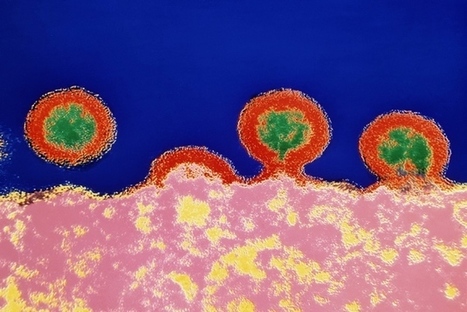
Retroviruses are known to rely extensively on the expression of viral proteins from the sense proviral genomic strand. Yet, the production of regulatory retroviral proteins from antisense-encoded viral genes is gaining research attention, due to their clinical significance. This report will discuss what is known about antisense transcription in Retroviridae, and provide new information about antisense transcriptional regulation through a comparison of Human Immunodeficiency Virus (HIV), Human T-cell Lymphotrophic Virus (HTLV-1) and endogenous retrovirus-K (ERVK) long terminal repeats (LTRs). We will attempt to demonstrate that the potential for antisense transcription is more widespread within retroviruses than has been previously appreciated, with this feature being the rule, rather than the exception.
The ability to recognize invading viral pathogens and to distinguish their components from those of the host cell is critical to initiate the innate immune response. The efficiency of this detection is an important factor in determining the susceptibility of the cell to viral infection. Innate sensing of viruses is, therefore, an indispensable step in the line of defense for cells and organisms. Recent discoveries have uncovered novel sensors of viral components and hallmarks of infection, as well as mechanisms by which cells discriminate between self and non-self. This review highlights the mechanisms used by cells to detect viral pathogens in the cytosol, and recent advances in the field of cytosolic sensing of viruses.
Bacterial, viral and parasitic zoonotic pathogens that transmit via the fecal-oral route have a major impact on global health. However, the mechanisms underlying the emergence of such pathogens from the animal reservoir and their persistence in the human population are poorly understood. Here, we present a framework of human-to-human transmission of zoonotic pathogens that considers the factors relevant for fecal-oral human-to-human transmission route at the levels of host, pathogen, and environment. We discuss current data gaps and propose future research directions.
A widespread epidemic of Zika virus (ZIKV) infection was reported recently in South and Central America. The biggest concern to the ZIKV infection is the significant increase of microcephaly in the fetus born to the infected mother (Brasil et al., 2016; Johansson et al., 2016; Mlakar et al., 2016). The placenta acts as a barrier against the infection, due to its multiple unique structural, cellular and immune properties. However, the placenta may also play an important role in the virus transfer. One possibility is that the virus penetrates through the placental barrier. Zika virus could be packaged as a cargo for the placental exosome pathway at the endoplasmic reticulum in trophoblast cells. Then the secretory autophagy-pathway may cause secretion or expulsion of the viral particle rather than its degradation (Zhang et al., 2017). Alternatively, the infection to the placenta may induce several immune responses and lead to brain defects indirectly (Adibi et al., 2016). A recent study indicated that the ZIKV genome could be detected in the amniotic fluid (Calvet et al., 2016), and the complete genome of ZIKV can be also recovered from the fetal brain (Mlakar et al., 2016), all of which confirm that the virus can cross the placental barrier (Mysorekar and Diamond, 2016).
Severe toll on elderly as flu death tally hits 75 Eilish O'Regan February 24 2017 2:30 AM Flu has claimed the lives of 75 people so far this season and has taken
The first human infections of novel avian influenza A(H7N9) virus were identified in China in March 2013. Sentinel surveillance systems and contact tracing may not identify mild and asymptomati
A Mysterious “Weaponized” Virus Sweeps the World Bill Gates Warns 30 Million Will Die Globalist aligned nations have been and are now requiring mandatory vaccinations of all of their citizens Holly…
BEIJING: Four kinds of vaccine for the H7N9 strain of bird flu virus have been approved for clinical trials by China’s top drug regulator, according to the Beijing Food and Drug Administration.
Zika virus (ZIKV) is a mosquito-borne flavivirus that is transmitted through the bite of Aedes spp mosquitoes and less predominantly, through sexual intercourse. Prior to 2007, ZIKV was associated with only sporadic human infections with minimal or no clinical manifestations. Recently the virus has caused disease outbreaks from the Pacific Islands, the Americas, and off the coast of West Africa with approximately 1.62 million people suspected to be infected in more than 60 countries around the globe. The recent ZIKV outbreaks have been associated with guillain-barré syndrome, congenital syndrome (microcephaly, congenital central nervous system anomalies), miscarriages, and even death. This review summarizes the path of ZIKV outbreak within the last decade, highlights three novel modes of ZIKV transmission associated with recent outbreaks, and points to the hallmarks of congenital syndrome. The review concludes with a summary of challenges facing ZIKV research especially the control of ZIKV infection in the wake of most recent data showing that anti-dengue virus antibodies enhance ZIKV infection.
Infection of humans by viruses from animal hosts — so-called zoonoses — occur relatively frequently around the world. Examples over the last few decades include human infections caused by avian influenza A viruses of hemagglutinin subtypes H5, H6, H7, H9, and H10, swine influenza A viruses of subtypes H1 and H3, Hendra virus and Nipah virus, Severe Acute Respiratory Syndrome (SARS)-coronavirus and Middle East Respiratory Syndrome (MERS)-coronavirus, West-Nile virus, and Ebola virus. Fortunately, most zoonotic infections occur as isolated cases or small clusters, posing little risk to the public at large. However, some zoonotic infections may trigger local or regional outbreaks, spread to humans in various parts of the world, or even result in widespread global outbreaks known as pandemics.
The accidental discovery of the giant virus of amoeba — Acanthamoeba polyphaga mimivirus (APMV; more commonly known as mimivirus) — in 2003 changed the field of virology. Viruses were previously defined by their submicroscopic size, which probably prevented the search for giant viruses, which are visible by light microscopy. Extended studies of giant viruses of amoebae revealed that they have genetic, proteomic and structural complexities that were not thought to exist among viruses and that are comparable to those of bacteria, archaea and small eukaryotes. The giant virus particles contain mRNA and more than 100 proteins, they have gene repertoires that are broader than those of other viruses and, notably, some encode translation components. The infection cycles of giant viruses of amoebae involve virus entry by amoebal phagocytosis and replication in viral factories. In addition, mimiviruses are infected by virophages, defend against them through the mimivirus virophage resistance element (MIMIVIRE) system and have a unique mobilome. Overall, giant viruses of amoebae, including mimiviruses, marseilleviruses, pandoraviruses, pithoviruses, faustoviruses and molliviruses, challenge the definition and classification of viruses, and have increasingly been detected in humans.
The vaccine gives the immune system the ability to flush out HIV by itself, meaning daily antiretroviral drugs aren't needed - one man has been free of the
Pathogenic Versus Commensal Tumor Viruses Another way to look at infectious carcinogens is whether or not a tumor virus is a rare or a common human infection. Commensal viruses are common, inapparent infections that do not usually cause symptoms or disease in the host.
Author summary Post-transcriptional gene silencing (PTGS) is an elaborately regulated process for defense against virus infection in plants. To achieve effective infection, a betasatellite molecule associated with geminivirus induced high levels of an endogenous RNA silencing suppressor, calmodulin-like protein (CaM), to counter host defenses. However, although CaM is one of the first identified cellular suppressors of RNA silencing, the mechanism of PTGS suppression is still poorly understood. This study demonstrates that CaM interacts with and degrades Suppressor of Gene Silencing 3 (SGS3) in Nicotiana benthamiana. We found that domains essential for the interaction between NbSGS3 and NbCaM are also required for the subcellular localization of NbSGS3 and for NbCaM suppressor activity. Moreover, NbCaM mediated NbSGS3 protein degradation can be blocked using the autophagy inhibitors 3-methyladenine and E64d, and by knock-down of key autophagy-related genes within the phosphatidylinositol 3-kinase (PI3K) complex. Silencing of the PI3K complex also inhibited geminivirus infection, which is consistent with autophagy playing an important role in RNA silencing suppression pathway and geminivirus infection.
Credit: NIAID The National Institute of Allergy and Infectious Diseases (NIAID), part of the National Institutes of Health (NIH), has launched a Phase 1 clinical trial to test an investigational va..
To get content containing either thought or leadership enter:
To get content containing both thought and leadership enter:
To get content containing the expression thought leadership enter:
You can enter several keywords and you can refine them whenever you want. Our suggestion engine uses more signals but entering a few keywords here will rapidly give you great content to curate.


 Your new post is loading...


 Scoop.it!