The latest HPV vaccine could prevent most HPV infections — and millions of cancers — worldwide, according to an article by Cosette Wheeler, PhD, and her collaborators. The article describing the HPV vaccine and strategies to overcome issues with its use was published online by the American Society of Clinical Oncology.
LITTLE ROCK, (KTHV) -- Three states surrounding Arkansas have had cases of dog flu. Louisiana health officials have confirmed finding at least two cases of canine influenza, also known as dog flu. There have been outbreaks in Texas and Tennessee.
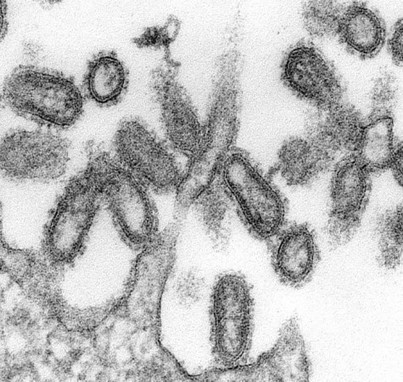
The 1918 influenza pandemic probably infected one-third of the world's population at the time — 500 million people. It killed between 50 million and 100 million; by contrast, Second World War deaths numbered around 60 million. Why is this catastrophe
Zika virus is an emerging pathogen of global importance. It has been responsible for recent outbreaks in the Americas and in the Pacific region. This study assessed five different mosquito species from the temperate climatic zone in Australia and included Aedes albopictus as a potentially invasive species. Mosquitoes were orally challenged by membrane feeding with Zika virus strain of Cambodia 2010 origin, belonging to the Asian clade. Virus infection and dissemination were assessed by quantitative PCR on midgut and carcass after dissection. Transmission was assessed by determination of cytopathogenic effect of saliva (CPE) on Vero cells, followed by determination of 50% tissue culture infectious dose (TCID50) for CPE positive samples. Additionally, the presence of Wolbachia endosymbiont infection was assessed by qPCR and standard PCR. Culex mosquitoes were found unable to present Zika virus in saliva, as demonstrated by molecular as well as virological methods. Aedes aegypti, was used as a positive control for Zika infection and showed a high level of virus infection, dissemination and transmission. Local Aedes species, Ae. notoscriptus and, to a lesser degree, Ae. camptorhynchus were found to expel virus in their saliva and contained viral nucleic acid within the midgut. Molecular assessment identified low or no dissemination for these species, possibly due to low virus loads. Ae. albopictus from Torres Strait islands origin was shown as an efficient vector. Cx quinquefasciatus was shown to harbour Wolbachia endosymbionts at high prevalence, whilst no Wolbachia was found in Cx annulirostris. The Australian Ae. albopictus population was shown to harbour Wolbachia at high frequency. The risk of local Aedes species triggering large Zika epidemics in the southern parts of Australia is low. The potentially invasive Ae. albopictus showed high prevalence of virus in the saliva and constitutes a potential threat if this mosquito species becomes established in mainland Australia. Complete risk analysis of Zika transmission in the temperate zone would require an assessment of the impact of temperature on Zika virus replication within local and invasive mosquito species.
Author summary Maternal ZIKV infection in pregnancy is associated with severe fetal anomalies, including microcephaly. It has been shown that infection manifests differently in pregnancy than in the non-pregnant state, with prolonged maternal viremia. ZIKV is spread by mosquitos and through sexual contact and since its first detection in early 2015, has become endemic to the Americas. While much has been learned from studying infected human pregnancies, there are still many questions concerning transmission of ZIKV from mother to fetus. Investigating ZIKV infection in non-human primates could help answer these questions due to similarities in the immune system, and the tissues separating the fetus from the mother during pregnancy. Our study serves to model ZIKV transmission in early and late pregnancy, as well as study the effects of this infection on the fetus and mother at these different times in pregnancy. The data collected provides an important insight on ZIKV in pregnancy where the pregnancies have been monitored throughout the entire infection period until term, and suggests that vertical transmission may be very efficient, although severe fetal outcomes are uncommon.
On May 26, the German health ministry said the country will pass a proposed law allowing kindergartens to notify authorities if parents don’t talk to thei
2 Doses of HPV Shot Enough to Prevent Genital Warts: Study, Latest Sexual Health News WEDNESDAY, May 24, 2017 (HealthDay News) -- New research supports the recent U.S. recommendation for two, rather than three, doses of the human papillomavirus (HPV) vaccine to protect against genital warts in preteens and teens. Investigators at Boston University Medical…
Locals to develop a vaccine to curb infant meningitis Taschica Pillay | 2017-05-02 09:09:35.0
This vaccine will be given to pregnant women to protect the unborn child. Group B Streptococcus infects children in their first month of life, when they are most vulnerable. File photo Photograph by: MARIANA BAZO A South African company will announce plans today to develop a vaccine to treat one of the leading causes of sepsis and meningitis in infants. Share Article:
The announcement will be made at the Innovation Effect Africa Conference at Durban's International Convention Centre.
The conference, convened by international nongovernmental organisation Path, the Bill and Melinda Gates Foundation, Leapfrog Investments, the New Partnership for Africa's Development and Wellcome Trust, brings together industry leaders to explore opportunities to advance African-led innovation to improve health, spur economic growth and end poverty.
Morena Makhoana, CEO of Biovac, the company at the forefront of the effort , said the Gates foundation was funding development.
"The partnership takes us into developing products locally rather than looking overseas. Hopefully when the product is successful we can manufacture the vaccine from scratch in South Africa."
He said clinical trials would begin in about four to five years.
Makhoana said it was the first time that the Gates foundation would fund vaccine development by an African company.
SAN JUAN, Puerto Rico (AP) — Puerto Rico's government is ordering all students ages 11 and 12 to get vaccinated against HPV by next year. Monday's announcement follo
Founded in 1988, the International AIDS Society (IAS) is the world’s largest association of HIV professionals, with members from more than 180 countries working on all fronts of the global AIDS response. The IAS is also the steward of the world’s two most prestigious HIV conferences – the International AIDS Conference and the IAS Conference on HIV Science.
Wild birds have been implicated in the expansion of highly pathogenic avian influenza virus (H5N1) outbreaks across Asia, the Middle East, Europe, and Africa (in addition to traditional transmission by infected poultry, contaminated equipment, and people). Such a role would require wild birds to excrete virus in the absence of debilitating disease. By experimentally infecting wild ducks, we found that tufted ducks, Eurasian pochards, and mallards excreted significantly more virus than common teals, Eurasian wigeons, and gadwalls; yet only tufted ducks and, to a lesser degree, pochards became ill or died. These findings suggest that some wild duck species, particularly mallards, can potentially be long-distance vectors of highly pathogenic avian influenza virus (H5N1) and that others, particularly tufted ducks, are more likely to act as sentinels.
Transmission of dengue virus (DENV) through blood transfusion has been documented and hence screening for DENV during blood donation has been recently recommended by the American Association of Blood Banks and Centres of Disease Control and Prevention. DENV is endemic in the Western province of the Kingdom of Saudi Arabia (KSA) and serotypes 1, 2 and 3, but not 4, have been detected. However, little is known regarding the rates of DENV during blood donation in the kingdom. The aim of this study was therefore to measure the prevalence of dengue virus and its serotypes in eligible Saudi blood donors in the endemic Western region of KSA. This was a cross-sectional study and serum samples were collected from 910 eligible Saudi male blood donors. DENV IgM and IgG antibodies were measured serologically by ELISA while viral serotypes were detected by a single step IVD CE certified multiplex RT-PCR kit. The overall prevalence was 39 and 5.5% for IgG+ and IgM+, respectively. There were 12 (1.3%) with exclusively IgM+, 317 (34.8%) exclusively IgG+ and 38 (4.2%) with dual IgM+/IgG+ donors. The overall prevalence was 3.2% (n = 29) and 2.3% (n = 21) for primary and secondary infections. PCR was positive in 5.5% (n = 50) and, DENV-2 (n = 24; 48%) was the most frequent serotype and was significantly higher than DENV-1 (20%; P = 0.02) and DENV-3 (2%; P = 0.1 × 10⁻⁵) but not DENV-4 (30%; P = 0.2). There was no significant difference between both DENV-4 and DENV-1 (P = 0.4). The combination of the PCR and serology findings showed that 22 (2.4%) and 28 (3.1%) donors had primary and secondary viremic infections, respectively. The detected rates of DENV by PCR suggest a potential high risk of viral transmission by blood transfusion. To the best of our knowledge, this study is the first to report the detection of DENV-4 serotype in Saudi Arabia. More studies are required to measure the precise prevalence of DENV serotypes and their potential transmission rate during blood donation in the kingdom.
The classification of complex organisms is in chaos. Stephen T. Garnett and Les Christidis propose a solution.
And that solution in part is that leg- and leaf-ologists (aka animal and plant taxonomists) take the example of the International Committee on Taxonomy of Viruses. Excellent!
Scientists at The Scripps Research Institute (TSRI) have made another important advance in HIV vaccine design. The development was possible thanks to previous studies at TSRI showing the structures of a protein on HIV's surface
Rodents represent the most diverse mammals on the planet and are important reservoirs of human pathogens. Coronaviruses infect various animals, but to date, relatively few coronaviruses have been identified in rodents worldwide. The evolution and ecology of coronaviruses in rodent have not been fully investigated. In this study, we collected 177 intestinal samples from thress species of rodents in Jianchuan County, Yunnan Province, China. Alphacoronavirus and betacoronavirus were detected in 23 rodent samples from three species, namely Apodemus chevrieri (21/98), Eothenomys fidelis (1/62), and Apodemus ilex (1/17). We further characterized the full-length genome of an alphacoronavirus from the A. chevrieri rat and named it as AcCoV-JC34. The AcCoV-JC34 genome was 27,649 nucleotides long and showed a structure similar to the HKU2 bat coronavirus. Comparing the normal transcription regulatory sequence (TRS), 3 variant TRS sequences upstream the spike (S), ORF3, and ORF8 genes were found in the genome of AcCoV-JC34. In the conserved replicase domains, AcCoV-JC34 was most closely related to Rattus norvegicus coronavirus LNRV but diverged from other alphacoronaviruses, indicating that AcCoV-JC34 and LNRV may represent a novel alphacoronavirus species. However, the S and nucleocapsid proteins showed low similarity to those of LRNV, with 66.5 and 77.4% identities, respectively. Phylogenetic analysis revealed that the S genes of AcCoV-JC34, LRNV, and HKU2 formed a distinct lineage with all known coronaviruses. Both alphacoronaviruses and betacoronaviruses were detected in Apodemus chevrieri in the Yunnan Province of China, indicating that Apodemus chevrieri is an important host for coronavirus. Several new features were identified in the genome of an Apodemus chevrieri coronavirus. The phylogenetic distance to other coronaviruses suggests a variable origin and evolutionary route of the S genes of AcCoV-JC34, LRNV, and HKU2. These results indicate that the diversity of rodent coronaviruses is much higher than previously expected. Further surveillance and functional studies of these coronaviruses will help to better understand the importance of rodent as host for coronaviruses.
The first large-scale clinical trial of a cannabis derivative known as cannabidiol shows it was able to cut the frequency of severe epileptic seizures by 39 percent, researchers said Wednesday.
PLYMOUTH MEETING, Pa., May 24, 2017 (GLOBE NEWSWIRE) -- Inovio Pharmaceuticals, Inc. (NASDAQ:INO) today announced that its HIV vaccine, PENNVAX®-GP, produced amongst the highest overall levels of immune response rates (cellular and humoral) ever demonstrated in a human study by an HIV vaccine. The vaccine candidate, PENNVAX-GP, consists of a combination of four HIV antigens designed to cover multiple global HIV strains and generate both an antibody (humoral) immune response as well as a T cell (cellular) immune response to both potentially prevent and treat HIV.
These preliminary results are from a study supported by the HIV Vaccine Trials Network (HVTN) and the National Institute of Allergy and Infectious Diseases (NIAID), part of the National Institutes of Health (NIH) in collaboration with Inovio. The study evaluated a four-dose regimen of PENNVAX-GP DNA vaccine administered by intradermal (ID) or intramuscular (IM) administration in combination with a DNA encoded immune activator, IL-12 (INO-9012). Overall, 71 of 76 (93%) evaluable vaccinated participants showed a CD4+ or CD8+ cellular immune response to at least one of the vaccine antigens (env A, env C, gag, or pol). Similarly, 62 of 66 (94%) evaluated participants demonstrated an env specific antibody response. None of the placebo recipients (0 of 9; 0%) demonstrated either a cellular or an antibody response in the study. Notably, amongst the participants receiving PENNVAX-GP vaccine and IL-12 with intradermal immunization, 27 of 28 (96%) participants demonstrated a cellular response and 27 of 28 (96%) demonstrated an HIV env specific antibody response.
To get content containing either thought or leadership enter:
To get content containing both thought and leadership enter:
To get content containing the expression thought leadership enter:
You can enter several keywords and you can refine them whenever you want. Our suggestion engine uses more signals but entering a few keywords here will rapidly give you great content to curate.


 Your new post is loading...


 Scoop.it!