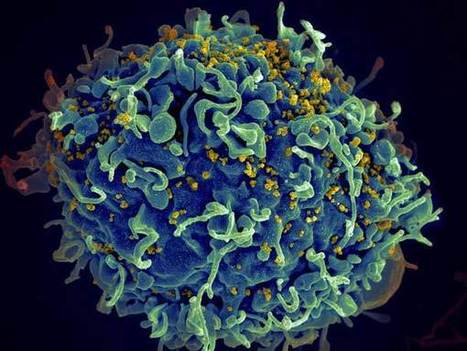
In 2018, Gavi, the Vaccine Alliance, is expected to review the strategy of maternal influenza immunization for potential investment in low-income countries.
Why is the flu hitting harder this year? The New Zealand Herald's Ophelia Buckleton talks to Auckland DHB's nurse leader Margaret Dotchin and ESR public health
It was 1952, and polio gripped the world in fear. There was no known cause, no cure and no help in sight for parents desperate to protect their children
I just love it when long standing mysteries in virology are suddenly solved, typically by the use of new technologies. In this story, the long standing mystery was why poxvirus mRNAs have a stretch of poly(A) in their 5′-noncoding regions. The answer is that it allows the ribosome to preferentially translate these viral mRNAs over those of the host
Since 1992 over half a million Dutch elms have been 'vaccinated' against Dutch elm disease. Among these vaccinated trees, only 0.1% was infected by the fungus via the infamous elm bark beetle over recent years. The Wageninge
The Queensland health department is urging people to have a flu vaccination, saying 10,000 people have already been struck down by the first day of flu season.
Background: Influenza is known to be associated with various neurological complications, including encephalitis. We conducted a registry-based study to assess the risk of encephalitis after influenza and A(H1N1)pdm09 vaccine.Methods: Data from Norwegian national health registries during 2008–14 were linked using the unique personal identifiers given to all Norwegian residents (N = 5 210 519). Cox proportional-hazard models with time-varying variables were fitted to estimate hazard ratios (HRs) of encephalitis after influenza and A(H1N1)pdm09 vaccine, using the risk windows 0–7, 0–14, 0–30, 0–60, 0–90 and 0–180 days.Results: In Norway, 684 172 individuals received an influenza diagnosis and 2793 patients were hospitalized with encephalitis during 2008–14. The risk of encephalitis increased after influenza: HR, 7-day risk window: 47.8 (95% confidence interval (CI): 35.8–63.8), and the HR decreased for longer risk windows; HR, 180-day risk window: 3.8 (95% CI: 3.1–4.7). HR of encephalitis after influenza during the 2009 main pandemic wave using a 7-day risk window was 30.0 (95% CI: 10.8–83.2). We found no differences in the risk of encephalitis after the seasonal influenza compared with influenza during the 2009 main pandemic wave; HR, 7-day risk window: 1.3 (95% CI: 0.4–4.3). A(H1N1)pdm09 vaccine was not associated with the risk of encephalitis: HR, 14-day risk window: 0.6 (95% CI: 0.2–2.1).Conclusions: There was an increased risk of encephalitis following influenza but not after A(H1N1)pdm09 vaccine. The risk of encephalitis was highest in the first few weeks after influenza.
BABIES and young children are bearing the brunt of an unprecedented flu outbreak as four separate strains of the virus run rampant across Sydney and NSW.The worst flu season on record has seen more than 8200 people turn up to hospital emergency departments last week with respiratory illnesses. Of these, 2375 were either admitted to…
Crimean-Congo hemorrhagic fever (CCHF) is a tick-borne viral zoonotic disease caused by Crimean-Congo hemorrhagic fever virus (CCHFV), a member of the genus Nairovirus in the family Bunyaviridae. CCHF is typically asymptomatic in animals but can be highly fatal in humans approaching case fatality rate of approximately 30%. In the present investigation, a cross sectional study was conducted to determine the prevalence of CCHF and to identify the potential risk factors associated with CCHFV seropositivity among the one-humped camel (Camelus dromedaries) in Central Sudan. A total of 361 camels selected randomly from six localities were employed in the study. Sera sampled were tested for the presence of CCHFV-specific immunoglobulin G (IgG) antibodies using enzyme-linked immunosorbent assay (ELISA). CCHFV seropositivity was recorded in 77 out of 361 animals accounting for a prevalence rate of 21.3%. Age (OR = 3.6, CI = 1.72–7.79, p-value = 0.026); locality (OR = 5.85, CI = 1.81–18.83, p- value = 0.003), tick number (OR = 4.6, CI = 1.37–9.81, P-value 0.04); tick control (OR = 2.2, CI, 1.11–4.35, P-value = 0.023) and breed (OR = 6.60, CI = 2.38–18.36, P-value = 0.001) were recorded as potential risk factors for contracting CCHF. The prevalence of CCHF is significantly high among camels in Khartoum State, Sudan. Age, breed, locality and tick control are considered as potential risk factors for contracting CCHF. This study would be expected to reduce the impact on the livelihood of pastoral communities and ultimately avoid disease spread in human.
I have seen caterpillars infected with beta nudaurelia virus: they basically turn into a bag of goo. I know, I know, lurid headline though - but viruses AND zombies: how could I resist?
After 25 laborious years of scientific study, researchers in Finland have finally found a connection between viral infection and the onset of Type 1 Diabetes.
By Ben Hirschler LONDON (Reuters) - Three decades after approval of the first-ever AIDS treatment, HIV medicine is seeing a new wave of innovation with scientists reporting positive data on Monday for improved drug cocktails and a novel experimental vaccine. The Achilles heel for us is drug resistance (via: trendolizer.com)
A ten-fold increase in some types of bacteria living under the foreskin can increase a man's risk of HIV infection by up to 63 percent, according to a new study out today by researchers at Milken Institute School of Publi
The Southern African Development Community (SADC) and the Food and Agricultural Organisation (FAO) are set to meet from tomorrow to discuss the recurrence of an
To get content containing either thought or leadership enter:
To get content containing both thought and leadership enter:
To get content containing the expression thought leadership enter:
You can enter several keywords and you can refine them whenever you want. Our suggestion engine uses more signals but entering a few keywords here will rapidly give you great content to curate.


 Your new post is loading...


 Scoop.it!