URBANmedias
76.1K views | +1 today
Follow
URBANmedias
le mediation des aménagements urbains
Your new post is loading...
Rescooped by association concert urbain from green streets
May 26, 2013 8:22 AM
Scoop.it!

The Cities We Want: Resilient, Sustainable, and Livable

The Cities We Want: Resilient, Sustainable, and Livable | URBANmedias | Scoop.it

Resilience is the word of the decade, as sustainability was in previous decades. No doubt, our view of the kind and quality of cities we as societies want to build will continue to evolve and inspire a new goal. Surely we have not lost our desire for sustainable cities, with footprints we can globally and locally afford, even though our focus has rightly been on resilience.

It speaks to the question: what is the city we want to create in the future? What is the city in which we want to live? Certainly that city is sustainable and resilient, so our cities are still in existence after the next 100-year storm, now apparently due every few years...


And yet: as we build this vision we know that cities must also be livable. Indeed, we must view livability as the third indispensible—and arguably most important—leg supporting the cities of our dreams: resilient + sustainable + livable.


Via Lauren Moss
ParadigmGallery's curator insight, May 13, 2013 2:31 PM

We thank you, Lauren Moss, for the interesting post. The post speaks to the three buzz words for our cities now and in the future...livable, resilient, sustainable....


New Yorkers exhibited a lot of personal and psychological resilience after Hurricane Sandy—they picked themselves up and started again, often rebuilding their lives in the same spot. This is true all over: people are resilient in the face of hard times..learn more

ParadigmGallery's comment, May 13, 2013 2:32 PM
interesting post....TY
Rescooped by association concert urbain from green streets
October 15, 2012 11:49 AM
Scoop.it!

The Global Cities That Offer the Most Opportunity

The Global Cities That Offer the Most Opportunity | URBANmedias | Scoop.it
A new report ranks the world's leading cities for economic, technological, and social opportunity.

New York tops the list of the world’s best "cities of opportunity," with London second and Toronto third, according to a report released this week by PricewaterhouseCoopers and the Partnership for New York City.

The report gauges 27 of the world’s largest and most influential global cities on their ability to provide opportunity to their residents — both long-term residents and new immigrants. This is what I like most about the report: It seeks to gauge the ability of cities not just to grow and develop, but to provide opportunity broadly. It notes the adaptability and resilience of cities and highlights the connection between quality of life, or livability, and long-run economic growth and development.

The 27 cities covered by the report are global powerhouses, accounting for nearly eight percent of global economic output (measured as gross domestic product) while housing just 2.5 percent of its population. The report projects that these 27 cities will add 19 million more residents, 13.7 million more jobs, and $3.3 trillion more in economic output by 2025...


Via Lauren Moss
No comment yet.
Rescooped by association concert urbain from green streets
July 25, 2012 3:45 AM
Scoop.it!

Designing Buildings that Evolve with the City

Designing Buildings that Evolve with the City | URBANmedias | Scoop.it

Resilient cities need infrastructure that lasts and planning teams that are willing to step up to the plate. Designing structures that can sustain decades of use requires forethought beyond the basic combination of blocks, steel and glass. Just like sidewalks and street corners, city buildings have the power to connect people to one another. Buildings are shelters from unpredictable weather, places where people can have a good time or sit quietly and think. Buildings can also serve as checkpoints or another step in someone’s journey from point A to B.
Developing cities that thrive through the ebb and flow of time are not simply about creating infrastructure that can persist, but about designing buildings that evolve as cities evolve. Sustainable design transforms as cities develop visions for furthering connections among neighborhoods and city sectors. Design features such as energy efficiency, water conservation, and heat reduction that better regulates a building’s temperature are significant elements that replenish a city’s vitality through buildings that are capable of adapting to a city’s needs. Infrastructure that is greater than the sum of its parts also requires infrastructure that functions according to the changing needs of residents...


Via Lauren Moss
No comment yet.
Rescooped by association concert urbain from green streets
November 27, 2012 3:07 PM
Scoop.it!

What Makes a Great City: A General Theory of Walkability

What Makes a Great City: A General Theory of Walkability | URBANmedias | Scoop.it

City engineers have turned our downtowns into places that are easy to get to but not worth arriving at.


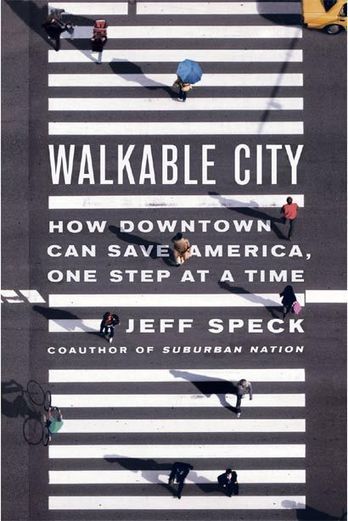
In Walkable City: How Downtown Can Save America, One Step at a Time (public library), city planner Jeff Speck, who spent four years leading the design division of the National Endowment for the Arts working directly with a couple hundred mayors to help solve their greatest city-planning challenges, turns a perceptive eye towards what makes a great city and how we might be able to harness the power of a conceptually simple, practically complex, immeasurably far-reaching solution in improving the fabric and experience of urban life.


Speck outlines a “General Theory of Walkability,” focusing on the four key factors of making a city attractive to pedestrians: 'it must be useful, safe, comfortable, and interesting. Each of these qualities is essential an none alone is sufficient...'


Learn more about urban livability, how to create the conditions that enable pedestrian-oriented development, and the benefits of this approach to urban spaces to the economic, environmental, and cultural health of a city at the article link...


Via Lauren Moss
No comment yet.
Rescooped by association concert urbain from Urban Life
August 19, 2012 8:06 AM
Scoop.it!

Vancouver, Toronto and Calgary all rank in TOP five on list of WORLD'S most LIVEABLE CITIES

Vancouver, Toronto and Calgary all rank in TOP five on list of WORLD'S most LIVEABLE CITIES | URBANmedias | Scoop.it

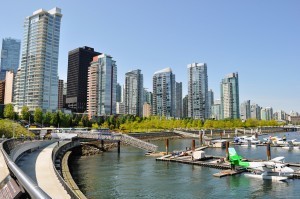
Three Canadian cities have again cracked the top five on a ranking of the world’s most liveable places. In the latest report from the Economist Int (#Vancouver is #3 on the 2012 Most Livable Cities in the World!


In the latest report from the Economist Intelligence Unit, Vancouver ranked third, followed by Toronto and Calgary in fourth and fifth respectively. The Canadian cities were bested only by Vienna in second and Melbourne, which topped The Economist’s Liveability Ranking.

The annual survey of 140 cities uses more than 30 factors to gauge the state of healthcare, education, infrastructure, stability, culture and environment — rendering a score out of 100.

Vancouver lost marks only for petty crime rates, availability of quality housing and congested road networks, with report authors citing a series of infrastructure projects such as the new Evergreen transit line “that will no doubt have a long-term benefit, but in the short-term they can be disruptive.”


The results vary little from the last ranking released six months ago, with Vancouver maintaining the third spot after slipping from first place in 2011.

Most of the top-tier countries are separated by fractions of a percentage — the first-ranked Melbourne is scored 97.5, only 1.8 points higher than 10th-place Auckland, N.Z. The Economist Information Unit uses the ranking to provide suggestions on how businesses should compensate employees working abroad in cities “where living conditions are particularly difficult.”

It’s one of several studies of its kind, but economic development experts in the listed Canadian cities say The Economist report’s catering to business communities could lead to tangible benefits...


Via Lauren Moss, Jandira Feijó
Mehakpreet Kaur's curator insight, March 22, 2017 11:15 PM

This is something I want to read later and share with my inquiry group