 Your new post is loading...

|
Rescooped by
association concert urbain
from green streets
December 18, 2014 2:19 AM
|
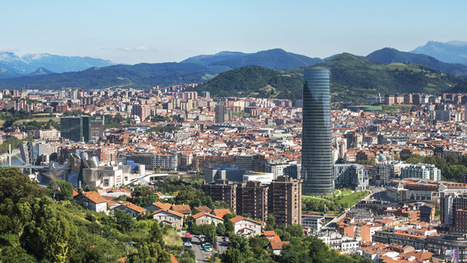
Dundee, Bilbao, Curitiba, Helsinki and Turin have been awarded UNESCO City of Design status for their input to the international design industry.
The accolade, awarded by international heritage body UNESCO, recognises the contribution of the five cities to the worldwide design industry – each the first in their respective countries of the UK, Spain, Brazil, Finland and Italy to achieve the designation. The scheme aims to promote the development of local creative industries, and to foster relationships and resource-sharing between fellow Cities of Design.
Via Lauren Moss
Rising sustainability concerns over the last decade have brought about a fascinating new tendency in landscape concepts for development and renewal of urban and even industrial areas. Nature is coming back to cities and that’s a wonderful opportunity for us to get back to it too. Experience the mesmerizing beauty of these nature bites inserted into urban context and let’s hope this is the future of landscape architecture!
Via Lauren Moss
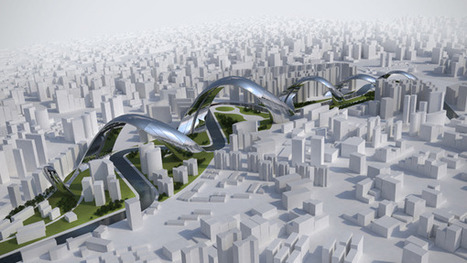
For over a century, writers and architects have imagined the cities of the future. In the late 1960s, architect Paolo Soleri envisioned “arcology” - a word that combines “architecture” and “ecology," with a goal of building structures to house large populations in self-contained environments with a self-sustaining economy and agriculture. “In the three-dimensional city, man defines a human ecology. In it he is a country dweller and metropolitan man in one. By it the inner and the outer are at ‘skin’ distance. He has made the city in his own image. Arcology: the city in the image of man.” (Paolo Soleri)
Via Lauren Moss
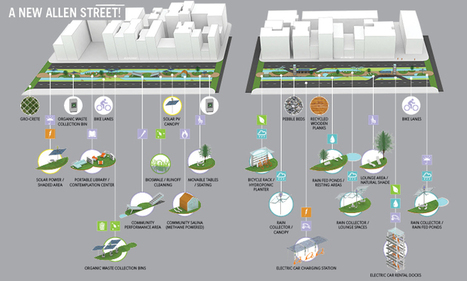
The Town Square Initiative is a yearlong volunteer effort in which Gensler designers set out to unearth and re-imagine unexpected open space in cities around the globe. All 43 Gensler offices were invited to participate in the conceptual project, in which we challenged our designers to identify open space in the city and reimagine it as a town square. Visit the link for more images, diagrams and information on Gensler New York’s design of their future city.
Via Lauren Moss
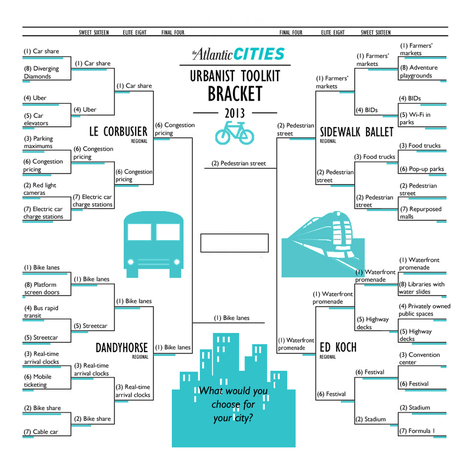
Welcome to the first annual Urbanist Toolkit Bracket Challenge, where the hottest trends in urbanism go head-to-head in a conceptual game that challenges the instincts, tastes, and urban design wisdom of readers. Here's how it works: Thirty-two in-form tools of urbanism have been seeded, according to their popularity and utility, into four regional groups: the Ed Koch, the Sidewalk Ballet, the Le Corbusier, and the Dandyhorse. The four #1 seeds -- car share, bike lanes, farmers' markets, and the waterfront promenade -- are paired off against decidedly more obscure options. It's the nature of an elimination tournament: two urban design features enter, one urban design feature emerges victorious. At the moment we have a choice between Bike Lanes and Pedestrian Street. The Pedestrian Street easily trumped the Waterfront Promenade, 69-31, to advance to the finals. On the left side of the bracket, Bike Lanes sent congestion pricing back to the theoretical realm, 60-40, in a match-up that many people found particularly aggravating, for reasons that commenter Quinn Raymond elucidated at the very start of the bracket challenge: "The final question is basically, 'Would you rather stab yourself in the face or the chest?'" (Confused? Check out the Final Four, the Elite Eight, the Sweet Sixteen, or the initial post for more info on the entries.)
Via Lauren Moss
|
|
Rescooped by
association concert urbain
from green streets
April 28, 2013 4:46 AM
|
For many years, architects and city planners from around the world have been trying to create the green ideal: an entire city built to strict environmental standards- highly functional while still retaining aesthetic value. Here’s a look at some green building and community design that caught our attention in recent months and may (or may not) become reality in the next several years. Their physical footprints may be large, but by using features such as wind power, solar, rainwater recycling and advanced air quality controls, their carbon footprints don't have to be...
Via Lauren Moss
|
|
Rescooped by
association concert urbain
from Greener World
September 29, 2012 1:06 PM
|
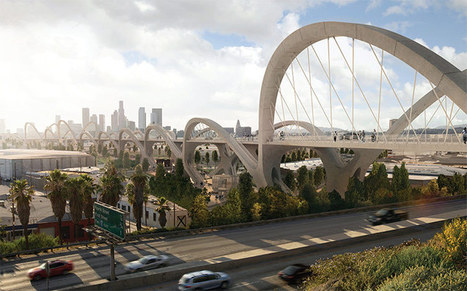
Three finalists present plans for major new bridge in Los Angeles: The groups—headed by HNTB, AECOM, and Parsons Brinckerhoff— have all been shortlisted to create the city’s new Sixth Street Viaduct. Their vivid public presentations were the first glimpse of what will likely be LA’s next major icon. The original 3,500-foot-long structure, a famous rounded Art Deco span designed in 1932, has been deemed unsalvageable due to irreversible decay, and in April the city’s Bureau of Engineering called for a competition to design a new, $400 million, cable stayed structure. Following the city’s lead, all three teams presented plans that not only showcased memorable forms, but embraced people-friendly designs, including pedestrian paths, parks, and connections to the river below. The push reveals Los Angeles’s focus on attracting people and talent through increased livability. Such moves are a welcome, if uphill battle considering that so much of the city has been designed for cars, not people...
Via Lauren Moss, Gerry B
|
|
Rescooped by
association concert urbain
from visual data
September 8, 2012 10:01 AM
|
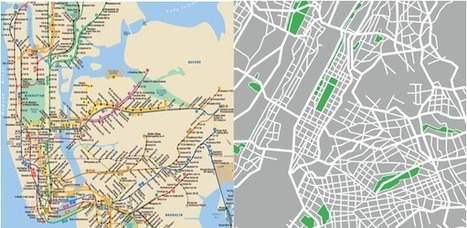
Subway maps distort the reality on the ground for all kinds of reasons. What happens when we make decisions based on them? London’s city center takes up about two percent of the city. On the Tube map, it looks four times as big. Over in New York City, Central Park—which is a skinny sliver, much longer than it is wide—was depicted in some 1960s and ‘70s IRT maps as a fat rectangle on its side. So public transit maps are distorted, quite on purpose. All of them enlarge city centers. Many use a fixed distance between stations out in the boonies, even if, in reality, they’re spaced wildly differently. Curvy lines are made straight. Transfers are coded with dots, lines, and everything in between. According to Zhan Guo, an assistant professor of urban planning and transportation policy at NYU Wagner, certain cities allow for more flight of fancy than others. San Francisco and New York have a lot of geographic markers, so passengers will only accept so much map distortion. New York’s grid system further discourages excessive futzing. In Chicago, the line is elevated, which leaves even less leeway. But in a place like London, with twisty streets, few geographical markers other than the Thames, and an underground system, you can pull a lot more over on people...
Via Lauren Moss
|
|
Scooped by
association concert urbain
June 3, 2012 6:48 AM
|
Partout dans le monde, des expérimentations voient le jour qui visent à améliorer la vie urbaine.
|
|
|
Rescooped by
association concert urbain
from Bionic City®
July 16, 2013 8:26 AM
|
|
|
Rescooped by
association concert urbain
from green streets
July 14, 2013 2:44 AM
|
The Communication Hut by Herreros Arquitectos is hung from three poles placed beyond its floating amoeba-like ring, and sits in the trees scattered through one of South Korea’s public squares. At all times of day, the ring emits WiFi signals to encourage occupation of the space, while at night it glows to provide a feeling of safety.
The Communication Hut encourages the public to use the space as an outdoor living room. By providing a relatively unobstructed ground plane, the occupants of the space can see friends from afar and children can play safely. The suspended structure, then, gives the site its boundaries, suggesting an enclosed space where sitting and stopping is welcomed. The Communication Hut is a subtle yet effective intervention in the workings of the city...
Via Lauren Moss
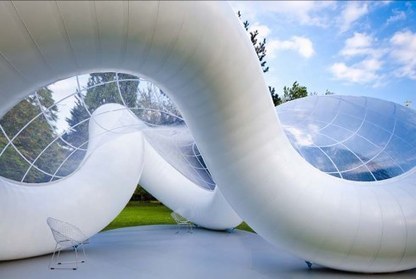
Parisian architects Irina Cristea and Grégoire Zündel of Atelier Zündel Cristea (AZC) conceived an inflatable trampoline bridge over the Seine last fall and their latest structure the Peace Pavilion, temporarily exhibited last month in the Bethnal Green Museum Gardens, uses a similar concept and materials creating a realized sculptural work that can be entered or climbed. The beauty of the shape of this inflatable sculpture lies in its perfect symmetry and fluidity. The geometry of the pavilion blurs the notion of inside and outside. The project is a self-supporting structure with 4m in height and 20m⊃2; in area, designed entirely with lightweight materials – 77.96m⊃2; of PVC membrane and 20m3 of air.
Via Lauren Moss
|
|
Rescooped by
association concert urbain
from green streets
May 26, 2013 8:23 AM
|
Lighting designers are applying the skills of their profession to further the goals of urban design, creating safer, more stimulating, and better functioning cities. Cities rarely stand still. It is in their nature to evolve, expand, and, in some cases, contract. Whichever way they go, cities are always reinventing themselves, often one neighborhood at a time. Outdoor lighting can be a crucial part of this metamorphosis. Across the U.S., urban regeneration projects are stimulating activity in derelict infrastructure, defunct waterfronts, neglected plots of land, and dilapidated buildings. Though not completely erased, the use of fluorescent tubes and glaring security lights has been scaled back and in their place is a growing appreciation for sensitive, appropriate, and considered lighting. The arbiters of this decades-long shift are lighting designers. Their role in improving conditions to make safer, more accessible cities is increasingly key to urban design...
Via Lauren Moss
|
|
Rescooped by
association concert urbain
from green streets
January 14, 2013 1:38 AM
|
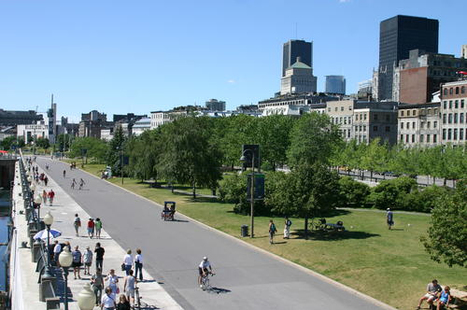
As more cities envision their waterfronts as lively public destinations that keep people coming back, PPS outlines the following principles to make that happen. They are not all hard and fast laws, but rules of thumb drawn from 32 years of experience working to improve urban waterfronts around the world. These ideas can serve as the framework for any waterfront project seeking to create vibrant public spaces, and, by extension, a vibrant city.
Via Lauren Moss
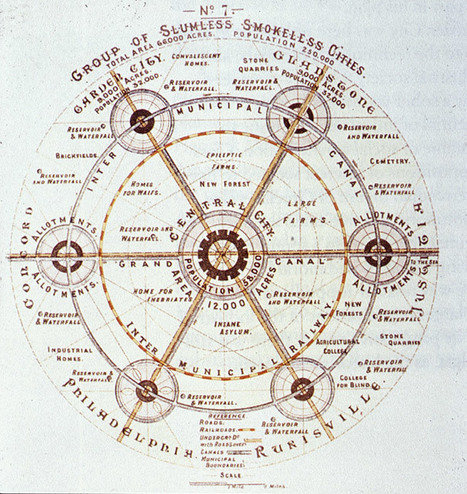
Written by Ebenezer Howard and originally published in 1898, the book was titled "To-morrow: A Peaceful Path to Real Reform". In 1902 it was reprinted as "Garden Cities of To-Morrow". Howard's ideas gave rise not only to the garden city movement, but also were the origin of modern planning concepts such as network urbanism or polycentric cities. "Our diagram may now be understood. Garden City is built up. Its population has reached 32.000. How will it grow? It will grow by establishing another city some little distance beyond its own zone of "country", so that the new town may have a zone of country of its own. [...] the inhabitants of the one could reach the other in a very few minutes; for rapid transit would be specially provided for, and thus the people of the two towns would in reality represent one community." Ebenezer Howard
Via Ignacio López Busón, landscape architecture &sustainability
|
|
Rescooped by
association concert urbain
from Advancing Eco-cities
September 19, 2012 4:26 PM
|
Lewis Mumford tells us, “The city is a fact in nature, like a cave, a run of mackerel or an ant-heap. But it is also a conscious work of art, and it holds within its communal framework many simpler and more personal forms of art. Mind takes form in the city; and in turn, urban forms condition mind”... but....
Via ddrrnt
"This collection of student projects from the AA's Diploma Unit 6 encapsulates a generational shift. After the past decade of deep (and sometimes, it would appear, deeply self-satisfied) explorations into new digital and computational design tools, "Typological Formations" demarcates a return to the city as the overt site, not just for architecture but for architectural thinking. A quick glance through this book will confirm the obvious: sophisticated parametric tools are all over these projects, but they are no longer a topic or focus in and of themselves.Instead, such tools are merely brought to bear on the design agenda: the search for 'renewable' building types that are able to negotiate the rapidly changing circumstances of cities in an era of global capitalism. [...] With this book, the idea of an architectural 'type' seems more supple - that is, more differentiated and therefore more relevant and productive - than ever. "Typological Formations" is nothing less than a manifesto for a return to projects and project-based forms of architectural knowledge today."
Via Ignacio López Busón
|













![[ Lewis Mumford ] City and Mind | URBANmedias | Scoop.it](https://img.scoop.it/Wuhv3j5Ph5Y3ciYrikLf6Tl72eJkfbmt4t8yenImKBVvK0kTmF0xjctABnaLJIm9)




