Your new post is loading...

|
Scooped by
association concert urbain
February 21, 2016 2:10 AM
|
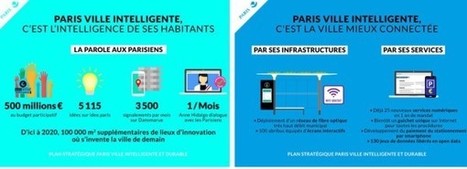
En 2015, toutes les grandes capitales de la planète auront voulu être des smart cities. Si la notion renvoie à un objectif de ville « connectée » ou « verte », à Paris, elle incarne plus fortement une culture de la citoyenneté retrouvée à travers une utilisation collective, créative et réfléchie du numérique.
Développement numérique
Smart City : ce mot-valise qui fut ultra-tendance en 2015, évoque une cité futuriste de l'ère du numérique, tirant partie des nouvelles technologies de l'information et de la communication. Une ville hyperconnectée est équipée de capteurs, de puces, de GPS, d'antennes, de caméras, de cellules, de domestique dans le mobilier urbain, les bâtiments, la chaussée, les moyens de transport, les arbres. Chaque objet, dès lors"intelligent", peut communiquer, produire et échanger des données, renseigner le big data de la ville. Stockées, croisées et valorisées, ces informations entraîneraient uneamélioration de la vie quotidienne des citadins, qui y accèdent via mobile, tout en rationalisant les coups en terme de consommation d'énergie, en accompagnant latransition écologique et en développant la démocratie participative.
L’échelle de la municipalité est la plus pertinente en terme de démocratie locale participative. « Plus près des problèmes qui affectent la planète et sa population, les villes sont tenues d'y répondre plus vite que les États. Elles ont ainsi l'occasion d'apporter des remèdes immédiatement opérationnels et efficaces. », notait un observateur lors du forum Smart City du Grand Paris organisé par le quotidien La Tribune fin novembre à Paris.
Selon un sondage de l'Observatoire des politiques publiques, réalisé par l'Ifop pour EY et Acteurs publics en septembre 2015, le développement numérique constitue « un enjeu central pour la ville de demain ». Près de huit Français sur dix jugent important ou prioritaire le développement numérique des villes. La réduction de la dépense publique et l'amélioration de la sécurité arrivent en tête des priorités assignées aux "villes intelligentes". Autrement dit, l’idée de ville intelligente redynamise l’espoir d’une citoyenneté de proximité qui rime avec efficacité et participativité.
Via Philippe Serafin
|
|
Rescooped by
association concert urbain
from Peer2Politics
April 4, 2014 4:48 AM
|
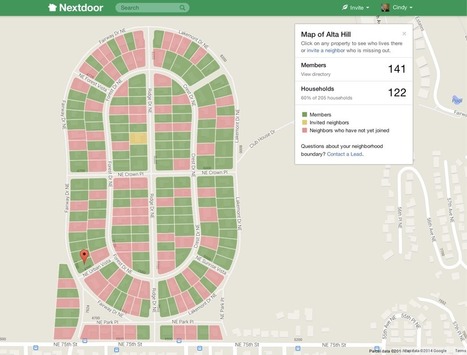
A look inside the hard work at Nextdoor, a social networking site for people in your neighborhood.
Via jean lievens
|
|
Rescooped by
association concert urbain
from green streets
November 23, 2013 3:53 AM
|
The German city is planning a green network that will cover 40% of the city area, contributing to resilience and allowing biking, swimming and nature watching in the city The European commercial hub promotes bicycling as the main mode of transportation, and plans to build a network around bikes and pedestrians, linking car-free roads to parks and playgrounds, from the city centre to the suburbs. Welcome to Hamburg, an environmental pioneer whose planned green network will cover 40% of the city's area. "It will connect parks, recreational areas, playgrounds, gardens and cemeteries through green paths", says Angelika Fritsch, a spokeswoman for the city's department of urban planning and the environment. "Other cities, including London, have green rings, but the green network will be unique in covering an area from the outskirts to the city centre. In 15 to 20 years you'll be able to explore the city exclusively on bike and foot."
Via Lauren Moss
|
|
Rescooped by
association concert urbain
from visual data
August 4, 2013 5:04 AM
|
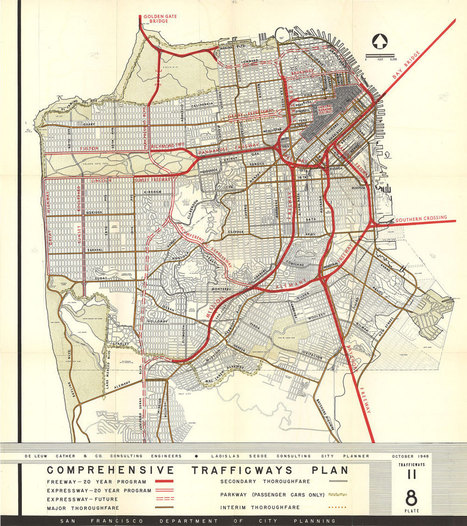
Maps can direct us from here to there, show where one thing is in relation to another, or add layers information to our surroundings. Whatever its form, a map’s main purpose is to make the complex world we live in more comprehensible. But there are also maps that describe the world as it never came to be. Those are the maps that interest Andrew Lynch, who runs a Tumblr called Hyperreal Cartography & The Unrealized City that's full of city maps collected from libraries, municipal archives, and dark corners of the internet. Lynch recently shared a few of his favorite “dream cities” with WIRED’s MapLab...
Via Lauren Moss
|
|
Rescooped by
association concert urbain
from Bionic City®
July 16, 2013 8:26 AM
|
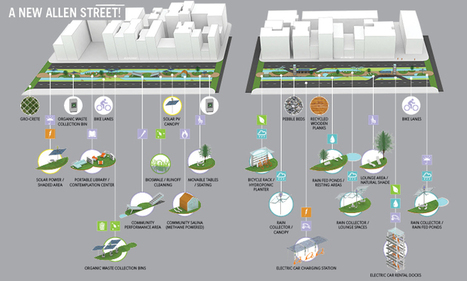
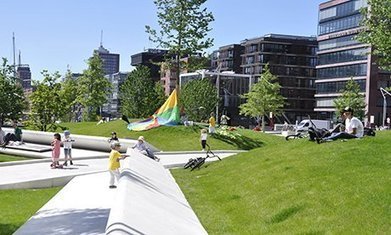
The Town Square Initiative is a yearlong volunteer effort in which Gensler designers set out to unearth and re-imagine unexpected open space in cities around the globe. All 43 Gensler offices were invited to participate in the conceptual project, in which we challenged our designers to identify open space in the city and reimagine it as a town square. Visit the link for more images, diagrams and information on Gensler New York’s design of their future city.
Via Lauren Moss
|
|
Rescooped by
association concert urbain
from green streets
May 26, 2013 8:22 AM
|
Resilience is the word of the decade, as sustainability was in previous decades. No doubt, our view of the kind and quality of cities we as societies want to build will continue to evolve and inspire a new goal. Surely we have not lost our desire for sustainable cities, with footprints we can globally and locally afford, even though our focus has rightly been on resilience. It speaks to the question: what is the city we want to create in the future? What is the city in which we want to live? Certainly that city is sustainable and resilient, so our cities are still in existence after the next 100-year storm, now apparently due every few years... And yet: as we build this vision we know that cities must also be livable. Indeed, we must view livability as the third indispensible—and arguably most important—leg supporting the cities of our dreams: resilient + sustainable + livable.
Via Lauren Moss
|
|
Rescooped by
association concert urbain
from green streets
April 28, 2013 4:39 AM
|
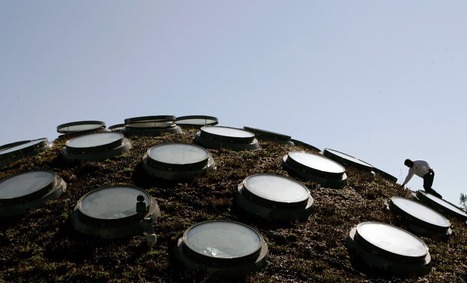
In honor of the opening of a new garden in Paris, Reuters has pulled together a list of some of their favorite green spaces. Here are a couple favorites...
Via Lauren Moss
|
|
Rescooped by
association concert urbain
from Urban Life
February 8, 2013 8:07 AM
|
22 cities have called for innovative solutions to solve urban challenges as part of the Citymart urban ideas competition. The aim is to identify & share solutions to challenges that cities face. The 2012 competition attracted 1,519 entries from 70 countries. Now Aalborg, Barcelona, Boston, Christchurch, Eindhoven, Fukuoka DC, L’Hospitalet, Lagos, Lavasa, London, Maringa, Mexico City, Oulu, Paris, Rio de Janeiro, Rosario, San Francisco, Sant Cugat, Sheffield, Tacoma, Terrassa and York all hope to evoke a similar response. The cities have presented challenges across a vast array of areas including mobility, economic development, social inclusion, health and well-being, urban management, lighting, energy, culture, future government and sustainable lifestyles...
Via Lauren Moss, Jandira Feijó
|
|
Rescooped by
association concert urbain
from green streets
December 21, 2012 6:22 AM
|
China's next new city will be designed by US firm KPF, next to Hunan's regional capital, around a 40-hectare lake. Adjacent to Changsha, the ancient capital city of Hunan, the design implements the sort of urban innovation that creates a sustainable and truly habitable environment. "We can introduce integrated urban innovation," von Klemperer says, "we can combine water transport with localised energy production, cluster neighbourhood centres, advanced flood prevention and water management, and urban agriculture. Meixi is an experiment in future city planning and building. It will serve Changsha as a new CBD, but it will also serve as a paradigm for other Chinese city planners. It's a kind of live test case." The firm seeks to achieve these goals through its dense, mixed-use urban, plan, with integration with surrounding mountains, lakes, parks and canals. Meixi Lake will eventually be home to 180,000 inhabitants, living in "villages" of 10,000 people, clustered around the canals...
Via Lauren Moss
|
|
Rescooped by
association concert urbain
from green streets
November 11, 2012 12:40 PM
|
Given the environmental straits we find ourselves in at present, architects and policy makers have to rethink our strategy of how to shape the city, buildings and urban space alike. This entails that we refrain from the strategies of the past and make do with the standing infrastructure that we already have.
Preserving and rehabilitating the aging steel relics of our global cities has proven an ingenious way of saving energy, while enabling newer methods of architectural planning. Projects such as the High Line have kickstarted a new age of urban regeneration–for good or bad–with initiatives from Tel Aviv to Philadelphia attempting to replicate it success on their own turf. When it comes to urban transformation, size does not matter, per se. The subtleties of thoughtful urban projects shine through at every level, and sometime outperform their more ostentatious contemporaries. Visit the link for photos and descriptions of 10 projects from across the globe, including public parks, infrastructure projects, cultural buildings and more...
Via Lauren Moss
|
|
Rescooped by
association concert urbain
from green streets
October 18, 2012 4:50 AM
|
Smart Cities and the Smart Grid: There are natural parallels between the Smart Grid and smart cities in terms of concepts and deployments, though cities have much more experience at evolution than the traditional electrical grid. After all, they have been adopting new technologies that disrupt the status quo for centuries. The Romans created aqueducts and fundamentally changed how water could be controlled and distributed in cities. Discoveries in hygiene and disease transmission and control allowed people to healthily live in population densities with minimized odds of large scale epidemics. And then automobiles exerted their influences on cities. In each case, city systems, policies, and people changed to accommodate new technologies, new knowledge and new practices. Now, ambitious goals such as zero net energy buildings will change the relationships that physical structures have within cities, and in turn change the relationships that occupants (full or part-time) have within buildings and within cities. Read the complete article for more on the latest advances in the building industry, infrastructure and transportation, and how smart cities will interact with the Smart Grid...
Via Joan Tarruell, Stephane Bilodeau, Lauren Moss
|
|
|
Rescooped by
association concert urbain
from green streets
December 18, 2014 2:19 AM
|
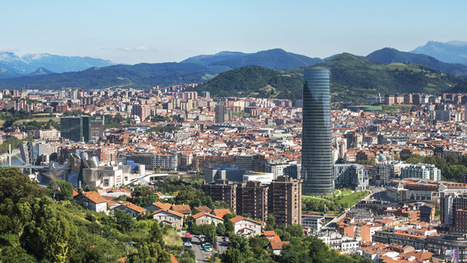
Dundee, Bilbao, Curitiba, Helsinki and Turin have been awarded UNESCO City of Design status for their input to the international design industry.
The accolade, awarded by international heritage body UNESCO, recognises the contribution of the five cities to the worldwide design industry – each the first in their respective countries of the UK, Spain, Brazil, Finland and Italy to achieve the designation. The scheme aims to promote the development of local creative industries, and to foster relationships and resource-sharing between fellow Cities of Design.
Via Lauren Moss
|
|
Rescooped by
association concert urbain
from visual data
March 2, 2014 8:06 AM
|
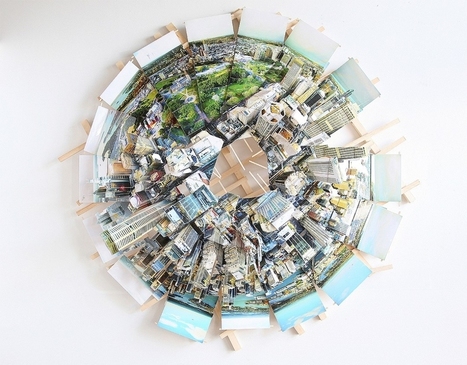
When you’re in a big city humming with activity, it’s not unusual to feel like the world revolves around you. On each trip to a new place, artist Isidro Blasco climbs up to the tallest buildings and documents what exactly “the world” looks like through the city’s eyes. The result: the “Planet” series, which takes us to the bubbles of places like New York, São Paulo, Sydney, and Madrid. The artist assembles photographs into meticulously circular panoramas. Reminding us that Photoshop techniques have origins in the physical world, each series is painstakingly incised and trimmed by hand. The three-dimensional works challenge perceptions of our everyday "orbits" through their creative use of representation.
More at the link.
Via Lauren Moss
Silent parks. Designing for disabilities. Human-powered data. Garbage anthropology. World-class sidewalks. Floating favelas. Paint as infrastructure. These are the keys to the cities of the future, according to the most recent TED conference, City 2.0. Last year, for the first time, the TED Prize went to an idea—the future of the city—and a million dollars was divvied up among ten grantees all over the world. Last week was the first-ever TED City 2.0 conference, featuring several of those grantees plus many other urban leaders discussing their ideas for the future of the city.
Via Lauren Moss, Raymond Versteegh, Manu Fernandez, Luciana Santos
Experts predict that by 2050, three-quarters of the world's population will live in cities. For part of its Tomorrow's Cities season the BBC takes a look through the crystal ball to imagine what city life might be like in 40 years' time. Find more details at the interactive graphic at the link.
Via Lauren Moss, Informatics, Rui Guimarães Lima
|
|
Rescooped by
association concert urbain
from Urban Life
July 23, 2013 9:25 AM
|
Sustainability values are not just something reserved for the CSR business mandates of corporations. Cities and countries also promote its sustainability and, by doing so, appeal to citizens and attract tourism and business. I’ve delved into how Canada and it’s cities and businesses fair on the sustainability stage in posts like the 50 Best Corporate Citizens in Canada 2012, the 30 Top Green Organizations in Canada According to Employee Engagement, the 55 Greenest Canadian Employers, the 50 Top Diversity Employers in Canada, the Top 50 Canadian CSR Business List, Canada’s Top Employers for 2013, the top 10 Canadian boards according to gender representation, the Top Canadian Boards According to Visible Minority and Aboriginal Representation, the 12 top countries represented in the Global 100: World Leaders in Clean Capitalism, the 10 Green Business Leaders the 10 best corporate citizens in Canada and the 10 top foreign corporate citizens in Canada. Today, I’ll be adding to this list with the 10 most sustainable North American cities from Corporate Knights (CK) 2013 North American Sustainable Cities Scorecard.... Based on the CK methodology used, the 10 most sustainable North American cities: San Francisco, United StatesWashington DC, United StatesOttawa, CanadaVancouver, CanadaToronto, CanadaBoston, United StatesSeattle, United StatesPhiladelphia, United StatesNew York City, United StatesCalgary, Canada
Via Ines Amaral, Jandira Feijó
For over a century, writers and architects have imagined the cities of the future. In the late 1960s, architect Paolo Soleri envisioned “arcology” - a word that combines “architecture” and “ecology," with a goal of building structures to house large populations in self-contained environments with a self-sustaining economy and agriculture. “In the three-dimensional city, man defines a human ecology. In it he is a country dweller and metropolitan man in one. By it the inner and the outer are at ‘skin’ distance. He has made the city in his own image. Arcology: the city in the image of man.” (Paolo Soleri)
Via Lauren Moss
|
|
Rescooped by
association concert urbain
from green streets
May 26, 2013 8:23 AM
|
Lighting designers are applying the skills of their profession to further the goals of urban design, creating safer, more stimulating, and better functioning cities. Cities rarely stand still. It is in their nature to evolve, expand, and, in some cases, contract. Whichever way they go, cities are always reinventing themselves, often one neighborhood at a time. Outdoor lighting can be a crucial part of this metamorphosis. Across the U.S., urban regeneration projects are stimulating activity in derelict infrastructure, defunct waterfronts, neglected plots of land, and dilapidated buildings. Though not completely erased, the use of fluorescent tubes and glaring security lights has been scaled back and in their place is a growing appreciation for sensitive, appropriate, and considered lighting. The arbiters of this decades-long shift are lighting designers. Their role in improving conditions to make safer, more accessible cities is increasingly key to urban design...
Via Lauren Moss
|
|
Rescooped by
association concert urbain
from visual data
May 4, 2013 9:37 AM
|
It is no great revelation that architects tend to look up when exploring a city. It’s the best way to guage size, scale, placement, composition and detail – all the information required to process the qualities of a space or place. Having spent the last few days looking up and considering the architectural impact of the New York City grid-plan layout, this article takes a particular interest in the domestic scale elements that help to service the city and punctuate the rigidity. At first the brain identifies the rhythm of the brick formation and the window layouts, it is this assumption of regularity that leaves many with this very valid conclusion based on the verticality of the grid. But in identifying this pattern – the eye becomes more accustomed, searching for further geometries or perhaps more importantly, exceptions to the rule.
Via Lauren Moss
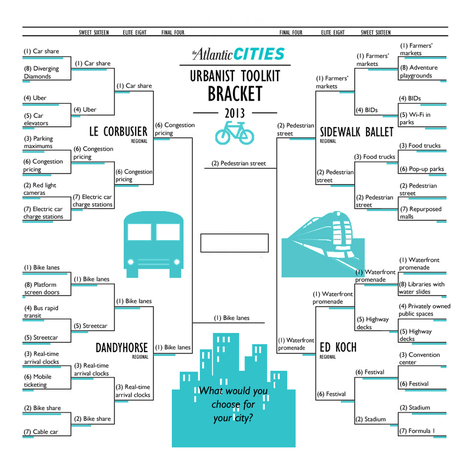
Welcome to the first annual Urbanist Toolkit Bracket Challenge, where the hottest trends in urbanism go head-to-head in a conceptual game that challenges the instincts, tastes, and urban design wisdom of readers. Here's how it works: Thirty-two in-form tools of urbanism have been seeded, according to their popularity and utility, into four regional groups: the Ed Koch, the Sidewalk Ballet, the Le Corbusier, and the Dandyhorse. The four #1 seeds -- car share, bike lanes, farmers' markets, and the waterfront promenade -- are paired off against decidedly more obscure options. It's the nature of an elimination tournament: two urban design features enter, one urban design feature emerges victorious. At the moment we have a choice between Bike Lanes and Pedestrian Street. The Pedestrian Street easily trumped the Waterfront Promenade, 69-31, to advance to the finals. On the left side of the bracket, Bike Lanes sent congestion pricing back to the theoretical realm, 60-40, in a match-up that many people found particularly aggravating, for reasons that commenter Quinn Raymond elucidated at the very start of the bracket challenge: "The final question is basically, 'Would you rather stab yourself in the face or the chest?'" (Confused? Check out the Final Four, the Elite Eight, the Sweet Sixteen, or the initial post for more info on the entries.)
Via Lauren Moss
|
|
Rescooped by
association concert urbain
from green streets
January 14, 2013 1:38 AM
|
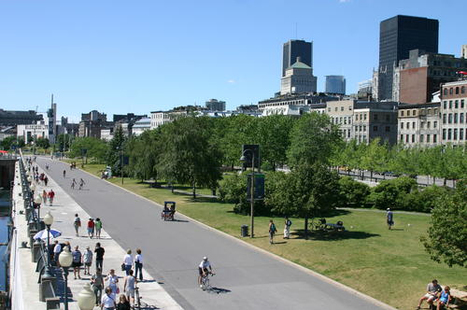
As more cities envision their waterfronts as lively public destinations that keep people coming back, PPS outlines the following principles to make that happen. They are not all hard and fast laws, but rules of thumb drawn from 32 years of experience working to improve urban waterfronts around the world. These ideas can serve as the framework for any waterfront project seeking to create vibrant public spaces, and, by extension, a vibrant city.
Via Lauren Moss
Over 50% of the world's population now lives in cities, so the conditions are ripe for improving, adjusting and rethinking the urban landscape and city life. The web flourishes with digital platforms for community discussion, since now it’s city dwellers - rather than governing executives - that actively take part in city-related decision-making...
Check out the following seven websites that harness the power, wisdom and knowledge of the crowds to cultivate smarter future cities.
Via Lauren Moss, F|Mattiuzzo
|
|
Rescooped by
association concert urbain
from green streets
November 11, 2012 12:37 PM
|
The Harvard Graduate School of Design released its Ecological Urbanism app last month. The interactive app adapts content from the GSD book of the same name, which explores how designers can unite urbanism with environmentalism.
Combining data from around the world, the app “reveals and locates current practices, emerging trends, and opportunities for new initiatives” in regard to the future of cities.
A collaboration between the school and Second Story Interactive Studios,the app stems from the GSD’s Ecological Urbanism conference and dovetails with the duo’s ongoing efforts to explore sustainability in our cities of the future. More than 100 participating architects and designers have provided content for the project, including such heavyweights as OMA, Rem Koolhaas, Kara Oehler, and Stefano Boeri. And the ever-evolving app allows designers and academics to add research and project updates as they happen...
Via Lauren Moss
|




![[Flipboard] Bionic City magazine, September 2013 | URBANmedias | Scoop.it](https://img.scoop.it/q78tsVeOdHqHzpK6NCNrxzl72eJkfbmt4t8yenImKBVvK0kTmF0xjctABnaLJIm9)