Your new post is loading...
Decrying Economic System, Which Promotes ‘Hoarding of Wealth by the Few,’ Speakers from Developing Countries Demand More Input into Global Decision-Making 29 September 2009 General AssemblyGA/10866 Department of Public Information • News and Media Division • New York Sixty-fourth General Assembly Plenary 13th Meeting (AM)
Decrying Economic System, Which Promotes ‘Hoarding of Wealth by the Few,’ Speakers
from Developing Countries Demand More Input into Global Decision-Making
General Assembly President Closes Annual Debate Pledging to Work With Member States towards Renewed Commitment to Promoting Inclusive Multilateralism
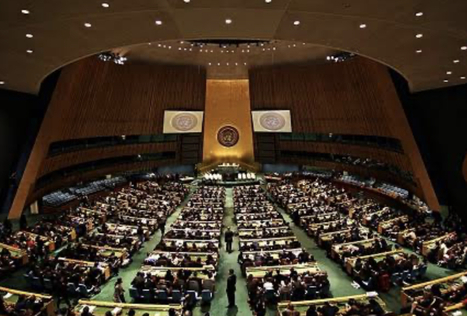
No longer satisfied with a power balance that favoured the few but risked imperilling the many in another economic tailspin, world leaders addressing the General Assembly today appealed for a new brand of multilateralism that reflected developing nations’ concerns in global decision-making, as they wrapped up the annual general debate.
The week-long debate heard 192 speakers, including 107 Heads of State and Government, who took the floor tooutline national objectives and forcefully call for a more equitable “power equation”, both within the Organization and on a host of issues: from restructuring the global financial architecture to strengthening food security, concluding the protracted Doha Round of world trade talks, and reviving the disarmament agenda, to name a few.
“I am heartened that inside this hall -– as well as outside -– in the various meetings and events on the sidelines, there was a renewed commitment to promoting an effective and inclusive multilateralism,” said General Assembly President Ali Abdussalam Treki, in his closing remarks.
Indeed, the Assembly was uniquely placed to forge collective strategies for the common good, he continued. Throughout the week, the world body heard calls for dialogue and a willingness to act together, notably on climate change, an issue that had sent ripple effects across the global economy in the areas of health, food production, and peace and security. He had detected a readiness among States to agree on reducing greenhouse gas emissions and make the upcoming United Nations Climate Change Conference in Copenhagen a success.
Similarly, there had been broad agreement on the need for a collective response to an unprecedented global financial crisis, he said, which included ideas for making the Bretton Woods institutions more inclusive and transparent. On disarmament, broad concern at the proliferation of weapons of mass destruction had been punctuated with appeals for a nuclear-weapon-free world. Among the strongest calls were those urging the comprehensive reform of the United Nations, whose Security Council had to be made more democratic, open and, thus, legitimate.
“We can collectively achieve all these goals,” Mr. Treki declared, assuring delegates that he would conduct such work with transparency and respect for the General Assembly’s central role in the United Nations.
Among the 16 delegations taking the floor today, Samuel Santos López, Nicaragua’s Minister of Foreign Affairs, agreed, saying economic policies should be decided within the most representative institution -- not within groups such as the Group of Eight (G-8) and Group of Twenty (G-20), which championed an economic system that promoted the subjugation of nations and the “hoarding of wealth by the few”. Citing Nicaragua’s national experience, he spoke of an alternative development model that transformed the structures of poverty and marginalization that were breeding grounds of public safety problems. “Our model is based on democratic reform, expressed in popular will, which we call ‘Citizen Power’”, he said.
For Samuel Abal, Papua New Guinea’s Minister of Foreign Affairs, Trade and Immigration, concern at the growing number of global conflicts was heightened by illicit trade and use of small arms and light weapons. That situation continued to cause untold suffering to millions around the world and Papua New Guinea was no exception. Global debate on small arms had focused on curbing the use of such weapons, but the supply side of the issue had never been comprehensively discussed. As such, Papua New Guinea supported the proposed comprehensive Arms Trade Treaty which would address a key element in the arms issue.
Adding to that, Togo’s representative said terrorism was a scourge that had to be fought through better, universalized, international legal measures. The illegal flow of drugs along the West African coastline posed a real threat and destabilized the region. Given the scope of the scourge, one country alone could not eradicate it. Togo thus called for international support to help restore a secure climate that was vital for development to prevail. Despite its limited resources, Togo had been ruthless in weeding out the plague of drug traffickers, with neighbouring support, he added.
“No more will we depend on just a few industrialized nations to solve the world’s economic problems,” said Hassan Wirajuda, Indonesia’s Minister for Foreign Affairs, adding that, through the G-20, developing nations would be heard. Influence in that new power distribution should be replicated in bodies like the Security Council. A throwback to life at the end of the Second World War, the Council was paralysed by an undemocratic composition and veto system that could no longer guarantee collective security. It had to become more democratic, accountable. In reforming the Council –- and global economic governance –- States had to realize that prosperity without democracy was but a bubble.
Lifting peoples’ living standards also meant relentlessly tackling HIV/AIDS, said Botswana’s representative. The global economic crisis had placed people living with HIV/AIDS at greater risk, as budget constraints had prompted cuts in health programmes. It was essential that Governments move toward the 2010 goal of achieving universal access to HIV/AIDS prevention, treatment care and support. Botswana was committed to combating the devastating pandemic and had attended the midterm review last year on the status of implementation of the 2001 Declaration of Commitment on HIV/AIDS.
Also speaking today were the Foreign Affairs Ministers of Grenada and Norway.
The representatives of Djibouti, Cape Verde, Saint Vincent and the Grenadines, Moldova, Greece, Denmark, Seychelles, Togo and Mali also addressed the Assembly.
The Permanent Observer of the Holy See also spoke.
The General Assembly will reconvene at 10 a.m. Tuesday, 6 October, to take up the Secretary-General’s report on the work of the Organization.
Background
The General Assembly met today to continue and conclude its general debate.
Statements
PETER DAVID, Minister of Foreign Affairs of Grenada, said the United Nations was the best place to face the numerous challenges of today’s world. “We cannot respond to one challenge and choose to ignore another, because all are interconnected,” he said, adding: “Indeed, working together is the raison d’être, the essence of ‘united’ in United Nations.” Climate change remained at the top of the global agenda but for small island States, the threat was particularly pronounced, he said. He called on the international community to support the most vulnerable and encouraged States to reach the targets set out for the upcoming Copenhagen Summit on the United Nations Framework Convention on Climate Change (UNFCCC).
With respect to the global economic and financial crisis, he said that his country has pursued sustainable economic development that included revitalizing the agricultural sector, increasing labour productivity, diversifying the export services sector, strengthening the national investment environment and modernizing their tax system. He added that Grenada sought partnerships with the international community and the United Nations system. Towards achievement of the Millennium Development Goals, Grenada had reduced violence against women, thereby increasing primary school enrolment, and had improved access to antiretroviral drugs for people with HIV/AIDS.
As to security, he said that there was a need for more intervention to stop drug trafficking and small arms proliferation, which he said was as lethal as nuclear weapons. On the situation in Honduras, he called for the immediate restoration of President José Manuel Zelaya. Concerning Cuba, he called for an end to the United States embargo. He also called for a resolution to the long‑standing Palestinian-Israeli and wider Middle East conflict. Finally, he said his country supported United Nations reform, particularly with regard to the Security Council. “ Grenada is proud to continue playing its role at the United Nations,” he said. “We support the pursuit of international peace and security, the rule of law, the fight against terrorism, and the eradication of poverty and the promotion of human rights.”
SAMUEL ABAL, Minister of Foreign Affairs, Trade and Immigration of Papua New Guinea, said his country firmly believed that strengthening international peace and security was fundamental to achieving human development, progress and prosperity. Papua New Guinea denounced weapons of mass destruction and was fully committed to the principle of a world free of such weapons. To that end, it was a State party to the South Pacific Nuclear-Free-Zone Treaty and was supportive of the South-East Asia Nuclear-Weapon-Free Zone. Papua New Guinea was now working earnestly towards early ratification of the Nuclear Non-Proliferation Treaty and the Comprehensive Nuclear Test Ban Treaty. It also looked forward to contributing constructively to the United Nations peacekeeping operations.
A continuing major concern for Papua New Guinea was the increase in global conflicts heightened by illicit trade and use of small arms and light weapons, he continued. That situation continued to cause untold suffering to millions around the world, and Papua New Guinea was no exception. Global debate on small arms had focused on curbing the use of such weapons, but the supply side of the issue had never been comprehensively discussed.
Papua New Guinea, therefore, supported the proposed Arms Trade Treaty which was still under negotiation and which would deal with one of the key elements in the arms issue. He stressed that small arms and light weapons threatened communities in his country. The Government had prioritized the need to comprehensively address that issue through commissioning a 2005 National Gun Summit Report which would be implemented soon.
Turning to the various global crises, he expressed strong support for calls to reform the international financial architecture to include major developing countries like China and India. Such reforms would better reflect today’s global economic realities and provide effective management of the global process which needed to be fair, equitable and transparent.
Achieving the Millennium Development Goals remained an integral development priority of the Government, he continued. Those Goals had been incorporated into Papua New Guinea’s medium-term development strategy, focusing on 15 national targets and 67 indicators under a national road map. Those targets and indicators had been specifically designed to reflect the country’s stage of development. A joint Millennium Development Goals project was launched in 2008 along with a National Steering Committee made up of representatives of the Government, the United Nations, academia and civil society. It was mandated to build national awareness and to facilitate a strong data collection and analysis regime in the country.
SAMUEL SANTOS LÓPEZ, Minister of Foreign Affairs of Nicaragua , said that although his country had been impoverished by historical circumstances like so many others within Latin America and the Caribbean, it had remained a land of beauty and natural resources and, indeed, was symbolic of reconciliation and national and international unity.
The country is one of the safest in the continent and it permanently and decisively combated organized crime, not only with coercive and punitive measures, but with an alternative model of development that transformed the structures of poverty and marginalization that were the breeding ground of public safety problems. He said: “Our model is based on democratic reform, expressed in popular will which we call ‘Citizen Power’.”
He noted several of his country’s successful development-oriented campaigns, including the “From Marti to Fidel” initiative, which had reduced illiteracy to slightly over 3 per cent. He also noted a strategy dealing with the H1N1 virus that had controlled the virus’ spread, as well as a nutrition programme that had been selected by the Food and Agriculture Organization (FAO) as one of the top four in the world. In addition, President Daniel Ortega had proposed a Central American Agriculture Policy that would transform the region into a food-production zone. Clean drinking water had been made available to 217,000 families and programmes such as “Zero Hunger” and “Zero Usury” were launched.
Turning to energy issues, he mentioned the country now had a reserve of electrical power of almost 43 per cent, whereas two years ago it was negative by 3.2 per cent. Nicaragua had made efforts to promote the use of alternative energy sources and supported initiatives aimed at developing civilian nuclear energy for peaceful purposes. He mentioned the urgency of climate change, and the need for Copenhagen to be a place to act and not simply debate and called for a true commitment to counteract the harmful effects of global warming.
On regional issues, he said Nicaragua embraced the cause of Puerto Rico’s independence, as well as the return of the Malvinas Islands to their rightful owner. Moving on to the issues of the economy, he mentioned that unfortunately the global financial crisis came upon the heels of decreased official development assistance (ODA), which was still made conditional by international financial institutions. There was reluctance by developed countries to replace the present model with one that was more just.
He said economic policies should be decided within the most representative institution, not within groups such as the Group of Eight and G-20, which were “promoters of the model of domination by the few over the majority, a model which is characterized by exclusion”. In addition, it was not possible to put a kind face on perversion, or on arrogance; that was the essence of the prevailing economic system, which promoted “the exploitation of one human by another, the subjugation of nations, the hoarding of wealth by the few. This is why we are in the crisis, not due to lack of resources.”
JONAS GAHR STØRE, Minister of Foreign Affairs of Norway, said that this was a moment for all to seize. “The new tone of voice we have heard from the United States […] is setting forceful persuasion above persuasive force and extending a hand to those who are willing to unclench a fist,” he said. The challenges ahead for the international community included crises of finances, food, energy, climate and health, and required collective action, he said. On climate change, he said the large, developed countries should commit themselves to measurable, reportable and verifiable actions.
Turning next to the global economic and financial crisis, he said that it had negatively affected the attainment of the Millennium Development Goals. To counter that, Norway had increased its official development assistance in absolute terms after the financial crisis hit, “to show solidarity with those who are less fortunate than we are”. Norway had also tripled its health-related contributions since 2000 and millions of lives had been saved.
Maternal health, however, remained a particular concern, he said, and reducing mother and child mortality was pivotal, he said, adding that there had been an appalling rise of rape and other forms of sexual violence that “reveal an ugly story of men around the world still regarding women and children as secondary citizens”. To give women the services and rights that men take for granted, was a matter of vital importance, he said.
On security, he said the international community should continue to support the United Nations Assistance Mission in Afghanistan (UNAMA), and that, in terms of nuclear disarmament, the Review Conference of the Nuclear Non-Proliferation Treaty next year had to set a clear and specific agenda for the eradication of nuclear arsenals. Regarding Iran, he said that Iran itself should remove the doubts surrounding its nuclear ambitions.
Beyond nuclear weapons, he said that small arms, cluster munitions and landmines were responsible for actual destruction of mass proportions, and he urged all States to accede to the Convention on Cluster Munitions and to try to control the small arms trade. Finally, he said that Norway had been elected to the Human Rights Council and that, last week, the country had submitted its first report on the human rights situation in Norway to take a critical look at its record and invite constructive criticism “as we believe all States should welcome similar constructive criticism of their own records”.
HASSAN WIRAJUDA, Minister for Foreign Affairs of Indonesia, said the Assembly was meeting amid intertwined crises, the most urgent of which was the current economic and financial turmoil, which had put millions out of work and pushed more than 100 million people below the poverty line. “No more will we depend on just a few industrialized nations to solve the world’s economic problems,” he said, adding that, through the G-20, the developing world would be heard in international decision-making. Indeed, the world was building a new and constructive “power equation”, whose distribution of influence should be replicated in other bodies, including the Security Council.
Also, financial institutions and instruments would need to be regulated, and Indonesia was working within the G-20 to reform the International Monetary Fund (IMF) and multilateral development banks, which must deliver concessional financing without conditions to low-income countries. He said that such efforts had set refreshing precedents in terms of access to financial resources and transparency. Climate change, and food and energy security were problems that fed on one another, and they had come about through a failure to form an effective international partnership to address a large bundle of challenges.
At its root, the current international situation had been set in motion by a failure of multilateralism. That failure could be rectified, he said, notably in Copenhagen this December, as States came together to reach consensus on a new climate accord. As the host country to the 2007 Bali Conference on Climate Change, Indonesia fervently hoped the upcoming meeting would yield a new framework to strengthen the Kyoto Protocol. That framework must stipulate deep emissions cuts, financing for adaptation and mitigation, and a priority role for forests. In that context, he noted the Indonesia Forest Carbon Partnership.
Turning to food security, he said Indonesia’s investment in agriculture had led to a surplus in rice production, to be allotted for both buffering national stocks and contributing to global food security. Through similar reform, a global partnership for energy security had a better chance of making a technology breakthrough that would increase fuel-burning efficiencies. With a new spirit of multilateralism, the impasse in the Doha Round of world trade talks could be broken in 2010, and protectionist barriers –- rising again amid fears sparked by the economic crisis –- torn down. Such efforts should also bring about the fulfilment of the 2002 Monterrey Consensus.
In addition, he said there was no reason why that spirit of reform could not resuscitate the disarmament agenda. In a truly democratic world order, nuclear Powers would live by their commitment to the Non-Proliferation Treaty by slashing arsenals and abiding by the Comprehensive Nuclear-Test-Ban Treaty. In turn, non‑nuclear countries would continue to refrain from building nuclear weapons. A window of opportunity had been opened with the adoption of Security Council resolution 1887 (2009) and process between the United States and the Russian Federation to cut arsenals.
Regarding United Nations reform, he called the Security Council a “throwback to the world at the end of the Second World War” paralysed by an undemocratic composition and veto system that could no longer guarantee collective security. The 15-member body had to become more democratic, transparent and accountable. Indonesia was a great believer in democratic reform, which had saved the country from being totally crushed by the 1997 Asian financial crisis.
Continuing, he said Indonesia had transitioned from a highly centralized, authoritarian regime to a decentralized, fully democratic system, and since 2004, had fine-tuned its reforms. A second wave of reform would allow it to become a developed nation by 2025. As the world’s third-largest democracy, Indonesia hoped that the world, as it reformed economic governance, would understand that “prosperity without democracy is but a bubble”, and that democracy that did not deliver development would not endure.
ROBLE OLHAYE ( Djibouti) said the current financial and economic turmoil had reached the shores of Africa and compounded the continent’s difficulties. Poor countries had no choice but to work hard to restore growth and recover lost ground in order to reach internationally agreed development goals. He emphasized that the global crisis could not be an excuse to avoid existing international aid commitments.
Turning to the tense standoff with Eritrean forces in the north of Djibouti, he said the Security Council had consistently condemned Eritrea’s forceful occupation of his country’s territory, Ras Doumeira and Doumeira Island, and in Council resolution 1862 (2009), had demanded, among other things, that Eritrea withdraw it forces and military hardware to locations prior to the standoff.
Eritrea had rejected the resolution and the matter had essentially remained the same, he continued. The militarization of that key strategic Red Sea maritime route did not auger well for peace in the region or for international shipping and investment. The dispute between Eritrea and Djibouti must not be allowed to fester any longer, he said urging the Council to act with all means at its disposal.
Turning to the situation in Somalia, he said the capital, Mogadishu, was essentially a “war zone” and most of the civilian population had been displaced. Civilians were also enduring horrendous collateral damage. African Union peacekeepers had kept the Transitional Government in power, but they were continuously under attack and the need for more troops could not be overemphasized, including the training and equipping of Somali forces. He urged all well-meaning Somalis, as well as people and Governments of goodwill everywhere, to act to create a lasting and stable environment for the Somali people.
Djibouti was eager that peace and security would be restored in the northern part of the Yemen, within the framework of its territorial integrity, sovereignty and unity. On the issue of Council reform, he said Africa, the continent with the largest number of countries, needed to have a permanent voice in the conduct of world affairs. Specifically, Africa must have no fewer than two permanent seats with all the prerogatives and privileges of permanent membership in the Council, including the right of veto; and five non-permanent seats. The recent global crises underscored the urgency for Africa’s meaningful involvement in the United Nations and world affairs. ANTONIO PEDRO MONTEIRO LIMA ( Cape Verde) expressed “unequivocal disdain” for the violence in neighbouring Guinea, and then paid tribute to the victims of the “odious act”, which threatened stability within the region. Peace and security were essential to the progress of humanity, he declared, and said that those two principles had never been threatened the way they were today.
Cape Verde was greatly concerned by threats such as terrorism, human trafficking, weapons proliferation, and drugs, all of which threatened the foundation of the democratic rule of law, and undermined the legitimate wishes of the people. They also harmed development efforts and thus, what was needed was a “fair-balanced multilateral perspective” to help.
Continuing, he said organized crime was becoming a problem in Cape Verde, which was “fertile ground” for the spread of such activity because it was an emerging democracy with a fragile economy. His country was unable to deal with the problem alone, and he called for a deploying of joint capabilities. Cape Verde would not allow itself to be poor and unstable and the key would be to diversify partnerships, and use multilateralism to combat challenges.
He noted efforts to establish a Zone of Peace in the South Atlantic, and said such an arrangement was important if countries in that region were to ensure progress and peace, as well as to reach the Millennium Development Goals. He mentioned a likelihood that the Goals might not be reached because of the financial crisis, especially in light of a decline in global gross domestic product (GDP), and an increase in poverty, unemployment, malnutrition and the cost of goods. He urged international partners to develop joint efforts especially for developing countries to become more inclusive, in order to avoid an unprecedented human crisis.
He affirmed the urgent need to tackle climate change and noted the success of the Secretary-General’s Climate Change Summit last week. If the world did not act now, it might be too late to avoid serious harm being done to the planet. Participants at the Summit had been convinced there was no more time for evasion and that the moment for action was now. For example, coastal regions and small island nations faced serious risks, and Cape Verde, for its part, was coping with desertification and water shortages.
He said Cape Verde had made efforts to take the most advantage of river basins, saving water and using modern technology, especially in irrigation. There was an active policy which helped the local agricultural sector. In addition, research and development for renewable energies was under way. The international community must do all it could to help small island nations, especially since forced migration due to climate change was a serious concern. He reiterated the importance of the ocean and the need to preserve it as a unique repository.
CAMILLO GONSALVES ( Saint Vincent and the Grenadines) said there was an issue under all the other current challenges: “A struggle by the powerful to cling to their dominion, long after the legitimate bases of their power have faded.” He went on to criticize the Security Council, the Bretton Woods institutions and the blockade on Cuba. Noting that the G-20 suffered from a lack of legitimacy, he said the geopolitical status quo remained. “Although we have a seat in this hallowed building, it is often the seat of a spectator in a historical drama.” On the subject of the global economic and financial crisis, his country suffered from its consequences, although it had played no part in its creation. Saint Vincent and the Grenadines faced three threats: globalization; climate change; and stigmatisation, he continued. The World Trade Organization (WTO) had destroyed the country’s trade in bananas; changing weather patterns threatened tourism; and the G-20, the Organisation for Economic Cooperation and Development (OECD) and other organizations discriminated against the Saint Vincent and the Grenadines when they claimed to be rooting out so-called “tax havens”. Another menace was the illicit trade in firearms and narcotics. His country, which produced neither a gun nor a kilo of cocaine, was awash in weapons and drugs, he said.
The citizens of Saint Vincent and the Grenadines would soon vote on a new constitution to transform the country into an independent republic, he announced, before turning to the subject of international relations. It was necessary for multilateral cooperation to be inclusive and participatory and, to that end, poor and developing countries were urged to help remake the United Nations. The global economic and financial crisis, poverty and development weren’t academic issues; climate change wasn’t theoretic and United Nations reform wasn’t a “diplomatic parlour game”, he said, and concluded: “We stand now in the autumn of our discontent. But, as Gandhi said, ‘healthy discontent is the prelude to progress’.”
ALEXANDRU CUJBA ( Republic of Moldova) said a reformed, robust and effective United Nations was needed to deliver prompt reactions and sustainable responses to today’s global challenges. Moldova supported the ongoing process of reform of the Organization, and he said the expansion of the Security Council was a matter of equity and efficiency. That body must reflect the legitimate aspirations of regional groups, and it was also necessary to allocate an additional non-permanent seat for the Eastern European group.
Regarding the global financial crisis, he said his country’s previous communist Government in Chisinau, the capital, had denied the crisis’ existence during 2008. It was only after the previous Government’s defeat in July elections that officials began to sound the alarm. The current Administration, the Alliance for European Integration, had assumed the responsibility for managing the crisis by taking several actions, including attracting funds from international financial organizations, securing foreign investment, and reviving the real sector of the economy. It also relied on the support of European institutions and international structures to promote the rule of law, safeguard human rights, and ensure democratic institutions functioned.
With respect to the peaceful resolution of conflicts, Moldova believed that the demilitarization and democratization of the Transnistrian region was indispensable for a viable solution to the Transnistrian problem. The new liberal democratic governance coalition planned to take measures to identify a solution to that problem in the current 5+2 format. Moldova would revive its efforts to withdraw foreign troops from the country, replace the present peacekeeping operations with a multinational mission and integrate the country in all socio‑economic areas. The Government appreciated the activity of the European Union Border Assistance Mission on the Moldovan-Ukrainian border and its close cooperation with relevant bodies of both States in charge of border management.
On the issue of terrorism, Moldova fully supported and participated in the global fight against that scourge, he said. It implemented measures at the national level and complied with international instruments, such as the Global Counter-Terrorism Strategy. It was dedicated to finalizing the talks on the comprehensive convention on international terrorism and organizing, under the United Nations auspices, a high-level conference on terrorism.
European integration was a major goal of Moldova’s foreign and internal policies and it welcomed positive developments in European Union-Moldova relations, especially after the victory of the Alliance for European Integration in the parliamentary elections in July 2009. The new Government would rehabilitate the country’s image in the international arena and negotiate for a new association agreement with the European Union. Its leaders were firmly committed to reforming the country’s socio-economic system and democratic process had been resumed. He counted on the support and opportunities offered by the United Nations and its Member States to promote the country’s political and socio‑economic objectives, its integration aspirations with Europe, and to resolve the Transnistrian problem and withdrawal of foreign troops.
ANASTASSIS MITSIALIS ( Greece) said that the annual gathering at the Assembly was important, but not enough. “What is needed first and foremost is political will –- will to turn words into deeds,” he said, adding that the international community was at a critical juncture. The planet was in a state of environmental emergency, the socio-economic effects of which could dwarf the current economic and financial crisis.
He said the upcoming United Nations Conference in Copenhagen would be the litmus test of each country’s commitment to an ambitious, all-inclusive climate change agreement. Greece had shown its commitment by supporting the most vulnerable countries’ adaptation to climate change with €21 million through the end of 2011. Humanitarian and development aid, however, had to be streamlined to be more effective and productive, he said.
With respect to migration, he said that currently some 192 million people were being forced from the lands of their birth, and almost 1 million people have been arrested since 2000 while trying to cross from Turkey to Greece, in a quest for a better life. The international community should work together to find solutions to that problem, as well as to the problem of human trafficking. On the subject of human rights, he said that Greece has submitted its candidacy to the Human Rights Council and that women’s rights needed special attention.
Concerning security, he said that Greece was the Chair of the Organization for Security and Cooperation in Europe (OSCE) and, in that capacity, had aimed to build consensus and achieve collective solutions to long-standing conflicts. The most significant achievement, he said, was the launch of the Corfu Process, a debate on the future of Europe’s security.
In the region, Greece had sought cooperation on a number of issues, but he added that long-standing disputes persist, among them one over the issue of the name of the former Yugoslav Republic of Macedonia. Regrettably, no substantive or tangible progress had so far been achieved, despite the fact that Greece had taken “huge steps towards compromise”. Greece had accepted the use of the term “ Macedonia” along with a geographical qualifier that reflected reality
In terms of Cyprus, he said that issue was still “an open wound at the very heart of Europe”. A new round of talks had started under the auspices of the United Nations, but Greece opposed artificial deadlines, strict time frames and threats of a permanent division. The current situation, he said, was unacceptable, but Turkey held the key to the solution. Greece, for its part, was probably the most sincere supporter of that country’s inclusion in the European Union. Despite Greek investment in rapprochement, Turkish jet fighters kept flying low over Greek-island homes and the Turkish Parliament maintained a threat of war against Greece. “We need the leadership of the United Nations if we are to carry out our ultimate mission: safeguarding the dignity, lives and freedoms of the citizens we represent,” he said.
CARSTEN STAUR ( Denmark) said the world needs the United Nations to “provide global answers to global challenges”, such as climate change. The international community must act now to avoid potentially disastrous changes in the global climate, he said, and called for an agreement at the upcoming United Nations Climate Meeting in Copenhagen. Such an accord must include a common goal for a significant reduction in CO2 emissions, a road to achieve those targets and the policies and measures to sustain them.
He went on to say that economic growth and checking climate change were not incompatible goals, as evidenced by the “green economy” of his own country. He also reminded the Assembly of the security risks associated with climate change and welcomed the recent report of the United Nations Secretary-General on the issue. On the subject of Millennium Development Goals, it was imperative that all donors delivered on aid commitments, particularly in light of the global economic and financial crisis. Moreover, next year’s Summit on the Goals offered an opportunity to consider how they could be attained more expediently.
On peace and security matters, he said the international community should hold the Government in Afghanistan accountable while helping build its capacity. In Pakistan, the international community should help with the creation of a stable, democratic and prosperous State, as such a move would further peace and development in the region. He also noted the need for a comprehensive and speedy implementation of the Malakand strategy. With regard to the Middle East, all parties should honour the Road Map. Also, Denmark favoured expanding the diplomatic Quartet on the Middle East peace process with a regional dimension and that Syrian and Lebanese peace tracks should become a permanent Quartet agenda item.
Pirates operating off the coast of Somalia and other places presented a new type of challenge, which Denmark had taken the lead in trying to solve by identifying legal and practical solutions. Finally, he called for reform of the Security Council and an overhaul of security assessments and procedures within peacekeeping operations. “This Organization holds great legitimacy and moral force, and we encourage the United Nations –- Member States, as well as the entire organizational system –- to seize the moment and take the lead in addressing the new global challenges,” he said.
RONALD JUMEAU ( Seychelles) delivered his statement on behalf of President James Michel, and said that with a population of just over 85,000, the Seychelles was painfully aware of its vulnerability as a nation at the mercy of global tides. This vulnerability was marked by economic and other crises and the increasingly destructive effects of climate change. The country’s inherent vulnerabilities and economic imbalances meant it had to face the crises earlier than other countries. Thus, it had arranged a standby deal with the IMF and was discussing debt re‑scheduling through the Paris Club. This process marked a milestone in the relationship between multilateral financial institutions and a small island developing State. It had proved that the instruments of the global economy could be adapted to meet the needs of a smaller partner. It was an example of a responsibility shared. “Through shared responsibility, a crisis can be contained,” he said.
Turning to the unrest in Somalia, he said the conflict had spread beyond its borders to piracy on the high seas. Seychelles was directly affected, as pirates lay siege to the yachting, tourism and fishing industries of the western Indian Ocean. The long-term impact was much wider, since as insurance costs increased for shipping, the costs of transporting essential goods also escalated. While noting other States’ role in fighting piracy, he urged the international community to take additional actions, such as strengthening the rule of law in Somalia. Other actions included expanded coordination and sharing of information among States in the region, and the use of sufficient military force in the region to deter the pirates.
Nowhere was shared responsibility more needed than in protecting and nurturing the planet’s shared environment, he said. In small island developing States, preservation of the environment was about the economy and survival. The international response had been inadequate so far, and there was no clear agreement weeks from Copenhagen. The Alliance of Small Island States (AOSIS) would call for measures needed for its survival, including a peak in global green house gas emissions by 2015 and a subsequent decline, and a reduction in greenhouse gas emissions by more than 85 percent by 2050.
Seychelles lauded the United Nations for its contribution to advancing the world’s understanding of how climate change was damaging the planet. The Intergovernmental Panel on Climate Change had shown that climate change was a disaster waiting to happen. It was the international community’s duty and responsibility to prevent it.
KODJO MENAN ( Togo) reaffirmed his country’s commitment to peace, security and development, all of which were at the core of the work of the United Nations. Togo was a part of the Organization’s recent initiatives to mobilize global support for economic, social and cultural change. He said political, administrative and economic governance was crucial to attaining peace and security, and, without a shadow of a doubt, to speeding up achievement of the Millennium Development Goals.
However, sustainable development would not be possible without a climate of peace and national cohesion, he warned. In that regard, since 2006, the Government of Togo had taken measures to promote democracy and reinforce poverty reduction programmes. Global agreements and agreements with the European Union had allowed the country to carry out free and democratic legislative elections in 2007. Togo had also taken steps towards constitutional reform, namely within the National Commission for Human Rights.
Continuing, he said there had been huge initiatives to revamp the judiciary sector in order to bring the administration and the people closer together. Government measures to ensure freedom of expression demonstrated this. As a mark of respect for human rights the Government had also put forward a bill to abolish the death penalty, which was adopted in June 2009.
The Government had also taken measures to improve the health and education sector, having earmarked significant funds towards health reforms for 2009-2013. To revive a deteriorating, cash-strapped education sector, it had committed to putting in place a plan to allow the country to integrate a fast track “education for all” plan by 2010. In terms of economic reform, Togo had taken appropriate steps to streamline public spending and to create a favourable climate for business and foreign investment. He took the opportunity to call on bilateral and multilateral partners to help Togo get its social and economic plans off the ground.
He said terrorism, which hindered peace and sustainable development, was a scourge that had to be fought through better, universalized, international legal measures. The illegal flow of drugs along the West African coastline posed a real threat and destabilized the region. Given the scope of the scourge, one country alone could not eradicate it. Togo thus called for international support to help restore a secure climate that was vital for development to prevail. Despite its limited resources, Togo had been ruthless in weeding out the plague of drug traffickers, with neighbouring support.
Two decades of economic stagnation had caused new challenges, namely food, financial and environmental crises. To alleviate the effects of the financial shock, it was necessary to put in place policies that would increase agricultural and energetic production among developing countries. To quell the resurgence of such crises, he urged for a joint global initiative to consider restructuring the economic system. In that regard, he praised the G-20 pledge to boost global business, by earmarking $50 billion for Africa from 2009-2011, as well as the African Development Bank’s initiative to fund businesses in Africa with more than $500 million.
OUMAR DAOU ( Mali), described the current General Assembly as an opportune moment to tackle burning issues that were affecting the international community, to share worries about global challenges and to try and find durable solutions that were in line with peoples’ profound aspirations. He went on to say that the global economic and financial crisis that erupted last year had spared no country but had severely weakened the economies of fragile States, especially within Africa. Also, fluctuating food and petrol prices had reduced revenue and increased inflation in a number of such countries.
Current economic, food and environmental crises had plunged hundreds of millions of people into poverty. To solve the global financial and economic crisis, it was crucial to make the international monetary system more democratic, by including the concerted efforts of developed and developing countries for a durable outcome. It was also crucial to revive global development partnerships, to ensure conditions for poverty reduction, better health care and education, and gender equality, in line with the Millennium Development Goals.
Still, he cautioned, a lot remained to be done to attain those goals, despite progress made by developing countries. He pointed out that donor countries, international financial institutions and development organizations had to pay attention to landlocked developing countries like Mali, since their geographical isolation made it extremely difficult for them to aspire to economic growth and social well-being within a global economy.
Turning to climate change, he said it was one of the planet’s biggest challenges, and urged the international community to intensify efforts towards a global solution at the forthcoming Copenhagen climate summit. Next, he said peace and security were indispensable to all development processes, and drew the Assembly’s attention to the forthcoming conference in Bamako on peace, security and development in the Sahel-Sahara region. He also acknowledged progress in African Union-led efforts towards peace and reconstruction.
C.T. NTWAAGAE ( Botswana) welcomed the United Nations reforms made to streamline rules, mandates and policies that would promote transparency, coherence and efficiency. Global cooperation was necessary to meet today’s challenges and uplift the living standards of people around the globe. Botswana was committed to tackling the devastating HIV/AIDS pandemic and had attended the mid-term review last year of the status of implementation of the 2001 Declaration of Commitment on HIV/AIDS. He stressed that the global economic crisis had placed people living with HIV/AIDS at greater risk as budget constraints prompted cuts to health programmes. It was essential that Governments move towards the 2010 Goal of achieving universal access to HIV/AIDS prevention, treatment care and support.
Turning to situations throughout the wider continent, he said Somalia remained a dangerous place rife with kidnappings, banditry and piracy –- even peacekeepers had not been spared. International support and assistance was urgently required to deploy a stabilization force to strengthen the African Union Mission in Somalia (AMISOM) and support long-term peace in the country.
Regarding the situation in the Democratic Republic of the Congo and the Great Lakes Region, he appreciated the collective efforts of the United Nations Organization Mission in the Democratic Republic of the Congo (MONUC), the Special Representative of the Great Lakes Region and other international initiatives. But the international community should not underestimate the gravity of the challenges that hampered that Region’s lasting stability and sustainable development. The efforts of regional bodies like the African Union must be combined with the work of the United Nations to help Great Lakes countries manage conflict and post‑conflict situations.
Botswana was disturbed by the emerging trend in Africa, and other parts of the world, of coups and unconstitutional transfers of power, he continued, expressing his “unreserved condemnation” of the coups that had taken place in Mauritania, Guinea, Guinea-Bissau, Madagascar and Honduras. Botswana would have been very disappointed “if someone like [Andry] Rajoelina, who masterminded the overthrow of a democratically elected Government in Madagascar”, had been allowed to address the Assembly.
He said the Southern African Development Community (SADC) had correctly decided to suspend the regime in Madagascar from participating in councils and structures of the subregional organization. The African Union maintained the principled position of automatically suspending any regime that came into power by overthrowing the constitutional order. The international community had to be united in its determination to isolate the regime in Antananarivo and could not embrace them in the international forums.
Another disturbing development that undermined democracy was the attempt at constitutional change by leaders and political parties that had lost elections. The international community could not condone leaders whom, for their own selfish interests, changed their countries’ constitutions to ensure they remained in power. The world needed to ensure that elections were credible and reflected the sovereign will of the people. Governments should not be allowed to conduct elections and then temper the outcome to suit their interests. With respect to the International Criminal Court, Botswana reiterated its position that it was fully committed to respecting the Court’s integrity and impartiality, and supported the principle of universal jurisdiction under international law and practice.
CELESTINO MIGLIORE, Permanent Observer of the Holy See, began by noting that the deliberations of the preceding session of the Assembly had been dominated by preoccupation with the global financial crisis. It was only fitting that this year, delegations have been asked to focus on effective responses to global crises: multilateralism and dialogue among civilizations. He invoked the preamble of the United Nations Charter to “reaffirm faith in fundamental human rights, in the dignity and worth of the human person, in the equal rights of men and women and of nations large and small”.
He mentioned the intertwining of various world crises in the last months and said that they provoked discussion on presuppositions of thought and principles of individual, social and international behaviour, which extended well beyond the financial field. He added that “high human and spiritual values serve to renovate the international order from within, where the real crisis lies”. The theme of peace and development coincided with the inclusion of all peoples in the human family.
He mentioned a recent appeal by Pope Benedict XVI, who had said that, in the face of unrelenting growth of global interdependence, there was a strongly felt need, even in the middle of a global recession, for an urgent reform of the United Nations, as well as economic institutions and global finance, so that the concept of the family of nations can acquire real teeth. Such reform was urgent, in order to find innovative ways to implement the principle of the “responsibility to protect” and give poorer nations an effective voice. The more interdependent the world became, the greater the need for the United Nations.
“We must always remember that true development involves an integral respect for human life,” he said. Unfortunately, in some parts of the world, development aid was tied to recipient countries’ willingness to adopt programmes, which discouraged the demographic growth of certain populations by methods and practices disrespectful of human dignity and rights. In that regard, it was both “cynical and unfortunate that frequent attempts continue to be made to export such a mentality to developing countries, as if it were a form of cultural progress or advancement”.
Every human being had a right to good governance, and should be guaranteed a free and dignified life, he said, adding that dignity should include personal responsibility and respect for the dignity of others. At the origin of the current global crises is the pretence of States and individual persons that only they have rights and they are reluctant to take responsibility for their own and other people’s integral development. “Often in the activity of international organisms is reflected an inconsistency already widespread in the more developed societies; on the one hand, appeals are made to alleged rights, arbitrary and non-essential […].while, on the other hand, fundamental and basic rights, already explicit in the Universal Declaration of Human Rights, remain unacknowledged and are violated in much of the world.”
The principle of the responsibility to protect was formulated at the 2005 World Summit and received the unanimous consensus of all United Nations Member States, he said. That principle “becomes a touchstone” of principles of truth in international relations and global governance. He said that the recognition of the dignity of every man and woman ensured that Governments always undertook with every means to prevent and combat crimes of genocide, ethnic cleansing and any other crimes against humanity. Thus, recognizing their interconnected responsibility to protect, States would realize the importance of accepting the collaboration of the international community, as a means of fulfilling their role of providing responsible sovereignty.
He acknowledged the work of peacekeepers and the role they played in stabilizing innumerable local conflicts and making reconstruction possible. Nevertheless, he pointed out that the United Nations had not been able to resolve many conflicts, and in many of those, serious crimes against humanity had occurred. That was why acceptance of the principle of the responsibility to protect, and of the underlying truths, which guide responsible sovereignty, could be the catalyst for the reform of the Security Council. In that context, he noted the Honduran people and their continued suffering from the too-long political upheaval. He said that the Holy See urged concerned parties to find a prompt solution.
He ended with the issue of climate change, saying that “the protection of the environment continued to be at the forefront of all multilateral activities because it involved in cohesive form the destiny of all the nations and the future of every individual man and woman”. He added that the recognition of the double truth of interdependence and personal dignity also required that environmental issues be taken as a moral imperative and translated into legal rules capable of protecting the planet.
Rights of Reply
Exercising his right of reply in response to Djibouti’s statement, the representative of Eritrea said Djibouti had been engaged in a public campaign against his country for quite some time. When those efforts were initially made, Eritrea had chosen not to respond through a similar diplomatic and media campaign, as it did not want to fall into the trap of escalating a crisis created by others as part of misguided and destabilizing policies in the Horn of Africa.
He said it was strange to condemn a Member State on the basis of incomplete and one-sided information, and then request the Secretary-General to send a United Nations fact-finding mission. He was seriously concerned that it had become common practice to embroil countries in an endless crisis, only in the desire to gain control of regions by managing those crises. There were various crises that illustrated that trend, among which was that between Djibouti and Eritrea.
Recalling that, on 10 June 2008, Djibouti had launched an unprovoked attack on an Eritrean border unit, he said it was important to note that, through patience, Eritrea had contained that ploy. Eritrea’s desire was to restore and cultivate good relations with Djibouti, on the basis of full respect for territorial integrity and sovereignty. He called on Djibouti to stop allowing Mount Musa Ali to be occupied by troops hostile to his country. Eritrea did not have any territorial ambition and had not occupied land that belonged to Djibouti.
Responding, the representative of Djibouti, also speaking in exercise of right of reply, said her delegation’s statement this morning had referred to tangible facts that regional and international organizations had witnessed for themselves since the start of the crisis between the two countries. The conclusions of the United Nations fact-finding mission were unequivocal: Eritrea had rejected mediation efforts to resolve the crisis. Security Council resolution 1862 (2009) condemned Eritrea’s action against theRas Doumeira and Doumeira Islands; requested its withdrawal of forces and a return to the status quo ante; and called for dialogue in the search for a diplomatic end to the crisis.
There had been a lack of cooperation on the part of Eritrea, she continued. Indeed, Eritrea, since its accession to independence, had launched aggressions against various countries, including Yemen, Sudan, Ethiopia and, most recently, against Djibouti. She said Djibouti had spared no effort to stop that from happening. “You need two to have a dialogue,” she said, emphasizing that no Member of the United Nations could disrespect international law, and thus, it was time that resolution 1862 (2009) be implemented.
In response, the Representative of Eritrea wished to clarify that resolution 1862 (2009) and other findings had been issued based on unacceptable facts on the ground. Eritrea wished for the restoration of normal relations with Djibouti.
The representative of Djibouti then recalled, as he had stated previously, that the facts spok
Nuclear Testing on Korean Peninsula in May Demonstrated Success of Test-Ban Treaty’s Monitoring System, Say Speakers as Two-Day Conference Concludes 25 September 2009 General AssemblyDC/3193 Department of Public Information • News and Media Division • New York Conference on Comprehensive Nuclear-Test-Ban Treaty 3rd Meeting (AM)
Nuclear Testing on Korean Peninsula in May Demonstrated Success of Test-Ban
Treaty’s Monitoring System, Say Speakers as Two-Day Conference Concludes
Far-Reaching Detection Network Deemed Treaty’s ‘Biggest Asset’, by Delegates Urging Ratification by Remaining Nine States Needed for Treaty’s Entry into Force
Highlighting the importance of verification in “giving teeth” to disarmament and non-proliferation agreements, speakers today praised the effectiveness demonstrated by the nuclear test-ban Treaty’s International Monitoring System (IMS), as they concluded their conference aimed at promoting the Treaty’s entry into force.
Wrapping up the high-level meeting -- the sixth so far -- to garner support for the Comprehensive Nuclear-Test-Ban Treaty (CTBT), speakers for the second day here at United Nations Headquarters brought a renewed sense of urgency to their calls on the remaining 9 countries whose ratification is among 44 specifically required to trigger the Treaty’s entry into force -- to take the necessary action. Undeniably, the Treaty was a big step towards the ultimate goal of eliminating nuclear weapons, they said, but even before its entry into force, it boasted a sophisticated global monitoring system, which had already proven its worth.
While the provocative nuclear test carried out by the Democratic People’s Republic of Korea in May had highlighted yet again the urgency of having a test-ban treaty in force at the earliest opportunity, said Peter Power, Minister of State at the Department of Foreign Affairs of Ireland, one positive outcome had been the demonstration of the considerable progress that had been made by the IMS as an effective and reliable means of verification with the provisions of the CTBT. That development should help to reassure those who had expressed concern about the efficacy of the system, he added.
Describing that system as one of the CTBT’s biggest assets, Onon Sodov, Director-General of the Department of International Organizations in the Ministry of Foreign Affairs of Mongolia, agreed that it had proved itself when it provided accurate and timely findings and analysis of the nuclear tests by the Democratic People’s Republic of Korea. Apart from the main mission to monitor the globe for nuclear explosions, verification data and technologies generated by monitoring stations under that system had also proven useful for broader civil and scientific applications. That was particularly relevant for mitigating tsunami consequences and might prove useful for earthquake early warnings, since seismic technology might help to acquire and disseminate data regarding potential earthquakes and thereby save human lives.
Juan Manuel Gomez Robledo, Deputy Foreign Minister for Multilateral Affairs of Mexico, said that, in addition to proving effective in addressing the case of the Democratic People’s Republic of Korea, the international verification mechanism had also helped with disaster warnings. Mexico had contributed to the international verification system by installing and transmitting data in real time from its own monitoring stations to the International Data Centre. He expressed hope that the station in the Mexican state of Baja California would receive certification, so that it could begin transmitting data to the Centre in Vienna.
Other speakers stressed the importance of regional efforts in achieving nuclear disarmament and non-proliferation, and of the cessation of nuclear weapons testing as underpinning that process, if not propelling it. Nigeria’s Ambassador, Bukun-Olu Onemola, and the Chief of Staff of the First Vice-Minister for Foreign Affairs of Spain, Juan Sell, welcomed the entry into force of the African Nuclear-Weapon-Free Zone Treaty (Treaty of Pelindaba) on 15 July.
Algeria’s Ambassador, Mohammed Belaoura, said that that the Pelindaba Treaty was a concrete contribution to worldwide peace and security. He added that the establishment of a nuclear-weapon-free zone in the Middle East was a priority objective of the international community and said that the difficulty in the realization of that objective was a source of ongoing concern, particularly considering the sensitive situation and the tensions in that region.
The Permanent Representative of Egypt, Maged Abdelaziz, expressed regret that no real efforts had been made in the last 14 years to implement the commitment contained in the essential resolution on the Middle East, which had been included in the package of decisions agreed at the 1995 Review and Extension Conference of the Treaty on the Non-Proliferation of Nuclear Weapons (NPT). That resolution, which motivated a conclusion to negotiations the following year on the CTBT, had been sponsored in clear recognition that the nuclear situation in the Middle East threatened its stability in an unprecedented manner.
Addressing the Conference today on behalf of non-governmental organizations was Jessica Matthews, President of the Carnegie Endowment. She appealed to the nuclear-armed nations to reinforce their commitment to the purpose and objectives of the CTBT by adopting clear policies not to develop or produce new designs of nuclear warheads or modify existing warheads for the purpose of creating new military capabilities.
Ms. Matthews noted the pledge by United States President Barack Obama that that country would stop the development of new nuclear weapons, but she said that was not enough, urging the Obama Administration to embed a “no new nuclear warheads” policy in its forthcoming Nuclear Posture Review. The United States’ nuclear arsenal had been -- and could continue to be -- maintained with high confidence through non-nuclear tests and evaluations and, as necessary, the re-manufacture of key components to previous design specifications, she said.
In other business, the Conference adopted, as orally revised, the report of its Credentials Committee (document CTBT-Art.XIV/2009/5), which was introduced by the Committee’s Chairman, Jairo Hernandez-Milian, and the Report of the Conference as a whole (document CTBT-Art.XIV/2009/WP.2/Rev.1).
The representatives of France and Morocco, who shared the Conference presidency, made statements today.
Deputy Foreign Ministers and other State Ministers from the former Yugoslav Republic of Macedonia, Tunisia and Montenegro also spoke.
Statements were also made by other senior Government officials from the United Arab Emirates, Brazil and Qatar.
Also speaking were the representatives of El Salvador (on behalf of El Salvador’s Foreign Affairs Minister), Viet Nam and Colombia.
Background
The sixth Conference on Facilitating the Entry into Force of the Comprehensive Nuclear-Test-Ban Treaty (CTBT) met this morning to continue its consideration of progress reports on cooperation to facilitate the Treaty’s operation and to hear a general exchange of views on the matter.
The Treaty, which was adopted in New York on 10 September 1996, constrains the development and qualitative improvement of nuclear weapons. It also provides for the establishment of a global verification system to monitor compliance with the Treaty’s provisions. Article XIV specifies the conditions of the Treaty’s entry into force. It becomes operational 180 days after the 44 States, whose ratification is required under Annex II of the text, have done so. To date, 181 States had signed it and 150, including 35 of the Annex II States, had ratified the Treaty. The nine Annex II States that had not ratified the Treaty were China, Democratic People’s Republic of Korea, Egypt, India, Indonesia, Iran, Israel, Pakistan and the United States.
Exchange of Views
ZORAN PETROV, Deputy Foreign Minister of the former Yugoslav Republic of Macedonia, said that the CTBT’s entry into force remained crucial in a world where nuclear weapons existed. It was a strong instrument in limiting the proliferation of nuclear weapons by holding countries and nuclear testing. Progress towards its ratification must be made in order for there to be progress in the field of disarmament during the 2010 Treaty on the Non-Proliferation of Nuclear Weapons (NPT) Review Conference. Substantial efforts were required in that regard, particularly the political will and intent of all to ratify the Treaty. The former Yugoslav Republic of Macedonia was fully committed to the Treaty and its universalization. A total of 180 States had signed it and 150 States had ratified it. He appealed to all to consider early ratification of the instrument. The humanitarian benefits from ratification were many, particularly as they related to natural disasters.
PETER POWER, Minister of State at the Department of Foreign Affairs of Ireland, said that by aiming to hamper the development and qualitative improvement of nuclear weapons, the CTBT was one of the essential pillars in the nuclear disarmament and non-proliferation framework. Its entry into force would significantly strengthen the international security architecture built upon the foundation of the NPT.
He said that the provocative nuclear test carried out by the Democratic People’s Republic of Korea in May had highlighted yet again the urgency of having a test-ban treaty in force at the earliest opportunity. When the Conference last convened in 2007, the Democratic People’s Republic of Korea had conducted a nuclear explosion the previous year. Shortly after that test, that country had returned to the six-party talks, which had been abandoned. Today, the situation was arguably worse, as Pyongyang had conducted a second nuclear test, but was now outside those talks. The country should return to the six-party talks immediately and without preconditions. It should abandon and completely dismantle any nuclear‑weapon-related programme in a transparent and irreversible manner. It must comply unconditionally and without delay with all its international obligations, as set out in relevant Security Council resolutions and the International Atomic Energy Agency (IAEA) Comprehensive Safeguards Agreement.
A positive outcome to have emerged from the Democratic People’s Republic of Korea’s nuclear test was that the Preparatory Commission for the Comprehensive Nuclear-Test-Ban Treaty Organization’s (CTBTO) International Monitoring System (IMS) had demonstrated considerable progress, proving to be an effective and reliable means of ensuring verification with the Treaty, Mr. Power added. That should help reassure those who had expressed concern in the past about the efficacy of the system.
Welcoming the commitment made by United States President Barack Obama to “immediately and aggressively pursue US ratification of the CTBT”, he urged all States to not just wait for the United States to act, but to show leadership themselves in moving towards a world where the testing of nuclear devices was unacceptable.
HOANG CHI TRUNG ( Viet Nam) said his country consistently supported the objectives of complete disarmament and nuclear non-proliferation. In line with that long-standing and principled position, the country had acceded to all core nuclear disarmament instruments, such as the NPT and the CTBT, which were the pillars of the United Nations nuclear disarmament and non-proliferation machinery. At this important Conference, Viet Nam wished to reaffirm its strong support for the objectives of the test-ban Treaty, as a major instrument to enforce a comprehensive ban on all nuclear testing. That would be a significant contribution to stop the modernization of existing nuclear weapons and prevent the qualitative development of new nuclear warheads and delivery systems. It was undeniable that the Treaty was a big step towards the ultimate goal of the total elimination of those weapons and of a nuclear-weapon-free world. Guided by that principle, Viet Nam had been among the first countries to sign the Treaty in 1996 and then ratified it in 2006. It had also always supported its entry into force.
He said that, despite encouraging signs that the Treaty was achieving near universal acceptance, he remained deeply concerned that it had not yet entered into force. Given its vital importance for nuclear non-proliferation and disarmament, as well as world peace and security, he stressed the urgent need for greater efforts at all levels to bring the Treaty into force. In that connection, he emphasized the particular responsibility and role of the nuclear-weapon States; they should demonstrate their sincere political will and take a leading role in that regard. Viet Nam strongly believed that their ratifications would pave the way and further encourage the remaining Annex II countries to sign and ratify the Treaty. Pending its entry into force, all States, especially the nuclear Powers, should maintain their political will and moratoriums on nuclear testing and refrain from any acts that would undermine the Treaty’s noble objectives.
MOKHTAR CHAOUACHI, Minister Plenipotentiary and Director General of the Department of International Organisations and Conferences of Tunisia, said that modest progress had been made towards nuclear disarmament during the Conference on Disarmament, and in the context of the NPT. That momentum should encourage everyone to think about ways to strengthen the global disarmament system and renew confidence in multilateral forums, which worked to strengthen peace and security.
He said that, in ratifying the CTBT in 2004, Tunisia had expressed its commitment to collective action to address the nuclear-weapon threat. Tunisia had installed two inspection stations as part of the IMS, a further sign of its commitment to nuclear disarmament and nuclear non-proliferation. He welcomed the increasing number of States parties to the Treaty. Making the Treaty universal could contribute considerably to peace and security.
CARMEN MARIA GALLARDO HERNANDEZ (El Salvador), reading a statement on behalf of Foreign Affairs Minister Hugo Martinez, said that the greatest effort should be made to urge States that had not done so to sign and ratify the CTBT, particularly those countries listed in Annex II of the Treaty. While awaiting the Treaty’s entry into force, all countries should show political will by maintaining moratoriums in place against testing, in order to foster international confidence.
She said that El Salvador believed that the doctrines and justifications that nuclear weapons maintained deterrence should be discarded. Instead, room should be made for dialogue and other ways to resolve disputes among States. It was necessary to create an environment to enable States to have confidence in the Treaty. El Salvador believed that the international community should see itself as a community of States in the pursuit of the common good. In that regard, relations among States should be based on principles of international law and justice.
El Salvador had signed the CTBT on the day it opened for signature and ratified it shortly thereafter, she noted. The country believed that nuclear-weapon tests threatened international security and impeded economic development, and negatively affected biodiversity and the environment. Countries with nuclear weapons and those seeking to acquire them should take into account the moral and other costs associated with them. The use or threat of use of those weapons was just not acceptable.
MILORAD SCEPANOVIC, Vice-Minister of Foreign Affairs of Montenegro, said his country was the youngest Member of the United Nations. It was committed to the principles of the CTBT, confident that only a multilateral approach could contribute to long-term peace and security. The CTBT would pertain even to small States that did not have nuclear capacities. They, too, were part of the global security architecture aimed at maintaining international peace and ridding the world of nuclear weapons. He commended the convening, on Thursday, of a special Security Council summit on disarmament and nuclear non-proliferation. He had been encouraged by statements made on States’ commitment to the Treaty.
Particularly encouraging, he noted, had been the announcement by the United States that it was committed to ratifying the Treaty. That, and other developments, had created new impetus. The CTBT verification regime was built on the concept that it should be a pillar of trust among States parties. On-site inspections and other elements had been designed to detect nuclear activities. Bearing in mind the complexity of the IMS, the Preparatory Commission had used its time productively and it would continue to successfully fulfil its mandate. Lauding the merits of the CTBT verification technology, he said the IMS could contribute to the progress of mankind in new and competitive ways. He reiterated Montenegro’s commitment to the common objective of building peace and security.
MOHAMMED BELAOURA ( Algeria) called on all countries that had not done so, particularly the Annex II countries to sign and ratify the CTBT. By its action yesterday, in adopting resolution 1887 (2009), the Security Council had reaffirmed the relevance of the NPT as the cornerstone of the international nuclear disarmament and non-proliferation regime.
He said that the present Conference was taking place after the entry into force of the African Nuclear-Weapon-Free Zone (Pelindaba) Treaty, which made Africa nuclear-weapon free. That Treaty was a concrete contribution to worldwide peace and security. Algeria had been an early signatory to that Treaty. The establishment of a nuclear-weapon-free zone in the Middle East was also a priority objective for the international community. The difficulty in its realization was a source of ongoing concern, particularly considering the sensitive situation and the tensions in that region.
The nuclear Powers had a particular responsibility to help to ensure the test-ban Treaty’s entry into force, he said. Algeria, aware of its responsibilities, including as President of the Conference on Disarmament, had taken the initiative to relaunch the work of the Conference. As a result, it had finally adopted a programme of work. Its implementation was a priority and would be reflected by the appointment of three working groups. Algeria believed that a fissile material cut-off treaty, together with the CTBT, were the two pillars that would make it possible to achieve real progress towards nuclear disarmament.
JUAN MANUEL GOMEZ ROBLEDO, Deputy Foreign Minister for Multilateral Affairs of Mexico, said the entry into force of the CTBT was a priority for Mexico, as it constituted a step towards nuclear disarmament. Since the fifth Conference, 10 States, including 4 in Latin America, had ratified the Treaty. Among them was Colombia, an Annex II country. There were no Annex II countries in Latin America that had not ratified the Treaty, thus no legal impediment in the region for its entry into force. The Conference coincided with the historic Security Council summit yesterday, but just months after the Democratic People’s Republic of Korea’s nuclear tests. Mexico had supported Council resolution 1874 (2009), which condemned that testing. That stance was consistent with Mexico’s policy that traditionally condemned all nuclear tests, which it considered reprehensible. In particular, the testing by the Democratic People’s Republic of Korea had illustrated the need for prompt entry into force of the CTBT.
He lauded the announcement by the Obama Administration to seek to ratify the Treaty in the United States Senate, and expressed hope that it would be ratified as soon as possible. That would encourage other States to follow suit and bring the Treaty closer to its entry into force. The international verification mechanism had proven effective in addressing the case of the Democratic People’s Republic of Korea. It had also helped with disaster warnings, such as tsunamis. Non-proliferation was the only path to peace. Mexico had contributed to the international verification system by installing and transmitting data in real time from its own monitoring stations to the International Data Centre. He expressed hope that the station in the Mexican state of Baja California would receive certification, so that it could begin transmitting data to the Centre in Vienna. Mexico, in coordination of the Preparatory Commission, had held a workshop last month on capacity-building for the Latin American region. Mexico, Australia and New Zealand would work on a text during the current General Assembly session to promote the CTBT.
MAGED ABDELAZIZ (Egypt) expressed appreciation for the determination shown by the leaders of nuclear-weapon States to work towards a world free of nuclear weapons, to implement their obligations under Article VI of the NPT and to take serious steps towards achieving the universality of that Treaty. That commitment was important, as it supplemented the negotiations under way between the United States and the Russian Federation on a strategic arms limitation agreement that should entail serious cuts in their nuclear arsenals. Moreover, the Conference on Disarmament, for the first time in 12 years, had adopted a programme of work that might lead to the revitalization of the role of the Conference and the initiation of negotiations on a fissile material cut-off treaty. There had also been strong signals of an emerging collective awareness of the importance of achieving a balanced and comprehensive success of the NPT 2010 Review Conference in a manner that would solidify the alliance between nuclear- and non-nuclear-weapon States to significantly strengthen the NPT regime and pursue its universality.
He said that Egypt had played a key role over the years in support of the NPT, aiming at the balanced implementation by all sides of their commitments, including achievement of its universality. In that regard, Egypt played a visible role in the negotiation of the CTBT and had been among the first States to sign the Treaty in 1996. Its support for the CTBT had been based on the fact that it was a complementary reinforcement to the NPT system; Egypt had been motivated by the adoption of the NPT’s 1995 Review and Extension package. That package had included an essential resolution on the Middle East, in clear recognition that the nuclear situation in that region threatened its stability in an unprecedented manner. Unfortunately, for the past 14 years, no real efforts had been made to implement the commitment in that resolution.
JUAN SELL, Chief of Staff of the First Vice-Minister for Foreign Affairs of Spain, said that yesterday’s Security Council summit had been a call for hope to achieve a world free of nuclear weapons and characterized by international peace and stability. Spain had renounced nuclear weapons and supported the task at hand. The CTBT was necessary for a more secure world. He expressed Spain’s firm political commitment to the CTBT, adding that its entry into force would be a milestone. Spain was one of the first countries to have ratified the Treaty, which it did in 1998. For years, many believed the Treaty’s negotiation would be impossible. But to date, 181 countries had signed it and 150 had ratified it.
He welcomed the statement by the United States that it would work towards ratifying the Treaty in the United States Senate and join forces with other countries in that regard. He lauded China’s call in the General Assembly for the international community to take credible steps towards disarmament. Efforts to achieve a nuclear moratorium were positive, moral and just. Peaceful solutions must be sought to conflicts of peace and security, particularly in an era of weapons of mass destruction and threats to terrorist networks. Regional conflicts should be resolved through dialogue and diplomacy, and not the nuclear arms race. This year would conclude with a firm commitment by the United States and the Russian Federation concerning strategic arms. He lauded the recent entry into force of the Treaty of Pelindaba, which established a nuclear-weapon-free zone in Africa. The new political momentum towards disarmament must not be jeopardized.
ONON SODOV, Director-General, Department of International Organizations, Ministry for Foreign Affairs of Mongolia, said that, even though the CTBT was not yet in force, it had proven itself to be a successful Treaty. One of its biggest assets was its effective verification mechanism, which had been proven yet again when the Preparatory Commission of the CTBTO had been able to provide accurate and timely findings and analysis following the Democratic People’s Republic of Korea’s nuclear test on 25 May. Mongolia, however, believed that as long as the Treaty was not in force, the global regime banning nuclear testing would remain fragile.
Fortunately, she asserted, the chances of the Treaty’s entry into force were greater today than ever. She commended all States that had signed or ratified it since the previous article XIV Conference, adding that the factors contributing to today’s favourable climate had included the pledge by United States President Obama to “immediately and aggressively pursue US ratification”. When translated into action, that commitment had the potential to set in motion ratifications by the other remaining Annex II countries.
She said that apart from the main mission to monitor the globe for nuclear explosions, verification data and technologies generated by the monitoring stations under the IMS had proven useful for broader civil and scientific applications. That was particularly relevant for mitigating tsunami consequences and might prove useful for earthquake early warnings, since seismic technology could help to acquire and disseminate the relevant data and thereby save lives. Mongolia believed that the Provisional Technical Secretariat of the Preparatory Commission of the CTBTO should undertake a comprehensive study on how CTBT seismic and other relevant monitoring stations could be used for such peaceful and noble purposes.
HAMAD ALKAABI, Permanent Representative of the United Arab Emirates to the IAEA, said that his country had a consistent position on nuclear test bans, disarmament and international nuclear security. Peaceful nuclear energy was a viable option to meet growing energy demands, due to its competitive environmental and commercial nature. In 2008, the United Arab Emirates adopted a policy paper on the development of a peaceful nuclear energy programme, with a particular focus on high standards of nuclear security, non-proliferation and cooperation with the international community to achieve those commitments. His Government was now taking further tangible steps to support international non-proliferation, among them the development of an innovative model for peaceful nuclear energy. Those steps should help reduce global non—proliferation concerns by showing that nuclear energy could be used in a highly transparent, safe, secure and peaceful way.
He said that the United Arab Emirate’s political commitment to peaceful nuclear energy use was long-standing. The United Arab Emirates had acceded to the NPT in 1995 and it had ratified the CTBT in 2000. It remained fully committed to its obligations under both treaties, and the agreements reached by States parties at the 1995 and 2000 NPT review conferences. He reiterated his Government’s long-standing position for full elimination of all nuclear testing. As a ratifying State party to the CTBT, the United Arab Emirates strongly supported the creation of a comprehensive ban on all nuclear test explosions to stop the qualitative development of nuclear weapons. Noting that only 35 of the 44 Annex II States had ratified the Treaty, he called on the remaining ones to do so, saying their early ratification would facilitate and encourage other States to join and ratify.
CARLOS DUARTE, Director-General, Department of International Organisations, Ministry of Foreign Affairs of Brazil, said that his country had always supported a test-ban treaty. It had signed the CTBT on the first day it was opened for signature and it had been among the first countries to ratify it in 1998. Brazil believed that the CTBT was a key element in the non-proliferation and disarmament regime. In that regard, the country welcomed the recent positive signs for its entry into force, in particular the commitment by the United States President to pursue ratification. Brazil expected all of the Annex II States, whose signature or ratification was still pending, to join the effort aimed at bringing the Treaty into force, so as to ban nuclear testing once and for all.
AHMED HASSAN Al HAMMADI, Director of the Legal Affairs Department, Ministry of Foreign Affairs of Qatar, said that his country believed that rather than being squandered, nuclear materials should be put to peaceful use in nuclear reactors to generate electricity for the use and benefit of humankind. Qatar fully supported the CTBT and its efficient verification system, which, over the past three years, had proved its effectiveness. Qatar looked forward to the time when the CTBT would enter force. In that regard, it asked those countries that had not signed or ratified the Treaty to accelerate their effort towards accession. It also called upon the remaining nine Annex II countries to expedite action to sign and ratify the Treaty. Qatar hoped that the present Conference would be the last effort to promote the CTBT’s entry into force.
BUKUN-OLU ONEMOLA ( Nigeria) said that State signatories to the CTBT must underscore a commitment to totally eliminate all forms of nuclear testing. Nigeria supported the goals of the Treaty. The development of more sophisticated nuclear weapons was a challenge that must be collectively addressed and prevented. This year had brought nuclear disarmament and non-proliferation to prominence. It had also reflected the overwhelming outpouring of support for the CTBT. The doubts that had persisted for many years had waned, and the Treaty’s entry into force had become increasingly feasible. State signatories must seize the moment. Nuclear disarmament and non-proliferation were a prerequisite to international peace and security. He strongly urged all global partners to make concerted efforts towards achieving disarmament and non-proliferation, which required tremendous political will. He recognized the commitment of nuclear-weapon States during the 1995 and 2000 NPT Review Conference.
He recalled that in the final declaration of the Article XIV Conference held in 2000, several strategies were created to effectively achieve the goal of the Treaty’s early entry into force. He called for reviewing the proposals made earlier to verify some weaknesses that had occurred. He was encouraged by the United States’ presentation during Thursday’s Security Council summit that it would pursue ratification of the CTBT. Indonesia had spoken of its intention to do so as well. He called on the international community to sustain the political momentum to eliminate nuclear weapons. He called on all remaining Annex II States to ratify the Treaty. He welcomed the entry into force of the African Nuclear Weapon-Free Zone Treaty on 15 July.
BETTY ESCORCIA ( Colombia) said this was the first time Colombia was taking part in the Conference as a ratifying State. She reaffirmed Colombia’s commitment in various forums on disarmament and nuclear non-proliferation. In ratifying the CTBT, Colombia had shown its commitment to respect the Treaty, and it would work hard to achieve its entry into force. While obstacles to that existed, she expressed hope that the CTBT would take effect as soon as possible and that it would complement the NPT. In that vein, she hoped for a successful outcome of the NPT Review Conference in 2010. All countries should show their commitment to the treaties and the political will to achieve international peace and security.
She said that the test-ban Treaty, upon its entry into force, would be an important tool for global disarmament. Colombia was a State party to the Treaty for the Prohibition of Nuclear Weapons in Latin America and the Caribbean (Treaty of Tlatelolco), which established Latin America and the Caribbean as one of the first weapon-free zones in the world. She reaffirmed Colombia’s commitment to the CTBT to find ways to ensure its early entry into force.
JESSICA MATTHEWS, President of the Carnegie Endowment, making a statement on behalf of non-governmental organizations, said that to help put the CTBT over the finish line, like-minded, pro-CTBT States should work together to develop and execute a common diplomatic strategy to persuade the remaining States to sign and/or ratify the Treaty before the next Article XIV Conference two years from now. Failure to pursue such an effort would cast doubt on the sincerity of the many strong statements of support for the CTBT’s entry into force, which had been expressed at this weeks’s Conference. Those few States that had not delivered their assessed contributions or that had not yet allowed the transmission of data from monitoring stations on their territory should do so without further delay, as those actions were contrary to the Treaty’s goals.
She said that nuclear-armed nations, in order to reinforce their commitment to the purpose and objectives of the CTBT, should adopt clear policies not to develop or produce new designs of nuclear warheads or modify existing warheads for the purpose of creating new military capabilities. Ratification by the United States and China was particularly important. Given their existing nuclear test moratoriums and 1996 signature of the CTBT, Washington and Beijing already bore most CTBT-related responsibilities, yet their failure to ratify had denied them ‑‑ and others ‑‑ the full security benefits of CTBT entry into force.
Noting the pledge by United States President Obama that that country would stop the development of new nuclear weapons, she said that now he must translate those words into action by mounting a substantial effort to win the support of two thirds of the United States Senate for the Treaty. However, it was also true that the United States’ nuclear arsenal had been ‑‑ and could continue to be ‑‑ maintained with high confidence through non-nuclear tests and evaluations and, as necessary, the re-manufacture of key components to previous design specifications. She, therefore, strongly urged the Obama Administration to embed a “no new nuclear warheads” policy in its forthcoming Nuclear Posture Review. She added that Washington’s ratification also opened up opportunities for other Annex II States, such as Indonesia.
Nuclear-weapon States, in order to increase confidence in their commitment to the CTBT, should seriously consider joining France in closing their test sites to all nuclear weapons-related research activities and experiments, particularly those involving fissile material. Meanwhile, those States with active nuclear test sites should adopt transparency and confidence-building measures that helped to clarify that there were no prohibited nuclear test explosion activities of any kind on their territory.
India and Pakistan could advance the cause of nuclear disarmament and substantially ease regional tensions by converting their unilateral test moratoriums into legally binding commitments to end nuclear testing through the CTBT. With no shortage of conflict and hostility in the Middle East, ratification of the test-ban Treaty by Israel, Egypt and Iran would reduce nuclear-weapons-related security concerns in the region. It would also help create the conditions necessary for the realization of a zone free of nuclear weapons and other weapons of mass destruction in the Middle East, as called for in the Middle East resolution adopted by the 1995 NPT Review Conference.
Concluding Remarks
In closing, OMAR ZNIBER (Morocco) said now, more than ever, it was necessary to combine efforts and seize the opportunity to end the reluctance of some States to commit to the CTBT. There must be greater awareness of the great risks involved in a world without a ban on nuclear weapons. That ban was necessary to ensure peace and stability in the world, which was facing so many challenges, including nuclear terrorism. Morocco would spare no effort to work towards the CTBT’s entry into force, which would set a milestone for disarmament and nuclear non-proliferation.
FLORENCE MANGIN (France) thanked all who had contributed to the Conference before adjourning it.
Poverty Eradication, Climate Change, International Financial System among Key Agenda Items as Second Committee Approves Organization of Work 17 September 2009 General AssemblyGA/EF/3237 Department of Public Information • News and Media Division • New York Sixty-fourth General Assembly Second Committee 1st Meeting (AM)
Poverty Eradication, Climate Change, International Financial System among Key
Agenda Items as Second Committee Approves Organization of Work
Poverty eradication, climate change, the international financial system and development were among key topics approved for consideration by the Second Committee (Economic and Financial) this morning as it approved its organization of work for the sixty-fourth session of the General Assembly.
The Committee also adopted its programme of work (document A/C.2/64/L.1) as Chair Park In-kook ( Republic of Korea) welcomed other members of its new Bureau: Vice-Chairpersons Mohamed Cherif Diallo ( Guinea), Carlos Enrique García González ( El Salvador), Dragan Mićić ( Serbia) and Rapporteur Denise McQuade ( Ireland).
Issues slated for review included macroeconomic policy questions, including international trade and development, the international financial system, external debt and commodities; operational activities for development, including United Nations activities and South-South cooperation; and follow-up to, and implementation of, the outcome of the 2002 International Conference on Financing for Development and the 2008 Review Conference.
Other topics to be considered were: groups of countries in special situations, including the Third United Nations Conference on the Least Developed Countries, and the outcome of the International Ministerial Conference of Landlocked and Transit Developing Countries; globalization and interdependence, including the role of the United Nations in promoting development in that context, preventing and combating corrupt practices, and science and technology; poverty eradication, including implementation of the Second United Nations Decade for the Eradication of Poverty (2008-2017), women in development, and human resources development; and agriculture development and food security.
The Committee was also expected to take up permanent sovereignty of the Palestinian people in the Occupied Palestinian Territory, including East Jerusalem, and of the Arab population in the occupied Syrian Golan over their natural resources; information and communications technology for development; sustainable development, including implementation of Agenda 21, the Programme for the Further implementation of Agenda 21 and the outcomes of the World Summit on Sustainable Development, and follow-up to, and implementation of, the Mauritius Strategy for the Further Implementation of the Programme of Action for the Sustainable Development of small island developing States.
Also under sustainable development, the Committee was expected to consider the International Strategy for Disaster Reduction, protection of global climate for present and future generations, implementation of the United Nations to Combat Desertification, the Convention on Biological Diversity, the report on the twenty-fifth session of the United Nations Environment Programme (UNEP) Governing Council, sustainable mountain development, and the promotion of new and renewable sources of energy.
Others items on the Committee’s agenda were implementation of the outcome of the United Nations Conference on Human Settlements (Habitat II) and strengthening of the United Nations Human Settlements Programme (UN-Habitat), global partnerships, and programme planning.
The Second Committee will meet again at 10 a.m. on Monday, 5 October, to begin its general debate.
General Assembly President Says United Nations Must Be Urgently ‘Reinvented', As Time for Reform Has Passed, in Closing Statement to 63rd Session
General Assembly President Says United Nations Must Be Urgently ‘Reinvented', As Time for Reform Has Passed, in Closing Statement to 63rd Session 14 September 2009 General AssemblyGA/10854 Department of Public Information • News and Media Division • New York Sixty-third General Assembly Plenary 105th & 106th Meetings (AM & PM)
General Assembly President Says United Nations Must Be Urgently ‘Reinvented’,
As Time for Reform Has Passed, in Closing Statement to 63rd session
Responsibility to Protect, System-Wide Coherence, Assembly Revitalization, High-Level Dialogue on Development among Issues Addressed in Assembly Texts
With the world and its peoples facing unprecedented challenges, outgoing General Assembly President Miguel d’Escoto Brockmann today decried blatant inequality in the international system, and urged Member States to generate the political will to tackle poverty, provide safety nets for vulnerable countries and, even more importantly, to reinvent the United Nations and its major organs.
Describing the Assembly’s sixty-third session as “one of the most turbulent in years”, as it had taken place in the shadow of a massive global financial contraction and economic recession, deepening impact of climate change and ongoing food shortages, Mr. d’Escoto said that, while the 192-member body had successfully addressed some of those issues: “If we fail to make solidarity and a sense of social and environmental responsibility the main driving force behind our human society, then, quite simply, we will not survive.”
“I am one of those who believe that the United Nations has the potential […] to be indispensable to humanity’s efforts to survive crises,” Mr. d’Escoto said, but apparently, some of the Organization’s founding Members did not support, or even believe in its principles. The problem was that the low level of commitment of some Member States and their willingness to “do whatever they feel like with total and absolute impunity”, with no regard for others, were undermining the Organization’s effectiveness. During this year, he had come to realize that the time had passed for reforming the United Nations: “What we need to do is reinvent it, and we need to do it urgently […] for the good of the Earth and of humanity.”
The Assembly held two meetings to wrap up its work ahead of the opening tomorrow of its sixty-forth session. Mr. d’Escoto’s wide-ranging address capped a day when delegations took action on a number of outstanding issues and adopted key resolutions on matters related to system-wide coherence, “the responsibility to protect”, cooperation between the United Nations and the African Union and Assembly revitalization.
Taking stock of the Assembly’s substantive work over the past year, Mr. d’Escoto highlighted the adoption in July of the outcome document of the United Nations Conference on the World Financial and Economic Crisis and its Impact on Development as an “historic milestone”. That document had established the Assembly as the most appropriate forum to address issues that affected the entire international community. It had also led to the creation of an ad hoc working group charged with follow-up on relevant issues such as reform of the current outdated and unfair global financial system, and the Bretton Woods institutions.
“It is precisely because of our failure to resolve the fundamental problems of the economic system, and the extreme poverty and inequality on which it is based, that we have had to resort to palliative measures such as the Millennium Development Goals,” he continued, stressing that no matter how necessary those targets might be, they did not address the need for indispensable international economic reforms. Right now, the most urgent issue remained the provision of resources to the most vulnerable countries, primarily in the form of donations, or rather, compensation, through a global fund or special drawing rights to finance public goods and agreed development objectives.
He went on to say that Member States were currently at a critical juncture, as the institutions that had been established nearly 65 years ago in San Francisco had undergone a natural and inevitable process of attrition, leading to the present crisis in international economic governance and policy. While noting that there now might be a “light at the end of the tunnel” since the launch earlier this year of intergovernmental negotiations on the nettlesome issue of Security Council reform, he said much remained to be done if the United Nations was to become worthy of the trust and credibility it needed to carry out its mission effectively.
Among other steps that could be taken to that end, he stressed that only a strong General Assembly, which vigorously exercised its deliberative, policy-making and decision-making role, would be capable of enhancing multilateralism as the best option for relations between States. He reminded delegations that the most significant achievement thus far in the exercise to reinvigorate the Assembly had been its capacity this year to address existential economic issues, which it had been unable to tackle for nearly three decades. “[So] revitalization is a political, rather than a technical issue,” he declared.
He expressed satisfaction that during his tenure the Assembly had been able to carry out its agenda and remain attuned to events of international relevance not on its work programme, such as the financial and economic crisis, the recent coup d’état in Honduras, and “the Israeli aggression against Gaza”, at the beginning of the year. At the same time, inertia on the Palestinian issue had been “my greatest frustration this year”, he said. Indeed, the Security Council’s apparent indifference to Israel’s ongoing blockade of Gaza had been “disgraceful”. With the humanitarian situation in Gaza threatening to deteriorate even further, now was the time to demonstrate “with action and not words, a true commitment to the responsibility to protect”.
Turning next to climate change, he said it was now clearer than ever that humankind’s reckless behaviour was putting the planet at risk. To be effective, the international community’s response must be immediate and forceful. In terms of economic resources, at least 1 per cent of global gross domestic product (GDP) would be required to mount such a response. The “major culprits” would have to bear the costs in proportion to their responsibility for the problem, he added.
He also called for the adoption of a “universal declaration on the common good of the Earth and humanity” as a first step to reinventing the Organization, and urged Member States to use the opportunity provided by the upcoming United Nations climate summit in Copenhagen to prove its commitment to Mother Earth and to take the action necessary to defend all life on the planet.
Finally, following a moment of silent reflection, Mr. d’Escoto invited to the podium the President of the sixty-fourth session, Ali Abdussalam Treki, of Libya, and passed him the traditional gavel.
Over the course of the day, the Assembly took a number of forward-looking decisions, including approving the holding of a High-Level Dialogue on Financing for Development, to be held at Headquarters on 23 and 24 November 2009. The two-day meeting aims to follow up the decisions taken by the 2002 International Conference on Financing for Development, held in Monterrey, Mexico, and the review Conference held last year in Doha, Qatar.
Also, the Assembly adopted, as orally amended, a resolution submitted by President d’Escoto, on system-wide coherence (document A/63/L.103). That text took up five key areas of concern: strengthening the institutional arrangements for support of gender equality and women’s empowerment; strengthening governance of operational activities for development of the United Nations system; improving the funding system of operational activities for development of the United Nations system; “delivering as one”; and harmonization of business practices.
In a section on the way forward, the Assembly decided to continue its intergovernmental work on the issues addressed in the resolution during the coming session, with a view to achieving further substantive action in all areas, and it resolves, at the conclusion of its entire process on system-wide coherence, to review and take stock of all its prior actions and deliberations in a single resolution or decision.
Among the resolution’s highlights was an expression of the Assembly’s broad support for a composite entity of a consolidated Office of the Special Adviser on Gender Issues and the Advancement of Women, the Division for the Advancement of Women, the United Nations Development Fund for Women and the United Nations International Research and Training Institute for the Advancement of Women, led by an Under-Secretary-General who would report directly to the Secretary-General.
As for delivering as one, the Assembly requested the Secretary-General to urgently undertake an independent evaluation of lessons learned from “programme country pilots” and to inform it of the modalities and terms of reference of that evaluation at its upcoming session. Concerning harmonization of business practices, the Assembly calls on the Secretary-General, in cooperation with members of the United Nations System Chief Executives Board for Coordination, to continue to simplify and harmonize business practices within the United Nations development system. It asks him to regularly inform the Economic and Social Council about progress and challenges.
Several speakers, explaining their position after adoption of the resolution, thanked the co-facilitators ‑‑ the Permanent Representatives of Namibia and Spain ‑‑ for guiding the process forward throughout the Assembly’s consultations. Generally strong support was expressed for consolidating the four entities in the United Nations system dealing with gender issues into a composite entity, headed by an Under-Secretary-General. Several felt that that reform was a fresh start, a catalyst for bringing an important shift to the work of the United Nations in the area of gender equality and women’s empowerment; one urged that the composite gender entity become operational as soon as possible.
In addition, the issue of funding was also considered a top priority, on which many said it was vital to achieve substantive progress during the coming session, particularly in addressing the persistent imbalance between core and non-core funding. Some held that improving the governance structures and funding modalities for development work was essential for the Organization to be an effective partner for developing countries as they worked towards achieving the Millennium Development Goals.
The representative of the United Republic of Tanzania said that, as a “delivering as one” pilot country, his country could confirm that the reform process of system-wide coherence at the country level had been “transformative” in many development areas at the country level and had conferred national ownership of the development process in partnership with the United Nations. He underscored the need for a speedy execution of the independent evaluation of the pilot country, while stressing that the three issues of gender, governance and funding were very different and, thus, could not move at the same pace. The goal, however, should be to achieve significant results for each.
Japan’s delegate said he had joined consensus in support of reforming the gender architecture, despite “strong dissatisfaction” at the draft’s introduction less than a week before the conclusion of the sixty-third session. Furthermore, there had been no opportunity for open consultation, and he was displeased with that “opaque consultation process”. In order to avoid unnecessary bloating of the new entity, the principle of “scrap-and-build” should be strictly applied when rebuilding a “slim” entity. It was important to conserve United Nations resources by creating an effective United Nations system and investing the saved resources into developing countries. If those resources could not be secure, it would not be possible to achieve the goals of system-wide coherence.
Similarly, the speaker from the Russian Federation regretted that the resolution had been put to a vote before the Assembly had gone through the text and without substantial and open consultations. He also had reservations to certain provisions. In particular, he was not prepared to lend decisive support to creating a composite entity on gender issues before receiving information on institutional arrangements, financing mechanisms and an exhaustive list of answers to the questions that had been raised during discussions held within the framework of the system-wide coherence process. He was concerned that the Assembly made decisions on a text in a way that violated its own rules of procedure. Moreover, there was not really a consensus among Member States on the resolution’s content.
Explanations of position after action were also made by the representatives of Egypt (on behalf of the Joint Coordinating Committee of the Non-Aligned Movement and the “Group of 77” developing countries and China), Sweden (on behalf of the European Union), Iceland (on behalf of the Nordic countries), Australia (on behalf of Canada and New Zealand), United States, Mexico, United Kingdom, Ireland, Republic of Korea, Chile, Rwanda, Switzerland and Barbados.
Also generating a brief debate was the Assembly’s adoption of a resolution that took note of the report of the Secretary-General on “the responsibility to protect”, as well as the “timely and productive” debate on the issue held by the world body in late July, 2009 (document A/L.80/Rev.1). That text, introduced by the representative of Guatemala, also decided the Assembly would continue consideration of the responsibility to protect.
Several speakers took the floor to explain their position after the text’s consensus adoption, including the representatives of Venezuela, Cuba, Syria, Bolivia, Sudan, Iran, Ecuador, Nicaragua and Rwanda. Most held that the text just adopted was procedural in nature and that more time should be devoted to carefully studying the responsibility to protect concept, based on the agreement reached at the 2005 World Summit.
While there was broad agreement that States should “carefully watch over” the well-being of their citizens, concern was expressed that a responsibility to protect mechanism could devolve into interference in the affairs of sovereign and politically independent States and the use of force, thereby undermining the principles of the United Nations Charter.
Among the other reform-minded decisions taken today, delegations adopted a resolution based on recommendations contained in the report of the Ad Hoc Working Group on Revitalization of the General Assembly (document A/63/959), which called on the Assembly to convene the Working Group during its sixty-fourth session “to identify further ways to enhance the role, authority, effectiveness and efficiency of the Assembly”.
Following that action, the representative of Belarus praised the efforts of all those that had participated in discussions on Assembly revitalization, including members of the Security Council. He hoped the five permanent Council members would recognize their special responsibility in facilitating ‑‑ “or sometimes simply allowing” ‑‑ bold and meaningful strides of the wider membership to increase the Assembly’s role, and would regard the overall revitalization process not as an “unavoidable nuisance” but rather an indispensable way to ensure the viability and good health of the entire Organization.
Mexico’s representative, speaking on behalf of the Rio Group, said the resolution laid out the various concerns raised by groups during the negotiations. The Rio Group would, therefore, call on all Member States to step up their efforts to bolster the Assembly’s work, including through rationalizing and streamlining its agenda and improving its voting procedures. Also, the Rio Group was convinced that the Assembly should play a more relevant role in selecting the Secretary-General, in line with the Charter.
The Assembly also adopted a decision based on recommendations contained in the report of its Open-Ended Working Group on the Question of Equitable Representation on and Increase in the membership of the Security Council and other issues related to the Security Council (document A/63/47). By that decision, the Assembly took note of that report and decided to convene the Working Group during its sixty-forth session.
Following that action, President d’Escoto noted that the intergovernmental negotiations were ongoing and the Assembly further agreed to immediately continue that exercise in an informal plenary meeting during the sixty-forth session, building on the progress achieved so far. He urged delegations to turn the negotiations into a practical outcome during the coming session, “because the issue of better Council could not be left for the future”.
The Assembly also adopted a decision on the scope and application of the principle of universal jurisdiction (document A/63/L.100), which placed a relevant item on the agenda of its sixty-fourth session and recommended that it be considered by the Sixth Committee (Legal) during that session.
That text was introduced by the representative of the United Republic of Tanzania on behalf of the African States, who recalled that universal jurisdiction was a well-established international law principle whose purpose was to ensure that individuals who committed grave offences such as piracy, slavery, torture, genocide, war crimes and crimes against humanity did not do so with impunity.
However, he said the extent of its application had never been substantively discussed at the General Assembly, and thus, the African States urged its inclusion on the agenda of the sixty-fourth session for further discussions and agreement on the extent and applicability of the principle in order to create uniformity in its application by domestic courts and further ensure that the doctrine was applied justly by all States without limitations.
Speaking after the decision’s adoption, Rwanda’s representative said the African Group fully subscribed to the principle of universal jurisdiction, as enshrined in international law. However, that noble principle had been left open to abuse and often misguided political interest, as in the case of his own country. That misapplication endangered and undermined the very principles of universal jurisdiction and international law. It was imperative, therefore, that a clear universal mechanism be established to ensure the impartial and appropriate uniform application of universal jurisdiction.
Sweden’s representative, speaking on behalf of the European Union, said that that discussion was first and foremost a legal subject, which rightly belonged in the Sixth Committee (Legal), and he looked forward to discussing it there.
Unanimously adopting a draft resolution on cooperation between the United Nations and the African Union (document A/63/L.101), the Assembly stressed the need for both organizations to develop close cooperation and concrete programmes aimed at addressing the problems in areas such as illicit trafficking in small arms and light weapons. It emphasized the need to bolster existing cooperation in emerging areas of peace and security, and political and humanitarian affairs.
Further by that text, introduced by the representative of Algeria on behalf of the African Group, the Assembly called on the United Nations system to support the African Union and its Member States in their efforts to implement the internationally agreed development goals, including the Millennium Development Goals. The United Nations system was also encouraged to intensify efforts, in collaboration with the African Union, in combating the exploitation of natural resources, particularly in conflict areas.
In other business, the Assembly, at the request of the representative of Serbia, decided to reopen consideration of its item on “request for an advisory opinion of the International Court of Justice on whether the unilateral declaration of independence of Kosovo is in accordance with international law”. That representative said the international community was now awaiting the Court’s decision. Therefore, the issue was open and, as such, should be maintained on the draft agenda of the Assembly’s sixty-fourth session.
Also, the Assembly deferred consideration on a number of items to its sixty-fourth session and placed them in that session’s draft agenda, including on “prevention of armed conflict”; “financing of the United Nations Mission in Timor-Leste”; “Zone of peace and cooperation of the South Atlantic”; “Cooperation between the United Nations and regional and other organizations”; and “Financing the United Nations Mission in Sierra Leone (UNAMSIL)”. It also deferred consideration of the report of the Secretary-General on peacebuilding in the immediate aftermath of conflict (document A/63/881).
In addition, the Assembly deferred consideration of its item on “the situation in the occupied territories of Azerbaijan”. Following that action, Armenia’s representative said that, as in previous years, his delegation would again dissociate itself from the consensus on that decision.
It also concluded its consideration of a number of items, including on “Observer status for the Agency for International Trade Information and Cooperation in the General Assembly”. Finally, a proposed text on a recent agreement by the Food and Agriculture Organization (FAO) Council to convene a world food security summit this coming November, was withdrawn for further consideration.
All delegations taking the floor today expressed appreciation for Mr. d’Escoto’s efforts over the past year and, just before the end of the meeting, the representatives of Iran, Uzbekistan, Brazil, Philippines and Cuba delivered separate statements of appreciation.
The General Assembly will convene the first meeting of its sixty-fourth session at 3 p.m. Tuesday, 15 September.
SPECIAL INVESTIGATIVE PROJECT BY BIRN TRACKS ARMS TRADE FROM EUROPE TO THE MIDDLE EAST PUBLISHED ON JULY 28, 2016 An investigation by BIRN and OCCRP has revealed that some of the €1.2 billion in weapons sales from the region has been diverted to Syria and Yemen. Graphic courtesy of BIRN.
PERRY CAMMACK JOINS ROCKEFELLER BROTHERS FUND TO LEAD PEACEBUILDING PROGRAM PUBLISHED ON JANUARY 22, 2019 The Rockefeller Brothers Fund (RBF) announced today that Perry Cammack has joined its staff as program director for the Fund's Peacebuilding program. Mr. Cammack is a Middle East expert and foreign policy analyst with a distinguished career spanning the government, nonprofit, and academic sectors. He joins the RBF from the Carnegie Endowment for International Peace, where he was the principal architect of “Arab World Horizons,” a three-year project based on the premise that Middle East citizens and states must forge new social contracts to address the region's myriad challenges. The project engaged civil society leaders and activists, industry leaders, scholars, and government officials to examine the underlying causes of the Arab World’s profound instability. Previously, Mr. Cammack worked for more than a decade on Middle East diplomatic, security, democracy, and economic issues in the United States government. From 2003–2013, he worked as an advisor to then-Senators Joseph Biden and John Kerry on the Senate Foreign Relations Committee. He served as a member of the policy planning staff of Secretary of State John Kerry from 2013–2015. Mr. Cammack was also an adjunct professor at the Elliott School of International Affairs at George Washington University from 2014–2018. He is a member of the Council on Foreign Relations and the International Institute for Strategic Studies. “Perry brings a nuanced understanding of the context and stakeholders in the wider Middle East to the Rockefeller Brothers Fund's efforts to advance just and durable peace in the region,” said Betsy Campbell, vice president for programs at the Rockefeller Brothers Fund. “His policy expertise, in tandem with his efforts to lift up voices from the region and his conviction that civil society is central to conflict prevention and transformation, will shape the work of the Peacebuilding program and its grantees to develop innovative and collaborative approaches and build constituencies for peace.” The Rockefeller Brothers Fund established its Peacebuilding program in 2011 with a focus on conflicts in the wider Middle East, in particular Afghanistan, Israel/Palestine, and the U.S.-Iran relationship. Mr. Cammack replaces Ariadne Papagapitos, who led the Fund’s Peacebuilding program from 2011 to 2018.
“Inflicted Starvation”: The link between conflict and famine By Haisley Wert - 31 January 2018 Haisley Wert, MSc Development Management candidate, reflects on a recent public lecture from Alex de Waal, Executive Director of the World Peace Foundation and Research Professor at The Fletcher School, about his new book, Mass Starvation: The History and Future of Famine. Alex de Waal, Executive Director of the World Peace Foundation and Research Professor at The Fletcher School, squarely addressed dangerous misconceptions about starvation during the lecture “Mass Starvation: The History and Future of Famine”. Hosted by the LSE Firoz Lalji Centre for Africa on the evening of Thursday, January 25th, 2018, he was joined by discussants Clare Short, Former UK Secretary of State for International Development, and Professor Mary Kaldor, Director of the Conflict and Civil Society Research Unit at the LSE. The talk accompanied the recent release of Professor de Waal’s book by the same title. Clare Short lauded his clarity and resonance in the publication, explaining: “a lot of the [famine] discussion…is so emotional…[that] it’s ignorant… The value of the book is to make discussion much more informed about what causes hunger and famine”. de Waal changes the conversation, escorting starvation (the causal and controversial cousin of famine) into the room and appropriately politicizing it. Mass starvation, he implored, is the “issue of our time”. Yet, it is conceived of as an archaic misfortune, confined vaguely to the great geographical expanse of Africa. There is the misperception that technology is eclipsing its ravages, as people conflate famine with chronic hunger, ameliorated in the public eye by new food production mechanisms that are boons to swelling, increasingly urbanized amalgamations of populations. “Just google ‘famine’”, he readily and not-so-rhetorically insisted, pulling up quadrants of images summoned by the search engine. One doesn’t need to scour all corners of the internet to observe that famine conjures images of deserts, atrophied crops, and skeletal subjects. The narrative around famine is abstract and pity-based, rather than empirically-grounded and infuriating. In response, de Waal systematically and substantively unpacks seven main famine fictions in his work. Bookending the collection are two weighty and resolute ideas that redress the problem and reinforce the solution: Starvation is the problem, and famine is the outcome. It comes from the transitive verb, to starve, which means that humans inflict it upon each other. In fact, the man who coined the word ‘genocide’ focused more intently on rations over gas chambers. We need to shift out attention to the man-made atrocity of the problem. And, as alluded to, which also served as a pre-Question and Answer parting note: “We must celebrate the global liberal humanitarian world order…” so that we can uphold it. We have welcomed in the changing time of decreasing autocracy, openness, informational freedom, more democracy, and correspondingly, heightened responsiveness and accountability of publics and governments. De Waal metaphorically contextualized his argument: if the peasant were analogously up to his or her neck in water before, in effect, liberalism has lowered the water level. Small waves could no longer sweep him under. But there is never a moment where democratic values should be taken for granted, as “large rogue waves” are increasingly common and devastating. Development economist Amartya Sen would take heart in this entreaty. As he wrote in his 1999 piece, Democracy as a Global Value, “in the terrible history of famines in the world, no substantial famine has ever occurred in any independent and democratic country with a relatively free press” (Sen 1999: 7 and 8). This greater call to value civic engagement and uphold democratic duty is practicable on even the level of the individual. Broadening his case, at the core of de Waal’s argument are seven terse truths that international constituencies need to confront to end mass starvation as a war-implement: -
Famines are “less lethal” than they have been in any previous time. Although they have instigated over 100 million deaths since 1870, about 40 years ago, this death toll plummeted off a graphic precipice. The consequence of famine now is migration. With a well-enacted and cohesive strategy in action, famines are possible to end. - The most “recent leading cause” of famine is armed conflict. Subsequently predominant factors include active political repression and emerging from an armed conflict. These three statuses make up more than 75% of all famines. The remaining quarter or so of famines, that occurred without conflict or repression, are largely featured in the nineteenth century.
-
Famine is not mainly an African phenomenon. Between 1870 and 2010, about half of all famines occurred in China. Only 10% of famines occurred in Africa, as inflicted in the colonial and post-colonial periods, and they are much less severe. -
Famines are “exceptional and multi-causal”. With the exception of China in the 1950s, in most famines, infectious diseases perpetrate murder in numbers far greater than any other factor. Some famines are directly inflicted by poor governance. Other political reasons, alongside ecological or economic events, can also influence conditions of starvation. - Starvation is not caused by over-population. Food consumption is a relatively “small drag on our resources”. As we approach finite boundaries, “the pinch will be felt somewhere else”.
-
Famines are inflicted along four degrees of intention, three of which are anthropocentric. Second degree famines, “famines of recklessness”, where “public authorities pursue policies that are the cause of famine, [of which] they are aware”, have been the most prominent degree of infliction in contemporary times. Mass starvation in Yemen, a result of the Saudi and Emirati blockade (as supported by the United States and United Kingdom) is an example of second degree famine. -
“There is enough law on the books to criminalize famine”, and the fact it hasn’t been “publically vilified” is a problem of misinformation and apathy. Alex de Waal calls for a commitment where “leaders will not let this occur, and the public will demand this of them”. Clare Short agreed that criminalization of starvation would be critically conducive to its amelioration. Alex de Waal confronts starvation in a pithy and powerful way, dispelling a pervasive and fundamentally misled public narrative. We must necessarily understand mass starvation as a human-made tool of repression to effectively engineer its demise. Haisley Wert is a MSc Development Management candidate in the Department of International Development at the London School of Economics and Political Science. The views expressed in this post are those of the author and in no way reflect those of the International Development LSE blog or the London School of Economics and Political Science. This post first appeared on the LSE's International Development blog. Credit image: Victor R. Ruiz via Flickr (CC BY-SA 2.0) FacebookTwitterShare
In Anticipation of the Next Cycle of Arab Revolutions By Azzam Tamimi - 03 February 2017 Azzam Tamimi explores the likely implications of the Arab Springs' counter-revolutions. This is a chapter in the E-book 'The Future of the Middle East' co-produced by Global Policy and Arab Digest, and edited by Hugh Miles and Alastair Newton. Freely available chapters will be serialised here and collected into a final downloadable publication in the spring. I had just been appointed a senior lecturer at the UK-based Markfield Institute of Higher Education in the autumn of 2000 when the newly appointed director, Dr. Zaghlul Al-Najjar, summoned me to his office. He spent the first few days of his tenure in office acquainting himself with the academic staff. On that day, it was my turn. After a few introductory remarks, he handed a copy of my CV over to me and said: “I want you to correct the mistakes in it and then bring it back to me.” Curiously, I flipped through the few CV pages only to find that he had crossed with red ink every single “Middle East” phrase within my CV. Politely, I asked him: “But what is wrong with the Middle East?” He said: “It does not exist, it never existed.” This, at the time, seemed like a joke. For how could I change the title of my book “Islam and Secularism in the Middle East” or change the titles of some of my papers as well as of the many conferences and seminars I organised or attended? However, the rejectionist sentiment expressed by Dr. Al-Najjar, who is not a political scientist anyway, is shared by many activists and intellectuals of his generation who regard the Middle East a colonial invention. For them, it expressed the vision of the colonial powers of a region that was, for centuries, until the onset of colonialism the very heart of the Ummah, the Muslims’ global community. In as much as the creation of the Middle East was the product of a change in the global and regional balances of power, another historic change could, indeed, lead to the disappearance of this category and the emergence of a new reality. The struggle for undoing what colonialism did to this region never ceased. However, reform and national liberation projects aimed at accomplishing this objective have mostly reached a dead end. Reversing the process that saw the creation and consolidation of the mosaic of modern territorial states across the region proved to be a formidable, even near impossible, task. The elites governing these territorial states seemed to inherit from the colonial powers their contempt for the populations under their rule. Most of these post-colonial entities, notwithstanding the claims of independence, ended up being some sort of feudal properties exclusively owned by Mafias, whether dynasties or some military juntas, that seized absolute control of almost all material and human resources. As the ruling classes grew richer and richer the ruled, especially in densely populated states, grew poorer and poorer. Dissent, or mere criticism, was always suppressed and brutally punished. The majority of prison populations consisted of political activists and opponents. The two most common features across much of the Arab despotic Middle East were corruption and lack of respect for basic human rights. When the Arab uprising of 2011 succeeded in bringing down four dictators who tormented their populations for decades in Tunisia, Egypt, Libya and Yemen and seemed to threaten so many others, hopes were raised that a new order was perhaps in the making. Jubilant masses took to the streets in many other places in the hope of bringing about similar changes to their own communities, sending alarm bells ringing in the palaces of horrified kings and presidents. A new Middle East seemed to be in the making. How would such a new Middle East have looked like? Well, to start with governments would have been representative of the people and government functions and institutions would have been supervised by, and checked and made accountable to, elected parliaments. There was absolutely no need to reinvent the wheel; representative democracy had already been in place and functioning fairly well for centuries in the West. Indeed, this was what Egypt and Tunisia headed for. Had democratic transition in those two countries been successful and complete, other entities in the region would have enthusiastically followed their example. Imagine for a minute what would have happened had the three neighbouring countries Egypt, Libya and Tunisia, who had just rid themselves of their dictators, been fully democratic. The people of Algeria next door, followed most probably by Morocco and Mauritania, would have not settled for anything less. One can easily imagine, from then onwards, that the peoples of those ‘democracies’ would have wanted their representative governments to remove the obstacles that were put in place by defunct dictatorships and that for so many decades limited freedom of movement and divided with artificial lines drawn in the sand by the old colonial powers a people who to a large extent spoke the same language, shared the same heritage, hailed from the same ancestry and followed the same religion. One could easily envisage that, within few years, confederations, or federations, or even full unions, would have formed. Moving to the Arab east, and using a similar intellectual exercise, imagine what would have happened had Syria and Yemen, both of which rose after Tunisia, Egypt and Libya, had become democracies. The young and educated in the Kingdom of Saudi Arabia and the in rest of the ultra-rich Gulf ‘principalities’ would have not settled for anything less than genuine political reform, to say the least. It is no wonder that Saudi Arabia, the United Arab Emirates and the State of Kuwait paid billions of dollars to fund the Egyptian army’s coup against the nascent regime and the arrest of democratic transformation not only in Egypt but also in Tunisia, Libya and Yemen. Looking farther into the more distant future, had democratic transition been successful, one could envisage the creation of what might have become known as the United States of the Middle East, a formidable power with enormous resources, both human and material, and with considerable potential. The impact of such transformation would have been unprecedented. It would have been no less significant and history-making than the American and the French revolutions. The emergence of such a magnificent regional power would have immediately put an end to Iranian expansionist and imperial ambitions in the region. It is no wonder that Iran, which today has a regime that claims to have been itself the product of a popular revolution against tyranny, was a staunch opponent of the popular Arab Spring revolutions. The emerging power would not have just been more genuinely democratic but it would have also been Sunni. It would have had the immediate impact of inciting the oppressed peoples of Iran, many of whom happen to be Sunnis or Arab Shiites, to rise and seek emancipation from a Shiite theocracy disguised as some kind of ‘democracy’. Iran’s endeavour to self-promote as the model for the oppressed peoples of Central Asia, Africa and the Middle East to follow would have been dealt a fatal blow. The emergence of a successful Sunni democratic model would have signalled the beginning of the end of the self-proclaimed role of global Muslim leadership by the Islamic Republic of Iran. On another front, the emerging new regional power would, for the first time since Israel was created in Palestine in 1948, radically tilt the balance in the chronic Palestinian-Israeli conflict, or what used to be referred to in the old days as the Arab-Israeli conflict, in favour of the Palestinians. Arab unilateral peace treaties concluded with Israel at the expense of the Palestinians and without the consent of the Arab populations would, out of necessity, be revisited. It is no wonder that Israel seemed most concerned when the Egyptian people delivered to power, through the ballot box, a leader belonging to the Muslim Brotherhood and why it seemed most pleased when the Egyptian military toppled him in a bloody coup that almost fatally crushed the Islamic group. So, the success of the Arab uprising would have eventually delivered a Middle East that is free from despotism, free from Iranian influence, free from division and free from Israeli occupation. The 3 July 2013 military coup against the first democratically elected civilian president in the history of Egypt brought to an end what felt like a sweet dream. Since then, the Middle East has been living through a nightmare. One may produce a list of reasons why the Arab Spring revolutions ended up in a mess. The most obvious reason has been the counterrevolution. The deep state, representing the interests of individuals and groups that were likely to lose as a result of change and reform, joined hands with regional powers and players, such as Iran, Israel, the United Arab Emirates and Saudi Arabia, that were horrified at the prospect of democratisation succeeding in the neighbourhood as well as with some world powers, such as the United States, the EU and Russia, that feared the rise of Islamic groups to power via the ballot box. While the Russian attitude was not surprising, the betrayal of Middle East democracy by the world’s leading democracy in the West was scandalous. Not only did this alliance bring to a standstill the dynamic that promised a better future; in fact, it contributed directly to the empowerment of the most radical elements within Middle Eastern societies and to the radicalisation of a large numbers of young men and women who swelled the ranks of ISIS. (From Deep State to Islamic State, The Arab Counter-Revolution and its Jihadi Legacy by Jean-Pierre Filiu; OUP, 2015.) So far, the cost has been astronomical. Much of Syria is in ruin and nearly half of its population has been displaced internally or forced into exile. The sectarian conflicts in Iraq and Yemen are pulling both countries toward the same abyss. Libya is already divided and is having its own ‘light’ civil wars while Egypt, which is being led by the coup authorities from one disaster into another, has never been worse. The countries that funded the counterrevolution and contributed to the mess are showing signs of strain too. This is particularly true in the case of Saudi Arabia, which squandered billions over a series of misadventures from Egypt to Yemen forcing it to impose austerity measures on its own population at home. Indeed, today, the mayhem prevails across the region and the crisis is only likely to grow deeper for a while. The war on terrorism has invariably only begotten more terrorism and is only destined to generate more of the same so long as political and economic reform is non-existent. All signs indicate that the Middle East will never be the same. Yet, sometime soon – perhaps in a few years or at most in a decade or two – the next cycle of revolutions will begin. Revolutions that change the course of history usually come in cycles and achieve their objectives when their successive cycles manage to change not only regional and global balances of power but also the mindset and attitude of the people concerned. Despite the heavy blow suffered by mainstream Islamic movements across the Arab world, most notably the Muslim Brotherhood, they continue to be the most credible and most popular political parties in the Middle East. Leftist, nationalist and liberal opposition groups that initially identified with the Arab Spring and cheered on as its revolutions erupted one after the other soon afterwards jumped ship and joined the counterrevolution when it became apparent to them that free and fair elections were being won by the Islamists in one country after the other. The repressive measures used to marginalise or exclude the Islamists have always succeeded only briefly. It does not usually take long before they come back and rise once more. The Muslim Brotherhood in Egypt, who won the presidential elections and the parliamentary elections in 2012 were previously almost completely annihilated twice, in 1954 and in 1965, by Egypt’s former military dictator Gamal Abd Al-Nassir. As they bounced back several times before, they will bounce back again simply because their persecution and their steadfastness coupled with their moderate and tolerant interpretation of Islam only add to their credibility and popularity. The counterrevolution has now all but been fully exposed for what it is, even to many of those who were deluded by it. Wherever one travels in the Middle East today, nothing, not even terrorism, supersedes people's concern about the deterioration in living conditions and the deepening crises at all levels. Many people see terrorism as an outcome rather than a cause whereas they believe the source of all evils to be despotism. There is one obvious reason why change is inevitable and is definitely on its way. The counterrevolution has made things much worse than what they used to be when the Arab Spring revolutions erupted. The pressure cooker will once again explode and a new generation of young men and women will take to the streets to resume the dynamic. Just like before, they will look for leadership and will find it nowhere but with those who have been truthful to the cause, those who paid with their lives and wealth, in order to bring about a new Arab dawn. Azzam Tamimi is a British Palestinian writer on Islamic affairs. His books include: Power-Sharing Islam, 1993; Islamic & Secularism in the Middle East, 2000; Rachid Ghannouchi a Democrat within Islamism, 2001; and Hamas Unwritten Chapters, 2007.Other freely available chapters are serialised here. Photo credit: Zadokite via Foter.com / CC BY-NC-ND FacebookTwitterShare
How Withdrawal Will Not Reverse the United States gains in Afghanistan By Hizbullah Khan - 23 July 2021 Hizbullah Khan argues that the recent withdrawal of Us forces will not spell the end of the Afghan government as feared by many. In April 2021, President Joe Biden officially announced that the United States will withdraw troops from Afghanistan by September 11 to end America’s longest war. The withdrawal will not erase the last 20 years’ hard-won gains and trigger civil war as the US and its allies have achieved significant goals against terrorist groups. There are several reasons that the withdrawal of US troops from Afghanistan will not reverse the gains and create a vacuum for the Taliban to recapture Afghanistan. The US and its allies achievements have already collapsed the Taliban’s capacity for victory, overthrowing them from power, destroyed Al Qaeda’s training bases, and made a strong Afghan army and democratic system. Concerns also soared among Afghans in 2014 when the US and NATO officially ended their combat role; more than 100,000 NATO troops were leaving Afghanistan and handing full responsibility for security to the Afghan forces. The Taliban fought for seven years and lost thousands of its fighters but they still don’t control a single provincial capital among 34 provinces. Furthermore, the Taliban, a force five times smaller than the Afghan security forces, has an estimated 50,000 to 60,000warriors, controlling just 15 percent of rural parts of the country with very small populations. Since 2014, the Taliban has constantly attacked several major cities to constitute a center from which it can easily govern but has failed. The Taliban still has the capacity to conduct high-profile attacks in Kabul and seize some parts of provincial capitals, but they don’t have the power to defeat the Afghan Military and capture the entire country. Presently, many fear that the exit of US troops could collapse the Afghan government as the Mujahideen war collapsed Dr. Najibullah’s government in March 1992 after the Soviet withdrawal, leading to a civil war. At that time, the West, Middle East, and the majority of the world’s great powers were against Najibullah’s government. However, now most of the world, particularly the great powers including the US, China, and Russia, support Afghanistan’s democratic elected government. The communist government also collapsed because major leaders of various ethnicities of Afghanistan were against Najibullah. They included Ahmad Shah Massoud who lead the Tajiks, Abdul Ali Mazari, a famous leader of the Hazaras, and Abdul Rashid Dostum who led the Uzbeks. But today, these ethnicities all support the Afghan government and do not want to be governed by the Taliban. Moreover, the withdrawal will not provide a void for the Taliban to establish an extreme regime in the country as they did in 1996, as this time the scenario is completely different. The Taliban captured Kabul at a time when there was no elected government; Afghan institutions were entirely demolished during the civil war and there was no army. Today's Afghanistan is much stronger than it was in 1996, with functional institutions and 314,000 Afghan army and police. Currently, the Afghan security forces are entirely able to secure capital, big cities and territories, but the Communist government in Afghanistan survived for three years after the Red army left, and collapsed abruptly after the cessation of security assistance by Soviets. The US and other international partners provide some 90 percent of the budget for the Afghan army, police, and intelligence forces, collectively known as the Afghan National Defense and Security Forces (ANDSF). Sustaining this security assistance is essential to thwarting a civil war and protecting the international community’s accomplishments. The Taliban has also lost the argument to justify more conflict. In the past, they argued the presence of foreign forces constitutes an occupation which overthrew their government in 2001 and that they are fighting to expel them. Now that the US and NATO are withdrawing their forces and giving the political reins to the elected Afghan government the Taliban will lose its ideological support on the ground, which will undermine their ability to sustain the war against the ANDSF. Similarly, the Taliban’s contemporary ideology is too conservative and much less acceptable for most Afghans than in the past, particularly for literate people. Forbidding people from modern technology, sports, elections, and women’s rights will not be tolerated. Their narrative is deeply unpopular when compared twith the present Afghan government’s. For instance, a nationwide poll in 2015 found that 92 percent of Afghans supported the Afghan government and only four percent favored the Taliban. In this situation, the exit from Afghanistan will not only end the US’ longest war, but also stabilize the Afghan government. Then the Taliban will fully lose the justification of continuing war. Hizbullah Khan is a political analyst, focusing on war and terrorism in Afghanistan who has published articles with Independent, The Diplomat, The Jerusalem Post, The Globe Post, Asia Times, Dawn, and The Quint. Twitter Photo by Suliman Sallehi from Pexels FacebookTwitterShare
A (not so) ‘Happy New Year’ for Iran? Cornelius Adebahr argues that economic decline rather than the nuclear issue determine life in Tehran on the eve of the Persian year 1392. But a ‘perception gap’ between Iran and the West makes the conflict over the latter apparently insoluble while accelerating the first. 2013 has repeatedly been called a “decisive year” for the international conflict over the Iranian nuclear programme. Not only raising expectations of and pressure on all sides while making an obvious point, this commonplace also very symbolically highlights a source for potential misunderstandings. Because the Iranian year 1391 is just about to end, with 1392 beginning on 21 March – or 1 Farvardin as the date for Nowrouz (New Year) according to the Persian calendar. But rather than bicker about whose year counts as decisive, this observation should serve to illustrate the ‘perception gap’ that seems to separate Iran and the international community. From a Western point of view, the past year was unparalleled both in terms of action and rhetoric concerning Iran’s worrisome ‘nuclear issue’. Whereas the United Nations’ Security Council has not levied new sanctions since June 2010 (when Resolution 1929 inter alia tightened the existing arms embargo, imposed new travel bans, and froze the funds of the Iranian Revolutionary Guard Corps (IRGC, or Pasdaran)), both the EU and the United States have increased their unilateral measures towards the country. In the wake of its far-reaching decision of late January 2012, the EU has put in place an oil embargo against Iran, which took effect mid-last year. Furthermore, it restricted any cooperation in foreign trade, financial services (including insurance), and energy technologies. Pursuant to this, in March 2012 the Belgian company SWIFT disconnected all sanctioned Iranian banks from its worldwide system of electronic financial transactions, thus effectively cutting off Iran from all sorts of international money transfers. Likewise, the US has increased its sanctions pressure over the past year to an almost complete economic embargo on Iran. This includes banning the Iranian Central Bank not only from the U.S. financial system, but also threatening anyone who does business with it. Going far beyond measures targeting the incriminated nuclear programme and related activities, those bilateral sanctions are now plainly directed at the Iranian government as such, aiming to cut off its revenues from the energy sector and to isolate Iran from the international financial system. Not surprisingly, the effects of sanctions have been felt far beyond those listed persons and companies denominated as their primary targets. The overall economic decline, symbolised in the continuing slide of the Iranian Rial (losing some 40% of its value in only a week in early October 2012, and more than 60% over the past year as a whole), hurts ordinary Iranians at least as much as those in power. The latest official inflation figure is estimated at 27,4 % – the highest ever published – although unofficial estimates reckon the rate to be at least twice as high, with price increases for some basic products ranging up to 100% over the past year. For the past year, the International Monetary Fund forecast the first economic contraction in Iran in nearly 20 years. Moreover, in the second half of 2012, a debate reached the international press as to whether the sanctions directly affected the country’s supply with pharmaceuticals and medical equipments – even though these do not fall under any of the international sanctions. Iranian claims to this end, likening their plight – in an unusual comparison to their otherwise despised neighbours – to that of Iraqis in the 1990s, gained credibility when U.N. Secretary-General Ban Ki-moon spoke of “significant” sanctions effects on the human rights’ situation in Iran. What gained much less attention internationally were statements by leading Iranian politicians blaming homegrown mismanagement and corruption for the dire economic situation rather than international sanctions. Parliamentary Speaker Ali Larijani’s statement to this effect – “80% is mismanagement, 20% is sanctions” – can be directly attributed to his quarrel with the Ahmadinejad government. Yet the criticism of former Health Minister Marzieh Vahid Dastjerdi that the Central Bank simply did not allocate enough dollars for drug imports while providing hard currency for luxury cars, was apparently more to the point: She lost her job, being the only women in the cabinet, two weeks later. This leads to how Iranians perceived their last year, i.e. 1391. Contrary to the Soviet-style claim of the regime calling it the “year of national production”; it was a year of economic troubles and decline. The summer saw an eruption of ‘chicken riots’, when angry shoppers protested in front of shops which had run out of poultry sold at government-subsidised prices. In early October, a crackdown on moneychangers following the Rial hike sparked short-lived protests near Tehran’s traditional Bazaar. Throughout the winter, the capital made international headlines with a number of ‘smog-free days’, i.e. the closure of schools, universities, and government agencies as a means to battle the increasing pollution. Now, Iranians worry about price increases of pistachios, their favourite Nowrouz snack. These are again mostly unaffected by the sanctions but rather by the pistachio industry’s strategic decision to export the nuts for the sake of gaining hard currency rather than sell them at the domestic market. So where does this leave the ‘perception gap’? Well, while Western powers might argue whether 2013 was a good year or a bad one with regard to the nuclear issue – after all, sanctions are now ‘working’ and the international coalition against Iran is still broadly intact; but then again, the conflict is still not solved and, instead, the regime keeps increasing its nuclear stockpiles – 1391 was certainly not a good year for Iran or Iranians. An economy in shambles, a middle class further weakened by job cuts and price rises, and no relief in sight. After a two-weeks Nowrouz recess (certainly less joyous than in previous years), the country will wake up to another boldly named year, which will first of all bring them Presidential Elections in mid-June. The regime – or rather the powers that control everything in this country, including the government – will make sure that ‘the right man’ will win. After two misses with the reformist Khatami elected in 1997 and the populist Ahmadinejad successful in 2005, this means a died-in-the-wool conservative from the inner circle of the Supreme Leader that relies on good connections with the Pasdaran – or the other way around, depending on whether Khamenei or the Guards are actually in charge. The international community would do well to understand that by focusing merely on Iran and its nuclear programme, the conflict is unlikely to be solved. Indeed, both sides regularly acknowledge that there is not trust between them, which is why any attempt to come to a solution within the “bomb-or-not” frame has failed so far. Instead of asking the regime to surrender, both nationally and internationally, the global powers should broaden the problem to include other issues. Bilateral negotiations between the U.S. and Iran to overcome their mutual impasse is one way, while trying to establish a nuclear weapons free zone in the Middle East is another. Acknowledging that Iran has a role to play in the Syrian endgame would be similarly helpful, as would it be to focus on human rights abuses not only in Iran but in all countries of the Middle East, including the West’s allies. None of this should take away from Iran’s obligations deriving from the Non-proliferation Treaty as well as the relevant UN Security Council resolutions. The aim remains unchanged: There must not be an Iranian bomb. Yet taken together, such a broadening of the picture should ultimately help Tehran to agree to an eventual compromise that contains more than just ending the punitive measures imposed as a response to the country’s intransigence. Both Libya and North Korea were offered better deals to back down, even though neither currently offers a good example for Iran. If the international community continues to fail to see the conflict also through Iran’s eyes – if only when looking at the calendar – it will remain bound in a power play that it is unlikely to win. A new year should thus be an opportunity for a broader approach to succeed.
Political Islam Diminished By Robin Lamb - 22 August 2017 Robin Lamb argues that the appeal of political Islam has severly diminished in most countries, but what comes next may not be any better. This chapter first appeared as blog on the Royal Society for Asian Affair's website. It will appear in the e-book 'The Future of the Middle East' co-produced by Global Policy and Arab Digest, and edited by Hugh Miles and Alastair Newton. Freely available chapters will be serialised here and collected into a final downloadable publication in the spring. Proposition Political Islam [1] has dominated political doctrine in the Middle East and North Africa (MENA) for the last forty years. But jihadi [2] violence has contaminated its image (but not the faith of most Muslims) and regional support across the Middle East and North Africa is receding in the face of recent experience. If political Islam has not run its course, it is diminished. Its alternative in most regional perceptions is not democracy but autocracy, including military regimes. Background The leap in oil prices and revenues during the 1970s transformed the status and influence of traditional Sunni monarchies in the Arabian Peninsula and the Gulf. Among other effects, it generated funding for the spread of Saudi Arabia’s strict and exclusivist brand of Islam across the Muslim world and beyond. At the end of the decade, the 1979 Islamic Revolution in Iran underlined the resurgence of Islam as a political force [3]. The conclusion drawn by Western governments was that political Islam was a key factor in the region and had to be accommodated. This assessment was reinforced in the UK by the imperative of respecting the beliefs of British Muslims in a multicultural society. Aside from the Gulf states, Morocco and Jordan, early C20th Arab attempts to assert national identity through monarchies presiding over parliaments gave way in the 1950s and 1960s to secular military/security regimes legitimized by Arab nationalism, socialist policies and fake democratic institutions. But first monarchies and then republics failed to deliver economic, social and, in the confrontation with Israel, national satisfaction. Moreover, both parliamentary democracy and socialism were imported ideologies which did not fit easily with the region’s political, economic and (for some) religious traditions. Islam in contrast is home-grown, has a history of past military and intellectual superiority and offers lessons (but rarely uniform paradigms) for government, economy and society as well as personal belief. The Soviet invasion of Afghanistan in December 1979 followed hard on the heels of the Iranian Revolution and presented the Islamic world with the prospect of another invasion of a Muslim country by an external power. Among other consequences, the invasion attracted foreign fighters from across the Muslim world and in due course enabled Osama Bin Laden, in 1988, to create Al Qaida (AQ). In 1991, a military coup in Algeria frustrated the election of an Islamist government and precipitated a lengthy civil war pitting Islamist irregulars against a military regime. This reinforced perceptions of the power of political Islam, further strengthened by massive growth in political support in Egypt for the Muslim Brotherhood (buoyed by well-funded social welfare programmes) which professed a non-violent, democratic approach to its relationship with government and Western society. In this it departed from the jihadist ideology developed by Pakistani theologian Abul Ala al Maududi (d.1979) and the MB’s own former ideologue Sayyid Qutb (d.1966). It also set itself at odds with AQ and other jihadist organisations, such as the Gama’at Islamiyya and Takfir wa’l Higra, and attracted their contempt. AQ’s series of spectacular terrorist atrocities culminating in the 9/11 (2001) destruction of the World Trade Centre’s Twin Towers in New York underlined the importance to policy makers of identifying representatives of political Islam offering adherents an alternative to jihad and willing to cooperate with regional governments and external powers. This combined with recognition of the need to avoid feeding into the AQ narrative or giving offence to Muslim populations susceptible to radicalization. The continued presence of US forces in Saudi Arabia after the liberation of Kuwait in 1991 did both which led to the eventual agreed removal of US forces from Saudi Arabia to Qatar in 2003. Argument Support for political Islam and jihadism has drawn strength from broader hostility to the West engendered by religious, social and cultural dissonance. This has included divergences on religion and its role in society [4], the norms of social behaviour (confusing some Muslim observers who accuse the West of immorality), the relationship between government and people, freedom of speech and association and the treatment of women. Politically, the Arab world has been offended by past colonial occupations and since the mid C20th by the absence of successful international action to protect the Palestinians from the existential threat posed by Israel to their aspirations to nation and statehood. More recently, the 2003 invasion of Iraq and international military action against the Taliban in Afghanistan have fed a single narrative myth alleging uninterrupted Western hostility to Islam dating back to the Crusades (1096-1272 AD). The radicalising effect on some Muslims living in Western societies, including young people born and bred in Western countries (but faced with the complexity of reconciling competing cultures as they mature), has been widely reported. But the Arab Spring of 2011 was notoriously instigated not by Islamist movements but by young people rebelling against repressive regimes. They were motivated by the urge to protest illiberal policies and the absence of economic and employment prospects. But experienced, organized and well-funded Islamist organizations were able to exploit events and fill a vacuum of revolutionary leadership. In Egypt, the Muslim Brotherhood won power by constitutional means – but failed to follow Turkish President Erdogan’s (then) example of delivering stability, security, control of the military establishment and economic growth before (as now) pursuing an autocratic Islamist agenda. In contrast to the Algerian experience, the military coup which overthrew the MB in 2013 was therefore widely supported, obtained electoral endorsement and has been able to repress the Brotherhood without arousing serious popular opposition. The Egyptian government faces a security challenge from jihadi groups but not an existential threat. In Libya, the Muslim Brotherhood and its local analogues did not even get as far as electoral success. Elections were held but Islamist candidates were roundly beaten. They might have expected to do better: before 2011, Libyans provided a disproportionate number of recruits to AQ and the Libyan Islamic Fighting Group (LIFG) was one of the leading forces arrayed against the Qaddafi regime. In the event, although rejected by the electorate, they used their organizational and military strength, determination and battle experience to subvert the result of a succession of elections and impose their will on elected parliaments. But while they could, and did, help frustrate efforts to build a new Libya, they could not assert national control against the strength of opinion and the array of militias ranged against them. UK and international policy in Libya has been to promote a reconciliation involving all factions to reduce the risk that excluding one could cause the collapse of the political process. Thirty years of accommodation with political Islam and Libya’s story since 2011 have favoured inclusivity. But total inclusivity may now inhibit a successful political process if it gives any veto to Libyan organisations and individuals seen by the rest of the population as having placed political Islam ahead of their more secular and quotidian political and economic aspirations. Conclusion In short, the Egyptians have experienced a Muslim Brotherhood government and did not like it. The Libyans never wanted one and have seen the damage the imposition of political Islam by force can do to their own hopes and prospects. But the Egyptians and Libyans are not the only Muslims to have blanched at regional examples of what political Islam in its extreme form can mean. The atrocities committed by the ‘Islamic State’ in Iraq and Syria (Daesh to give it its – rare – Arabic acronym) have traumatized the people of both countries and caused revulsion among governments and peoples across the region [5]. The Muslim Brotherhood, which had seemed to Western governments – and some Arabs – to be a moderate organization they could work with, has been tarred by association and by its failure in government. It is now one of the targets of the Saudi-led campaign against Qatar and seems to have few champions. Implications If Mao saw the revolutionary as a fish in a sea of sympathetic (or enforced) support, jihadism floats on a lake fed by a number of tributaries – doctrinal, financial and fanatical – without which it would dry out. Few of the parties involved in the dispute around Qatar’s foreign and information policy can claim not to have fed that lake in one way or another. They may exercise plausible deniability. Saudi Arabia may argue that the law of unintended consequences applied when they spread a theology that excoriated fitna (religious discord) and thought itself politically quietist (but is essentially takfiri); Egypt may point out that jihadi doctrine was developed by a political dissident but Sayyid Qutb’s organisation was later rehabilitated and long tolerated; several Gulf countries may claim that funding was provided by private individuals including ruling family members who held no government position but formal and informal state controls failed to stem the flow of substantial funds. In short, the roots of political Islam are more complex than the perceived misbehaviour of a single actor. But the experience of desolation inflicted by the jihadi extreme has driven most Arab governments and peoples to reject political Islam (but not their Muslim faith) and the risks of parliamentary democracy in favour of the security of military and traditional autocracy. This needs to be taken into account by Western governments in their interactions with the Arab world. Robin Lamb was formerly British Ambassador to Bahrain and is now the executive director of LBBC. He is also a member of the Council of the RSAA. for the original blog please click the below image:
Photo Credit: Khalid Albaih via Flickr (CC BY 2.0) Notes [1] Political Islam refers to the conviction that Islamic precepts should dictate government form and policy; and to the individuals and organizations committed to that end [2] There is a debate within Islam about the meaning of jihad but I use it in this article as shorthand for the use (and users) of violence in support of the most autocratic and exclusivist (takfiri) variants of political Islam. [3] And the revival of sectarianism as an unfortunate corollary [4] At its extreme, political Islam sees democracy as seeking to deny the supreme, unique authority of Allah and therefore tantamount to polytheism (shirk). Western promotion of democracy can therefore be seen as an assault on Islam. [5] Playing into the hands of President Asad in Syria
Ukraine: How an Armed Conflict Could Play Out By Julien Théron - 25 January 2022 Talks between Russia and the west have failed. Moscow has described the situation in Ukraine as “intolerable” and “a matter of life or death”. The US president, Joe Biden, has predicted the Kremlin “will move in” to Ukraine. The impasse was reached when the Russian president, Vladimir Putin, insisted that the armed conflict in eastern Ukraine “looks like genocide”, adding massive pressure to his diplomatic demands. Russia insists it is prepared to deploy unspecified but alarming sounding “military-technical” means to pursue its ends. The signals are more than clear: after annexing Crimea in 2014 and sponsoring separatist movements in the Donbas, in the country’s east, Moscow is directly threatening a third incursion into Ukraine’s territorial sovereignty, massing troops on the Ukrainian border and also in Belarus, officially for “joint exercises”. Beyond Ukraine, Russia is putting pressure on Nato and the EU, and attempting to change the international order with this latest round of power politics. Is Moscow bluffing – or is an escalated military conflict likely in Ukraine? If so, what are the chances that Kyiv can resist its more powerful neighbour? Pressure on Kyiv A concerted campaign of disinformation deployed through Russian-language media aims to foment unrest in Ukraine. But eight years of war have considerably diminished the power of pro-Russian propaganda and Kyiv took further steps last year by banning pro-Russian media outlets. Ukraine’s security services have also revealed that several thousand cyberattacks have been conducted from occupied Crimea since 2014. In mid-January, a message calling on Ukrainians to “be afraid and expect the worst” – purporting to be from Poland, one of Ukraine’s strongest supporters – was revealed by Ukraine’s information ministry to have probably been devised by Russia. Energy security is another important part of this crisis. Moscow’s plans for Nord Stream 2 – a pipeline which is supposed to directly reach Germany through the Baltic Sea – could deny energy to Ukraine, which has already lost control of its coal deposits in the conflicted Donbas. On top of that, Ukraine could lose transit fees equivalent to approximately 4% of its GDP, or US$7 billion (£5.1 billion). But these are covert measures which must fly under the radar. The fear is that Moscow is backing itself into a diplomatic corner where the use of force is its only way to remain credible. Military scenarios Russia has built up sufficient military resources to penetrate into Ukrainian territory. But it’s unlikely to be able to take the whole country and, more importantly, hold it for any significant period, given the prospects of fierce armed resistance from Ukraine. But it has a number of options from which to launch a measured incursion. East: Russia could easily launch a massive operation from the eastern province of Donbas where it is supporting local militias. The main part of its military build-up is in this area. The problem is that the main cities that Moscow could attempt to seize, Kharkiv and Dnipro, are heavily populated and would be difficult to capture occupy. South: The Black Sea territories, or Prichernomorie, would be a tempting target for Russian strategists. Seizing this area would cut Ukraine off from its access to the sea and connect Russian forces from Donbas to Transnistria – a Russian-occupied region of Moldova, to the west of Ukraine. Russia could launch its eastern forces as well as pre-positioned troops in Crimea. Analysts indicate that the coastal defences to the west of Crimea are quite exposed. But Russia would need to seize the cities of Marioupol, in the east, and Odessa, in the west, where the population would most likely strenuously resist Russian occupation. North: Kyiv, Ukraine’s capital, is less than 100km from the border with Belarus, where Russia has troops conducting joint exercises. Belarus’s president, Alexander Lukashenko – an autocrat who holds on to power thanks to Moscow’s support – recently declared that his country “won’t stand aside if war breaks out”. West: Perhaps the most surprising direction from which a new invasion of Ukraine could come. The Pentagon recently indicated concerns of a Kremlin false-flag operation coming from Transnistria – a Russian-speaking region of Moldova where Moscow has kept troops since the collapse of the Soviet Union. Is Ukraine ready to resist? For eight years, Kyiv has been fighting in the east of the country, beefing up its military and preparing its population to resist. But military sources are gloomy about the prospect of being able to resist for much longer than a week without the help of western allies. Air defences are weak, but Ukraine has other assets, such as drones provided by Turkey as well as new anti-tank missiles provided by the US and the UK, with the assistance of trainers. Ukraine has also developed its own missile, which is proving effective in the field. As well as its regular troops, Ukraine has its national guard, a sort of armed national police force. Backed by significant investments and advanced weaponry, it could act as a rearguard against paratroopers or special forces infiltrations. Meanwhile, Ukraine’s defence battalions now span the whole territory, following the National Resistance Act which entered into force this month. These are civilian units, military trained to use guerrilla tactics against occupying forces. The Ukrainian population has also been mobilizing in support of the troops since the seizure of Crimea and the war in Donbas. And according to a poll taken in December 2021 by the Kyiv International Institute of Sociology, 58% of Ukrainian men and almost 13% of women declared that they are ready to take up arms. A further 17% and 25% more said they would resist through other means. In what would be a classic case of asymmetrical warfare, resistance from Ukraine’s population could therefore prove a serious thorn in Moscow’s side. Julien Théron, Lecturer, Conflict and Security Studies, Sciences Po. This article is republished from The Conversation under a Creative Commons license. Read the original article. Photo by Maria Orlova from Pexels FacebookTwitterShare
Book Review - The Gulf Monarchies after the Arab Spring: Threats and Security By Sinem Cengiz - 30 July 2024 The Gulf Monarchies after the Arab Spring: Threats and Securityby Cinzia Bianco. Manchester: Manchester University Press, 2024. 206 pp., £85 hardcover 978-1-5261-7084-2 The Gulf Cooperation Council (GCC) states, considered as islands of stability, were heavily affected by a combination of the game-changing events of the Arab Spring which substantially put into question their existing perceptions of security at home and in the region and led to the emergence of multi-dimensional and multi-layered security issues. Cinzia Bianco’s timely book challenges commonly held pre-Arab Spring narratives and monolithic understandings that saw the GCC monarchies as having shared security concerns – showing how and why their divergences have emerged (p.5). The book meticulously unpacks the threat perceptions and strategic calculus of each GCC monarchy, highlighting their distinct sociopolitical and socioeconomic vulnerabilities (p.20). The conflictual foreign policies pursued by the six GCC countries in the post-Arab Spring era definitively challenge the argument that there was foreign policy coordination. Rejecting the generalizations and hyper-securitization that characterized the post-Arab Spring discourse, Bianco introduces new concepts and instruments to provide a nuanced understanding of security perceptions at the leadership level in each of the six GCC monarchies to comprehend their policies and positions (p.6). The book is systematically structured and divided into three parts: Part One focuses on Bahrain, Saudi Arabia, and the UAE; Part Two on Kuwait and Oman; and Part Three on Qatar, which stands out as a unique case. The book includes a combination of the quantitative (statistics and surveys) and qualitative research methods (interviews and discourse analysis) and the reliance on both theoretical knowledge and empirical data. Building on Barry Buzan’s comprehensive concept of security, Bianco theorizes a differentiation between threats and risks (p.183). This risk/threat distinction has allowed for a more nuanced description of how a threat perceived by one state might be perceived just as a risk by another. As Bianco, notes, it is the decision-makers who ‘securitise’ risks into threats with their speech acts based on their security perceptions (p.44). Additionally, Bianco categorizes threats by nature, type, and dimension to perform an effective threat analysis, going beyond the simple external-internal categorization, which does not fit the post-2011 reality of the GCC states (p.49). Bianco focuses on four dimensions of threat – political, military, economic, and social (p.40). Thus, in this book, Bianco’s contribution to the existing literature is three-fold: a) distinguishing between threats and risks, b) examining the interaction between structural and ontological vulnerabilities and leadership perception, and c) going beyond the traditional dichotomy of external threats (that affect the international interests of the country) and internal threats (having endogenous roots and affect the internal stability of the country), using the term ‘intermestic threats’ (pp.11-12). She explains ‘intermestic threats’ as having a mixed external and internal nature, such as those derived from exogenous motives but having domestic implications, or vice versa. The hypothesis presented in the book is that ‘intermestic threats’ were highly prioritized by the GCC leaders, especially those originating abroad or abetted by foreign actors (p.53). These ‘intermestic threats’ are prominent in all six empirical chapters of the book, showing that every GCC monarchy is particularly concerned with them, yet in different ways (p.184). In the decade following the Arab Spring, the actors emerging as catalysts of the GCC countries’ security calculus were Iran - and its allied regional groups - and the diverse constellation of Islamist groups coalescing around the Muslim Brotherhood (p.185). Bianco focuses on two main threats that became catalysts of GCC states’ security perceptions: the ‘Islamist threat’, and the ‘Shi’a threat’. Six case chapters examine how these threats’ external and internal dimensions affect each GCC state’s security perception and strategic calculus. Each leadership in the GCC viewed these two threats differently with regard to their own stability and security. For instance, Saudi Arabia and the UAE treated Islamism as an ‘intermestic threat’, exhibiting the most hyper-securitized approach. On the other hand, Qatar, a country perceiving virtually no domestic repercussions from the 2011 uprisings, showed no intention of adopting the hyper-securitized positions of the other GCC monarchies. While Kuwait and Oman, the neutral actors of the GCC, opted a hedging strategy between security and stability, and avoided being caught between pro-status quo and revisionist powers within the GCC. While discussing how the GCC states addressed the perceived ‘Islamist’ and ‘Shi’a’ threats, Bianco cites several incidents, offering readers a comprehensive process-tracing analysis. In doing so, she examines how each GCC state historically perceives Islamists, navigates its relations with its Shi’a populations, and broadly manages its relations with Iran. This book’s findings confirm that GCC security is not a one-dimensional phenomenon but is instead a complex matrix of domestic and regional factors, each playing a distinctive role in formulating the definition, categorization, perception, and prioritization of threats (p.188) One key finding of the book is that GCC states increasingly view each other as potential sources of threats to stability, as evidenced by the 2017 Gulf crisis (p.187). Intra-GCC crises have shown that the sub-regional level of study is no longer sufficient to decode security perceptions in the GCC, and the domestic level is necessary (p.181). As Bianco notes, “the national chapters of the Arab Spring brought to the surface the different sociopolitical and socioeconomic vulnerabilities of the individual countries that, interpreted by the political culture and filtered by the governing systems, accelerated the polarisation of their security calculus, setting the monarchies on a collision course.” (p.181). Acknowledging that Shi’a and Islamist threats are significant for GCC leaderships and they are ‘intermestic threats’ as they have both internal and external dimensions, it would be better if the book had touched upon the role of intra-ruling family rivalries, which could also act as a domestic threat with external dimensions. Additionally, while discussing the Shi’a threat, the book extensively covers Iran’s role but fails to address Turkey’s role in the Islamist threat related to the Muslim Brotherhood, as Turkey, alongside Qatar, was a notable regional actor ‘securitized’ by some GCC states in the post-2011 era. Ultimately, this book is a significant contribution to the Gulf Studies literature, offering a rich framework of existing concepts and theories and detailed analysis based on the author’s field research. It is an essential read for scholars and policymakers interested in GCC policymaking as it unpacks the threat perceptions driving GCC states’ behavior, emphasizing their increasingly diverging domestic specificities (p.181). The study’s most valuable contribution is its nuanced understanding of the different facets of threat perceptions in the six GCC states individually through a meticulous conceptualization. Sinem Cengiz is a Researcher at the Gulf Studies Center at Qatar University and a Non-Resident Fellow at Gulf International Forum in Washington D.C. She is a regular columnist for Arab News and a member of the Women in Foreign Policy Initiative. She is the author of Turkish-Saudi Relations: Cooperation and Competition in the Middle East and co-editor of The Making of Contemporary Kuwait: Identity, Politics, and Its Survival Strategy. FacebookTwitterShare
|
GA/10865 28 September 2009 Demanding Reforms, Speakers Say Outdated United Nations Structure Leaves Organization Ill-Equipped to Address Twenty-first Century Realities 28 September 2009 General AssemblyGA/10865 Department of Public Information • News and Media Division • New York Sixty-fourth General Assembly Plenary 11th & 12th Meetings (AM & PM)
Demanding Reforms, Speakers Say Outdated United Nations Structure Leaves
Organization Ill-Equipped to Address Twenty-first Century Realities
Addressing Assembly via Cell Phone, Honduran President Zelaya Calls on United Nations to ‘Restore Rule of Law and Freedom that Honduras Deserves’
Concerned that the United Nations outdated structure left it ill-equipped to deal with twenty-first century realities, Government Ministers addressing the General Assembly today pressed the world body to revamp its institutions, extend its alliances and break old mindsets that had hampered its credibility as the world’s pre-eminent negotiating forum.
For Osman Mohammed Saleh, Eritrea’s Minister for Foreign Affairs, who echoed the sentiments of many speakers during the Assembly’s morning session, the United Nations should have embarked on a process of transformation 20 years ago, at the end of the cold war. The global financial and economic crisis was a mere symptom of that inaction, and it was clear the ageing world order had been hijacked to serve the interests of the few. Despite fervent calls for reform, the few who controlled global arrangements were not attuned to the notion of change; they regarded crises and suffering as ordinary historical imperatives.
Moreover, when it came to resolutions, Africans found themselves dependent on the good will of others, he explained. Fundamental change in the Organization should not be left to the goodwill of the few. Nor should it be limited merely to increasing the number of seats in the Security Council. Rather, it should steer the world away from its dangerous descent and redirect it towards a path of safety. Africa as a whole had to expend more effort to achieve that goal, as truly fundamental reform required collective commitment, he added.
Later in the evening, delegates heard a moving address by Honduran President José Manuel Zelaya, who appealed to the Assembly via telephone from his refuge in the “besieged Brazilian embassy” in Tegucigalpa, the Honduran capital. Mr. Zelaya explained that in June he had been subjected to a coup d’état, which had oppressed his peoples’ rights. His people had been silenced and a serious crime had taken place.
“I call on the United Nations to restore the rule of law and the freedom that Honduras deserves,” he said over a cell phone held up to a microphone by Honduran Foreign Minister Patricia Isabel Rodas Baca. Calling for civilized nations around the world to “maintain a stand against barbarism,” Mr. Zelaya, who has been back in Honduras for a week, saluted Brazilian President Luiz Inácio Lula da Silva’s courage in upholding democracy. He urged the United Nations to reverse the coup and ensure that democracy was made available to all nations.
Following the telephone address, Ms. Rodas Baca characterized Honduras as a country under siege: the constitution had been suspended, news and media outlets had been dismantled, women were being raped in “concentration camps” and the entire nation had been militarized. “First we fought against conquest, colonization and economic differences”, she said. Today, Honduras continued to fight peacefully -- its only weapon was the truth. She urged delegations to convene a special assembly session on the crisis and to request Secretary-General Ban Ki-moon to send a mission to her country.
Returning to the issue of United Nations reform, several delegates said that the need for across-the-board reform was nowhere more apparent than in the 15-member Security Council, where Africa had been unrepresented for far too long. Marco Hausiku, Minister of Foreign Affairs of Namibia, called for Africa to be equitably represented on the Council, with all the privileges associated with membership. His country stood by the common African position outlined in the Ezulwini Consensus and Sirte Declaration.
Welcoming the joint communiqué on strengthening African Union capacity in peacekeeping operations as a step in the right direction, he underscored the need for a more formalized cooperation between the Council and its counterpart, the African Union Peace and Security Council, including in the areas of financing, logistics and technology transfer.
[The Ezulwini Consensus, adopted by African Union Foreign Ministers as Africa's common position on United Nations reform, argues that Africa be fully represented in all the decision-making organs of the United Nations, particularly in the Security Council, where it should have two permanent seats and five non-permanent seats.]
Naha Mint Mouknass, Minister for Foreign Affairs and Cooperation in Mauritania, added that a restructured Security Council should also include permanent seats for the Arab world, given that the latter made up 11 per cent of the global population.
Indeed, it was absurd to argue for static institutions in a changing world, said Mexico’s Minister of Foreign Affairs, Patricia Espinosa Cantellano. Negotiations on Council reform must move toward a compromise that increased representation, improved accountability and did not jeopardize efficiency. The Council’s legitimacy could be improved by strengthening work in preventing crises related to massive human rights violations and making development assistance a basic strategy for conflict prevention and reconstruction.
More broadly, she said the United Nations had to understand that the world was realigning its economic governance structures and policies needed to be adjusted accordingly. On a lighter note, she said the outbreak of influenza A (H1N1) showed how the United Nations system could coordinate States’ action and prevent inappropriate unilateral measures. The World Health Organization (WHO) had lent support to the timely, energetic and responsible actions of the Mexican Government.
Taking a bird’s eye view, Singapore’s Minister of Foreign Affairs, George Yeo, pointed out that rebalancing the global economy was both an economic and political endeavour. The rise of Asia was altering the global power structure –- and nothing expressed that more than the complex relationship between the United States and China. With its reserves of more than $2 trillion, China was heavily invested in the United States dollar, making it a major stakeholder in that country’s economy.
Looking forward, he said the world would become more multipolar, as Europe and Japan remained heavyweights and India, the Russian Federation, Brazil and others became bigger players. A multipolar world meant more effective global governance across many issues, from human rights to international financial regulation to efforts to combat pandemics, climate change and terrorism. The United Nations was not structured to deal with issues such as a major financial crisis. Though not ideal, the Group of Twenty process was presently the most important driver of change.
But for Afghanistan, “the United Nations is not a forum for lip service,” said Rangin Dâdfar Spantâ, the country’s Minister of Foreign Affairs. Restructuring the world body’s agencies was pivotal in closing the gap between the Charter’s goals and world realities. The United Nations had to provide political and moral leadership and assume greater responsibility for finding collective solutions to global challenges.
Rather than just reacting to problems, he said the United Nations had to find ways to address the structural causes of problems and conflicts. To those ends, there should be more cooperation among the United Nations, the International Criminal Court, international financial organizations and global civil society.
Also speaking today was the Prime Minister of Myanmar.
The foreign affairs ministers of San Marino, Peru, Bahrain, Cuba, Tunisia, Syria, Niger, Democratic Republic of the Congo, Oman, Belize, Hungary, Bhutan, Ireland, Yemen, Uzbekistan, Mozambique, Armenia, Barbados, Chad, Guinea, Saint Lucia, Ecuador, Angola, Timor-Leste, Malaysia and Nigeria also spoke.
The Secretary of State for Foreign Affairs and Cooperation of Portugal spoke, as did the vice foreign affairs minister of the Democratic People’s Republic of Korea.
Also addressing the Assembly was Sudan’s Advisor to the President.
The representative of Germany also spoke.
The General Assembly will reconvene at 9 a.m. Tuesday, 29 September to continue and conclude its High Level Debate.
Background
The General Assembly met this morning to continue its general debate.
Statements
ANTONELLA MULARONI, Minister for Foreign and Political Affairs of San Marino, said reform of the United Nations was “fundamental to future world stability.” As part of that process, the Organization’s main bodies must be revitalized. Indeed, the Assembly must become more efficient and the Council must become more democratic, transparent and accountable. Given the numerous interrelated challenges of today’s world, global and coordinated action was of the essence, she said, adding that if the Organization relinquished its role as leader of the global governance system, it would be “a defeat for all”.
With regard to the current economic and financial crisis, she said that it was “the greatest global disaster since the very existence of the United Nations, all the more because it has added to a severe food crisis affecting many regions of the world.” It was the Organization’s task to consider the impact on Millennium Development Goals attainment and to find ways in which the fallout of the crisis could be mitigated.
On the subject of climate change, she said that it had become a central issue, “an absolute priority on the political agenda of all States”, and that it was her country’s aim to educate the citizens on the need to face climate changes. As to terrorism, she lauded the Global Counter-Terrorism Strategy, adopted by the Assembly in 2006, as it laid the foundations for a coordinated response and recognized the need to respect human rights. “However, an effective response to terrorism must also be based on education, understanding and respect for each other,” she said.
Concluding on the subject of human rights, she touched on the plight of children, and women in particular. Today, 9.2 million children under the age of 5 died every year from largely preventable causes, and more than 100 million school-age children did not have access to education, she said. Many children were also victims of sexual violence, used as soldiers or sold as sex slaves, she said, and applauded the work of the United Nations Children’s Fund (UNICEF) to improve the lives of these children. Finally, she noted the adoption of the Convention on Cluster Munitions and the importance of giving new momentum to the disarmament process. “The protection of human rights is strictly connected with the need to guarantee every human being and every population the possibility to live in peace and justice.”
MARCO HAUSIKU, Minister of Foreign Affairs of Namibia, said the impact of the financial and economic crisis was a major concern that required efforts in the search for effective solutions. Indeed, the crisis was taking a toll on every aspect of economic and social life, and progress made in the fight against poverty, hunger and disease was under threat. As the economic upheaval had arrived amid food and energy crises, net-food importing countries, like Namibia, had had to divert resources from development to energy relief, while the import of high-priced food had destabilized balance of payments and State revenue. The situation had been worsened by high fuel prices, and oil importers, like Namibia, had been negatively impacted.
The confluence of such crises, with the adverse impacts of climate change on sustainable development, was cause for great concern, he explained. Namibia, like other developing nations, was an insignificant contributor to greenhouse gas emissions, yet among the most vulnerable to the impacts of climate change. He called on major emitters to make drastic emissions cuts, and ensure that technology and financial resources were available to help developing countries adapt. He fully supported the Secretary-General’s efforts to mobilize the political will to ensure a legally binding climate agreement in Copenhagen this December.
For its part, Namibia had made progress in the provision of health, education and other services, and was on course to meet various Millennium Development Goals, he said. At the same time, it faced difficulties in responding to the combination of the HIV/AIDS pandemic, high food insecurity and poverty, and he therefore reiterated his call for increased global support for national sustainable development programmes, notably through concessional loans and foreign direct investment.
Turning to United Nations reform, he said that the process should be expedited, in order to deliver on promises in the maintenance of international peace and security, observation of human rights and environmental protection. There was an urgent need to reform the Security Council to make it more representative, democratic and accountable. The need for Africa to be equitably represented on the Council, with all privileges associated with membership, was a priority, and Namibia stood by the common African position as outlined in the “Ezulwini Consensus” and Sirte Declaration.
He also welcomed the joint communiqué on strengthening African Union capacity in peacekeeping operations as a step in the right direction, saying there was a need for more formalized cooperation between the Security Council and the African Union Peace and Security Council, including in the areas of financing, logistics and technology transfer. He called on the Assembly to pass a resolution prohibiting the participation of Governments that had taken power by military coup in all activities of United Nations bodies.
JOSE ANTONIO GARCIA BELAUNDE, Minister for Foreign Affairs of Peru, said it was regrettable that the convergence of wills around the economic and financial crisis had not been present with the same determination to reach the Millennium Development Goals and to face the threats that seriously endangered liberty, democracy and regional and global stability.
“How can we explain to our people that, in the middle of one of the most serious world economic recessions and before the existence of more than one billion in extreme poverty in the world, countries dedicate more than $1,464 billion to military expenses in 2008?” he asked. Over the past five years, countries in Latin America had devoted a total of $156 billion to military expenditures. He, therefore, reiterated Peru’s proposal to establish a non-aggression pact that guaranteed a Zone of Peace in South America, as well as the creation of a “peacekeeping and intervention force” to impede any conflict in the region.
He said it was also important that the fight against trafficking in narcotic drugs was at the centre of the world agenda, as it had a dangerous link with terrorism, and violence in general. The illicit production of the coca leaf was causing irreparable damage in the Peruvian Amazon forest because of logging and burning of forests. Although Peru had dedicated financial and human resources to fight the scourge, it felt it was a solitary effort, as the international community did not offer an adequate and rapid answer. He asked the United Nations Office on Drugs and Crime (UNODC) to compile a report with updated figures of the global resources dedicated to face illicit traffic in narcotics drugs, as well as identifying key programmes to intensify cooperation with the most affected countries.
Another sensitive issue was climate change and the preservation of the environment, he said. Concrete objectives must be established regarding technological transfer. He reiterated Peru’s proposal to establish a world fund to support measures of mitigation and adaptation and apply a duty of $0.5 per oil barrel. Peru also proposed the establishment of integrated programmes of adaptation to climate change, financed by the Global Environment Facility and/or the World Bank.
He said the situation of migrants was also an issue of special interest for Peru and other developing countries. His country actively promoted the human rights of migrants and their families and the shared responsibility of countries of origin and host countries in dealing with that phenomenon. Migration was a vital development tool. Xenophobic and discriminated pressures should be avoided.
Finally, he stressed that the democratic process in Honduras had been interrupted abruptly. Measures against the Embassy of Brazil should be repudiated. He called for a dialogue that would lead to the re-establishment of the democratic system. The return of President Manuel Zelaya should be used by all Honduran political forces to establish a Government of unity and national reconciliation, based on the San Jose Agreement.
General THEIN SEIN, Prime Minister of Myanmar, began by saying the global economy was showing a tentative recovery; however, many nations still faced daunting challenges, with developing countries being hardest hit. “The nascent economic recovery has yet to effectively lift low-income countries from the trough.” He commended developed countries for taking the lead in addressing the crisis, but said the views of the developing countries must be considered. Indeed, developing countries had worked hard to combat poverty, and thus, measures taken that could have adverse effects on economic growth should be avoided. Developed countries were also urged to increase their development aid, and he welcomed China’s pledge to increase support for countries hit by the financial crisis.
Turning to climate change, he acknowledged its threat and called for a global response. He looked forward to the Copenhagen Summit in December and hoped for a new agreement to curb greenhouse gas emissions. A multilateral approach was required to address both the issue of climate change and the economic crisis, as those problems exacerbated already existing challenges such as food and energy prices and pandemic diseases. “No single country can effectively overcome these problems acting alone,” he said, adding that the global community must work together.
Speaking about United Nations reform, he called it the single world organization with near universal participation, but added that steps to make it more democratic, effective and accountable had been “painfully slow”. He urged dialogue among nations of different religious and cultural backgrounds to contribute to peace, security and development.
Mankind’s greatest threat was weapons of mass destruction, particularly nuclear weapons. “ Myanmar believes that the total elimination of nuclear weapons is the single absolute guarantee against the threat or use of those weapons,” he continued, expressing the hope that all nations would work towards the total elimination of such weapons. However, nations must have the right to peaceful uses of nuclear energy, adding that nuclear techniques had widespread application in food, agriculture, health and scientific industries.
Moving on to the issue of sanctions, he said that some powerful countries had been resorting to economic sanctions to pressure developing countries, adding that they were a “political tool against Myanmar and we consider them unjust. I would like to state that such acts must be stopped.” He said the goal of sanctions was to influence political and economic systems without taking into account a country’s historical and cultural backgrounds.
A transition to democracy was proceeding in Myanmar, and a new State constitution had been approved by almost 93 per cent of the eligible voters in a nation-wide referendum in May 2008. Multiparty general elections would be held in the coming year. “The Government is taking systematic steps to hold free and fair elections,” he said, adding that multiparty general elections were a significant step in the transition to a peaceful, modern and developed democratic State.
Touching on cyclone Nargis, which hit Myanmar in May 2008, the Government and the United Nations and the Association of South East Asian Nations (ASEAN) had established the Tripartite Core Group to undertake relief and reconstruction, and that Group had been given due recognition by the international community. The Post-Nargis Recovery and Preparedness Plan (PONREPP) had been laid down for 2009-2011, and would require $691 million over three years. He said that to date, only half that amount had been committed by the international community. However, the Government and people would always remain grateful for the generous help and assistance extended in their hour of need.
PATRICIA ESPINOSA CANTELLANO, Minister of Foreign Affairs of Mexico, repeated the energetic call of global civil society, made at the sixty-second annual United Nations Department of Public Information/Non-Governmental Organization Conference in Mexico City earlier this month, that Governments assume their responsibilities to achieve a world free of nuclear weapons. She said protecting human rights was a universal ethical imperative and an obligation that no Government could renounce.
The health emergency Mexico had faced several months ago with the outbreak of H1N1 influenza showed how the United Nations system could help coordinate States’ actions and prevent inappropriate unilateral measures. The World Health Organization (WHO) had lent its support to the timely, energetic and responsible actions of the Mexican Government. To Mexico, the achievement of the Millennium Development Goals was a commitment undertaken by the State and eradicating poverty was the Government’s priority.
She said the international community needed to implement policies that ensured concrete results on the 2002 Monterrey Consensus on development financing, wrapping up the Doha Round of World Trade Organization negotiations, and increasing the contributions of developed countries and multilateral development banks to countries with less growth.
Turning to the financial crisis, she said the recent Group of 20 (G-20) Summit in Pittsburgh showed that the magnitude of the crisis demanded coordinated measures by each country to mitigate the crisis’ impact. The United Nations had to understand that the world was undergoing a reconfiguration of the economic global governance and its policies needed to be adjusted accordingly. The austerity imposed by each country had to be reflected in the budgets of the United Nations’ organs.
On the issue of global warming, she said Mexico had promoted an innovative financing scheme, the Green Fund, during the preliminary negotiations to the upcoming Copenhagen Climate Change Conference as an economic incentive to move towards the fulfilment of the Kyoto Protocol commitments. The Fund would reward the efforts of States that adopt policies oriented to reducing the levels of greenhouse gases, without jeopardizing their development goals.
She said that the Green Fund would fully respond to the principle of common but differentiated responsibilities and was not just another financial mechanism that responded to conventional criteria. The scale of each country’s contribution would depend on several factors, including the level of development, population size and emissions volume. Least developed countries would not have an obligation to contribute. This initiative of President Felipe Calderón had received growing support among Member States.
On Security Council reform, she said negotiations needed to move towards a compromise that increased the Council’s representation, provided improved accountability and did not jeopardize its efficiency. It was absurd to argue for static institutions in a changing world. Mexico had presented its candidacy as a non-permanent Council member for the 2009-2010 term. The Council’s legitimacy could be improved by strengthening its work in preventing international crises related to massive human rights violations; preventing conflict by incorporating mandates with its resolutions that link security with assistance for development and humanitarian needs; and make assistance for development a fundamental strategy on conflict prevention and reconstruction.
SHAIKH KHALID BIN AHMED BIN MOHAMED AL KHALIFA, Minister of Foreign Affairs of Bahrain, said the sixty-fourth session had convened at a time of rapid universal change that placed international relations at a critical juncture. People needed to exert greater efforts towards tolerance for others who did not necessarily share their values and ideas. Common grounds of mutual understanding would help make the world more progressive and secure. Today’s serious challenges required a broader global alliance of Member States and the support of the entire United Nations system in the interest of the international community.
Turning to the prolonged Arab-Israeli conflict, he said the Middle East peace process required greater political and diplomatic efforts to reach a two-State solution as part of a comprehensive and just settlement, based on equal security for all nations. The failure to end that conflict was due to the lack of a methodology based on a balanced peace, as well as the conspicuous absence of a binding mechanism of implementation.
The Arab Peace Initiative unequivocally confirmed the Arab position that peace was a strategic and irreversible option, he continued. Bahrain expected the international community, particularly the leading Powers, to exert pressure on Israel to conform to relevant international resolutions and the requirements of the Road Map and the Arab Peace Initiative. This would include a freeze and dismantlement of all Israeli settlements created in the territories.
He commended the speech delivered last week by United States President Barack Obama, and said Bahrain considered it a term of reference for resumption of the Middle East peace process. Nuclear proliferation in the Middle East and Gulf region was another concern, generated by the Iranian nuclear programme. That issue should be addressed without creating the threat of confrontation. Pursuant to Council resolution 1887 (2009), Bahrain reiterated its appeal to the international community to make the Middle East, including the Gulf region, a zone free of nuclear weapons and all weapons of mass destruction.
On other regional issues, Bahrain was concerned with the situation in Iraq and the need to preserve the country’s sovereignty and territorial integrity, and condemned all terrorist activities that destabilized its security and rekindled sectarian hatred. In order to build confidence between the Gulf Cooperation Council and Iran, he said it was also imperative to settle the question of the occupied islands belonging to the United Arab Emirates, either through direct negotiations between the two parties or referral to the International Court of Justice.
Bahrain also reaffirmed the need for efforts to help Yemen, under the supervision of the United Nations, deal with its refugee problem and restore stability. Preserving stability and unity in the Sudan was important, as was security in Somalia. He said Bahrain reaffirmed its position supporting the sovereignty of Morocco over all its national territory and called on the international community to support the negotiations process initiated by the Council.
BRUNO RODRÍGUEZ PARRILLA, Minister of Foreign Affairs of Cuba, said the global community had reacted with “profound optimism” to the change of Government in Washington and it appeared that a period of unilateralism in United States foreign policy had ended. Although the conciliatory speech from the White House had raised great hopes about change, dialogue and cooperation, Washington’s real capacity to “get over” ideological trends that threatened the world under the previous Administration was uncertain, as the neoconservative forces that promoted the use of force and domination still held the reins of influence. The detention centre in Guantanamo, which had usurped Cuban territory, had not been shut down. Occupation troops in Iraq had not been withdrawn and the war in Afghanistan was expanding.
The new United States Government had announced measures in April to abolish some of the most brutal actions taken by the former George W. Bush Administration, and while that had been a positive step, it was insufficient, he said. For example, American companies had received authority to carry out telecom operations in Cuba, but restrictions that prevented their implementation had not been modified. Nor had there been any sign that the Government would end the “immoral practice” of misappropriating Cuban funds that were frozen in United States banks. Despite laws such as the Helms-Burton Act, the United States President had broad powers to modify the implementation of the blockade. Describing options, he said the United States could allow Cuba to buy products containing more than 10 per cent of American components or technology anywhere, regardless of trademark. The United States Treasury could stop freezing and confiscating third-country transfers and Washington could lift the ban preventing third-party vessels from entering United States ports until 180 days after touching any Cuban port. Further, the President could allow American citizens to travel to Cuba.
The indisputable fact was that the United States Government continued to ignore the General Assembly’s overwhelming appeal to end its blockade. Just two weeks ago, that country’s new President had stated that it was in the United States national interest to maintain sanctions against Cuba. Recalling that Cuba, for years, had shown its willingness to normalize relations, he said Cuban President Raúl Castro had reiterated the desire to sustain a respectful “arm’s length” dialogue with the United States, without overshadowing his country’s sovereignty.
Among the topics Cuba considered necessary in any future discussions with the United States were: the lifting of the blockade; Cuba’s exclusion from the list of countries that sponsored terrorism; abolition of the Cuban Adjustment Act; compensation for economic and human damages; return of territory occupied by the Guantanamo Naval Base; end of radio and television “aggression” against Cuba and an end to funding for domestic subversion. Also, the United States President had the constitutional basis to release the five Cuban anti-terrorism fighters who had been imprisoned in the United States for 11 years.
Describing Cuba’s efforts, he said that, on Cuba’s proposal to cooperate in the fight against drug trafficking, terrorism and human smuggling, his Government had held “fruitful” talks on migration and resumption of direct postal services with the United States. Cuba maintained “fraternal” cooperation with tens of countries from Africa, Asia, Latin America and the Caribbean. Even under a blockade, Cuba had shown its ability to cope with the global economic crisis and impacts of climate change, which cost the economy 20 per cent of its gross domestic product (GDP) last year. Patriotism, social justice and the decision to defend interdependence were part of Cuban national identity.
Regarding regional events, he said Latin America and the Caribbean were living through a dramatic juncture, and the coup d’état in Honduras reflected that fact. It was not clear why the plane that had kidnapped the legitimate Honduran President Jose Manuel Zelaya had stopped at the United States Air Base at Palmerola. He should be fully and unconditionally reinstated in the exercise of his constitutional duties and the siege against the Brazilian embassy in Tegucigalpa must end. Such events coincided with renewed United States interest in establishing military bases in Latin America and reactivation of its Fourth Fleet, which threatened progressive processes, particularly in Venezuela. Amid such moves, he called for greater contributions from Latin American and Caribbean peoples towards their independence.
As for the global economic crisis, he said forecasts for recovery early next year were not based on solid data and developing countries had been victims of irrational models of industrialized nations’ consumption, exploitation and corruption. Measures adopted were mere palliatives that perpetuated deficiencies of an unjust economic system and he called for promoting a fully inclusive international dialogue with active developing-country participation. “We need to establish a new international economic order based on solidarity, justice, equity and sustainable development,” he said, urging the United Nations to play a key role in those efforts. In closing, he reiterated Cuba’s appreciation for the Assembly’s solidarity in its struggle against aggression and the blockade.
ABDELWAHEB ABDALLAH, Minister of Foreign Affairs of Tunisia, said the world was witnessing deep and rapid changes that had conferred new dimensions upon international relations and altered the balances which had long governed them. The scientific and technological evolution had brought about considerable progress in a number of fields, reduced distances and improved quality of life. However, such developments had not put an end to hot spots of tension, nor to the varied conflicts, extremist trends and violence. Those “disturbing paradoxes” contradicted the foundational values and principles of the United Nations, he said.
He went on to say that the present structure of the United Nations was the outcome of the conditions of its creation more than half a century ago, and no longer reflected the reality of the new world situation. Thus the process of Organizational reform must be accelerated, particularly with regard to enlarging the Security Council, and making that body more transparent and efficient. However, he said that, despite its “complex and intermingling character”, the world situation would “only strengthen” the international community’s attachment to the United Nations, since it was more necessary than ever to disseminate the culture of tolerance, dialogue and respect for differences.
Efforts of Tunisia to further the cause of tolerance included the 1995 adoption of the Carthage Charter on Tolerance; Tunisia’s 2001 call for dialogue among civilisations; the creation of the university level of the Ben Ali Chair for dialogue among civilisations and religions; and the adoption of the Kairouan Declaration by the “International Conference on the Dialogue of Civilisations and Cultural Diversity” held in June.
In that regard, he also stressed the importance of constantly listening to the concerns of youth, saying “they are our real wealth”. He reiterated Tunisian President Zine El Abidine Ben Ali’s call to proclaim 2010 “International Year of the Youth”, including a World Youth Conference to be attended by young people from all parts of the world and to be concluded with the issuing of an International Pact, uniting world youth around common universal values. He looked forward to the General Assembly’s support for the adoption of such a resolution during its current session.
With regard to the effort to contain terrorism and extremism, he said Tunisia had been one of the first countries to warn against the dangers of this phenomenon since the 1990s, and he renewed the call to convene an international conference under the auspices of the United Nations in order to elaborate a code of conduct to fight terrorism by which all sides would be bound.
He said that conflicts in Africa had devastated the continent and put its development process in jeopardy, slowing its growth and negatively affecting its societies. He thus called upon the United Nations and the Security Council to support the efforts of the African Union and its Member States, and to stand beside the African peoples to help regain security and stability, and overcome the effects of conflict and war.
For its part, Tunisia had set up an initiative adopted by the General Assembly in 2002 for a World Solidarity Fund aimed at fighting poverty and laying foundations for a solidarity-based development among nations. He renewed the call to operationalize that fund, so that it could provide assistance to developing nations in general, particularly in Africa. He further said that Tunisia was keen to strengthen its relations with the European Union, and noted that these relations had witnessed remarkable progress due to both sides’ determination to upgrade their ties to the level of advanced partnership, thus opening wide prospects for enhancing cooperation in all fields and enabling Tunisia to further integrate its regional and international environment.
OSMAN MOHAMMED SALEH, Minister for Foreign Affairs of Eritrea, said the United Nations had been founded to address the challenges of the post-World War I and II world order and could not realistically cope with the exigencies of the twenty-first century. The Organization should have embarked on a process of transformation 20 years ago, when the cold war ended. The global financial and economic crisis was a mere symptom of the consequences of inaction, and it was clear the ageing world order had been hijacked to serve the interests of the few.
He went on to say that financial institutions had been left to operate unchecked, without restrictions or regulations. Illegitimate military and coercive blunders had been allowed to fester. A culture of “politics of fear” and “management by crisis” had been established as a norm. World peace and security had been imperilled beyond measure.
Moreover, despite the fervent calls for reform by the international community, the few who controlled the outdated world order were not attuned to the notion of change; they had regarded the crises and suffering as ordinary historical imperatives. In the global maelstrom, none had been more exposed to harm than those of the marginalized in Africa. The continent had become riddled with crises and conflict. Special interest groups had rendered the Africans paralysed. When it came to resolution, Africans found themselves dependent on the goodwill of others. The role of Africa in the United Nations, as well as in other international organizations, could be described as inconsequential.
The need for fundamental change in the Organization and other international bodies should not be left to the goodwill of the few. He said the change needed to transform anew the outdated world order should not only be implemented through reform. The desired change should not only be limited to increasing the number of seats in the Security Council. It should, rather, steer the world away from its dangerous path of descent, where it was controlled by a powerful few, and redirected towards a path that would ensure the safety of all. The African continent needed to expend more efforts to achieve that goal, he said, stressing that fundamental reform required collective commitment.
It would not do justice to dwell on numerous current events, or consequences spawned by the fundamental flaws of the world order, he continued. Doing so would only serve to confuse and distort the bigger picture. He had, therefore, chosen not to address important issues of the Horn of Africa and Eritrea’s specific issue of illegal occupation of sovereign Eritrean territory, which awaited responsible and urgent action.
WALID AL-MOUALEM, Minister for Foreign Affairs of Syria, said that the Middle East was among the most tension-ridden regions of the world, and the situation there remained “ominous”. Despite calls for comprehensive solutions, “paying lip service” to the need for peace was categorically different from working towards that goal. He said that Israel had “no qualms” about committing internationally forbidden acts and breaching international law, as it had been encouraged and protected by the previous Administration in Washington.
He said Israel continued to lay a “stifling siege” to Gaza in contravention of the most rudimentary humanitarian principles and tenets of international law. He pointed to the recent report or the United Nations Fact-Finding Mission on Gaza, saying that it had found Israel to have committed “grave violations” of international law, including war crimes and possible crimes against humanity.
While the new reprioritization of the problem in the Middle East was reassuring, the engagement by the new United States Administration, members of the Security Council, the European Union, the Organization for Islamic Conference (OIC), and the Non-Aligned Movement had been continuously countered by Israeli measures and positions that ignored rudimentary “givens” of the peace process. He said Israel had refused to freeze illegitimate settlement building and by so doing was in breach of its obligations under international law. Moreover, Israel continued to confiscate Palestinian lands, build its “apartheid wall”, and expel inhabitants from their homes.
Continuing that thread, he stressed that peace and occupation could not coexist. Syria sought a strategic peace based on Security Council resolutions 242 (1967) and 338 (1973). To that end, he said Syria had entered into indirect talks with Israel through Turkish mediators and sought to arrive at a common ground that would ultimately enable the launch of direct negotiations. However, the absence of genuine political will to make peace, and Israel’s “war of aggression” waged against Gaza earlier in the year, had brought this pursuit to a halt.
He went on to say that Iraq “continued to bleed”, and that safeguarding that country’s independence and Arab-Islamic identity was a serious concern. It was, therefore, urgent to build Iraqi unity based on national reconciliation that included “Iraqis of all stripes”. Syria continuously condemned all terrorist acts claiming the lives of innocent victims in Iraq, and called for the withdrawal of all foreign troops, and for the restoration of full independence and sovereignty. He said Syria was dedicated to strengthening bilateral Syrian-Iraqi relations.
While strongly condemning the recent “Bloody Wednesday” terrorist bombings in Iraq, he said he had been surprised to hear accusations levelled that Syria had harboured those responsible, calling these allegations both extremely unfortunate and devoid of any truth. Syria was open to all suggestions aimed at solving the current crisis, and had demanded that real evidence be made available to substantiate the claims. However, no such evidence had been put forward.
With regards to the economic and financial crisis, he said answers must be sought that consecrated sound practices and remedied systemic imbalances that were bound to affect all in a globalized world. As for climate change, he said it was the responsibility of rich States to provide all forms of support to poorer countries, as they had earned such support. He also called for a larger participation by developing countries in the work of the G-20, so as to allow them to advance proposals to overcome the crisis.
AICHATOU MINDAOUDOU, Minister of Foreign Affairs of the Niger, declared that observing the theme of this year’s general debate -- multilateralism -- would help realize the objectives of peace and development. In addition, multilateralism, which was evidenced by cooperation between the Security Council and other regional organizations such as the African Union, would produce lasting solutions towards peace and security in Africa.
She said that progress had been achieved on conflict prevention and management -- and that there was goodwill and concerted action on peace. The Tripoli Summit had reflected a desire to take on issues that had always halted progress, she said, and thus, the theme of multilateralism had taken on real meaning.
She declared that the United Nations must be “a melting pot to achieve a more balanced community” and that all States must tackle and manage the effects of the global financial crisis. In addition, she mentioned the need for inclusive solutions to other issues: food security; climate change; and conflict resolution. Further, the global financial crisis had highlighted “our ongoing concern for a more inclusive transparent approach that would take into account the concerns of large and small countries”. Progress had been mixed and meant that “we must step up to make sure we respect our commitments.”
The Niger, for its part, had made progress in fighting poverty and in grass-roots development through specially designed projects in nearly all sectors, including the deepest corners of the country. Those projects included schools, clinics, wells, drinking water, and micro-credit programmes, especially for rural women, who were often the most vulnerable.
She mentioned a referendum in August 2009 to adopt a new constitution, which would allow for a new presidential regime. She reassured development partners and civil society who were concerned with the political situation that Niger was “not in a situation of lawlessness or insurrection”, but a place where everyone could express his or her opinion. The Niger was resolutely committed to building its future and helping its people to overcome poverty.
Turning to disarmament, she said Niger was at the forefront of the continent’s discussion of that issue, and she noted that her country had ratified several agreements on small arms and light weapons, an important contribution to peace. Highlighting several other issues, she called for a greater recognition of Africa’s role on the Security Council and also expressed hope that the upcoming Copenhagen Summit on Climate Change would heed results.
She expressed gratitude to the Assembly President’s decision to devote attention to dialogue among cultures and civilizations, and urged that “we must maintain the momentum”, something which was helped by high-level meetings on religions and civilizations, as well as an upcoming conference in the Philippines on inter-religious dialogue.
GHAZI SALAHUDDIN ATABANI, Advisor to the President of the Sudan, said millions of people were looking to the Assembly in the wake of suffocating crises, traces of which still lingered, especially amid developing countries’ dashed hopes for development and stability. Non-compliance with international law had led to a policy of double standards on the international scene, which made the world less secure. As Chair of the “Group of 77” developing countries and China, the Sudan had paid special attention to the global economic and financial crisis, which had created more poverty, hunger and unemployment, raised commodity prices and diverted foreign direct investment.
He said the Group was deeply concerned at its impacts on African States, least developed countries, small island States and countries emerging from conflict. Industrialized nations had a moral duty to find solutions, notably in the areas of funding, capacity-building and elimination of barriers to trade and investment. On reform of the global financial system, he said developing country participation in norm-setting and decision-making was of central importance, and the open-ended working group created to follow up on the outcome of the High-level Conference on the World Financial and Economic Crisis must urgently discharge its mandate.
Regarding climate change, he expressed hope that developed nations, on the basis of their historic responsibility to address the issue, would provide new and additional financial resources to help build capacities and develop technologies. Meanwhile, he said the absence of democracy in the Security Council had been a major factor in reducing the United Nations’ ability to respond to new challenges.
Indeed, he continued, unilateral sanctions hostile to trade and investment had violated international law, while a misused concept of terrorism had led to equating victims with aggressors, as was the case with the Palestinians. Their situation had gravely compromised the United Nations’ reputation. On the basis of the African position, he called for revitalizing the United Nations and reforming the Security Council, and more closely integrating the United Nations and regional organizations to promote development.
For its part, the Sudan had made peace a strategic goal with the signing of the Comprehensive Peace Agreement, he said, noting that the pact had established rights on the basis citizenship and outlined wealth-sharing principles in line with the norms of equity. However, donors had not fulfilled their pledges, which reflected negatively on the agreement, especially in the area of development, rehabilitation and reintegration of former combatants. Recalling that the Sudan would hold executive elections in April, he invited the international community to provide financial and material support to those efforts.
Expressing profound concern at recent armed tribal conflicts in southern Sudan, he said responsibility for the maintenance of peace in that region belonged to the Government of southern Sudan. The signing the Darfur Peace Agreement in Abuja, under the aegis of the African Union, affirmed his Government’s commitment to resolving the Darfur problem. Darfur had seen positive developments, thanks, in part, to his Government’s cooperation with the African Union-United Nations Hybrid Operation in Darfur (UNAMID) through the tripartite mechanism. Khartoum’s signing of the humanitarian agreement with the United States Special Envoy to the Sudan further supported those efforts.
He said his Government was prepared to work at any time to ensure the success of negotiations in Doha, in the framework of the Afro-Arab Initiative and under the efforts of the joint mediator, and welcomed the United States’ readiness to help find a solution to the Darfur question. His Government also appealed to armed groups to “muster the will for a solution”, as the Sudanese were more capable than any others of solving their problems. He called on the global community to follow through on pledges to take stringent decisions against those who impeded peace talks. In addition, his Government was keenly interested in having constructive relations with its neighbours and was ready to cooperate with a view to ending regional hotbeds of tension. The Sudan wished to normalize relations with Chad, in line with all agreements signed with that country.
Indeed, the causes of conflict in Darfur were well known and seen in the paucity of resources, environmental degradation and impacts of climate change, he said. They could be cured through development and poverty eradication, however, an unjust campaign had been undertaken against his country, which included an agenda designed to exploit the Darfur crisis and obfuscate facts.
He said the Government of National Unity had made progress in the application of the Comprehensive Peace Agreement and that the country had started a new phase of political reform, peaceful devolution of authority and work to end infighting. The International Criminal Court’s selective targeting of the Sudanese leadership was a losing attempt to hamper the peace process and prolong suffering. It had been condemned by regional and international organizations. The achievement of security and stability in Darfur required those conditions to be urgently rectified. In closing, he called for renewed resolve to foster multilateral action to address world challenges.
ALEXIS THAMBWE MWAMBA, Minister for Foreign Affairs of the Democratic Republic of the Congo, said that Africa, particularly the central and southern parts of the continent, had made healthy progress in settling conflicts in Burundi and the Central African Republic, promotion of good-neighbourly relations between Chad and the Sudan and, albeit slowly, promotion of democracy and consolidation of peace and stability in Southern Africa. He supported the mediation efforts by the Southern African Development Community (SADC) in Madagascar and rejected any unilateral decision that would violate the Maputo Agreement.
He said that the global economic crisis had undermined economies worldwide, and his country suffered from a drop in commodity prices, growing cost of imports, declining growth rate and diminishing tax revenues. The crisis had led to a shortfall of resources to finance infrastructure. At a time when the country was emerging from conflict, there was a lack of resources to establish State-wide authority. The Democratic Republic of the Congo was also affected by climate change. He welcomed the high-level event last week on the issue. If rising sea levels and advance of deserts, among other consequences, could not be stopped, the world would move towards a disaster and the African continent would be the first to bear the cost.
As for United Nations reform, he reiterated his plea for the full representation of Africa in the decision-making bodies, particularly the Security Council. Any viable reform must take into account the political and numerical weight of Africa in the Assembly. Addressing the issue of the responsibility to protect, he said that each State must protect its people against war crimes, crimes against humanity, genocide and ethnic cleansing. The principal role of the international community consisted in determining how it could support States in that regard, particularly countries in post-conflict situations.
Three years after the successful elections in his country, it was at long last in the process of normalizing democracy, for which the rule of law was an urgent need. Peace and security could only continue if the population realized it was established through fair means. Measures against corruption in that regard had begun to bear fruit. A successful transition from war to peace was not possible without mechanisms that could provide a sense of justice for all citizens.
Sexual violence and rape in the eastern part of the Democratic Republic of the Congo were the most serious crimes humanity had seen in the twenty-first century. Justice must be restored to the raped women and girls. The Government was putting an end to impunity for the perpetrators of those crimes, whether they were military or civilian. Describing actions, in cooperation with Rwanda and Uganda, against the rebels of the Lord’s Resistance Army and the Democratic Liberation Forces of Rwanda (FDLR), he said the authority of the State was being restored and peace was gradually being established.
Like other post-conflict countries, the Democratic Republic of the Congo underscored the urgent need to hold an international conference on financing of reconstruction as soon as possible, he said. Coming out of a long war, his country was eminently aware of the importance of regional cooperation. It had learned that the most expensive peace was less onerous than the cheapest war.
YOUSEF BIN ALAWI BIN ABDULLAH, Minister of Foreign Affairs of Oman, declared that the United Nations had made great achievements in its more than 60 years of existence. However, the Palestinian issue remained unsolved despite the efforts of Arab countries and the wider international community. The Arab Peace Initiative was the most appropriate way to settle the Arab-Israeli conflict, which should include the return of Arab lands occupied since 1967, the establishment of an independent Palestinian State on the west Bank and the removal of all illegal Israeli settlements. “We call upon Israel to seize the historical opportunity to establish a just and comprehensive peace in the Middle East,” he said.
Turning to the situation in other countries, he welcomed recent positive developments in Iraq, and expressed the hope that such developments would continue in order to achieve security and stability there, as well as contribute to the success of comprehensive national reconciliation efforts. With regard to Darfur, he looked forward to seeing positive results from the relevant peace talks, and hoped that the concerned parties could reach a political agreement that would achieve stability and security.
As for Somalia, he welcomed efforts to achieve peace, and called all parties within the country to renounce violence. He also expressed support for international efforts to combat piracy in the Horn of Africa. On Iran, he welcomed cooperation between Iran, the international community and the International Atomic Energy Agency.
In terms of the global economy, he said there was no doubt that
GA/10860 23 September 2009 With Crises in Food, Energy, Recession Hitting All at Once, ‘the World Looks to Us for Answers’, Secretary-General Says, Opening General Debate General Assembly President Hails United Nations as Most legitimate Forum For Concerted Global Action, as 30 World Leaders Address Session’s First Day
Amid signs that countries were slowly pulling back from the brink of recession, United Nations Secretary-General Ban Ki-moon today cautioned world leaders attending the General Assembly’s annual debate that serious challenges remained, and that tackling the fallout from ongoing crises in food, energy and climate would require nothing less than rising to the call of an exceptional moment in history.
“If ever there were a time to act in a spirit of renewed multilateralism –- a moment to create a United Nations of genuine collective action –- it is now,” Mr. Ban said, opening the Assembly’s sixty-fourth general debate with a call for collective action. “Now is our time,” he declared, urging member States to be united in purpose and united in action.
Laying out his vision, he expressed hope that this year would see significant progress on various fronts, including in the creation of a nuclear-free world. Amid new pledges by the United States and the Russian Federation to reduce nuclear arsenals, and optimism that next year’s Review Conference on the Treaty on the Non-Proliferation of Nuclear Weapons (NPT) would offer a fresh start, the Secretary-General said that action on the issue now could helpbring the Comprehensive Nuclear Test Ban Treaty into force.
As for the ongoing fight against poverty, he drew attention to the fact that the “near poor” were becoming the new poor, and that an estimated 100 million people risked falling below the poverty line this year. With that in mind, he was creating the Global Impact Vulnerability Alert System (GIVAS) to provide real-time data on the world’s socio-economic picture. Further, a summit on the Millennium Development Goals would also be convened at Headquarters in 2010 to mount a final push towards the 2015 deadline.
Turning to the Organization’s work in the field, Mr. Ban called for consolidating progress in Darfur and delivering on world body’s mandate, especially as the African Union-United Nations Hybrid Operation in Darfur (UNAMID) –- which still lacked critical assets -– would be 90 per cent deployed by year’s end. Among other situations, he said that, in Myanmar, if next year’s elections were to be accepted as credible, all political prisoners, including Daw Aung San Suu Kyi, must be released.
Regarding the situation in Gaza, he underscored that issues of justice and accountability had to be addressed and negotiations revived towards achieving a two-State solution. Elsewhere, the United Nations was committed to standing with the people of Afghanistan and Pakistan, and solidifying gains in countries like Timor-Leste, Haiti, Sierra Leone and Nepal.
Above all, the United Nations was committed to offering a voice to the voiceless and defending the defenceless. With crises in food, energy, recession and pandemic flu hitting all at once, “the world looks to us for answers”, he said, adding: “If we are to offer genuine hope to the hopeless, if we are to truly turn the corner to economic recovery, then we must do so for all nations and all people.”
Picking up that thread, the President of the General Assembly, Ali Abdussalam Treki, said the biggest challenges –- peace and security, environmental degradation, extreme poverty, simultaneous economic, food and energy crises and disarmament –- could only be tackled through a well-functioning multilateral system.
As the United Nations chief deliberative policy-making organ, the Assembly held legitimacy unmatched by any other body or organization, and he pledged to work with States to forge consensus on a revitalized Assembly and a reformed Security Council. In the area of human rights, racial discrimination, xenophobia and intolerance continued to plague societies across the globe, and the Assembly would need to support the development of the Human Rights Council.
Recalling that peace required global cooperation, United States President Barack Obama said his Government was ready to begin a new chapter of international cooperation -- one that recognized the rights and responsibilities of all nations. Recalling that he had assumed office at a time when many viewed the United States with mistrust, he said it was his deep belief that in 2009 -- more than at any other time -- the interests of nations and peoples were shared.
He said the United States would live up to its values and lead by example. It had re-engaged the United Nations, joined the Human Rights Council and fully embraced the Millennium Development Goals. Challenging all Member States to work together and with more urgency to ensure global peace and security, Mr. Obama laid down four pillars towards a more peaceful word, including eliminating nuclear weapons, curbing global warming, ending intractable conflicts and creating a fair global economic and trade system.
He noted the General Assembly had often become a forum for sowing discord -- but twenty-first century leadership demanded more. No world order that elevated one nation over others would succeed. “The choice is ours,” he said. “We can be remembered as a generation that chose to drag the arguments of the twentieth century into the twenty-first […] or one that chooses to come together to serve the common interest of all human beings.”
Similarly, Ugandan President Yoweri Kaguta Museveni said Africa was entering a phase of growth and transformation. Uganda had faired well during the recession, mainly because of strong regional trade, but it would do much better when roads, electricity and railways were in place. Progress in those infrastructure areas had been slow, due to dependence on foreign funding, which tended to be frivolous and erratic.
How could growth and transformation be expected in such a situation? he asked, and said the whole of Africa needed to “wake up” and cooperate on finding solutions. Indeed, Africa could no longer be held hostage to foreign funding in such vital areas, he said, stressing that African nations faced a double task: to transform from pre-industrial to modern economies and to cope with problems caused by others, including the global financial crisis and environmental deterioration. The need for dialogue among civilizations was long overdue, he added.
On that point, Dmitry Medvedev, President of the Russian Federation, said the international community had felt the need, as never before, for informal collective leadership, and an increased role for forums like the Group of Eight (G-8) and Group of 20 (G-20). Among problems that could not be solved without the United Nations was the imbalance of existing world economic governance mechanisms, the inadequacy of their “rules of the game” and the chasm between financial markets and the real economy.
He said the United Nations had to strengthen its influence and preserve its multinational nature. Reforming the Security Council was essential to those efforts and the time had come to step up the search for a compromise formula for its expansion. In addition, real progress in nuclear disarmament would be impossible without addressing national missile defence and non-nuclear strategic offensive arms potential. He expected work on a new treaty to fully take into account relevant provisions of the joint document endorsed by himself and the United States President at their meeting in Moscow earlier this year.
Hu Jintao, President of China, said that, as the world moved further towards multi-polarity and economic globalization, democracy in international relations had gained greater public support. At the same time, prospects for global economic recovery were unclear and he called on the United Nations to achieve a more balanced global economic system, notably by creating an international environment conducive to developing country growth. Developed countries should open their markets by reducing or exempting tariffs, while developing nations should upgrade South-South cooperation.
For its part, China would continue to open to the rest of the world, he said, pledging support to developing countries hurt by the financial crisis. Such efforts would include assistance for attainment of the Millennium Development Goals, increased assistance to Africa, the reduction -- or cancellation -- of debt for heavily indebted poor countries and promotion of regional monetary and financial cooperation.
Also speaking today were the Heads of State of Brazil, Libya (on behalf of the African Union), Qatar, Turkmenistan, Chile, Uruguay, Algeria, Republic of Korea, France, Argentina, Tajikistan, Monaco, Colombia, South Africa, Czech Republic, El Salvador, Equatorial Guinea, Dominican Republic, Iran, Bolivia, Ukraine and Poland, as well as the Heads of Government of Sweden (on behalf of the European Union), Italy, United Kingdom and Australia.
The General Assembly will reconvene at 9 a.m. Thursday, 24 September, to resume its general debate.
Background
The General Assembly met this morning to begin its annual general debate.
Statement by the Secretary-General
Opening the sixty-fourth session’s general debate, United Nations Secretary-General BAN KI-MOON recalled that the Assembly gathered every September in a solemn rite –- to reaffirm the United Nations’ founding charter and faith in the principles of peace, justice, human rights and equal opportunity for all. Delegates assessed the state of the world and laid out a vision for the way forward.
This year, however, the Assembly had been asked to rise to an exceptional moment: amid the many crises of food, energy, recession and pandemic flu, the world looked to the 192-member body for answers.
“If ever there were a time to act in a spirit of renewed multilateralism –- a moment to create a United Nations of genuine collective action –- it is now,” he said. It was time to put the “united” back into the United Nations.
Laying out his vision, he asked world leaders to make this year one in which the Organization rose to the greatest challenge facing the human family: the threat of catastrophic climate change. Indeed, just yesterday, 100 Heads of State and Government recognized the need for a climate agreement that all nations could embrace, in line with their abilities, consistent with what science required, and grounded in “green growth” –- the lifeline of the twenty-first century.
He urged that this year see a world free of nuclear weapons. It was a cause that had lain dormant for too long, which was why, last October, he had proposed a five-point plan for putting disarmament back on the global agenda. The Russian Federation and the United States had pledged to cut nuclear arsenals and this May, there would be a chance to push for real progress at the United Nations Review Conference on the Nuclear Non-Proliferation Treaty (NPT).
Moreover, tomorrow’s historic Security Council Summit, chaired by the President of the United States, offered a fresh start. “With action now, we can get the ratifications to bring the Comprehensive Nuclear-Test-Ban Treaty (CTBT) into force,” he said.
In the fight against poverty, he hoped this year would bring a focus on those left behind, as a new crisis was at hand. The near-poor were becoming the new poor and an estimated 100 million people risked falling below the poverty line this year.
Markets might be bouncing back, but incomes and jobs were not, he said. People believed the global economy was stacked against them, which was why he had put forward a Global Jobs Pact for balanced and sustainable growth, and was working to create a new Global Impact Vulnerability Alert System, which would provide real-time data on the world’s socio-economic picture.
A special summit on the Millennium Development Goals also would be convened at this time next year. “With only five years to go, we must mount a final push towards 2015,” he stressed. Rightly, women and children had been placed at the forefront.
The prevention of sexual violence against women also must be a priority. “Let us agree: these acts are an abomination,” he stressed. Leaders of every nation were personally accountable when such crimes were committed within their borders. When women died in childbirth or were raped as a weapon of war, the United Nations could not look the other way, and he reminded delegates they had recently agreed to create a single agency to address women’s issues.
Along similar lines, he said the Assembly also had reaffirmed the responsibility to protect. “Where conflicts arise, justice and accountability should follow,” he said, which was why the work of the International Criminal Court was so vital. He looked forward to the Review Conference next May as a chance to strengthen its mandate.
Turning to the United Nations’ work in the field, he said none of those noble goals could be achieved without peace, security and justice. In Darfur, that meant consolidating progress and delivering on the mandate. While the mission would be 90 per cent deployed by year’s end, it lacked critical assets, and in that context, he urged continued work to stabilize the Sudan and to shore up the comprehensive peace with the Southern Sudan.
Noting that Somalia continued to demand attention, he said the United Nations, in Sri Lanka, would continue to press for settlement, reconciliation and respect for the principle of responsibility. He welcomed the Government’s pledge to allow all displaced persons to return by the end of January.
In Myanmar, the release of some political prisoners last week fell short of what was needed, and he called for doing “much more” in the best interests of the country and its people. If next year’s elections were to be accepted as credible, all political prisoners –- including Daw Aung San Suu Kyi –- must be released.
In Gaza, people continued to suffer, he stressed. Issues of justice and accountability had to be addressed and he urged reviving negotiations towards a two-State solution and comprehensive peace in the Middle East. He supported United States President Barack Obama’s efforts for the resumption of peace talks and would work within the Quartet to that end.
While recent elections in Afghanistan had revealed serious defects, the world should not forget that progress had been made, he continued. The United Nations was committed to standing with the Afghan people, as well as with the people of Pakistan. Significant progress also had been made in Timor-Leste, Haiti, Sierra Leone and Nepal. Quiet progress had been made in Iraq and fresh opportunities created in Cyprus. It was time to take stock and move forward.
On a final note, Mr. Ban reminded delegates that their common ambition should be to make the United Nations’ outward renovation work a symbol of the Organization’s inward renewal. The United Nations had made progress in “Delivering as One” and in “getting peacebuilding right” so that societies emerging from war did not slide back into conflict. It had created the Department of Field Support and was developing the “New Horizons” strategy to make peacekeeping more agile and effective.
“We need the strong support of Member States, just as we do to secure the safety of our brave staff serving in dangerous places,” he said.
In his travels from the Arctic ice rim to the steppes of Mongolia, to the Democratic Republic of the Congo, and to summits in Trinidad and Tobago, London and L’Aquila –- he had spoken out on one point above all others: the United Nations was the voice of the voiceless, the defender of the defenceless.
“If we are to offer genuine hope to the hopeless, if we are to truly turn the corner to economic recovery, then we must do so for all nations and all people,” he said. “We are here to take risks, to assume the burden of responsibility, to rise to an exceptional moment, to make history.” This year, of all years, asked no less.
Statement by General Assembly President
ALI TREKI, President of the United Nations General Assembly, said the sixty‑fourth session was taking place as the international community faced multiple crises and enormous challenges in areas from international peace and security, to environmental degradation and climate change, to extreme poverty and deadly infectious diseases. The setbacks to the achievement of the Millennium Development Goals; the economic, financial, food and energy crises; disarmament and non-proliferation were all challenges in the backdrop of this session.
Those challenges could only be addressed through a well-functioning multilateral system that would ensure effective and collective action. As the embodiment of multilateralism, the United Nations was the most legitimate forum for ensuring concerted global action. The Assembly was “the chief deliberative policymaking organ of the United Nations”, and held a global membership and legitimacy unmatched by any other organization. Mr. Treki pledged to work with Member States to forge a consensus on a revitalized Assembly, a more representative and reformed Security Council, and other initiatives to improve the effectiveness and management of the Organization.
Turning to crucial issues facing the world, he said the international community needed to work towards a global climate change agreement in Copenhagen and a more comprehensive and coherent approach towards peace, security and development in Africa. He said the upcoming high-level Assembly meeting, scheduled for the start of the sixth-fifth session in 2010, would be held just five years before the achievement of the Millennium Development Goals and offered an opportunity to identify the impediments to progress towards the Goals.
Supporting post-conflict peacebuilding would continue to be a major concern for Member States, as would the promotion and protection of human rights. He noted that the Assembly would review the follow-up to the outcome of the Durban Review Conference as racial discrimination, xenophobia and intolerance challenged societies across the globe. The Assembly would be required to support the development of the Human Rights Council. The question of Palestine and the Arab-Israeli conflict remain unresolved despite its place on the Assembly’s plenary agenda for many years, and still posed a serious threat to international peace and security. A comprehensive and lasting settlement was needed, he said.
The Organization had a unique responsibility in striving for the rule of law within international affairs and was the universal centre for international standard setting in various fields of international law. Yet the rule of law meant little without the accountability of law, and in the face of violations of international law, there had to be effective means of redress. While the international community was constantly strengthening accountability mechanisms, including dispute resolutions, it had far to travel to fulfil this part of the vision. The law itself had to reinforce the common belief in the fundamental dignity of all human beings, Mr. Treki said.
Statements
LUIZ INáCIO LULA DA SILVA, President of Brazil, said he would focus on three perils haunting the planet: the ongoing economic crisis; the lack of stable world governance; and the threat of climate change. As he had said a year ago, history would never forgive the serious blunder of dealing with the “impacts” rather than the “causes” of the crisis.
For example, he said, the current economic crisis was more than a crisis of “big banks”. It was a crisis of “big dogmas”. An economic, political and social outlook that had been held to be unquestionable had simply fallen apart. A senseless system based on absurd doctrines, such as markets regulating themselves, had proved itself bankrupt. Furthermore, the fact that a total collapse of the system had been avoided had apparently given rise to irresponsible acquiescence in certain sectors. Most of the underlying problems had been ignored. There was enormous resistance to adopting mechanisms to regulate financial markets.
At the G-20 meetings and in other venues with world leaders, he continued, he had insisted on the need to irrigate the world economy with a significant volume of credit. He had defended the regulation of financial markets, the widespread adoption of anti-cyclic policies, the end of protectionism and the fight against tax havens. He had proposed true reform of the multilateral financial agencies.
The world could no longer be run by the same rules and values that had prevailed 65 years before, he stated. Likewise, the United Nations and the Security Council could no longer be run under the structures imposed after the Second World War. The world was growing “multilateral” and also “multi-polar,” based on regional integration, such as South America’s creation of the Union of South American Nations (UNASUR). And rather than being in conflict with the United Nations, such a world would invigorate the Organization.
It would take political will to confront and overcome situations that conspired against peace, development and democracy, he continued. Without political will, throwbacks such as the embargo against Cuba would continue. There would be more coups such as the one that had toppled the constitutional President of Honduras, granted refuge in Brazil’s embassy in Tegucigalpa since Monday. The international community must demand that he be returned to the Presidency of his country and must ensure the inviolability of Brazil’s diplomatic mission in Honduras.
Finally, he said, the threat of climate change would continue to grow unless all countries took action to turn back global warming. His country would arrive in Copenhagen with precise alternatives and commitments based on a National Climate Change Plan that included an 80 per cent cut in deforestation of the Amazon by 2020. Further, despite the fact that Brazil was self-sufficient in oil and major reserves had recently been found, Brazil would not turn into an oil giant but would consolidate its role as a world power in green energy.
Meanwhile, he said the developed countries must set emission-reduction goals far beyond those tabled to date. Plus, the funding for technological innovations to protect the environment in developing countries was totally insufficient.
BARACK OBAMA, President of the United States, said that, while he had been in office for just nine months, he was aware of the expectations that accompanied his Presidency –- they were rooted in a discontent with a status quo that had allowed people to be increasingly defined by their differences and outpaced by their problems. At the same time, such expectations were rooted in hope that real change was possible and that the United States would lead in bringing it about, he said.
He had come to office at a time when many viewed the United States with mistrust, but it was his deep belief that in 2009, more than at any other time, the interests of nations and peoples were shared. Religious beliefs could forge new bonds or tear people apart. Technology harnessed could light the path to peace or darken it. What happened to the hope of a child anywhere could enrich the world –- or impoverish it. “We must embrace a new era of engagement based on mutual interests and mutual respect,” he said. “Our work must begin now.”
“ America will live its values, and we will lead by example,” he said, noting that his Administration would work with all Members States to disrupt, dismantle and defeat Al-Qaida and its extremist allies. In Afghanistan and Pakistan, the United States and others were helping to develop their Governments’ capacity to lead in that effort, and advance their peoples’ security. In Iraq, it had removed American combat brigades from cities and set a deadline of next August to remove all such brigades from Iraqi territory. He pledged to keep his promise to remove all troops by the end of 2011.
He said the United States had outlined a comprehensive agenda to seek a world without nuclear weapons. In Moscow, the United States and the Russian Federation had announced they would pursue reductions in strategic warheads and launchers. At the Conference on Disarmament, they agreed to a plan for negotiating an end to the production of fissile materials for nuclear weapons, and this week, the Secretary of State, Hillary Rodham Clinton, would become the first senior American representative to the annual Members Conference of the Comprehensive Nuclear-Test-Ban Treaty.
The United States also had re-engaged the United Nations, he explained, saying “we have paid our bills”, joined the Human Rights Council, signed the Convention on the Rights of Persons with Disabilities and fully embraced the Millennium Development Goals. Some actions had yielded progress and others had laid the groundwork for it in the future. But such efforts could not fall to America alone; all had to bear their share of responsibility for a global response to global challenges.
Recalling that peace rested on the cooperative effort of the world, Mr. Obama pointed out that the General Assembly had often become a forum for sowing discord. Twenty-first century leadership demanded more, and no world order that elevated one nation over others would succeed. “Old habits and old arguments are irrelevant to the challenges faced by our people,” he said, calling for building new coalitions that bridged old divides. “The choice is ours: we can be remembered as a generation that chose to drag the arguments of the twentieth century into the twenty-first […] or one that chooses to come together to serve the common interest of all human beings.”
With that, he put forward four pillars, fundamental to a future the United States wished to see, calling first on States to stop the spread of nuclear weapons and seek a world without them. Today, the threat of proliferation was growing in scope and complexity. Failing to act invited a nuclear arms race in every region. A fragile consensus stood in the way of that frightening outcome -– the basic bargain that shaped the Nuclear Non-Proliferation Treaty (NPT), which outlined States’ right to peaceful nuclear energy and that those with nuclear weapons had the duty to move towards disarmament.
He said the United States would pursue a new agreement with the Russian Federation to substantially reduce strategic warheads and launchers, and complete a Nuclear Posture Review that opened doors to deeper cuts. It also would host a summit next April reaffirming nations’ duty to secure nuclear material on their territory and help those unable to do so. Such efforts must work to strengthen the NPT.
When International Atomic Energy Agency (IAEA) inspections were avoided and United Nations demands ignored, people were less safe and all nations were less secure, he said, adding that the Governments of North Korea and Iran threatened to take the world down that dangerous slope. He was committed to diplomacy that opened a path to a more secure peace for both nations, but if they ignored international standards, they must be held accountable. “We must insist that the future does not belong to fear.”
Turning to the second pillar –- the pursuit of peace -– he said efforts must begin with an unshakeable determination that the murder of innocent people would never be tolerated. In confronting extremists that promoted conflict by distorting faith, he said the United States would forge partnerships, share intelligence, coordinate law enforcement and protect people. The most powerful weapon in its arsenal was the hope of human beings –- the belief that the future belonged to those who built, not destroyed.
The United States would boost support for peacekeeping and energize efforts to prevent conflicts. In the Sudan, he said, it would pursue lasting peace through support of people in Darfur and implementation of the Comprehensive Peace Agreement. Elsewhere, from Haiti to the Congo to East Timor, it would work with the United Nations to support lasting peace.
In addition, the United States would continue to seek a just and lasting peace between Israel and Palestine, and the Arab world. Just yesterday, he had met with Prime Minister Benjamin Netanyahu and President Mahmoud Abbas. While progress had been made, he continued to call on Palestinians to end incitement against Israel, and reiterate that America did not accept the legitimacy of continued Israeli settlements.
He said the time had come to relaunch negotiations –- without preconditions –- that addressed the permanent status issues: security for Israelis and Palestinians, borders, refugees and Jerusalem, he said. The goal was clear: two States living side by side in peace and security -– a Jewish State with true security for all Israelis, and a viable, independent Palestinian State with contiguous territory, that ended occupation begun in 1967. The United States would also pursue peace between Israel and Lebanon, Israel and Syria, and a broader peace between Israel and its many neighbours.
Turning to the preservation of the planet, he said the danger posed by climate change could not be denied and nations’ responsibility to meet the challenge could not be deferred. Without action, efforts to end conflict would be eclipsed by wars over refugees and resources; development would be devastated by drought. “The days when America dragged its feet on this issue are over,” he said, adding that the country would press ahead with deep cuts in emissions to reach the goals set for 2020, and eventually 2050.
On the final pillar –- creating a global economy that advanced opportunity for all people –- he said the world was still recovering from the worst economic crisis since the Great Depression. Across the globe, there were promising signs, yet little certainty about what lay ahead. At the upcoming G-20 meeting in Pittsburgh, the United States would work with the world’s largest economies to chart a course for balanced growth. That would mean vigilance, to ensure efforts did not let up until people were back to work, rekindling demand, and strengthening regulation for all financial centres.
Indeed, there was a moral and pragmatic interest in the broader questions of development. The United States had set aside $63 billion to carry forward the fight against HIV/AIDS, to end death from tuberculosis and malaria, to eradicate polio, and strengthen public health systems. The United States would join others in contributing H1N1 vaccines to the World Health Organization.
Growth could not be sustained unless all embraced their responsibility. Wealthy nations had to open their markets to more goods, and reform international institutions to give more countries a greater voice. Developing countries had to root out corruption that precluded progress. The United States would support honest police and independent judges, civil society and a vibrant private sector.
“Our goal is simple: a global economy in which growth is sustained and opportunity is available to all,” he said. Such changes would not be easy but he believed the world’s people hoped that for their children. Democracy and human rights were essential to achieving such goals. The test of leadership would not be the degree to which nations fed the fears of their people. As an African American, he would never forget that he would not be here today without the steady pursuit of a more perfect union in the United States. While America had too often been selective in its promotion of democracy, that only reinforced its commitment.
“We have reached a pivotal moment,” he said. “The United States stands ready to begin a new chapter of international cooperation -– one that recognizes the rights and responsibilities of all nations.” With confidence in its cause, and commitment to its values, the United States called on all nations to help it build the future people deserved.
MUAMMAR AL-QADHAFI, Leader of the Revolution of Libya, speaking also on behalf of the African Union, said he hoped this gathering would be a historic one. He also congratulated United States President Barack Obama on his first address to the General Assembly. This year’s debate was being held in the midst of many challenges and the world should unite and defeat these challenges, which included climate change, the economic crisis and the food crisis.
He said many Member States were not present when the United Nations was created by three countries years ago. They created the Charter but the Preamble was different from the provisions and articles. No one objected to the Preamble, but he rejected everything that came after. The Preamble of the United Nations Charter said nations were equal, whether large or small. The veto power bestowed upon the five permanent members of the Security Council was, therefore, against the Charter, and he neither accepted nor recognized it.
Continuing, he said the Charter’s Preamble stated that military force should not be used unless there was a common interest. But 65 wars, with millions of victims, had broken out since the creation of the United Nations. Moreover, the Preamble said if there was aggression against any country, the United Nations together would check such actions. Despite that, countries which held the veto used aggressive force against “the people”, even as the Charter said no nation had the right to intervene in the internal affairs of another.
He went on to express concern that right now, calls for reforming the Organization focused only on increasing the number of Member States. That would only make things worse. For instance, adding more Security Council seats would “give rise to more super-Powers, crush the small people and create more poverty”. Such an impractical move would also generate more competition among countries. In any case, the Council should act according to the rules of the United Nations. The solution was to close the admission of new Member States and provide equality among those already belonging to the Organization, he said.
Currently, the Assembly was like a decor without any substance. “You just make a speech and then you disappear...that’s who you are right now,” he said. Setting that right would mean that the Security Council could serve as a tool for implementing resolutions adopted by the Assembly. The Council should represent the interests of all countries, through individual seats or seats held by unions that represented each region of the world. There were equal votes in the Assembly and there should be equal votes next door in the Security Council, he declared, adding that ultimately, for a united and peaceful world, serious Organizational reform was needed.
Keeping his focus squarely on Security Council dynamics, he said that the 15-member body practised “security feudalism” for those who had a protected seat. “It should be called the terror council”, he said, underscoring that terrorism could exist in many forms. The super-Powers had complicated interests and used the United Nations for their own purposes. Indeed, the Security Council did not provide the world with security, but gave it “terror and sanctions”. He was not committed to adhere to the Council’s resolutions, which were used to commit war crimes and genocides. He reiterated that the Council did not provide security and the world did not have to obey the rules or orders it decreed, especially as it was currently constituted.
Regarding Africa, the African Union deserved a permanent seat in the Security Council for the suffering it had endured for many years. This had nothing to do with reform, he said, declaring that Africa deserved compensation, amounting to some $77.7 trillion for the resources and wealth that had been stolen in the past. Colonization should be criminalized and people should be compensated for the suffering endured during the reign of colonial power.
Africans were proud and happy that a son of Africa was now governing the United States of America and it was a great thing -- it was a glimmer of light in the dark of the past eight years, he said.
However, he noted the money spent by the United States and the city to secure United Nations Headquarters during the annual Assembly. While thanking the United States for its efforts in hosting the Organization for the past 50 years, he said the United Nations should hold its annual debate in another hemisphere for the next 50 years. He complained about the trouble some diplomats and their staff had in securing visas from the United States Government.
YOWERI KAGUTA MUSEVENI, President of Uganda, said Africa had gotten grasp of the development compass in the last 15 to 20 years. Uganda’s economy had grown at the rate of 6.5 per cent a year for the two decades and had grown 7 per cent the last year, despite the global recession. Those reasonable rates of growth had been achieved despite the fact that three vital infrastructural elements remained to be resolved decisively.
In the areas of electricity, roads and railways, he said progress had been slow due to a dependence on foreign funding, which tended to be frivolous and erratic. Rising tax collections have now put Uganda in position to fund projects in those areas and foreign investments were welcome, of course. But Africa could no longer be held hostage to foreign funding in those vital infrastructural areas in which there were shameful global inequities. The United States, for example, had an electrical usage rate of 14,124 kilowatts per capita per year, while Africa had 574, and some African countries had rates as low as 9 kilowatts.
How could growth and transformation be expected in such a situation, he asked, and said the whole of Africa needed to “wake up” and cooperate on finding solutions to that matter and to the poor condition of roads. In China, the cost of transporting a ton of cargo between Beijing and Shanghai by rail, was $12. In East Africa, the cost was $65.
He said another two bottlenecks were related to the export of raw materials and the lack of progress in modernizing subsistence and traditional agriculture. The present process of exporting raw materials was called “modern slavery” by many Africans since it brought in only 10 per cent of the final processed product. The modernization of farming meant the implementation of initiatives to improve products and equipment, irrigation systems, breeding stocks and agro-practices.
Africa was entering a phase of growth and transformation, he said. Uganda had faired well during the recession because of regional trade, but it would do much better when the three infrastructural elements of roads, electricity and railways were in place. Africa had great growth potential that was not yet tapped and multilateral action would unlock the dormant potential. The situation was similar to the current global crisis, which had been caused by lax regulations in managing the world’s economics. Multilateral actions had been required to stop money-laundering and to strengthen regulations.
In conclusion, he said African countries had a double task. One was to transform their economies from pre-industrial to modern ones. The other task was to cope with problems caused by others, such as the global financial crisis and environmental deterioration. The need for dialogue among civilizations was long overdue.
SHEIKH HAMAD BIN KHALIFA AL-THANI, Amir of Qatar, said the current General Assembly coincided with an extremely special international situation; one that took place at “critical junctions of major historical developments”. That had given rise to the opportunity to regulate international interactions and systems. Those opportunities were a “pre-renewal” for a new future, especially after the financial market crisis, 11 September 2001 and other events.
He urged that the United Nations system needed quick renewal and strengthening of its institutions so that it conformed to the new realities of the world. Global events had altered the world map, changed the balance of power, and had also generated a “renewal-seeking movement” in the United States that “we are all following with interest”.
He added that the international community had become “confused”, and it was now clear that peace and prosperity required more than bi-polarity or the hegemony of one country, no matter how advanced that country was. “It is clear that the serious crises of the world were exacerbated when nations and the international order tried to tackle issues not from the United Nations framework but from another setting.” The situation in the Middle East was one of those issues.
Highlighting the contribution that small States could make on issues, he said that although the sizes of States were not equal that “it is time to go back to the United Nations system that accommodates everyone and is a venue recommended by all and a charter accepted by all nations of the earth”. It was necessary to use the United Nations to solve intractable crises with a legitimate international consensus.
Turning to the issue of energy, he highlighted Qatar’s involvement with energy alternatives, its concern with global climate change and the impact of that phenomenon on the environment and life on planet. Moreover, there could not be peace or prosperity when there was an energy crisis. He thanked Secretary General Ban Ki-moon for his United Nations Summit on Climate Change, which was a forum to discuss the issue’s serious threats. He said it was the duty of the international community to respond to these new challenges.
Finally, he noted that Qatar’s North Field has made that country the world’s third largest producer of natural gas; consumption of which was less harmful to the environment. Thus, the Government of Qatar was promoting its use, as well as encouraging efficiency using other forms of alternative energy such as solar power.
GURBANGULY BERDIMUHAMEDOV, President of Turkmenistan, said today’s world demanded closer coordination among States and international organizations. How effective that interaction was would determine how global problems of ecology, energy, food, water distribution and poverty would be solved. It would be impossible to discuss achieving those goals without reaffirming the United Nations’s most important role. For more than 60 years, it had been the main guarantor of universal peace, security and development.
Regarding United Nations reform, he said the Organization had to improve its effectiveness. Reform must be sensible, targeted and related to the global community’s real needs. Supporting efforts to bring more openness to the United Nations, he said the Security Council’s structure had to be improved, notably to create closer interaction with the General Assembly.
He said the permanent neutrality of Turkmenistan, and features of its legal status, provided opportunities for positive influence on the process in the Central Asia and Caspian Sea region. The idea would be to create permanent mechanisms for discussing regional problems and working out mutually acceptable decisions. Security of one country could not be guaranteed in a lack of regional security.
On energy, he said discussion centred not on accepting preventive measures or local agreements on aspects of fuel transport, but on the creation of a new, universal model of relations in the world energy space –- those based on a multilateral balance of interests. In line with a General Assembly resolution on “Reliable and stable transit of energy resources and its role in securing stable growth and international cooperation” (2008), Turkmenistan had held a high-level international conference on that issue. A proposal from it outlined the creation of a legal document on the transit of energy resources, which would take into account proposals of interested countries and organizations. Turkmenistan fully supported that idea and called on interested States to put forward proposals.
Taking up disarmament and reduction of weapons arsenals, he said countering distribution was a main issue on the global agenda. Turkmenistan was convinced that the fewer armaments, the more stable the world’s development. All countries in his region were parties to the 2006 Treaty that established a nuclear-free zone in Central Asia, and he called for holding an international conference in the first half of next year under United Nations auspices. He also welcomed proposals aimed at assisting global disarmament processes.
Among the most serious issues today was effectively countering international terrorism, illegal drug trafficking and trans-border organized crime, he said. Such problems were especially important in his region and only through joint efforts could those threats be resisted. The United Nations should increase its participation in coordinating models of international cooperation that aimed to neutralize those threats.
Turning to the revival of Afghanistan, he said Turkmenistan would continue to provide assistance to that country for reconstruction, and social and humanitarian purposes. The United Nations, with its peacemaking experience, should suggest new political-diplomatic models for solving Afghanistan’s problems and take into account the potential of the United Nations Regional Centre for Preventive Diplomacy for Central Asia.
The serious after-effects of the world financial and economic crisis demonstrated the need to join efforts in shaping a global architecture of security and establishing conditions for equal relations among States, based on recognized international legal norms, he said. Responsibility, morality and humanism were criteria that current and future generations would use to assess the Assembly’s work. As a member of the world community, Turkmenistan would contribute to strengthening the high principles in such international affairs.
MICHELLE BACHELET, President of Chile, said that, while six decades of international collaboration had led to “significant progress”, the current economic crisis had given new urgency to the need for global collaboration on combating climate change and world hunger, among other things. On the issue of poverty, she reminded the Assembly that more than 1 billion people suffered from hunger globally -- 50 million of them in Latin America alone.
She noted the “sad paradox” that at the same time Governments in developed countries spent trillions of dollars to revitalize the economy, the World Food Programme had seen its budget reduced by half. She then observed that less than 0.1 per cent of what had been spent on the financial rescue plans could end the food crisis, and she added that the issue of global hunger should be put on the agenda –- in the Assembly and at the forthcoming meeting of the G-20.
“[It] is not possible that, on the pretext of the economic crisis, the executives of the investment banks, which were at the centre of the current crisis, gambling irresponsibly with financial assets, should today be back to business as usual,” she continued, decrying the excessive bonuses still being paid out by some companies. The world could not continue that way, especially since the collapse of financial institutions in some countries had revealed a “crisis of conception”, where the State and the public sector were now seen as parts of the problem, not the solution. While widespread damage had thus far been averted, it was time for all to recognize the need for constructing realistic, fair and pragmatic models that ensured advancement for all peoples.
Turning to her own country, she said that, having learned the lessons of the past, Chile had developed stricter and more effective financial regulation and more solid macroeconomic foundations, with better capitalized banking systems. “Today, reform cannot wait -– either domestically…or abroad.” On the issue of the United Nations, she said Chile supported the Organization’s recent efforts in the areas of human rights, development and climate change. Her country favoured reform and enlargement of the Security Council and supported the “important work” being done by the Peacebuilding Commission.
Regarding climate change, she warned that, unless the countries coordinate at the highest level, the upcoming Copenhagen Conference would not attain its goal, and she urged the Assembly, “Let us not use the economic crisis as an excuse for not reaching an agreement that our citizens are demanding.”
TABARE VAZQUEZ, President of Uruguay, demanded the immediate restoration of constitutional order in the Republic of Honduras and the restoration of those democratically elected by the Honduran people to their posts. He further called for the integration of the American continent without exclusions, exceptions or embargoes, such as the one on Cuba, without second-class partners. “We are all Americans,” he said, “and equals.”
As one of the main contributors of troops to United Nations Peacekeeping Operations, he noted that the difficulties encountered in the peacekeeping system -– such as their growing demand and complexity –- far from being discouraging, should be a stimulus to better coordination of efforts with other Member States and the Secretary-General to stabilize areas affected by conflicts, protect the civilian population, strengthen institutions and promote economic and social development of affected countries. States must also cooperate in the fight against terrorism, while maintaining absolute respect for international law and human rights.
Uruguay, which had signed a wide range of human rights conventions, would be one of the first signatories to the Optional Protocol of the International Pact on Economic, Social and Cultural Rights, he said. The country was also party to the main international conventions on the environment and sustainable development.
In a time of globalization, it was not only the economy that had to be globalized; “peace, freedom, democracy, justice, dignity and the welfare of the people must be globalized as well”, he said. Among the many policy and actions undertaken by Uruguay to that end, was its firm commitment to tobacco-control policies. Citing the World Health Organization (WHO) statistic that smoking was “the leading avoidable cause of death worldwide”, he noted that Uruguay had become the first smoke-free country in the Americas, which was no small matter when one considered it caused more than 5 million deaths annually. His delegation had sponsored and promoted the resolution to create a smoke-free United Nations. “It is a partial, but auspicious advance in the fight against this epidemic,” he said.
He also spoke of Uruguay’s efforts to become a country providing equal opportunity access to information technologies through the Ceibal Project, providing every student and teacher in the public primary school system with a laptop computer having Internet access. He anticipated that, by the end of 2009, every student and teacher in the elementary school system would have received an XO prototype. The programme developed intelligence and introduced deep changes in teaching and learning, offering equal access to information starting in childhood. The project would provide knowledge that was indispensable for becoming a member of society and ensuring its proper functioning.
In closing, he quoted Michel de Montaigne, who had said: “There is no greater destiny for human beings than taking care of the task of being human.” Five centuries later, it should not be remembered as something solely of the past, but something to be assumed as a task of the present. “I believe there is no other option if we really want to survive as a species and to improve as human beings,” he said.
ABDELAZIZ BOUTEFLIKA, President of Algeria, said the global economic crisis was again at the centre of the Assembly’s debate. It was only through an integrated, concerted approach to international relations that States could collectively surmount today’s problems and deal with the menace that weighed on peace and security. Describing the current state of affairs, he called for ending opaque commercial and financial practices imposed in the name of free trade, and incoherence in the face of the crisis, seen most notably in the unfair treatment of developing nations.
In negotiations to conclude a treaty to replace the Kyoto Protocol, a spirit of compromise and solidarity was needed, particularly because developed countries had been motivated by narrow national interests. He said such behaviour also had been seen on the issue of non-proliferation and disarmament, which had suffered from non-compliance of certain nuclear Powers, and in the fight against impunity. The question of human rights was based on a selective approach, casting suspicion on efforts in that area.
He favoured measures that would strengthen existing structures to counter the financing of terrorism. In that context, the African Union had launched an appeal, and he supported its efforts to make it concrete. He hoped the United Nations would make progress on reform in the General Assembly, Security Council and Economic and Social Council.
Indeed, he continued, a revitalized Assembly would be able to find compromiseon Security Council reform. Equitable representation in the Council was needed, in line with the demands of our time. In addition, the preservation of peace, promotion of development and respect for human rights were necessary for building an Arab-Maghreb region that was stable and integrated. The United Nations had supported Algeria in settlement of disputes in the Western Sahara, in line with the United Nations Charter, he added.
Continuing, he said Algeria was fully committed to Palestinians and their situation. Indeed, the Middle East would not be able to achieve peace without a just and sustainable solution to that question. Pressure must be brought to bear on Israel and its policy of aggression towards Palestinians. Noting that Algeria had joined all African efforts to end obstacles to development, he said the African Union’s collaboration with the United Nations had led to reduced tension on the continent. In closing, he reiterated his hope that international affairs be carried out in a manner that reinforced the multilateral system.
LEE MYUNG-BAK, President of the Republic of Korea, began by underscoring the special historical ties between his country and the United Nations, which had enabled it to carry out unprecedented democratic elections in 1948. The United Nations had come to his country’s rescue only two years into its independence, once the Korean war had broken out in 1950. He acknowledged the Organization’s invaluable support in that regard.
Regarding Republic of Korea’s international contributions, he said the country was striving to become a “Global Korea” by actively ensuring the well‑being of all human beings. Although financial support was crucial, he said it was fundamental to overcome poverty through a development model that was fit for each cou
General Assembly President Says Dialogue through United Nations, Revitalized Assembly, ‘Is the Way to a Better Future’, as Sixty-Fourth Session Opens 15 September 2009 General AssemblyGA/10857 Department of Public Information • News and Media Division • New York Sixty-fourth General Assembly Plenary 1st Meeting (PM)
General Assembly President Says Dialogue through United Nations, Revitalized
Assembly, ‘Is the Way to a Better Future’, as Sixty-Fourth Session Opens
Says Session Will Focus on Realizing Peace and Security, Dialogue of Civilizations, Responsibility for Development
Opening the General Assembly’s sixty-fourth session today, incoming President Ali Abdussalam Treki of Libya underscored that the United Nations and, in particular, the Assembly, “is the way to a better future”, and called on people of all colours, religions and origin to engage in dialogue through the Organization and its most representative body.
Because of advances in information and communication technology, what affected some, affected others, he explained, and while dialogue was the only solution, one should not make light of existing problems. “Dialogue and mutual understanding are the way to resolve our problems,” he said, stressing that embargoes and blockades were fruitless, as they undermined respect for international will.
Continuing, he said everyone believed the United Nations was in need of reform and democratization, and that the Assembly had been hampered by obstacles that prevented it from enforcing its resolutions. The 192-member body must be reformed to regain its international legitimacy, he declared.
He said reform of the Security Council, the expansion of its membership and the realization of equitable geographic representation were also of utmost importance. Africa was comprised of 53 States, none of which was a permanent member. The same was true of Latin America and countries represented by the Forum of Small States, which accounted for over half of the world’s inhabitants. It was vital to reform the Council and revitalize the Assembly so they could comprehensively fulfil their roles.
Turning to other crucial issues, he said the gap between rich and poor had been steadily growing, most often at the expense of the poor and by exploiting resources with which they were endowed. Terrorism had been condemned by all, yet it continued to grow and spread. The international community had to address its roots, whether carried out by individuals, groups or States, which was the harshest form of terrorism.
He said the Middle East situation, unresolved for more than 60 years, was another threat to the global community despite numerous Assembly and Council resolutions. Through the Assembly, the United Nations needed to assume a new, serious role and the many resolutions needed to be respected and implemented. Realizing Palestinians’ aspirations towards independence and the right to return to their land were fundamental conditions for achieving peace and security in that part of the world. Ending settlement activities and removing illegal settlements would also help, he added.
“We are faced with many momentous issues whose resolutions require dialogue, cooperation and community spirit,” he asserted. As such, the theme of the sixty-fourth session encompassed joint responsibility for development, the realization of peace and security, and the dialogue of civilizations. In addition, the summit on climate change, convened by the Secretary-General and set to be held next Tuesday, would be a chance for the Assembly to prepare recommendations ahead of the United Nations Climate Change Conference in Copenhagen, Denmark in December.
During the upcoming session, he said the Assembly would address the development goals for the third millennium as it prepared for a high-level meeting in September 2010. He looked forward to the Assembly’s joint consultations within the framework of resolution 63/302.
Regarding the global economic crisis, he noted that the Assembly’s relevant resolution had established a working group to follow up on that issue and promote any recommendations that could be undertaken jointly to alleviate the crisis. He called on all States to consider the issue and search for solutions.
The goal of disarmament and non-proliferation was shared by all, particularly with respect to weapons of mass destruction. He urged the Assembly to work not only towards non-proliferation and elimination of nuclear weapons, but also the elimination of other weapons of mass destruction.
In closing, Mr. Treki said he would work to ensure the Assembly gave sustained, serious and responsible efforts to reach consensus on ‑‑ and resolve ‑‑ issues brought before the body. He also commended United Nations Secretary-General Ban Ki-Moon for his support, saying that he and the United Nations chief would be working closely together to achieve their goals of development, stability and security.
In other business today, the Assembly also appointed nine members of the Credentials Committee: Brazil; China; Jamaica; Philippines; Russian Federation; Spain; United Republic of Tanzania; United States; and Zambia.
The Assembly authorized (document A/64/348) the following United Nations programmes and bodies would meet during the sixty-fourth session on the strict understanding meetings be accommodated within available facilities and services: Committee on Relations with the Host Country; the Committee on the Exercise of the Inalienable Rights of the Palestinian People; Disarmament Commission; Executive Board of the United Nations International Research and Training Institute for the Advancement of Women (INSTRAW); Executive Board of the United Nations Children’s Fund (UNICEF); United Nations Dispute Tribunal; and the Working Group on the Financing of the United Nations Relief and Works Agency for Palestine Refugees in the Near East (UNRWA).
Finally, delegations took note of a letter from the Secretary-General to the Assembly President (document A/64/345), informing the Assembly that six Member States were in arrears in payment of their financial contributions to the United Nations, under Article 19 of the United Nations Charter.
[According to Article 19 of the Charter, a Member State in arrears in the payment of its financial contributions to the Organization will have no vote in the Assembly, if the amount of those arrears exceeds the amount of the contributions due from the preceding two years.]
The General Assembly will reconvene at a date and time to be announced.
HOW A NUCLEAR AGREEMENT COULD IMPACT U.S. POLICY TOWARD IRAN AND ITS NEIGHBORS PUBLISHED ON SEPTEMBER 17, 2014
DIVISION, DIVERSITY, AND DEMOCRACY PUBLISHED ON JANUARY 18, 2019 By Stephen Heintz On June 4, 1919, the 66th Congress of the United States passed the 19th Amendment, recognizing the right of women to vote. Fast forward a century to January 3, 2019, as the 116th Congress was gaveled into order. Nearly one quarter of its members are women. Americans today are voting in record-shattering numbers for women, who one hundred years ago were not permitted to vote. Need we any further proof that “toward a more perfect union” is not a vain concept? The 116th Congress is the most diverse in American history. More than one hundred women now serve in the U.S. House of Representatives. They include the first Native American women to serve in Congress; the first Somali American; the youngest congresswoman in history. They include the first Palestinian-American woman, Rashida Tlaib, who took her oath of office with a Quran owned by Thomas Jefferson. Testament to our society’s progress is that, nearly two hundred and fifty years after Jefferson penned his famous line about self-evident truths, we hold to be self-evident that not only men are created equal. That the Creator doesn’t dwell only in churches. But the 116th Congress embodies a second historic trend as well—one that is much more ominous. The government shutdown that darkened the celebratory mood of the incoming congressional class, now the longest shutdown in U.S. history, reminds us that we are living through one of the most divided and polarized chapters of American history. Even after the federal shutdown ends, as it eventually will, the political division of which it is symptomatic threatens to plague American politics for years to come. This convergence of diversity and division is not accidental. Our democracy—not just our representatives but also our institutions and policies—has not kept pace with changing U.S. demographics. Even the most diverse congress in history falls far short of truly representing the U.S. population. An upswell of voices from American communities too long ignored have opened new challenges to the status quo and created anxiety among those who benefit from it. Deadlocked political debate on issues from healthcare to immigration, the scepter of congressional investigations, a revolving door in the White House, and the looming 2020 presidential election add fuel to the fire. In this Age of Anxiety, to borrow W.H. Auden's apt phrase, it would be easy to simply shut down disagreement using the vicious politics of racism, sexism, and discrimination, where name-calling supplants policy debate; attacks on gender, race, and religion replace civil discourse; and intimidation displaces intellectual contest. Already the disturbing outlines of this dark future are visible. The 2018 midterm elections were marred, in several states, by race-baiting. The Senate, for the second time, had to consider sexual assault allegations in a Supreme Court confirmation. And the mass shooting at a Pittsburgh synagogue confirmed that gross anti-Semitism is still pulsing through American society. But identity politics are both unproductive and irresponsible. They guarantee stalemate at best and, at worst, the dissolution of democracy. Arguments rooted in racism, sexism, anti-Semitism, or discrimination have no place in a healthy democratic culture. Diversity need not exacerbate division. It can also provide the opportunity to broaden the discourse. Yes, articulating disagreement and frustration in a respectful and civil manner takes effort. Engaging earnestly across divides of perspective and experience takes courage. Democracy can be difficult, uncomfortable, and slow. Its rewards are also rich: Creative ideas and solutions to the hurdles we face. A fair, just, and inclusive society. A more perfect union. In an eerily apt metaphor for our times, the federal shutdown that now continues into its fourth week reflects a stalled debate about a wall. Whether or not the proposed physical barrier along the U.S. southern border will ever be built, the wall that matters already stands. It is the political and spiritual wall, if you will, that divides us a nation and a people. As it grows higher, we will no longer see those on the other side. As it grows thicker, we will no longer hear them. “You don’t know what’s happening on the other side of the wall,” James Baldwin once wrote, “because you don’t want to know.” It's easier not to know. To retreat behind one’s own side of the wall is all too easy. More difficult, by far, is to scale it—to build a bridge to the other side. It’s time for the 116th Congress to start climbing. This essay first appeared on The American Prospect.
The Emerging Global Governance (EGG) Project is a collaborative research initiative led by Gregory Chin at York University (Canada) and Eva-Maria Nag at Global Policy journal, Durham University, as the principal partners, and the Johns Hopkins University’s School of Advanced International Studies, Foreign Policy Institute as a legacy partner. The Project brings together leading scholars, early-career scholars, and policy practitioners to profile leading-edge research on key emerging issues and emerging actors in global governance, global collective action, global public goods provision, and global risk management across the range of relevant sectors and issue-areas, including global economy and development; the biosphere, environment, and climate change; global security; global health; digitalization, artificial intelligence, big data; global indigenous rights; international migration. The EGG Project highlights innovative global policy research findings, and international governance solutions that are arising from the emerging world, or at the interface between the emerging powers and the established actors in the system, or new initiatives led by non-state actors. The goal is to bridge the ongoing gap in knowledge-sharing and critical exchange between the scholarly and policy communities. Through its online e-footprint, the EGG Project features cumulative research results, sustained research partnerships and networks, and mobilizes knowledge with broader societal relevancy. The outputs, collaborative research partnerships, and networks emerging from the EGG Project will be used to leverage further and larger sustained, multi-year collaborative research initiatives. Research Outputs The EGG project profiles new evidence-based research and analysis of distinguished thinkers and practitioners. Their work is presented in a range of project outputs including: - Online blog-commentary collections covering “core issues”, “new trends and patterns”, and “emerging hot issues” (briefing memo-length pieces for decision-makers)
- Journal article length pieces and journal special featured sections in Global Policy or other leading journals
- Free to access e-Books on feature themes (Global Policy will e-publish the collections of commentaries in an e-book format)
- Select book reviews of key new books
- Interviews with key thinkers (posted to Youtube)
Global Policy and contributing authors and participating organizations (partner research institutes) will post the outputs on their social media platforms. Related project activities include workshops, and e-workshops, e-presentations, press briefings and media interviews; briefings for policymakers and decisionmakers. Eva-Maria Nag (Co-Director) Gregory Chin (Co-Director) Aligning Global Threats and Opportunities via AI Governance: A Commentary Series This is the first post in a new EGG commentary series exploring how AI’s development is affecting economic, social and political decision-making around the world. Browse the full series here.
What We Are Reading The new Great Game - As China and the US compete for power and resources, Europe is left a bystander. Writing in The New Statesman, Helen Thompson argues that as China and the US compete for power and resources, Europe is left a bystander. To read the full piece click here.
The Brutal Logic of the Political Marketplace By Tom Kirk - 09 December 2015 In the first of a series of commentaries on the Justice and Security Research Programme’s emerging ideas, Tom Kirk reports on Alex de Waal’s recent book launch and explores the use of grand political ordering frameworks for interpreting conflict affected regions. Over the last four years I have been fortunate to work with the JSRP on an ad-hoc basis. At the heart of these engagements has been a lively, and at times tense, discussion about exactly what it is that an inter-disciplinary group of econometricians, anthropologists, activists and academically-orientated development practitioners can add to understandings of governance in regions where the state appears to be absent or weak, and ongoing conflicts frustratingly intractable. In partial answer to this, the consortium has gradually coalesced around an agreement that ground level, vernacular, perspectives of the everyday provision of security and justice can tell us much about ‘real’ or everyday governance, and the creation of public authority in such places. The next, and perhaps harder task, is to move beyond these, albeit fascinating, localised descriptions to say something generalizable for an audience of policymakers. Thus it was with great interest that I sat down to listen to JSRP Research Director, Alex de Waal, launch his new book ‘The Real Politics of the Horn of Africa: Money, War and the Business of Power’. Indeed, although I am not an Africanist, the promised discussion of Alex’s idea of the political marketplace ensured that anyone with an interest in supposedly ‘fragile states’ or comparative politics should take note. Although I have not yet had the opportunity to read the book, in what follows I try to summarise Alex’s talk, and why the framework he presents fits into, and encourages, honest ways of talking about politics in such places. Whilst Alex has been developing his idea of political marketplaces (see here, here and here) for some time, he chose to begin his talk with visualisations of changing patronage networks in the Horn. What was immediately clear is that the nature of patronage has changed since the 1970s from a few spatially bounded networks to a plethora of more diverse, overlapping and border-straddling networks (see slides from Alex’s talk). At the same time, Alex pointed out that, since independence analysts have been largely unable to talk of civil wars in the region. Instead it is characterised by low-intensity conflicts that spill from one sovereign state to another and back again.
In the words of one of Alex’s informants, holding onto power and securing a measure of stability in the Horn requires ‘having the political budget needed for the political market’. Put another way, the ability of leaders to avoid destabilising levels of violence and to remain in power, is a function of their ability to buy off rivals and incorporate them into rent-seeking elite coalitions. Whereas in the 1970s the Horn’s leaders could purchase loyalty through symbolic gestures such as medals, titles or positions or land grants, the monetisation of patronage has meant that leaders increasingly require large cash budgets in order to be successful patrons or, failing this, the ability to grant local elites licenses to extract resources or taxes in remote, often border, provinces. However, the contemporary ease with which both money and goods can move within countries and across borders has meant that patronage networks have become more pervasive, more competitive and less likely to be bounded by political imaginations. It is for this reason that Alex argues we must not see political marketplaces as relics, or as difficult to remove traditions from the region’s distant past. Rather they are well orchestrated, often globally connected, modern political ordering systems, with a logic that analysts and policymakers would do well to heed. Indeed this is where Alex’s ideas dovetail with those of other JSRP members. For example, Mary Kaldor’s exploration of war economies within which aid is diverted to provincial elites, whilst those same elites continue low-level localised conflicts or criminal enterprises that justify that aid, is explicable as an attempt by a leader to placate potential provincial rivals with foreign resources. Similarly it also sheds light on the importance of state-like tax regimes that Kasper Hoffmann and Koen Vlassenroot identify as bound up with the provision of security and justice in parts of the DRC. In this sense, a framework such as Alex’s can help analysts and practitioners to theorise the wider drivers of observed governance processes and conflict in difficult places. However for the framework to become a theory amenable to further scrutiny, it arguably requires some measure of predictive power. Other frameworks, such as North, Wallis and Weingast’s extensive depiction of ‘political settlements’, have attempted to uncover the conditions for patronage-based political arrangements to become developmental. They focus on (i) the establishment of rule of law among elites; (ii) the adoption of perpetually existing organizations; and (iii) the political control of the military (with others testing this hypothesis). However, at least in his lecture, Alex was much more ambiguous about what it takes for such systems to incubate developmental outcomes. Instead he talked of leaders’ abilities to navigate the turmoil and unpredictability of the Horn’s politics, all the while incentivising provincial elites to keep violence to a minimum. Nonetheless Alex’s framework provides a useful rationale as to why the money that foreign interventions or new exportable resources bring often disrupts carefully negotiated political marketplaces, with elites using violence to renegotiate their share of rents (click the cartoon on South Sudan for a great example). This stark warning goes some way towards helping outsiders understand why their best intentions may have the opposite effect in places such as the Horn. It also suggests that those wishing to engage political marketplaces should seek partners with fine-grained local knowledge of the networks, alliances and rents that give them some modicum of stability. In sum, the political marketplace’s solid, intuitive and simple core message should be accepted by, and prove useful to, policymakers. Indeed I suspect the materialist central tenant – ‘follow the money’ – would have many a non-expert nodding in agreement and ring true among the Horn’s ordinary citizens, not just the elites that Alex has spent decades analysing. It also does not fall foul of any tests of normativity or culturalism, and provides a solid pointer to those confused as to where to start. Yet, perhaps most importantly, it gives policymakers a way to think about how global processes and interventions are linked to the messy politics and frustratingly intractable conflicts they find in such places. Thomas Kirk is a PHD candidate at the London School of Economics and Political Science. Thomas’ research interests include social accountability, and security and justice provision, with particular reference to Afghanistan, Timor-Leste and Pakistan. Thomas also is interested in the application of technology for monitoring and evaluating development programmes. This post firist appeared on the JSRP blog.
FacebookTwitterShare
The Disabled Ukrainians Doing What the UN Can’t (or Won’t?) By Anna Landre - 10 March 2022 Guest post from Anna Landre, one of our (Tom from GP and Duncan from F2P2) amazing students, who has bunked off class (with permission) to do some amazing work on Ukraine. And she’s pretty angry about what she’s seen. As a 23-year-old wheelchair user halfway through a Master’s degree at the London School of Economics, I didn’t expect to spend my past week working 16 hours a day to coordinate evacuations of people with disabilities from war-torn Ukraine. But when I opened social media last Saturday to see Ukrainian disability rights organization Fight for Right (FFR) begging for assistance with evacuating their community, I quickly got in touch to see how I could help. Within 24 hours, my small US-based disability organization, The Partnership for Inclusive Disaster Strategies, was on board to do what we could. We expected to jump in for a few days to create connections between FFR and relevant humanitarian organizations we knew, such as the UN, Red Cross, USAID, and more – the usual suspects when it comes to situations like the crisis in Ukraine. We certainly weren’t equipped to facilitate evacuations from an active conflict zone, when our typical operations include policymaking and disability supply deliveries after earthquakes and other natural disasters. But as we made these connections, reaching the highest heights of the “who’s who” of the humanitarian field, we were turned down every time. The typical line was that the organization lacked the ability to evacuate “personnel with those needs” – in other words, people with disabilities. How fascinating (read: infuriating), given that every single one claims to serve the disability community in their promotional materials and appeals for funding. The reality is that these promises are empty. Instead, we get: - Disabled people who called the main hotline for a household-name medical humanitarian agency being told “Oh, we don’t help people with disabilities.”
- A lack of evacuation vehicles outfitted to wheelchair-users and people who are bed-bound
- Refugee registration centers, shelters, and buses that are not wheelchair accessible
- Ukrainian hospitals, orphanages, and institutions housing children and adults with disabilities being abandoned.
And that’s just the tip of the iceberg of the things I’ve seen. 2.7 million Ukrainians have a documented disability; the real number is likely much higher. 15% of the world’s population has a disability, and we have had these statistics for decades. These are not niche needs. So why hasn’t the humanitarian field learned to accommodate them? Are they unwilling? Dominated by so many nondisabled bodyminds as to be incapable of understanding the needs of anyone else? Fight for Right and The Partnership do not have the capacity to do what’s necessary to keep Ukrainians with disabilities safe. But we’re trying. See the photo? Meet Sergey and Olga, two Ukrainian wheelchair users who just arrived in Germany. We were able to evacuate them from their home, working tirelessly to crowdsource accessible transportation to the border, where we then networked to find Polish disability community contacts that could get them accessible transportation and housing in Poland. The same network is bringing them to Germany, where German disability allies have found them housing. Notice a pattern here? The disability community, already under-resourced and struggling, is consistently the only one to step in to help. (Another notable pattern is that my team is almost exclusively disabled women, but that’s another blog post.) This burden of responsibility and work isn’t as it should be. The humanitarian field shouldn’t work for only 85% of humanity, leaving the other 15% to become acceptable and expected losses. We’re still trying to find a partner organization who will work with us – someone who is actually equipped to handle evacuations and resource delivery and is willing to do so for people with disabilities. Let this blog post be foremost a call for help. Second, let it be a call for a reckoning in the humanitarian space. Knowing what we know about past mistakes and the uneven burden of impact in emergencies, why are we (or more likely, you) still abandoning 15% of the global population? As a disabled woman myself, I think I know exactly why that is – but I could sure use some help pressuring those responsible into fixing it. I’d like to end this post with a quote from a text I got from Uliana Pcholkina and Vitaliy Pcholkin two wheelchair users and activists who are still stuck in Ukraine and now have lost all access to internet due to the Russian occupation of their city: “People with disabilities all over the country have been held hostage to their disability – we do not have access to shelter, we cannot get food and water, we need medicine… Now we are in a city where there is a humanitarian catastrophe !!! Save people in Bucha !!!! We have no chance without help !!!!” This first appeared on From Poverty to Power. Image: UNICEF Ukraine via Flickr (CC BY 2.0) FacebookTwitterShare
GELI Stories – Taking Risks as a Leader to protect child rights in Syria By Duncan Green - 22 April 2024 In the fifth of this series of podcasts with UN and other aid leaders making change happen on the frontline, I talked to Panos Moumtzis, who now leads the GELI programme, about some top influencing he did in a previous job as UN Humanitarian Coordinator for Syria. Duncan: Welcome to GELI stories. I’m with Panos Moumtzis who in 2018 was the UN Humanitarian Coordinator for the Syrian response, based in Amman. He has a really interesting influencing story around persuading one of the warring parties to stop using children. Panos, welcome. Panos: Thank you. In the Syrian context at that time, about maybe half the country was controlled by the government and the other half were non-state actors. In my capacity as a regional humanitarian coordinator, it came to my attention through the protection cluster and humanitarian actors on the ground that in the northeast of Syria, one of the non-state actors, the Kurdish force, was using children – young boys primarily, age 8, 10, 12 – in the armed forces. So we put our heads together to think what could we do in order to ensure the protection of the children who clearly should have been at school, not with the soldiers. We devised a strategy and started working first more at the technical level on the ground, with the immediate counterparts who facilitated access and managed checkpoints and so on, trying to influence them to stop the recruitment of these children. Duncan: So what were the children being used for? Panos: The children were used to man checkpoints. They were armed – they were these kids, really, with a Kalashnikov standing on checkpoints, (there were quite a lot of checkpoints!). Some of them were used for cooking, for cleaning, for support roles within the armed forces. Clearly there had to be an intervention with the leadership of the armed forces. We devised a strategy together with UNICEF, Save The Children and a couple of other actors for how to best impress upon the Kurdish armed forces to stop this practice. I actually had a number of meetings with their leadership. It was highly sensitive because, first of all, the country is divided. With our exchange with them, we were not bringing any official recognition or political message – it was really about disarmament of the children. Of course, we were worried that an outside group would look at the engagement with the United Nations as sending a political message. We were also very aware that the government in Damascus would have been very upset; Turkey would not have been happy with this engagement with them. We were highly driven by the protection of the rights of the children. These children should not be there. I was approached and I engaged with the senior leadership of the non-state actor group and actually I found them quite responsive – they asked to meet in Beirut. I wanted to make sure it was a discreet meeting, so we were in a hotel on a level two basement in a conference room … I didn’t want any pictures, I wanted just to have a conversation. We identified on their side there was a woman who was in charge of humanitarian action and we also wanted to meet the military guys. We found that they were quite receptive and at the same time we looked into who could have influence over them. We looked into countries that they were in contact with and asked them also to engage and this was really the coalition countries that were operating in the north east of Syria, so it was also a military to military conversation, pressing upon them the principles that they had to adhere to. Duncan: So this is the Americans, the Brits, the Europeans who were with the Kurds in this fight? Panos: Yes – I met the military leadership of the coalition and they were all very sympathetic and supportive and said actually this is something we can do. At the time a coalition of Western countries were operating in that area and they had an engagement with the Kurdish forces. That discussion went back and forth for six months, until finally they said they were willing to sign an agreement on disarmament. Then it became an issue who would sign, it came to me, we also had the UNICEF special envoy who agreed to do so, and an agreement was signed. And it was quite interesting to hear back from my colleagues that really it was quite rapid; they stopped seeing children at checkpoints, and we followed up also with them and they said all kids under 16 were all returned back to their families and were no longer with them. Duncan: So what did your bosses say? Panos: It was a decision that we took on the ground, but I alerted my bosses and I think it was understood, including UNICEF at the highest level, that it was a child protection issue, and there was an agreement to go ahead with it. There was also communication with everybody on all sides of the conflict to say that this was going to happen. It was a successful outcome to a very politically sensitive discussion. I needed to take the decision to go ahead with it, which wasn’t without risks. The risk whenever you deal with a non-state actor, with an armed group, first of all, is that they need to behave and honour a principle, in this case the disarmament of children. Secondly, the host government in Syria, who is all the time concerned about their sovereignty and respect for their state. And then the neighbouring countries, tensions, sensitivities, there was a Kurdish group within Turkey, within Iraq, so there were quite a lot of risks involved. But we took the risk, the calculated risk, to go ahead and do it, because it was the right thing to do. Duncan: How did you minimise the risks? Was there anything you could do in that situation, rather than just hope they didn’t notice? Panos: No, we proactively informed everybody that this was what was happening. Duncan: So you told Syria, you told… Panos: Yes, we said that we’re concerned about the protection of the children and that it’s something that was happening. There was information sharing about this happening and of course they were not happy with it. And even after the signature took place, there was a letter of complaint. I think it was to UNICEF primarily. But for us, it’s absolutely worth it because the reason we do this job is really to be able to speak up on people’s rights, on vulnerable people’s rights, whether it was questions related to women or girls, or in this case with children. There, we really needed to intervene and to do the right thing. In the work we do, we’re guided by values, which means that there are situations where we have to push the boundary, we have to push the line, and ask everybody to show respect. Duncan: I mean, this seems wonderful, first of all… I mean a real success story… but basically everybody was very well behaved. Panos: It wasn’t as straightforward as that because first of all within the Kurdish leadership, it wasn’t until we reached the very top that the decision was made. The lower levels were unresponsive and it took a few months before we were able to get to the top to have these meetings. Then they said ‘Absolutely, we want to be a responsible armed force’. I think it was also the time where they still wanted to be seen as part of the war on terror forces, and they wanted to adhere to these principles in a political context where they were arguing that there had to be political change and so on. Duncan: So did you make those arguments? Did you say this is how modern armies fight? They don’t use children? Panos: We have what we call the civ-mil collaboration – civilian to military exchange, and we have some trainings we offer as humanitarians to armed groups around the world in terms of giving awareness on principles around humanitarian work – partiality, neutrality, independence – and then we inserted there principles related to protection of children in this case, and UNICEF was part of that, so we really asked them to adhere to this. Duncan: Did you offer them that training then? Panos: Absolutely and this was done through the civ-mil collaboration – I mean it’s a training we offer around the world to armed groups in order to make sure that humanitarian work is respected, and we were very happy when this happened. Duncan: Panos Moumtzis, thank you very much! The Global Executive Leadership Initiative - GELI - is a leadership development programme designed exclusively for top-level leaders from the United Nations, NGOs, and the Red Cross and Red Crescent Movement. Global Policy's Tom Kirk facilitates it alongside Duncan. Photo by Ahmed akacha
Why a “humanitarian pause” or “humanitarian corridors” are simply not the answer in Gaza By Richard Stanforth and Magnus Corfixen - 15 November 2023 Why are Oxfam and other humanitarian organisations not welcoming calls for corridors, pauses and so-called “safe zones” to address the humanitarian catastrophe in Gaza? Richard Stanforth and Magnus Corfixen explain – and set out why a ceasefire is the only credible solution. Many in the international community including the UK are pressing for a “humanitarian pause”, while others have called for “humanitarian corridors” and so-called “safe zones” in Gaza. You may be surprised to learn that Oxfam and many other humanitarian organisations are not joining them. Why? Here, we’ll explain what these terms mean and why they will not be anywhere near enough to effectively address the desperate need for aid in Gaza. What is a humanitarian pause? Many members of the international community including the UK are pressing for a ‘pause.’ This is effectively a temporary ceasefire in the fighting for a short period that may be designed to allow people to leave a conflict area, repairs to be made, or bring in humanitarian relief or other supplies. What is a humanitarian corridor? Humanitarian corridors mean those involved in a conflict declare that a particular route will not be targeted and is off limits. That could be for a short or long period. Sometimes just one side (for instance, a government) may declare they will observe a humanitarian corridor; sometimes all groups will agree to a corridor. The corridors are meant to allow safe passage and the escape of people not fighting (“civilians”), including the wounded and sick. They are also meant to make it easier and safer to transport of goods, especially essential humanitarian supplies such as water, food, fuel or medicines (More detail on these corridors and how they are used on the ICRC page here.) What is a safe zone? A safe zone is an area (as opposed to a route above) that those involved agree is off limits to attacks. Sometimes external groups may oversee security in a safe zone. For example, some of the demilitarised zones in Syria were controlled by the Turkish Army; in other places UN peacekeepers have overseen the security of these. Armed groups or government forces may be in the zone but they are not supposed to conduct any fighting in it. Even a “demilitarized” safe zone, does not mean there will be no armed groups. So why do Oxfam and other agencies argue so strongly that a full ceasefire is the only real solution? Here are four big problems with pauses, corridors and safe zones. 1. International law means we shouldn’t need pauses or corridors in the first place A key point to understand is that we should not need humanitarian corridors, safe zones or ‘pauses’ in fighting simply to get life-saving aid to and protect civilians. That’s because international humanitarian law makes it illegal to target civilians, or deny humanitarian relief supplies including food, medicines or water. It is also illegal to destroy what are called ‘objects indispensable to the survival’ of civilians such as food warehouses, food trucks or water networks. The creation of safe zones cannot be used to label everything else a legitimate target. Gaza, the West Bank and East Jerusalem are recognised as an occupied territory by the UK government, EU, and UN including the International Court of Justice. Israel is what is known as an ‘Occupying Power’ under international humanitarian law and therefore unlike Egypt has a legal obligation to ensure the welfare of the population in Gaza including the provision of relief supplies. That means, if the rules of war were followed, civilians would be protected and supplies available throughout Gaza. Using the Israeli crossings into Gaza, Erez and Kerem, Shalom could allow hundreds of truckloads to cross each day, along with thousands of people. 2. Corridors and pauses are fragile and often ignored Examples of humanitarian corridors that have been declared include in Ukraine and Syria in recent years. In Ukraine, civilians were allowed to flee a steel works in Mariupol. But very often corridors are often called for but not implemented or agreed. For example, President Putin claimed attacks into Damascus stopped the implementation of a humanitarian corridor in Ghouta in Syria. There are also no specific laws governing humanitarian corridors or safe zones: they are voluntary agreements. Sometimes declarations are made by just one side, or established with minimal standards, and are therefore extremely fragile. Different sides may declare or agree that an area is de-militarised but so often the corridors and safe zones are not respected by those fighting in a war, putting civilians and humanitarian workers at risk. 3. They may even put civilians at greater risk Oxfam’s experience in conflicts around the world is that these measures can sometimes put civilians at greater risk. In wars, civilians and soldiers alike are often unable to access credible information. Rumours and misinformation spreads that this road or that “safe zone” has been declared a demilitarised area, but that is often not true, leaving people walking into a warzone believing it is safe. Governments and armed groups may take advantage of corridors to move personnel or military supplies, actually fuelling the conflict. Armed groups or governments may hide troops/combatants among civilians in supposed safe zones. Sometimes a corridor may be declared for a particular time period but, when this expires, again civilians can be confused and end up caught in the violence. 4. History makes Palestinians in particular fear talk of safe zones and corridors Palestinians have a history of being displaced since Israel was founded in 1948. Many Palestinians were forced to flee their homes to other countries or the West Bank or Gaza. Then in subsequent wars in 1967 and 1973 many Palestinians were forced to move again. Palestinians in Gaza fear that talk of forcing them into humanitarian corridors and safe zones are really an attempt to remove them permanently from their land to a new location, as has happened throughout their history – and in particular push them into Egypt. For humanitarians, a ceasefire is the only solution that works There are no corridors, pauses or safe zones in Gaza yet anyway, with no safe passage even for the small number of trucks entering through the Rafah crossing from Egypt. But, even if humanitarian corridors are declared, Oxfam is concerned that the continued bombing and rockets will make it virtually impossible to distribute any aid through a fragile and narrow corridor. Given the scale of need, we must establish a proper, broad aid operation in a safe and peaceful context. That means far more than handing out small amounts of aid through Rafah under bombardment: instead Gaza needs a co-ordinated effort that meets the urgent needs of all of its people, including the particular needs of women and vulnerable groups. That is why we are calling for a ceasefire to end the violence and deaths of civilians in Israel and Palestine – that means stopping the violence for good rather than a temporary ceasefire or a “pause” or a corridor, which might take just as long to negotiate but will not have anywhere near the same impact. Such a ceasefire will also be an essential precursor to peace talks and addressing the root causes of the conflict Right now, bombs are constantly falling across Gaza, with the BBC estimating that, at times, six bombs/missiles are hitting Gaza every minute. This is a massive concern not just for civilians but also for brave humanitarians who will have to deliver aid inside Gaza. The UN agency for Palestinians (UNRWA) reports that they have lost more than 70 of their staff in the past three weeks and the toll on local Gaza organisations who are taking the lead will be high. Even if more trucks cross into Gaza it still does not address the fact that Gaza is under constant bombardment, further crippling the delivery of much-needed humanitarian assistance. Roads across Gaza have been damaged; there is little availability of warehousing; and the fuel, needed to ensure that the aid supplies can reach those most in need, is nowhere to be found. All this makes humanitarian assistance not only dangerous but also logistically impossible. World leaders must secure a ceasefire, as that is the only way to deliver the aid Gaza so desperately needs. Without a ceasefire we will be putting both humanitarian agencies and civilians at further risk. How can Oxfam, our partners, national organisations and other humanitarian agencies be expected to deliver aid as bombs continue to fall? Read the open letter to the UK government calling for a ceasefire from Oxfam, Action Against Hunger UK, Christian Aid and CAFOD. You can join the call for a ceasefire here (outside UK) and here (UK) More on Oxfam’s Gaza response and our position on the conflict here: Those in the UK can also contribute to the appeal at the above link. If you’re outside the UK, you can support the appeal here
#ScholarSpotlight with Caroline Tynan
#ScholarSpotlight with Caroline Tynan Caroline is currently the ACLS postdoctoral fellow and research manager with the Committee to Protect Journalists in New York, where she helps to document and analyze global trends in legal and physical assaults on journalists. She completed her PhD in political science in 2019 at Temple University in Philadelphia, where she also has taught several courses in international and comparative politics. She is currently working on a project documenting attacks on the media in Yemen. In this chat with Global Policy: Next Generation, Caroline discusses her new book on Saudi interventions in Yemen, thinking through writing, and the academics who inspire her. What is the focus of your research? My research examines the relationship between political transitions, national identity construction, and foreign policy, with a regional focus on the Arab world. I problematize traditional understandings of state ‘security’ as well as fixed categories of democracy and autocracy, and the essentialization of religious, sectarian, and national identities. My recently published book, Saudi Interventions in Yemen: a historical comparison of ontological insecurity(Routledge 2020) is based on my doctoral dissertation. It argues that the Saudi government’s decision to lead a full-scale military intervention into Yemen in 2015 is an [authoritarian] regime survival strategy, in which the Saudi monarchy has constructed foreign threats in an inflexible way, due to unprecedented challenges to its legitimacy from within. In contrast, the ideological nature of [predominantly secular, revolutionary] Arab nationalist security threats in the 1960s actually made a useful foil against which the Saudi regime strategically positioned itself. The ways in which the regime dealt with Arab nationalist revolution in the region was through constructing threats as flexibly different. At home, it balanced repression with co-optation, and abroad, mitigated its confrontation with Nasser in Yemen with appeals to Arab unity, and calls for reconciliation with its enemies—even as conflict continued. In contrast, the monarchy didn’t know how to address the diffuse nature of threat embodied in the Arab region’s 2011 uprisings, other than upping its repression. MBS later capitalized on this regime anxiety, amplifying the strategically heightened sectarian discourse and repression the regime had shifted towards in 2011. But we are already seeing the fragility of this policy play out. Khashoggi backfired, and finally, Yemen is starting to backfire. Even if the international community’s response remains timid to the regime’s aggressive policies, the growth of Saudi opposition has only grown. Attaining ontological security, or a ‘stable’ sense of self, is a process at which authoritarian regimes must continuously work to maintain their rule. While some tactics lead to lengthier resilience than others, no method creates conditions for permanent rule. The two time periods are not discrete entities—a lot happens from 1970 to 2011, and I weave this in to show how the eventual deterioration of the system built up to deal with threats in the 1960s was inevitable, leading the regime to where it was in 2011, and today. Why is your research important to you? My research has always been about bringing better understanding of and, awareness to fundamental challenges of human rights and human security. I think these are universal issues, and when it comes to the Arab world and Middle East, my home country, the US just has such an extensive legacy over the last several decades there. So whenever I get asked ‘Why do you study the Middle East? Or why Saudi Arabia, or why Yemen?’ I say: As an American, how could I not be interested.? There’s so many misconceptions and oversimplified, misleading or outright incorrect narratives on authoritarianism in the region, on religious and sectarian identities, which fail to explain variations in time and place, and ultimately reinforce the discursive toolkit of dictators: that authoritarianism somehow brings stability. Unfortunately, many policy decisions, such as the US intervention in Iraq in 2003, have inadvertently fueled this authoritarian playbook. “Hey look, overthrowing a dictator brought chaos and instability—maybe autocracy is for the best”. No—authoritarianism breeds instability, and the idea that wars will somehow solve these problems is of the same line of ill-informed and dangerous thinking. I’ve always thought best through writing—it is essential to reflecting on research, and to gain better understanding. I can say definitively that I’ve learned so much about other places, other times, and in the process even, about myself. It’s my hope that my work can help others to learn as much as I have, and to help in bringing about improved understanding of one another—the cornerstone of a more peaceful world. Which academics’ work has inspired some of your key thinking? This will be tough to keep short, because there’s just been so many. May Darwich’s work on ontological insecurity and the role of nonmaterial threats in shaping states’ foreign policy has been both thematically and theoretically inspirational, including, of course, her identification of a shift in Saudi ideological legitimation after 1979—to a more narrow, sectarian approach. On authoritarian regime legitimation strategies, I build from: Johannes Gerschewski, Christian von Soest, and Dan Slater. Mazhar al-Zo’by and Birol Baskan’s article on the ‘discourse of oppositionality’ in the UAE during the Arab uprisings ended up providing a key terminology I adapted to differentiate the contemporary period in the region from the revolutionary period in the 1950s and ‘60s. On categorizing personalist styles of rule and linking regime type to foreign policy, there was Jessica Weeks and Jeff Colgan. On Saudi Arabia specifically, some of the best work has, unsurprisingly, come from Saudi women. Madawi al-Rasheed and Mai Yamani were the two whose works I drew most inspiration. Last but not least, Ivan Krastev. ‘The Paradoxes of the New Authoritarianism’ may have been in the background whenever I grappled with ideology. In the conclusion, I discuss some of this, and his work on protests, as it relates to the current wave of nationalism we are seeing in the world today. My advisors Sean Yom and Samer Abboud were also so key—not only as useful sounding boards as I developed my thinking and writing, but as intellectual mentors. The initial spark to write on the Saudi intervention in Yemen came from the way Sean talked about the astounding proportion of the population involved in the 2011 revolution in Bahrain, and the agency of the Gulf states in coming together through a military intervention to maintain the status quo. Seminars and conversations with Sean cultivated in me a strong interest in the agency of Arab states—beyond a simple colonizer/colonized or victimizer/victim narrative in West/ East terms. Along these same lines, by introducing me to work on critical security studies in the Arab world, Samer and others in the ‘Beirut School’ of security studies were inspirational to problematizing traditional narratives on studying the region,. What issues do you see your field being focused upon in the next several years? To better understand and explain current phenomena, political science needs to continue to borrow more from sociology, psychology, and history. So much of what is happening in the Arab world requires explanations beyond the material—as important as oil has been to explaining current shifts in Gulf countries, it is not the full story. And the region is so much more than a place of continual conflicts or primordial identities—to see beyond those as inevitabilities is necessary for truly understanding what is going on. I also think we are going to see a lot of renewed debates on how to categorize authoritarian regimes, as well as differentiating authoritarian from totalitarian regimes, in a way not seen since the end of the cold war and the introduction of this particular differentiation. There will also be more on non-state actors, whose role is so central to politics and conflict in the Arab world. As with these other topics—authoritarianism, nationalism and foreign aggression—non-state actors’ role in challenging state authority may be something various regions and regime types can learn from the Arab world. Again, that is central to the thinking of the Beirut School of security studies—rather than continuing to apply Western-centric theories to the Arab world, studying the Arab world from within, and with those insights, having much to offer not only for Middle Eastern and ‘postcolonial’ politics, but perhaps informing broader theories with global insights. My studies of political transitions in the Arab world, for example, certainly informed my own analyses of the current era in the US, including Trump and the Republican Party, the resurgence of right-wing terrorism, and mass mobilization of peaceful demonstrations in 2020. How does your research link to or have an impact on global policy issues? As a study on [Saudi] foreign policy, it is intrinsically global in nature. Much of it is regionally focused on the Arab world, but, as the US and others are finally waking up to—what happens there has implications for the rest of the world, and vice versa. As most already know, there is a lengthy history of British, and later US, role as a military supporter of and political partner to Saudi Arabia and other Gulf states. Even though Saudi Arabia’s current war in Yemen was carried out with a new level of independence, especially in terms of decision making, the US and Europe still played a pivotal role in arms support, which is why Biden’s decision to halt US support to the war was so momentous. Time will tell what the future of international military support to Gulf states will be, but I do not see it ending altogether any time soon, from the US and other Western states. What is the one piece of advice you wish you had been given when starting your academic career? To not second-guess so much. Earlier on, I was more hesitant to submit to conferences, always thinking I did not have an interesting enough topic, or polished enough writing. Writing is a process and it’s important to get used to writing to rewrite, to receive feedback, and to keep going no matter how challenging. We are not remaking the wheel when we write dissertations or books—just, to repeat what my friend once said, helping it to turn a little. So, maybe I could have internalized that sort of advice a bit more. What is one must-read book/ article for scholars not in your field? This is so hard to answer not only because there’s so many great works out there, but because I see my field as overlapping in multiple subfields, if you will. I’d have to go with May Darwich’s article “The Ontological (In)security of Similarity Wahhabism Versus Islamism in Saudi Foreign Policy” best conveys the two things in my field I see as crucial to understanding the relationship between authoritarian legitimation and foreign policy in the region, particularly in Saudi Arabia. As for books—I’ll give two. For the Arab Spring: Asef Bayat’s Revolution Without Revolutionaries and for Saudi Arabia specifically: Stephane LaCroix’s Awakening Islam.
Brazil's insurgency should serve as warning to the Global South: The West will not protect us By Abdoulie Ceesay - 26 January 2023 At least 39 people have been charged following the riots in Brazil’s capital earlier in January. Not only is it the latest mockery to strike the world’s democracies, it is a warning to all of us in the Global South of what’s to come. The recent violence in Brazil cannot be divorced from another conflict – the war on Mother Nature. Some Brazilian indigenous activists have even claimed the violence – which included the destruction of centuries-old artefacts - is akin to annihilation the Amazon rainforest experienced for years under former President Jair Bolsonaro. It is not a coincidence the turbulence occurred one week after President Lula resuscitated a 1 billion Amazon fund - which included several executive orders to prevent deforestation and protect indigenous rights - creating the first-ever position of Minister for Indigenous Peoples. Lula’s opponent Bolsonaro – a climate change denier now conveniently holed up in Florida a couple hours from his ally, former US President Donald Trump - notoriously operated off a laissez-faire attitude to the Amazon rainforest. He was responsible for laws which encouraged illegal extraction activities, side-lined minority communities, and saw deforestation levels reach 14-year highs. Moreover, only this week, President Lula accused Bolsonaro of committing genocide against the Amazon’s indigenous Yanomami community, which have been desecrated by malnutrition and disease linked to illegal mining and deforestation activities. While who is behind the Brazil insurgency remains unclear, reports indicate that interest groups from the Amazon (farmers, truckers etc) used crowdsourcing platforms like Pix to fund the rioters. The behind-the-scenes players who funded Bolsonaro’s campaign were the big business elite, including the powerful Brazilian agribusiness lobby, as well as European and American-led corporations/business owners, who profit from the destruction of the Amazon – and its indigenous peoples. But instead of talking about the roles that American investment group BlackRock, or British agricultural firm, Cargill, play in funding the deforestation of the Amazon, Western pundits have been quick to use the riots to further their own agenda. Liberal media compared the events to the storming of the US Capitol on January 6th, while commentators like Tucker Carlson used the riots as proof of a ‘rigged election.’ But is anyone talking about the West’s role in all this? Because this reality isn’t only confined to Brazil. Across Africa, and the entire Global South, major corporate interests from the Global North override the needs of local indigenous communities. The same trend exists in my home of Gambia, as well as many other African nations, where political instability and environmental devastation go hand in hand. For example, although various countries from the Global North, including the US, UK and the European Union, pledged billions to protect the Congo rainforest in 2021, the DRC still experiences some of the highest rates of illegal deforestation in the world. The very same countries who pledged to protect it demand raw virgin wood, rubber, and other commodities which are then sourced through illegal means. This pattern contributes to resource strains, and land wars, which spill into geopolitical and national security issues. Environmental concerns are even fuelling an increase in extremism; Boko Haram and ISIS are both organizations that use climate-related societal unrest to recruit new members. Indeed, the West’s insatiable consumption patterns are evidence of a larger legacy of green colonialism – one which is proliferating today in conflict zones across the Global South. And if we cannot trust our own politicians, or the West, to do what needs to be done to protect the climate and secure supply chains, then who can we trust? To answer this question, I took part in Duke University’s ‘Youth Interfaith Leaders Fellowship on Climate Change,’ a first-of-its-kind program in partnership with Faith For Our Planet (FFOP). I was one of thirty Fellows, who all originated from twenty countries, invited to participate in the week-long fellowship which saw industry-leading experts, academics, and scientists gather to discuss how young people of faith can use religious networks to pursue tangible climate action. FFOP, which was founded by the Secretary-General of the Muslim World League, Dr. Mohammed bin Abdulkarim Al-Issa, is a global interfaith climate NGO. It has held events from The Gambia to London with the goal of targeting problem areas in the Global South (and Global North) with solutions-oriented, grassroots approaches. Indeed, across the Global South we have come to rely on a vast network of moral and faith leaders. These networks are invaluable resources when it comes to climate change activism. Religious institutions are often the most trusted authority in the Global South and they are invaluable for galvanizing the on-the-ground changes which are crucial to long-term environmental sustainability. As the world collectively pursues more climate action, initiatives like FFOP’s will become all the more important. Ultimately, Brazil’s problems are all of our problems. Until the West sits up and takes notice, what we witnessed in Brazil could very well become the norm for countries across the Global South. Abdoulie Ceesay is the Deputy Majority Leader of the National Assembly of The Gambia. As a Member of Parliament, he serves on Committees for education, trade, youth, human rights, and constitutional matters. Ceesay is also a member of The Gambia’s delegation to the African, Caribbean and Pacific (ACP) states – for the EU Parliamentary Assembly. He is also the founder of the Help Foundation Gambia, a charitable organization. Ceesay also serves as Secretary for The Gambia Parliamentary Youth Caucus. During his first term in office, he was involved in successful efforts to pass a new anti-corruption law, an access to information law, as well as a bill encouraging women enterprise. Ceesay was notably profiled in international media in 2018 as one of the young Gambians entering politics following the long-time dictator Yahya Jammeh. His political career has been reported on in publications from the United States to China. Photo by Rifqi Ramadhan FacebookTwitterShare
|