
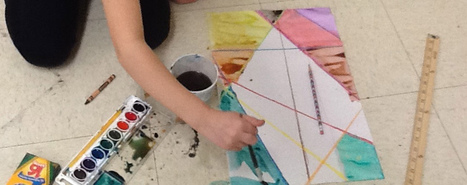

From Kindergarten through Grade 6, a Common Core focus is for students to master 2-Dimensional shapes. During grades 1-3, this is supported by students honing in on reasoning with shapes and their...


|
Scooped by
Kathleen McClaskey
onto UDL - Universal Design for Learning August 25, 2013 1:05 PM
|
 Scoop.it!
From Kindergarten through Grade 6, a Common Core focus is for students to master 2-Dimensional shapes. During grades 1-3, this is supported by students honing in on reasoning with shapes and their...

 Your new post is loading...
 Your new post is loading...
Your new post is loading...
Scoop.it!

Universal Design for Learning (UDL) is used to design curriculum, lessons and instruction based on the diversity of the learners in their classroom.
How can UDL guide personalize learning to meet the Common Core?
When a teacher understands his/her learners through the UDL lens, he/she creates a flexible learning environment and provides opportunities for learner voice and choice. When lessons are designed using the UDL model, the lesson includes goals, methods, materials, tools, and assessments to reach and support the maximum amount of learners in the classroom.
Learners can use this model to help them understand how they learn best and what learning path they can take to become an independent expert learner, leveraging their natural abilities in the process. This process helps the learner create their personal learning profile that is understood by both teacher and learner.
The importance of this strategy is that both the teacher and the learner understand who the learner is and how they learn best. The learner and the teacher uses the UDL lens to personalize learning. So what does that look like?
An example of an 8th Grade unit on the Civil War serves as an example along with two students who can meet a number of CCSS when they choose and use the tools to support their learning.
Explore our new website, Personalize Learning (www.personalizelearning.com), to learn more about the research, models and educators who are personalizing learning.

RATOMAHENINA HARRY's curator insight,
March 24, 2014 4:45 AM
Éducation / Exemplarité /Peace / Change thé World / Solidarité 
María Dolores Díaz Noguera's curator insight,
March 24, 2014 8:11 AM
UDL Guides Personalizing Learning to Meet the Common Core 
Nicky Mohan's curator insight,
March 24, 2014 3:14 PM
Personalized learning is what 21st Century Learning is all about
Scoop.it!
Kathleen McClaskey's insight:
Learning goals are the foundation of any effective curriculum. Only by clarifying what we want learners to accomplish can we begin to consider what assessments, methods, and materials will be most effective. Included are 10 tips developed by CAST Professional Learning that discuss learning goals from a UDL perspective.

paul rayner's curator insight,
November 14, 2015 4:30 PM
UDL = Universal Design for Learning (in case you're downunder like me) 
Karen Sikkel's curator insight,
November 2, 2017 6:19 PM
Learning goals are the foundation of any effective curriculum. Only by clarifying what we want learners to accomplish can we begin to consider what assessments, methods, and materials will be most effective. Included are 10 tips developed by CAST Professional Learning that discuss learning goals from a UDL perspective.
Scoop.it!
We're Back With a Brand New Series! Join the UDL- IRN and Kit Hard, Instructional Technology and Professional Development Supervisor for...
Kathleen McClaskey's insight:
Join Kit on September 16th in a Google Hangout to discuss how UDL is a practice that can help create a community, culture and learning environment in schools.
Scoop.it!
Kathleen McClaskey's insight:
Experience the latest in brain science, research and practice at the UDL Guidelines Institute that takes place on September 28th and 29th at the CAST headquarters in Wakefield, MA.
Scoop.it!
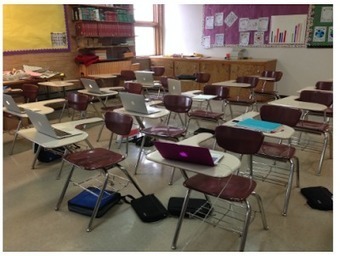
Bill McGrath from Montgomery County Public Schools, MD, shares why UDL is important for all learners.
Kathleen McClaskey's insight:
The UDL framework gives us guidelines and a vision to build expert learners:
UDL tells us how to do this so it can work for each and every learner.

Kathleen McClaskey's curator insight,
July 3, 2015 11:28 AM
The UDL framework gives us guidelines and a vision to build expert learners:

Inma Contreras's curator insight,
January 18, 2016 10:58 AM
Some tips to convert our experience of learning. To learn and to teach.
Scoop.it!

Practical Tools for UDL Lesson Design.
Kathleen McClaskey's insight:
Join CAST as they discuss discuss practical resources and tools that can be integrated immediately into practice and align with the UDL principles. They invite educators from all levels to benefit from some of the exciting resources freely available. Register today!
Scoop.it!
Kathleen McClaskey's insight:
UDL-IRN has created a great resource for designing the implementation of UDL in your school or district. Jamie Basham and Loui Lord Nelson, authors of this paper, provide important insight on the process to implement UDL. The topics included are:
Scoop.it!
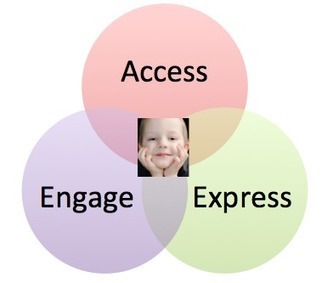
Access, Engage, and Express, based on Universal Design for Learning (UDL) principles, is the lens for teaching and learning for all learners.
Kathleen McClaskey's curator insight,
December 7, 2014 6:15 PM
Access, Engage, and Express (TM) is the lens for understanding how anyone learns best. The reason we came up with these three words was to help educators easily understand their learners using this lens. We want Access, Engage, and Express to be an integral part of their daily approach to teaching and learning. Using Access, Engage and Express was developed from the Universal Design for Learning® (UDL) principles that are based on neuroscience and how we learn.
"UDL is the framework for Personalized Learning." 
Barbara Bray's curator insight,
December 8, 2014 10:29 AM
Why do teachers and learners need a lens for learning? This post will share the importance of understanding how you learn best. Access is about how you transform and process information into useable knowledge. Engage is how you best engage with content. Express is how you demonstrate what you know and understand. If you use this lens, you and your teacher become partners in learning.
Scoop.it!

Universal Design for Learning can make your lessons more accessible and your lesson-planning more fun.
Kathleen McClaskey's insight:
This article includes excellent advice on how to engage learners using the UDL framework. UDL principles and guidelines are not step-by-step instructions. Instead, they serve as more of a framework or philosophy that can guide educators in developing and executing the goal of making learning more accessible for all learners. Luis Perez, author of Mobile Learning for All provides ways to get started with UDL.
Scoop.it!
Kathleen McClaskey's insight:
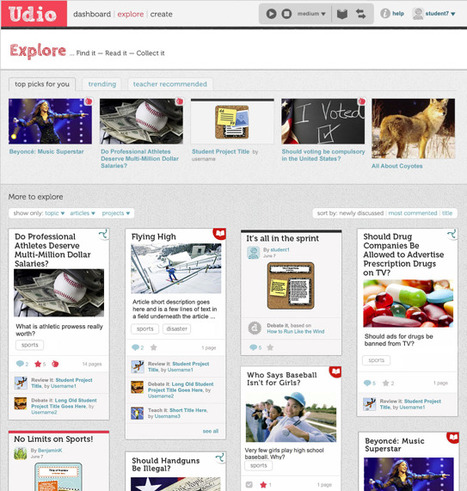
The National Center on the Use of Emerging Technologies to Improve Literacy Achievement for Students with Disabilities in Middle School is researching and developing a technology-rich learning environment called “Udio” that will make it possible for schools to provide all learners with Universally Designed for Learning (UDL) literacy experiences as they read independently across the curriculum. Consider joining the research in this important product. To achieve their mission and vision, the Center is leveraging the capabilities of the Web itself to create a more distributed ecosystem for adolescent literacy, termed “Udio,” where the goals are to: 1. foster a passionate interest and investment in reading for learners who have traditionally been uninterested in, or disenfranchised by, traditional classroom literacy practices;
Scoop.it!
Kathleen McClaskey's insight:
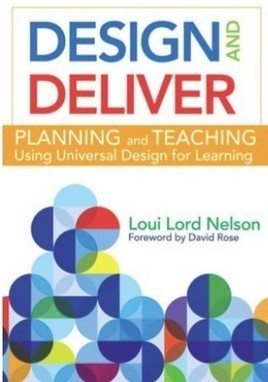
Loui Lord Nelson’s book, Design and Deliver: Planning and Teaching Using Universal Design for Learning, breaks down the principals, guidelines, and checkpoints into easily understood language using classroom strategies and design techniques proven to be successful in a wide variety of classrooms. Join us for this webinar conversation, where Loui will discuss highlights from the book including goal and assessment design, classroom design, and the use of UDL as a design tool.
Scoop.it!
Kathleen McClaskey's insight:
In this introductory course, participants learn the research basis for UDL, practical applications of UDL to lesson design, and helpful technology tools that support flexible, inclusive instruction. Each course section brings together up to 20 educators in an online community of practice. The course consists of 14 sessions – 11 online sessions and 3 synchronous Web conference sessions.
Scoop.it!
Kathleen McClaskey's insight:
Launched in June 1014, UDL on Campus serves as a resource to higher ed as they embark on applying UDL in practice. The resources on this site focus on how UDL can be used to address learner variability in postsecondary education settings in order to help ensure that all students receive a high-quality learning experience and are able to succeed. For background information about the UDL framework, visit the National Center on Universal Design for Learning
|
Scoop.it!
Kathleen McClaskey's insight:
Engagement is essential for learning!
At the Symposium participants and speakers will engage in a variety of session types to:
Scoop.it!

Learn more about Universal Design for Learning (UDL) at the UDL-IRN
Kathleen McClaskey's insight:
Members of the UDL-IRN Research Committee will lead a discussion regarding the current state of research regarding UDL. They will direct attendees to resources that summarize the research base on UDL. Expect a lively discussion in whether we should refer to UDL as a promising practice (which does not affirm UDL as an evidence-based practice) an evidence based practice, or an evidence-based framework.
Scoop.it!
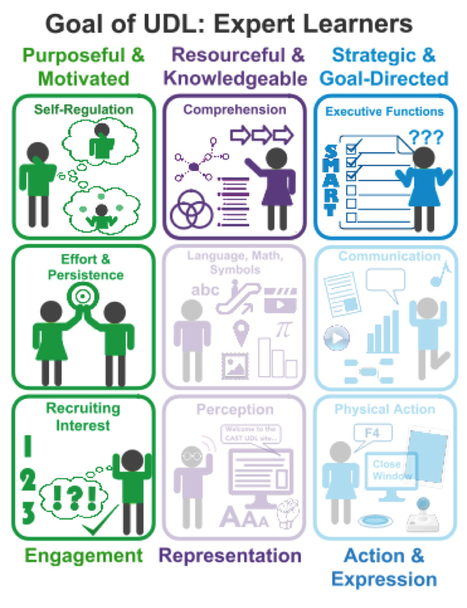
Use QR codes, AR apps and posters, and iBeacons to get students moving and engaged while bolstering their executive functioning and comprehension skills.
Kathleen McClaskey's insight:
How do you create a learning environment that is filled with purposeful, motivated, strategic, goal-directed learners? One way to create this type of learning environment is with the Universal Design for Learning (UDL) framework, which aims to develop expert learners. In addition to removing barriers and making learning accessible to the widest varied of learners possible, UDL addresses many of the metacognitive and self-efficacy skills associated with becoming an expert learner, including:
Discover from Luis Perez and Kendra Grant the tools that can help develop the expert learner.
Karen Sikkel's curator insight,
November 2, 2017 6:20 PM
How do you create a learning environment that is filled with purposeful, motivated, strategic, goal-directed learners? One way to create this type of learning environment is with the Universal Design for Learning (UDL) framework, which aims to develop expert learners. In addition to removing barriers and making learning accessible to the widest varied of learners possible, UDL addresses many of the metacognitive and self-efficacy skills associated with becoming an expert learner, including:
Discover from Luis Perez and Kendra Grant the tools that can help develop the expert learner. 
Rhonda James-Danielsson's curator insight,
January 11, 2019 4:48 AM
rhonda.james-danielsson@almhult.com

Delphine Williams Young's curator insight,
August 28, 2022 11:29 PM
How do we engender expert learners?
Scoop.it!
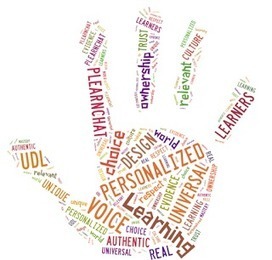
Interactive and informative discussions around Universal Design for Learning and Personalized Learning during 7/6/15 #plearnchat.
Kathleen McClaskey's insight:
Over 35 educators across the country came together in a vibrant and vital discussion around the big question in #plearnchat: "Why is Universal Design for Learning the framework for Personalized Learning?" Take a look at the Storify and be amazed what educators are thinking about this big question.
Kathleen McClaskey's curator insight,
July 7, 2015 10:08 AM
Over 35 educators across the country came together in a vibrant and vital discussion around the big question in #plearnchat: "Why is Universal Design for Learning the framework for Personalized Learning?" Read the Storify and be amazed what educators are saying about UDL and PL.
Scoop.it!
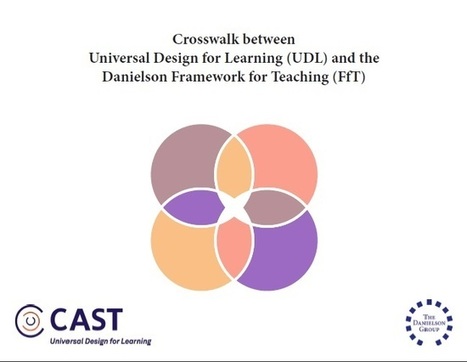
The Crosswalk between the UDL and Danielson FfT frameworks grew out of a need expressed by UDL experts in the field. As teachers strengthen their practices by infusing the principles of UDL in their work, their performance within the Danielson FfT improves.
Kathleen McClaskey's insight:
This UDL-Danielson Crosswalk will be an important guide for any school where teachers apply UDL principles in practice.
Scoop.it!
Kathleen McClaskey's insight:
Starting Feb 4th, a free online course offered by the ISTE Inclusive Learning Network will run a four-week SOOC (Small Supported Open Online Course). This course will enhance your skills in two exciting trends in education: mobile learning and Universal Design for Learning (UDL). Through participation in this course you will not only learn about UDL and how to support its implementation with iOS devices and apps, you will see it modeled by the instructors as you participate in a dynamic community of practice and create your own UDL materials and resources. Sign up soon as participation is limited to 50 participants!
Scoop.it!
Kathleen McClaskey's insight:
The UDL Implementation Research Network (UDL-IRN) is hosting a summit focusing on UDL implementation and associated research on March 12 & 13, 2015 at The University of Southern Mississippi. This beautiful campus is located on the Gulf of Mexico beach in Gulfport, MS. The intent of this summit is to gather practitioners and researchers to build networks for supporting the systematic implementation of UDL in pre-school, K-12, and higher education classrooms from across the globe.
Scoop.it!
Samantha G. Daley research scientist at CAST presented on "Supporting All Learners Through UDL: Variability in Emotion and Learning" at Towson University.
Kathleen McClaskey's insight:
Samantha G. Daley is a research scientist at CAST, where she investigates the relationship between emotions and cognitive performance of students, particularly those with learning disabilities. She focuses on the role of emotions in learning activities and how to design instruction to reflect the relationship between emotion and cognition in learning.

Patrice Bucci's curator insight,
May 28, 2015 8:02 PM
Ah yes...the role of emotion on lesrning...more of us need to understand how critical knowledge in this area i
Scoop.it!
Kathleen McClaskey's insight:
Join expert classroom educators Jon Mundorf (Naples, Florida) and Alexis Reid (Boston, Massachusetts) as they discuss the ways in which UDL helps them teach more effectively and reach more students. They’ll discuss some of the challenges of applying UDL principles and share proven strategies for success. David Gordon, co-author of the 2014 book Universal Design for Learning: Theory and Practice, which featured both Jon and Alexis, will join them to talk about how the growing community of UDL practitioners is informing and shaping the theory.
Scoop.it!

Universal Design for Learning (UDL) is a teaching approach to help all learners be successful. Learn how it benefits kids with learning and attention issues.
Kathleen McClaskey's insight:
The goal of UDL is to use a variety of teaching methods to remove any barriers to learning and give all students equal opportunities to succeed. UDL doesn’t specifically target kids with learning and attention issues. It’s about building in flexibility that can be adjusted for every student’s strengths and needs.
Scoop.it!

Master of Education in Universal Design for Learning explores approaches to classroom design and curriculum development. Apply today at USD MEd Online.
Kathleen McClaskey's insight:
Here is one of the first graduate degree programs being offered in UDL at the University of San Diego. Course of Study: Earn this Masters of Education in California by completing 10 courses (3-units each) for 30 units of coursework. The program consists of five foundation courses including a capstone action research project as well as five specialization courses. You may start in any semester with any of the courses offered. The Capstone Seminar is the final course in the program and builds on knowledge gained in the research and specialization courses.
Scoop.it!
Kathleen McClaskey's insight:
Universal Design Learning is a framework for learning that includes all learners.. Being grounded in socio-cultural theory, UDL views learning environments and social interactions as being key elements in development and learning. In UDL learners are allowed to express their learning in a variety of ways.
Delphine Williams Young's curator insight,
August 28, 2022 11:35 PM
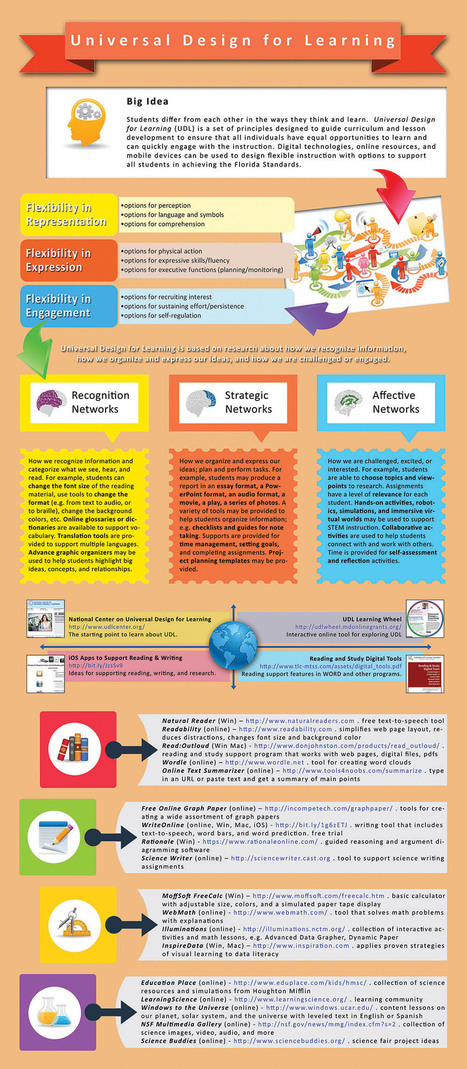
This Infographic provides links to tools.
Scoop.it!
Kathleen McClaskey's insight:
Do you have a burning question about UDL that you’d like clarified? In this webinar, discover some of the most frequent myths and misconceptions around UDL and hear about the current CAST research and thinking being done to address these myths. Included in the conversation will be CAST co-founder, David Rose.

Hindie Becker Dershowitz's curator insight,
August 3, 2014 3:17 PM
UDL: Universal Design in Learning is a concept that promotes teaching to all students in your class. Some excellent strategies and techniques. If you are not familiar or need some more exposure, this should be a great webinar. You might want to share it with your friends. |

















The author offers suggestions on how you can use technology and the arts to help learners understand and master 2-Dimensional shapes, a Common Core focus in geometry for K to Grade 6.
"These arts and technology based activities could be used for your multiple means of engagement, representation, or expression, depending on where/how they are used throughout a unit. Many can be used as whole-class activities, continued small-group practice, or even for assessment purposes following a sequence of lessons. These fit Universal Design for Learning nicely when considering geometry goals because there are multiple ways for learners to absorb and process information as well as convey their understanding. HOW students explore the concepts to be mastered is the key- not just giving them the WHAT."