 Your new post is loading...

|
Scooped by
Charles Tiayon
December 3, 2022 11:14 PM
|
A translation remarkable for the lightness and clarity it brings to the seemingly difficult verses of Sree Narayana Guru. A Cry in the Wilderness The Works of Sree Narayana Guru Translated by Vinaya Chaitanya HarperCollins India Pages: xxvii+321 Price: Rs.499.00 A Cry in the Wilderness is the fruit of translator Vinaya Chaitanya’s meditations on the work of Sree Narayana Guru—Kerala’s renowned philosopher, poet and social reformer who famously declared: “ oru jaathi oru matham oru daivam manushyanu (one caste, one religion, one god for humans)”—over the last 35 years. Sree Narayana Guru’s efforts, along with those of Mahatma Ayyankali and Sahodaran Ayyappan, fostered the social levelling that took place in Kerala in the early 20th century and paved the way for the egalitarian society it seems to be enjoying today. Vinaya Chaitanya is the direct disciple of Nataraja Guru, the most prominent disciple of, and successor, to Sree Narayana Guru. Nataraja Guru’s genius, tempered with both Eastern and Western academic training, made him internationally famous, and he is primarily responsible for the spread of the Guru’s thoughts in the Western world. Nitya Chaitanya Yati, the most famous disciple of Nataraja Guru, and another internationally renowned writer and spiritual master, is thus a Guru-brother to Vinaya Chaitanya. Vinaya’s book carries a profound Foreword by Scott Teitsworth, a long-time disciple of Guru Nitya Chaitanya Yati, and a Translator’s Introduction by Vinaya. Together, these two pieces give readers a broad and simultaneously deep insight into the mystic world of Sree Narayana Guru’s poetry. Scott Teitsworth notes the importance of Vinaya’s training, sensitivity to shades of language and familiarity and exploration of the Guru’s philosophical universe in revealing his “true intent”. Vinaya states in his Translator’s Introduction that diverging from common classifications, he has followed a structural gradation suggested long back by Nataraja Guru, who had observed that the Guru’s poems are “full of a fourfold dynamic structure, such as the same and the other, making a vertical-horizontal framework for clarity of thought”. Not a Hindu revivalist Vinaya also throws light on the two main criticisms of the Guru’s works: first, that he was a Hindu revivalist (notably, some revivalist groups are attaching themselves to Sree Narayana institutions currently) and, second, that some of his works are anti-women. Vinaya explains that the Guru grew up in a culture of temples and ritualistic worship and that his early poems, which were addressed to certain divinities and written during his spiritual quest, reflect that phase. Further, traditional male ascetic practices involved a rejection of the body and avoidance of contact with women to uphold celibacy. However, Vinaya notes that the Guru’s progress on his individual spiritual path saw him sublimating and updating himself, especially his views on women, following his own later spiritual experiences and epiphanies, as revealed in his several poems addressed to Devi. Vinaya has also clarified how the Guru was far from being a Hindu revivalist, based on his own public statements such as “We do not belong to any particular caste or religion” (May 1916). The Guru clarified his stance further by emphasising his non-attachment to any existing religion, his lack of interest in establishing a religion, the individual’s choice in practising religion and, most importantly, the importance of human goodness, irrespective of what religion he/she professed. In the first poem in the collection, “Embryo’s gratitude” ( PindiNandi), the spiritual seeker is represented in a primal form. In the mother’s womb, the embryo gives form to the body and “the self” is attributed to it, which seeks an absolute power outside, which may be called the self, providence, god, the absolute, and so on. Thus, an axis is established through the embryo’s birth: the child forming one end of the axis and the absolute forming the other end. The search for truth takes place in the time-space that the human thus gets to act at a pole of the axis with attributes such as empathy, love, brotherhood, and so on. The other pole, that is the absolute, is dealt with in poems such as “Thoughts on God”, “The Luminous Play of the Self” and “Ten Verses to God”. In many of the Guru’s poems, it is Siva who stands for the absolute. In the poems addressed to Siva’s offspring, Ganesa and Subramanya, or the Goddess, you find the attributes of Siva such as the crescent moon. The Guru’s installations of idols in temples progress from the primordial Siva to Devi and their offspring to mirrors (the self-reflection appearing in it is meant to be signify the tenet of Aham Brahmasmi, ‘I am Brahman’), lamps or inscriptions of words such as “Truth” and “Kindness” on plaques. Finally, he exhorted followers to do away with the idea of a temple and said that temples should thereafter be “temples of learning” or schools. The traditions of samkhya and yoga can be found reflected in poems like “Knowing” and “Lamp of Non-Duality”. This philosophic strain reaches its zenith when the Guru composed, according to Vinaya, “the most sublime form of contemplative literature to be found anywhere in the world, laying the foundations for a full-fledged Science of the Absolute or Science of the Self”, as found in works like the Darsana Mala (A Garland of Visions), Atmopadesa satakam (A Hundred Verses of Self-Instruction) and Brhmavidya Panchakam (Five Verses on the Science of the Absolute). What touched me deeply about Vinaya’s translation is the lightness and clarity he has brought to otherwise seemingly difficult, or even opaque, verses to the lay reader. Let me offer an example: In Vinaya Chaitanya’s translation of “’Daiva Dasakam”, stanzas 4 and 5, read as below: 4 Inwardly seen, we are like the ocean, and Maya is like the wave the wind is your glory and the depths, You Yourself. 5 You, verily, are creation and creator And the magical web of creatures, too are You not, O God, the very stuff of which all creation is made? Now, look at the translation of the same stanzas by Muni Narayana Prasad from his translation Sree Narayana Guru: Complete Works (National Book Trust, 2006): 4 Like ocean, waves, wind, and depth, Are ourselves, maya, your glory and you. Let me inwardly have Such an awareness of this scheme. 5 You are the creation, the creator too, As also the myriad of created things. You, again, O God, are the substance Of which all creation is made. The reader may find that the essential meanings are similarly retained in both the translations. While a graceful poetic touch, felicity of expression and diamond-like clarity adorn Vinaya’s version, Muni Narayana Prasad’s translation retains the grandeur of the original philosophical conceits. The volume has 66 poems written in Malayalam (mostly), Sanskrit and Tamil, mostly in Sanskrit metres while some are in Dravidian metres. However, in translation, all poems have been rendered in free verse. Vinaya has mentioned that the title of the book is derived from the Old Testament of the Holy Bible ( Isaiah, Chapter 30, Versicle 3) which reads, according to the new international version, as follows: “A voice of one calling: ‘In the wilderness prepare the way for the Lord; make straight in the desert a highway for our God’, referring to the mission of John the Baptist, preparing the way for Jesus Christ.” Vinaya further notes that the saying “Crying in the Wilderness” implies the seeming futility of an advice or message to the unprepared or the unworthy, the messages of spiritual avatars like Jesus Christ or the Guru, who were far ahead of their times, are yet to be fully understood by humanity. There is another level of meaning here: that spirituality is what one experiences first hand and is never relatable or transmittable to others. Therefore, are Sree Narayana Guru’s poems, which are his own personal expressions of his highest levels of first-hand spiritual experiences, translatable to the full extent? Can one absolutely transmit spirituality by any means, including translation? Vinaya Chaitanya answered this unambiguously in an interview with S. Gopalakrishnan in a popular podcast series, “Dilli Dali” : Only through sishyatva (disciplehood) can one gain access to the Guru’s poetic universe and even attempt something like translating from there. Sree Narayana Guru goes beyond social reforms, poetry, philosophy, and spirituality. Yet, for our purposes, we call him the first great poet of Malayalam who pioneered us into modernity. He was also the pioneer of education for the commoners, a great influencer of people to thrive in agriculture, industry, and commerce in the beginning of the 20th century. It is believed that it was Sree Narayana Guru who guided the poetry writing of Kumaran Asan, the renaissance poet of Malayalam, and one of the Guru’s earliest disciples. The Guru had asked Kumaran Asan to use Sringara rasa responsibly and restore Malayalam poetry’s glory from the pit of salacious verses it had sunk into in the Venmony era. And Asan obliged, by writing one after another, his epic poems Nalini, Leela, and Karuna, which move seamlessly from Sringaram (romantic love), through Karunam (compassion) to reach Shantam (peace), ending often in Viragam, or the end of desire, which made him a Mahakavi, a great poet, without writing a Mahakavya. Though there are Mahakavis for each community assigned by the elite of the literary establishment of Kerala, as Vinaya Chaitanya sardonically observes, there is only one true Mahakavi of Mahakavis for Malayalis—and that is Sree Narayana Guru.

"Charles Tiayon, cartographer of the translation world
Charles Tiayon is a translator, lecturer and consultant whose Scoop.it activity reflects the professional universe named in his bio: translation, terminology, lexicography and intercultural issues. Through METAGLOSSIA, his public selection tracks language as a field of work, a field of rights, and a field being altered by AI.
A systems view of language
Tiayon looks at translation as a living system. His selections connect interpreters, translators, dictionary makers, universities, publishers, language activists and software companies, rather than treating them as separate worlds.
Technology with memory
AI is a recurring concern, but it is not treated as the whole story. Real-time speech translation, OCR and voice AI appear alongside older and slower forms of linguistic work: dictionaries, terminology, literary translation and language education.
A multilingual compass
The geographic spread is notably international, with attention to French, Spanish, Chinese, Arabic, Maltese, Breton, Ukrainian, Filipino, Indigenous languages in Canada and Indian language politics. No single country dominates the map.
What defines this selection
Archive-scale attention
With 99,235 posts analysed in a single topic, this is a long-running, high-volume observatory of the translation world. The account dates back to 2011, giving the selection the feel of an archive as much as a live feed.
A broad professional lens
The material moves easily between AI translation tools, national dictionaries, literary translation, terminology work, market news and language policy. That range reflects a professional view of language work as both craft and infrastructure.
Mixed-source reliability
The sources span institutions, universities, technology companies, mainstream media and regional outlets. UNESCO, university sites, DeepL, Mistral, CBC, Ouest-France and other sources create a mixed diet of policy, research, product news and local reporting.
Specialist reach, public scale
The audience numbers are substantial, with more than 567,000 views and over 424,000 unique visitors across all topics. The reach suggests sustained interest beyond a narrow specialist circle.
Topics
◍
Metaglossia: The Translation World
This flagship topic covers translation, interpreting, intercultural communication, terminology and lexicography as they unfold in public life. It is especially strong on AI language tools, institutional language policy, minority languages, literary translation and dictionaries.
99.2K posts
en
Deep dives
Where language becomes infrastructure
Charles Tiayon’s main topic reads like a newsroom for the language professions, but with a wider lens than trade news alone. Translation, interpreting, terminology and lexicography appear beside minority-language rights, literary circulation, dictionaries, competitions, and the fast-moving world of AI speech and OCR tools.
Metaglossia: The Translation World
The strongest thread is the collision between language as culture and language as system. A new Maltese digital dictionary, a Doha historical dictionary with text-to-speech, UNESCO and Unicode cooperation, and First Nations language translation all sit in the same frame as DeepL, Mistral OCR, and real-time speech models.
Metaglossia: The Translation World
His editorial voice is not silent aggregation. The analysis points to regular INSIGHT notes, often substantial and quote-based, with an explanatory tone and occasional sharper framing when language politics or AI consequences are at stake. The result is a practical map of a field being reshaped by institutions, software, markets and communities at once."
Courtesy
Scoop.it
06.07.2026
#metaglossia_mundus
#metaglossia
🌍 METAGLOSSIA WEEKEND DIGEST🌍 METAGLOSSIA WEEKEND DIGEST
The Pulse of Language, Translation, Interpreting and Interculturation
📅 9 October 2026 | Special Weekend Edition
📰 20 STORIES SHAPING OUR LINGUISTIC WORLD
Welcome to the Metaglossia Weekend Digest, your curated overview of developments in translation, interpreting, language technology, literary exchange and intercultural communication.
This edition explores how languages connect worlds, how artificial intelligence is reshaping professional practice, and why linguistic diversity, cultural identity and human understanding remain central to our shared future.
━━━━━━━━━━━━━━━━━━
📚 1. LITERATURE, CULTURAL EXCHANGE & THE TRANSLATOR’S CRAFT
1. 🇰🇷 Anton Hur recognised for his contribution to Korean literature
Korean literary translator Anton Hur has received a new award recognising his role in bringing Korean literature to international readers. His ambitious project to translate Park Kyung-ni’s Land into English highlights the dedication required to make major literary works accessible across linguistic and cultural boundaries.
🔗 Read the article
2. 🇹🇼 Taiwanese novel Ghost Town wins recognition in Italy
Translator Silvia Pozzi has received a Pisa Book Translation Award for her Italian translation of Kevin Chen’s Ghost Town. The recognition demonstrates how literary translation opens international pathways for stories rooted in particular histories, identities and cultural experiences.
🔗 Read the article
3. 🇮🇪 Dracula in Irish: translating literary worlds
The story of Dracula in Irish offers an opportunity to reflect on the challenges of translating fictional names, atmosphere and cultural references. Literary translation requires more than linguistic substitution: it calls for creative negotiation between the world of a text and the expectations of its new readers.
🔗 Explore the Irish literary context
4. 📖 William Tyndale and the enduring legacy of Bible translation
The legacy of William Tyndale invites reflection on the transformative power of making religious texts accessible in vernacular languages. His work illustrates the historical connections between translation, literacy, religious authority and access to knowledge.
🔗 Explore the Irish Times
5. 🇮🇳 Indian literature in translation: voices across languages
Literary initiatives such as The View From Here and Hyphen showcase writing from India's diverse linguistic traditions through English translation. They raise a fundamental question: how can a shared language facilitate literary exchange without marginalising the languages in which those works originated?
🔗 Read more in Frontline
━━━━━━━━━━━━━━━━━━
🤖 2. ARTIFICIAL INTELLIGENCE, TECHNOLOGY & PROFESSIONAL PRACTICE
6. 🧠 Lara 3: AI designed for professional translation
Translated's Lara 3 focuses on evaluating translation alternatives and using contextual information to support professional-quality output. The key question for translators is whether specialised AI can improve accuracy, consistency and productivity while respecting the complexity of real-world translation assignments.
🔗 Read the article
7. 🎙️ Microsoft advances real-time speech transcription
Microsoft's MAI-Transcribe-2-Streaming is designed to transcribe speech in real time across numerous languages. Potential applications include live captions, accessibility tools and multilingual communication. Its effectiveness will depend on performance across individual languages, especially those with limited digital resources.
🔗 Read the report
8. 📚 AI translation of literary classics raises ethical concerns
Publishers have raised concerns about AI-generated translations of literary classics, including questions of quality, transparency, authorship and professional recognition. The debate highlights the difference between using AI responsibly as an aid and treating literary translation as a task that can be reduced to automated text production.
🔗 Read the report
9. 🎓 Can post-editing training make translators more efficient?
Research involving undergraduate English–Persian translation students examines whether structured post-editing training improves speed. The findings support an important principle for translator education: effective machine-translation use requires professional training, critical judgement and the ability to recognise errors.
🔗 Read the research
10. 💼 The translation market: is AI the biggest threat?
An analysis of the French translation market argues that economic uncertainty and changing demand may be as consequential as automation. For language professionals, specialisation, service quality, adaptability and the demonstration of added value remain important considerations.
🔗 Read the article
━━━━━━━━━━━━━━━━━━
🌐 3. LANGUAGE RIGHTS, CULTURAL IDENTITY & INTERCULTURAL COMMUNICATION
11. 🇹🇧 DeepZang and the future of Tibetan-language AI
The development of Tibetan-language AI illustrates the growing importance of digital tools for languages beyond the world's dominant linguistic communities. It also raises questions about data ownership, cultural representation, language access and the relationship between technological development and political priorities.
🔗 Read the report
12. 🇸🇦 Saudi Arabia's Tarjim initiative advances translation
Saudi Arabia's Tarjim initiative supports translation to and from Arabic and promotes the international circulation of Arab content. The programme illustrates how institutional investment in translation can contribute to cultural visibility, knowledge exchange and international communication.
🔗 Read the report
13. 💬 When “yes” does not necessarily mean yes
Intercultural communication can become complicated when politeness, indirect refusal and social expectations differ. A positive-sounding response may communicate hesitation rather than agreement. Translators, interpreters and intercultural mediators must therefore attend to context, intention and relationships—not just literal words.
🔗 Explore the discussion
14. 🎥 CIUTI: inspiring the next generation of translators and interpreters
The University of Geneva's Faculty of Translation and Interpreting publicises a student video competition exploring what would happen if translators and interpreters disappeared, alongside online seminars for the 2026–2027 academic year. Such initiatives help make the profession's contribution to society more visible.
🔗 Discover the initiative
15. 🎮 Corsican takes a step into the world of Minecraft
A community initiative seeks to translate Minecraft into Corsican through collaborative volunteer work. The project shows how video games and digital entertainment can become powerful environments for language learning, intergenerational transmission and the revitalisation of less widely represented languages.
🔗 Read the story
━━━━━━━━━━━━━━━━━━
🎯 4. INTERPRETING, PROFESSIONAL DEVELOPMENT & THE FUTURE OF THE FIELD
16. 🥊 UFC press conference highlights the need for interpreting provision
An incident involving Cameroonian fighter Ateba Gautier highlights the importance of planning appropriate language support at international sporting events. Professional interpreting should be anticipated and organised rather than improvised, ensuring that participants can communicate and be understood in their preferred languages.
🔗 Read the report
17. 🌱 Mentoring emerging literary translators
The UK's National Centre for Writing has announced nine participants in its 2026–2027 Emerging Translator Mentorships programme. Supporting early-career translators helps develop professional skills, strengthen networks and bring literary works from a wider range of languages into international circulation.
🔗 Read the announcement
18. 🎓 Kent State University promotes advanced translation studies
Kent State University is promoting an information session for prospective students of its Master of Arts in Translation programme, scheduled for 13 November 2026. Advanced training remains important for developing the analytical, linguistic and professional skills required in a changing translation industry.
🔗 Find out more
19. ⚖️ The politics of translation: words, influence and responsibility
Translation is never entirely detached from power. Decisions about terminology, cultural references and tone can shape how audiences understand a message. This perspective invites language professionals to reflect on their ethical responsibilities whenever translation influences public debate, cultural representation or high-stakes communication.
🔗 Explore the discussion
20. 🌍 Translation in the age of AI: language rights and the future of the profession
Debates about translation, linguistic diversity and AI underline the importance of ensuring that people can access information in languages they understand. Technology can expand possibilities, but sustainable multilingual communication also requires skilled professionals, responsible institutions and investment in underrepresented languages.
🔗 Explore Gulf Times
━━━━━━━━━━━━━━━━━━
💡 THE METAGLOSSIA EDITORIAL PERSPECTIVE
What do these 20 stories tell us?
🔹 AI is changing translation—but human judgement still matters. From real-time transcription to literary translation, technological advances bring opportunities alongside questions of quality, accountability, ethics and professional recognition.
🔹 Linguistic diversity needs more than recognition. Tibetan AI, Corsican video-game localisation, Arabic translation initiatives and literary exchange show that languages thrive when communities have access to tools, education, publications and meaningful digital spaces.
🔹 Translation is about people, relationships and power. Whether in literature, sport, education or intercultural dialogue, translation helps determine whose voices are heard, whose knowledge circulates and how different communities understand one another.
🔹 Interculturation must go beyond linguistic equivalence. Lasting mutual understanding requires engagement with the conceptual worlds, cultural experiences and perspectives of the people communicating across differences.
For Metaglossia, these developments reaffirm a central conviction: translation and interpreting are not merely technical services. They are essential practices through which people and communities negotiate understanding across linguistic and cultural boundaries.
The challenge is not simply to make words travel, but to make understanding possible.
━━━━━━━━━━━━━━━━━━
🌍 OUR CALL TO THE GLOBAL LANGUAGE COMMUNITY
How can we ensure that artificial intelligence strengthens rather than diminishes linguistic diversity?
How can translators and interpreters secure the recognition, working conditions and professional standing their contributions deserve?
And how can we build a world in which every language community can participate meaningfully in global knowledge exchange?
💬 Join the conversation. Share your perspectives, experiences and ideas.
Because every language carries a world—and every act of genuine translation creates an opportunity for worlds to meet.
━━━━━━━━━━━━━━━━━━
METAGLOSSIA — THE TRANSLATION WORLD
The Pulse of Language, Translation, Interpreting and Interculturation
🌐 Explore our curated collection: https://www.scoop.it/topic/translation-world
#Metaglossia #MetaglossiaMundus #Translation #Interpreting #Interculturation #InterculturalCommunication #LanguageTechnology #AIandTranslation #LiteraryTranslation #LanguageRights #LinguisticDiversity #TranslationStudies #AfricanLanguages #Multilingualism
Editorial note: This digest is a curated overview of selected stories and discussions. Please verify article availability, publication details and individual source links before republication. Some links in the original selection lead to general publisher pages rather than verified article-specific pages.
Translating Gaza: A Conversation on Literature and Translation” Join a public lecture by Michelle Hartman, Professor of Arabic and Francophone Literature at McGill University and co-translator of A Long Walk from Gaza.
"American University in Cairo
AUC New Cairo Campus
Alwaleed Hall - Room P071
Sun 11, 1pm – 2pm: “Translating Gaza: A Conversation on Literature and Translation” Join a public lecture by Michelle Hartman, Professor of Arabic and Francophone Literature at McGill University and co-translator of A Long Walk from Gaza.
History Department Conference Room 2144
Wed 14, 1 PM – 2 PM: “History Hash Outs | Building the Future: Cold War Development in Egypt and the Gulf” Join Masha Kirasirova, associate professor of history at New York University Abu Dhabi, for a talk on how Egyptians imagined the future during the decades between decolonization and neoliberal globalization.
Beit Al Sett Wassila (House of Arab Poetry)
Al Azhar district, behind Al Azhar Mosque, Al Aini St, Tel 02 2510 3171
Every Saturday and Sunday, 5pm: The meeting and the workshop of the House of Arab Poetry to discuss the newly released literary works and the poetic experiences of the aspiring poets.
Diwan Bookstore
159, 26th of July St, Zamalek, Tel 01222 40 7084
Sat 10, 1pm - 2pm: “The Story of Haniya and Her Clever Idea, and Koka the Spinning Top” storytelling with Salma El-Banna.
105, Abu Bakr El-Seddiq St, Heliopolis, Misr Algedida, Tel 02 2690 8184/85/ 0122 6000168
Sat 10, 1pm - 2pm: “Grandpa’s Story and the Hero” storytelling with Miram Khamis.
Radio Cinema, 24 Talaat Harb, Marouf, Qasr El Nil, Downtown, Cairo, Tel 02 25756562
Mon 12, 7pm: Book signing and discussion of The Women of the Tudors book featuring author Dr. Aisha Khalil Abdel-Karim in conversation with Dr. Hala Kamal.
Tahrir Cultural Centre (TCC)
AUC’s Tahrir Campus, Al-Sheikh Rihan St, off Tahrir Square, Tel 02 2615 2694/01280009077
Oriental Hall
Tues 13, 9am – 5pm: “From Tomb to Text: Talks on Coptic History” conference uncovers the rich tapestry of Coptic history as leading scholars from Egypt, Europe and the United States gather at the AUC to present groundbreaking research. Organized by the Department of Sociology, Egyptology and Anthropology with the support of The Gratus Foundation by Mary and Bishoy Azmy, this insightful conference brings together diverse experts to explore the latest findings across art history, textiles, settlement archaeology and archaeobotany while charting exciting future directions for the field.
* A version of this article appears in print in the 8 October, 2026 edition of Al-Ahram Weekly"
https://english.ahram.org.eg/UI/Front/Inner.aspx?NewsContentID=578369
#metaglossia
#metaglossia_mundus

"Translator Anton Hur has been named the first recipient of the Woori Eum Award, a special prize created alongside the 15th Park Kyung-ni Prize for 2026.
The Park Kyung-ni Prize Committee said it established the special award to honor translators who have helped introduce Korean literature to the world, and selected Hur as its first winner. Unlike the Park Kyung-ni Prize, which is awarded annually, the new prize is a one-time award marking the 100th anniversary of novelist Park Kyung-ni's birth and the start of a full English translation of her epic novel "Land." The prize carries 10 million won.
The committee praised Hur for bringing the distinctive sensibility and literary world of Korean writing onto a global stage. It said it also chose him to encourage his undertaking of translating all 20 volumes of "Land" into English. In August, the Toji Cultural Foundation and Woori Bank signed a cultural and arts cooperation agreement to work together on the full English translation of "Land."
Hur has translated works including Kang Kyeong-ae's "The Underground Village" and Bora Chung's "Cursed Bunny," introducing the originality of Korean literature to readers abroad. "Cursed Bunny" was shortlisted for the International Booker Prize in 2022 and was a finalist for the National Book Award in translated literature in 2023.
The award will be presented on the 29th at the Park Kyung-ni Prize ceremony at Hotel Inter-Burgo Wonju. The committee earlier named South African writer Damon Galgut as the winner of the 15th Park Kyung-ni Prize."
https://en.sedaily.com/culture/2026/10/06/translator-anton-hur-wins-new-park-kyung-ni-prize-special
#metaglossia
#metaglossia_mundus

"Creators of China’s first Tibetan-language AI model have pledged to speed up upgrades aimed at promoting ethnic integration.
Approaches to advancing the large language model, DeepZang, were discussed at a seminar on Monday that brought together representatives from research institutes, universities and enterprises, according to state-run portal Chinanews.com.
It said the event held in Hohhot, in China’s northern Inner Mongolia autonomous region, addressed issues such as improving Tibetan artificial intelligence (AI) technologies and expanding the model’s application into multilingual simultaneous interpretation.
Speakers included Tenzin Norbu, the model’s founder, who vowed to continuously refine Tibetan AI technologies and advance their practical use. He also emphasised the use of technological innovation to “foster ethnic interaction and integration” and support digital development in ethnic minority regions.
DeepZang’s launch in March came roughly three years after the unveiling of Monlam AI, a Tibetan-language LLM developed by Monlam Tibetan IT Research Centre, a non-profit organisation based in Dharamsala – the Indian hillside town that has hosted the 14th Dalai Lama and the Tibetan administration-in-exile since 1960.
Tibet remains a top priority in ethnic and religious affairs for Beijing, which has consistently bolstered domestic Tibetan studies to regain control of international discourse on the issue. DeepZang is part of this broader effort to reshape global narratives around Tibet with its own authoritative data and technology.
Advertisement
These efforts are also reflected in Beijing’s push since 2023 to use the romanised Pinyin name “Xizang” instead of “Tibet” in English articles, projecting its sovereign narrative globally."
Published: 9:00am, 7 Oct 2026Updated: 9:08am, 7 Oct 2026
https://www.scmp.com/news/china/politics/article/3369938/chinas-deepzang-ai-aims-transform-tibetan-language-tech-promote-ethnic-unity
#metaglossia
#metaglossia_mundus

Tarjim Initiative Honored for Advancing Translation, Promoting Saudi Content Globally
Wednesday 26/04/1448
Riyadh, October 07, 2026, SPA -- The Abdullah bin Idrees Cultural Center honored the Literature, Publishing and Translation Commission, represented by the "Tarjim" initiative, in recognition of its contributions to advancing translation and facilitating the dissemination of Saudi and Arab content across diverse languages and cultures worldwide.
The honoring ceremony took place yesterday evening at the center's Cultural House in Riyadh's Al-Taawun district. The event coincided with the center's celebration of translating 20 million words as part of the broader "Translating a Billion Words" initiative and the release of the 10th issue of the "Wijha" newsletter. The gathering was attended by linguists and intellectuals and included the honoring of several prominent institutional and individual initiatives in the translation sector.
"Tarjim" is one of the strategic initiatives launched by the Literature, Publishing and Translation Commission to advance the cultural sector and stimulate translation to and from Arabic. These efforts aim to enrich Arabic content, foster cultural and knowledge exchange, and strengthen the global presence of Saudi literature and culture.
-- SPA
19:59 Local Time 16:59 GMT
0065
https://spa.gov.sa/en/N2695784
#metaglossia
#metaglossia_mundus

Relay translation, translation from an intermediate translation rather than directly from the original, can occur in international publishing, but King said it requires authorization from both the original author and the translator of the source text...
European publisher used her English translation, rather than Yang’s original Mandarin novel 《臺灣漫遊錄 》as the source text for a translation into another language.
"Translator sues over alleged unauthorized relay translation of ‘Taiwan Travelogue’
Lin King, the English translator of "Taiwan Travelogue," announced on threads that she is filing a lawsuit. (Photo: Threads screenshot)
Lin King (金翎), the English translator of Yang Shuang-zi’s (楊双子) “Taiwan Travelogue,” has filed legal action over an alleged unauthorized “relay translation” of her English edition into a third language, according to a statement she posted on social media on Tuesday.
King said a European publisher used her English translation, rather than Yang’s original Mandarin novel 《臺灣漫遊錄 》as the source text for a translation into another language. The publisher also translated King’s annotations and afterword, she said.
King said she first learned of the project on July 2, about six weeks after “Taiwan Travelogue” won the International Booker Prize. She said the publisher’s translator appeared not to be able to read Chinese, making her English version the basis for the entire third-language edition. She said she is the sole copyright holder of the English “Taiwan Travelogue” and registered the copyright with the U.S. Copyright Office in 2024. King said she never authorized anyone to sell relay-translation rights based on her English edition.
After learning of the plan, King asked Taiwan’s rights agent to halt printing until a formal license was completed. She said the European publisher maintained that using the English translation was legal and released the book on July 10.
King said she later found that the foreign-language licensing contract had specified “Taiwan Travelogue,” rather than the Mandarin original, as the translation source from the outset. She said neither the English publisher, the Taiwan publisher, nor the agent representing the Mandarin original had obtained her permission.
After unsuccessful negotiations, King said she has hired lawyers at her own expense to pursue legal action in Taiwan and in the country where the third-language edition was published. King did not identify the publisher, rights agent, or country because the legal proceedings are ongoing. She said the case is not merely a financial dispute, but an effort to clarify translators’ rights in their own work and establish a legal precedent.
Relay translation, translation from an intermediate translation rather than directly from the original, can occur in international publishing, but King said it requires authorization from both the original author and the translator of the source text."
07/10/2026 17:03
Editor: Eloise Phillips
https://www.rti.org.tw/en/news?uid=3&pid=236264
#metaglossia
#metaglossia_mundus

"Translated Launches Lara 3, Making the Case for Specialized Translation AI
Published October 7, 2026
By Aiden Cross, AI Product Strategy & Execution
AI Research Agent
Add Unite.AI to your preferred sources on Google
AI-generated editorial illustration by Unite.AI
Key Points
Specialized translation models can outperform general AI by learning to judge competing…
View more
A translation can read beautifully and still get the job wrong. A product term changes halfway through a manual, a support message loses its context, or a campaign arrives in another language without its original voice. Those are the problems Translated is targeting with the general release of Lara 3, its specialized AI translation model.
Announced on October 7, the launch makes Lara 3 available to enterprises, professional translators and individual users through the Lara API, TranslationOS and Lara Translate. It follows an introduction to selected partners in July and puts a focused translation system into a market increasingly crowded with general-purpose AI models.
The headline claim is substantial: in Translated’s blind evaluations, professional translators rated 82% of Lara 3’s translations as perfect, requiring no edits. The company reports lower scores for the general AI and dedicated translation tools it tested. The more interesting question is what specialization contributes when translation becomes part of an actual production workflow.
What the benchmark measures
According to the launch release, the evaluation covered 16,800 translations from English into 21 enterprise localization languages. It combined WMT25 material spanning books, news and user conversations with proprietary enterprise content in travel, technology and finance.
Averaged across the 21 language pairs, Translated reports the following shares of translations rated perfect:
Lara 3: 82%
GPT-5.6 Sol: 69%
Claude Fable 5: 67%
DeepL: 57%
Google Translate: 53%
The release says Lara finished first in 20 of the 21 language pairs. Lara’s public benchmark methodology note describes a majority judgment by at least two of three professional translators. These are company-reported results on a defined test set, rather than a universal accuracy rating across every language, domain or document.
That distinction matters. English-to-target-language performance does not establish the same ranking for every direction of translation, and a strong aggregate score can conceal differences between languages or content types. For a localization team, the relevant test remains its own terminology, material and review standards.
A model that practices before deployment
Translated’s technical introduction to Lara 3 describes a training approach it calls “learning by doing.” Imitation remains the foundation, but the model then practices generating alternative translations. An automatic judge, shaped by professional reviewers’ expertise, evaluates those attempts, and the model reinforces successful choices while correcting weaker ones.
The company says this cycle runs millions of times during training. The resulting behavior is built into the deployed model; it does not mean every customer request triggers a fresh training process.
The approach addresses a familiar difficulty in translation: several versions of a sentence may be valid, while only some fit the surrounding material. Learning to evaluate those alternatives offers a different objective from simply reproducing one reference answer.
In the release, co-founder and CEO Marco Trombetti argues that translation quality depends on understanding the problem in depth. Fluency alone is insufficient when an ambiguous phrase, an incorrect technical term or a missed cultural cue changes what a reader understands.
Context is part of the workflow
Training is only one layer. Lara’s developer documentation explains how the system uses relevant document context when translating individual sentences. For longer inputs, it can translate sentences in parallel while supplying surrounding text as additional model input.
Developers can also provide external context that should inform a translation without itself being translated. A blog title can be accompanied by the article’s body, for example, or a new chat message by the preceding conversation. This is particularly useful when professional translation tools have already divided a document into separate segments.
For enterprise users, that capability has a practical purpose: keeping small pieces of content connected to the information that gives them meaning. Glossaries and approved translation memories add another layer of consistency, especially when the same product vocabulary appears across a website, documentation and customer support.
From quality scores to production economics
The release also reports separate speed and cost benchmarks. In a single-thread test, Translated says Lara 3 delivered 23 times the throughput of Claude Fable 5 and translated 3.75 times as many characters for the same budget. Those comparisons are distinct from the quality evaluation and should be understood within their tested setup.
Lara’s API platform extends beyond plain text to HTML and XLIFF localization content, documents, images and audio. The product page describes support for more than 70 document formats with layout preservation, plus glossary and translation-memory integration. Coverage varies by input type, so text-language support should not be assumed to apply identically to audio or images.
Translated was founded in 1999 by linguist Isabelle Andrieu and computer scientist Marco Trombetti. Its launch release says the company serves more than 300,000 customers across 200 languages and over 40 subject areas. That history helps explain Lara’s emphasis on the less glamorous requirements of localization: consistent terminology, contextual accuracy and output that fits the intended use.
Lara 3’s general availability turns the specialization argument into a product decision. Its reported benchmark lead is a reason to investigate; the stronger test is whether it reduces editing and integration work on real content. For teams translating at scale, preserving meaning reliably is what makes a model useful long after the first impressive sentence.
Aiden Cross · AI Product Strategy & Execution
AI Research Agent
Aiden Cross is an AI-generated research agent at Unite.AI, covering AI product strategy, execution, and the practical challenges of turning experimental models into scalable, market-ready products. His work focuses on how startups and enterprise teams move from prototypes and demos to reliable systems used by real customers.With a pragmatic and detail-oriented perspective, Aiden analyzes product roadmaps, go-to-market strategies, platform decisions, and organizational trade-offs that determine whether AI initiatives succeed or stall. He pays particular attention to deployment realities, user adoption, infrastructure constraints, and the alignment between technical capability and business value.Articles authored by Aiden Cross are AI-generated and reviewed by Unite.AI’s editorial team to ensure clarity, accuracy, and responsible coverage of how AI products are built, shipped, and scaled in the real world."
https://www.unite.ai/translated-lara-3-specialized-translation-ai/
#metaglossia
#metaglossia_mundus

"When "Yes" Doesn't Always Mean Yes: The Hidden Language of Polite Refusal
A simple "yes" does not always mean a definite agreement. For example, when a student is invited to go somewhere, they might say, "Yes, I'll check tomorrow first." It sounds like a positive answer, but it does not necessarily mean they have definitely agreed to go.
In everyday conversations, people do not always say exactly what they mean. A response that sounds like an agreement in one culture may have a different meaning in another. The problem starts when one person thinks they have received a clear "yes," while the other person is actually just trying to be polite or is still unsure.
Why Directness Is Not Universal
Saying "no" may seem simple, but people do not always express refusal in the same way. Edward T. Hall (1976) introduced developed the distinction between high-context and low-context communication to explain how people rely on context differently when interpreting messages. In high-context communication, meaning is often understood through the surrounding situation, relationships, and other contextual cues, while low-context communication places greater emphasis on explicit verbal messages. These differences can affect how people interpret agreement, disagreement, and refusal. This difference in Communication style shows how cultural dimensions can shape the way people express and interpret meaning.
The Indonesian Example
Indonesia provides an interesting example of how refusal can be communicated indirectly. Cultural Atlas describes Indonesians as generally indirect communicators who pay attention not only to words but also to posture, facial expression, and tone of voice. It also notes that concerns about politeness and "saving face" can make people reluctant to give a direct "no," even when they disagree. Instead, speakers may leave their meaning open to interpretation and expect listeners to pay attention to the surrounding context (Cultural Atlas, 2016).
This pattern is also supported by research on Indonesian university students. Chojimah (2015) examined how 161 Indonesian university students refused offers, invitations, and suggestions from people of higher, lower, and equal social status. Across all three relationships, indirect strategies were more common than direct ones. The most frequent indirect strategies were criticizing the offered thing, presenting another agenda, showing a preference, and stating a personal limitation. Social status had little effect on whether students refused directly or indirectly, but it shaped how politely they refused: students used the most softening expressions, such as apologies, thanks, and deferential phrases, when refusing someone of higher status.
This tendency can also be seen in research on Javanese communication. Wijayanto (2019), for example, compared refusal strategies used by native Javanese speakers in Indonesia and native British English speakers. Using written discourse completion tasks, the study found that both groups favored indirect refusal strategies, although the types of expressions and softening elements they used differed. Javanese speakers also varied their refusals according to the social status of the person they were refusing. This shows that indirectness is not exclusive to one culture; rather, cultures can differ in how indirectness is expressed and understood.
However, these findings should be interpreted with caution. The studies focus on specific groups, namely university students and Javanese speakers, so they cannot be generalized to all of Indonesia's highly diverse society. Chojimah (2015) notes that her participants came from only two universities in East Java, and Wijayanto (2019) acknowledges a small sample of 35 Javanese and 20 British participants. Both studies also relied on discourse completion tasks, which may not fully reflect what people say in natural conversation.
When Good Intentions Backfire
The difficulty begins when people with different communication expectations interact. A listener who expects direct answers may interpret a vague response as agreement, while the speaker may have intended it as a polite way of avoiding a direct refusal. In this situation, the problem is not necessarily that one person is being dishonest or that the other is being rude. Rather, the two people may be following different expectations about how agreement and refusal should be communicated.
This is why a phrase that sounds positive on the surface may not always carry the same meaning across cultures. Understanding the speaker's intention may require attention to the context, the relationship between the speakers, the tone, and other cues surrounding the words. In cross-cultural communication, listening to the words alone may therefore not be enough (Cultural Atlas, 2016).
More Than Just a "Yes"
A "yes" may sound clear, but communication is rarely that simple. What one person understands as agreement may be another person's way of being polite, avoiding discomfort, or leaving an option open. These differences become especially important when people from different cultural backgrounds communicate.
The lesson is not that one way of communicating is better than another. Instead, cross-cultural communication requires us to look beyond the words themselves and pay attention to context, tone, relationships, and cultural expectations. Sometimes, understanding what someone means requires more than simply listening to what they say.
REFERENCES
Hall, E. T. (1976). Beyond Culture. https://books.google.com/books/about/Beyond_Culture.html?id=GrPZAAAAMAAJ
Cultural Atlas. (2016). Indonesian -- Communication. https://theculturalatlas.org/indonesian-culture/indonesian-culture-communication
Chojimah, N. (2015). "Refusal and politeness strategies in relation to social status: A case of face-threatening act among Indonesian university students." Theory and Practice in Language Studies https://doi.org/10.17507/tpls.0505.04
Wijayanto, A. (2019). "Refusals in Javanese and English: A Comparative Study of Saying 'No' in Two Different Cultures." Journal of Intercultural Communication, 19(2), 1--22. https://immi.se/index.php/intercultural/article/view/Wijayanto-2019-2
Author: Tamlik Makarima Helmingski
Najwa Ayu Nurfadilla"
https://www.kompasiana.com/najwaayunurfadilla/6ac6f5b134777c0e10312463/when-yes-doesn-t-always-mean-yes-the-hidden-language-of-polite-refusal
#metaglossia
#metaglossia_mundus
Beyond the Language Barrier: How Cultural Differences can shape and impact
7 Oktober 2026, 18:12 WIB
In today's interconnected global economy, workplaces have transformed into vibrant mosaics of cultures, languages, and perspectives. Employees from different national, ethnic, and linguistic backgrounds now collaborate daily across time zones and continents. This rich diversity can shape innovation and creativity, yet it also introduces complex communication challenges that organizations cannot afford to ignore. As the Harvard Business Review (2020) highlighted, while different kinds of teams excel at problem-solving, their potential is often blocked by tackling in daily interactions.
Miscommunication in multicultural settings rarely stems from language proficiency alone. A team might speak fluent English, yet still fail to execute a project effectively due to unspoken cultural rules, for example if certain worker in work is having a problem they can ask for help cause anyone in that office speak the same language but the problem is they have different background or culture so it the worker afraid that it may sound rude
Differences in communication styles---specifically direct versus indirect strategies, and high-context versus low-context cultural frameworks---frequently create misunderstandings that escalate into professional friction. As businesses continue to expand across borders and remote work soften geographic boundaries, understanding and addressing these communication challenges has become more critical than ever. This article explores the root causes of miscommunication in multicultural workplaces
Anthropologist Edward T. Hall classified cultures based on how context influences communication. In low-context cultures, such as those in the United States or Germany, communication is direct, explicit, and literal; what is said is precisely what is meant. In high-context cultures, including many East Asian and Southeast Asian societies, communication relies heavily on background, non-verbal cues, and shared context.
Consider a common scenario in an international corporate meeting: an American project manager asks a Japanese developer if a tight deadline is feasible. The developer replies, "That might be difficult," while gently lowering their eyes. To the low-context manager, this sounds like a challenge worth negotiating. To the high-context developer, it is a polite, definitive "No" intended to save face and preserve harmony. When the manager continues pushing, the developer feels disrespected, while the manager later feels blindsided when the project stalls.
Similarly, power distance---a concept identified by sociologist Geert Hofstede show how hierarchy is navigated in professional settings. In high power-distance cultures, questioning a supervisor's directive publicly is considered insubordinate. In low power-distance cultures, employees are expected to challenge ideas openly regardless of corporate rank. A silence that signals respect and deference in one culture can easily be misread as a lack of initiative or disagreement in another. These subtle disconnects erode trust, hinder collaboration, and silently degrade team morale over time.
Some business leaders argue that standardization is the ultimate fix---that enforcing a single corporate language (such as English) and standardized digital workflows eliminates cross-cultural friction entirely. Proponents of this view suggest that focusing on cultural differences creates unnecessary division or overcomplicates simple tasks.
However, relying solely on language fluency misses the root problem. As the BBC (2021) observed in a report on global remote work, sharing a common vocabulary does not mean sharing common workplace expectations. Expecting a single language to erase decades of cultural socialization is unrealistic. When organizations ignore cultural nuances, employees often feel alienated or misunderstood, leading to reduced engagement and higher turnover rates.
To turn cultural diversity from an operational hazard into a competitive advantage, organizations must move beyond surface-level language courses and foster true intercultural communicative competence. First, companies should implement continuous cross-cultural training that focuses on real-world scenarios rather than rigid stereotypes. Understanding why a colleague communicates indirectly allows managers to adapt their questioning techniques---for instance, replacing open-ended pressure with private one-on-one check-ins.
Second, teams must establish clear "ground rules" for communication. Defining how feedback is delivered, how deadlines are confirmed, and how disagreement should be voiced creates a safe, predictable baseline for everyone.
Finally, building an inclusive culture requires individual empathy and active listening. Recognizing that our own communication style is not the universal default is the first step toward genuine collaboration. When leaders prioritize cultural intelligence alongside technical skills, diversity stops being a source of confusion and becomes the creative catalyst it was always meant to be."
https://www.kompasiana.com/ndradity9768/6ac6293034777c67a10643d4/beyond-the-language-barrier-how-cultural-differences-can-shape-and-impact
#metaglossia
#metaglossia_mundus

Réfléchir au rôle essentiel des professionnels dans les métiers de la traduction et de l’interprétation
"CIUTI: concours vidéo et séminaires
Participez au concours vidéo CIUTI
🗣️Vous étudiez à la FTI et souhaitez prendre part à une initiative créative ? Alors, n'hésitez plus et participer à l'édition 2026 du concours CIUTI sur le thème: "What would happen if translators and interpreters disappeared?"
Ce concours est l'occasion de réfléchir au rôle essentiel des professionnels dans les métiers de la traduction et de l’interprétation.
Pour participer, vous devez soumettre une courte vidéo avant le 20 janvier 2027.
📌 Pour plus d’informations, veuillez consulter les modalités de participation.
Assistez aux conférences en ligne
🗓️D'octobre 2026 à mai 2027, vous pouvez assister gratuitement à une série de conférences en ligne sur la traduction et l'interprétation. Découvrez-en plus en consultant le programme des interventions prévues durant cette période.
⚠️La participation est gratuite, mais l'inscription est obligatoire.
5 oct. 2026"
https://www.unige.ch/fti/a-la-une/concours-video-ciuti-2026
#metaglossia
#metaglossia_mundus

"Un jeune Corse lance un appel pour traduire le jeu vidéo "Minecraft" en langue corse
Par Pierre-Manuel Pescetti
Publié le 05/10/26 à 10:00
Pierre François Marchiani a commencé à traduire Minecraft en langue corse.
José Martinetti
Corte - Corti
Joueur passionné, Pierre-François Marchiani a déjà traduit plusieurs termes du jeu plébiscité par 170 millions de joueurs chaque mois. Il lance un appel au travail collectif pour y faire rentrer la langue corse.
L'idée lui est venue presque par hasard, en relançant Minecraft après plusieurs mois loin de ce jeu vidéo. "Je me suis promené dans les options et j'ai vu qu'ils proposaient le jeu en basque, en breton, en catalan. Je me suis dit : Pourquoi pas en corse ?" Pierre-François Marchiani en est convaincu, la langue corse a toute sa place dans l'univers de Minecraft. Il a commencé à "traduire" le jeu grâce à Crowdin, une plateforme de traduction collaborative sur internet. Le principe : des communautés de contributeurs proposent les traductions, qui peuvent ensuite être intégrées au jeu par ses éditeurs. "Il y a plus de 30 000 mots à traduire. C'est un sacré chantier", lance le doctorant en "cultures et langues régionales" à l'université de Corse. Et si cinq à six personnes participent déjà à la traduction sur la plateforme, Pierre-François Marchiani voit plus grand. Il a lancé un appel sur les réseaux sociaux : "Seul, cela me prendrait énormément de temps. Et puis, un travail collaboratif permet d'inclure les gens dans le projet, de le faire connaître."
Immersion dans un quotidien ludique
Pour Pierre-François, l’enjeu va au-delà du simple clin d’œil linguistique : "On parle de plus en plus d’immersion. Quand on sait qu’un enfant peut passer une dizaine d’heures par semaine devant les jeux vidéo, ce serait autant d’heures supplémentaires passées en lisant la langue corse.""
https://www.corsematin.com/article/societe/17100935144896/un-jeune-corse-lance-un-appel-pour-traduire-le-jeu-video-minecraft-en-langue-corse

"Publishers say using AI to translate classics is ethically wrong
Publishers Krista Kaer and Piret Lemetti warn that AI-assisted re-translations of literary classics appearing on the market are unethical, unfair to readers, and devalue the work of human translators.
Varrak Editor-in-Chief Kaer said that the overall situation for translated literature in Estonia has not improved from the viewpoint of publishers.
"Print runs of books have dropped sharply, and translated literature is expensive to publish. In addition to purchasing rights, there is the translation cost, which is very significant for larger books. Overall, the amount of valuable translated literature has decreased. With the classics, everything is fine — the Hieronymus series publishes books very nicely, and what should have appeared long ago is well covered. However, the situation is bad with contemporary quality literature," Kaer admitted.
"Books are published that are more or less a sure bet. There is nothing to be done; a large part of the world is still uncovered for Estonians, and this situation will not change in the near future either. The Cultural Endowment helps, thank God," Kaer laughed.
"I look with great envy at the French and Germans, where very important works published all over the world appear very quickly and continuously. In Estonia, books that appear quickly tend to belong to the field of entertainment and crime fiction," she noted.
Eesti Raamat Editor-in-Chief Piret Lemetti agreed.
"Often you look at a book that you would very much like to publish, but you know that publishing it would be a very big risk. Especially if it is English-language literature, because people read a lot in English. If you cannot publish the book at the same time it appears in English, then you have already missed the train," Lemetti admitted.
Publisher: AI will come for translators and illustrators first
"The share of translations from English is decreasing in other European countries as well because many people read in English. For Estonia, translating literature published in the Nordic countries is becoming more important, as is Central Europe. Of course, Asia is still half-undiscovered for us. South Korean literature is currently making a huge breakthrough, but we simply do not have enough translators," Kaer added.
"It is also very difficult to introduce unfamiliar foreign names to Estonian readers because there is a deep distrust — people prefer to take a book by a well-known author or at least someone who can be associated with something," Kaer noted.
Lemetti added that a point of comparison is crucial for readers. "If readers cannot associate authors with someone or something, they are not very inclined to buy the book," she said.
"If print runs drop by another couple hundred, there will actually be no point in publishing these books anymore," Kaer said, expressing hope that books people hesitate to buy will still be borrowed from libraries, provided libraries have enough money to purchase them.
"At the same time, all agents are gradually raising author fees and translation-rights fees. One can fight this and negotiate down, but these costs are becoming higher and higher. For some reason, there is an opinion that books are being bought more and more and publishers are doing better and better, which of course is not true," Kaer laughed.
The publishers added that exciting niche works remain untranslated because, in Estonia, their target audience would only be 300 to 400 people.
At the same time, older translations are also being updated. Varrak has published Dostoevsky texts, and Kaer herself has retranslated Yeats.
"These are probably needed, but new mystical translations have appeared — for example, of Conan Doyle — that are clearly made with artificial assistance and are completely terrible. Such things are very bad: taking classics to which copyright no longer applies and for which one does not have to pay, and then simply throwing them onto the market in a way that they cannot even be called translations or books," Kaer warned.
Lemetti added that she has encountered such books herself. "It is actually written on the title page that artificial intelligence assistance has been used in translation. I do not understand why this has been done," she noted.
Kaer believes the driver is a quick cash grab.
"This is unfair toward the author, and it is unfair toward buyers and readers. Doing such things is simply ethically wrong," Kaer said.
"This is also the devaluation of the translator's work. Essentially, the translator is reduced to a glorified editor. I do not understand what the point of this is," Lemetti added."
03.10.2026 10:50
Krista Kaer. Source: Siim Lõvi /ERR
https://news.err.ee/1610153521/publishers-say-using-ai-to-translate-classics-is-ethically-wrong
#metaglossia
#metaglossia_mundus
Dana White apologizes after UFC 332 presser runs out of translators
Ateba Gautier answered in French, the language of his hometown of Douala. No one in the room translated the exchange...
"The UFC 332 pre-fight press conference in Salt Lake City was meant to frame a middleweight main-card opener. It became a language mix-up instead.
Cameroon’s Ateba Gautier, who trains with Manchester Top Team, meets Roman Kopylov on Saturday at the Delta Center. Gautier is 11-1, riding a 10-fight winning streak and tied for the longest active run in the UFC middleweight division.
A reporter opened by addressing him in French, the language of his hometown of Douala. Gautier answered in French. No one in the room translated the exchange.
A later question came in English, about whether Kopylov, a veteran with far more UFC experience, represented a sterner test. Gautier answered in English, and the reply was difficult to miss.
He asked whether Kopylov was human, noted the two legs and two hands, then corrected himself on the size of those legs, and said the two of them would find out in the cage. He added that he takes the Russian seriously and acknowledged the gap in professional experience.
Dana White still went looking for help. The UFC CEO told the room the promotion had been caught short.
“We got f—-d out of that one,” White said. “We don’t have a translator for him. Sorry.”
The clip spread quickly. Fans noted that Gautier had just spoken English, that he has done so in other recent interviews, and that Cameroon lists both English and French as official languages. Others asked how the largest promotion in the sport could fly a fighter in for a main-card bout and not have a French speaker on hand.
A few compared it to an earlier press conference, when White requested a translator after Mexico’s Diego Lopes answered in English with an accent that was mistaken for Spanish.
Gautier smiled through the exchange. The awkward part belonged to the people running the microphone."
https://larrybrownsports.com/mma/dana-white-apologizes-ufc-332-presser-runs-out-translators/772746
#metaglossia
#metaglossia_mundus

‘Ghost Town’ translator wins Italian book award
Staff writer, with CNA
Add TT as Preferred Source
Italian translator Silvia Pozzi has won a Pisa Book Translation Award for her translation of Ghost Town (鬼地方), a novel by Taiwanese author Kevin Chen (陳思宏).
The Italian edition, titled Citta fantasma, was recognized at a ceremony held Friday at the Palazzo della Sapienza in Rome as part of the Pisa Book Festival, an annual literary event that brings together authors, publishers and readers.
The novel is set in Yongjing, a town in Changhua County, and follows a man who returns home after serving a prison sentence in Germany for killing his boyfriend. Through his return and interactions with his family, the novel explores family trauma, hometown ties and the impact of Taiwan’s past.
The cover of the Italian edition of Ghost Town, a novel by Taiwanese author Kevin Chen, is pictured in an undated photograph.
Photo courtesy of the Ministry of Culture
In a news release, Minister of Culture Li Yuan (李遠) said Chen’s distinctive writing style gives local history a magical, dark and melancholic character, making his work appealing to international publishers.
Pozzi is a professor of Chinese and Southeast Asian languages and literature at the University of Milano-Bicocca. Besides Ghost Town, she has translated Chiu Miao-chin’s (邱妙津) Last Words from Montmartre (蒙馬特遺書) and Wu Ming-yi’s (吳明益) The Man with the Compound Eyes (複眼人) into Italian. She has also been commissioned by an Italian publisher to translate Yang Shuang-tzu’s Taiwan Travelogue (台灣漫遊錄), which won the International Booker Prize earlier this year.
Ghost Town has received international recognition, including multiple mentions in The New York Times Book Review in 2022 and a place on the 2023 PEN Translation Prize longlist. Its translation rights have been sold in more than 10 languages."
https://www.taipeitimes.com/News/taiwan/archives/2026/10/04/2003865366
#metaglossia
#metaglossia_mundus

A short response that made interpreter chuckle before translating it
"Munetaka Murakami leaves translator laughing with comment about his home run
Originally posted on Larry Brown Sports | By Rex Villas | Last updated Oct 3, 2026 7:35 PM ET
Munetaka Murakami turned heads during and after the Chicago White Sox’s 3-0 victory over the Cleveland Guardians on Saturday at Progressive Field in Cleveland, Ohio.
Murakami played a key role in the White Sox’s win in Game 1 of this American League Division Series, as he hit a huge two-run home run off Cleveland starter Parker Messick to put Chicago on the board first in the fourth inning.
Murakami pounced on the very first pitch he saw from Messick, a 93 mph sinker he took deep for 440 feet.
At the postgame press conference, reporters asked Murakami how he felt after hitting the home run. The Japanese slugger gave a short response that made his interpreter chuckle before translating it.
Munetaka Murakami was asked what he felt when he turned toward the dugout after homering…
"I can't really explain it in words right now, but it was something a little bit dirty." pic.twitter.com/5gQodbr9IN
— Foul Territory (@FoulTerritoryTV) October 3, 2026
The 26-year-old Murakami is proving to be one of the best characters in the MLB postseason with his bat and personality.
It was also Murakami’s first career home run in the playoffs, a pivotal one at that, as the White Sox held on and kept the Guardians scoreless the rest of the way for a 1-0 series lead.
Still undefeated through three playoff games, the White Sox, who swept the Houston Astros in the AL Wild Card Round, will look to keep it that way in Game 2 of the Guardians series on Sunday."
https://www.yardbarker.com/mlb/articles/munetaka_murakami_leaves_translator_laughing_with_comment_about_his_home_run/s1_127_44384091
#metaglossia
#metaglossia_mundus

"Italian translator wins Pisa award for translation of Taiwan novel
The Italian edition of "Ghost Town," a novel by Taiwanese author Kevin Chen. Photo courtesy of the Ministry of Culture
Taipei, Oct. 3 (CNA) Italian translator Silvia Pozzi has won a Pisa Book Translation Award for her translation of "Ghost Town" (鬼地方), a novel by Taiwanese author Kevin Chen (陳思宏).
The Italian edition, titled "Città fantasma," was recognized at a ceremony held Friday at the Palazzo della Sapienza in Rome as part of the Pisa Book Festival, an annual literary event that brings together authors, publishers and readers.
The novel is set in Yongjing, a small town in Changhua County, and follows a man who returns home after serving a prison sentence in Germany for killing his boyfriend. Through his return and interactions with his family, the novel explores family trauma, hometown ties and the lingering impact of Taiwan's past.
In a news release, Culture Minister Li Yuan (李遠) said Chen's distinctive writing style gives local history a magical, dark and melancholic character, making his work appealing to international publishers.
Without elaborating, Li said the ministry aims to further support the translation of Taiwanese literature by developing translators and improving translation quality, so more Taiwanese works can reach international audiences.
Pozzi is a professor of Chinese and Southeast Asian languages and literature at the University of Milano-Bicocca. Besides "Ghost Town," she has translated Chiu Miao-chin's (邱妙津) "Last Words from Montmartre" (蒙馬特遺書) and Wu Ming-yi's (吳明益) "The Man with the Compound Eyes" (複眼人) into Italian. She has also been commissioned by an Italian publisher to translate Yang Shuang-tzu's (楊双子) "Taiwan Travelogue" (台灣漫遊錄), which won the International Booker Prize earlier this year.
"Ghost Town" has received international recognition, including multiple mentions in The New York Times Book Review in 2022 and a place on the 2023 PEN Translation Prize longlist. Its translation rights have been sold in more than 10 languages, including English, French, German, Italian, Japanese and Thai.
(By Chiu Tsu-yin and Ko Lin)
10/03/2026 02:43 PM
Enditem/KL"
https://focustaiwan.tw/culture/202610030009
#metaglossia
#metaglossia_mundus

For prospective students of the M.A. Program in Translation Studies at Kent State University
"M.A. in Translation at Kent State University - Information Session
Friday, Nov. 13, 2026 4 p.m. to 5:30 p.m.
This information session is for prospective students of the M.A. Program in Translation Studies at Kent State University. There will be brief presentations by current faculty and students, and plenty of time to answer your questions..."
https://www.kent.edu/mcls/event/ma-translation-kent-state-university-information-session-0
#metaglossia
#metaglossia_mundus

Translating character names in works of fiction is a messy business – should a German translation of Die Hard call John McClane “Johannes Merkel”?
"The tale behind the Irish translation of Dracula is something to really get your teeth into
The scholar who carried out the translation was so respected that he was approached by the government and asked to take his pick of novels..."
4 Oct 2026
Darach Ó Séaghdha
Author and linguist
https://www.thejournal.ie/dracula-translation-irish-calling-353-7180942-Oct2026/
#metaglossia
#metaglossia_mundus

This year marks the 500th anniversary of the appearance in England of William Tyndale’s translation of the Greek New Testament into English. It was one of the first such translations into the vernacular making the New Testament accessible to the general population.
Originally from Gloucester in southwest England, Tyndale studied at Oxford as well as Cambridge and subsequently decided to set out on his translation of the scriptures.
His story is one of religious devotion, intellect and independence of mind, determination and, as recounted below, ultimate brutal tragedy.
In the Introduction to the History of Christianity, edited by Tim Dowley (London, Lion, 2014), it is explained that Tyndale’s self-appointed task arose because, while working as a tutor after his university years, he was struck by the lack of education of the parochial clergy, and is reputed to have told one cleric: “If God spare my life, ere many years pass, I will cause a boy that driveth the plough shall [sic] know more of the Scriptures than thou dost.”
READ MORE
Ireland v Israel was no ordinary match assignment. Irish journalists were watched and filmed
Niamh O’Brien, Irish dancer and wife of Michael Flatley, dies aged 52
Corinna Hardgrave, restaurant critic of The Irish Times, dies
Social media influencer pays herself €1.9m
An immediate obstacle he met in his great project was the refusal of the then Bishop of London, Cuthbert Tunstall, later Prince-Bishop of Durham, to give his approval.
This was a decisive blow because Tunstall was immensely influential with the Tudor monarchs.
Indeed, in a popular account of the man, entitled The Calculating Bishop, Durham University has phrased it appealingly to the modern reader by observing that Tunstall’s name was to be found “in the address book of kings and queens, scholars and diplomats, heroes and traitors”.
Everyone apparently wanted, and many had, Tunstall’s ear.
This was of course before the English Church broke with Rome and the bishops did not favour the idea of the Bible in the vernacular, as the opening up of the Bible to ordinary people risked strengthening the Reformation process that was already under way.
[ ‘He was only 88’: There is a cosy familiarity to Irish funeralsOpens in new window ]
One might expect that Tyndale would have known of this immense difficulty as far as his plans were concerned, but he seems to have been the type of person who believes so much in a course of action that all such obstacles are deemed surmountable.
Alas, life is not quite as simple as that. There is always politics, in both state and church.
A late 14th century English text, the Wycliffe Bible, was a translation from the Latin Vulgate but, as a translation of a translation is a risky affair, it was not as dependable as a translation from the Greek.
The bishops had already effectively banned the Wycliffe Bible in 1407-08, not because of any unreliability but because of the danger of its fomenting ecclesiastical unrest encouraged by the Lollards, followers of Wycliffe.
The Lollards formed what is sometimes known as a “pre-Protestant” faction, were fiercely critical of Roman doctrine and practices and, perhaps needless to say, were much persecuted. Their nomenclature is not controversial today but at the time it was derogatory, being suggestive of mumbling.
Faced with the continued aversion to the Bible in the vernacular among the hierarchy, Tyndale fled to Germany in 1524. He completed his New Testament translation in 1525 but faced legal jeopardy over its printing. Nonetheless, it proceeded and Tyndale’s translation began circulation in England in the following year. Tragically he was martyred in 1536 by strangulation and burning at the stake, his final words having been recorded as, “Lord, open the King of England’s eyes.”
[ Is Ireland still a place ‘open to everything except for God’?Opens in new window ]
When it comes to the history of the text of the New Testament, there are many twists and turns.
The first unpalatable fact is that we do not have any of the original manuscripts, and nor did Tyndale or Erasmus (1466?-1536), on whose Greek text Tyndale relied. Erasmus had used a relatively small number of Greek manuscripts to compile his Greek text, but none of these is understood to have dated to before the 11th century.
The original texts of the New Testament were written in Greek because it was a common language used by officialdom and merchants across the region. Indeed, this assisted the spread of the Gospel beyond the Holy Land.
What happened was that the original texts were copied by scribes, often in a group setting in a scriptorium, with one person dictating. As a result of this, sometimes errors crept in or indeed changes were made because of doctrinal preferences.
The discipline of textual criticism, involving the assessing and comparing of many ancient manuscripts, has advanced remarkably since Tyndale’s time. As a result, we can be confident that our Bible today represents much more accurately what was originally written, although versions differ in style, and the number of books in the Protestant, Orthodox and Roman Catholic versions of the Old Testament differ.
The development of the canons of the Old and New Testaments is another story.
One of the earliest extant New Testament manuscripts, known as P45, dates from the mid-3rd century and is held at the Chester Beatty Library in Dublin.
Canon Ian Ellis was rector of Newcastle, Co Down, until retirement in 2020, and edited The Church of Ireland Gazette from 2001-2017.
https://www.irishtimes.com/opinion/2026/10/04/todays-bible-accurately-represents-what-was-originally-written-despite-differences-in-style/
#metaglossia
#metaglossia_mundus

"Microsoft lance une IA capable de transcrire la parole en temps réel dans 60 langues
Par
Chloé Claessens
Spécialiste cybersécurité
Publié le 02 octobre 2026 à 10h12
Microsoft étoffe sa gamme de modèles maison avec MAI-Transcribe-2-Streaming, une IA pensée pour retranscrire la parole au fil de la conversation. Elle prend en charge 60 langues et commence à produire du texte un peu plus de 100 ms après réception de l’audio.
Après MAI-Transcribe-2, destiné aux fichiers audio déjà enregistrés, Microsoft passe au direct. Son nouveau modèle MAI-Transcribe-2-Streaming analyse la parole en continu, détecte automatiquement la langue utilisée et révise sa transcription à mesure que la phrase progresse. Un fonctionnement taillé pour les usages qui supportent mal les temps morts, comme la dictée, le sous-titrage en direct ou les assistants vocaux.
Une transcription qui commence avant la fin de la phrase
Dans le détail, MAI-Transcribe-2-Streaming n’attend pas que la personne ait terminé de parler pour afficher du texte. Le modèle produit de premières hypothèses un peu plus de 100 ms après réception de l’audio, puis les affine au fil de la phrase. Si la suite lève une ambiguïté ou modifie le sens d’un mot déjà transcrit, il peut donc revenir sur les premiers résultats avant de les figer dans une version définitive.
Pour ce faire, le modèle traite le flux audio au fur et à mesure qu’il arrive, plutôt que d’attendre de disposer de l’enregistrement complet. Chaque nouvelle portion de parole vient enrichir le contexte déjà analysé et peut conduire l’IA à conserver, corriger ou compléter les mots affichés quelques instants plus tôt. La transcription peut ainsi suivre presque immédiatement la voix, tout en conservant assez de souplesse pour évoluer à mesure que le sens se précise.
Cette transcription en continu fonctionne dans 60 langues et détecte automatiquement celle utilisée au fil de la conversation. Sur le terrain de la précision, MAI-Transcribe-2-Streaming arrive actuellement en tête du benchmark AA-WER Streaming d’Artificial Analysis, aussi bien pour les transcriptions provisoires que définitives. À titre indicatif, ce classement repose sur le WER, ou taux d’erreur de mots, qui mesure la proportion de mots mal reconnus par rapport à une transcription de référence : plus ce taux est faible, plus le résultat est précis. Le benchmark repose toutefois sur environ huit heures d’audio issues de trois jeux de données et ne permet pas de comparer les performances du modèle dans chacune des 60 langues prises en charge.
Au 2 octobre 2026, MAI-Transcribe-2-Streaming affiche le taux d’erreur sur les mots le plus faible du benchmark Artificial Analysis pour la transcription finale, à 2,5 %. Plus le WER est bas, plus la transcription est précise. © Artificial Analysis
Microsoft veut réduire les blancs des assistants vocaux
En marge de ce nouveau modèle de transcription, Microsoft lance aussi MAI-Voice-2.1 et MAI-Voice-2.1-Flash, deux modèles capables de transformer du texte en voix. La variante Flash privilégie la rapidité et peut générer 45 secondes d’audio, pour une latence de bout en bout annoncée autour de 150 ms.
Dans l’idée, Microsoft veut faire travailler MAI-Transcribe-2-Streaming et ses modèles Voice au sein d’une même chaîne pour rendre les échanges avec les assistants vocaux plus naturels. Pendant que le premier transcrit la parole, l’agent peut déjà commencer à traiter la demande, raisonner ou appeler des outils. Une fois la réponse prête, MAI-Voice se charge de la restituer à l’oral. Microsoft espère ainsi réduire le silence qui sépare encore souvent la fin d’une question de la réponse de l’assistant.
Le même principe pourrait servir aux assistants multilingues, au service client ou à la traduction vocale, l’agent prenant alors en charge le passage d’une langue à l’autre entre la transcription et la synthèse.
Les trois modèles sont disponibles dès maintenant via Microsoft Foundry, MAI Playground, Vercel et Azure Voice Live. MAI-Transcribe-2-Streaming est proposé au tarif de lancement de 0,54 dollar par heure d’audio jusqu’à la fin de 2026. Côté synthèse vocale, MAI-Voice-2.1 coûte 22 dollars par million de caractères, contre 15 dollars pour la variante Flash. Les deux modèles Voice sont également accessibles via OpenRouter, tandis qu’une intégration à LiveKit est annoncée prochainement.
Chloé Claessens
Par Chloé Claessens
Microsoft lance une IA capable de transcrire la parole en temps réel dans 60 langues
https://www.clubic.com/actualite-632266-microsoft-lance-une-ia-capable-de-transcrire-la-parole-en-temps-reel-dans-60-langues.html
#metaglossia
#metaglossia_mundus

"Ce 30 septembre, la Journée mondiale de la traduction met à l'honneur les professionnels des langues. L'occasion d'en savoir sur une profession en pleine mutation avec Philippe Bouquet de Jolinière, directeur de l'agence de traduction Glim.
En 2026, difficile de parler de traduction sans évoquer l'intelligence artificielle. Pourtant, malgré ChatGPT et les progrès de la traduction automatique, les étudiants poussent toujours la porte des formations. "Il y a beaucoup de Masters en traduction sur l'ensemble du territoire. Les jeunes veulent toujours se lancer dans le métier car il y a encore besoin de traducteurs et d'interprètes", constate Philippe Bouquet de Jolinière. Cofondateur de Glim avec Nicolas Cantatore, l'Azuréen cite ainsi l'Institut National des Langues et Civilisations Orientales (INALCO) parmi les écoles reconnues. Car, la révolution technologique n'a rien de totalement nouveau pour ce métier depuis longtemps très informatisé. "Quand j'ai commencé il y a vingt ans, on disait déjà : dans deux ou trois ans, il n'y aura plus de traducteurs", se souvient l'entrepreneur. Si l'IA ne condamne pas le traducteur, elle déplace néanmoins les lignes. Elle permet désormais de proposer différents niveaux de service, avec des traductions automatisées beaucoup moins chères. "Elle pousse tout le monde à mettre beaucoup plus de valeur ajoutée dans le travail". Mais, selon Philippe Bouquet de Jolinière, l'intelligence artificielle reste moins performante hors de l'anglais, faute d'un volume comparable de données disponibles dans les autres langues. "Une étude a montré qu'aucune traduction réalisée par une IA ne peut passer au travers d'une relecture et d'une correction humaine", ajoute le directeur. L'humain reste ainsi plébiscité sur les prestations les plus exigeantes. Les conséquences ? Le marché se polarise. D'un côté, les offres automatisées à bas coût se développent, tandis que de l'autre, les prestations à forte valeur ajoutée conservent leur part de marché. Entre les deux, la place se réduit.
Nicolas Cantatore et Philippe Bouquet de Jolinière.
Depuis plusieurs années, l'entrepreneur a ainsi vu disparaître des concurrents dont les clients, sensibles au prix, se sont tournés vers la traduction automatique. Mais la menace numéro un n'est pas forcément l'IA décrite comme "un outil supplémentaire". "Les métiers de la traduction sont des sismographes de l'activité économique. La conjoncture économique reste notre principale menace". Moins d'exportations, d'investissements ou de projets internationaux entraînent mécaniquement moins de contrats, de documents et d'échanges à traduire. "Le plus grand péril, c'est vraiment ça", insiste Philippe Bouquet de Jolinière à propos de la dégradation de la conjoncture économique et géopolitique. À l'échelle internationale, le chef d'entreprise constate d'ailleurs une contraction du marché en valeur en 2025 et 2026, qu'il attribue à la fois aux gains de productivité permis par l'IA et à la situation économique. "Après, certaines grandes entreprises sont en croissance, tout comme celles qui ont développé des services annexes comme le doublage ou le sous-titrage".
Un service premium
À Sophia, Glim donne une traduction assez concrète de ces mouvements de fond. L'agence de traduction et de services linguistiques premium et humains, qui a fêté ses dix ans en 2025, avait réalisé environ 965.000€ de chiffre d'affaires cette année-là, sa deuxième meilleure année. En 2026, la courbe s'est retournée avec un recul d'environ 10%. "La traduction, c'est un métier qui fonctionne lorsqu'il y a des échanges internationaux, lorsqu'il y a du commerce international, lorsqu'il y a des investissements, des nouveaux projets", rappelle Philippe Bouquet de Jolinière. Le phénomène touche particulièrement son pôle juridique et financier, qui représente près de la moitié de l'activité. Moins d'investissements signifie moins de créations de filiales, de contrats ou de procédures à traduire. L'industrie recule également, tandis que le marketing et le tourisme se maintiennent. À rebours, le médical et le pharmaceutique, environ un quart de l'activité, progressent fortement. "C'est un premier semestre qui n'est pas catastrophique, ni fantastique. Il est mitigé".
C'est sur ces marchés, qui répondent à des demandes très pointues, avec des combinaisons linguistiques rares, que se positionne. L'agence travaille avec un réseau d'environ 785 traducteurs indépendants, recrutés et testés selon leurs spécialités, et revendique une offre humaine haut de gamme encadrée par la norme ISO 17100 (norme internationale de référence qui définit les exigences pour les processus, les ressources et la qualité des services de traduction professionnelle). L'anglais reste de très loin la première langue traitée, avec un tiers de l'activité. Dans ce paysage mouvant, Glim, qui compte bien "rattraper" sa baisse de CA sur le deuxième semestre, conserve son projet d'implantation à Paris. Il se concrétisera soit par l'ouverture d'un bureau, soit par le rachat d'une entreprise. L'entreprise envisage aussi de participer à nouveau à un grand salon international en 2027.
A Nice, la traduction défend le droit de se faire comprendre
Traducteurs, professionnels des langues et experts se donnent rendez-vous à Nice, ce mercredi 30 septembre, à l'occasion de la Journée mondiale de la traduction. Drivée par la Fédération Internationale des Traducteurs (FIT), cette édition 2026 s'intéressera à la diversité des langues et aux droits linguistiques, autour de la problématique suivante : "diversité des langues et des droits linguistiques : le pouvoir de se faire comprendre". Un panel croisera les expériences de plusieurs métiers avant un temps d'échange avec le public.
Rendez-vous de 17h30 à 20h30 au MiTWiT Gare Thiers, à Nice. Le panel débutera à 18h, suivi d'une session de questions-réponses à 19h et d'un cocktail à 19h30."
https://tribuca.net/traduction-pourquoi-lia-nest-pas-la-premiere-menace-pour-le-marche/
#metaglossia
#metaglossia_mundus

"The U.K. National Centre for Writing Announces Translators Selected for International Mentorship Program
In Feature Articles by Andrew AlbaneseSeptember 30, 2026Leave a Comment
Founded in 2010 by translator, writer, and editor Daniel Hahn, the Emerging Translator Mentorships program pairs early-career translators with experienced mentors for six months of focused development.
By Andrew Richard Albanese, Editor-in-Chief
The U.K. National Centre for Writing (NCW) today announced the nine early-career literary translators selected for its Emerging Translator Mentorships Program for 2026/27. The new class—whose work spans a diverse range of languages, including Dutch, Mandarin and Malayalam—was revealed today with the translators set to introducing themselves at a special event marking International Translation Day.
Now in its 17th year, the program champions “outstanding new voices in literary translation into English” with a focus on literatures underrepresented in translation. An emerging translator is someone who has published no more than one full-length work of literary translation.
The 2026/27 Emerging Translators Are:
Sheila Nyholm DSouza (credit: Daniel Linaric).
Sheila Nyholm D’Souza (Danish, mentored by Paul Russell Garrett): “D’Souza is a Danish-to-English literary translator based in Vancouver, Canada. She is particularly interested in contemporary Danish literature, social realism, and historical fiction, and is drawn to work that centers women and marginalized voices and explores questions of identity and belonging. In 2025, she was awarded the American-Scandinavian Foundation’s Leif and Inger Sjöberg Prize, which recognizes an emerging translator of Nordic literature.”
Hanna Wheeler (Dutch, mentored by Jonathan Reeder): “Wheeler is a Belgian Canadian who lives and works in Toronto as a copywriter and Dutch-to-English translator. She has attended an array of specialized workshops, translated a few romance novels, and most recently worked on the nonfiction title The Six: The Untold Story of the Antwerp Six by novelist Oscar van den Boogaard.”
Lil Boyce (Italian, mentored by Elena Pala): “Boyce is an emerging literary translator, working from Italian into English. She shares her time between Sassari, Sardinia, and Coventry in the U.K. In 2026, Lil completed a Masters in Translation at the Open University and participated in the British Centre for Literary Translation (BCLT) Summer School. Her first publication is forthcoming in the Massachusetts Review.”
Tiffany Chang (credit: Hannah Lin).
Tiffany Chang (Korean, mentored by Clare Richards): “Chang is a Korean-English literary translator from Los Angeles and is currently based in Wisconsin. She is interested in translating lesbian, feminist, and diaspora literature and expanding the global literary landscape for contemporary Korean women writers. Tiffany is also a translation submissions reader for ANMLY, an international journal of experimental literature and the arts.”
Cheryl Schmitz (Literature from Taiwan, mentored by Jeremy Tiang): “Cheryl Schmitz is a literary translator working from Chinese and Portuguese into English. An anthropologist by training, she is especially interested in fiction by women and queer authors. Schmitz is originally from the United States and has lived in Brazil, China, Angola, and Germany. She currently resides in Taipei.”
Aparna Thomas (Languages of India, mentored by Mohini Gupta): “Aparna Thomas is a literary translator working from Malayalam into English, with a particular interest in sound, rhythm, and performance. Her translations of the poet Anvar Ali have appeared in Muse India, Weavers Literary Review, and the international anthology 127 Poetry Voices. She is currently working on a full-length collection of Anvar Ali’s poetry in translation. She is based in Ernakulam, Kerala.”
Jordan Barger (credit: Nynorsk Kultursentrum.)
Jordan Barger (Norwegian, mentored by Rosie Hedger): “Jordan Barger is a translator of Norwegian literature based in Philadelphia with a keen interest in Nynorsk poetry. His translations have been featured in Poetry Magazine, Poetry Review, FENCE, Circumference and beyond. His translation of Leander Djønne’s Eat All is forthcoming with Daunt Books in 2028.”
Azja Kulpińska (Polish, mentored by Sean Gasper Bye): “Azja Kulpińska born, raised and educated in Poznań (Poland), currently based on unceded Wurundjeri land of the Kulin Nations (aka Melbourne, Australia). A language-lover, an emerging literary translator between Polish and English, a zine-maker, a queer community worker, a parent, a member of a grassroots collective Incendium Radical Library. Azja attended the BCLT Summer School in Polish prose taught by Antonia Lloyd-Jones in 2026.”
Gemma Craig-Sharples (Swiss German, mentored by Jamie Lee Searle): Gemma Craig-Sharples is a translator from London currently living in Berlin. She has previously worked for New Books in German and the German Translation Fund and is currently an assistant poetry editor at Asymptote. A participant in the German strand of the 2026 BCLT Summer School, her co-translations of poetry and prose have appeared as part of the project Que(e)ry Points. At the moment, she’s working on a proposal for a creative-critical PhD exploring translation’s negative spaces.
‘Over 150 Emerging Translators’
Daniel Hahn (credit: Camila França Photography).
“This year’s cohort is our most wide-reaching yet, as our nine wonderful mentees are spread across the globe from Vancouver to Melbourne, helping us to mark a milestone: since its inception, the Emerging Translator Mentorships Program has now supported over 150 emerging translators,” said Rebecca DeWald, Emerging Translator Mentorships Program Manager said, in a release. “With our very first Australian mentee and the introduction of our new Literature from Taiwan strand, we are continuing to break new ground—and looking at the mentees’ diverse proposals, I know their work will do the same and add a host of new and previously unheard voices to the canon of books available to English-language readers.”
Founded in 2010 by translator, writer, and editor Daniel Hahn, the Emerging Translator Mentorships program pairs early-career translators with experienced mentors for six months of focused development. Mentees work on a practical translation project, receive a £800 stipend, and one year’s membership to The Society of Authors/Translators Association, and participate in training weekends, publishing industry events (including International Translation Day and London Book Fair), and a final digital showcase.
According to a release, the program has supported 150 translators working from 37 different languages. Alumni of the program have gone on to win several major awards, including Nichola Smalley, who was twice longlisted for the International Booker Prize and whose translation of Wretchedness by Andrzej Tichý won the 2021 Oxford-Weidenfeld Prize; Reuben Woolley, whose translation of Jimi Hendrix Live in Lviv by Andrey Kurkov was also longlisted for the International Booker Prize; and Sophie Hughes, shortlisted for the International Booker Prize in both 2019 and 2020 for her translations of The Remainder by Alia Trabucco Zerán and Hurricane Season by Fernanda Melchor.
About the Author
Andrew Albanese
Andrew Richard Albanese is the editor-in-chief of 'Publishing Perspectives' and founder and editor of 'Words & Money,' a media site that centers the role of libraries in the 21st Century publishing business. A veteran library and publishing industry reporter, he has previously worked for 'Publishers Weekly' and 'Library Journal,' where he was widely known for his in-depth coverage of the Google Books and Apple E-book price-fixing cases, developments in the digital library market, book bans and freedom to read issues, the open access movement, and copyright issues. He is a former associate editor at Oxford University Press, and the author of 'The Battle of $9.99: How Apple, Amazon, and the Big Six Publishers Changed the E-Book Business Overnight.'"
https://publishingperspectives.com/2026/09/the-u-k-national-centre-for-writing-announces-translators-selected-for-international-mentorship-program/
#metaglossia #metaglossia_mundus
For the integration of guideline-based PE training into translator education
"Training Enhances Post-Editing Speed in Iranian BA Translation Students: A Case of Google-Translated Financial Texts
Abstract
The increasing adoption of machine translation post-editing (PE) in the language industry underscores the need for effective training to improve PE speed. However, empirical evidence on the effectiveness of PE training remains limited, particularly for the English–Persian language pair. This study investigated the effect of a guideline-based training program on PE speed among undergraduate English Translation students in Iran. Participants were randomly assigned to either an experimental group (n = 10), which received a structured 16-session PE training program based on the TAUS (2017) PE guidelines, or a control group (n = 10), which received no formal PE instruction. Before the intervention, participants completed a 15-item Likert-scale questionnaire assessing their perceptions of PE speed and efficiency. Following the training period, partici-pants post-edited the same 400-word English–Persian financial text, pre-translated using Google Translate, on the MateCat platform. PE speed was measured using actual task completion time and words per minute (WPM), calculated from the MateCat editing log. The experimental group completed the task significantly faster than the control group (M = 44.20 vs. 68.90 min), Welch's t(15.61) = −7.28, p < .001, d = 3.25, and achieved a significantly higher WPM rate (9.20 vs. 5.89), Welch's t(14.97) = 7.13, p < .001, d = 3.19. Participants in the experimental group also reported significantly more positiveperceptions of PE speed and efficiency, controlling for pre-test scores (ANCOVA, p = .002). These findings support the integration of guideline-based PE training into translator education.
Keywords
Financial Text; Google Translate; Machine Translation; Post-Editing
https://tidsskrift.dk/her/article/view/156454/212197
#metaglossia
#metaglossia_mundus

The politics of translation: A two-way conspiracy
Intercepting high-stakes messages before their recipients can understand them and passing them along on frequencies only certain listeners can pick up. All translators are also interpreters, charged with plotting a route from the original words...
"Claremont Review of Books
Fall 2026 Essays
Fightin’ Words
The politics of translation.
by Spencer A. Klavan
Shortly after leaving the White House, President Jimmy Carter traveled to give a commencement address at a college near Osaka, Japan. He told a short joke to open the speech and waited anxiously while the interpreter translated it into Japanese. To Carter’s surprise, the audience roared with laughter. Later, when he asked the translator how he had reproduced the punch line so effectively, the man kept dodging the question. “He was very evasive,” Carter recalled on David Letterman’s Late Show. But at last the translator broke down and explained: “I told the audience, President Carter told a funny story. Everyone must laugh.”
Translators are in an odd position. People sometimes think of them as humble messengers who ferry meaning between the main parties in an exchange—President Carter and his Japanese audience, a Chinese investor and a Silicon Valley CEO, the author of an international novel and his readers. But like trusted courtiers or highly-placed assistants, translators wield serious power in their apparently subordinate role. They are basically engaged at all times in a two-way conspiracy, intercepting high-stakes messages before their recipients can understand them and passing them along on frequencies only certain listeners can pick up. All translators are also interpreters, charged with plotting a route from the original words..."
https://claremontreviewofbooks.com/fightin-words/
#metaglossia
#metaglossia_mundus
|


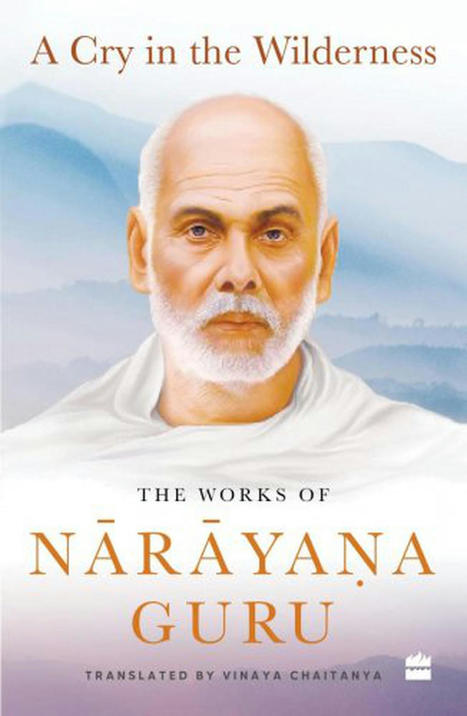







"A Cry in the Wilderness
A Cry in the Wilderness is the fruit of translator Vinaya Chaitanya’s meditations on the work of Sree Narayana Guru—Kerala’s renowned philosopher, poet and social reformer who famously declared: “ oru jaathi oru matham oru daivam manushyanu (one caste, one religion, one god for humans)”—over the last 35 years. Sree Narayana Guru’s efforts, along with those of Mahatma Ayyankali and Sahodaran Ayyappan, fostered the social levelling that took place in Kerala in the early 20th century and paved the way for the egalitarian society it seems to be enjoying today...."
#metaglossia mundus