Your new post is loading...

|
Scooped by
Prentiss & Carlisle
July 25, 2016 12:21 PM
|
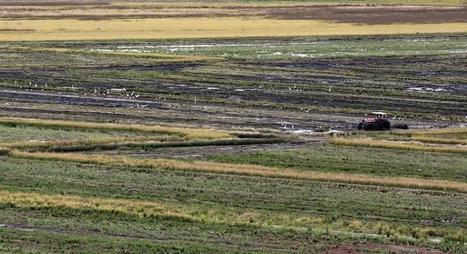
The imminent lifting of Brazil's limits on foreign land ownership is expected to unleash investments, principally by large funds in search of long-term returns, and reignite a slice of the stagnant real estate market. The government of President Luiz Inacio Lula da Silva shocked investors in 2010 when he put the breaks on foreigners' purchase of large pieces of agricultural land. It cited concerns over plans by Chinese investors to buy state-sized tracts of land the government said would threaten national sovereignty. With the impeachment of Lula's hand-picked successor, suspended President Dilma Rousseff, Brazil is under interim President Michel Temer, who hopes that new foreign investment into farm land will breathe life into a moribund economy. *** A high-level source in the government said on Thursday it plans to ease farm land ownership restrictions in a package of measures in the coming months. Some criteria will be included in the measures to mitigate undue speculation in farm land, the source said.
***
Segments that will benefit from the re-opening of foreign investment into land are timber and pulp and paper. They require large volumes of capital for long-term investments, which dried up here after 2010. "It's an industry of great scale. You need a free and open market. We have multinational firms with repressed demand and national companies with distorted market valuations," said Elizabeth Carvalhaes, executive president of the Brazilian Timber Industry Association. The depreciation of Brazil's real against the dollar over the past year and the tight credit environment will also grease the wheels of land sales for foreign investors, analysts said.
|
|
Scooped by
Prentiss & Carlisle
May 13, 2016 11:32 AM
|
In the 20th century, chestnut blight and Dutch elm disease decimated billions of U.S. trees, in forests and along urban and suburban streets. The tree diseases, caused by invasive pests, effectively changed the face of one American city landscape after another—chestnut trees were virtually wiped out and elms diminished to but a few locations—and cost local governments and homeowners a fortune. A paper published May 10 in the journal Ecological Applications illustrates how American homeowners today bear the brunt of the burden posed by current invasive forest pests. The emerald ash borer, hemlock woolly adelgid and others are costing Americans well over $2 billion dollars a year. Gary Lovett, a forest ecologist at the Cary Institute of Ecosystem Studies, based in Millbrook, New York, was inspired to pursue the study after realizing that in his field work he was coming across more and more hemlock and other Eastern U.S. trees that were dead or destroyed by forest pests.
***
Lovett calls forest pests, present in all 50 states, the most pressing and underappreciated forest health issue today. Working with 15 other scientists to synthesize information found in previous scientific studies of invasive pests, Lovett found that, on average, 25 new pests become established in the country every decade. The scientists say efforts that exist to prevent new forest pests from entering the country are far too weak to keep up with escalating trade and an increased reliance on shipping containers—25 million enter the U.S. each year. More than 90 percent of wood boring insects that have recently invaded the U.S. entered on wood packaging materials, mostly within shipping containers. And while the federal government does require that wood packaging material be treated to prevent pest importation and that plants are inspected upon entry to the U.S., there are simply too many shipments coming in each day to inspect everything.
***
Lovett says we've been lucky not to have yet encountered an imported pest destructive to the Southeast’s loblolly pine or the Northwest’s Douglas fir, two of the country’s most commercially important trees. He estimates the economic damages would then be far greater than they already are. However, the stakes are already higher than most people realize. Forest pests are the only threat that can decimate an entire tree species within just decades, as they did the American elm and chestnut.
|
|
Scooped by
Prentiss & Carlisle
March 25, 2016 12:38 PM
|
Over his 27 years as director of the Oregon Chapter of The Nature Conservancy (TNC), Hoeflich helped reinvent the role of conservationists by allying with the timber industry to promote restoration logging in both public and private forests. Hoeflich has made ample use of his smarts and charisma in an effort to alert the public and elected officials to what he calls the “ever degrading forest condition” of national forests, Bureau of Land Management tracts, and industrial timberlands, thanks to high-grade logging, livestock grazing, and wildfire suppression.
These unhealthy forests, according to Hoeflich, are at high risk of devastating wildfires, which threaten ecosystems and human communities alike. His solution is the expansion of “fuel reduction” logging to restore forest health, protect homes from burning, and provide a source of renewable “biomass” energy.
***
However, not everyone’s on board with the new conservationists’ agenda. Some forest ecologists, hydrologists, and more traditional, wilderness-centric conservationists contend that groups like The Nature Conservancy aren’t helping the forest, but instead are doing the bidding of the timber and bioenergy industries by inflaming fears of natural wildfire and “greenwashing” logging as restoration. Far from a forest remedy, they see this “log the forest to save it” mentality as a major threat to the nation’s carbon-storing forests, one of our best buffers against climate change.
Has The Nature Conservancy found a more realistic, and ultimately effective, approach to conservation by teaming up with an industry long despised as the enemy? Is Hoeflich, as some of his toughest critics suggest, merely an industry shill in environmentalist’s clothing? Or is the rift the result of two very different views on the relationship between humanity and the natural world?
|
|
Scooped by
Prentiss & Carlisle
March 18, 2016 12:49 PM
|
The state's plan to harvest timber on a parcel of land it owns in the Katahdin Region now faces a hurdle. A private landowner who shares ownership of that parcel with the state has now filed a lawsuit to divide up the land and protect a portion of it from logging. Charlie Fitzgerald has a mission to keep parts of Maine's woods and waters unspoiled so he filed a petition to partition the land in Penobscot County Superior Court.
"The state has indicated an intent to do some harvesting on that property and his goal is protect particularly the most environmentally sensitive portion of that tract," explained Berney Kubetz, Fitzgerald's attorney in this case.
The land in dispute is a 25-hundred acre parcel that is bordered by Baxter State Park to its west and south and Elliotsville Plantation's proposed national park lands to it's east and north. The state has already started making plans to harvest timber on the land but this lawsuit could slow that process down.
|
|
Scooped by
Prentiss & Carlisle
March 11, 2016 10:39 AM
|
The United States and Canada on Thursday vowed to settle a long-standing dispute over Canadian exports of softwood lumber which could erupt again this October when an earlier agreement on the problem expires.
U.S. producers complain that Canadian softwood lumber, which tends to come from government-owned land, is subsidized. A 2006 deal that ended the last dispute expired in October 2015 but both sides agreed to take no action for a year after that.
Faced with the prospect of the U.S. timber lobby pressing for penalties when the grace period runs out this October, President Barack Obama and recently elected Canadian Prime Minister Justin Trudeau asked officials to work out possible solutions and report back within 100 days.
"This issue of softwood lumber will get resolved in some fashion ... undoubtedly to the dissatisfaction of all parties concerned," Obama told a news conference after holding Oval Office talks with Trudeau.
"Each side will want 100 percent, and we'll find a way for each side to get 60 percent or so of what they need, and people will complain and grumble, but it will be fine," he said.
Trudeau said he was confident both sides were "on the right track towards a solution in the next weeks and months to come".
Major companies operating in Canada which could be affected if the U.S. lobby pushed for higher duties on lumber include Canfor Corp, Tembec Inc, Resolute Forest Products Inc and West Fraser Timber Co Ltd.
|
|
Scooped by
Prentiss & Carlisle
February 12, 2016 4:49 PM
|
AUGUSTA, Maine — Citing concern of a “federal takeover,” Gov. Paul LePage announced Friday that Maine will establish access to state property surrounded by North Woods land that entrepreneur Roxanne Quimby wants to become a national park.
The provocative move puts the Republican governor in the middle of the contentious debate around the 87,500 acres east of Baxter State Park near Millinocket.
A spokesman for the Quimby family’s nonprofit said while it has “no problem” with the state establishing access, it’s more about LePage “using the power of the government to stop something that the governor doesn’t like.”
In a Friday news release, the Maine Bureau of Parks and Lands said it started to re-establish access to 2,500 public acres surrounded by Quimby’s property. John Bott, a spokesman for the bureau, said crews were plowing and repairing access roads there on Friday.
The move comes a day after members of Maine’s congressional delegation criticized the federal government for a letter that was noncommittal on whether President Barack Obama would make the property a national monument.
|
|
Scooped by
Prentiss & Carlisle
December 2, 2015 6:33 PM
|
Washington, D.C. - U.S. Senators Susan Collins, Senator Angus King and Representative Bruce Poliquin have sent a letter to President Barack Obama regarding the possible designation of land in the Katahdin region as a national monument.
Dear Mr. President: We understand that you are considering using your executive power under the Antiquities Act to designate unilaterally as a national monument more than 100,000 acres of what is currently privately owned land in northern Maine and write to express our serious reservations and significant concerns about such a proposal.
The private land owner, Elliotsville Plantation Inc. (EPI), has made clear that it would like to donate its land in the Katahdin Region to the federal government for the purpose of establishing a national park and national recreation area, which would require an act of Congress.
***
While we acknowledge the right of private land owners to donate their land, we have serious concerns about the executive branch using its power to unilaterally designate a national monument in our state. Mainers have a long and proud history of private land ownership, independence, and local control, and do not take lightly any forced action by the federal government to increase its footprint in our state. Recognizing that despite these concerns, you nevertheless may use your legal authority to bypass the normal legislative process and designate a national monument in Maine, we believe that you should be aware of the history of this proposal and the conditions that we strongly believe must be included if such a designation moves forward.
***
Proponents and opponents alike target more jobs for the struggling Katahdin Region as the basis for their conclusions. Some residents believe that one way to stimulate the regional economy, decimated by the closure of paper mills in the area, would be for the federal government to create a national park and national recreation area to boost tourism and outdoor recreation jobs. Local chambers of commerce support this opportunity and cite economic studies which point to job creation around other national parks across the country. In a recent poll, the idea of a national park was supported by roughly 60 percent of Mainers.
Other residents believe that any form of federal ownership could jeopardize jobs and future job creation in the prized Katahdin Region’s working forests. In two non-binding referendums this past summer, more than 70 percent of the residents living in two of the most affected communities voted in opposition to creating a national park on this land. In addition, 225 Maine businesses that employ more than 5,000 hard-working Mainers, many in the logging, trucking, saw mill, and other forest products industries, announced their opposition to the proposal, largely because they believe that federal ownership would hurt their businesses and prevent future investment and job creation.
The federal government is also struggling to meet its current obligations to fund our 408 existing national park units, with a current maintenance backlog of $11.5 billion. Adding more than 100,000 acres to the federal land system would only add to that burden.
***
In closing, while we respect the right of EPI to donate its private property to the federal government, we cannot ignore the serious reservations of our constituents. We urge you to carefully weigh the views of those who live in the region, as well as the criteria we have outlined in this letter. The last thing the Katahdin Region needs is burdensome and restrictive federal regulations that discourage future investment and badly needed jobs while changing the traditional Maine way of life.
|
|
Scooped by
Prentiss & Carlisle
October 13, 2015 11:52 AM
|
The Vancouver-based Council of Forest Industries says the Canadian government agreement to the Trans-Pacific Partnership (TPP) will create new opportunities for the British Columbia forest industry, especially in emerging Asian markets.
“We’re particularly encouraged by Japan’s willingness to gradually eliminate tariffs on forest products imports,” said Susan Yurkovich, President and CEO of COFI. “We have long and productive relationships in the Japanese market, and we believe the TPP will only strengthen those relationships.”
COFI also sees great opportunities in ASEAN countries such as Vietnam and Malaysia, where British Columbia softwood lumber can become a competitive substitute for tropical hardwoods in the manufacturing process if the existing 30%-40% tariffs are reduced or eliminated.
Export markets for the wood products manufacturing industry are critically important to the British Columbia economy. For example, forest products account for 24 per cent of all cargo exports from Port Metro Vancouver. The forest industry contributes $12 billion annually to provincial GDP and 150,000 jobs in the province rely on the industry.
|
|
Scooped by
Prentiss & Carlisle
August 12, 2015 9:46 AM
|
The DNR and the U.S. Forest Service have announced an agreement where the state and the Chequamegon-Nicolet National Forest will partner on forest management within the 1.5 million acres of the state's only national forest. It's under the 2014 Farm Bill called Good Neighbor authority.
Under the agreement, the amount of timber offered for harvest that's in an approved plan will increase 25 percent to more than 100 million board feet in 2016.
|
|
Scooped by
Prentiss & Carlisle
February 17, 2015 12:15 PM
|
Tens of thousands of acres of tax-subsidized private forest would be logged without state forester oversight of cutting plans under a proposal in Gov. Scott Walker’s budget.
The budget provision was requested by loggers who say state regulation is costly and unneeded because private foresters usually design cutting operations that adequately protect forests, streams and wildlife.
The change would affect the 3.2 million acres of privately held land — one-third of it open for public recreation — that owners have enrolled in the state managed forest program in exchange for lower property taxes.
The 1986 managed forest law requires owners to file 25-to-50-year plans specifying scheduled timber sales and management practices designed to ensure a sustainable supply of wood for industry as well as preservation of wildlife habitat, water quality and certain recreational opportunities.
Walker’s plan would provide owners with automatic state approval when they file timber-cutting notices if they hire a contractor who participates in the Department of Natural Resources cooperating forester program, which mandates minimum educational requirements and an agreement to use sound practices.
|
|
Scooped by
Prentiss & Carlisle
December 1, 2014 3:44 PM
|
A new analysis by the federal Environmental Protection Agency may be good news for Maine firms that make electricity by burning wood, but some environmental groups are crying foul.
The new EPA analysis, issued last week, suggests how the federal government will count greenhouse gas emissions from wood-fired biomass facilities, and an accompanying memo from a top-ranking EPA official suggests biomass producers will likely get a pass when it comes to strict, new carbon dioxide regulations.
Carbon dioxide is a gas byproduct that comes from burning any carbon-based fuel, including coal, petroleum and wood, and it is largely blamed for the effects of global climate change.
But the new analysis suggests that because wood-fired biomass facilities are fueled with forest byproducts, namely leftover branches, limbs, chips and sawdust, the net impact on the environment is neutral over time. The analysis involves some complex science that models the amount of CO2 live trees absorb compared to the amount that's released when they either decompose naturally or are burned for energy.
|
|
Scooped by
Prentiss & Carlisle
November 20, 2014 10:10 AM
|
With less than a year to go until the Canada-U.S. Softwood Lumber Agreement expires, lines are being drawn on both sides of the border over the future of lumber trade between the two countries.
Canadian producers say they want to extend the agreement, which has brought an uneasy peace to the decades-long lumber war since it was signed in 2006, but their U.S. counterparts say they won’t sign on again.
The U.S. Lumber Coalition, a lobby group representing American lumber companies and timber owners, said last week it’s not going to renew the agreement when it expires next October. It has expressed its anti-deal position to the U.S. government but it has yet to say publicly what it intends to do.
|
|
Scooped by
Prentiss & Carlisle
November 6, 2014 11:25 AM
|
A recent dispute over “country of origin labelling” for meat products underscores the fact that Canada and the U.S. still have their share of trade disputes.
Yet lurking in the background is a massive trade issue that you haven’t heard about for a while: softwood lumber, the granddaddy of all Canadian-U.S. trade disputes. Canada exported $7.4-billion worth of lumber in 2013, the highest amount since 2006. The United States is the destination for the bulk of that wood, and U.S. lumber producers have for decades demanded the U.S. government collect tariffs on Canadian lumber. After decades of dispute, Canada and the U.S. agreed to a nine-year truce in 2006. Under the agreement, the U.S. agreed to return more than $5-billion in duties collected from Canadian lumber companies, and a ceasefire in trade litigation.
If you thought we’ve achieved lumber peace in our time, you might be premature. We’ve now entered the final year of that truce, which is set to expire on Oct. 12, 2015. There are signs this historic trade grievance is set to return with a vengeance. U.S. housing starts are heating up. As U.S. construction grows, demand for Canadian lumber increases, something that will inevitably antagonize U.S. lumber producers who have long argued that Canada’s industry is unfairly subsidized.
|
|
|
Scooped by
Prentiss & Carlisle
June 1, 2016 1:12 PM
|
Wood manufacturers across Vietnam attended a seminar in Ho Chi Minh City on Monday hosted by the Vietnamese Chamber of Commerce and Industry (VCCI), which focused on the risks of exporting timber products in the context of Vietnam joining the Trans-Pacific Partnership and the EU-Vietnam Free Trade Agreement (EVFTA).
***
Huynh Van Hanh, vice president of the Ho Chi Minh City Handcraft and Wood Industry Association, explained that the fear came from the recent tendency of Chinese wood companies investing in Vietnam in order to avoid an anti-dumping taxation imposed on Chinese exports by the U.S.
Chinese products, Hanh said, face a very high anti-dumping duty in the U.S., and Chinese companies are looking toward Vietnam to avoid the tax by exporting their products under Vietnamese labels.
According to Hanh, instead of manufacturing timber products in Vietnam, these companies only import goods from China, make some minor adjustments, then ‘re-export’ them to foreign markets within the TPP to take advantage of the favorable tax conditions that Vietnamese products enjoy as part of the agreement. The surge in Chinese investment in Vietnam’s timber industry and subsequently in the country’s wood export to the U.S. has the potential to leave domestic manufacturers vulnerable to anti-dumping lawsuits filed by American companies, Hanh explained.
|
|
Scooped by
Prentiss & Carlisle
May 10, 2016 10:19 AM
|
Canadian forest companies are no longer debating whether they will be hit with a softwood lumber duty, but how much pain the duties will cause, forest products analyst Paul Quinn told an international wood products conference Thursday.
Although Canadian Prime Minister Justin Trudeau and U.S. President Barack Obama told negotiators last March that they have 100 days to resolve the lumber impasse between the two countries, Quinn said that mid-June deadline is likely to pass with no resolution.
“I am pretty pessimistic on them finding a deal,” he said. “The history on this file is very difficult, and there are lots of issues.”
|
|
Scooped by
Prentiss & Carlisle
March 18, 2016 12:56 PM
|
Colleges and universities are under growing pressure from Congress and campus activists to reveal financial investments made through their endowments, but most institutions are standing firm against the idea. The movement includes federal lawmakers who are questioning whether to tax colleges on investment profits that can amount to billions of dollars a year. Many students and alumni are making inquiries too, demanding to know whether schools invest in certain industries. Those moves challenge the privacy that has long been granted to university endowments, which are large pools of investments meant to provide financial aid to current students and to sustain the schools for future generations. Endowments face little federal regulation compared with other fundraising institutions. Private foundations, for example, are required to spend at least 5 percent of their assets each year and pay a 2 percent excise tax on investment earnings. Colleges face no spending rules and, because of their educational purpose, are not taxed on their earnings.
***
Despite the calls for transparency, record requests made by The Associated Press to dozens of the nation’s wealthiest colleges show a continued push to keep investments secret.
***
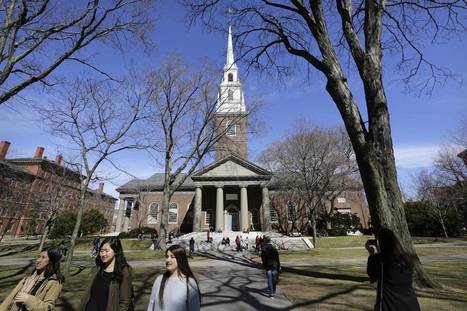
Transparency can also lead to unwanted scrutiny. For instance, Harvard University’s investments in the timber industry inspired student protests in 2014, and environmental groups blasted the school for buying land in Africa to be used for commercial farming. Harvard insists that it invests responsibly.
|
|
Scooped by
Prentiss & Carlisle
March 16, 2016 6:24 PM
|
Idaho will have $160 million to invest from the sale of commercial real estate and cottage sites over the next five years and a financial consultant says it should be used to buy timberland and farmland.
Idaho Gov. C.L. "Butch" Otter and Secretary of State Lawerence Denney say they like that advice because it could mean better financial security for the institutions, mainly public schools, that benefit from the state's endowment lands.
The consultant with Callan Associates told the five-member Idaho Land Board on Tuesday that the board will likely not have the opportunity again to have so much money available to buy land.
The Idaho Department of Lands is taking public comments on the draft reinvestment plan through April 15.
|
|
Scooped by
Prentiss & Carlisle
February 24, 2016 2:31 PM
|
Trade Minister Todd McClay says forestry and tourism are just two of the big winners once the Trans-Pacific Partnership (TPP) comes into force.
Speaking at the Rotorua Chamber of Commerce today, Mr McClay said regional New Zealand will reap the benefits of TPP with economic growth and jobs.
“New Zealand exported $1.5 billion in forestry products to TPP countries in 2015, 32 per cent of total forestry product exports.
“Once TPP is fully implemented, all tariffs will be eliminated across the 12 Parties, saving the forestry sector $11 million every year in tariffs.
“And that is mostly on value-added timber,” says Mr McClay.
In Canada, all tariffs will disappear immediately once TPP enters into force. In the United States, 98 per cent of tariffs paid will be eliminated immediately and the remainder over 8 years, and in Vietnam, paper and paperboard products will become tariff free in four years or less - something not previously achieved in the ASEAN-Australia-New Zealand FTA (AANZFTA).
“Japan is New Zealand’s fourth-largest export market for forestry products. With TPP, almost 80 per cent of tariffs will be eliminated on entry into force. This includes all duties on fibreboard, nearly all builders’ joinery, and sawn wood. Particle board and plywood will see a 50 per cent reduction in tariffs on entry into force and total elimination of tariffs in 11 and 16 years respectively,” says Mr McClay.
|
|
Scooped by
Prentiss & Carlisle
February 2, 2016 11:52 AM
|
In August last year, France became the first country to introduce mandatory climate change-related reporting for institutional investors.
The relevant law has been hailed as “groundbreaking”, with potentially far-reaching implications.
Many investors, in the meantime, have their work cut out for them.
The reporting obligations are set out under Article 173 of France’s law on “energy transition for green growth”, with an implementing decree setting out the requirements in greater detail.
Effective since the beginning of January, the decree applies to a wide range of investors, including asset managers, insurance companies, Caisse des Dépôts et Consignations and pension and social security funds.
They are being required to report not only on how they integrate environmental, social and governance (ESG) factors in general into their investment policies – and, where applicable, risk management – but also specifically on how climate change considerations are incorporated.
|
|
Scooped by
Prentiss & Carlisle
October 20, 2015 12:19 PM
|
Initially billed as low-risk investments, failed timber and agri-business schemes around the country have now cost thousands of Australian investors their life savings.
"Pests and diseases, bushfires — these things were anything but safe and the fact that you didn't get a cash-flow for 15 to 20 years suggests that they always were going to be very high risk," Senator Peter Whish-Wilson said. Senator Whish-Wilson is part of a Senate committee examining managed investment schemes in forestry — and why so many have failed.
***
The number of failed schemes continues to grow with a Western Australia plantation of paulownia trees recently put into voluntary administration, leaving hundreds of growers like Warren Carter paying for trees that are undersize and unable to be sold. "Nobody is going to get anything, it's worthless, they might as well put a match through it," he said. "They promised us up to $700,000 for the allotments I had."
***
Earlier this month the company's administrator sent a letter to investors outlining expert advice which said the trees were planted in the wrong place without enough rainfall and the management did not collect enough money to water and fertilise them properly. The result was sunburnt trees half the size they were supposed to be, and worth nothing.
***
The situation is all too common after lucrative tax incentives introduced in the 1990s saw hundreds of plantations established across the country. The vast majority have since failed and Senator Whish-Wilson believes they were doomed from the start.
"What we saw was this massive land grab and almost like a gold rush of trying to grow trees as quickly as possible to meet these kinds of incentives that the Government had put in place, and of course that led to a huge oversupply — no market for these trees at all," he said. "There was no evidence that you could actually grow trees successfully in line with what the prospectuses were offering. "There's been almost a complete failure rate. There's been very few successful schemes."
Forestry managed investment schemes are still being established and the senate inquiry is expected to recommend the Government scrap the tax concessions that have propped up the schemes for decades.
|
|
Scooped by
Prentiss & Carlisle
October 13, 2015 11:33 AM
|
Montana's timber industry is watching to see if Canadian lumber will soon flood the market. That's because a 9 year-old U.S.-Canada Lumber trade Agreement expired today.
The 2007 agreement was designed to end to what American timber producers felt were unfair practices created by Canadian subsidies. Now, U.S. timber companies are barred from raising any trade disputes with Canada for one year.
Todd Morgan is director of Forest Industry Research at the University of Montana's Bureau of Business and Economic Research.
"That gives a one-year period where we're going to see just how much influence unrestricted trade of Canadian lumber will have on the U.S. market. Prices in the U.S are already pretty low, they've been falling since November/December and they're down about 30 percent from about a year ago," Morgan says.
|
|
Scooped by
Prentiss & Carlisle
April 17, 2015 9:59 AM
|
For the first time in a century, Vermont is losing forestland and the existing forests are being broken into smaller, fragmented parcels that threaten the state’s cherished relationship with those forests, Vermont’s top forestry official told lawmakers Thursday.
Michael Snyder, commissioner of forest parks and recreation, told members of five legislative committees that more than 80 percent of that land is owned privately, the landowners are getting older and 75 percent of Vermont is forested — making it the fourth most forested state in the country.
As forest parcels get smaller through development and the splitting up of family parcels, managing forestland for things like timber or animal habitat gets harder.
“Simply put, practicing forestry becomes operationally impractical, economically non-viable and, I would argue, culturally unacceptable in heavily fragmented forest landscapes,” Snyder said.
|
|
Scooped by
Prentiss & Carlisle
December 15, 2014 12:12 PM
|
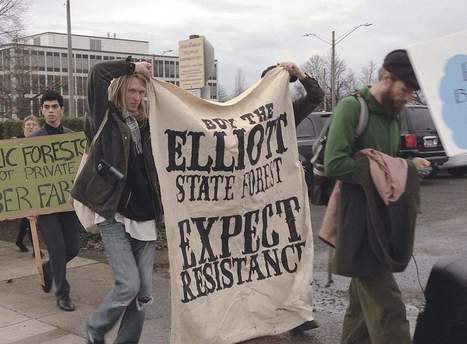
Members of the Oregon State Land Board said Tuesday they want to sell the Elliott State Forest to another government agency or public-private partnership.
The proposal would provide the State Land Board with a way out of the long-running arrangement of logging the Elliott State Forest, which is northeast of Coos Bay, to generate money for public schools. That system has generated more controversy and less revenue in recent years, as the state scaled back timber harvests following lawsuits over federally protected species in the forest.
Environmental groups and members of the public have also urged the state to manage the forest for conservation and recreation, goals that clash with the State Land Board’s duty under the Oregon Constitution to maximize timber revenue for schools.
The three members of the board, Gov. John Kitzhaber, Secretary of State Kate Brown and State Treasurer Ted Wheeler, said during a meeting Tuesday that they want employees of the Department of State Lands to continue to proceed with an option to request proposals from entities interested in purchasing the 84,000 acres in the Elliott forest which the state manages to benefit schools.
|
|
Scooped by
Prentiss & Carlisle
November 20, 2014 10:20 AM
|
The New York Times ran a story in its Saturday editions about Sweet Home and the town’s attempts to redefine itself now that federal forests don’t produce nearly the level of timber that they have in the past.
The story likely was of interest to the paper’s readers, but it probably didn’t tell Sweet Home residents or citizens of Linn County anything they didn’t already know.
But it sometimes is worthwhile to take a look at the broader issues at play here, and the Times story offers an opportunity to do that again. And it’s particularly timely, considering that the lame-duck session of Congress is poised to take another whack at legislation that could increase the timber harvest on the state’s Oregon & California Railroad lands.
The notion of reinvention is at the heart of the Times story, and that’s another verse in a song we’ve heard many times before: Timber towns around the West need to reinvent themselves to accommodate an era with fewer jobs in the forests. We buy into some of that. But there needs to be a place for timber even in these reinvented Western communities, and it’s awfully easy to forget about that.
|
|
Scooped by
Prentiss & Carlisle
November 18, 2014 10:26 AM
|
Just under seven months from when the devastating Oso mudslide in Snohomish County claimed the lives of 43 people and buried a portion of State Route 530, the main roadway to communities like Darrington, the Washington State Forest Practices Board has voted unanimously to expand the authority of the State Department of Natural Resources (DNR) to require landowners to provide additional technical information when planning timber harvests near potentially unstable slopes that could affect public safety.
The board reached the decision at its regular quarterly meeting Wednesday.
“Current rules prohibit timber harvests and other forest practices where they are likely to influence the further movement of an unstable slope,” said Commissioner of Public Lands Peter Goldmark. “These new procedures will apply an additional level of scrutiny, based on the best science available, to further protect the safety of the public and its natural resources.”
|