Timberland Investment
141.2K views | +12 today
Follow
Timberland Investment
Timber Industry | Deals & Transactions | Investment Rationale | Financial Performance | Investors | Asset Managers
Your new post is loading...
Scooped by Prentiss & Carlisle
March 21, 2013 1:12 PM
Scoop.it!

New Zealand Forestry Investment Outlook Remains Bright on China Demand

New Zealand Forestry Investment Outlook Remains Bright on China Demand | Timberland Investment | Scoop.it

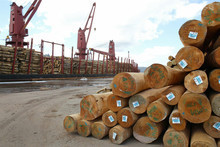
The economy of New Zealand grew at the fastest pace in three years in the last quarter of 2012, with demand for forestry exports underpinning gains in the primary sector, the National Business Review reported on 21 March 2013. In addition, gains in the forestry sector helped offset declines in other areas such as manufacturing. The outlook for New Zealand’s forestry sector remains positive mostly due to demand from China, which is likely to provide support for New Zealand forestry investment.

No comment yet.
Scooped by Prentiss & Carlisle
January 25, 2013 9:57 AM
Scoop.it!

High NZ dollar could hurt timber gains

High NZ dollar could hurt timber gains | Timberland Investment | Scoop.it

The forestry and timber industry may be poised for a recovery amid signs of improvement in the Kiwi and US construction markets, but industry players say it could be a delicate one.


According to industry figures, timber exports from New Zealand appear to have bottomed, with $774.5 million worth of cut lumber sold overseas in 2012, up from $770.4m in 2011, although more timber was sold at a lower unit price.


That's poised to pick up in the year ahead, according to forecasts from the Timber Industry Federation, as construction activity picks up due to the Christchurch earthquake rebuild and a rise in home building activity in Auckland.


Asian demand for New Zealand cut timber and logs is also expected to grow as North American timber supplies tighten due to a recovery in the United States home construction market.

***

But Andres Katz, a forestry economist at Resource Management Services, warns that too much of a good thing could be bad for the cut timber side of the industry. Katz said a sudden spike in demand out of China could lift the price of logs suddenly, and result in a knock-on effect for millers.

***

Mike King, chief executive at forestry and timber consultancy Interpine, said the other elephant in the room was the New Zealand dollar, which was currently trading at over US84 cents - its highest level in 16 months.


"Any gain we might make in the actual payments or in the value of the export commodity is often eroded by the high value dollar and shipping costs," he said. "Those could be the killers of any boom."


No comment yet.
Scooped by Prentiss & Carlisle
October 4, 2012 12:25 PM
Scoop.it!

NZ Super Fund - how best to invest

NZ Super Fund - how best to invest | Timberland Investment | Scoop.it

The biggest factor determining the performance of an investment portfolio is, according to a landmark paper produced quite a few years ago now, asset allocation.

...

The investment experts at the NZSF have determined that an appropriate asset allocation is 80 per cent in growth assets and 20 per cent in bonds - the rationale being that because NZSF has a very long term investment horizon it can afford to take a long term view and have a higher proportion of its money in higher growth, risky assets and in particular assets that are hard to sell and/or hard to price.

...

Looking at NZSFs portfolio some 27.5 per cent is in relatively illiquid sectors like infrastructure, timber, property and other private markets. The downside however is cost - it requires expensive experts to manage these sort of assets. Furthermore, to paraphrase George Orwell, some experts are more expert than others.

...

So far the Super Fund has performed relatively well returning 7.4 per cent pa versus 6.8 per cent pa for its benchmark which it calls the "reference portfolio" (RP). The RP is defined as 70 per cent international shares, 5 per cent NZ shares, 5 per cent international property and 20 per cent international bonds.

...

Whilst the Super Fund says that its asset allocation is 20 per cent bonds, 80 per cent shares it is important to understand how it gets to these figures.

...

The Super Fund has about 28 per cent of its portfolio in alternative assets like infrastructure and timber and when it calculates asset allocation it considers that these assets have some attributes of bonds and some of shares. So for example it reckons that infrastructure is 60 per cent shares and 40 per cent bonds. For timber it assumes that this asset is 70 per cent bonds, 30 per cent shares.


It is important that the public and politicians understand the NZSF's alternative treatment of alternative assets. With the future looking more uncertain than ever it will be interesting to see if NZSF continues to outperform its Reference Portfolio.

No comment yet.
Scooped by Prentiss & Carlisle
March 19, 2012 4:01 PM
Scoop.it!

New Zealand facing "wall of wood"

New Zealand facing "wall of wood" | Timberland Investment | Scoop.it

Just how big the bulge will be is up for debate. The current harvest is 25 million cubic metres, of which 40 per cent – about 10 million cum – is exported. Scenarios vary, but, according to the Agriculture and Forestry ministry, the annual harvest will spike to 60 million cum by about 2025 if all owners, big and small, harvest their trees at the age of 30. Two-thirds of the bulge would be from the newer, small-time players.

rgc57's comment March 20, 2012 12:32 PM
Too much wood in the World, but don't worry China will use it all. What a pipe dream. Wood is a commodity, Julian L. Simon the esteemed economist (now deceased) postulated that commodities decrease in value over time, so shall wood.
A "wall of wood" in NZ, soon a "wall of chip-n-saw" in the US South and then a "wall of sawtimer". How about a "wall of eucalyptus" in the Southern Hemisphere. Maybe the euc producers need a decades long plan to increase value added milling, then we have a "wall of lumber - veneer - biomass" you pick the product.
The TIMO model was built on the 100 year belief that trees are scarce. The marketing refrain of the 1980’s and early 1990’s was that “demand for trees will exceed supply and prices are expected to increase at 2% above inflation”. I also remember dazzling presentations in my Atlanta office over multiple years during that time from Fletcher that one should not be concerned with lack of current income because the future was bright with a “wall of wood at increasing prices”. I did not buy it then (the increasing price part) and I don’t buy it now.
Timber can be a good investment if based on the realities of abundance. Trees grow in a predictable pattern, a good thing. Investments should be made at prices that anticipate the very real possibility of declining real value for them over the long-term.
Scooped by Prentiss & Carlisle
March 14, 2012 9:44 AM
Scoop.it!

Gunns rushes to redesign its capital raising

Gunns rushes to redesign its capital raising | Timberland Investment | Scoop.it

The suspension of trading in Gunns shares has been extended until Monday, as the timber company scrambles to redesign its capital raising plans after the exit of potential buyer Richard Chandler Capital Corporation.

...

No comment yet.
Scooped by Prentiss & Carlisle
January 28, 2013 4:12 PM
Scoop.it!

Forestry sector awaits biofuel report

Forestry sector awaits biofuel report | Timberland Investment | Scoop.it

Crown-owned forest researcher Scion is set to present a report into the viability of generating biofuels from trees at the end of next month, a move that could throw a much-needed financial lifeline to the struggling sector.


Converting tree waste into biofuels and bioplastics has long been a Holy Grail for the forestry and wood-processing industry. It could turn pulp wood and sawmill waste into real revenue streams.


But while the technology has been proven in the lab, questions remain over the long-term commercial viability despite extensive research by forestry-dependent countries such as Canada and Sweden.

No comment yet.
Scooped by Prentiss & Carlisle
December 18, 2012 7:48 AM
Scoop.it!

Harvard sells down Kaingaroa forest stake

Harvard sells down Kaingaroa forest stake | Timberland Investment | Scoop.it
Harvard Management Company, which manages Harvard University's US$30.7 billion endowment fund, has sold down its stake in the central North Island Kaingaroa forest.

Canada's public sector pension fund picking up the bulk and the New Zealand Superannuation Fund taking a small bite.

Canada's C$64.5 billion Public Sector Pension Investment Board will take a 30 percent stake in the 178,000 hectare forest, while the NZ Super Fund lifted its share 1.25 percentage points to 41.25 percent. Harvard Management will keep a 28.75 percent stake in the forestry company.

No price was disclosed, though the NZ Super Fund valued its 40 percent share at $954 million as at June 30, indicating Harvard's previous 60 percent stake was valued at about $1.43 billion.

The Super Fund was keen on lifting its stake in the forest and was looking at ways to buy out Harvard earlier this year, having acquired a minority stake in the timberlands for some $300 million.

Harvard Management natural resources portfolio, which accounts for about 13 percent of its assets, consists of timberland, agricultural land and other resource bearing properties. The asset class made a return of 2.4 percent in the year ended June 30, and has delivered an average annual return of 12.7 percent.
No comment yet.
Scooped by Prentiss & Carlisle
May 2, 2012 1:19 PM
Scoop.it!

NZ state pension fund looks to buy forest from Harvard

NZ state pension fund looks to buy forest from Harvard | Timberland Investment | Scoop.it

New Zealand's state pensionfund is in talks to buy total control of the country's biggest commercial forest estate from the United States' Harvard University investment arm...


The New Zealand Superannuation Fund said along with global investment company GMO Renewable Resources it was in talks with Harvard Management Company to buy its 60 percent stake. The fund already owns the minority 40 percent stake in the 170,000 hectare (420,000 acres) Kaingaroa commercial plantation in the central North Island.

No comment yet.
Scooped by Prentiss & Carlisle
March 19, 2012 3:51 PM
Scoop.it!

New Forests Leads Purchase of 46,000 Hectare Australian Softwood Plantation

New Forests Leads Purchase of 46,000 Hectare Australian Softwood Plantation | Timberland Investment | Scoop.it

Funds managed by New Forests have taken a controlling interest in the 46,000 hectare Auspine estate. New Forests' Australia New Zealand Forest Fund is the lead investor in the transaction, which includes the land and trees of the 64-property estate, formerly owned and managed by Gunns Limited. The plantation estate will be managed by Sydney-based New Forests, an investment manager specializing in sustainable forestry and associated environmental markets.

No comment yet.