 Your new post is loading...

|
Scooped by
Servicio de Geriatría
April 10, 2019 9:05 AM
|
AKQA – The AKQA Sensekit is designed to empower the one in ten people who suffer sensory impairment – perhaps blind or deaf, or with low vision, or who are hard of hearing. Intended to be developed as a kit comprising various sensors and haptic wearables, this allows users to develop solutions that respond to their unique requirements. Using sensory substitution AKQA’s technology takes data from sensors, then making use of Edge Computing and Microsoft Cognitive Services, transforms that into a signal sent to a discreet haptic wearable. Over time users learn how to interpret vibration patterns from the wearables, so that the brain starts to extract meaning from the vibration to be able to recognise a face or understand a spoken greeting, for example.
|
|
Scooped by
Servicio de Geriatría
April 9, 2019 5:38 PM
|
An independent report on behalf of the Secretary of State for Health and Social Care. The Topol Review makes recommendations that will enable NHS staff to make the most of innovative technologies such as genomics, digital medicine, artificial intelligence and robotics to improve services. These recommendations support the aims of the NHS Long-Term Plan, and the workforce implementation plan, helping to ensure a sustainable NHS.
|
|
Scooped by
Servicio de Geriatría
April 9, 2019 5:23 PM
|
Computed tomography (CT) and magnetic resonance imaging (MRI) scans are chock full of information that might be used to personalize treatment. Unfortunately, this information is not readily available. The latest type of artificial intelligence (AI) algorithms, however, might change that, according to Albert Hsiao, M.D., assistant professor of radiology at the University of California San Diego.
During a scientific session March 16 of this year’s annual meeting (#ACC19) of the American College of Cardiology, Hsiao said he plans to discuss how smart algorithms might extract this information from CT and MRI scans and how its availability could change patient management.
A key takeaway of his presentation, to be given as part of a scientific session titled “Man vs. Machine: Current and Future Applications of Machine Learning in Cardiovascular Imaging,” will be that the “explosive growth” of machine learning has raised “opportunities for tying (this information) directly to patient management,” he said. “This is in large part because of the amazing democratization of machine learning that this new area of ‘deep learning’ has enabled.”
Physicians might use this information to create “imaging phenotypes” of patients. These phenotypes, in turn, might be used to personalize the treatment of patients.
“Information like how much body fat you have, how fat is your liver, how much is your muscle mass — those are rich pieces of information that if quantified could really help us guide and make more specific patient recommendations,” said Hsiao, who seven years ago co-founded Arterys, a modern day provider of cloud-based AI software for medical imaging.
|
|
Scooped by
Servicio de Geriatría
April 9, 2019 5:20 PM
|
Our era is witnessing a technological revolution. Healthcare is becoming increasingly digitised, empowering both patient and physician. We’re using computational power and data to better predict, diagnose and manage patients with complex health conditions. In part one of this series we explore AI and imaging and the effects these have on the diagnosis and treatment of cancer.
Chronic diseases are on the rise, with a threefold increase in the number of those with cancer in the last 40 years (1). In the face of mounting pressure in healthcare, all available technologies are being leveraged to deliver innovations that will provide sustainable long-term solutions. 90% of all healthcare data is produced via medical imaging and, more staggeringly, 97% of this data remains unused and unanalysed. Hospitals are producing up to 50 petabytes (10^15) of data annually (2). With this in mind, image-analysis tools have been developed using AI that assist clinicians in the diagnoses of such conditions and provide increased precision for administering treatments such as radiotherapy.
Recent developments in imaging are able to show tissues in three dimensions, allowing these specially trained AI algorithms to analyse them AI and imaging is a particularly important innovation for cancer treatment as it enables the precise location, type and stage of tumour to be identified (3). Currently, much of this is done manually, but it is time- consuming for radiologists and oncologists to continuously review imaging data. AI software can do this rapidly, allowing doctors to focus on the more challenging cases. With an ageing population and more cancer screenings taking place such technology is proving indispensable, as proven by Addenbrooke’s Hospital in Cambridgeshire, UK.
“El Content marketing es una técnica efectiva de posicionar tu negocio, captar nuevos clientes y fidelizar los existentes. Veamos de qué se trata y cómo crear una estrategia efectiva de marketing de contenidos. En los próximos apartados conocerás: TABLA DE CONTENIDOS ¿Qué es el Content Marketing? ¿Por qué es importante hacer Content Marketing? ¿Cómo crear…”
Via Juan Jesús Baño Egea
|
|
Scooped by
Servicio de Geriatría
January 22, 2019 5:14 PM
|
AbstractBackground and Objectives. Smart home auto-prompting has the potential to increase the functional independence of persons with dementia (PWDs) and decr
|
|
Scooped by
Servicio de Geriatría
January 22, 2019 5:12 PM
|
AbstractBackground and Objectives. Implementation of robotics technology in eldercare depends on successful human–robot interaction (HRI). Relying on a systema
|
|
Scooped by
Servicio de Geriatría
January 22, 2019 5:09 PM
|
Research at the intersection of technology and aging has grown dramatically over the past few years. Two trends are responsible for this growth: first, the unsu Brecha generacional, robots asistentes y de compañía y una interesante reflexión acerca del uso de las tecnologías en el ámbito de las residencias de ancianos.
|
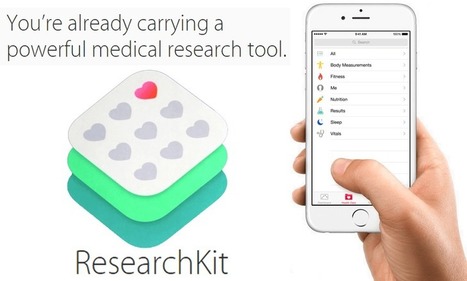
“ medical researchers all over the world will now be able to use ResearchKit to develop their own apps and developers can also contribute new research modules”
Via Celine Sportisse, Clara Hamelin
|
|
Scooped by
Servicio de Geriatría
April 9, 2019 5:37 PM
|
This paper commissioned by NHS Digital looks at the clinical, ethical and practical concerns relating to artificial intelligence (AI) use in the health and social care system. It provides a snapshot of 12 domains that will be most impacted by AI and looks at each from a clinical, ethical and practical perspective. The report makes seven key recommendations and warns that AI is not likely to solve all the problems faced by the health care system.
“After attending the 4YFN (four years from now) at the Mobile World Congress in Barcelona recently, digital health entrepreneur and nurse Anna Sort outlines four key predictions for the healthcare of the future.”
Via Florian Morandeau, Lionel Reichardt / le Pharmageek
|
|
Scooped by
Servicio de Geriatría
April 9, 2019 5:23 PM
|
“It doesn't take artificial intelligence to tell you that a preventable hospitalization is not good. A hospital is not a bed-and-breakfast. No one says, "hey, for fun, let's get a hospital room overlooking the parking garage this weekend." A preventable hospitalization is by definition one that could have been prevented. Thus, it costs people, insurance companies, businesses, the government, and society considerable time, effort, and resources that could have been diverted to more productive activities. Plus, a hospitalization may expose a patient to potential badness such as hospital food, being separated from friends and family, medication errors, and antibiotic-resistant bacteria. Again human intelligence can tell you all this. Where artificial intelligence may be helpful is in reducing such preventable hospitalizations, and Clover Health is an example of a company aiming to do this.
Hospitalizations that could have been prevented continue to be a major problem. A 2010 report from the Agency for Healthcare Research and Quality (AHRQ) indicated that in 2008 "one out of every ten hospital stays was potentially preventable" and that "potentially preventable acute conditions accounted for 3.9 percent of all hospital stays, and potentially preventable chronic conditions accounted for 6.2 percent." That would translate to a lot of money going down the proverbial toilet. These rates get even higher when you focus on those who are older or economically disadvantaged. A study from the Centers for Medicare and Medicaid Services found that in 2009, among a sample of those eligible for both Medicare and full Medicaid benefits "26 percent of hospitalizations were potentially avoidable."
Why are these potentially preventable hospitalizations occurring? Humans are like cars, except that humans are a lot more complex and rarely have fuzzy dice hanging from them. In order to keep your car out of the mechanic's shop or the scrap heap, you have to regularly check, take care of, and maintain the car. This includes taking preemptive measures such as routinely changing the oil and the tires. Similarly, preventive care is so important for humans, especially those with more complex medical situations like older adults.”
|
|
Scooped by
Servicio de Geriatría
February 7, 2019 6:29 AM
|
Tokyo AI company, Exawizards, is using deep learning to analyze unstructured nursing care data - with the goal to improve the quality of care for dementia patients as well as to help new caregivers deliver effective care.
|
|
Scooped by
Servicio de Geriatría
January 22, 2019 5:15 PM
|
AbstractBackground and Objectives. The ability to use everyday technology has become a key competence for conducting activities of daily living, maintaining an
|
|
Scooped by
Servicio de Geriatría
January 22, 2019 5:14 PM
|
AbstractBackground and Objectives. Undernutrition has unfavorable consequences for health and quality of life. This pilot study aimed to evaluate the feasibili
|
|
Scooped by
Servicio de Geriatría
January 22, 2019 5:11 PM
|
AbstractBackground and Objectives. Social robots may promote the health of older adults by increasing their perceived emotional support and social interaction.
|










Congratulations Ander!