

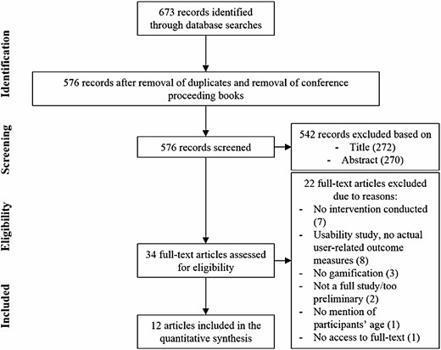

AbstractBackground and Objectives. During past years, gamification has become a major trend in technology, and promising results of its effectiveness have been


 Your new post is loading...
 Scoop.it! AbstractBackground and Objectives. During past years, gamification has become a major trend in technology, and promising results of its effectiveness have been 
No comment yet.
Sign up to comment
Scoop.it!

Background Psychosocial issues, such as social isolation and loneliness among older adults and people with dementia, continue to pose challenges with a rapidly aging population worldwide. Social robots are a rapidly emerging field of technology, developed to help address the psychosocial needs of this population. Although studies have reported positive findings regarding their psychosocial benefits, their implementation in real-world practice remains a challenge. Nevertheless, little is known about the factors affecting their implementation. The purpose of this review is to provide a systematic overview of the barriers and facilitators affecting the implementation of social robots for older adults and people with dementia. Method The Arksey and O’Malley approach with methodological enhancement by Levac et al. was used to guide the conduct of this review. Seven electronic databases were searched. In addition, hand searching and backward citation tracing was conducted. Three independent reviewers were involved in the screening and data charting process. Findings were synthesised and categorised into the five domains outlined in the Consolidated Framework of Implementation Research (CFIR). Results A total of 53 studies were included in the final review. Most of the included studies were based in participants’ homes and in care facilities. Barriers and facilitators were mapped onto 18 constructs in the five domains of the CFIR. The most frequently cited barriers were mapped to the constructs within the domain of “Intervention characteristics”, where issues such as the complexity of using the technology and technical obstacles impeded implementation. Most facilitators were mapped onto the domain “Patient needs and resources”. Overall, existing research are disproportionately focused on the internal validity (i.e. characteristics) of social robots, and there is significantly less research investigating their external validity, such as organisational or wider contextual factors that can affect their implementation in real-world practice. Conclusion This review has identified and synthesised the breadth of evidence on the barriers and facilitators to the implementation of social robots for older adults and people with dementia. Future research should pay more attention to investigating the contextual factors, using an implementation framework, to identify barriers and facilitators to guide the implementation of social robots.
Scoop.it!

Read the full article at: jamanetwork.com
Scoop.it!

AbstractBackground. The accessibility, versatility and motivation provided by virtual reality technology (VRT) have fostered its rapid expansion as a rehabilita
Scoop.it!

Guía básica de content curation: respuestas curadas a preguntas e inquietudes comunes sobre curación / 6 Este post está dedicado a dar respuesta a preguntas habituales acerca de cuáles son las habilidades o competencias de un buen curador de contenidos o qué debería conocer bien y dominar el profesional que hace curación de contenidos. Via Gumersindo Fernández
Scoop.it!

The right person in the right place and at the right time is not always possible; telemedicine offers the potential to give audio and visual access to the appropriate clinician for patients. Advances in information and communication technology (ICT) in the area of video-to-video communication have led to growth in telemedicine applications in recent years. For these advances to be properly integrated into healthcare delivery, a regulatory framework, supported by definitive high-quality research, should be developed. Telemedicine is well suited to extending the reach of specialist services particularly in the pre-hospital care of acute emergencies where treatment delays may affect clinical outcome.
The exponential growth in research and development in telemedicine has led to improvements in clinical outcomes in emergency medical care. This review is part of the LiveCity project to examine the history and existing applications of telemedicine in the pre-hospital environment. A search of electronic databases including Medline, Excerpta Medica Database (EMBASE), Cochrane, and Cumulative Index to Nursing and Allied Health Literature (CINAHL) for relevant papers was performed. All studies addressing the use of telemedicine in emergency medical or pre-hospital care setting were included. Out of a total of 1,279 articles reviewed, 39 met the inclusion criteria and were critically analysed. A majority of the studies were on stroke management. The studies suggested that overall, telemedicine had a positive impact on emergency medical care. It improved the pre-hospital diagnosis of stroke and myocardial infarction and enhanced the supervision of delivery of tissue thromboplasminogen activator in acute ischaemic stroke. Telemedicine presents an opportunity to enhance patient management. There are as yet few definitive studies that have demonstrated whether it had an effect on clinical outcome.
read complete in International Journal of Emergency Medicine http://www.intjem.com/content/7/1/29
Via Ignacio Fernández Alberti
Scoop.it!

This study assessed a deep-learning model that uses chest radiographs and other electronic health record (EHR) data to identify patients at high risk for lung cancer.
Scoop.it!

This cross-sectional study uses 2018 data from the National Health and Aging Trends Study to assess the prevalence among older adults in the United States of unreadiness to access video or telephone telemedicine because of disability or inexperience with technology.
Scoop.it!

Wars and other national crises force society to act differently for a while. But in doing so, they highlight organizational actions and innovations that should not end with the crisis and should be allowed to play a greater role in the future. The coronavirus disease 2019 (COVID-19) pandemi
Scoop.it!

“Healthcare can be transformed with the innovation and insights of AI and machine learning. From robot-assisted surgery to virtual nursing assistants, diagnosing conditions facilitating workflow and analyzing images, AI and machines can help improve outcomes for patients and lower costs for providers”
Via Andy Dé
Scoop.it!

Two physicians walk through the process of setting up and implementing an effective patient exam using telemedicine.
Scoop.it!

Proyecto desarrollado por el Hospital de la Princesa junto con el Hospital Universitario de Guadalajara y la Universidad de Alcalá de Henares.
|
Scoop.it!
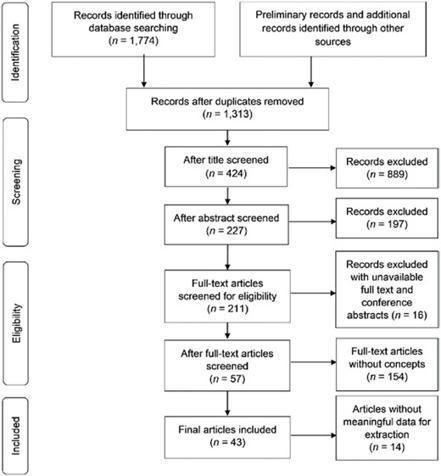
AbstractBackground and Objectives. With the emergence of healthy aging as a key societal issue in recent decades, technology has often been proposed as a soluti
Scoop.it!
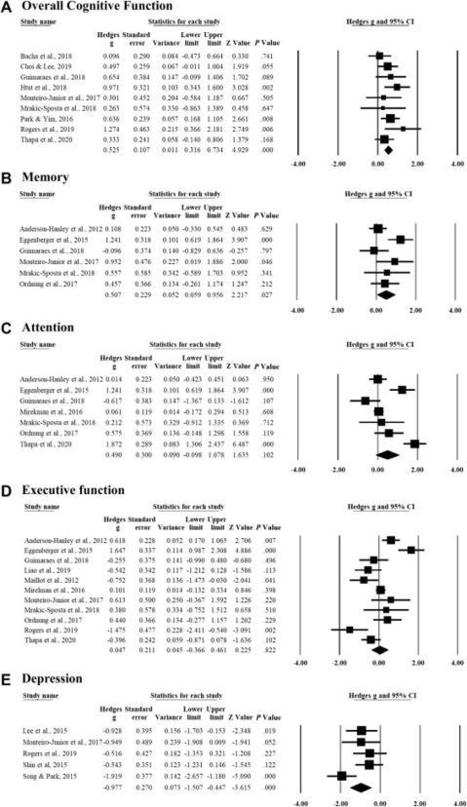
Virtual reality (VR) exergames are an innovative approach to promote older adults'
Scoop.it!

AbstractBackground and Objectives. The relationship between frailty and disability in activities of daily living (ADLs) can be seen in different ways, with disa
Scoop.it!

Tras la pandemia, el consumo de audio a demanda se ha convertido en un bálsamo emocional que llena los huecos antes dedicados a la vida social. Hoy no hay nada más terrorífico que media hora de silencio forzoso.
Scoop.it!

Los códigos QR están en todas partes. Con ellos podemos acceder a páginas web, pagar servicios, comprar comida rápida, entrar a ordenadores remotos, y mucho más. Afortunadamente, hay pocas restricciones sobre el proceso de codificación, y cualquiera puede utilizarlos. Todo lo que necesitas es un buen generador de códigos QR, y así llegamos al flamante SimpleCodeGenerator, desarrollado por el inagotable Nirsoft. Via Gumersindo Fernández
Scoop.it!

Una nueva plataforma de telemedicina, que permite al paciente crónico controlar su estado de salud sin necesidad de ir con tanta frecuencia al médico, muestra excelentes resultados tras sus primeras implementaciones. Flowlab, la empresa española que ha desarrollado esta herramienta denominada TelMe, ha sido la encargada de diseñar, desarrollar y adaptar la aplicación para empresas de referencia del ámbito sanitario español, como la aseguradora Mútua Terrassa. Más de 2.000 pacientes crónicos ya se benefician de las ventajas que ofrece. Via Ignacio Fernández Alberti, Antonio Carrasco Escacena

Ignacio Fernández Alberti's curator insight,
June 15, 2014 4:51 AM
"El paciente crónico ya puede controlar su salud sin tener que ir al médico" bueno, es un titular... algo engañoso, porque falta información... porque eso de no tener que ir al médico ¡imposible! a no ser que sea médico jejeje habría que ser más preciso: no tiene que ir al médico con tanta frecuencia Aportando que es TelMe Health?? CONSULTA Y DESCARGA EL PDF QUE HACE FLOWLAB'?? puedes consultar y descargar el PDF
Scoop.it!

Nursing homes that used telemedicine to provide after-hours care significantly reduced hospitalization rates for their residents, compared with facilities not using this service. Savings from the reduction in hospitalizations, however, generally accrued to Medicare, rather than to nursing homes. Different payment models, such as those used in accountable care organizations or managed care, are needed to encourage telemedicine use among nursing home facilities. Via Ignacio Fernández Alberti
Scoop.it!
Proyecto liderado por el Instituto de Investigación Sanitaria La Fe.
Scoop.it!

“At launch, Apple is working with Penn Medicine, Cedars-Sinai in Los Angeles, Johns Hopkins, Geisinger Health System and others across the country.”
Via Andy Dé
Scoop.it!

“Amazon continues to invest in healthcare and has begun selling software which analyzes patient medical records for hospitals and their physicians.”
Via Andy Dé
Scoop.it!

Like Hippocrates said, medicine is an art and a science. The same holds true for healthcare content. Let this be your prescription for success.
|






