Researchers are learning that handwriting engages the brain in ways typing can't match, raising questions about the costs of screens, especially for kids.
Discover the key to unlocking your decision-making potential in this captivating video. Join us as we delve into the fascinating world of decision-making and ex
In truth, AI may not need human curiosity at all. But there are compelling reasons why human curiosity is needed more than ever in the age of AI, and they stem from the fundamental differences between human and AI curiosity.
Analysis of Beethoven’s DNA has revealed that he had a low genetic predisposition for beat synchronization, an ability that’s closely related to musicality. This is according to researchers who set out to show how making genetic predictions for individuals, including famous historical figures, can…
The worriers of academia envision a dystopia where students outsource thinking and creativity; where intellectual property theft and plagiarism unchecked and undetectable will lead to a generation of writers with no syntax mojo or ability to communicate without generative assistance.
Researchers identified how neurons in the human brain encode various elements of speech. The findings might be used to help develop treatments for speech and language disorders.
Research shows that even brief mental blocks created by shifting between tasks can cost as much as 40% of someone’s productive time, the equivalent of dropping 10 IQ points from our cognitive performance—about as debilitating as smoking weed.
Why you should read everyday Because it actively engages your brain, reading is one of the healthiest hobbies for your mind. Not only is reading educational and informative, which is beneficial in itself, but it also rewires the connections in your brain, leading to many benefits.
In a study of brain wave activity, researchers found back-to-back virtual meetings are stressful. But the research also points to a simple remedy—short breaks.
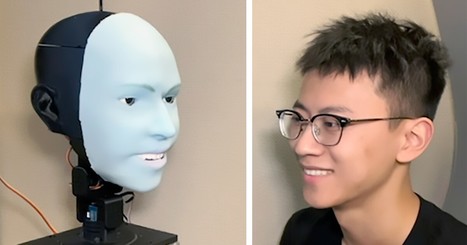
A robot called Emo that senses when a human is about to smile and simultaneously responds with one of its own could represent a big step towards developing robots with enhanced communication skills more conducive to building human trust, a new study suggests.
Life is uncertain. We never know what will happen, and many things are unknowable. This can make us feel stressed or worried, since the unknown is associated with danger. But as journalist Maggie Jackson argues in her new book, Uncertain: The Wisdom and Wonder of Being Unsure, there are many benefits to allowing ourselves to…
To "spring forward" is more damaging to our health than to "fall back," according to some surprising science about how our brains and bodies handle the time shift.
So I'll post this an hour later in honor of DST. I find this research fascinating. But with an obvious very minority report, I don't find I experience any reaction to time changes. I won't lose an hour of sleep -- I'll "lose" an hour of tomorrow's daytime. Something tells me this is an issue that will be debated for a long TIME!
To get content containing either thought or leadership enter:
To get content containing both thought and leadership enter:
To get content containing the expression thought leadership enter:
You can enter several keywords and you can refine them whenever you want. Our suggestion engine uses more signals but entering a few keywords here will rapidly give you great content to curate.
I've posted other articles on this. I'll also personally testify to this. It's an important topic!