

The Zeigarnik effect can do something stunning when we scatter our attention and let our mind wander.


 Your new post is loading...
 Scoop.it! The Zeigarnik effect can do something stunning when we scatter our attention and let our mind wander. 
No comment yet.
Sign up to comment
Scoop.it!

___ Language is processed in the temporal lobes, on the sides of your brain, next to you temples.Different areas in the temporal lobes (mostly on the left...
Scoop.it!
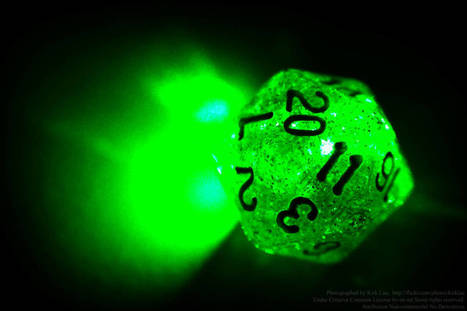
Although Dungeons and Dragons is known more for its creative play and storytelling, science understanding, geography and math skills are weaved into the po...
Scoop.it!

___ Limiting children's screen time linked to better cognition, study says (CNN): "Limiting kids' recreational screen time to less than two hours a day, along...
Scoop.it!

___ How do genetics impact early intervention for dementia?(Medical News Bulletin): "Cardiovascular and neurological diseases, such as dementia, have been...
Scoop.it!

Perspective can be the difference between seeing a burden or an opportunity...
Scoop.it!

The deeply interconnected web of IQ and societal outcomes
Scoop.it!
|

|
Scooped by
James Schreier
August 20, 2018 12:20 PM
|
Scoop.it!

___ The Use of Mobile Games to Assess Cognitive Function of Elderly with and without Cognitive Impairment (Journal of Alzheimer's Disease): Abstract: In the...
|
|
Scooped by
James Schreier
August 11, 2018 10:57 AM
|
Scoop.it!
Are you a glass half full or a glass half empty kind of person? Some people inherently focus on the negative when faced with a decision-making situation and new research from a team of MIT neuroscientists has identified exactly what region of the brain may be inducing these pessimistic decisions.
|
|
Scooped by
James Schreier
July 23, 2018 9:00 AM
|
Scoop.it!

We have unwittingly accepted the paradigm that technology comes first, with people relegated to doing the actions that the machines cannot do. This requires people to act like machines, ever ready to take over when things go wrong.“We are serving the wrong masters.”
|
|
Scooped by
James Schreier
July 16, 2018 9:00 AM
|
Scoop.it!

The Delboeuf illusion won’t help you trick yourself into eating smaller portions when you feel hungry...
|
|
Scooped by
James Schreier
July 9, 2018 9:00 AM
|
Scoop.it!


A new interpretation of a classic psychology experiment will change your view of perception, judgment – even human nature
|
|
Scooped by
James Schreier
November 12, 2018 9:00 AM
|
Scoop.it!

___ OCD symptoms could be reduced with 'brain-training' app, study says (UPI): "People with obsessive compulsive disorder could manage their symptoms, including...
|
|
Scooped by
James Schreier
November 5, 2018 8:00 AM
|
Scoop.it!

The mysteries of human perception are endlessly fascinating. For over a decade the Neural Correlate Society has been running an annual competition celebrating the best new perceptual illusions, and the 2018 winners are sure to short-circuit your brain … in the best possible way.
|
|
Scooped by
James Schreier
October 22, 2018 9:00 AM
|
Scoop.it!

When parents assume capacity and expect responsibility from their kids, navigating tough spots can go more smoothly....
|
|
Scooped by
James Schreier
October 8, 2018 11:07 AM
|
Scoop.it!
___ Exercise 'doesn't slow' progression of dementia (NHS Choices): "A trial in which people with dementia took part in a moderately intense exercise programme for 4 months found their mental decline did not slow and may even have worsened faster than in people who did not take part in the programme...While...
|
|
Scooped by
James Schreier
October 4, 2018 10:01 AM
|
Scoop.it!

As you probably know September is World Alzheimer's Month, and we'd like to help improve public knowledge about brain health and Alzheimer's risk factors by...
|
|
Scooped by
James Schreier
September 17, 2018 9:00 AM
|
Scoop.it!

Scientific American is the essential guide to the most awe-inspiring advances in science and technology, explaining how they change our understanding of the world and shape our lives.
|
|
Scooped by
James Schreier
September 5, 2018 2:23 PM
|
Scoop.it!

Mindfulness is being aware that the mind is thinking in the past, present, or future. It allows you to distinguish where your attention is in the moment.
|
|
Scooped by
James Schreier
August 27, 2018 9:00 AM
|
Scoop.it!

Our floodlit society has made sleep deprivation a lifestyle. But we know more than ever about how we rest—and how it keeps us healthy.
|
|
Scooped by
James Schreier
August 13, 2018 9:00 AM
|
Scoop.it!

Get lost in a good book. Time and again, reading has been shown to make us healthier, smarter, and more empathic.
|
|
Scooped by
James Schreier
July 30, 2018 9:00 AM
|
Scoop.it!
-- Lia Koltyrina/Shutterstock In the search for new treatments, science often focuses on medication first.But drugs aren't the only way to fight illness,...
|
|
Scooped by
James Schreier
July 23, 2018 9:00 AM
|
Scoop.it!

The pursuit of perfection, taken to extremes, can lead to OCD and depression – and the number of students reporting the problem has jumped by 33% since 1989
|
|
Scooped by
James Schreier
July 16, 2018 8:59 AM
|
Scoop.it!

Scientific American is the essential guide to the most awe-inspiring advances in science and technology, explaining how they change our understanding of the world and shape our lives.





