Daring Ed Tech
96.6K views | +0 today
Daring Ed Tech
All things educational technology and how they work on my middle school library world!
Curated by GwynethJones
Your new post is loading...
Rescooped by GwynethJones from EdTech Evolution - Mapping the Intersection of tech, innovation, and instruction
December 26, 2016 7:48 AM
Scoop.it!

5 Tech Predictions for 2017

5 Tech Predictions for 2017 | Daring Ed Tech | Scoop.it
I’ve been writing a tech predictions column for nearly 30 years now. I study our research and look for trends and information that give me hints of what I believe might be the hot topics, trends or issues that will impact the tech industry in the coming year.

Here are what I believe will be the biggest trends and issues in tech for 2017:

Via Carlos Fosca, Dean J. Fusto
GwynethJones's insight:

Yeah, I'm gonna guess VR is on the list!

No comment yet.
Rescooped by GwynethJones from Future Ready School Libraries
December 17, 2016 9:37 AM
Scoop.it!

Are librarians the key to a Future Ready school?

Are librarians the key to a Future Ready school? | Daring Ed Tech | Scoop.it
School and district leaders should consider a Future Ready Librarian framework to better enable innovative strategies and practices.
Via Bookmarking Librarian
GwynethJones's insight:

Like, Duh! I think we knew this!, am I right? But we need to tell the WORLD this!

Rescooped by GwynethJones from Professional Learning for Busy Educators
December 17, 2016 9:31 AM
Scoop.it!

It's official, teachers must relax over Christmas to avoid burnout - The Guardian 

It's official, teachers must relax over Christmas to avoid burnout - The Guardian  | Daring Ed Tech | Scoop.it
Teachers will be looking forward to a well-earned rest this Christmas. But it can be tough to switch off from – and avoid catching up on – work. It might be good for you to shun your marking and instead plan for a proper break this year, though. Why? Well, for a start, research says you should.

Via John Evans
GwynethJones's insight:

Hear that, year round school advocates? We NEED to relax, detox, and chill during the holidays!

No comment yet.
Rescooped by GwynethJones from SchoolLibrariesTeacherLibrarians
December 10, 2016 10:01 PM
Scoop.it!

Teaching with Graphic Novels 

Teaching with Graphic Novels  | Daring Ed Tech | Scoop.it
Modern graphic novels have emerged as effective teaching tools that help improve literacy, explain complex concepts, and get students excited about reading.

Via Ana Cristina Pratas, Joyce Valenza
GwynethJones's insight:

LOVE me some Graphic Novels! Thanks, Joyce!

Ana Cristina Pratas's curator insight, August 15, 2016 2:29 AM

"Visual Storytelling Can Build Non-Visual Reading Skills


Although often grouped together, a graphic novel is not the same as a comic book. Unlike the Sunday comic stripes or short serialized superhero stories, graphic novels contain all of the aspects of any school-assigned book: a beginning, a middle, an end, conflict, character development, resolution, and many other literary characteristics. However, graphic novels often use panels and images to also tell the story.

“The most significant difference from a comic is that the graphic novel’s text is both written and visual,” English teacher Cat Turner explained to the National Council of Teachers of English. “Every part of each frame plays a role in the interpretation of the text, and hence, graphic novels actually demand sophisticated readers.”


This more diverse and complex style of storytelling may be especially beneficial to students who struggle with large sections of text. The combinations of short lines of text and images throughout may deliver the same information to a student as a lengthy paragraph, but feel more palatable.


Due to space limitations in a panel on on the page, graphic novels also showcase efficient writing, mirroring a habit that readers can practice themselves. The unique combination of image and text can also improve comprehension and even vocabulary, as students have more context to derive their clues from. The School Library Journal noted one example of graphic novels in the classroom where an educator gave half the class Hamlet as the traditional text and the rest the graphic novelization. Those who read the graphic novel spent almost one fewer hour reading and scored higher on a comprehension quiz later.


Some educators argue that reading through images can be just as important as learning to read through text, particularly with the proliferation of visual media. Graphic novels also provide nontraditional learners an opportunity to get excited about reading and thrive via the mixed medium.


“Graphic novels can be a way in for students who are difficult to reach through traditional texts,” educational publisher Scholastic explained. “Even those deemed poor readers willingly and enthusiastically gravitate toward these books. Readers who are not interested in reading or who, despite being capable of reading, prefer gaming or watching media, can be pulled into a story by the visual elements of graphic novels.”


When Graphic Novels Are Too Graphic
One of the major criticism over graphic novels is the depiction of violent, graphic, racy, or scandalous images. Some of the most famous graphic novels, such as the Watchmen and Persepolis, feature scenes or stories of serious violence.


However, advocates of graphic novels argue that the issue is often not with the content but the presentation. As SLJ noted, the problem may be what researcher Steven Cary calls the “naked buns” effect. This is a paradox where the text of the phrase “naked buns” is not perceived as offensive or indecent while the illustration of the phrase would be. It is the image not the concept that can lead to controversy.


In the past, the graphic memoir Fun Home has faced controversy when it was assigned as reading for college students due to its depiction of sex. Fellow autobiographical graphic novel Persepolis has also been protested when assigned to middle school students because of a scene involving torture. Following the “naked buns” argument, this content may only be seen as more offensive than traditional novels because of its illustration of the concepts versus its discussion of them.

However, many books that have been banned or censored throughout history in U.S. are now looked at as literary masterpieces and assigned regularly, such as The Canterbury Tales , The Grapes of Wrath , and the Adventures of Huckleberry Finn .


Ways to Begin Integrating Comics Into Curriculum
Graphic novels can provide students with a number of reading benefits because of their unique style and presentation, but this also makes it more difficult for educators to incorporate these works into their curriculum.


Shelley Hong Xu, associate professor in the department of teacher education at California State University, Long Beach, recommended that teachers start slow and learn more about graphic novels in general, according to the NCTE. Xu advocates for educators to spend time reading a graphic novel and noting their own comprehension skills.


“I think that every preservice and inservice teacher needs to experience this activity in order to better understand literacy knowledge and skills that students use with reading comics and graphic novels,” Xu said.


Teachers should also learn about the genre of graphic novels and what their students are most interested in learning or what their experience with the genre is. There are a number of graphic novels that are directly focused on historic events and may act as teaching tools on their own, but there are many others that would be meritless in the classroom.


Teachers who want to incorporate graphic novels into the curriculum should also expect some pushback from parents and administrators, Xu argued. Educators should explain how these texts can help students reach their education goals, improve reading comprehension, and provide other benefits. Students may be less likely to push back about the inclusion of graphic novels in class, but educators should be prepared to coach students on how to read graphic novels and deal with other difficulties that may arise.


Although graphic novels are unlikely to cure modern reading issues in the classroom, their unique style of storytelling and more exciting visual medium can help address specific pain points by attracting a wider variety of readers, leading to more consistent recreational reading and creating healthy reading habits."

Tina Jameson's curator insight, August 18, 2016 7:08 PM
An interesting assessment of the effectiveness of using and analyzing graphic novels in the classroom, and of the controversial nature of the material that may also face educators.  However the writer of the article clearly sees the value of using graphic novels as a teaching tool.
GwynethJones's curator insight, March 5, 2017 7:05 AM

My kids are crazy for graphic novels.... here's how to teach with them!

Rescooped by GwynethJones from Future Ready School Libraries
December 10, 2016 7:39 PM
Scoop.it!

Fake News and K-12 Information Literacy

Fake News and K-12 Information Literacy | Daring Ed Tech | Scoop.it
Following the November 2016 Presidential election, there was great concern about "fake news" on Facebook and in Google searches.
Via Bookmarking Librarian
GwynethJones's insight:

Information Literacy, authenticity, and authority. Why it's important right now to step up our game teaching this stuff to our kiddos.

No comment yet.
Rescooped by GwynethJones from Digital Literacy in the Library
December 10, 2016 7:29 PM
Scoop.it!

Truthy Lies and Surreal Truths: A Plea - Hybrid Pedagogy

Truthy Lies and Surreal Truths: A Plea - Hybrid Pedagogy | Daring Ed Tech | Scoop.it

Kris Shaffer writes: "Help awaken your students to these new practices of digital deception, and help them face them effectively. They need this knowledge."


Via Mary Reilley Clark
GwynethJones's insight:

Digital deception, outright lies, and bogus news - now more than EVER we need to teach how discernment & authority.

Mary Reilley Clark's curator insight, December 9, 2016 11:59 AM

I am aware I am sharing this without doing the deep reading and reflection that the article calls for (I will go back and read again later when I have uninterrupted time) but I wanted to save and share it now.


Kris gives some examples of the insidious nature of misinformation, of the need for better "crap detection", and some thoughtful guidelines for how to combat the false information being spread. What jumped out at me was his recommendation to thoughtfully curate resources that provide accurate information and keep them visible in the social media stream. This is something librarians should excel at, right? I feel that responsibility more than ever!


And speaking of curation, thanks to School Library Connection for reposting this article from Joyce Valenza. If you don't curate, Joyce thoughtfully outlines why you should!

Scooped by GwynethJones
December 8, 2016 3:26 PM
Scoop.it!

Fake News is a Real Problem. Here’s How Students Can Solve It. – John Spencer

Fake News is a Real Problem. Here’s How Students Can Solve It. – John Spencer | Daring Ed Tech | Scoop.it
GwynethJones's insight:

Great piece for helping kids learn how to evaluate sources. OR they could ask and learn from a Librarian! LOL

No comment yet.
Scooped by GwynethJones
December 4, 2016 5:55 PM
Scoop.it!

Always Be Thankful For Thanks!

Always Be Thankful For Thanks! | Daring Ed Tech | Scoop.it
Because this is the time of the year when I reflect on being thankful, I'd like to share a simple thing you can do that will help yo
GwynethJones's insight:

Do you already do this? What are the ways that you save, savor, & share the thanks?

No comment yet.
Rescooped by GwynethJones from Search and the information landscape
December 4, 2016 5:45 PM
Scoop.it!

New AI-Based Search Engines are a "Game Changer" for Science Research

New AI-Based Search Engines are a "Game Changer" for Science Research | Daring Ed Tech | Scoop.it
Products such as Semantic Scholar and Microsoft Academic could be a boon for scholars

Via Joyce Valenza
GwynethJones's insight:

See?? She always gives the BEST resources!

Joyce Valenza's curator insight, December 3, 2016 7:27 AM
Very promising news for academic search.  I've missed Microsoft Academic

Rescooped by GwynethJones from iPads, MakerEd and More in Education
December 4, 2016 5:27 PM
Scoop.it!

The 15 Most Useful Google Apps You Never Knew Existed

The 15 Most Useful Google Apps You Never Knew Existed | Daring Ed Tech | Scoop.it
Google can be your best friend when it comes to searching for answers or information online. Millions of people use it every day, but only few can utilize Google to its full potential. In fact, this powerful search engine can offer lots of great services, apps and features that aren’t on many people’s radar.

The Bright Side team will help you to uncover some of them. Here are 15 of the most useful Google apps that you probably didn’t know existed.

Via John Evans
GwynethJones's insight:

Yes, please!

Best Smart Living Posts's curator insight, December 7, 2016 9:36 PM

Check out 15 of the most useful Google apps that you probably didn’t know existed. 

Jamie Edwards (IDS)'s curator insight, December 9, 2016 8:21 AM
Sound search and search by image are new to me.
Rescooped by GwynethJones from iGeneration - Humane Use of Technology in an AI world (Pedagogy & Digital Innovation)
December 1, 2016 10:57 AM
Scoop.it!

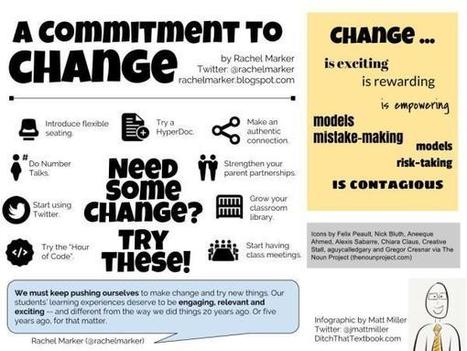
Creating eye-popping infographics with Google Drawings via @MattMiller

Creating eye-popping infographics with Google Drawings via @MattMiller | Daring Ed Tech | Scoop.it
Infographics are visually stimulating and force us to summarize well. What if we did more infographics in schools and less research papers?

Via Dr. Tom D'Amico (@TDOttawa)
GwynethJones's insight:

Infographics as PBL. LOVE this idea!

Martha Bongiorno's curator insight, December 2, 2016 9:53 AM
I love this idea! It is perfect for Project-Based/Problem-Based Learning...I do caution against moving away from research papers to just infographics, though. I think using more infographics in social studies or science would be beneficial. 
Simon J Condon's curator insight, December 2, 2016 2:19 PM
A tool to use for great visual presentations of information
Rescooped by GwynethJones from iGeneration - Humane Use of Technology in an AI world (Pedagogy & Digital Innovation)
November 26, 2016 10:10 AM
Scoop.it!

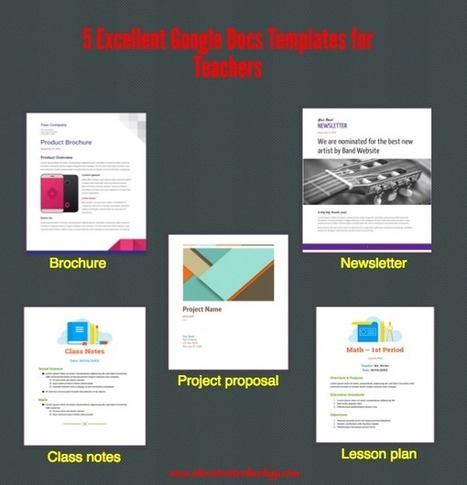
5 Excellent Google Docs Templates for Teachers via @medkh9

5 Excellent Google Docs Templates for Teachers via @medkh9 | Daring Ed Tech | Scoop.it
Free resource of educational web tools, 21st century skills, tips and tutorials on how teachers and students integrate technology into education

Via Dr. Tom D'Amico (@TDOttawa)
GwynethJones's insight:

Love me a Google Doc Template!

No comment yet.
Rescooped by GwynethJones from Digital Literacy in the Library
November 19, 2016 6:51 PM
Scoop.it!

This researcher programmed bots to fight racism on Twitter. It worked.

This researcher programmed bots to fight racism on Twitter. It worked. | Daring Ed Tech | Scoop.it

Kevin Munger writes: "Overall, I found that it is possible to cause people to use less harassing language. This change seems to be most likely when both individuals share a social identity. Unsurprisingly, high status people are also more likely to cause a change."


Via Mary Reilley Clark
GwynethJones's insight:

Programming for good.

Mary Reilley Clark's curator insight, November 19, 2016 1:49 PM

There's a lot to dig into here. I'm not sure most students are aware of bots or of buying followers, which is a good place to start. When I talk about digital citizenship, I always address cyberbullying. I emphasize that being an upstander by making a comment of support to the person being bullied, or by merely commenting that the bully is being unkind, can go a long way. Now, here is some statistical proof of that, with some caveats. It would be interesting to hear students' take on what "sharing a social identity" means to them. Thanks to Diane Main, @Dowbiggin on Twitter for sharing this.

Rescooped by GwynethJones from Future Ready School Libraries
December 24, 2016 9:23 AM
Scoop.it!

17 of the Most Exciting YA Books to Read in 2017 | Brightly

17 of the Most Exciting YA Books to Read in 2017 | Brightly | Daring Ed Tech | Scoop.it
There is something for every lover of YA books in 2017, whether that reader enjoys things quirky and magical, extra-real real, wild, or world-building.
Via Bookmarking Librarian
GwynethJones's insight:

Happy Holiday Reading!

No comment yet.
Rescooped by GwynethJones from iPads, MakerEd and More in Education
December 17, 2016 9:35 AM
Scoop.it!

Media Literacy & Fake News - A Lesson Plan @rmbyrne

Media Literacy & Fake News - A Lesson Plan @rmbyrne | Daring Ed Tech | Scoop.it
C-SPAN Classroom has a new lesson plan that is quite timely given all of the recent stories about fake news stories created and shared through social media. Media Literacy & Fake News is a free lesson plan that is based on five C-SPAN videos featuring authors and other experts talking about the role of media in influencing how people think about political topics. The last video in the lesson plan features writers from The Onion talking about why they're disappointed when people believe their stories are real.

Via John Evans
GwynethJones's insight:

I bet some people wish that headline was real! LOL

Lilydale High School's curator insight, December 25, 2016 6:03 PM
Information literacy and fake news lessons.
Rescooped by GwynethJones from SchoolLibrariesTeacherLibrarians
December 10, 2016 10:18 PM
Scoop.it!

Chalkmotion - Engage with Simple Drawings

Chalkmotion - Engage with Simple Drawings | Daring Ed Tech | Scoop.it
create animated doodle slideshows

Via Ana Cristina Pratas, Joyce Valenza
GwynethJones's insight:

I think using graphics & drawing is a REAL authentic way to ENGAGE kiddos!

Rosemary Tyrrell, Ed.D.'s curator insight, June 27, 2016 7:37 PM
This is a cool tool for creating and recording simple drawings for presentations. 
Joyce Valenza's curator insight, June 28, 2016 8:15 AM
Looking forward to playing with this one!
Rescooped by GwynethJones from SchoolLibrariesTeacherLibrarians
December 10, 2016 9:44 PM
Scoop.it!

Infographic of the Week: 27 Ways to Reflect on Your Teaching | #Reflecting

Infographic of the Week: 27 Ways to Reflect on Your Teaching | #Reflecting | Daring Ed Tech | Scoop.it
The beginning of a new year typically presents individuals with a designated time and opportunity to reflect upon the events of the past 365 days, to cherish the unforgettable moments, to learn from mistakes or disappointments, and most importantly, to set goals for the next chapter in this adventure we call life. In education, we call these types of behaviors “reflective practice”, or the manner in which teachers step back and evaluate the learning environment.


As in any other profession, we assess what was successful, what didn’t work as planned and/or what needs to be adjusted the next time—all in an effort to improve our craft.


Learn more / En savoir plus / Mehr erfahren:


http://www.scoop.it/t/21st-century-learning-and-teaching/?tag=reflection


https://gustmees.wordpress.com/2016/06/01/update-twitter-chats-what-to-do-better/


https://www.pinterest.com/swirlz42/mia-macmeekin/


Via Gust MEES, Joyce Valenza
GwynethJones's insight:

It's important to take the time to REFLECT on your teaching practice. It's a good practice! And it's from @JoyceValenza. So it's gotta be good, right?

Gust MEES's curator insight, November 12, 2016 11:17 AM
The beginning of a new year typically presents individuals with a designated time and opportunity to reflect upon the events of the past 365 days, to cherish the unforgettable moments, to learn from mistakes or disappointments, and most importantly, to set goals for the next chapter in this adventure we call life. In education, we call these types of behaviors “reflective practice”, or the manner in which teachers step back and evaluate the learning environment.


As in any other profession, we assess what was successful, what didn’t work as planned and/or what needs to be adjusted the next time—all in an effort to improve our craft.


Learn more / En savoir plus / Mehr erfahren:


http://www.scoop.it/t/21st-century-learning-and-teaching/?tag=reflection


https://gustmees.wordpress.com/2016/06/01/update-twitter-chats-what-to-do-better/


https://www.pinterest.com/swirlz42/mia-macmeekin/


Martha Bongiorno's curator insight, November 14, 2016 9:48 AM
With teachers ever increasing to-do list, it's not unheard of to put our reflections on the back burner. This is one of the most important parts of our profession, and we need to make time for it. Here are some ideas on how to reflect!
Rescooped by GwynethJones from Professional Learning for Busy Educators
December 10, 2016 7:36 PM
Scoop.it!

3 Tips for Teachers to Help Teens Distinguish Fact From Fiction

3 Tips for Teachers to Help Teens Distinguish Fact From Fiction | Daring Ed Tech | Scoop.it
High school teachers can use some of the following tips from other educators to teach the media literacy and critical thinking skills needed to assess information.

Via Nik Peachey, John Evans
GwynethJones's insight:

More resources for teaching digital authority & authenticity

Nik Peachey's curator insight, December 9, 2016 1:05 AM

It's a start, but needs to go much further.

Carol Hancox's curator insight, December 11, 2016 12:59 AM
Digital literacy, fact vs fiction
Rescooped by GwynethJones from EdTech Evolution - Mapping the Intersection of tech, innovation, and instruction
December 10, 2016 7:24 PM
Scoop.it!

Children’s sleeplessness may be linked to bedtime use of electronic gadgets

Children’s sleeplessness may be linked to bedtime use of electronic gadgets | Daring Ed Tech | Scoop.it
An analysis of data from 26,000 children provides the strongest evidence yet of a link between bedtime use of electronic devices and poor sleep, inadequate sleep and excessive daytime sleepiness.

Via Dorian Love, Dean J. Fusto
GwynethJones's insight:

I truly think our kiddos need some digital detox time.

No comment yet.
Rescooped by GwynethJones from Future Ready School Libraries
December 8, 2016 7:53 AM
Scoop.it!

Don't Click Here: Facebook, Algorithms, and Articles You Won’t Be Shown

Literacy Daily—the blog of the International Literacy Association (ILA)—features education stories, teaching tips, book reviews, and more.

Via Bookmarking Librarian
GwynethJones's insight:

SEE? FB is EVILLLL! As in froo-its of the devil!

No comment yet.
Scooped by GwynethJones
December 4, 2016 5:49 PM
Scoop.it!

5 Team Building Games That Can Teach Critical Thinking Skills

5 Team Building Games That Can Teach Critical Thinking Skills | Daring Ed Tech | Scoop.it
Here are 5 team building games to try out with your students that also develop critical thinking skills. Collaboration and team spirit await you!
GwynethJones's insight:

Yup! 2 of my fav things, too Chris!

Oskar Almazan's curator insight, March 14, 2017 8:21 AM
Team building games offer students fun opportunities to hone critical skills for success in the modern workplace. Students (and future employees!) that value teamwork are more motivated and creative. They’re also better at problem solving and communicating with one another and have a higher level of trust. We already know students love working in groups. Why not make a game of it?
Andrea Mejia Medina's curator insight, March 18, 2017 12:10 AM
Critical thinking is the most important skill to develop, since in these times of information at hand, we cannot believe everything we see, read, and hear, and that is why it is important to develop this ability as it allows us to be alert and question everything that comes from these means of information. Is a skill that moves a student from concrete ideas to abstract and inferred concepts. Critical thinking allows us to analyze outcomes, compare ideas, identify parallels, sequence events, synthesize information and draw conclusions from a given body of knowledge. Whether it is the proof behind a mathematics formula or an implied tone in an essay, critical thinking skills enable students to solve problems in the real world and on exams in school. Meghan Moll (2014) suggests five tools to develop the critical thinking skills necessary for success on every high school or college test and assignment. 1. Brain games: Recently, websites dedicated to training your brain have enjoyed increased popularity. Lumosity, for example, provides games that aid in improving memory and problem-solving. From timed matching games to order sequence memorization, websites like this can aid in cognition and the ability to ask, "What is the next step?" This skill is critical to learning how to approach complex problems on standardized tests like the ACT and SAT. Rather than playing time-wasting games when you have a lull in your day, search online for brain teasers and peruse the plethora of brain games at your fingertips. 2. Logic puzzles: Before the Internet, puzzles intended to exercise your brain were published in books. Collections of crossword puzzles, logic problems, riddles, sudoku, word problems and word searches can be found at your local bookstore or library. The puzzles in these books are a wonderful strategy to activate different parts of your brain for a round or two of mental gymnastics, and many collections even discuss what each puzzle is meant to target within the mind. 3. Board games: This suggestion may seem strange at first, but do not balk. Choose board games that require more than luck – namely, strategy – for players to win. Any game where players must carefully consider their next move, recognize patterns and remember details will aid in honing critical thinking skills. Certain games like Rubik’s Cube are single-player, while others involve multiple people. Checkers, chess and Mastermind are two-player games that challenge you to plan several steps ahead. Games like Boggle and Scrabble require analyzing information quickly and formulating words, while Clue and Risk test and strengthen your ability to anticipate and react to others’ moves, as well as infer motives. 4. Journaling: Daily reflection – such as maintaining a journal – is a simple way to revisit your day, but it is also a fantastic opportunity to explore ideas. Writing encourages you to expand upon your thoughts and form connections. A journal forces you to slow down and focus on just one or two ideas at a time, which hectic schedules don't otherwise allow. Use your journal to record important ideas and questions and narratives about your life. 5. Book clubs: Students who read for understanding find it far easier to think critically than those who rush to finish. Analyzing a book requires you to delve deeper and ponder complex questions. When reading, think about why the book was written the way it was, what motivates certain characters, and how plot developments may be symbols of foreshadowing. Locate a book club to hone these skills. You will read works you otherwise may not have, and you will learn to examine character development, plot, symbolism and a whole host of other features.
3
Character Minutes's curator insight, May 5, 2017 12:47 PM
Great games to use with "ME Leadership" (Marks of Excellence)
Scooped by GwynethJones
December 4, 2016 5:44 PM
Scoop.it!

Learning from Rock Star Librarians

Learning from Rock Star Librarians | Daring Ed Tech | Scoop.it
This month’s One-Question Survey asked our readers to name the ‘school library rock stars’ who are the biggest influence on their work and what it is that makes these individuals stand out. The resulting word cloud of school library luminaries is certainly fun to view but really not too surprising—much more intriguing are the explanations of the knowledge, skills, and dispositions that set these individuals apart. What can we learn from these rock star librarians?
GwynethJones's insight:

Honored to be mentioned! These people are my inspirations, too! Esp. Joyce, Jennifer, Tiffany, & Shannon.

Joyce Valenza's comment, December 5, 2016 1:31 PM
So flattered to be included in this cloud with so many people I so admire. Including dear Gwyneth!
Scooped by GwynethJones
December 2, 2016 12:53 PM
Scoop.it!

Six Tips for Building Book Displays That Matter

Six Tips for Building Book Displays That Matter | Daring Ed Tech | Scoop.it
If I've worked with your school district or spoken at your state's conference or you happened to run into me at your neighborhoo
GwynethJones's insight:

The Amazing Library Girl @jenniferlagarde does it again!

Joyce Valenza's curator insight, December 3, 2016 7:40 AM
Love this inspiration from Jennifer!
Rescooped by GwynethJones from Future Ready School Libraries
November 26, 2016 10:11 AM
Scoop.it!

Students Have 'Dismaying' Inability To Tell Fake News From Real, Study Finds

Students Have 'Dismaying' Inability To Tell Fake News From Real, Study Finds | Daring Ed Tech | Scoop.it
Stanford researchers assessed students from middle school to college and found they struggled to distinguish ads from articles, neutral sources from biased ones and fake accounts from real ones.
Via Bookmarking Librarian
GwynethJones's insight:

Shocker!

Bookmarking Librarian's curator insight, November 25, 2016 6:08 PM
Information literacy, digital literacy, media literacy
Scooped by GwynethJones
November 23, 2016 9:25 PM
Scoop.it!

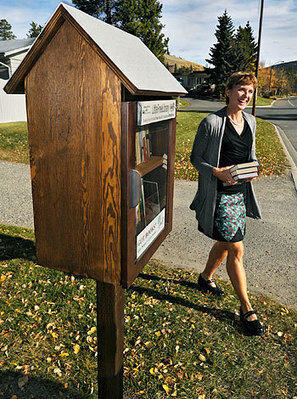
A big idea for a little library | Yukon News

A big idea for a little library | Yukon News | Daring Ed Tech | Scoop.it
Janet Clarke has opened Whitehorse's newest and littlest library right on her front lawn. Anyone is welcome to visit, take a book or leave a book.
GwynethJones's insight:

I'm so impressed by this. I really want one for the front yard of our school!

No comment yet.