Your new post is loading...
A new study funded by Greenpeace shows that a quarter of a million Chinese people died of air pollution from coal fired power plants in 2011. And the smog is worse this year.
"The analysis traced the chemicals which are made airborne from burning coal and found a number of health damages were caused as a result. It estimates that coal burning in China was responsible for reducing the lives of 260,000 people in 2011. It also found that in the same year it led to 320,000 children and 61,000 adults suffering from asthma, 36,000 babies being born with low weight and was responsible for 340,000 hospital visits and 141 million days of sick leave."
Click headline to read more, view pix and maps and watch video clip--
After almost two years of negotiations with the European Council and the European Parliament, the European Commission is ready to launch Erasmus+ on 1 January 2014. With an agreed budget of 14.7 billion (an increase of 40% on current levels), the programme is set to run for the next seven years. What does the new programme really mean for higher education? Here’s a guide to the final agreements and implications of this highly anticipated programme. Together with Erasmus Ambassadors, Erasmus Mundus and Oceans Alumni, the EAIE was invited as one of the Erasmus multipliers to learn more about Erasmus+ at a special training session organised by the European Commission in November. In addition to discovering what Erasmus+ means for higher education, all participants discussed how to promote the new features of the three Key Actions.
Click headline to read more--
In March 2011, an unknown amount of radiation was released into the atmosphere after a powerful tsunami slammed into the Fukushima Dai-ichi nuclear reactors on the Pacific coast in Japan. Because people had little access to detailed information about radiation levels, they bought up every Geiger counter they could find in stores and online. Soon the counters were all but sold out worldwide, and in Japan a grey market of shoddy Geiger counters sprouted up, some with faulty or fake parts.
Now, as workers at the plant attempt to move 1,500 highly radioactive spent fuel rods from Unit 4, the most heavily damaged reactor, the risk of radioactive contamination is escalated. The rods, housed in a damaged and leaking concrete pool 100 feet above the plant’s floor, are being moved to a second enclosed pool where it’s hoped they’ll be secure if another earthquake hits Japan’s coast.
The situation at Fukushima has received limited coverage in the Western media, but many scientists have grave concerns about the health and safety ramifications of the procedure — which has never been tried before — should something go wrong.
In a phone interview, Harvey Wasserman of Nukefree.org emphasized the gravity of the situation.
“God forbid they drop a rod, or another earthquake occurs,” he said. A mistake in the procedure could be catastrophic. The tightly packed rods together contain 14,000 times the radiation released by the Hiroshima bomb, according to Reuters.
Click headline to read more--
Serious games: What an oxymoron! In the classic definition, a game is defined as a voluntary action that is intended to be fun and enjoyable for the player. On the contrary, serious - video or board - games’ first intentions are utilitarian. Because of this they are often used within business or education. Indeed, their key aim is to engage individuals in complex or boring tasks.
These more serious games provide a safe environment to let participants (often employees) experiment in solving business issues or problems without worrying about the consequences. The process of developing and using such games enhances skills and abilities, which is a necessary first step before actually taking action to improve real-life business problems. They focus on emotions rather than on a cognitive approach to enhance participants’ motivation in seven key areas: Competition, personal challenge, chance, loss of control, role playing social recognition and collaboration.
Today, serious games are used for both employee and customer engagement. Disney’s “Disneystars” game, for example, is designed to build employees’ understanding of Disney’s leisure businesses, to facilitate cross and up-selling. Alternatively, they can also be implemented by Human Resources departments for training, assessment or recruitment. L’Oréal’s serious game “Reveal” is a good example of serious games in this context.
But, in each of these situations, the transfer of knowledge is in one direction; top-down. While they may be learning experiences for participants the business doesn’t actually gain any insights in return.
The really exciting trends in serious games reverse this process. The best serious games don’t just facilitate knowledge transfer, they facilitate innovation too. The 57,000 players of the virtual puzzle “Foldit” are contributing to scientific research on different diseases through protein folding, as well as learning about molecular biology.
Business leaders often talk about their desire to tap into their employees’ knowledge; serious games provide a great means to achieve this. The challenge now for organisations is to make the most of this best practice, flip the knowledge transfer process, and innovate through gaming. In this way they can reset the processes of learning and innovation.
Click headline to read more--
The Asset Owners Disclosure Project (AODP) asked the world’s thousand largest asset owners what they were doing to guard against the possibility that their investments in fossil fuels could, in future, become worthless.
Together, the owners manage more than US$70 trillion of funds. The Project found that only 27 of the 460 investment funds replying to its request are currently addressing climate risk at what it considers a responsible level.
Only five of the 460 achieved the AODP’s top AAA, with an additional 29 rated A or above. Only these groups, says the Project, “will survive a carbon crash in any kind of good shape”. . Of the 1,000 asset owners approached, 80% are either D rated (abysmal) or X rated (doing nothing). A further 540 funds did not disclose sufficient information to allow a rating.
“A majority of the world’s investment industry are clearly acting contrary to the interests of those whose money they represent – this is an outrageous situation” says Sharan Burrow, an AODP board member and general secretary of the International Trade Union Confederation.
“It must be remembered that much of the money being held by these organisations is the product of workers’ lifelong savings.”
The survey looked at several categories of investment behaviour, including transparency, risk management and low carbon investment. Asset owners examined came from 63 countries, in all regions of the world.
Click headline to read more--
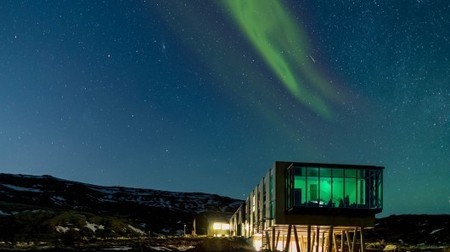
While the use of geothermal energy and recycled materials would normally be starting points for Gizmag's look at a new holiday destination like the ION Adventure Hotel, there's one element here that stands well above the pack – location. The hotel is nestled amidst the diverse Icelandic landscapes in the heart of the Mt. Hengill region, offering guests the opportunity to catch a glimpse of the spectacular aurora borealis or midnight sun, depending on which time of the year it is.
The ION Adventure Hotel opened its doors earlier this year and was built with the environment in mind.
"The fact that we are in a water protected area and the nature around the hotel is so rich we wanted to connect the hotel with the nature rather than have it stand out from the nature," ION's Assistant Hotel Manager, Katrín Ósk Sigurgeirsdóttir tells Gizmag.
Local hot springs provide the hotel with geothermal energy and hot water, local wood such as driftwood was used to furnish most of the building's interior and all of the beds, lounges and chairs were built from recycled materials. Corrugated cardboard was used to make many of the hotel's lamp shades and recycled rubber was used for the restroom basins.
Click headline to read more and view pix gallery--
While many existing oil and gas reserves in other parts of the world are facing steep decline, the Arctic is thought to possess vast untapped reservoirs. Approximately 13 percent of the world’s undiscovered oil deposits and 30 percent of its natural gas reserves are above the Arctic Circle, according to the United States Geological Survey. Eager to tap into this largess, Russia and its Arctic neighbors — Canada, Norway, the United States, Iceland and Denmark (by virtue of its authority over Greenland) — have encouraged energy companies to drill in the region.
For Russia, which recently seized a Greenpeace ship and is prosecuting 30 of the group’s activists for attempting to scale an oil platform, the temptation to exploit the Arctic Ocean is especially powerful. Russia’s economy is heavily dependent on exports of oil and gas, and the government relies on these sales for much of its income. Until recently, the Russians could draw on reservoirs in western Siberia to satisfy their needs, but now, with many of these fields in decline, they are counting on Arctic supplies to maintain current production levels. “Our first and main task is to turn the Arctic into Russia’s resource base of the 21st century,” Dmitri A. Medvedev, then the president, declared in 2008.
The Russians have explored drilling options in several offshore areas of the Arctic. In the Pechora Sea, above northwestern Siberia, the Russian energy giant Gazprom has installed its Prirazlomnaya platform — the one protesting Greenpeace activists attempted to board. Further east, in the Kara Sea, the state-owned Rosneft is collaborating with ExxonMobil to develop promising deposits; Rosneft has also teamed up with Statoil of Norway and Eni of Italy to investigate prospects in the Barents Sea.
But Russia is hardly alone in seeking to exploit the Arctic. Norway, like Russia, derives considerable income from gas and oil exports and is under pressure to develop reserves in the Barents Sea to compensate for the decline of its existing fields in the North and Norwegian Seas. Other areas of the Arctic are also being eyed for development. Cairn Energy of Edinburgh has sunk exploratory wells in waters off Greenland, for example, while Royal Dutch Shell is attempting to develop fields off Alaska.
For all of its promise, however, the Arctic is not likely to surrender its resources easily. Sea ice covers much of the area in winter, and storms pose a constant danger. Global warming is likely to reduce the extent of sea ice in the summer and fall, permitting extended drilling operations, but it could also produce unruly weather and other perils. Adding another layer of risk, many of the boundary lines in the Arctic remain to be fully demarcated, and various Arctic powers have threatened to use military force in the event that one or another intrudes on what they view as their sovereign territory.
Click headline to read more and view map full screen--
We recently wrote about the ridiculous performance put on by the UK Parliament in quizzing the editor of the Guardian, Alan Rusbridger, concerning the legality of reporting on the Snowden leaks. Now, it appears that the same committee sought to hold a hearing with the head of the British MI5 intelligence agency, Andrew Parker, in order to see if he could back up the claims that the Guardian's reporting had put UK citizens in danger. However, that's not happening. UK officials won't let Parker testify in front of the same committee. Why? Because.
The home secretary, Theresa May, told the home affairs committee chairman, Keith Vaz, that she had rejected the request for the spy chief to give evidence because his appearance would "duplicate" the existing oversight provided by the prime ministerially appointed intelligence and security committee.
And, indeed, it is true that the intelligence and security committee held a hearing on the topic not so long ago -- but, like the Congressional counterparts, it was almost entirely softballs allowing them to spew rhetoric, rather than answer serious questions concerning the intelligence community.
Even worse, it appears that the UK leadership is working extra hard to keep trying to pass a hot potato to make sure no one has to testify on this particular issue:
Click headline to read more--
The blogging platform WordPress.com has taken the unusual — and welcome — step of going to court to defend its users against bogus copyright claims aimed at silencing their speech on the platform. Automattic, WordPress’s parent company, has joined two separate lawsuits that seek to hold the would-be censors of legitimate lawful speech accountable for their attempts.
One of the targeted bloggers, Oliver Hotham, is a U.K. student journalist who wrote about a group called Straight Pride UK. That group issued a press statement explaining its concerns about the “homosexual agenda” and holding up Vladimir Putin as symbol of straight pride. When Hotham’s article quoting that press statement started to get attention, he was slapped with a takedown notice and told his quotes constituted copyright infringement.
The other case involved a website called “Retraction Watch,” run by two noted science journalists. The site tracks instances of published scientific papers being criticized or retracted, for reasons ranging from honest error to falsified data, and covering some controversial situations that may be embarrassing for the scientists involved.
Several of these articles focused on one researcher, Anil Potti, who has been the subject of significant scrutiny for his academic practices. A self-described news site, apparently created after most of these stories had already been posted, republished these particular accounts and then sent WordPress a takedown notice alleging infringement.
WordPress says it gets hundreds of takedown notices for user content, and can’t always identify which ones are abusive. As is typical of many platforms, in each of these cases it initially complied with the takedown requests and the content came down. The unusual part is what happened next: WordPress filed these two suits for damages on behalf of the targeted bloggers.
Click headline to read more--
At a media event in Detroit, Ford Motor Company gave the automotive world a glimpse of its newest research vehicle, a tricked out Fusion Hybrid designed to test out new autonomous driving technologies. The car looks like your typical 2014 Fusion until you glance at the roof. It’s equipped with four whirling cylinders, emitting constant beams of imperceptible laser light in all directions.
The system is called Lidar (a portmanteau of “light” and “radar”) and we’ve become accustomed to seeing much larger versions of these rigs on Google mapping vehicles tooling around our cities. Ford is using the Lidar system in combination with 360-degree cameras to help its Fusion “see,” creating a visual and topographical representation of the world around it.
Click headline to read more--
A growing number of industries are trying to reduce or at least curtail carbon footprints and energy use. Emissions standards have been set for the automotive, construction, and even telecommunications industries. Yet the internet’s carbon footprint is growing out of control: a whopping 830 million tons of CO2 annually, which is bigger than that of the entire aviation industry. That amount is set to double by 2020.
It is time for web designers to join the cause.
Right now, at least 332 million tons of CO2—40 percent of the internet’s total footprint—falls at least partially under the responsibility of people who make the web. It needn’t be that large, but with our rotating carousels, high-res images, and more, we have been designing increasingly energy-demanding websites for years, creating monstrous HUMVEE sites where we could be just as well served by slender hybrids or, better yet, bicycles.
The good news is that we have several methods for fixing obese websites and simultaneously attacking our industry’s carbon footprint—methods that conveniently dovetail with good business practice: mobile-ready design demands a thoughtful and efficient approach to page design, and increasingly sophisticated web ROI metrics are already driving businesses to pursue faster and lighter sites.
Before getting into the nitty-gritty, let’s first look at how to estimate a website’s footprint.
Click headline to read more--
Scientists in Australia have reported the discovery of huge freshwater reserves preserved in aquifers under the world's oceans. The water has remained shielded from seawater thanks to the accumulation of a protective layer of sediment and clay. And it’s not a local phenomenon. Such reserves are to be found under continental shelves off Australia, China, North America and South Africa.
The discovery was made by researchers at the National Centre for Groundwater Research and Training (NCGRT) and the School of the Environment at Flinders University. The scientists estimate there is around half a million cubic kilometers of what they describe as “low salinity” water, which means it could be processed into fresh, potable water economically.
The reserves formed when ocean levels were lower and rainwater made its way into the ground in land areas that were not covered until the ice caps melted 20,000 years ago, causing sea levels to rise.
"The volume of this water resource is a hundred times greater than the amount we’ve extracted from the Earth’s sub-surface in the past century since 1900," says study lead author Dr. Vincent Post. "Our research shows that fresh and brackish aquifers below the seabed are actually quite a common phenomenon."
Click headline to read more--
If you are visiting this page the chances are that you are not a human, at least according to research.
A study by Incapsula suggests 61.5% of all website traffic is now generated by bots. The security firm said that was a 21% rise on last year's figure of 51%.
Some of these automated software tools are malicious - stealing data or posting ads for scams in comment sections.
But the firm said the biggest growth in traffic was for "good" bots.
These are tools used by search engines to crawl websites in order to index their content, by analytics companies to provide feedback about how a site is performing, and by others to carry out other specific tasks - such as helping the Internet Archive preserve content before it is deleted.
To generate its report, Incapsula said it observed 1.45 billion bot visits over a 90 day period.
The information was sourced from 20,000 sites operated by its clients.
Dr Ian Brown, associate director at Oxford University's Cyber Security Centre - which was not involved in the study - said the figures were useful as an indication of the growth in non-human traffic, even if they were not accurate to the nearest decimal place.
"Their own customers may or may not be representative of the wider web," he told the BBC.
"There will also be some unavoidable fuzziness in their data, given that they are trying to measure malicious website visits where by definition the visitors are trying to disguise their origin."
Click headline to read more--
|
The Panel on Global Internet Cooperation and Governance Mechanisms—a diverse group of global stakeholders from government, civil society, the private sector, the technical community and international organizations—held their first meeting in London on December 13th to discuss global Internet cooperation and governance mechanisms.
The Panel expressed strong support for a multistakeholder approach to the future of Internet governance. The conversations held at the London meeting were facilitated by a team of Internet governance experts. The discussion will be taken online in the coming days at 1Net.org.
"The world relies on the Internet for economic, social, and political progress. It is imperative to ensure emerging issues are properly addressed in a global context, without individual governments or intergovernmental organizations developing their own solutions," said Estonian President Toomas Hendrik Ilves and chair of the Panel.
"The success of the Internet is rooted in a distributed and bottom-up model, with openness and collaboration at its core," said Vint Cerf, vice-chair of the Panel. "The inaugural meeting of the Panel brought together a diverse set of perspectives on the future of the Internet, and through this diversity I'm confident we can chart a course to protect the core of the current ecosystem, while evolving its methods, accessibility, and universality to meet the opportunities and challenges of the future."
Click headline to read more--
BT has announced that new customers will from today have porn filters automatically switched on when they subscribe to its broadband service.
The company is also introducing new BT Parental Controls that go beyond the remit of its current free privacy controls, which only focuses on desktops and laptops. The new controls will cover all internet-connected devices in the home, including tablets, games consoles and smartphones.
New customers, says BT in a press release, "[will] have to make a choice on whether or not to activate the parental controls when setting up their internet connection for the first time", but adds that "the option of having the controls implemented is pre-selected". You'll either have to confirm that you're happy with the pre-selected protection level, or actively choose to change the settings, which BT is keen to remind you might expose you to "content potentially unsuitable for children".
"BT takes the issue of online child protection extremely seriously and we are very pleased to be able to launch the whole-home filter to help parents keep their families safe online. It adds to the many tools we already make available for free to our customers. We've been focused on the issue of online safety since we developed the world's first Cleanfeed filter to block child abuse images and made the technology available free to other ISPs across the world a decade ago," says Pete Oliver, MD of consumer commercial marketing and digital at BT.
If you're already a BT customer, the company will be contacting you some time over the next year in order to make you aware of the new controls and give you the option to implement them or not.
Click headline to read more--
German copyright troll U+C (Urmann and Colleagues) recently upped its trolling game by sending out settlement letters to German Redtube viewers who had the misfortune of watching some rather generically-titled porn under its nominal control. U+C's previous trolling efforts had concentrated on P2P file sharing, so this new move, targeted at viewers of supposedly infringing streams raised several questions.
First and foremost: how did U+C acquire the names and addresses of those who had viewed the streams? Streaming viewers don't leave IP addresses exposed like P2P sharers do. Redtube denied turning over any user data. The theory arose that U+C had misled the courts by presenting Youtube as a "swap meet," i.e., a file sharing site. Obviously, Redtube is not in the business of file sharing and under German law, those viewing streams -- even if the streams themselves are infringing -- cannot be held liable for infringement. The other theory mooted was that U+C was utilizing some sort of malware to trap IP addresses, but no evidence has surfaced that this is the case. (Although, it should be pointed out that Google indicates Redtube "might be hacked.")
A few German lawyers stepped into the fray, offering their assistance and telling those served with letters to ignore them until further notice. Now, Redtube itself has weighed in on the matter via a press release, and it sounds thoroughly irritated by U+C's shady activities.
Click headline to read more--
The controversial leasing of 2,800 acres near the Au Sable River to a Canadian gas and oil company has been approved, but with the caveat that no above-ground techniques be implemented to access the subterranean resources.
A Thursday, Dec. 12, meeting of the Natural Resources Commission in Lansing saw Michigan Department of Natural Resources Director Keith Creagh approve the results of an Oct. 28, oil and gas lease auction to Encana Corp., with the stipulation that the acres along the Au Sable River Holy Waters corridor are nondevelopmental.
A nondevelopment lease does not allow the use of the surface for oil and gas exploration or development, DNR officials explained.
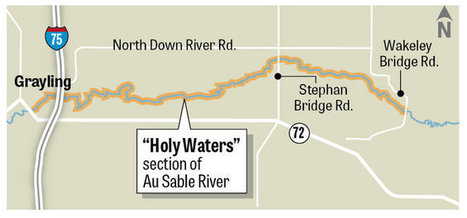
The Holy Waters corridor is an 8.7-mile stretch of land that begins just east of the city of Grayling in Crawford County and meanders east from Burton's Landing to Wakeley Bridge. It's known for its wadable water, dependable insect hatches and quality trout fishing, according to the DNR.
“Michigan has special places that deserve careful attention and thoughtful protection,” Creagh said. “The Au Sable River is one of those places. A nondevelopment lease lets us protect an area’s valuable surface features. This, in turn, protects Michigan citizens against the loss of revenue if publicly owned minerals are removed without a lease in place.”
The DNR reports that funds generated from oil and gas leasing on state-managed lands pay for recreational improvements and land acquisition for Michigan residents. The agency continued that a significant portion of the Au Sable corridor — known as the Rayburn Tract — was acquired by the DNR with $1.2 million in funds from oil and gas lease development on public property.
Click headline to read more--
Shipping containers have been used to revolutionize housing, and have also given rise to wacky ideas like an extreme sports theme park. Thanks to a new concept dubbed SOAK, we can add sustainable bathhouse to the growing list of potential uses for the durable metal boxes.
The main premise behind SOAK is that it aims to remove some of the guilt which may result from being a regular visitor to resource-heavy spas or bathhouses, by using renewable energy sources and recycled shipping containers.
SOAK looks like it will be pretty well stocked in bathing facilities, with a couple of cold plunge buckets, a shower, and a solarium. It's not clear what the capacity would be (presumably not very high), but a small physical footprint would also make sustainable energy more practicable.
Click headline to read more, view pix gallery and watch video clip--
The new energy law allows private oil and gas companies to drill for oil and gas with the state-run firm Pemex in exchange for a share of the profits.
It has been approved by the Chamber of Deputies a day after being passed by the upper house, the Senate.
Opposition lawmakers protested vigorously against the bill. The Chamber of Deputies voted 354 to 134 to give general approval to the bill.
President Enrique Pena Nieto says private investment is needed to modernise the energy sector.
"The energy reform is a fundamental transformation, which will enable Mexico to strengthen its sovereignty and energy security," Mr Pena Nieto posted on his Twitter account after the vote.
He said the new legislation "will also boost economic growth and the creation of new jobs" in the country.
Private firms will be allowed for the first time since 1938, when the sector was nationalised, to explore and extract oil and gas with state-run firm Pemex - and take a share of the profits.
The opposition said the new legislation would damage the national interests of Mexico.
The were scuffles during the long debate in the lower house of the Mexican Congress.
Landy Berzunza of the governing PRI party was taken to hospital with a scratched retina after an altercation with opposition MP Karen Quiroga.
Throughout the debate members of the opposition Democratic Revolution Party (PRD) tried to disrupt the proceedings to prevent the passage of the bill.
Some occupied the podium in the main chamber.
Others barricaded the chamber's entrances to prevent MPs from the PRI, PAN and Nueva Alianza parties, who backed the reform, from entering.
MP Antonio Garcia Conejo, from the PRD, stripped down to his underwear to show his rejection of the bill.
Click headline to read more--
CDMA operator China Telecom has been authorised to begin large scale 4G network trials in more than 40 cities, Marbridge Daily cites an unnamed industry source as saying. The rollout will initially target high-density areas such as shopping and business districts, parks and subways.
Whilst Telecom completed a tender earlier this year for 4G core network covering 31 provinces nationwide, its trials will concentrate on over 40 cities including Nanjing, Shanghai, Beijing and Wuhan.
As previously noted by CommsUpdate, China Telecom is planning to invest CNY45.7 billion (USD7.45 billion) in 4G network construction next year.
In related news, French-US vendor Alcatel-Lucent has announced that it has been selected by Telecom to provide the cellco with Long Term Evolution (LTE) equipment for the its 4G trials. Under the deal Alca-Lu will supply Telecom with its lightRadio LTE Radio Access Network (RAN), providing 9,892 base stations.
Shutting down secure email services because of surveillance agency interference apparently isn't just a local phenomenon. Lavabit, Snowden's email provider, shut down earlier this year to prevent being forced by the NSA to sabotage its own encryption. Silent Circle, another secure email service, shut down only hours later. Silent Circle hadn't yet been pressured by the government, but obviously felt it was only a matter of time.
International Business Times is reporting a similar incident occurred in the UK earlier this year.
PrivateSky was shut down at the beginning of the year after introducing a web-based version in beta and for Outlook and had "tens of thousands of heavily active users".
Brian Spector, CEO of CertiVox, told IT Security Guru: "Towards the end of 2012, we heard from the National Technical Assistance Centre (NTAC), a division of GCHQ and a liaison with the Home Office, [that] they wanted the keys to decrypt the customer data. We did it before Lavabit and Silent Circle and it was before Snowden happened.
Even before the leaks made the Five Eyes' covert surveillance programs public, PrivateSky got an inside peek at the intelligence community's thirst for data. Unfortunately for Spector and his company, complying with GCHQ's request would mean destroying the security it promised to its customers.
Click headline to read more--
As the US applies more and more pressure to the other nations taking part in the secret TPP negotiations in an attempt to get them to accept its demands, one issue that is starting to be raised is the central one of benefits. Given the sacrifices the USTR is demanding from other countries in order to strike a deal, people in affected countries are rightly questioning what exactly they will get in return. The growing doubts about the value of TPP are presumably why at this late stage the USTR has just released a document touting its "economic benefits". There are two things worth noting about this.
First, that no evidence is offered to back up the big numbers being thrown around there, so we know nothing about the assumptions and methodology behind the figures. And secondly, as Burcu Kilic rightly points out, if the USTR wants people to consider the economic benefits, it should also produce a similar report on the economic damage that could result from TPP so that they can see whether on balance it is worth proceeding with the deal. Needless to say, such analyses are never conducted -- at least, not by governments.
Of course, predicting the economic effects of complex trade agreements that haven't even been concluded is nigh on impossible. But as an alternative, instead of trying to squint into the future, we can perhaps look back at what actually happened with previous free trade agreements. Techdirt has already written about two major deals, NAFTA and KORUS, both of which turned out to be disastrous for the US, but what about the others?
A small, bilateral FTA was signed between the US and Colombia just under a year ago. Recently, President Obama welcomed Colombia's President Santos to the White House, and referred to the trade deal as follows:
Click headline to read more--
Internet Monitor’s first annual report is a collection of essays that invite reflection and discussion of the past year’s notable events and trends in the digitally networked environment.
The report, intended for a general audience, invites reflection and discussion around some of the most fascinating developments and debates over the past year.
For more information about Internet Monitor, see thenetmonitor.org
Click headline to access hot links to the report--
A groundbreaking study by Harvard University's Harvard Forest and the Smithsonian Institution reveals that, if left unchecked, recent trends in the loss of forests to development will undermine significant land conservation gains in Massachusetts, jeopardize water quality, and limit the natural landscape's ability to protect against climate change.
The scientists researched and analyzed four plausible scenarios for what Massachusetts could look like in the future. The scenarios were developed by a group of forestry professionals, land-use planning and water policy experts, and conservation groups. The scenarios reflect contrasting patterns and intensities of land development, wood harvesting, conservation, and agriculture. The two-year study is unique in its forward-looking approach and its use of sophisticated computer models to conduct a detailed acre-by-acre analysis of the entire forested landscape of Massachusetts over 50 years.
"What we found is that land-use decisions have immediate and dramatic impacts on many of the forest benefits people depend on," said Jonathan Thompson, Senior Ecologist at Harvard Forest and lead author of the new study. This is the first time a study of this magnitude has been conducted for an entire state. Thompson goes on to say, "Massachusetts is an important place to study land-use because it is densely populated, heavily forested, and experiencing rapid change – much like the broader forested landscape of the eastern U.S. The results of the study show that sprawl, coupled with a permanent loss of forest cover in Massachusetts, create an urgent need to address land-use choices." Click headline to read more--
G.fast’s road toward bringing fiber-like speeds to existing copper-fed DSL networks took a step forward Wednesday as the International Telecommunications Union granted “first-stage” approval to the emerging standard.
That technology is embedded in a budding standard called G.fast, which was granted “first-stage approval” Wednesday by the International Telecommunications Union, which expects to finalize G.fast “as early as April 2014.”
ITU expects to finalize G.fast “as early as April 2014,” but this week’s first-stage stamp should give chipmakers, modem vendors and network gear suppliers the technical roadway necessary to develop G.fast products and present telcos with a platform that is designed to deliver aggregate capacity of 1 Gigabit per second that can be flexibly allocated to a telco’s downstream and upstream pathways.
“The core technology is pretty much set,” said Michael Weissman, vice president of marketing for Sckipio, a G.fast silicon startup that this week announced it had secured a $10 million investment from Gemini Israel Ventures, Genesis Partners, Amiti Capital, and Aviv Ventures. Sckipio, a company with about 25 employees, expects to have some initial G.fast product available in 2014. “We have trials scheduled,” Weissman said.
G.fast, which has also attracted interest from Broadcom, will flirt with 1-Gig speeds thanks to its use of a wider swath of spectrum. The standard calls for G.fast to handle bandwidth profiles of 106 MHz and just north of 200 MHz, comparing to the relatively paltry 17 MHz of bandwidth used for the 17a profile of VDSL. Because G.fast can operate in higher frequencies, it will aim to reduce crosstalk interference through the use of vectoring, a technique that is in widespread commercial deployment on DSL networks.
Click headline to read more--
|