Your new post is loading...
A vertical garden covering 1492m2 has been created in Vitoria-Gasteiz, Spain. The garden, which adorns the the Palacio de Congresos Europa (Palace of Congresses Europe) and incorporates over 33,000 individual plants, was designed by Alicante-based sustainable architecture firm Urbanarbolismo.
The project was conceived as a means of improving the energy usage of the Palacio de Congresos. The addition of a planted facade to the building is expect to increase its thermal insulation by 270 percent.
In order to reflect the native ecosystems of the locality, the plants used are inspired by those found in the areas surrounding Vitoria-Gasteiz, including the wetland vegetation of Salburua, the agricultural field plots of Alava, and beech forests of the Vitoria mountains.
About two thirds of the planted area uses a hydroponic system, which is monitored to control the development of the plants. Factors tracked include substrate nutrient conditions, pH levels and humidity. The monitoring also helps to save water and energy.
Click headline to read more and view pix gallery--
In amazing news, the White House is taking an aggressive move to educate about the effects of climate change by releasing a highly produced scientific video entitled, "The Polar Vortex Explained in 2 Minutes."
In the video, White House science adviser and physicist John Holdren dismantles silly claims that cold weather refutes global warming. "The fact is that no single weather episode can either prove or disprove global climate change," explains Holdren. He then describes how, in fact, climate change could make extreme winter weather in the mid-latitudes more common. "A growing body of evidence suggests that the kind of extreme cold being experienced by much of the United States as we speak is a pattern that we can expect to see with increasing frequency as global warming continues," Holdren asserts.
With the news that climate coverage has drastically dropped in U.S. media, the information that the White House will be aggressive in its coverage is much welcomed and perhaps shows that they are preparing to be more advancing in climate policy.
Click headline to watch the video clip--
If snooping by the U.S. National Security Agency isn't enough to make you worry about your privacy, Japan's Fujitsu Laboratories has developed a fast method to perform secret searches of data that is encrypted.
The technology makes use of homomorphic encryption, which allows for operations to be performed on encrypted data without having to decrypt it.
Fujitsu developed a batch search method that can rifle through 16,000 characters per second using any search term without the need for pre-registering keywords.
The lab hopes to commercialize the technology by 2015, billing it as a useful analytical tool in an increasingly data-driven world. The researchers said it's one that will in fact protect privacy.
"Our technology is based on public-key encryption," said Jun Kogure, research manager at the Social Innovation Laboratories in the Secure Computing Lab of Fujitsu Laboratories.
"When acquiring a public key, one also obtains a secret key paired to that public key. Those who perform searches only need a public key, which is made public beforehand and is something anyone can obtain. As results of searches are also encrypted, only those who have the secret key can see the search results."
If thieves or spies tried to use the method, it would be fruitless.
"They may be able to make searches, but it will not mean anything without the secret key," Kogure said.
Forgoing registration of searchable keywords distinguishes Fujitsu's new approach from other ways of looking through encrypted data.
Click headline to read more--
NBN Co, the public-private company overseeing the construction and management of the National Broadband Network (NBN), has confirmed that 27 wholesale customers have already signed its revised Wholesale Broadband Agreement (WBA).
With fixed line incumbent Telstra and the country’s largest alternative operator Optus among those to have put pen to paper, the new WBA is expected to be full operation from 1 March 2014. The updated agreement includes a range of enhancements for access seekers, NBN Co has said, as well as greater clarity and consistency, though the company aims to ‘continue to engage with industry in 2014’ as it implements the new WBA and will work to further develop its terms in light of ongoing operational experience.
Commenting on the matter, Caroline Lovell, NBN Co’s Head of Regulatory Affairs and Industry Analysis, noted: ‘The new WBA was achieved after two years of engagement with industry to develop terms of supply of NBN Co fibre-to-the-premises (FTTP) and wireless based services, and follows the ACCC’s acceptance of NBN Co’s Special Access Undertaking … Significant progress has been made in the development and execution of NBN Co’s new supply arrangements and NBN Co thanks customers for their engagement in relation to the new WBA.’
Click headline to read more--
Ahmed Jabari never saw the missile that killed him. As he drove past parked cars and empty intersections on a leafy street in Gaza City in November 2012, a drone circling high overhead took aim at the roof of his nondescript sedan and fired.
In the chaos that followed, little did anyone know that reducing Jabari and his car to a cloud of shrapnel and dust marked the beginning of Israel's Operation Pillar of Defense. Within hours, the Israel Defense Forces made sure hundreds of thousands of people found out.
A senior Hamas military leader whom Israel accused of involvement in several terror attacks, Jabari was a strategic target for the Israeli military in its eight-day air and ground offensive against Hamas' Gaza stronghold.
Shortly after Jabari was killed, the IDF broke the news by uploading a brief, silent, black-and-white video of the airstrike to YouTube. It then took to Twitter to say "Ahmed Jabari: Eliminated" and posted a follow-up on Facebook with a photo of Jabari titled "IDF Begins Widespread Campaign on Terror Sites in the Gaza Strip," inviting its followers to "stay tuned for updates."
Before long, Hamas' military wing, the Al Qassam Brigades, responded with its own social media barrage.
"Our blessed hands will reach your leaders and soldiers wherever they are (You Opened Hell Gates on Yourselves)," the Al Qassam Brigades tweeted.
From this point forward, the world was given a couple of front-row tickets -- each with a decidedly one-sided view -- to watch as the conflict was live-tweeted between these bitter enemies.
Click headline to read more and watch video clip--
The fact that the USTR continues to peddle the line that TPP is "the most transparent trade negotiation in history," despite a dogged refusal to reveal its negotiating positions to the public (to say nothing of any draft texts), indicates that the US government is acutely aware that its attitude towards transparency in TPP and TAFTA/TTIP is both unpopular and unjustifiable.
Meanwhile, on the other side of the Atlantic, the European Commission too is desperately trying to convince people that it is conducting the TTIP negotiations in a fully open way. For example, earlier this week, the Commission held what it called an "Outreach" session in Brussels:
As part of an ongoing commitment to transparency, DG TRADE is organising a second Civil Society Dialogue to discuss progress and to exchange views on the TTIP.
As well as trumpeting its "ongoing commitment to transparency," the European Commission claims that this is a "Civil Society Dialogue." On the same Web page, there's a list of who had registered to participate in this session.
Here are some of the "civil societies" that caught my eye in a quick scan:
Click headline to read more--
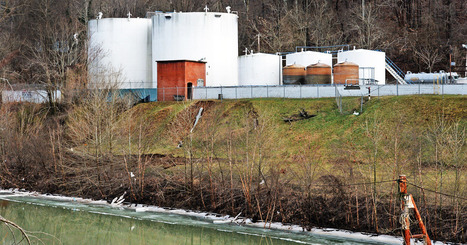
The Elk River rises in the broad valleys of Pocahontas County, West Virginia, over the mountains from Virginia’s Piedmont horse country, then spills into the narrow hollows of the counties of Webster, Braxton, and Clay on its way to join the Kanawha River, in Charleston. It snakes north of coalfields, through small towns built up during hardwood-timbering booms. Flanked by steep slopes, it runs in shadow for much of the day. Rhododendrons, which need shade, choke the narrow gorges of its tributaries. The Elk shares its narrow band of flatland with two-lane roads, train tracks, and tiny vacation shacks perched on the slope between the berm and the riverbank.
Last Thursday, an estimated seventy-five hundred gallons of crude MCMH, a chemical used to remove impurities from coal, ran into the Elk from a one-inch hole in a tank belonging to a company called Freedom Industries. The leak took place a mile and a half upstream from a major intake for West Virginia American Water, a private company that provides municipal water in parts of nine counties, including Charleston, the state capital. Since then, about three hundred thousand people have been under orders not to drink the water, cook with it, wash in it, or even use it do laundry. Some households have backup wells or springs, but most are relying on emergency water distribution from the National Guard and private groups. In the past day, officials have begun approving water use for some areas.
The spill was a reminder of the familiar dangers of the industrial economy that runs beneath the sleek surfaces of tech and finance industries in West Virginia. In 1985, a Union Carbide plant in Charleston’s so-called Chemical Valley leaked methylene chloride, sending more than a hundred people to the hospital. In 2010, twenty-nine miners died in an explosion at the Upper Big Branch mine, in Raleigh County. Mountaintop-removal mining has buried more than a thousand miles of stream headwaters and shattered hundreds of hills and mountains.
The Freedom Industries spill is another burst of industrial harm, another reminder that the consequences of risks often fall on the poor. But it is possible that, in the end, no one will be poisoned, no fish will be killed, and the injuries will be restricted to the wretched hassle, anxiety, and plain indignity of living without water for a week. This is possible because no one knows much of anything about how MCMH affects human health. It is no one’s job to know.
Click headline to read more--
Playing on mobile users' fears of commercial and government surveillance, two companies are building a phone they say is designed to protect privacy. The joint venture between smartphone manufacturer Geeksphone and encrypted communications provider Silent Circle will unveil the new device called Blackphone at the Mobile World Congress show in Barcelona next month.
Blackphone will run an Android-based OS called PrivatOS that the companies claim will allow users to communicate securely. According to them, users will be able to make and receive secure phone calls, exchange secure texts, exchange and store files securely, engage in secure video chats, browse privately, and access the Internet anonymously through a VPN (Virtual Private Network) connection.
Details about the technology used and other implementation aspects are not yet available and Geeksphone declined to release any additional information ahead of Mobile World Congress. However, giving Silent Circle's involvement, it's reasonable to assume that some of the company's existing apps and services will be integrated into the new handset.
Based in National Harbor, Maryland, Silent Circle offers subscription-based encrypted voice calling, video chat, text messaging and file transfer services through Android, iOS and desktop apps, some of which have had their code released publicly.
Click headline to read more--
As California struggles through a run of historically dry weather, most residents are looking at falling reservoir levels, dusty air and thirsty lawns.
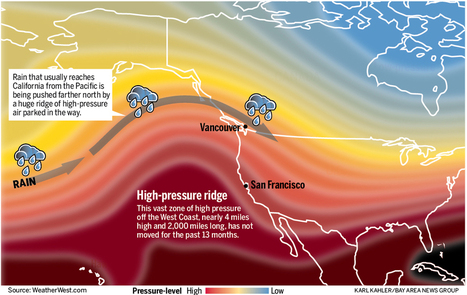
But meteorologists have fixed their attention on the scientific phenomenon they say is to blame for the emerging drought: a vast zone of high pressure in the atmosphere off the West Coast, nearly four miles high and 2,000 miles long, so stubborn that one researcher has dubbed it the "Ridiculously Resilient Ridge."
Like a brick wall, the mass of high pressure air has been blocking Pacific winter storms from coming ashore in California, deflecting them up into Alaska and British Columbia, even delivering rain and cold weather to the East Coast. Similar high-pressure zones pop up all the time during most winters, but they usually break down, allowing rain to get through to California. This one, ominously, has anchored itself for 13 months, since December 2012, making it unprecedented in modern weather records and leaving researchers scratching their heads.
"It's like the Sierra -- a mountain range just sitting off the West Coast -- only bigger," said Bob Benjamin, a forecaster with the National Weather Service in Monterey. "This ridge is sort of a mountain in the atmosphere. In most years, it comes and goes. This year it came and didn't go."
The current high-pressure ridge is even stronger and more persistent than a similar ridge that parked over the Pacific Ocean during the 1976-77 drought, one of the driest in the 20th century. Scientists know that changes in temperature cause high- and low-pressure zones around the world. In many ways, air works like water. The deeper you swim in the ocean, the stronger the water pressure, because the weight of the water above is pressing down on the water below. Air in the atmosphere also has weight, and as temperatures of the ocean and land fluctuate, the atmospheric pressure also changes, helping drive much of our weather.
Click headline to read more--
The Obama administration is retreating from previous demands of strong international environmental protections in order to reach agreement on a sweeping Pacific trade deal that is a pillar of President Obama’s strategic shift to Asia, according to documents obtained by WikiLeaks, environmentalists and people close to the contentious trade talks.
The negotiations over the Trans-Pacific Partnership, which would be one of the world’s biggest trade agreements, have exposed deep rifts over environmental policy between the United States and 11 other Pacific Rim nations. As it stands now, the documents, viewed by The New York Times, show that the disputes could undo key global environmental protections.
The environmental chapter of the trade deal has been among the most highly disputed elements of negotiations in the pact. Participants in the talks, which have dragged on for three years, had hoped to complete the deal by the end of 2013.
Environmentalists said that the draft appears to signal that the United States will retreat on a variety of environmental protections — including legally binding pollution control requirements and logging regulations and a ban on harvesting sharks’ fins — to advance a trade deal that is a top priority for Mr. Obama.
Ilana Solomon, the director of the Sierra Club’s Responsible Trade Program, said the draft omits crucial language ensuring that increased trade will not lead to further environmental destruction.
Click headline to read more--
According to new data from TeleGeography, Skype’s international traffic volume continues to soar. TeleGeography estimates that Skype’s on-net (Skype to Skype) international traffic grew 36 percent in 2013, to 214 billion minutes.
International telephone traffic from fixed and mobile phones continues to grow as well, increasing an estimated 7 percent in 2013, to 547 billion minutes. However, recent growth rates are well below the 13 percent average that carriers posted over many of the past 20 years, and the benefits of traffic growth have largely been offset by steady price declines.
While the volume of international telephone traffic remains far larger than international Skype traffic, Skype’s minutes are growing much more rapidly. Skype added approximately 54 billion minutes of international traffic in 2013, 50 percent more than the combined international volume growth of every telco in the world. Given these immense traffic volumes, it’s difficult not to conclude that at least some of Skype’s growth is coming at the expense of traditional carriers.
Such strong traffic growth more than 10 years after Skype’s launch is particularly impressive in light of the growing acceptance of a wide range of alternative over-the-top (OTT) communications applications for mobile devices. OTT messaging applications are among the most popular mobile apps, and several, including Skype, WhatsApp, Facebook Messenger, Viber, Line, Tango, Google Hangouts, and Samsung’s ChatOn, have been installed more than 100 million times from Google’s online Play app store, alone.
Click headline to read more and view graphic--
For enterprises that don't want employees to roam using cellular networks, Telefonica has launched Universal Wi-Fi, which offers coverage in 110 countries.
Wi-Fi is becoming an increasingly important access technology to operators, either to offload their cellular networks or, as in this case, to offer subscribers data access when traveling. Universal Wi-Fi is specifically aimed at multinational enterprises.
The service uses more than 1.3 million hotspots at locations such as airports and hotel chains, including Marriott, Hyatt, Hilton and Sheraton. To get that many hotspots, Telefonica is collaborating with iPass and Swisscom, for example.
It has also partnered with Gogo to offer in-flight coverage. Gogo has put Wi-Fi on 6,000 planes from Air Canada, American Airlines, Delta Air Lines, United Airlines and Virgin America.
Telefonica didn't immediately reply to questions about what the service will cost. Users will pay a fixed cost for access using up to five devices, according the operator.
Click headline to read more--
In recent weeks, BT, the UK’s biggest ISP, has given us the gift of router level internet filtering. – Ah, you shouldn’t have.
No, really. The announcement that UK ISPs would soon offer more robust internet filtering on the TalkTalk HomeSafe model – BT Parental Control, Sky Broadband Shield and Virgin Media WebSafe – has been met earlier this year and even more recently with derision and concern.
Could ISPs rolling out this software face a customer revolt? And are consumers right to object?
Click headline to read more--
|
The European Union’s antitrust watchdog is increasing pressure on Google to swiftly provide better proposals to address allegations the firm is abusing its dominant position in Internet searches.
If the U.S. tech giant fails to present better proposals to reach a settlement, the EU will start the traditional antitrust procedure, the EU’s competition watchdog chief Joaquin Almunia said Wednesday. That more confrontational route could take years, but also result in fines worth billions of dollars.
Almunia said that feedback from competitors and other market players on Google’s latest proposed changes to its Internet searches was clearly negative.
“So let’s see if Google can improve their proposal or we go to the traditional route,” he told reporters in Brussels.
“We need more, not during the next year but during the next weeks,” Almunia said. Google’s pending reaction will be the “last opportunity” for reaching a settlement, he added.
Google’s Brussels office did not react to repeated emails and calls seeking comment.
The company has a market share of about 90 percent of Internet searches in Europe, compared with around 70 percent in the U.S.
Competitors in Europe have complained about the way Google gives preference to its own Google-branded services at the top of results pages, especially when consumers are likely to be searching for something to buy.
The European Commission, the executive arm of the 28-nation European Union, has been investigating Google since 2010. Almunia has said he hopes to resolve the case by spring this year.
Click headline to read more--
The latest in the ongoing revelations for the Ed Snowden leaks is that the NSA and GCHQ are collecting what appears to be hundreds of millions of text messages every day.
While it does try to "minimize" messages involving Americans, it appears to allow access to the rest of the database to the GCHQ in the UK, who does use it to spy on UK phone numbers. GCHQ staff are told to avoid viewing actual content of UK text messages, but it's unclear if that's enforced. As the NSA notes, this database, called DISHFIRE, is "a goldmine to exploit."
Click headline to read more--
Invitalia, Telecom Italia, and Italtel have signed a development agreement worth more than €61 million ($82.6 million) to extend and improve the broadband network and services in Sicily.
Telecom Italia is investing over €41 million to increase fixed-line and mobile broadband network capacity throughout Sicily by replacing copper network infrastructure with fiber-optic cable. The project also paves the way for future next-generation broadband access network development.
Italtel is investing €20 million – €18 million to build a software-led platform for video, voice, and Internet services over next-generation networks, and €2 million to diversify output at the Carini premises in Palermo, where it will build out infrastructure for a software factory and an engineering hub to produce industrial-grade software-led products.
Presented by Telecom Italia and Italtel, the plan is being co-funded by economic development agency Invitalia, which will contribute around €18 million of funds from Italy’s Ministry of Economic Development.
Click headline to read more--
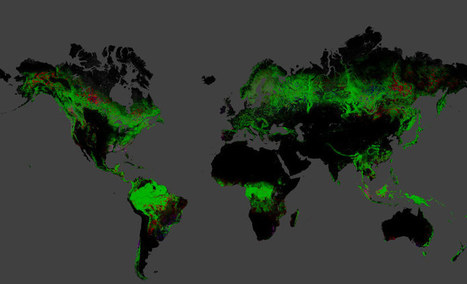
Google Earth has partnered with a research team at the University of Maryland in the realization of an interactive, digital map that highlights global forest change.
The data used has been compiled from the results of a decade long analysis of 654,178 landsat images.
Each color indication on the interface corresponds to collected informational evidence: red -- forest loss from 2000-2012; blue -- forest gain from 2000-2012; magenta -- both loss and gain; green -- forest extent.
Click headline to read more and view additional maps--
Techdirt has already noted how the NSA's massive spying programs around the world are costing US companies money through lost business -- and are likely to cost them even more in the future. But it seems that the fallout is even wider, as this story from The Voice of Russia makes clear:
The sale of two intelligence satellites by France to the UAE [United Arab Emirates] for nearly $1bln could go bust after the satellites were found to contain US technology designed to intercept data transmitted to the ground station.
A top UAE defence source said that the satellites contain specific US-made components designed to intercept the satellites' communication with their accompanying ground station.
As a result, the UAE might do a deal with the Russians instead:
Click headline to read more--
This is a guest post by James Lawrence Powell.
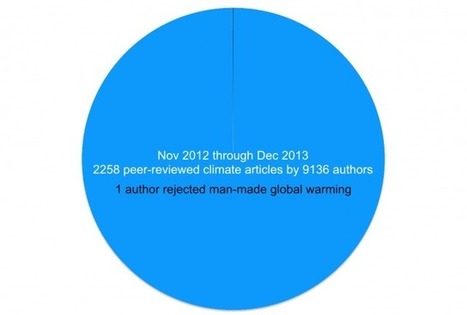
I have brought my previous study (see here and here) up-to-date by reviewing peer-reviewed articles in scientific journals over the period from Nov. 12, 2012 through December 31, 2013. I found 2,258 articles, written by a total of 9,136 authors. (Download the chart above here.)
Only one article, by a single author in the Herald of the Russian Academy of Sciences, rejected man-made global warming. I discuss that article here.
Click headline to read more--
Wikileaks, who had already leaked out the Intellectual Property chapter of the TPP has now leaked the Environment Chapter as well. And, as had been expected by many civil society groups, it is now clear that the USTR, in particular, has "retreated from previous demands of strong international environmental protections."
The USTR likes to talk big about how things like the TPP would actually increase environmental protections, but it looks like (as many expected) this was just a negotiating position, to be traded away to get other benefits for big corporate donors (such as corporate sovereignty and intellectual property issues). As Wikileaks notes:
Click headline to read more including the TPP document--
In 2012, researchers from the University of Florida reported a record efficiency of 8.6 percent for a prototype solar cell consisting of a wafer of silicon coated with a layer of graphene doped with trifluoromethanesulfonyl-amide (TFSA). Now another team is claiming a new record efficiency of 15.6 percent for a graphene-based solar cell by ditching the silicon all together.
The prototype photovoltaic device, created by researchers from the Group of Photovoltaic and Optoelectronic Devices (DFO) at Spain's Universitat Jaume I in Castelló and Oxford University, uses a combination of titanium oxide and graphene as a charge collector and perovskite as a sunlight absorber.
Click headline to read more--
As Mike reported recently, the NSA has presented no credible evidence that its bulk metadata collection is stopping terrorist attacks, or keeping people safe. Instead, the argument in support of the secret activities of the NSA and its friends abroad has become essentially: "Trust us, we really have your best interests at heart." But that raises the question: Can we really do that? New revelations from The Independent newspaper about massive and thorough-going corruption of the UK police and judiciary a decade ago show that we can't:
The entire criminal justice system was infiltrated by organised crime gangs, according to a secret Scotland Yard report leaked to The Independent.
In 2003 Operation Tiberius found that men suspected of being Britain's most notorious criminals had compromised multiple agencies, including [UK tax and customs services] HM Revenue & Customs, the Crown Prosecution Service, the City of London Police and the Prison Service, as well as pillars of the criminal justice system including juries and the legal profession.
If an entire criminal justice system can be corrupted so completely, there's no reason to believe that agencies like the NSA or the UK's GCHQ are immune. After all, they have the same ethos of serving the public that supposedly prevents them from betraying the trust placed in them (but didn't in the case of the UK police), and the same kind of privileged access to important and valuable information that inevitably makes them attractive targets for blackmail and bribery.
Click headline to read more--
Spanish mobile network operator Orange Espana has confirmed that it has expanded its 4G LTE network to the city of Granada. Having spent some EUR4.5 million (USD6.15 million) on the network development, Orange noted that 4G services had been on offer in the city since 16 December, with its infrastructure covering the entire city centre, as well as the north of the city to the border of the neighbouring Maracena municipality.
Having initially inaugurated its LTE-based services on 8 July, Orange Espana now offers 4G connectivity in a total of 18 locations, those being: Madrid, Barcelona, Valencia, Sevilla, Malaga, Murcia, Zaragoza, Bilbao, Alicante, Cordoba , Palma de Mallorca, Las Palmas de Gran Canaria, La Coruna, Valladolid, Vigo, Huelva, Cadiz and Granada.
Climate change — with its superstorms and rising sea levels — are a concern for much of the planet, and pose a particular challenge for coastal towns and cities — like Boston. Consider the impact of Hurricane Sandy last year on coastal New York and New Jersey, and it’s no wonder that climate scientists project that Boston’s Back Bay could one day become “the Venice section of Boston.”
With that in mind, Gov. Patrick announced a new set of initiatives Tuesday to prepare the state for the impact of climate change on public health, transportation and basic infrastructure. The plan includes a $40 million grant program to help cities and towns protect energy services and clean water supplies — and to help coastal communities prepare for higher sea levels.
Patrick spoke earlier today at the New England Aquarium.
“What is the cost of inaction?” asked Patrick. “We are trying to be thoughtful and not careless but to think big and to act, if you will, commensurate with the challenge.”
For a look a closer look at the governor’s plan, and for some analysis of the challenge ahead, WBUR’s Anthony Brooks spoke with Seth Kaplan, vice president for policy and climate advocacy at the Conservation Law Foundation.
Click headline to listen to the interview and access hot links to read more--
The National Security Agency (NSA) is spending some $80 million in basic research on quantum computing. And what the NSA spends its research money on may ultimately help commercialize quantum computing -- and even make it accessible via the cloud.
This is what Defense Department agencies do: They fund basic research that private industry sees as too risky, but if the work leads to breakthroughs, it's the commercial sector that may benefit the most.
Information about the NSA's quantum computing research comes from documents acquired by Edward Snowden and published by the Washington Post. These documents use macho sounding names for the quantum computing effort, including "Owning the Net (OTN)."
Although the revelation may create another uncomfortable Big Brother moment for the NSA, the more important question is whether it -- and the government as a whole -- is spending enough on quantum computing.
The U.S. isn't alone in this area. The U.K. government recently announced plans to spend $444 million to create five quantum computing centers. Canada's Institute for Quantum Computing is more than a decade old. China, Russia and the Europeans are also all investing in quantum research.
"It's an academic race at the moment," said Earl Joseph, an analyst at IDC who noted that defense agencies have been funding quantum computing efforts for over a decade. "The goal is to fund basic research and make new discoveries that may be useful for our safety and national defense."
Click headline to read more--
|