Your new post is loading...
Fluxnium's fibers can extract uranium directly from seawater, which has enough of the nuclear fuel to power thousands of generations. The U.S. has ambitious plans to triple the capacity of its nuclear power plants by 2050, but that goal might hit a roadblock if plant operators can’t buy fuel at reasonable prices. Prices for yellowcake, a form of unrefined uranium, are up 75% in the last five years, according to the U.S. Energy Information Administration. Further complicating matters, the U.S. doesn’t have significant resources within its borders — unless you consider the ocean. The ocean has over 4 billion metric tons of uranium in it, enough for 50,000 years or so. “It’s like a thousand times more than all identified hard rock mines combined,” Jeff Green, founder and CEO of the clean tech Fluxnium, told TechCrunch. Fluxnium thinks it has solved the problem of how to extract uranium from seawater. Using technology developed at U.S. Department of Energy national labs, the company has an approach that could be competitive with existing uranium mines.
A natural gas supply crisis pushes Alaska utilities to look for alternatives to supply the region’s electricity, and community energy came calling. For this episode of the Local Energy Rules Podcast, host John Farrell is joined by professor of history and cooperative utility board member Dr. Philip Wight.
In what is being described as "another gift to the fossil fuel industry," the Trump administration plans to end rules limiting the release of planet-heating emissions from power plants that burn coal and gas.
Google's emissions rose 48% since 2019, driven by AI energy demands, putting its 2030 net-zero goal under serious pressure. Google published its 2024 Environmental Report in July 2024, and the headline number is difficult to spin: total greenhouse-gas emissions reached approximately 14.3 million metric tons of CO2e in 2023, up 48% from 2019, the company’s own baseline for its net-zero target. That 13% single-year jump came while Google was running some of the most energy-efficient data centers globally.
Bill Gates-backed US nuclear fusion firm Commonwealth Fusion Systems has secured an investment from South Korea’s Hyundai Motor Group to help build its commercial power stations. The funding was completed as part of a recent $1 billion capital raise, which will allow both organisations to explore engineering partnerships for commercial fusion power stations known as ARC. “Fusion energy has the potential to play an important role in addressing growing global energy demand while supporting a more sustainable future,” said Hokeun Chung, Executive Vice President of Hyundai Motor Group.
Ookla data identifies the individual Starlink satellites that powered Spain's emergency satellite service during its record wildfires, revealing how, where, and for whom the direct-to-cell layer worked. In the last week of July 2026, the Sierra Oeste fire complex burned more than 60,000 hectares across Ávila, Madrid and Toledo. Officials described it as Spain’s largest wildfire on record, prompting the country’s first national wildfire emergency and knocking out mobile coverage across dozens of rural communities. Within 48 hours, MasOrange and Starlink opened their five-month-old satellite direct-to-device (D2D) pilot, free of charge, to Movistar customers as well as MasOrange’s own, under an exceptional permit from Spain’s telecoms ministry. This analysis reconstructs the D2D activation from the device side using Ookla® background signal scan data, cross-checked against the constellation’s published orbital elements, official fire perimeters from the Copernicus Emergency Management Service, and crowdsourced outage reports from Downdetector.
Five newspaper publishers in New York City agreed in 1846 to pool resources in order to speed the delivery of news about the U.S. war with Mexico using a pony-express relay through Alabama to a telegraph office. Those beginnings gave birth to an organization that in many ways became the backbone of the news industry. The AP claims some 4 billion people, nearly half of the world’s population, see news produced by the company on a typical day. Many don’t realize that. For most of its history, the AP has effectively been a utility, providing material for other news outlets to print, broadcast or carry online, its journalists largely anonymous. AP reporters weren’t even identified with bylines until World War I. But the company has chronicled the nation’s big moments for much of the 250-year history of the American republic. Although horses long since gave way to the internet, the journalism remains. Here are some stories behind the stories the AP has chronicled.
September 2026 - CAPE COD, MA - My truck splashes through a puddle on a street where I have a landscaping project. A puddle isn’t news, but when it hasn’t rained lately and drought conditions are in effect, a puddle concerns me.
This particular puddle is from an irrigation system that apparently waters so thoroughly that the unused water flows onto the asphalt and pools in a low spot. What’s even more disheartening is that this puddle is only about three houses back from the beach. A portion of the large lawn on the property where I am working, opposite that puddle, is like walking through a marsh. It’s wet, splashy and soggy but the grass is thick and green. If you saw this home in a photograph, you might think it is the Pacific Northwest, but we’re here on arid Cape Cod. What’s wrong with this picture? What’s wrong with this picture? Before these houses were built, this seaside area would likely have been a woodland of Oak and Pitch Pine with undershrubs like blueberry, beach plum, bayberry, huckleberry, maybe some sweet fern and asters. A grassy-looking groundcover, sedge, would have covered the ground. Sedge still grows in most of our wild places. Drought or no drought, these plants would have survived and thrived in the unrelenting salty wind and dry sandy soil. But in our effort to make the Cape a sparkling emerald wonderland, we’ve largely relegated what naturally grows here to the forgotten edges of our neighborhoods. And that’s a problem because our verdant, unnatural landscapes are wholly dependent on water — and a lot of it.
11 September 2026 -- CAPE COD, MA -- Cape Cod’s long-term drought has highlighted the patchwork of public water providers across the Cape Cod and the future need for coordination.
Does Cape Cod have multiple water suppliers?
Cape Cod’s long-term drought triggered restrictions by public water providers across Cape Cod and the future need for coordination.
Does Cape Cod have multiple water suppliers?
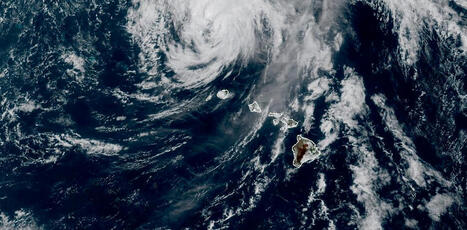
The Hawaiian Islands rarely see significant hurricane damage, but they just experienced the effects of their second hurricane in a year as Hurricane Lowell’s eyewall brushed Niihau, west of Kauai, on Sept. 8, 2026.
California-based Cowboy Space is leasing a 291,035-square-foot industrial facility in Kent, Wash., to support the production of hardware for its planned constellation of AI data center satellites, according to the company that arranged the lease. “According to Newmark Research, the transaction is the largest industrial lease in the Puget Sound region year-to-date,” Newmark, the real estate broker for the deal, said in a news release. Newmark represented CenterPoint Properties, Cowboy’s new landlord. The facility at 7650 S. 228th St. previously served as a Costco distribution and delivery center. “This building was originally designed for large-scale logistics users, but Cowboy Space recognized the opportunity to reimagine it as a highly specialized production facility,” said Taylor Hoff, a vice chairman at Newmark’s office in Bellevue, Wash.
The Exploration Company (TEC) has raised $450 million to build reusable spacecraft, in what it describes as “the largest-ever Series C by a European space company.” The queue to send objects into orbit is growing, but space infrastructure isn’t keeping up with demand. As the realization sinks in that Elon Musk’s SpaceX can’t be the sole answer, other companies are raising their hand — and money. These include The Exploration Company (TEC), which operates out of Germany, France, Luxembourg, Spain, and Italy, and which has raised $450 million in what it describes as “the largest-ever Series C by a European space company.” But the race is global, with U.S.-based rival Stoke Space currently raising a $1 billion Series E round. Rivalry aside, these rounds show that investors on both sides of the Atlantic are willing to back companies seeking to build reusable spacecraft. That’s a category pioneered by SpaceX, but that many players, both public and private, now believe it shouldn’t solely control as space gains strategic importance. These sovereignty-related concerns create extra tailwinds for an EU-headquartered company like TEC. Led by Hélène Huby, a French national who spent two decades at Airbus and ArianeGroup, the company intends to use its funding to build the foundation for a reusable European heavy-lift launcher offering an affordable alternative to SpaceX.
The obligations promise more accountability, but applying them to AI chatbots and gaming platforms raises new questions, writes Mariana Olaizola Rosenblat. On August 31, the European Commission designated OpenAI’s ChatGPT as a Very Large Online Search Engine (VLOSE) and named Roblox and Reddit Very Large Online Platforms (VLOPs) under the Digital Services Act (DSA). Four months from now, these services will have to comply with additional obligations, including that they must: - assess and mitigate the systemic risks their services generate
- submit to annual independent audits
- open their internal data to vetted researchers
- give users at least one content recommendation system not based on profiling
- publish a repository of the advertisements they run
- release biannual public reports on their content moderation
These new requirements kick in anytime an online platform or search engine becomes “very large,” meaning that it reaches at least 45 million average monthly users in the EU. The implications are substantial, particularly for transparency.
|
I predicted its decline 25 years ago. Today, the U.S. has serious problems, but our rivals have even bigger ones. Is America an empire? That was the question on the minds of many U.S. citizens 25 years ago, in the wake of the September 11, 2001, terrorist attacks on the United States. And it is a question being asked again today, as the war with Iran drags into its seventh month, and Donald Trump continues to fantasize about annexing Canada and Greenland—to say nothing of the application of the “Donroe Doctrine” and the “Trump Corollary” in Venezuela and (coming soon) Cuba. In the years after 9/11, a standard left-wing interpretation was that Osama bin Laden and his suicidal hijackers had struck a blow against American imperialism in the Middle East. Surprisingly, some neoconservatives within the George W. Bush administration agreed. “We’re an empire now,” an unnamed “senior adviser” to President Bush told journalist Ron Suskind in 2004, “and when we act, we create our own reality. And while you’re studying that reality—judiciously, as you will—we’ll act again, creating other new realities, which you can study too, and that’s how things will sort out. We’re history’s actors. . . and you, all of you, will be left to just study what we do.” This was not the official line, of course. “We’re not an imperial power,” said President Bush in April 2005. “We’re a liberating power.” In his brilliant new history of the modern Middle East, The Cauldron, Simon Sebag Montefiore shows the ambivalence Americans have always felt about their imperial role in the region. At the height of the 1973–74 Arab oil embargo, Henry Kissinger threatened to seize the Saudi oil fields. He was bluffing. Nearly 30 years later, partly on Kissinger’s recommendation, Paul Bremer found himself installed as Grand Poo-Bah in charge of the Coalition Provisional Authority in Baghdad. It was May 2003. Within seven months he had to admit, in an email to his wife: “We are already halfway out of [here]. . . . We are not ready for empire!” And yet, and yet. There’s just something about unleashing a storm of steel against the Persians, as the United States has this year, that does seem kind of empire-y.
Experts warn of a global surge in PFAS production driven by AI and data centers. As a United Nations expert reiterated a call for a global ban on nonessential uses of per- and polyfluoroalkyl substances, a Swedish nonprofit on Monday released research on how rapidly advancing artificial intelligence and related data centers are helping to drive a surge in PFAS production. Often called “forever chemicals” because they don’t easily break down in human bodies or the environment, PFAS are tied to range of health issues, including various cancers. For months, advocacy groups, journalists, and researchers have stressed that “data centers have a PFAS problem.”
Big manufacturers planning to produce more of the forever chemicals to meet demand from datacentres. Pfas companies are launching a “tidal wave” of forever chemicals production to meet demand from the AI industry, a campaign organisation has warned. Despite alarm over the chemicals, which have been linked to cancer, a survey of the 10 biggest manufacturers found most had plans to increase production. Many frame their investments around the “AI revolution”, because of the role Pfas play in semiconductor production and next-generation datacentre cooling systems. But opponents warn that the chemicals, which never degrade in nature, are a ticking timebomb for human and planetary health. They say increased production risks undermining nascent moves to restrict Pfas in Europe, the UK and parts of the US.
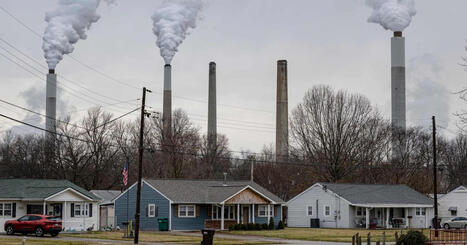
A federal appellate court rejected the Trump administration's push to keep an aging Michigan coal plant open, a decision cheered by climate advocates fighting a range of similar orders.
How batteries, grid connections and AI are turning energy from a network cost into an infrastructure asset. What got me looking at this was Verizon. During Verizon’s second-quarter call, Dan Schulman explained that the company is removing old copper equipment from thousands of central offices. That is freeing up buildings that already have power, permits, backup systems, and network connections. Verizon is starting to reuse some of them as small data centers for AI inference, and Schulman said an early trial sold out its available capacity within 24 hours. At Goldman Sachs Communacopia this week, he went further. Verizon is already signing agreements around some of those decommissioned sites and expects the business to start generating noticeable revenue from inference and edge computing next year. Mobile operators probably consumed around 310 TWh of electricity in 2025, roughly 1% of global electricity use, and spent around $52 billion on energy. Operators also consume billions of liters of diesel and gasoline every year, while networks account for more than three-quarters of their electricity use.
A $2.5 billion factory in Georgia now produces solar panels from raw wafer to finished product, a milestone for U.S. manufacturing in an industry China has dominated for over a decade. Inside the vast QCells factory in Cartersville, Georgia, workers and a bevy of robots move ultra-thin slices of polysilicon through a lengthy series of machines and chemical baths to get what are known as wafers. “The $2.5 billion, the 3.5 million gallons of water, the 90 megawatts of power, the 60 tons of chemicals on site, and all of the football fields worth of infrastructure you've seen is to arrive at this,” said Scott Bell, vice president of external affairs at QCells, holding up one of the paper-thin blue wafers. It’s the basic building block of a solar panel. In June, the plant, about an hour northwest of Atlanta, expanded from assembling the major components of solar panels to bringing the whole production process under one roof. It’s a major milestone for the U.S. solar industry.
El Niño can affect agriculture, marine life and economies in profound ways, including slowing commerce at the Panama Canal. This El Niño is likely to be the strongest in over a century. El Niño is here, and forecasters warn that it’s likely to be bigger and stronger in 2026-27 than any El Niño event recorded in at least 150 years. During strong El Niños, global air and ocean temperatures spike, and precipitation patterns shift dramatically – flooding rains deluge places that are normally dry, and drought strikes some of the wettest locations on earth. With this El Niño arriving on top of already high global ocean and air temperatures, it carries the potential for extraordinary impacts to millions of lives throughout the world. Globally, August 2026 was the hottest month on record, according to data from Europe’s Copernicus climate service. Those effects are already showing up in Central and South America.
10 September 2026 - CHATHAM, MA - Chatham Harvesters is the only fishing producer owned co-op in Massachusetts - and it wants to bring a counterbalance to the current seafood industry model of large centralized buyers and processors, focusing instead on a model where local fish gets eaten locally. What is Chatham Harvesters? Brett Tolley, co-founder and general manager of Chatham Harvesters says local fish have a bright – and tasty – future. “We really honed in on doing right by our Cape Cod community, feeding people the best fish that we got,” he said. Chatham Harvesters is the only fishing producer coop in the state – and a company that suggests a new path for sustainable fishing fleets, fishing communities, consumers, and the ocean. If it seems like a big mission, it is. What does the cooperative do?
A massive solar flare could seriously disrupt life on Earth – but new NASA missions and others in development will help monitor the Sun. Most days, you can look up and see the Sun shining above. Even if it’s hidden behind clouds, you know it’s there, lighting up the sky. But while the Sun’s light might be relatively constant, its surface is surprisingly active. If you hopped on NASA’s Parker Solar Probe for a closeup view of the Sun, you might see spurts of charged gas called solar flares coming off its surface, or dramatic explosions called coronal mass ejections. These events travel outward from the Sun through space, and sometimes they interact with Earth’s magnetic field, causing space weather. This week, the National Oceanic and Atmospheric Administration is tracking several coronal mass ejections that could lead to a minor geomagnetic storm in Earth’s atmosphere. People in Canada and the northern United States may be able to see an aurora the evening of Sept. 9, 2026.
Seattle-area startup targets early 2027 for first Pathfinder launch, with bigger Nova Block 2 due for 2029 debut. Stoke Space says it has raised roughly $1 billion to get ready for the first launch of its fully reusable Nova rocket — and to scale up the rocket’s design for even bigger payloads. To accommodate its grander ambitions, the Kent, Wash.-based startup is also scaling up its rocket test facility in Moses Lake, 175 miles to the east. “We have confidence in the foundation that we’ve laid today, and now it’s time to scale,” Stoke Space CEO and co-founder Andy Lapsa told GeekWire. The newly announced Series E financing round was co-led by Point72 Ventures and Spark Capital, with participation from General Innovation, Glade Brook Capital, US Innovation Technology, Washington Harbour Partners, Woven Capital, Y Combinator and other investors.
A watchdog group representing 9/11 first responders and survivors applauded New York Mayor Zohran Mamdani on Tuesday as his administration released a trove of long-buried files that shed new light on how New Yorkers were misled about air quality and health risks in the wake of the terrorist attack. “I want to thank Mayor Mamdani for being the mayor, after 25 years, who finally begins to answer the question, ‘What did the city know about the dangers from the toxic cloud at ground zero, and when did it know it?’” said Benjamin Chevat, a longtime advocate for programs to help survivors and first responders, who leads the group 9/11 Health Watch.
|