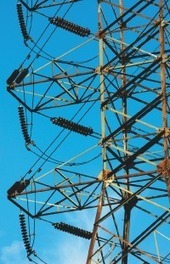
Our Global Future in the 21st Century is based on "The Third Industrial Revolution" which finally connects our new ICT infrastructure with distributed energy sources that are both renewable and sustainable
Morocco's ambitious and expensive plan to draw 40 percent of its energy needs from the limitless power of its blazing sun by 2020 received a publicity boost this week as the first solar powered plane to make an intercontinental flight landed in the North African kingdom.
As Swiss pilot and adventurer Bertrand Piccard stepped out of the fragile craft in front of reporters late Tuesday following his 20-hour flight from Madrid, he immediately paid tribute to Morocco's solar ambitions, which include one day exporting electricity to Europe.
"We came here out of admiration for Morocco's pioneering solar energy program," Piccard said, flashing a brilliant smile and hugging members of his team on the tarmac.
Just moments earlier, the Solar Impulse had swept silently out of the darkness to glide onto the runway. Its four battery-powered turbo-props were already still, showing off the aircraft's ability to fly even when the sun is gone.
"It was perhaps the most beautiful flight of my life. I have dreamed since I was a child of flying without using fuel," said Piccard, who hails from a family of adventurers and who already has circumnavigated the world by balloon.
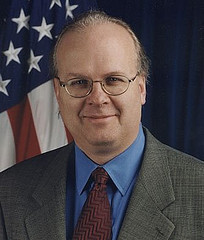
Major new supporters, including Republican strategist Karl Rove, emerged for the campaign to keep U.S. wind energy growing by extending a critical Production Tax Credit (PTC), as the global wind industry's largest annual gathering, WINDPOWER, entered its fourth and final day today in Atlanta.
Microsoft and Sprint delivered a new letter to Congressional leadership asking for an extension of the PTC. Microsoft and Sprint are the largest "wind customer" companies to endorse the campaign, ranking 37th and 90th, respectively, in the Fortune 500, with combined annual revenues of over $100 billion. They join 15 other major U.S. companies and consumer brands, including Starbucks, Nike, Campbell 's Soup, Staples, Yahoo!, and Hewlett-Packard, who have committed to purchasing more renewable energy, and endorse the PTC extension.
And Tuesday, Karl Rove endorsed a PTC extension along with Robert Gibbs, a former spokesman for President Obama in a lively discussion during a general assembly appearance before an audience of thousands.
Europe must agree 2030 milestones as soon as possible to spur investment in renewable energy, or green power growth will fizzle once firm policy runs out in 2020, the European Commission said on Wednesday in its latest strategy statement.
Many in the renewable energy sector agree there is a need for strong guidance, but they want binding targets, rather than vague aims. At the other extreme, some of the 27 member states are strongly opposed to legal goals for renewables.
The European Union currently has a firm target to increase the share of renewable energy in the mix to 20 percent, which analysts and industry say it should meet and could exceed.
"We should continue to develop renewable energy and promote innovative solutions. We have to do it in a cost-efficient way," Energy Commissioner Guenther Oettinger said in a statement.
"This means producing wind and solar power where it makes economic sense and trading it within Europe, as we do for other products and services."
Let’s get the boring stuff out of the way up front.
The renewable energy Production Tax Credit (PTC) is an incentive provided to energy producers equal to 2.2 cents per kilowatt-hour, adjusted annually for inflation. If you generate electricity using a renewable system — geothermal, wind, solar, etc. — you’re eligible.
For now, anyway. The credit is expiring for most forms of energy creation at the end of 2013. For wind, it’s up at the end of 2012.
Which has wind energy producers understandably nervous. But don’t worry, wind energy producers! Karl Rove has your back!
From well-established companies and smaller trading houses to international investors, more and more people and companies are making solar energy systems available in Oman.
One of the first providers of solar energy equipment in the Sultanate is Oman Solar Systems.
Since 1991 it has been providing solar panels which convert light to energy and a variety of other systems. Oman Solar Systems has worked with several companies in Oman, both large and small, installing solar panels for them. It has projects for PDO, Omantel and OmanMobile, Occidental of Oman, the Ministry of Information, the Ministry of Regional Municipalities, the Ministry of Water Resources and many other companies and government departments.
With its booming economy, growing middle class and investments in city infrastructure, Brazil is looking like it’ll be the next hot market for smart grid development. According to a report in Metering, Siemens is making a $1 billion investment into the smart grid market in Brazil over the next five years and is in the process of acquiring an undisclosed smart grid startup in the country.
Investments in the smart grid in Brazil are supposed to hit $36.6 billion by 2022, according to a report from the Northeast Group. That report says that Brazilian utilities will use smart grid investments to reduce electricity theft, improve grid reliability and simply to build out electricity infrastructure. Brazilian utilities are also investing in smart meters, and the government and the Brazilian regulator ANEEL want to deploy 63 million AMI meters by 2021.
Mitt Romney’s opposition to tax breaks for wind farms puts him at odds with conservative support for renewable energy in states such as Iowa and Texas that have built the largest wind industries with taxpayer help.
The presumptive Republican presidential nominee favors more oil drilling and fewer clean-air regulations and has voiced opposition to government backing for wind and solar projects.
Romney hasn’t taken a position on renewing a federal tax credit for wind power that’s set to expire Dec. 31, though he’s ridiculed government subsidies for turbines. Republican lawmakers are backing a bill to extend the incentive. President Barack Obama supports the credit and says it will create jobs.
The 2012 official World Tourism Day (WTD) celebrations will be held in Maspalomas, Gran Canaria, Spain (27 September 2012). Under the theme “Tourism and Sustainable Energy: Powering Sustainable Development”, WTD 2012 highlights the need to bring the tourism sector and energy stakeholders closer together to spur tourism’s contribution to sustainability.
“Tourism is at the forefront of many of the latest and most innovative sustainable energy initiatives,” said UNWTO Secretary-General, Taleb Rifai. “One only has to think of the investments being poured into renewable energy sources for aviation, or the energy technology solutions implemented in hotels around the world, to know that sustainable energy is a major priority for the sector.
Sustainable Energy Development Authority (SEDA) Malaysia has allayed market concerns over delays in the signing of the Renewable Energy Power Purchase Agreements (REPPAs) between successful feed-in tariff (FiT) applicants and Malaysia’s power utility company, Tenaga Nasional Berhad (TNB).
SEDA Malaysia chief executive officer Badriyah Abdul Malek says the delays were caused by two issues: firstly, each applicant has unique circumstances, and there was considerable due process to follow; and secondly, TNB itself needed to change its approval process to empower its management staff with the authority to sign REPPAs.
SEDA Malaysia, in a statement to Green Prospects Asia, says TNB will soon be able to comply with the time frame to ink REPPAs – four weeks for installations of less than 1 MW and eight weeks for larger installations, having delegated signatory powers to its senior management.
SHET ( In Indonesian language : Sistem Hibrida Energi Terbarukan) is an integrated system that provides on-line performance control and monitoring of various harvesting modules for renewable energy developed in the vicinity of a sustainable bridge. The SHET algorithm is further designed to accommodate the future need for combining BHMS (Bridge Health Monitoring System) and establishing a complete engineering monitoring and assessment system for the bridge.
More than a quarter of all farmers have not just green fields but "green" barns too, thanks to a surge in the use of solar panels and wind turbines.
Renewable energy is promising to overtake rural tourism as a secondary income for the agricultural sector, with 200 megawatts of power – enough for 40,000 households – installed, according to joint research by the National Farmers' Union (NFU) and NatWest bank.
They found that one in six farmers will have solar photovoltaic (PV) systems in place by the middle of this year and one in five will be producing clean electricity by this date. If this trend continues, as much as 15% of all UK electricity from renewable sources come from the land by the end of this decade, they believe.
Jonathan Scurlock, chief renewable energy adviser to the NFU, said: "The NFU has been encouraging farmers and growers nationwide across all sectors to diversify into renewable energy for the past few years, but we are amazed at this level of uptake already.
There are three types of people in the world, the saying goes. Those who make things happen, those who watch things happen, and those who wonder what happened. When it comes to the Smart Grid, this observation applies to businesses and governmental entities too. States like California are making things happen through innovative policies, exemplified in two decisions just enacted in this past week that will influence the state’s three investor-owned utilities’ Smart Grid plans.
The California Public Utilities Commission (CPUC) ruled in favor of an expanded definition and standard calculation to develop the number of residential and small commercial customers who can participate in net metering. Net metering is a tariff that lets participants receive a credit on their bill for excess electricity generated by their solar equipment that is returned to the grid.
What does this mean for California’s investor-owned utilities (IOUs)? The amount of net metered solar that can be added to the grid more than doubles from 2.4 GW to 5.2 GW. That in turn increases pressure on utilities to upgrade their distribution grids for bi-directional power flows, which is one of the primary characteristics of a Smart Grid. This additional power from a clean but intermittent source of energy may spur increased utility focus and investment in solutions that help manage distributed energy resources (DER) and in DER assets like community-based energy storage.
Universal Service Fund, Intercarrier Compensation, Connect American Fund – big topics, technical topics, wonky topics, topics that most people avoid like the plague – but avoid at your own peril. USF, ICC and CAF are federal funding mechanisms that help build and maintain broadband to rural areas. Without federal funds many areas will not get broadband coverage, in fact some areas may lose coverage because between difficult terrain and low population density it is very difficult to make a business case to serve those areas.
Last week, the Minnesota Intelligent Rural Communities (MIRC) participants and leaders met to talk about broadband adoption. USF/ICC/CAF came up several times – and I was lucky enough to have a video camera with me. (Serendipity for the following videos was great – actualy footage not as much – but I thought the content was worth the lower quality video.)
First Colleen Landkamer from USDA Rural Development mentioned USF during the keynote lunch…
Click headline to read more and watch the two videos--
A solar energy plane landed in Morocco on Tuesday, completing the world's first intercontinental flight powered by the sun to show the potential for renewable-energy air travel.
The Solar Impulse took off from Madrid at 0322 GMT on Tuesday and landed at Rabat's International airport after a 19-hour flight. Shortly before Swiss pilot Bertrand Piccard landed in Rabat's airport, the project co-founder and pilot Andre Borschberg said the aircraft has proved its sustainability.
"The aircraft can now fly day and night. It's quite a show ... It's a technology we can trust," he told reporters.
Piccard descended from the plane, smiling as he was greeted by Borshberg and Mustafa Bakkoury, the head of Morocco's solar energy agency.
The Federal Government has restated its commitment to promote activities that can help in creating an enabling environment for faster Information and Communication technology roll-out in Nigeria. The Minister of Communication Technology, Mrs. Omobola Johnson, said government would ensure accelerated roll-out of a robust cost effective ICT infrastructure to increase access of Nigerians to ICTs.
Speaking during a visit to the ministry by the House Representatives Committee on Communication, as part of its oversight function in Abuja recently, the minister listed the priorities of the FG to include infrastructure provision, inclusive development, job creation, e-Government and sustaining a sound regulatory environment for ICTs to thrive in Nigeria.
On the poor quality of service for which some operators were recently sanction for, the minister said the issue of poor quality of service by telecoms operators would soon be a thing of the past.
She said the ministry was working hard to improve the operating environment and en-sure that issues of inadequate number of base stations, arbitrary cost and lengthy process of right of way acquisition, interruptions to laying cables, wilful and accidental damage to fibre optic cables and base stations, and other such challenges being faced by the operators are resolved in order to ensure improved services.
China is currently the second largest consumer of energy in the world (behind the US) and is projected to overtake the US as the largest consumer by 2015. To meet its growing energy needs, China has made impressive efforts in recent years to expand its renewable energy capacity. This effort was kick-started with the passage of the Renewable Energy Law in 2005.
After four years of rapid expansion in China’s renewable energy sector, China passed amendments to the Renewable Energy Law on December 26, 2009. While it still remains to be seen what the exact impact of the amendments will be, the amendments illustrate China’s continued commitment to expanding its renewable energy supply and overcoming some of the existing barriers to achieving this objective.
The original Renewable Energy Law created an umbrella framework for regulating renewable energy in China. (Here is the text of the original law in English and Chinese). Like many laws enacted in China, the Renewable Energy Law left many of the important details to be determined later by various government agencies through regulation.
Since the Renewable Energy Law went into effect on January 1, 2006, numerous regulations have been issued to fill in some of these details. Although the amendments do not alter the underlying policy goals of the original law, they do add additional detail to the existing framework to improve implementation of the law’s underlying goals.
Click headline to read more and access hot links--
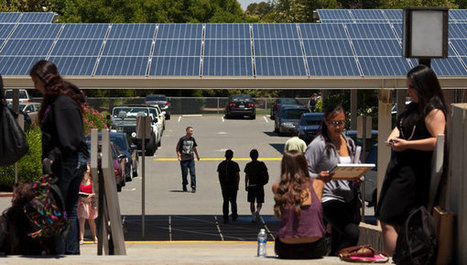
In California’s sun-scorched Central Valley, the monthly electric bill can easily top $200. But that’s just about what George Burman spent on electricity for all of last year.
When the sun is shining, the solar panels on his Fresno condominium produce more than enough power for his needs, and the local utility is required to buy the excess power from him at full retail prices. Those credits mostly offset his purchases from the electric company during cloudy days and at night.
Mr. Burman says the credit system, known as net metering, is a “very nice benefit” for him. But it’s not such a good deal for his utility, Pacific Gas and Electric.
As he and tens of thousands of other residential and commercial customers switch to solar in California, the utilities not only lose valuable customers that help support the costs of the power grid but also have to pay them for the power they generate.
Ultimately, the utilities say, the combination will lead to higher rate increases for everyone left on the traditional electric system.
“Low-income customers can’t put on solar panels — let’s be blunt,” said David K. Owens, executive vice president of the Edison Electric Institute, which represents utilities. “So why should a low-income customer have their rates go up for the benefit of someone who puts on a solar panel and wants to be credited the retail rate?”
Solar power firms are betting that the nuclear crisis in Japanwill become a game-changer for renewable energy in the world's third largest economy, with new foreign entrants such as Canadian Solar looking to go toe-to-toe there with some of the biggest utilities in Asia.
They will be given a big helping hand next month when the government introduces a generous subsidy for renewable energy via a so-called feed-in tariff (FIT), in a bid to encourage alternative energy sources, which currently only generate about 1 percent of power in Japan.
The FIT, which excludes large hydro-electric schemes, will require utilities to buy electricity generated by renewable sources such as solar, wind and geothermal heat at a premium for 20 years. Costs will be passed on to consumers through higher power bills.
After dallying for years, lawmakers in Japan hastily turned FIT into law last summer, with the Fukushima nuclear disaster in March 2011 severely shaking the public's faith in atomic energy.
Take a poultry farmer from Starbuck, Minnesota with an affinity for flying, and you might end up with one of the most notable renewable energy success stories in the state, if not the nation.
Randy Hagen is a farmboy. He raises turkey hatchlings for some of the biggest turkey producers around. He also likes flying. He is an instrument-rated pilot.
Instruments are delicate things. If the avionics in a cockpit (which can often cost as much as the plane itself) heat up from too much sun, they can fry. When your instruments are fried, flying can lose its romance.
“The instructors would tell me, don’t fire up the instruments if the cockpit is hot,” remembers Randy.
He thought about his turkeys. They shouldn’t get hot either.
“We use negative pressure in the turkey buildings to keep them cool.” So, he thought, why not install a small version of the big fans in the barn inside the cockpit. Just open the vents on the wings and let the fan draw out the hot air. Like the turkeys, the avionics would not overheat.
So, Hagen invented the fan at the farm in Starbuck. It worked. But, it would take an awfully long run of extension cord to stretch to the plane on the tarmac. That’s when he thought of using the light of the sun against itself.
Germany’s powerful industry lobby group says it will independently monitor the country’s ambitious switchover from nuclear power to renewable energies over the next decade.
Hans-Peter Keitel, head of the BDI lobby group, on Monday criticized the government’s lack of resolve in following up on last year’s decision to speed up phasing out all nuclear power by 2022.
Keitel says the energy switchover in Europe’s biggest economy amounts to “open heart surgery” and requires “intense monitoring and professional management.”
The European Bank for Reconstruction and Development (EBRD) announced on May 18th that it is stepping up investments to improve energy efficiency and address climate change via new investment in projects worth up to €25 billion over the next three years, under the new phase of the Bank’s Sustainable Energy Initiative (SEI).
Both energy consumption and water loss in most water and wastewater systems worldwide could be reduced by at least 25% through cost-effective efficiency actions.
Using a combined water and energy efficiency approach, since 1997 the Alliance to Save Energy’s “Watergy” programme has achieved significant water, energy, and monetary savings in more than 100 municipalities in 15 developing countries, and is now being adopted in the United States.
The Alliance coined the term “Watergy” to describe the strong link between water and energy in water supply and wastewater treatment systems.
Its goal is to provide cost effective water and wastewater services while reducing energy consumption, water wastage and protecting the environment.
Watergy project activities include energy audits, automation of distribution systems, leak detection and loss reduction, pressure management, installation of metering and monitoring systems, and distribution system modeling for water and energy efficiency.
Renewable Energy Group (REG), a company focused on producing and marketing biodiesel, says it plans to build a B100 wholesale terminal at its biodiesel plant near Clovis, N.M.
The facility, which is almost halfway complete, will have an output of approximately 15 million gallons per year. REG is converting the site's liquid storage and truck load-out into a wholesale terminal for REG-9000 biodiesel sales via truck and rail.
Smart energy is "the range of efficient technological options available to providing electricity in a distributed fashion, either for local use or for grid support." It is the increasing shift to a modular and distributed systems-based approach to energy. Until recently, the focus has solely been on renewable energy, but with the emergence into the commercial marketplace of energy storage systems and advanced, efficient, conversion devices such as fuel cells, it is increasingly a systems-based network that is posting significant year-on-year growth. Pike Research's analysis indicates that the size of the smart energy market is now growing at such a pace that it represents, in 2011, over 10% of the global annual additional capacity forecast by the International Energy Agency.
A number of convergent market drivers are leading to expanded availability and increasing revenue opportunities across the smart energy continuum. Such drivers include the rising costs of maintaining the current energy system as well as regulatory and policy initiatives in many countries around the world. In the policy arena, the European Union is leading the way, but a number of other countries, including Australia and South Africa, are positioning themselves as early adopters of smart energy technologies.
Click headline to read more and access hot link to the report
When greentech investing was in sort of a bubble in 2007/2008, it wasn’t all that uncommon for a former web or computing entrepreneur to take on a crazy dream in the energy sector. But now, after the recession and a difficult year for greentech, it’s quite a bit less common. However that’s not stopping entrepreneur Russ Wilcox who is the former CEO and co-founder of display-maker E Ink, and according to Boston.com, has just joined next-gen nuclear startup Transatomic Power as its CEO.
Transatomic Power is a startup designing a new type of nuclear reactor that can run off of nuclear waste and also produce significantly less waste than the traditional lightwater nuclear reactor. Called the “Waste Annihilating Molten Salt Reactor” or “WAMSR,” the reactor uses liquid fuel and molten salt — in contrast to solid fuel rods — and also has a more safe way to power down the system than a traditional lightwater nuclear reactor.
To get content containing either thought or leadership enter:
To get content containing both thought and leadership enter:
To get content containing the expression thought leadership enter:
You can enter several keywords and you can refine them whenever you want. Our suggestion engine uses more signals but entering a few keywords here will rapidly give you great content to curate.


 Your new post is loading...