Qatar National Broadband Network (Qnbn) has reached a milestone in its mission to bring high speed fiber optic broadband infrastructure to the country with the opening of two state-of-the-art Central Offices which will improve the digital connectivity of 30,000 residences and businesses in the West Bay area. The announcement coincides with ‘Gimme Fiber Day’, an annual international event held on November 4th to promote the use and development of fiber optics in telecommunications networks.
The Central Offices are a major boost to the fiber optic infrastructure made available to Qatar’s Service Providers. By providing a local-loop for more effective optical transfer of data, known as a ‘backhaul facility’, the central offices enable faster data transmission and efficiency in service continuity.
As part of Qnbn’s government mandate to improve ICT capabilities and user choice, the company deploys a Next Generation high speed fiber optic infrastructure Network in an open-access model which enables service providers to co-locate and operate their network equipment within Qnbn’s Central Offices, utilizing services available in the facility.Ahmed Al-Sulaiti, Qnbn’s Chief Technology Officer, commented, “We are making Qatar’s fiber optic future a reality with the opening of these two Central Offices which are the backbone of a knowledge economy and act as catalysts to connectivity:
it is a win-win scenario which means service providers have open access to new fiber optic infrastructure; customers have more choice in selecting operators to provide faster, next generation internet services; and businesses benefit from an enhanced broadband network which fuels economic growth via superior connectivity.
Our Global Future in the 21st Century is based on "The Third Industrial Revolution" which finally connects our new ICT infrastructure with distributed energy sources that are both renewable and sustainable
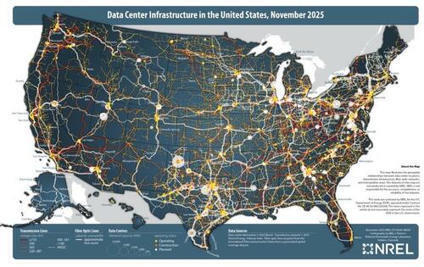
Earlier this month, “Marketplace” kicked off our AI series looking at whether the industry, with its hundreds of billions of dollars in spending on data centers specifically, is becoming too big to fail.
“Marketplace” host Kai Ryssdal also visited a Los Angeles data center, and “Marketplace Tech” host Meghan McCarty Carino looked into people’s negative feelings about our AI future.
To wrap up this leg of the reporting, Ryssdal and McCarty Carino spent the day on the ground together in Silicon Valley to explore the AI economy — and the trade-offs that come with it.
Despite the AI boom, McCarty Carino, who both lives in and grew up in the Bay Area, noted that it doesn’t feel like a boom time for the local economy.
No region does more to fuel the U.S. economy than the Midwest, yet rural communities are so often shortchanged and unrecognized. However, with the July 4 passage of the “One Big Beautiful Bill,” Congress and President Trump established a market-based solution…
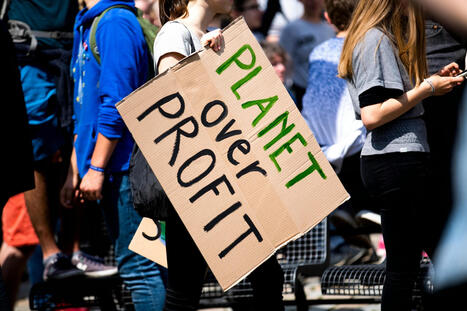
Climate leaders can revitalize the movement by rallying against excessive utility profits and showing how local, clean energy policies can cut rising bills.
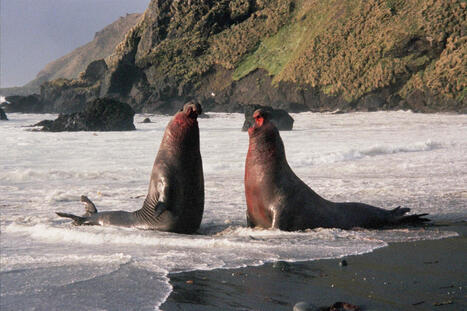
An unprecedented avian flu outbreak in Argentine Patagonia devastated a stable elephant seal colony, highlighting the rising threat of infectious disease to wildlife in a warming world.
In the spring of 2023, we returned to Península Valdés, a rugged coastal region in Argentine Patagonia, expecting to witness the familiar sights and sounds of southern elephant seals during their breeding season. These massive marine mammals, with males weighing up to 4,000 kilograms, gather in large colonies on the beaches to give birth, nurse their young, and mate. The air usually resonates with the cries of thousands of pups calling out to their mothers, the grunts and bellows of males competing for dominance, and the buzz of life thriving on the rocky shores.
Instead, we were met with an eerie silence and a devastating sight: beaches once bustling with thousands of seals were littered with hundreds of dead pups and adults. The usual cacophony had been replaced by the stench of decay, and the empty spaces where seals should have gathered were painfully obvious. This mass mortality event had unfolded over just a few weeks—a stark and sudden collapse that no one could have predicted with such speed and severity.
Communities can balance safety, cultural life, and ecological health by designing nighttime lighting that protects both people and the natural world.
The night sky—the silent dark between stars—is a living commons bridging Earth, life, and spirit. As the 13th‑century Zen master Eihei Dōgen taught in Keisei Sanshokuor “The Sound of the Streams, the Shape of the Mountains,” rivers, forests, mountains, and night are not mere backdrops but the body and speech of the Buddha—sacred, alive, and deserving reverence.
Imagine stepping outside on a clear night, looking up at the stars, only to find the heavens dimmed to a faint, featureless glow. Where once the Milky Way stretched across the sky, now only a handful of stars remain visible to the naked eye. This creeping veil is light pollution—the quiet theft of night’s natural darkness. It spills from streetlights, billboards, and high-rise windows, casting cities in a permanent, artificial twilight.
While it leaves no residue in air or water, its effects ripple through life on Earth, confusing migrating birds, misleading sea turtle hatchlings, and disorienting nocturnal animals. The same lights also negatively impact humans, disrupting sleep, altering hormone cycles, and affecting overall health. Also, access to natural darkness is not equally experienced: communities differ in how light—or the lack of it—shapes public safety, cultural life, and ecological exposure.
An airport made of bamboo? A tower reaching 20 metres high? For many years, bamboo has been mostly known as the favourite food of giant pandas, but a group of engineers say it’s time we took it seriously as a building material, too.
This week the Institution of Structural Engineers called for architects to be “bamboo-ready” as they published a manual for designing permanent buildings made of the material, in an effort to encourage low-carbon construction and position bamboo as a proper alternative to steel and concrete.
Bamboo has already been used for a number of boundary-pushing projects around the world.
KoBold Metals has raised $537 million in its latest funding round as it seeks to become a key player in the race for critical minerals needed for the energy transition.
Backed by investors such as Microsoft’s Bill Gates and Amazon’s Jeff Bezos, the company said its Series C funding round valued KoBold at $2.96 billion.
The round was co-led by new investor Durable Capital Partners LP and a pair of T. Rowe Price funds making their first investment in the company.
The financing included participation from existing KoBold investors Andreessen Horowitz Growth, BOND, Gates’ Breakthrough Energy, Earthshot Ventures, Equinor, July Fund, Mitsubishi Corporation, and Standard Investments, as well as new investors StepStone Group and WCM Investment Management.
The Berkeley, California-based KoBold uses artificial intelligence to find deposits of minerals such as copper, lithium and nickel.
Sadiq Khan is to warn in a major speech that artificial intelligence could destroy swathes of jobs in London and “usher in a new era of mass unemployment” unless ministers act now.
In his annual Mansion House speech, the London mayor will say the capital is “at the sharpest edge of change” because of its reliance on white-collar workers in the finance and creative industries, and professional services such as law, accounting, consulting and marketing.
Khan will argue that “we have a moral, social and economic duty to act” to ensure that new jobs are created to replace those that will disappear, with entry-level and junior jobs the first to go.
BOSTON – Governor Maura Healey has filed reforms to implement a new streamlined process making it, according to the governor’s office, easier and faster to build homes and lower housing costs.
The reforms to the review process for housing development of the Massachusetts Environmental Policy Act Office will make it faster, simpler, and more predictable while maintaining strong environmental protections, according to Healey’s office.
The reforms are set to take effect on January 30th.
Healey says review timelines will be shortened from years to just 30 days.
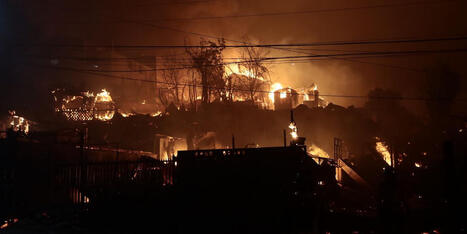
Wildfires in Chile's Ñuble and Biobío regions killed at least 18 people and forced over 50,000 to evacuate, highlighting the dangers of the worsening climate emergency.
On the heels of another historically hot year for Earth, disasters tied to the fossil fuel-driven climate emergency have yet again turned deadly, with wildfires in Chile’s Ñuble and Biobío regions killing at least 18 people—a figure that Chilean President Gabriel Boric said he expects to rise.
The South American leader on Sunday declared a “state of catastrophe” in the two regions, where ongoing wildfires have also forced more than 50,000 people to evacuate. The Associated Pressreported that during a Sunday press conference in Concepción, Boric estimated that “certainly more than a thousand” homes had already been impacted in just Biobío.
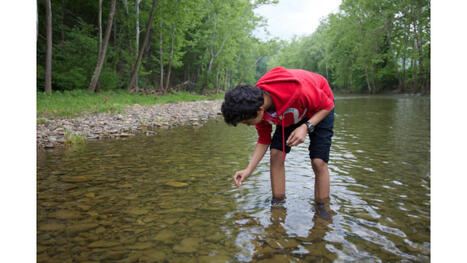
Forests, especially old, undisturbed ones, not only contribute to replenishing our groundwater but also act as the first source of filtration for streams, ponds, and reservoirs.
150 million people in the United States have some of their drinking water filtered by forests. Forests, especially old, undisturbed ones, not only contribute to replenishing our groundwater but also act as the first source of filtration for streams, ponds, and reservoirs. Approximately 74 percent of all water in the U.S. is sourced from above-ground water sources. Prioritizing the protection of old-growth forests is an easy way to ensure that we continue to supply Americans with clean drinking water.
The massive winter storm that disrupted US energy production, sparked the most flight cancellations since Covid, and paralyzed much of the eastern half of the country for days is finally over. BofA chief economist Aditya Bhave has warned that the winter blast could deliver a meaningful hit to first-quarter GDP. However, the eastern half of the US is not in the clear yet. At least another week of brutally cold weather is forecast, which could keep pushing power grids to the brink.
As heating demand surged to record levels, fossil fuel power generation proved critical in preventing widespread rolling blackouts. James Bevan of Criterion Research made that clear in an exclusive note for ZeroHedge:
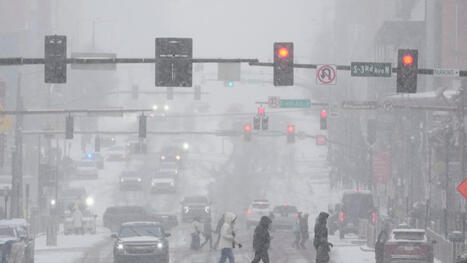
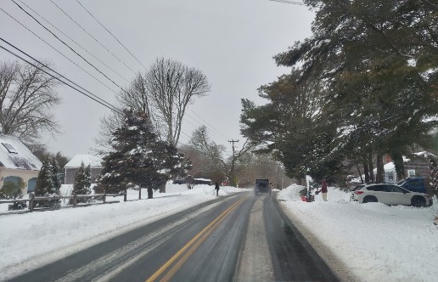
(YARMOUTH) – One of the biggest snowstorms in several years blanketed Cape Cod & the Islands Sunday and early Monday with up to a foot of snow, grinding most activities and transportation to a …
Don't forget to subscribe, share with your friends, leave a recommendation on our podcast feeds, and join the conversation online using the #LocalEnergyRules hashtag!
On everything from housing and education, to gas pipelines, asset managers and private equity firms have been snapping up essential infrastructure at an alarming pace. And now, they could be coming for your utility company.
BlackRock, the world’s largest asset manager, is trying to acquire Minnesota Power, a regional utility company that provides power to approximately 150,000 people in the state. If it succeeds, critics warn, there could be far-reaching consequences for the community, potentially driving up already-soaring utility costs and throwing a wrench in state decarbonization goals.
“There’s no requirement that they pursue this clean energy vision that the current executives in Minnesota Power have laid out,” Minnesota State Senator Jen McEwen told More Perfect Union. “We’re going into this sale on promises without any teeth in the guarantee that it’ll actually be carried forward.”
The “polluter pays” principle transformed the energy industry half a century ago. Now, as industrial agriculture drives climate breakdown, deforestation, and water scarcity, experts say it’s time to apply the same rule to our food systems—and make corporations, not consumers, bear the cost of the damage.
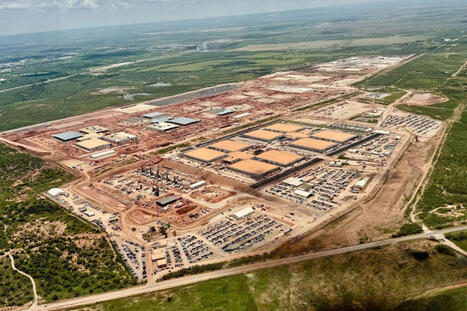
Project Jade could eventually use the same amount of electricity as produced by 10 nuclear power plants, boosting Wyoming’s energy industry while challenging efforts to limit emissions and stressing water supplies.
BROOKLYN, N.Y. — In the back of Black Seed Bagels in northern Brooklyn is a giant catering kitchen filled with industrial-size condiments and freezers full of dough. A tall, silver electric oven, named the Baconator, stands in a far corner, cooking thousands of pounds of meat every week to accompany Black Seed’s hand-rolled, wood-fired bagels.
The Baconator is connected to a battery the size of a carry-on suitcase, which is plugged into the wall. While the morning rush is underway, the 2.8-kilowatt-hour battery can directly power the commercial oven to reduce the company’s reliance on the electric grid, Noah Bernamoff, Black Seed’s co-owner, explained recently at the company’s Bushwick shop. Two more batteries are paired with energy-intensive refrigerators in the front.
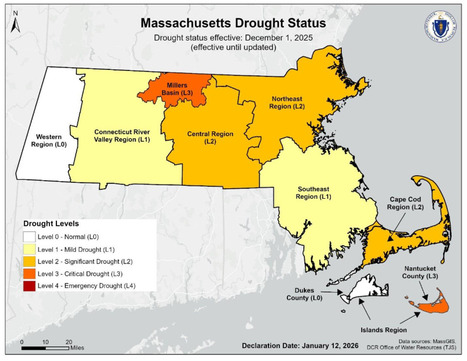
CAPE & ISLANDS – State officials with the Department of Energy and Environmental Affairs have announced that Nantucket County has moved into a state of critical drought, while significant
drought conditions continue throughout Cape Cod.
The update mirrors declining trends in the Northeast and Southeast coastal regions, with the exception of Dukes County, where drought conditions are no longer present.
An Interior Department memo is hampering wind and solar on public lands. It’s one of many federal actions slowing the build-out of cheap, clean energy.
As the Trump administration wages a high-profile attack on the nation’s offshore wind farms, it has also been quietly fighting a brutal battle with renewable energy projects on land.
Since President Donald Trump took office nearly a year ago, his administration has announced at least two dozen policy and regulatory actions aimed at hindering the build-out of wind and solar projects, including rescinding federal tax credits, withdrawing grants and loans, and freezing permitting approvals. Yet one measure in particular has had an outsize chilling effect — and is facing a new legal challenge from clean energy groups.
To get content containing either thought or leadership enter:
To get content containing both thought and leadership enter:
To get content containing the expression thought leadership enter:
You can enter several keywords and you can refine them whenever you want. Our suggestion engine uses more signals but entering a few keywords here will rapidly give you great content to curate.


 Your new post is loading...