Your new post is loading...
Grid operator PJM wants states and utilities to hold data centers responsible for buying their own power — or risk being cut off from grid service. PJM Interconnection, the biggest grid operator in the U.S., has finally settled on a plan to prevent data centers from causing other customers’ utility bills to soar further in its 13-state territory. That plan relies heavily on states themselves, and the utilities they regulate, to force data centers to secure their own power supplies — or face the possibility of getting their power cut off during grid emergencies.
An analysis of the last seven years of Tesla earnings calls shows just how little attention Musk pays to Tesla's car business. Elon Musk wants you to believe Tesla is no longer a car company, even if it’s still shaped like one. The company shipped nearly half a million cars last quarter and made 70% of its money from car sales. Still, Musk has spent the last few years making the case that Tesla is really an AI and robotics company, even if some of the AI happens to live in cars. And whatever the company financials suggest, Musk’s attention has been moving decisively to the AI parts of the company — projects like the Optimus robot and fully autonomous robotaxis — as the everyday concerns of a carmaker get pushed to the side.
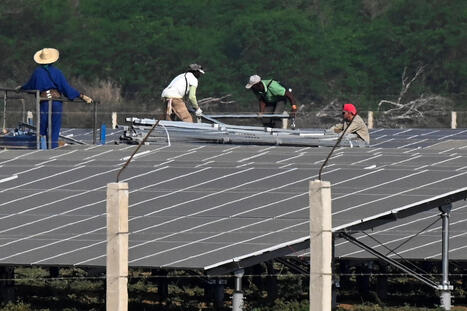
As blackouts continue to cripple Cuba and fuel growing public discontent, China is leveraging the island’s worst energy crisis in decades to deepen its dependence on Chinese-made solar technology. Key Points - Cuban imports of Chinese photovoltaic panels increased over 1,800 percent in five years, with dozens of solar parks now operating across the island.
- China controls nearly 80 percent of the global solar supply chain and has positioned itself as Cuba's leading renewable energy partner while addressing its industrial overcapacity.
- Solar energy accounts for only about 9 percent of Cuba's electricity generation because the aging power grid cannot efficiently integrate new capacity and lacks battery storage systems.
- Cuba compensates for Chinese energy technology with nickel exports, creating asymmetric cooperation that gives Beijing access to strategic minerals while expanding its economic and strategic influence on the island.
Climate change, biodiversity loss and water conservation are often framed as problems in need of national policies. However, there is an often more important level of governance: the neighborhood. If you build a house in the United States today, there’s a good chance you’ll be living under the dictates of a neighborhood homeowners association – roughly two out of every three new homes are in an HOA, as are a third of existing homes. Some of these HOAs have evolved to encourage environmentally friendly yards, particularly in the desert Southwest, but many more throw up barriers to sustainability, even in communities where water is becoming more scarce, wildlife is under threat and homegrown energy can reduce pollution.
Some 180 kg of explosives were used today, Adevărul reported, to move a large rock restricting the flow of water. Acting defence minister Radu Miruță hailed the operation as a success, saying it will help with cooling of the plant and water transport on the river. Given the continuing extreme weather conditions, the Cernavodă plant may still have to temporarily suspend its operations at some point, but any extra day of its work is worth more than the cost of the explosion, he said.
The EU AI Act enters a new phase as Brussels gains enforcement powers over AI companies and introduces transparency rules for AI-generated content. Brussels gains new enforcement powers under the AI Act on Aug. 2, when the European Commission can begin fully enforcing the rules for providers of general-purpose AI (GPAI) models. Although those obligations started applying last year, the Commission will only now be able to investigate, order corrective measures and impose fines. On the same day, new transparency rules will also begin to apply. They are intended to make it easier for people to recognize when they are interacting with an AI system or seeing synthetic content, to reduce risks of deception and manipulation. The new powers arrive just days after the first reported case of an autonomous AI agent carrying out an unexpected cyber operation, raising fresh questions about whether regulators can keep pace with rapidly advancing systems.
Ticks are taking over the United States. Due to climate change, changing land use, and an explosion in the deer population, ticks have been expanding their territory and infecting more people than ever. They carry pathogens that cause everything from Lyme disease to the red meat allergy-inducing Alpha gal syndrome. In some cases, tick bites can be fatal. Ticks usually lurk in the tall grass in wooded areas. That means going on a hike or even just hanging out in your backyard or a park can expose you to a tick bite.
Federal safety regulators have given Zoox a temporary exemption that will allow the Amazon-owned autonomous vehicle technology company to charge customers for rides in its custom-built robotaxi. The exemption from certain federal motor vehicle safety standards, which was announced Thursday by the National Highway Traffic Safety Administration (NHTSA), was one of the last remaining regulatory hurdles Zoox needed to clear before launching a commercial robotaxi service.
Google, Microsoft, and other hyperscalers have come under scrutiny for their impact on water quality and availability. On Monday, SpaceX amended its initial public offering to state that water conditions—including water scarcity, regulations around water, and drought—could constrain data center development. It isn’t the only tech company trying to assess how water scarcity might impact its business. Water use is emerging as one of the most contentious data center issues. A recent Gallup poll found that seven out of 10 Americans are opposed to data center development, with water scarcity ranking as the top resource concern. Facing increasingly fierce resistance, some tech companies are scrambling to assure the public that they’re facing the issue head-on.
Abstract Ecological imperialism refers to the center’s robbery of nature from the periphery, emphasizing the ecological dimension of trade, often overshadowed by monetary concerns. Examining historical cases like the nineteenth-century guano trade between Peru and Europe reveals this dynamic, wherein the involvement of the United States has been often overlooked. Utilizing archival data from British, French, Peruvian, and U.S. sources, I demonstrate how guano served as an ecological foundation for U.S. expansion overseas starting in the 1850s. This includes the significance of guano islands as the first U.S. overseas territories, considerations of annexing South American islands for guano, and the role of guano in partly inspiring the construction of the Panama Canal. Overall, the guano trade exemplifies an imperial-ecological process that reshaped global legal, geopolitical, and trade systems. Additionally, I discuss the contemporary relevance of this history, particularly concerning lithium, emphasizing the importance of prioritizing ecology in center-periphery analyses.
A federal Crown corporation quietly financed the gas plant behind Meta's $13-billion Alberta data centre — and stayed silent about it for three weeks. Here’s how the story broke, and what it reveals about who’s really paying for Alberta’s AI boom.
You’ve been planning your dream beach vacation for months, only to arrive and find the shoreline covered in large piles of smelly, brown seaweed, with even more floating offshore. It’s disappointing, for sure – and increasingly common. Since 2011, summer scenes like this have played out on beaches in South Florida and throughout the Caribbean. The consequences are even greater for people who live and work along the Caribbean and Gulf coasts and the coasts of the tropical Atlantic. Large masses of sargassum seaweed can clog harbors, interfering with fishing and boating, and in some cases harm marine life. As the seaweed begins to decompose it releases gases, including hydrogen sulfide, ammonia and methane, raising concerns for both public health and the environment.
Amid layoffs and industry belt-tightening, quality of coverage, not quantity, becomes even more important. “The planet is overheating,” read a recent headline from Grist, the long-running environment-focused news organization. “Why is the news looking away?” Grist reported a 38% reduction in climate coverage by the media worldwide in 2025 since a high-water mark in 2021, using data from the University of Colorado, Boulder. Additionally, Media Matters for America has found a 35% decrease in climate-related airtime on U.S. broadcast channels CBS, ABC, and NBC since 2024.
|
US News: Every year after Christmas, thousands of used trees are thrown away. In New Orleans, however, many of them get a second use. Instead of ending up in landfill, the trees are collected, tied into large bundles and dropped by helicopters into coastal marshes to help slow land loss.
Where most energy storage companies look for big tracts of land near large connections to the grid, Base Power is betting that it can beat them all by putting batteries in people’s backyards instead. It appears to be paying off, with Base Power installing more than 500 megawatt-hours of storage over the past few years. The startup announced today that it has raised another $1 billion less than a year after its last billion-dollar round. The Series D values the company at a $13 billion post-money valuation. Base Power is installing about 100 batteries per day, according to The Wall Street Journal report, and it hopes to double that by the end of the year. That works out to about 8 megawatt-hours of storage installed per day.
For decades, regular citizens and advocacy groups have filed suits that forced companies and the federal government to clean up the environment. Trump officials have moved to limit that power. Now, in a legal filing, the Trump administration is saying citizens should not be allowed to enforce environmental laws. Rather, despite what the laws say, the U.S. Department of Justice has claimed in a case involving Elon Musk’s xAI that people should be required to leave enforcement to the executive branch – even if the executive decides to take no action.
"The numbness or avoidance among many of us who care about the impact of Earth’s warming climate, is similar to the ambivalence and static grief that can take hold after a serious medical diagnosis," writes Alexis Drutchas. Just days before Earth Day last April, my 3-year-old son, Oliver, said the most alarming thing as we walked down the stairs. “I don’t want to leave Earth.” I stopped mid-step. Was he thinking about death? Climate change? He’s only 3! “What do you mean, love?” I asked. “I don’t know, Mama, but I don’t want to leave the planet with blue and white swirls,” he said, twirling his finger in the air like wind. “We don’t have to go anywhere. Earth is where we live,” I said. Oliver has recently become fascinated with space. Yet his words had a clairvoyant feel, reaching into a distant future. At 3, he has no idea that scientists are already considering whether other planets might be viable for human life.
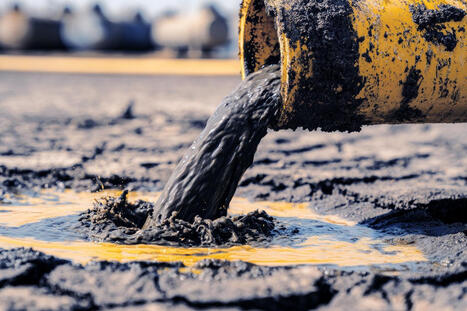
The Environmental Protection Agency under Donald Trump has scrapped an important regulation meant to limit spraying of biosolids on crops. Consumers and agricultural workers rejoice: the Trump administration has killed a key regulation meant to keep toxic human and industrial waste sludge from our food supply, because toxic sludge is apparently not a threat to public health. On Monday, the Guardian reported that the Environmental Protection Agency is tossing out a major body of research that formed the basis for regulations which would have effectively limited the amount of sewage byproduct we’re allowed to spray into the environment.
In mid-July, the European Commission accepted X's corrective action plan to terminate its breaches of the Digital Services Act (DSA), including the failures on researcher data access under Article 40(12) that accounted for €40 million of the €120 million fine issued in December 2025. In an earlier analysis for Tech Policy Press, Oliver Marsh and LK Seiling unpacked what the December fine decision revealed about the Commission's interpretation of Article 40. That decision identified four failures: an overly restrictive interpretation of researcher eligibility, deficient application review processes, limited quotas and access duration, and contractual prohibitions on independent data collection. X's accepted commitments respond almost point by point: X will revise its screening process so that eligible researchers are not excluded in error, provide access free of charge, ensure timely access "including to the appropriate volumes of data" with significantly reduced application processing times, and update its terms to state explicitly that eligible researchers are not contractually prohibited from scraping publicly available data. X has six months to implement the plan, will be subject to an external independent audit, and remains under enhanced supervision.
We often think about weather controlling wildfires: dry air, heat, wind and lightning help determine when fires start and how quickly they spread. However, once a wildfire becomes intense enough, the relationship can flip. Instead of simply responding to the weather, the fire begins to create its own weather. I study wildfires and air quality at the University of Texas at Arlington. Here are four key ways wildfires influence the weather around them:
Campaigners worry politicians will have moved on by time of elections in which Marine Le Pen is expected to challenge. As dozens of forest wildfires burned across France this week amid the summer’s fourth brutal heatwave and increasing air pollution, some wondered whether voters’ first-hand experience of the climate emergency would change the political debate ahead of next year’s presidential election. The Green leader, Marine Tondelier, who cut short a tour of France on medical advice that at seven months pregnant she should avoid breathing smoke-filled air in the south-west near a huge wildfire in Gironde, said the political class still had its head in the sand. She said the government had ignored her plea for cross-party crisis talks to declare a national state of emergency on the climate this summer. She called for a new “climate welfare state” in France to help those whose lives were being affected as about 260,000 people were evacuated because of wildfires across the country.
What is it?
Phosphate mining in Florida officially kicked off around 1882 near Hawthorne in Alachua County. Since then, Florida has become the largest producer of phosphate in the United States.
The mining process involves significant alteration of the landscape by removing vegetation to access phosphate-rich soil and the rock beneath. This raw material then undergoes beneficiation, in which the desired phosphate ore is separated from the sand and clay. This process can cause the formation of clay-settling “ponds,” which further damage surrounding habitat. During the final step of the process, phosphate rock is treated with sulfuric acid to produce phosphoric acid, a vital ingredient in synthetic fertilizers that many consider indispensable for modern agriculture. Ensuring food security by boosting crop yield and used in animal feed and various industrial products.
Today, on the 1A show I mentioned earlier, someone mused at the idea of stationing data centers in space. So, I was interested when I saw Communications Daily mention it today... While space sustainability advocates are pressing the FCC to consider the possible environmental impacts of proposed orbital data center mega constellations, policy experts -- including some of those sustainability advocates — said the agency isn’t likely to do so.
The energy crisis from the war in Iran is one of Southeast Asia’s most pressing concerns, which I am covering closely along with other Associated Press colleagues. Rising prices of gasoline, diesel and other oil-based fuels due to the conflict are driving ordinary people toward electric vehicles and renewable energies such as solar. The Iran war, now in its fifth month, dominated conversations among top diplomats at a major meeting last week in Southeast Asia.
Donald Trump has no ideas, but America is ready for a U-turn on climate change. The news on green technology is surprisingly good. Both development and installation of renewable energy and industry are leaping ahead at rates I would not have thought remotely possible even five years ago. It’s the fastest energy transition in history—and ironically the pace has only accelerated of late thanks to Donald Trump’s madcap war on Iran, which is acting as a de facto carbon tax across the entire planet. Call it Trump’s Green New Deal. Alas, the progress is coming far too late to head off severe climate disasters. After Canada and the American eastern seaboard were blanketed by another suffocating plume of wildfire smoke in recent weeks, much of Europe is now suffering the same fate. Great swathes of France and Spain are ablaze, with little relief on the horizon. And now weather forecasters are warning that it looks like the most powerful El Niño in recorded history is coming soon. Climate change is not going to wait for America or any other country to sort out its political dysfunctions. We can confront climate reality or be run over by it.
|