Your new post is loading...
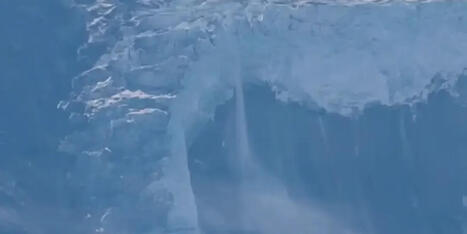
The catastrophic flood that killed hundreds of people in Nepal on Aug. 26, 2026, and left many more missing likely began with falling ice and rock crashing into the river below, but that wasn’t the end of the disaster. Days later, a new lake pooled behind the debris and then burst, sending more water streaming through the valley. The destruction represents two of the ways rising temperatures, thawing permafrost and melting ice are increasing the risk of destructive floods in the Himalayas and other high mountain regions around the world.
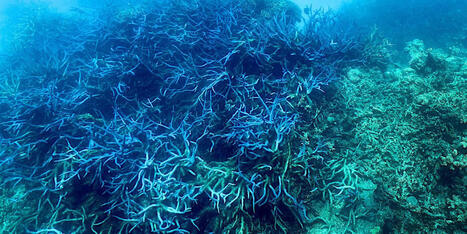
The largest global assessment of coral reefs reveals a distressing decline of nearly 10% between 2020-24. With warming oceans leaving reefs less time to recover, the future looks bleak. Can we afford to lose these vital ecosystems that support marine life and millions of people worldwide?
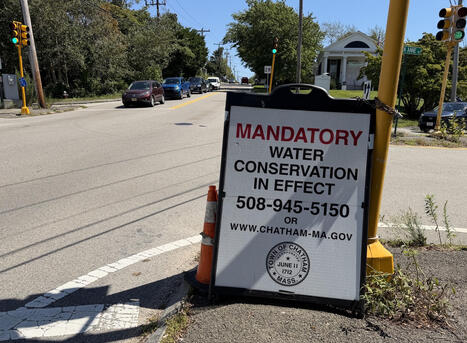
Click on image to watch short story about Cape Cod's drought!
28 August 2026 - CAPE COD, MA - A long-standing Level 2 drought on Cape Cod continues; water experts explain why and what might come next.
Coming next week - where does your town stand on water restrictions?
For more information:
As wildfire smoke plumes travel thousands of miles, sunlight and atmospheric chemistry bleach their color, strip away their campfire aroma and add them to the mix of urban smog. Smoky skies plagued the East Coast and Midwest again in summer 2026, as wildfires hundreds of miles away forced people to cancel sports practices and run air conditioners around the clock. Living in the western U.S., I am no stranger to this scene. Wildfires and the thick smoke they produce have become a fixture of summer life here. I also study wildfire smoke as an atmospheric chemist, in particular how the smoke evolves as it moves downwind from the flames to the communities where people breathe it. To understand what’s in the smoke you might be breathing, you have to look at where it’s been.
Genex Power looked at the vertical gap between those two holes and decided it was a battery. At its deepest, the drop from the upper pit into the lower one is 715 feet. Send water down that distance through a pair of turbines and you get 250 megawatts for eight hours straight. That project, K2-Hydro, is Australia’s first new pumped hydro plant in more than 40 years and, according to the federal agency that lent it the money, the first one anywhere built inside an abandoned gold mine. It was supposed to be dispatching power into the grid this October. It is now not due to finish until July 2027.
Y Combinator alumnus Apollo Atomics is shrinking a key nuclear reactor part, which promises to slash the cost of electricity below natural gas. The nuclear power industry is undergoing something of a renaissance, with startups raking in funding to develop advanced reactors in a quest to lower costs. But based on recent projections, it’s unlikely those reactors will be cost-competitive anytime soon. Assil Halimi and Drew Walker, the founders of Apollo Atomics, think that’s because companies have been chasing the wrong problem. So instead of designing a new reactor, Apollo is rethinking the way thermal energy is converted into electricity.
“Electric vehicle owners create a real problem for transportation finance,” write Christopher Knittel and Gilbert E. Metcalf. “Because they do not buy gasoline, they do not pay gasoline taxes, which have long helped fund the Highway Trust Fund." So, as electric vehicles become more common that revenue base will continue to erode. A recent bipartisan federal proposal would respond by charging EV owners a flat annual fee, reportedly $130 initially, rising over time, with a lower fee for plug-in hybrids. The instinct is understandable. The design is not.
As global temperatures rose by as much as 11 degrees Fahrenheit (6 degrees Celsius), heat and drought put stress on the forests, killing large numbers of trees. Forest canopies opened, exposing the ground to more sunlight and altering the movement of water through the landscape. In southern Wyoming, ferns briefly flourished where relatives of elms, walnuts, dawn redwood and avocado trees once thrived. Then palms and other warmth-loving plants spread northward. In a new study in the journal Science, my colleagues and I show how those Wyoming forests lost 60% of their canopy during this period, known as the Paleocene-Eocene Thermal Maximum, or PETM, and how it took them well over 100,000 years to recover.
Last week, the Los Angeles County Fire Department released the results of its 18-month investigation into the Eaton fire, a preventable tragedy that killed 19 people and destroyed more than 9,000 buildings. The report concluded that the fire was sparked by a Southern California Edison transmission tower — on a line that hadn’t been in service for more than 50 years. -
Follow the money: Back in 2001, regulators proposed a rule requiring utilities to remove abandoned lines unless they could prove that they would be used in the future. But utility companies put up fierce opposition, lobbying for a weaker rule that would allow them to keep abandoned lines for as long as they wanted. In 2005, the California Public Utilities Commission — then chaired by the former president of Edison International — approved the weaker regulation. Utilities “pretty much wrote those rules,” a former CPUC safety engineer told the L.A. Times.
The mayors of Charleston, South Carolina, and Boise, Idaho, make the case for investing in the improvement and innovation of local government. The water in Charleston does not flow through the city as a policy debate. It comes gushing over curbs, through intersections, around school buses and storefronts. The city sits at sea level, and the sea is rising. For years, Charleston flooded, recovered, and waited for the next storm. What changed was not the weather, but participating in the Bloomberg Harvard City Leadership Initiative and carrying those lessons home. City Hall began using data in new ways: tracking road closures alongside tide and weather patterns, analyzing high-water vehicle deployments, and mapping 118 vehicle rescues from floodwater over two years. A 7.1-foot tide with a northeast wind no longer leaves crews guessing. What had looked like scattered emergencies became a shared set of facts from which to build solutions. We are the mayors of Charleston, South Carolina, and Boise, Idaho. We come from different parties, different regions, and different circumstances. As the nation’s 250th birthday invites reflection on the ideas that built this country, we write together about one of the most overlooked investments in strengthening it. For centuries, Americans have argued about what government should do. Michael R. Bloomberg has instead bet on what it takes.
Rejecting North Sea drilling licences and protecting nature are just some measures Andy Burnham must implement to ready country. From record-smashing temperatures, wildfires, hosepipe bans and thousands of premature deaths, the climate crisis has left its mark across the summer of 2026. Tackling the root cause – the burning of fossil fuels – and ending the crisis will take years. So will fixing the UK government’s calamitous failure to protect lives and livelihoods against the long-predicted affects of global heating. But the climate emergency is right here, right now, and here are 10 policies that Andy Burnham’s government should consider announcing urgently.
Now that JPMorgan Chase & Co. is nearly finished turning the parking lot at its McCoy Center at Polaris into a giant solar farm, it is planning to do something similar at its other Columbus offices. The bank, the Columbus region's largest private employer with about 20,000 workers here, will be adding solar arrays at three other of its commercial sites in the Columbus area — Vision Drive, Morse Crossing and in Westerville. Like the Polaris project, the panels are being added to carports at the sites. "These installations in the Columbus market are the crowning jewel of our solar deployments because of the scale and the size and the impact," said Tyler Deaton, vice president in Chase's global real estate group who has a focus on sustainability.
A cybersecurity researcher explains how hackers target small computers that control a water system’s tanks, pipes and valves. Hackers tried to break into at least 30 municipal water systems in Minnesota on July 26-27, 2026. Since then, Michigan, New Jersey and several other states have reported similar cyberattacks. The attackers did not try to infiltrate the computers that utility offices use. Instead, they tried to seize control of small computers in equipment like pumps and valves that deliver drinking water to millions of people. The utilities countered the attacks by shutting down the control computers and sending personnel out into the field to operate equipment manually. Utility officials have said that water remained safe to drink.
|
How do we translate these horrors (of which there will be far far more as the growing El Niño envelops the world in record temperatures) into political change here in the US?
Environmental groups have sued the Trump administration, alleging the Environmental Protection Agency approved a cancer-causing "forever chemical" for use as an herbicide without fully assessing the risk.
Critics are warning that President Donald Trump’s Environmental Protection Agency is pushing through a rule that would let artificial intelligence data center builders off the hook for making public disclosures ahead of construction. The rule, which first came to light during an EPA meeting last month, would delegate power to states over public participation in the permitting process for specific sources of air pollution, such as diesel generators that are frequently used by data centers.
Every year, 27.7 million tons of Saharan dust crosses the Atlantic Ocean and settles on the Amazon rainforest, delivering roughly the exact amount of phosphorus the rainforest loses to runoff, which means the world's most productive forest is fertilised, year after year, by the slow erosion of the planet's largest desert thousands of miles away. The connection is one of those facts about the planet that nobody designed and almost no one outside the relevant atmospheric science literature knows about.
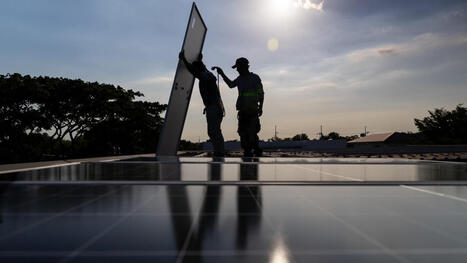
It’s a tough time to build renewable energy in the U.S. In fact, solar and batteries alone made up more than two-thirds of all new capacity added to the grid between January and June. As one analyst told Inside Climate News in a story parsing this same data, solar-plus-storage has become the grid’s “workhorse.”
This year’s El Niño is shaping up to be the strongest on record. Here’s what to expect. El Niño looks to reach an intensity unprecedented in recorded history. Characterized by warmer-than-normal sea surface temperatures in the equatorial Pacific, El Niño occurs every few years. Meteorological agencies and researchers around the world are on high alert because when the heat stored in the ocean is released into the atmosphere, it triggers a chain reaction that affects rainfall, temperatures, and even hurricane activity around the world.
Bruce Schauer is thrilled to show off all 10 of his new solar panels. When the city offered to put them on his house for free, he signed up right away. “I've been wanting it for a long time. I'm the first one in the neighborhood to get it put up,” he says. He lives with his daughter, his granddaughter, and his great-granddaughter, and they’re no strangers to power outages. Michiganders have some of the least reliable electricity in the country. Electric utilities have been facing all kinds of problems recently. Data centers are gobbling up every megawatt-hour they can, rates are up, and extreme weather is causing reliability issues.
. Matthew LaPlante doesn’t have to go to a lab to see his research in action. On some mornings, he can just look out his own window in the mountains high above Salt Lake City. After a warm night when the temperature stays above freezing, he’ll wake up and see that the snow level has dropped by inches, revealing more of the aspens he taps for syrup. “It feels like a monster came and just in the middle of the night, took a bite out of a snowpack,” said LaPlante, a journalist and climate scientist at Utah State University. So it’s fitting that scientists have started calling these kinds of heat waves, marked by unusually high temperatures in the spring and early summer, “snow eaters.”
The outer continental shelf is mostly a desert of sand. Flat and shifting, and almost entirely without anything hard to hold onto. A mussel needs a wall the way a climbing plant does, and out there no wall exists. Then a crane arrives and drives a steel cylinder the size of a grain silo into the seabed. It does that fifty four times. Nobody set out to build a reef, but that is what happens next. What the divers counted off Taiwan The clearest picture comes from the other side of the world. Off Miaoli County on Taiwan’s west coast, 69 foundations went into a flat sandy seabed between 2016 and 2021, and fish biologists have been diving on them ever since. The tally is not subtle. Divers logged 11,552 individual fish across 97 species, and pole and line surveys added another 40, bringing the total to 137. Of those, 86 were reef fish, and every single one was recorded within about 165 feet of a foundation. Not one turned up in the open sand between the towers.
The state of the global diesel market is getting even more precarious as the Russia-Ukraine war and the Iran crisis squeeze supply from multiple angles. Why it matters: Diesel prices ripple through economies here and abroad, affecting shipping costs, construction and plenty in between. - The average U.S. price is up 44 cents over the last month to $5.32 per gallon, compared to $3.71 a year ago, per AAA.
- However, during the Iran crisis, it hasn't hit the all-time high of $5.82 per gallon that AAA recorded in mid-June of 2022.
Move over, data centers. AI's climate impact may extend well beyond the electricity it consumes. Why it matters: A new peer-reviewed study finds AI could help produce more oil and natural gas — and produce a climate impact the authors argue could far outweigh the technology's benefits for renewable energy. Driving the news: The research, just published in a Nature journal, concludes AI's role in boosting oil and gas production would outweigh its climate benefits from accelerating renewable energy, leading to a net increase in emissions under a range of scenarios. - The study is among the first to estimate how AI-driven gains in fossil fuel production could affect global emissions.
After RWE disclosed its new gas investments as part of the deal, one climate campaigner declared that "committing to reinvest over $1 billion in fossil fuels is a disastrous mistake." Despite climate concerns and high prices from President Donald Trump’s illegal war on Iran, his administration continued its assault on offshore wind this week, using another “taxpayer-funded bribe” to convince a company to instead invest in fossil fuels. The German company RWE announced Thursday that it had reached a settlement with the US Department of the Interior to relinquish offshore wind leases off the coasts of New York, California, and Louisiana for $1.22 billion.
|