The rise of mirrorless cameras has produced some exciting new technology over the past few years. For this reason, DSLR brands have received a lot of flak for not innovating to the same degree.
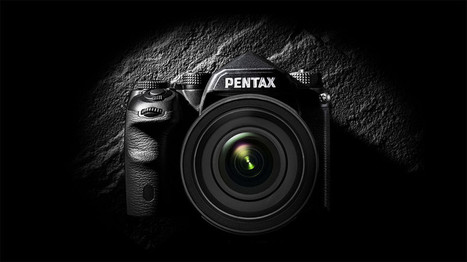
All this has changed, however, with today’s announcement of the new Pentax K-1. The company has just proved that the most interesting features seen on mirrorless interchangeable lens cameras can indeed be integrated into DSLRs, and can even be made to perform more efficiently than their mirrorless counterparts (at least, on paper).
We were pretty impressed by the Fuji X-Pro 2 when we saw an early unit, but we really wanted to see the image quality, AF performance and video quality of th...
It’s official: you’re going on holiday and you have a brand new Fujifilm camera to document the journey from start to finish. You’ve picked your destination, booked your hotel and packed your suitcases. All that’s left is to decide which lens(es) to bring along for the ride!
If you didn't already know, I use an Olympus O-MD E-M1 camera, which has so many features and options of customisation; I would have to write a book to list them all! Fortunately, there are good books available already, so I'm going to mention the touch focus and take a picture (TF-TAP) feature, which I like to use and actually used to capture this image on Wednesday, which is titled - Health & Happiness.
Mirrorless Planet is a new blog run by Loren Runyon and his wife Catherine, both of who have a passion for travel and wildlife photography. They are developing a series of in-depth articles about using Micro Four Thirds gear for bird photography. In their fourth post, Loren shares his thoughts about the two systems he is currently using for birds in flight: the Canon 7D mark II and the Olympus OM-D E-M1.
Zhongyi Optics (ZY Optics) is releasing a new version of their Mitakon Speedmaster f/0.95. According to the Chinese brand, the mark II version has better sharpness and reduced chromatic aberration. The new lens is also smaller and lighter than the first version: it weights 460g, so 1.5 times less than the mark I version. The barrel is made of metal with a robust finish.
We had the chance to see the Sony a6300 at the European press event in Amsterdam. Here are our first impressions. Check out the a6300 sample images here: htt...
As I mentioned in our post featuring sample images taken with the new G Master lenses, reviewers were not allowed to take any images with the new Sony a6300 at the two press events held in New York and Amsterdam because it was a pre-production model. However, Sony did provide us with no fewer than eighteen sample images which were most...
I wrote a piece on Sony's lens selection and strategy back in late 2013. With the announcements of Sony's new G Master FE lens line, It feels time to revisit this topic. A little over 2 years later, while some of my criticisms have been answered, some still linger and new ones have appeared.
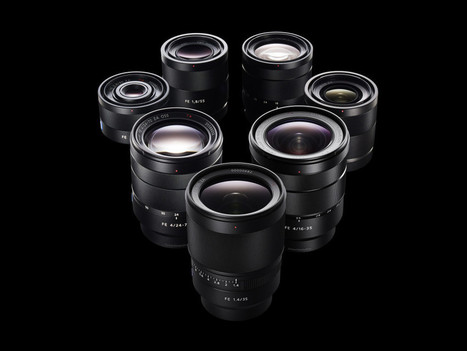
In that article, I suggested Sony develop some fast zooms to win over the pro DSLR crowd, but I kind of assumed they would have attended to the rest of the line in the meantime. Between then and now, they have released 7 FE lenses. I've added a basic description of each.
* 28mm f/2 (entry level Prime lens) * Sony Zeiss 16-35mm f/4 (Mid level constant aperture) * Sony FE 24-240 F3.5-6.3 OSS Lens (All in-one travel zoom with variable aperture) * Sony FE 28-135mm f/4 G PZ OSS Lens (Very large power zoom -primarily a video lens) * SONY FE 70-200mm f/4 G OSS Lens (Pro level long zoom- Sports, Wildlife, and studio) * Sony FE 35 F1.4 ZA Lens (Pro level Fast Prime with manual aperture ring) * Sony FE 90 F2.8 Macro G OSS Lens (Mid level macro)
You might look at that list and think, "What are you complaining about?"
I look at that list and see a lot of compromise and a lack of direction.
Some Examples
When I think of a camera system, I picture a robust and standard mount that accepts a whole range of lens offerings offering consistent quality and design philosophy. This is one reason photographers have put trust and money into Canon's L series, Nikon's FX series and Leica's M mount lenses. There's a consistency to how they work, look, and feel. Prices also have some consistency and predictability.
Sony's FE line seems disjointed, and inconsistent. Not only are there big holes in the lineup, but the variance in design and price between lenses is really weird. For example, the 28mm f/2 is a very solid lens and has a good reputation for image quality and build. It's priced at $450, which seems like a pretty good deal and is appropriately priced for a no-frills lens.
If you move to the next traditional focal length of 35mm, there are two lenses which both have some good qualities and are well loved by many Sony shooters, but just don't make sense in a system. The 35mm f/2.8 Zeiss lens is slower than the 28, and close to double the price. These two lenses are awfully similar in image quality, but don't seem like they belong in a system together. Different finish, different branding.
Add in the 35mm f/1.4 and things get really confusing. Is there an upper line of fast Zeiss lenses with dedicated aperture rings and absolute focus on image quality? No? You mean this is the only one? See what I mean? This lens has almost nothing in common with either of the two I've already mentioned which would indicate that it belongs to its own "set" of lenses.
How about a 50mm, the standard Normal focal length prime lens? I see a good mid-high end model in the Sony Zeiss 55mm f/1.8. Is there an entry level 50 matching the design and price point of the 28mm f/2? Nope. Is there an f/1.4 model that matches the high end 35? No, that one doesn't exist either.
Let's say you want an ultra wide or a super wide angle prime lens for astrophotography or low light interior shots. The entry level 28 is the widest prime in the Sony lineup and if you want to shoot wider, your only option is a 16-35mm f/4 zoom.
Are you starting to see some inconsistencies?
Marketing Strategy
Even from a marketing perspective, this random strategy makes little sense. From my (admittedly) anecdotal view, there's a healthy market for sub $1,000 fairly compact lenses. I know of very few A7 owners that don't own the 55 or the 35 f/2.8. Though there's clearly a place and demand for the development of higher end lenses, I'd wager that Sony is leaving money on the table by not having a larger stable of standard primes.
It seems there's a psychological barrier holding a lot of people back from the idea of spending more on a lens than the cost of the body. Though experienced photographers know that glass is a great place to invest, there is a very broad (arguably larger) market of newer enthusiast photographers who would rather buy 2-3 good lenses for $1,500 than one great lens.
So, though I know it's unlikely to draw Sony's attention and seriously change their plans or philosophy, I'd like to offer a roadmap which actually makes sense and addresses many different types of photographers.
Conveniently there are great pieces in the current lens lineup to guide us. Here's to development of a system which is optimal for shooters and gives Sony some great price points to drive wider adoption and good-will with photographers.
FE lenses
FE 28mm f/2 with UWC attached photo coutesy sony.com
This is a lineup that should resemble the 28mm f/2 . Smooth, satin finish bodies, a single focusing ring, simple branding and fairly quick apertures. On this line, I'd avoid OSS and apertures faster than f/1.8 or f/2 to keep the body size under control. These should all be in the $300-$700 range. Here are my suggestions.
* 21mm f/2 * 28mm f/2 (current model) * 35mm f/1.8 * 50mm f/2 or f/1.8 * Fisheye is already covered with the adaptor for the 28mm Sony Zeiss Lenses
Sony and Zeiss have a great history of collaboration and I really hope nothing happens to jeopardize it. There are some great Sony Zeiss lenses, but there just isn't a consistent direction. The 3 zooms are similar, but the primes are all over the place.
I'd move towards a set of prime lenses modeled after the 35mm f/1.4 Distagon with prices in the $800- $1600 range. Satin/Matte finish, Zeiss Branding, T* coatings, and dedicated aperture rings for the primes. I know a lot of photographers prefer to use zoom lenses to cover the broad ranges and then add a couple key primes in critical focal lengths. This line should reflect that.
* 14mm f/2.8 * 21mm f/2 * 24mm f/2 * 35mm f/2.8 (current) * 35mm f/1.4 (current) * 55mm f/1.8 (current, but ready for an update) * 85mm f/1.8 * 90 f/2.8 Macro (current, though branded as a G model and priced like a Zeiss?) * 135mm f/2 * 16-35mm f/4 (current) * 24-70mm f/4 (current) * 70-200mm f/4 (current, though branded as a G model and priced like a Zeiss?) Sony G Master
image courtesy Sony.com
This is relatively new line (they haven't even shipped the first 3 lenses yet as I write this). It seems Sony is really aiming to compete with the high end L glass from Canon, and the upper end FX lenses from Nikon with this set. I predict this being a much more speciality oriented set. Aperture rings, high end speciality glass and designs, with a distinct visual design. In some ways this line doesn't have to be that complete. This is the place to go all-out and try new stuff.
So, that's my proposal. It's a lot, but there really is a lot of room for improvement. Some of these aren't exciting, but would be great pieces to add if they have real long term plans for E-mount. Go take a look at the primes lenses available on just about any other system and this doesn't feel like a lot.
Other Makers
I really believe that Sony needs to offer their own complete line of lenses. That said, its great to see other companies get into the E Mount business. There are a few, but the only one that has really made a commitment to this mount is Zeiss.
There are a handful of other lenses with native E Mount, but these Zeiss lenses are the only serious peers and compliments to Sony's offerings. Zeiss has even gone so far as to publicly discuss their relationship with Sony and the differentiation between the Sony Zeiss collaborations and their own lenses.
Sony doesn't really do the same, which isn't all that surprising. Thankfully, these Zeiss lenses fill gaps between the Sony lenses and in-fact the Loxia lenses offer truly unique character and beautiful design and handling. If the Sony 55 is sometimes reviewed as "clinical" in it's rendering, the Loxia 50 seems full of character. As tests come in on the new Sony G Master 85, it will be interesting to see how it compares to the Batis 85, which is also really new.
My take on it? The Zeiss lenses offer some upgraded character, handling and build, but image quality is very similar to the Sony Zeiss lenses. It remains to see if the G Master lenses represent a significant upgrade.
What about APSC?
People express so much concern over Sony's lack of new APSC lens development and view it as a sign that APSC is dead or not a priority to the company. I suggest Sony cease marketing and making APSC-specific lenses and begin moving toward a universal E mount that can be used on both sensors. Perhaps keep the base model zooms and either the 21mm or 16mm pancake. This gives customers an easy and inexpensive way to get started, but removes the confusion and simplifies the upgrade path in a way that no other camera maker does.
New 50 and 35mm models in the FE base line could take the place of the current 50mm f/1.8 and 35mm f/1.8 models.
The Future
Sony is most certainly pushing the envelope with the Alpha series. New bodies are coming out quickly and many photographers are deciding that Mirrorless is finally ready for professional use which makes it a great time to land an upgraded lens strategy. It will show established photographers that Sony is willing to support a full system, making it easier to switch and it will allow new photographers to grow with this mount and system.
Sometimes it is hard not to scratch one's head when observing the behaviour of others. I had a recent experience with an article that I penned for NikonRumors...
Nasim Mansurov of Photography Life recently published an interesting article that provides an updated look at the ongoing mirrorless versus DSLR debate.
As a professional UK-based Hertfordshire wedding photographer of some twelve years standing I have now switched to a completely mirrorless camera system. I started using a Fujifilm X-Pro1 camera four...
Here are our first impressions of the three new Sony G Master lenses (FE 85mm f/1.4 GM, FE 24-70mm f/2.8 GM, FE 70-200mm f/2.8 GM) after trying them at the A...
During our recent holiday in the Myrtle Beach area of South Carolina I had the opportunity to spend some time photographing birds at Murrells Inlet. Early February is not the best time for bird photography as the number of birds and range of species is somewhat limited. Never-the-less I persevered and visited the inlet a …
Today Panasonic announced the Panasonic Lumix GF8, the successor to the entry-level GF7, but before anyone gets too excited, let me say upfront that there are very few differences between the two models...
Twenty-five years ago, Toronto-based real estate photographer Marco Sobrevinas was using large and heavy format view cameras to complete his work, which, in his words, was both physically demanding and technically challenging. Fast forward to 2016 and his kit has been downsized to the Fujifilm X-Pro1 and his one go-to lens, the XF 10-24mm f/4.
RUNAWAY[GO] released their stunning debut album, ‘ALIVE’, back in November 2015 and last night saw the Belfast duo formally mark the release with the official launch gig. Runaway Go features the du…
Since publishing our hands-on review and sample images taken with the FE 85mm f/1.4, our readers have already started asking us which of these the two lenses we’d personally recommend. Instead of responding to each individual email and comment with the same answer, we decided it would make more sense to write a dedicated post detailing our thoughts...
A short video shot with the new GM lenses (24-70mm 2.8 GM & 85mm 1.4 GM) and the A7r mark II. All the shots were recorded hand-held and in C-AF mode. Check o...
To get content containing either thought or leadership enter:
To get content containing both thought and leadership enter:
To get content containing the expression thought leadership enter:
You can enter several keywords and you can refine them whenever you want. Our suggestion engine uses more signals but entering a few keywords here will rapidly give you great content to curate.


 Your new post is loading...