The decline in teaching cursive handwriting, the rise of the keyboard, and the introduction of the Common Core State Standards that do not require children to know cursive all question its relevance.
Via EDTECH@UTRGV, Jamie Forshey

 Your new post is loading...
 Scoop.it! The decline in teaching cursive handwriting, the rise of the keyboard, and the introduction of the Common Core State Standards that do not require children to know cursive all question its relevance. Via EDTECH@UTRGV, Jamie Forshey 

Jennifer Shackles's comment,
July 9, 2013 11:22 AM
How can students read "primary" historical documents if we have generations who cannot read cursive? Only linguists will be able to. How do these students "write" and "sign" their names on official documents? It may not need to be stressed as it once was, but I think it is still a necessary skill.
Sign up to comment
Scoop.it!

We teach in amazing times. Just think about the technology that you carry around in your pocket or the things you are able to do on the Internet. Technology makes meaningful collaborative and engaging interactive classroom experiences possible with minimal effort.

Darlene Clapham K12's curator insight,
June 23, 2013 10:57 AM
Great article. Some very good points that we can all apply in our professional careers. Thanks for sharing this @JCasaTodd!
Scoop.it!
|

|
Rescooped by
Felix Jacomino
from Winning The Internet
June 9, 2013 1:48 PM
|
Scoop.it!
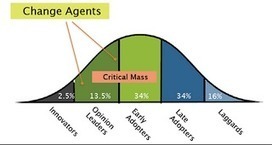
Today I am going to talk a little bit about Diffusion of Innovation Theory and relate it to our technology integration practices in education. Don't worry the post is not gonna be long , nor will it...

|
|
Scooped by
Felix Jacomino
May 24, 2013 9:58 PM
|
Scoop.it!


I am really feeling this as my iPods are already becoming obsolete. How do we use tech to create producers, not just consumers? Does it make a better reader or writer? That is what I ponder when I look at a new device or app.


Teachers are the rock stars in the class room...but great rock stars need instruments to create music.
|
|
Scooped by
Felix Jacomino
May 21, 2013 7:14 PM
|
Scoop.it!

Let's explore a number of excellent search alternatives, all with specific qualities that work well in various situations.
|
|
Scooped by
Felix Jacomino
May 14, 2013 5:44 PM
|
Scoop.it!

Admin after admin discuss the multiple benefits of Aerohive as the wireless network of choice! Recorded at ISTE, 2012 http://felixj.me/aht
|
|
Scooped by
Felix Jacomino
April 29, 2013 5:06 PM
|
Scoop.it!

Can you believe this?
My daughter goes to a 20th century school that mistakingly thinks it embraces 21st century learning simply because it allows students to bring their own device. This is particularly frustrating to me since I speak on this very subject at schools and conferences around the country.
"Daddy, I need to buy a scientific calculator for math class!" I respond, "Oh sweetie, you're so cute. No one with a brand new iPad mini needs to buy a physical calculator any more. Just tell me what functions you need it to do and I'll help you find the right app." To which she says, "No. We're not allowed to use our iPads or phones. The teacher says we can cheat that way by texting, IMing, or emailing answers to each other." *facepalm*
I would like to crowdsource here and ask for comments as to how to best deliver my email to this school's academic director.
Thanks in advance!


|
|
Rescooped by
Felix Jacomino
from Classroom Technology Integration and Project Based Learning
May 10, 2013 1:59 PM
|
Scoop.it!


If you have ever had a student do a report using internet research you know the headache that it can cause. This article makes google customization a great tool for research.
|
|
Scooped by
Felix Jacomino
April 25, 2013 11:23 PM
|
Scoop.it!
Our kids will spend the rest of their lives in the future Are we getting them ready? Kevin Honeycutt (@kevinhoneycutt) - Hutchinson, Kansas

Fantastic video about our opportunity and responsibility in the technology age. Love it.

|
|
Scooped by
Felix Jacomino
April 25, 2013 8:45 PM
|
Scoop.it!

Pat Bassett, NAIS president, notes key qualities of outstanding schools. His list includes adopting a big vision, committing to diversity, and creating a financially sustainable future that goes beyond large annual tuition increases.
|
|
Scooped by
Felix Jacomino
April 21, 2013 11:03 PM
|
Scoop.it!
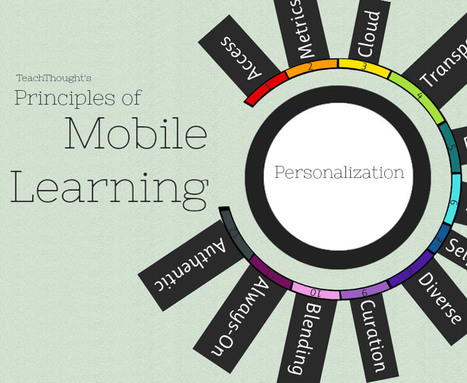
12 Principles Of Mobile Learning
Mobile Learning is about self-actuated personalization.
As learning practices and technology tools change, mobile learning itself will continue to evolve. For 2013, the focus is on a variety of challenges, from how learners access content to how the idea of a “curriculum” is defined.

This is where technology is taking us...to an area where the students control their learning....
1. Access
2. Metrics
3. Cloud
4. Transparent
5. Play
6. Asynchronous
7. Self-Actuated
8. Diverse
9. Curation
10. Blending
11. Always-On
12. Authentic
|
|
Scooped by
Felix Jacomino
June 21, 2013 11:07 PM
|
Scoop.it!


This is the type of teaching that I am talking about!
|
|
Scooped by
Felix Jacomino
June 20, 2013 4:51 PM
|
Scoop.it!

Unless you have been living under a rock lately, you know that mobile learning (or mlearning) is on the rise. New technology is making mobile learning a realty, and the decrease in mlearning device prices is helping with overall adoption.


Progress influences the everyday life also in education :)
|
|
Scooped by
Felix Jacomino
June 9, 2013 3:16 PM
|
Scoop.it!

Tony Vincent's video for his project-based learning workshops. http://learninginhand.com Music by Dan-O at DanoSongs.com

brilliant for VET students... learning real skills to increase employability
|
|
Scooped by
Felix Jacomino
May 21, 2013 8:17 PM
|
Scoop.it!

There are some big myths about writing with mobile devices. But are they actually true? The EdTechTeacher team weighs in on a controversial topic.

This article comes by way of @felixjacomino on ScoopIt. I really like this article, because it's main point is that people are trying to adapt old ways of writing to new technology. I believe the author, at some point, even points out that in education, it doesn't matter what software package a child learns as long as they learn technology and the basics of how to use word processing. I started out on WordPerfect years ago, and then had to adapt to Word 1.0 (what version are we up to now?). Same with CMS systems that I've learned in the past. People are always so stuck on knowing specific products in tech comm instead of realizing that if you know one software package, you can probably adapt fairly quickly to a new one if you are just shown the differences. That was definitely the case with my current position.
But back to iPads and writing--I took copious notes on my iPad during the STC Summit, and wrote several long blog posts on my iPad as well. Yes, it was easier to type with a wireless keyboard, but that's only because I type very fast and legibility is important to me. It's a sensory thing for me. I found that for basic writing tasks, I can use the iPad with ease, and that's the point of this article. No more excuses! Mobile is definitely an option.
--techcommgeekmom
I have found it quite difficult doing long term typing on my iPad. Very interesting.
|
|
Scooped by
Felix Jacomino
May 20, 2013 5:09 PM
|
Scoop.it!

This is great, because it talks about the evolution of #pbl, and tells me how I can get better as a teacher. This should be of particular interest to anyone trying to transform their classroom.

|
|
Scooped by
Felix Jacomino
May 14, 2013 6:39 PM
|
Scoop.it!

Take a moment and imagine a creative work environment. Don't worry about the kind of work going on. Just focus on the space. Close your eyes and picture it. What is that space like? What does it sound like? How are people interacting? Is there movement? Is there evidence of work in progress? Is it tidy, or busy-messy? Can you imagine working there?

This article gives teachers ideas on how to create a thinking space for students. In any KLA the importance of helping the students to be able to concentrate is extremely importand. One of the aims in the Australian Curriculum is to allow students to become "creative, innovative and enterprising when using traditional, contemporary and emerging technologies, and understand how technologies have developed over time."
By creating a thinking space this allows students the freedom to learn and implement the above areas.
This article asks us to rethink what we think to be a work space. They outline that a workspace can come in many different forms and still be productive. By simply moving around an changing the workspace can drastically change the outcomes of student leanring and engagement in more ways than 1.

|
|
Scooped by
Felix Jacomino
May 10, 2013 2:40 PM
|
Scoop.it!
EPIC. Kid's got his head on straight. He's definitely my hero ! Jeff's the man ! Jeff Bliss decided to give their teacher a lesson at the Duncanville High Sc...

Not technology related, but it absolutely illustrates how fed up our older students are with a system that does not work in their favor. I applaud this young man for having the courage to speak up.
|
|
Scooped by
Felix Jacomino
April 8, 2013 11:04 AM
|
Scoop.it!

by Felix Jacomino
As I prepare a presentation on 21st Century Skills, I find myself dealing with having to first be clear on what they are NOT. Only because for many, the term "21st Century" is synonymous with technology. In this post, I won't get into the details of why it's not.
What I would like to share is my realization that terrible times lie ahead for bad teachers. Conversely, there has never been a more exciting time for a good educator than today and the near future!
In order to make a statement like that, I owe it to my readers to give my definition of each type of teacher.
Bad teachers:
Do not want to learn new things.
Have "the book" lead instruction and feel the need to always stick to it.
Are comfortable doing the same lessons (the same way) year after year.
Never step out of their comfort zone.
Live in their own bubble and do not see the need to live outside of it.
Only teach facts and assess the ability to memorize those facts ("Any teacher that can be replaced by a computer, deserves to be." -David Thornburg).
Design tests to be easily gradeable.
Think that all progress in education are "fads."
Do not learn new things... oops, I already wrote that! It bears repeating because SOOOO much can be learned from other colleagues!
Good teachers:
Care whether their students find the learning relative.
Are ALWAYS looking for new ways to engage their students.
Embrace quality professional development as often as they can.
Learn from and share with other educators.
Have gotten this far into this post and are nodding their heads ;-)
My hopes are that we QUICKLY get to the point where teachers who do not inspire and engage will be seen as employees who are simply not doing their jobs and be let go. Or, they may move to schools that don't "get it" (yet) and find a safe haven there for now. Either way, it's time for ALL teachers to pick a side. And yes, there's plenty of room on the "good side" for bad teachers to make the change. Here's hoping!

Which category do you fall? How can we transition teachers who are not willing to update their skills?

Interesting take, and of course true, i.e. "technology" is not 21st Century. It is almost a constant - technology facilitates (or can, used correctly) good teaching, and offers opportunities to add variety, flexibility and relevance. Used badly it can be irrelevant.
|
|
Scooped by
Felix Jacomino
April 29, 2013 11:14 AM
|
Scoop.it!
Tony Vincent, teacher and learning consultant presents practical and entertaining ways for young learners to use low cost mobile devices to create movies. Pr...
|
|
Scooped by
Felix Jacomino
April 25, 2013 10:37 PM
|
Scoop.it!

If you run a classroom, school, district, or country, you need to know how to properly integrate technology in education. This should help.

This article is really interesting. It talks about the difference between merely using technology, and actually integrating it into the classroom. It gives scenarios, examples, and compares and contrasts the ideas of "using" and "integrating". I found it to be a good reminder of the ideas that our lessons should not be based around the technology itself, but instead, used in the same way as any other learning tool, to help make learning accessible.
~Trent VanDyken

Being purposeful about incorporating technology in our learning tasks will be vital to being an effective teacher. Students need to be taught how to use these tools and navigate the volume of information the internet presents. Using technology without direction and purpose can create problems and wastes tremendous potential.
Elsa Mansfield-This article talks about using technology to learn instead of learning how to use technology. Integration involves making technology a part of the everyday classroom, and using it to engage studetns with information or content. I like the idea of being very purposeful with employing technology in a variety of ways and incorporating technology in our learning tasks constantly. Using technology without direction and purpose can create problems and wastes tremendous potential.
|
|
Scooped by
Felix Jacomino
April 23, 2013 11:10 AM
|
Scoop.it!

iBooks Author is a fantastic way to get students involved in their own learning. If you're dedicated to providing engaging lessons for your students then creating interactive textbooks needs to go ...

What I believe will likely develop into a potential strength for the iPad and Apple.

Have students do reflection and journal as they advance in the nursing program. This insight can be a honest look at strengths and weaknesses.