


Whether it's fake news, real news, world news or just news to you, navigating and understanding the news in a second language can be a really useful way to gain some valuable and authentic insights into the culture of the language.
Via Nik Peachey


 Your new post is loading...
 Your new post is loading...
Your new post is loading...
 Scoop.it!
Whether it's fake news, real news, world news or just news to you, navigating and understanding the news in a second language can be a really useful way to gain some valuable and authentic insights into the culture of the language. Via Nik Peachey 
Scoop.it!
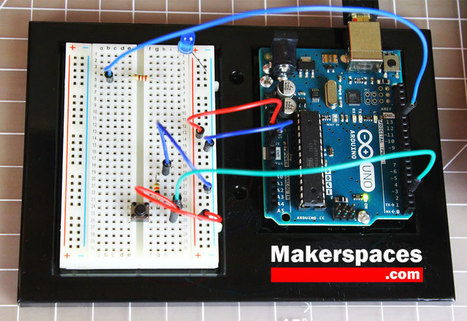
The easiest way for beginners to get started with Arduino is by creating circuits using a solderless breadboard. These simple projects will teach you the basics of Arduino Uno, electronics and programming. In this tutorial, you will be creating circuits using the following electronic components: Via John Evans
Carol Hancox's insight:
Arduino resources

Dr. Helen Teague's curator insight,
September 7, 2017 11:33 PM
Brings back happy memories from my Arduino project! Thank You Dr. Linda Polin!
Scoop.it!

Resources by Topic: Game-Like Learning Principles Commercial Games in the Classroom Other Edutopia Resources on GBL
Scoop.it!

Even though the internet is largely populated by cat videos and memes, it also has some intelligent stuff. But you need to know where to find it, if you want the web to boost your brain and not blast it. Via John Evans

Carlos Fosca's curator insight,
July 1, 2017 6:56 PM
"Even though the internet is largely populated by cat videos and memes, it also has some intelligent stuff. But you need to know where to find it, if you want the web to boost your brain and not blast it. A while back, we compiled a mega-list of 35 brainy sites for you to read more intelligent content. This new list has only five more, but we find ourselves going back to them a lot. Don’t miss out on these."
Scoop.it!

Technology can empower the students of today to create the world of tomorrow. The students we equip with digital skills today will work in careers we haven’t even thought of yet, and build new technology that we can’t even begin to imagine. Educators, parents, and technology companies have a responsibility to provide them with the best education and tools possible to make this future a reality. Technology is the key to helping our students succeed, think creatively, and ultimately create a better world. Via Nik Peachey

Dr. Theresa Kauffman's curator insight,
June 15, 2017 11:21 AM
Ensuring our students become fluent technology users for their future careers is part of the learning process. Engage them in ways they will want to learn.
Scoop.it!

From
payhip

Fostering a love of reading in our students is a goal that many language teachers share. We know the lifelong benefits of loving books, especially as many of us learned English - or another language – through reading. The challenge is: how to help our students become lifelong readers? Via Nik Peachey
Scoop.it!
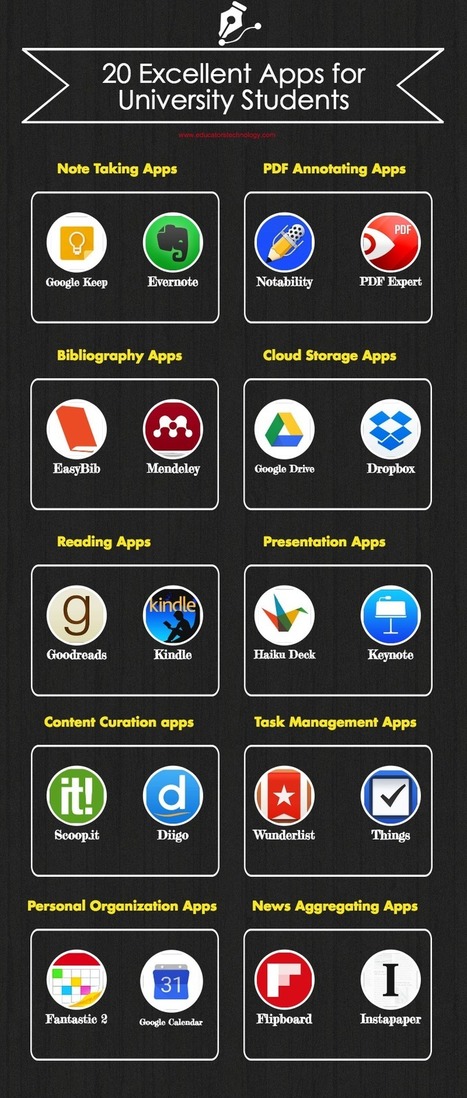
Free resource of educational web tools, 21st century skills, tips and tutorials on how teachers and students integrate technology into education Via Dr. Tom D'Amico (@TDOttawa)

Robert Heyman's curator insight,
May 24, 2017 5:44 AM
Great apps to be used by any students undertaking the quest for knowledge. Rescooped via Jan Swanpoel's curated collection.

Gabrielle's curator insight,
May 24, 2017 3:27 PM
Great insight into useful apps I can use/unaware of.

Collin Breault's curator insight,
October 6, 2021 2:14 PM
The article includes a lot of great apps that can help students in their academic studies!
Scoop.it!

Carol Hancox's insight:
Online audio editor to try out

Nik Peachey's curator insight,
April 29, 2017 12:47 AM
Very simple to use, works in the browser and the audio file can be downloaded in a number of formats.
Scoop.it!

This Is The World Teachers Must Adapt To: 7 Ways Teaching Has Changed
Scoop.it!

Choosing & Using Sources presents a process for academic research and writing, from formulating your research question to selecting good information and using it effectively in your research assignments. Via Nik Peachey
Scoop.it!

Any internet search will show that there are a huge number of online tools available for the creation on polls and surveys. The ones included here are some of the best I have used and show some of the variety of polling tools available. Via Nik Peachey
Nik Peachey's curator insight,
March 29, 2017 12:45 AM
A collection of tools for creating different kinds of surveys. 
Mari Ohnstad's curator insight,
April 13, 2017 8:21 AM
her er noen tips dersom du skal lage ordskyer eller enkle spørreundersøkelser for å fremme læringsutbytter i undervisningen
Scoop.it!

So the next time you walk into a training room and see a number of older teachers there, don’t groan with disappointment, but welcome the opportunity to test your skills and understanding with the most critical audience. If you can send them away motivated to use technology then you know you are on the right track. Via Nik Peachey

Miguel Angel Perez Alvarez's curator insight,
March 24, 2017 1:52 PM
Pistas para entrenar a maestros ya mayores en el uso de tecnologías. Sexagenarios #tecedu
Scoop.it!
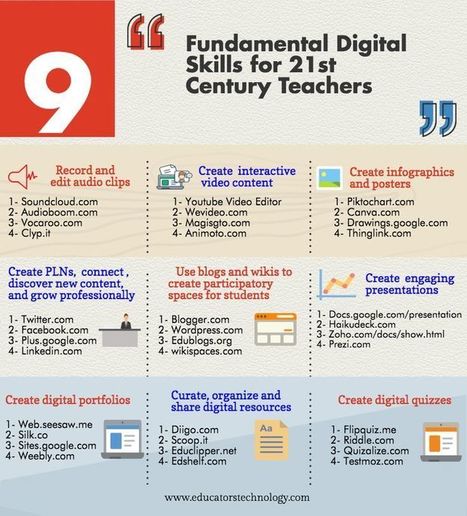
A collection of infographics related to technology and education. | See more about Technology, Teaching and In the classroom. Via Nik Peachey

Karen Draper's curator insight,
March 13, 2017 10:20 AM
Great Infographs. I like 9 fundamentals-- Teachers must stay current in order to help prepare our students for success in the future.

Eneko Martínez Goikolea's curator insight,
March 18, 2017 8:31 AM
#Infographics & Learning | @scoopit http://sco.lt/...
|
Scoop.it!

Daniel Jimenez Zulic's curator insight,
August 18, 2017 12:07 PM
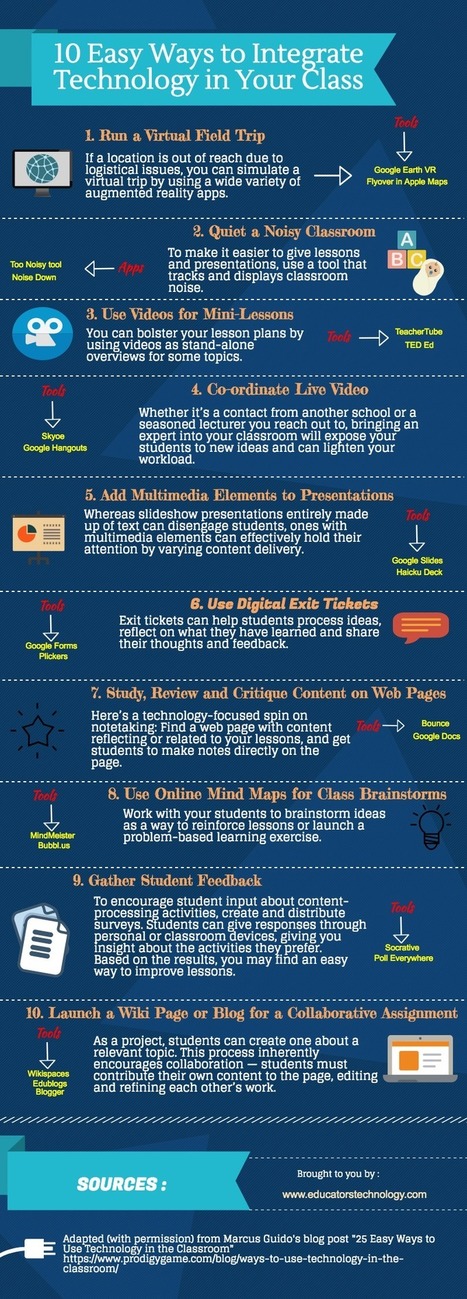
10 great ideas, and also allows increasing the appraisal of new content taking in account the student different learning styles
Scoop.it!

There’s no discounting the importance of the first day of class. What happens that day sets the tone for the rest of the course. Outlined below are a few novel activities for using that first day of class to emphasize the importance of learning and the responsibility students share for shaping the classroom environment.

Rosemary Tyrrell, Ed.D.'s curator insight,
July 21, 2017 2:46 PM
Research seems to suggest that people aren't good judges of how they learn best. I wonder if asking students to say "I learn best when . . . " is a good idea? 
Juanita Amiel Townsend's curator insight,
July 27, 2017 8:56 AM
Creating an online community of practice is essential for online courses. These traditional icebreakers can also be used online.
Scoop.it!

Comprehension strategies are sets of steps that good readers use to make sense of text. Comprehension strategy instruction helps students become purposeful, active readers who are in control of their own reading comprehension. The seven strategies here appear to have a firm scientific basis for improving text comprehension. Via Nik Peachey

Joyce Valenza's curator insight,
July 15, 2017 8:42 AM
Very practical ideas for implementation by teacher librarians! 
GwynethJones's curator insight,
July 16, 2017 7:56 AM
"Comprehension strategies are sets of steps that good readers use to make sense of text. Comprehension strategy instruction helps students become purposeful, active readers who are in control of their own reading comprehension. The seven strategies here appear to have a firm scientific basis for improving text comprehension." 
Donna Farren's curator insight,
July 19, 2017 10:59 AM
These are great strategies that can be used in all content areas to help develop reading and comprehension skills
Scoop.it!
Even though the internet is largely populated by cat videos and memes, it also has some intelligent stuff. But you need to know where to find it, if you want the web to boost your brain and not blast it. Via John Evans
Carlos Fosca's curator insight,
July 1, 2017 6:56 PM
"Even though the internet is largely populated by cat videos and memes, it also has some intelligent stuff. But you need to know where to find it, if you want the web to boost your brain and not blast it. A while back, we compiled a mega-list of 35 brainy sites for you to read more intelligent content. This new list has only five more, but we find ourselves going back to them a lot. Don’t miss out on these."
Scoop.it!

A new survey of faculty members and administrators by Tyton Partners asserts that the use of digital instructional technologies, which it endorses, is facing "headwinds" in adoption by colleges and universities. The study identifies faculty take-up of digital courseware and other tools as among the leading impediments to their spread -- but cites faculty members' lack of time and the training they receive from their institutions as far bigger cause than their outright opposition.
Scoop.it!

Nobelprize.org, the official site of Nobel Prize, offers a number of interesting educational games you can use with your students in class. These are interactive games and simulations based on Nobel-awarded achievements to teach and inspire students. There are actually over 29 games covering different topics including physics, chemistry, medicine, literature, peace, and economics. Most of these games include a ‘Read more’ link to help students learn more about the subject. Below are the 10 most popular games in Nobelprize.org. To access all the educational resources and games, check out this page. Via John Evans
Carol Hancox's insight:
Possible game ideas for teaching and learning
GwynethJones's curator insight,
May 14, 2017 6:01 PM
I'd give a Nobel prize for good games to use with the kiddos!
Scoop.it!

Innovative technologies change the way we used to learn and that happens incredibly quickly. What major technologies will define the future of modern education?
Scoop.it!

From
flowlab
Great for teachers & students. Flowlab is being used all over the world to introduce game design & development, along with crucial STEM skills. Creating themed games is also a fun way to get students engaged with classroom material. Via Nik Peachey
Carol Hancox's insight:
Online Game creation site

Gust MEES's curator insight,
April 30, 2017 7:25 AM
Great for teachers & students. Flowlab is being used all over the world to introduce game design & development, along with crucial STEM skills. Creating themed games is also a fun way to get students engaged with classroom material.
Learn more / En savoir plus / Mehr erfahren:
http://www.scoop.it/t/21st-century-tools-for-teaching-people-and-learners

MARÍA TERESA GARCÍA SÁNCHEZ's curator insight,
November 22, 2017 7:44 AM
Flowlab está siendo utilizado como material de trabajo en las aulas para desarrollar las habilidades y fomentar la creatividad, creando juegos y compartiéndolos con el resto de compañeros, una nueva metodología de enseñanza a través de los juegos del siglo XXI en el que el alumnado disfruta trabajando y aprendiendo.
Scoop.it!

There were a huge number of positives and negatives to education technology. But, gradually as technology was embraced by the educational institutes, they realized the importance of technology in education. Its positives outnumbered the negatives and now, with technology, education has taken a whole new meaning that it leaves us with no doubt that our educational system has been transformed owing to the ever-advancing technology. Technology and education are a great combination if used together with a right reason and vision. Via Nik Peachey

Julian Diaz's curator insight,
May 26, 2017 4:17 PM
"Technology and education are a great combination if used together with a right reason and vision."
I start citing this sentence and asking teh question "do you really think technology is that important for education?" As the world and society itself advance, technology takes its role as well. It's undeniable, technology is all over the world and it is always around us, it takes part of our lives in every moment and every minute, and it is taking part in education too (although not very fast) in my personal opinion, we should take into account technology in education, not just because it is growing in our lives, but because it might help teachers and students to improve the way we learn and teach. Take into account, for example, education 40 years ago, i would say it was more stupid and archaic, getting students to spit out data and information unuseful for their lives, but nowadays we become a new human kind and as technology is evolving, our way of thinking should evolve as well. in this article there are numbered a list of posibilities and advantages of using technology inside the classroom as well as ways of using ir for educational purposes. Enjoy the reading. 
Jillian Schaibly's curator insight,
July 12, 2017 10:24 PM
A good quick read about the transforming of technology and the positive and negatives of what it looks like in school today. Principals need to be aware of how technology is being used in their school and the positive and negatives of technology use.

Alexander Daron's curator insight,
October 15, 2017 11:47 AM
I chose this resource because technology in education is vital. This article discusses that there are negatives in using technology, but the positives severely outweigh these negatives. We must continue to implement more technology into our classrooms. I hope that this article will remove any doubt that technology in our classrooms will not benefit our students. We need to continue looking for new creative ways to implement technology into our schools.
Scoop.it!
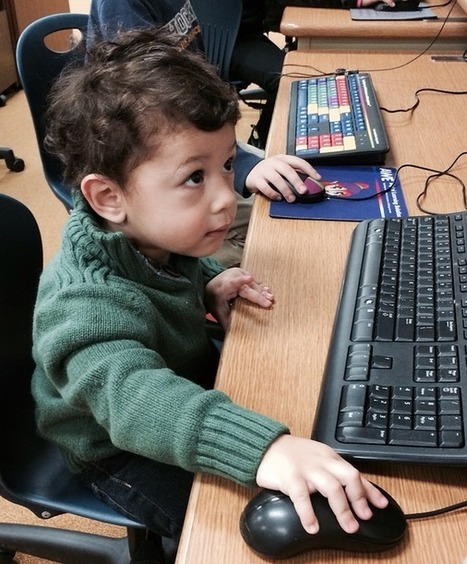
The ways in which students learn are changing rapidly thanks to technology, and both students and teachers will benefit from it. There are several specific changes that we can expect to see as digital learning takes over education. For one, the way teachers present information and how students work with that information has changed. Students are asked to be more hands-on and collaborative than ever before. There are also new skills that students must learn, such as digital literacy. Via Nik Peachey
Scoop.it!

Here are 5 team building games to try out with your students that also develop critical thinking skills. Collaboration and team spirit await you!

Oskar Almazan's curator insight,
March 14, 2017 8:21 AM
Team building games offer students fun opportunities to hone critical skills for success in the modern workplace. Students (and future employees!) that value teamwork are more motivated and creative. They’re also better at problem solving and communicating with one another and have a higher level of trust. We already know students love working in groups. Why not make a game of it?

Andrea Mejia Medina's curator insight,
March 18, 2017 12:10 AM
Critical thinking is the most important skill to develop, since in these times of information at hand, we cannot believe everything we see, read, and hear, and that is why it is important to develop this ability as it allows us to be alert and question everything that comes from these means of information. Is a skill that moves a student from concrete ideas to abstract and inferred concepts. Critical thinking allows us to analyze outcomes, compare ideas, identify parallels, sequence events, synthesize information and draw conclusions from a given body of knowledge. Whether it is the proof behind a mathematics formula or an implied tone in an essay, critical thinking skills enable students to solve problems in the real world and on exams in school. Meghan Moll (2014) suggests five tools to develop the critical thinking skills necessary for success on every high school or college test and assignment. 1. Brain games: Recently, websites dedicated to training your brain have enjoyed increased popularity. Lumosity, for example, provides games that aid in improving memory and problem-solving. From timed matching games to order sequence memorization, websites like this can aid in cognition and the ability to ask, "What is the next step?" This skill is critical to learning how to approach complex problems on standardized tests like the ACT and SAT. Rather than playing time-wasting games when you have a lull in your day, search online for brain teasers and peruse the plethora of brain games at your fingertips. 2. Logic puzzles: Before the Internet, puzzles intended to exercise your brain were published in books. Collections of crossword puzzles, logic problems, riddles, sudoku, word problems and word searches can be found at your local bookstore or library. The puzzles in these books are a wonderful strategy to activate different parts of your brain for a round or two of mental gymnastics, and many collections even discuss what each puzzle is meant to target within the mind. 3. Board games: This suggestion may seem strange at first, but do not balk. Choose board games that require more than luck – namely, strategy – for players to win. Any game where players must carefully consider their next move, recognize patterns and remember details will aid in honing critical thinking skills. Certain games like Rubik’s Cube are single-player, while others involve multiple people. Checkers, chess and Mastermind are two-player games that challenge you to plan several steps ahead. Games like Boggle and Scrabble require analyzing information quickly and formulating words, while Clue and Risk test and strengthen your ability to anticipate and react to others’ moves, as well as infer motives. 4. Journaling: Daily reflection – such as maintaining a journal – is a simple way to revisit your day, but it is also a fantastic opportunity to explore ideas. Writing encourages you to expand upon your thoughts and form connections. A journal forces you to slow down and focus on just one or two ideas at a time, which hectic schedules don't otherwise allow. Use your journal to record important ideas and questions and narratives about your life. 5. Book clubs: Students who read for understanding find it far easier to think critically than those who rush to finish. Analyzing a book requires you to delve deeper and ponder complex questions. When reading, think about why the book was written the way it was, what motivates certain characters, and how plot developments may be symbols of foreshadowing. Locate a book club to hone these skills. You will read works you otherwise may not have, and you will learn to examine character development, plot, symbolism and a whole host of other features. 3 
Character Minutes's curator insight,
May 5, 2017 12:47 PM
Great games to use with "ME Leadership" (Marks of Excellence)
Scoop.it!

Today, a day without tech being used in the classroom would be an unusual day indeed. In fact, according to a survey by Front Row Education, 75% of teachers say they use technology daily with their students. Tablets and laptops are now common in many classrooms. These devices can be loaded with education programs and apps for students, and using this kind of technology makes it easy for teachers to track student progress. Via John Evans

Christine's curator insight,
March 22, 2017 12:57 AM
Like almost everything else - a little bit of this mixed with that gives the all round environment.

John Rudkin's curator insight,
March 22, 2017 4:11 AM
Never doubt the opportunities modern digital technology can offer - and push the envelope
|







Some useful resource sites with lots of ready made activities and lesson plans.