Your new post is loading...

|
Scooped by
Scott Turner
March 26, 2017 6:00 AM
|
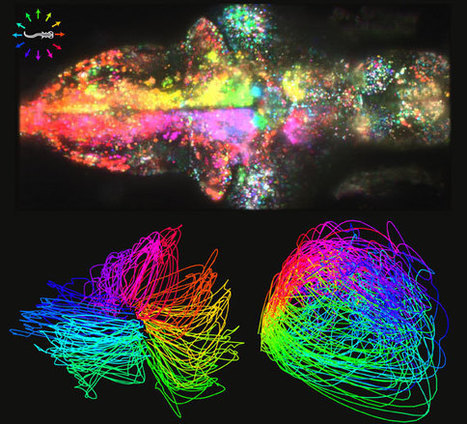
How neuroscience is benefiting from distributed computing, and how computing might learn from neuroscience.
|
|
Scooped by
Scott Turner
March 6, 2017 1:46 PM
|
Introduce and definitions Historical & philosophical roots of MMR Authorities & publications in the field Terminologies, notation system & visuals Purposes Research designs & typologies
|
|
Scooped by
Scott Turner
March 1, 2017 1:05 PM
|
The magazine for researchers who want to be more productive and achieve real-world impacts from their research.
|
|
Scooped by
Scott Turner
January 29, 2017 5:24 AM
|
Doctoral study can seem like a 24-7 endeavour, but don't ignore these other opportunities, advise Robert MacIntosh and Kevin O'Gorman
|
|
Scooped by
Scott Turner
December 16, 2016 2:48 PM
|
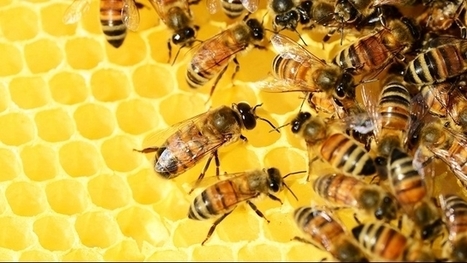
How bees inspire swarm-based artificial intelligence - Experts have found that the hive-mind can help develop smarter, more effective AI.
|
|
Scooped by
Scott Turner
December 15, 2016 2:42 PM
|
Blog about the work by computing by professionals, academics and students in Northamptonshire.
|
|
Scooped by
Scott Turner
December 9, 2016 1:19 PM
|
|
|
Scooped by
Scott Turner
December 6, 2016 2:59 AM
|
The film looks so 80's now but the song is as fresh as ever! "Engagement" is a buzz word currently in education, with companies and managers trying to convince us that measuring learner engagement using physical devices such as heart rate monitors can be used to prove learning is happening in formal education contexts. Thankfully…
|
|
Scooped by
Scott Turner
November 8, 2016 3:26 PM
|
|
|
Scooped by
Scott Turner
November 5, 2016 4:12 PM
|
Find out how digital tools can help you: ———————————– Explore the literature (back to top) Here is a collection of digital to…
|
|
Rescooped by
Scott Turner
from Edtech and assessment
November 4, 2016 3:06 PM
|
WSJ Leadership Expert C. L. Max Nikias says that higher education needs more dual appointments to foster the kind of collaborative research needed to keep up with technological advances.
Via Julie Tardy
|
|
Scooped by
Scott Turner
October 25, 2016 4:00 AM
|
22 quotes from IT and business leaders on facing risks, opportunities, and challenges.
|
|
Scooped by
Scott Turner
October 16, 2016 3:31 AM
|
‘During the course of the programme my attention shifted and deepened – I was more interested in developing myself as a person’
|
|
|
Scooped by
Scott Turner
March 20, 2017 7:13 AM
|
We sleep next to them. We carry them around with us wherever we go. We use them for social interaction, classroom polls, information gathering, navigation, entertainment, translation, coursework, p…
|
|
Scooped by
Scott Turner
March 3, 2017 12:19 PM
|
California community colleges take part in chatbot tool pilot aimed at getting students to interact and help each other with coursework.
|
|
Scooped by
Scott Turner
February 4, 2017 3:16 PM
|
If your job is at risk, don't wait until the last minute before planning a safe landing.
|
|
Scooped by
Scott Turner
January 2, 2017 11:05 AM
|
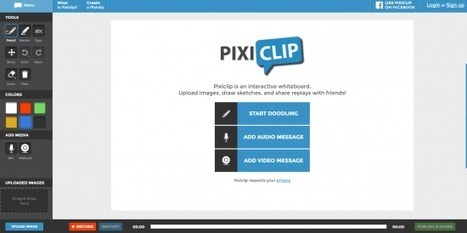
Last week I received an email from a reader who was looking for a suggestion for a free alternative to Educreations to use on a Mac or Windows computer. The tool that immediately came to my mind wa…
|
|
Scooped by
Scott Turner
December 16, 2016 12:51 PM
|
AI lends a hand to songwriters by setting their words to a pop song melody. And later, the aim is to get it to create whole compositions with lyrics by itself
|
|
Scooped by
Scott Turner
December 10, 2016 5:33 AM
|
When third-year students in strategy classes at BI Norwegian Business School have a question about their assignments next semester, odds are a robot will provide their answer. A chatbot—a computer program designed to simulate an intelligent conversation—will respond to routine student inquiries a
|
|
Scooped by
Scott Turner
December 9, 2016 8:53 AM
|
|
|
Scooped by
Scott Turner
November 9, 2016 3:50 AM
|
We find ourselves in the era of a new paradigm of education, in which learning ceases to be an internal and individual activity and becomes an activity performed collectively, critically, in participation with others, and online (Siemens, 2005). It is in this sense that the flipped classroom model arises. The present study provides evidence of the model’s efficacy at the university. The study investigates whether the model improves: the teaching and learning processes, the satisfaction in the development of the course, the academic performance of students and the assessment of professors. The method used consisted of an evaluative study and the collection of data from both professors and students. Regarding students, we analysed the following set of data: academic results, the university’s official survey, a questionnaire created and validated for the purpose of this study, and a focus group. Regarding professors, we collected data by interviewing the professors that organized the course. The results were in line with the previous study carried out by Yarbro, Arfstrom, McKnight and McKnight (2014). The study by Yarbro and colleagues, as well as present study, confirmed that the model contributed to: the enrichment of teaching and learning processes, aspects related to the integration of concepts, the role change of professors and students, the improvement of the processes of participation and communication, the integration of the ICTs, the improvement of academic results, and the promotion of student interest in the course.
|
|
Scooped by
Scott Turner
November 8, 2016 3:24 PM
|
Share your thoughts on how universities and colleges can exploit the potential of the internet of things and artificial intelligence.
|
|
Scooped by
Scott Turner
November 5, 2016 1:19 PM
|
The new book The Distracted Mind: Ancient Brains In A High-Tech World makes the case for managing the tsunami of digital distractions to aid how we learn, absorb information and live.
|
|
Scooped by
Scott Turner
November 2, 2016 3:49 AM
|
Explore uses Google smarts to help you create amazing presentations, spreadsheets and documents in a fraction of the time they used to take.
|
|
Scooped by
Scott Turner
October 16, 2016 3:31 AM
|
This study looks at the expectations of undergraduate students in one public university in Malaysia with regard to the introduction of the Accelerated Program for Excellence (APEX). The university has undergone major transformations, which consequently influence the expectations of students. This paper uses two sets of data: data collected through six focus group interviews and data from responses to a series of open-ended questions. These open-ended questions were part of a bigger survey consisting of 275 undergraduates, but only responses related to the open-ended section were included in this analysis. Student expectations can be categorized into expectations related to educational qualification and their projected future; teaching, learning and assessment; and information technology and communication. We suggest that universities need to take into consideration students’ realistic expectations and manage unrealistic expectations. We also argue that universities need to be cautious in viewing students as consumers in order to function as institutions that generate and disseminate knowledge to students.
|




 Scoop.it!