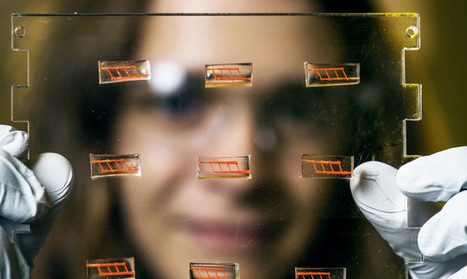
In 2012, Emily Leproust was trying to raise money to start Twist Bioscience, a company that aimed to synthesize DNA more quickly and more cheaply than existing methods allowed. But many investors were spooked by the perception that synthetic biology — the engineering of microorganisms to make useful products such as drugs, food ingredients and materials — would not turn a profit. “It was a lonely time,” Leproust recalls.
Synthetic biology builds upon the techniques and successes of genetics, molecular biology, and metabolic engineering by applying engineering principles to the design of biological systems. The field still faces substantial challenges, including long development times, high rates of failure, and poor reproducibility. One method to ameliorate these problems would be to improve the exchange of information about designed systems between laboratories. The Synthetic Biology Open Language (SBOL) has been developed as a standard to support the specification and exchange of biological design information in synthetic biology, filling a need not satisfied by other pre-existing standards. This document details version 2.0 of SBOL, introducing a standardized format for the electronic exchange of information on the structural and functional aspects of biological designs. The standard has been designed to support the explicit and unambiguous description of biological designs by means of a well defined data model. The standard also includes rules and best practices on how to use this data model and populate it with relevant design details. The publication of this specification is intended to make these capabilities more widely accessible to potential developers and users in the synthetic biology community and beyond.
The Synthetic Biology Engineering Research Center (Synberc) was founded in 2006 to bring together researchers working in the field of synthetic biology to help establish and grow the field. The goals for the ten-year center are to make biology easier to engineer, train the next group of synthetic biology researchers, integrate the industrial biotech community, and actively engage the public and policy makers. Synberc recently gathered at MIT for its Fall 2015 retreat. The retreats embody each of those goals through students sharing their progress in synthetic biology research and policy and through organization and participation in education, outreach, and public engagement activities.
The retreat kicked off with a community engagement event called “Conversations about Synthetic Biology”, first in a series of engagement events, held at LabCentral, a new lab space for biotech startups in Cambridge, MA. A mix of community members, researchers from different STEM fields, and synthetic biologists participated in hands-on activities from the Boston Museum of Science and discussed the current and potential impacts of synthetic biology in small groups. Researchers discussed how they participate in educating non-scientists on synthetic biology and how they think this effort has led to an increase in awareness in the broader community. A Boston high school teacher and one of her students shared how using BioBuilder, a kit that enables novice students to do simple synthetic biology experiments (see biobuilder.org for more), . Community members asked questions about the impacts and potential risks of synthetic biology and suggested ways that researchers can engage the public more effectively.
Saturday morning started strong with Dr. Ron Weiss’ presentation on synthetic organoids, organ-like tissues grown in vitro. From there we heard students and postdocs share the latest synthetic biology research from their Synberc labs, ranging from cell-free RNA systems to mammalian cells:
Microbial screening and engineering In the microbial engineering realm, we heard from Harneet Rishi (UC Berkeley) and Andrea Balassy (Washington University in St. Louis).
Andrea presented her group’s progress in engineering cyanobacteria to fix nitrogen. Their work will lead to better understanding of nitrogen fixation and engineering plants.
Harneet presented MiCodes, a microscopy-based approach for visualizing genotypic information in yeast. The project began as an iGEM project in 2012 at UC Berkeley and was recently published in ACS Synthetic Biology. By using different combinations of fluorescent colors and localization tags, MiCodes allows one to screen a library of thousands of phenotypes using microscopy.
Biosensors Biosensors were a highly anticipated topic of research. Students from all over the country presented molecular and cellular sensors for applications ranging from high-throughput screening of production-strains to infection-detection in humans.
We heard from Allison Hoynes-O’Connor at Washington University in St. Louis about her novel RNA, heat-repressible thermosensors. The sensors can be used to engineer logic at the transcriptional, translational, and post-translational levels. They’ve studied 24 of them in detail and have also developed guidelines for effectively designing more.
Later, Prabha Ramakrishnan, from Rice University, presented work on new light-responsive transcriptional controllers. Her group is using such tools to engineer cells that can sense and respond to multiple inputs.
Emily Yasi from the Peralta-Yahya lab at Georgia Tech presented her work on screening and evolving GPCR-based biosensors for biofuels and other chemicals. These biosensors will allow the Peralta-Yahya lab to scale screening of chemical-producing microbes to incredible levels, rapidly advancing their workflow of engineering microbes for industrial applications.
Dr. Shimyn Slomovic from the Collins Lab at MIT presented a zinc-finger based tool that detects specific DNA sequences and causes a user-designated cellular response. This tool was used to successfully detect adenovirus infection in mammalian cells and trigger expression of GFP through a clever intein-spliced activator. This could prove to be a great development for the field of synthetic biology.
Nanorobots are the most sophisticated artificial intelligence, gifted to the field of medicine by the biotechnologists. This novel powerful tool is destined to change the foundations of the cancer detection and therapy. The field of nanorobotics mainly focuses on designing, simulation, control and coordination of robots with nanoscale dimensions along with manipulation and/or assembly of nanoscale components. Any active structure capable of actuation, information processing, sensing, signalling, or swarm behavior at the nanoscale can be a component of the nanorobot system. In context to biology, such natural biomolecules do exist, the challenge was to develop synthetic nanorobotic systems
Modulation of biological oscillations by stimuli lies at the root of many phenomena, including maintenance of circadian rhythms, propagation of neural signals, and somitogenesis. While it is well established that regular periodic modulation can entrain an oscillator, an aperiodic (noisy) modulation can also robustly entrain oscillations. This latter scenario may describe, for instance, the effect of irregular weather patterns on circadian rhythms, or why irregular neural stimuli can still reliably transmit information. A synthetic gene oscillator approach has already proven to be useful in understanding the entrainment of biological oscillators by periodic signaling, mimicking the entrainment of a number of noisy oscillating systems. We similarly seek to use synthetic biology as a platform to understand how aperiodic signals can strongly correlate the behavior of cells. This study should lead to a deeper understanding of how fluctuations in our environment and even within our body may promote substantial synchrony among our cells. Specifically, we investigate experimentally and theoretically the entrainment of a synthetic gene oscillator in E. coli by a noisy stimulus. This phenomenon was experimentally studied and verified by a combination of microfluidics and microscopy using the real synthetic circuit. Stochastic simulation of an associated model further supports that the synthetic gene oscillator can be strongly entrained by aperiodic signals, especially telegraph noise. Finally, widespread applicability of aperiodic entrainment beyond the synthetic gene oscillator is supported by results derived from both a model for a natural oscillator in D. discoideum and a model for a predator-prey oscillations.
Students from Trinity College Dublin have successfully created anti-malarial 'biobricks', which could pave the way for easier and more cost-effective production of the key drug artemisinin. The students recently secured a gold medal for their entry in the International Genetically Engineered Machine (iGEM) competition, which challenged them to create a novel product with important real-world applications by using synthetic biology approaches. Biobricks are essentially DNA fragments that have been modularised and conformed to assembly standards, which means they can be easily integrated in new biological systems. The Trinity team investigated the re-engineering of artemisinin production in E-coli to provide a cheaper option with which to fight malaria. Artemisinin was first identified by the Chinese scientist Tu Youyou, who recently shared the 2015 Nobel Prize in Physiology or Medicine with Trinity alumnus William Campbell and Satoshi Omura, who discovered a therapy to treat roundworm parasite infections. The majority of artemisinin currently comes from plant extraction and, more recently, from production in yeast cells. However, production costs vary greatly and many sufferers cannot afford the drug, which provided the Trinity team with its key motivation to explore their alternative synthesis pathway.
Designer and architect Neri Oxman is leading the search for ways in which digital fabrication technologies can interact with the biological world. Working at the ...
Synthetic biology is a field that can be and often is described as “emerging”. The field-in-emergence is creating futures, problems and new objects that remain elusive. By turning an ethnographic gaze on the nascent stages of a new research field, we can pose interesting questions about the formation of local configurations and their relations to wider policies and actions in ways that the analysis of established fields would struggle to illuminate. In this paper we explore how a new field such as synthetic biology is actively ‘placed’, tracing the development of the field in the UK and in France. The concept of ‘placing’ allows us to interrogate the local configurations of an emerging field and tie these into non-local manoeuvres. The concept permits us to comprehend and link entities that are commonly differentiated as “local” (universities, research teams), “national” (funding, policy-streams, public debates, platforms), and “non-local” (international competitions, international conferences and publications). Placing a science means that the practices and discourses of the science co-emerge with its modes of organisation and geographies and with its histories and futures.
The biobricks, created via synthetic biology, could one day provide a cheaper means of making the key drug artemisinin
Students from Trinity College Dublin have successfully created anti-malarial ‘biobricks', which could pave the way for easier and more cost-effective production of the key drug artemisinin.
The students recently secured a gold medal for their entry in the International Genetically Engineered Machine (iGEM) competition, which challenged them to create a novel product with important real-world applications by using synthetic biology approaches.
Biobricks are essentially DNA fragments that have been modularised and conformed to assembly standards, which means they can be easily integrated in new biological systems. The Trinity team investigated the re-engineering of artemisinin production in E-coli to provide a cheaper option with which to fight malaria.
Artemisinin was first identified by the Chinese scientist Tu Youyou, who recently shared the 2015 Nobel Prize in Physiology or Medicine with Trinity alumnus William Campbell and Satoshi Omura, who discovered a therapy to treat roundworm parasite infections.
The majority of artemisinin currently comes from plant extraction and, more recently, from production in yeast cells. However, production costs vary greatly and many sufferers cannot afford the drug, which provided the Trinity team with its key motivation to explore their alternative synthesis pathway.
Pharmaceutical small-molecule drugs are the first “pillar” of modern medicinal therapeutics, with recombinant protein biologics claiming the second pillar. If the emergent third pillar of medicine is cell-based therapeutics, cellular immunotherapy of cancer stands as the pillar's current poster child (1). This approach includes adoptive T cell therapy, which has seen major advances recently. Underlying some of this progress are developments in synthetic tumor recognition receptors. Although it's early days for applied synthetic immunobiology, increasing momentum in this field may soon lead to the application of engineered T cells to a broader spectrum of cancers as well as to infectious and autoimmune diseases.
Like much of our society, the American university is increasingly scrutinized through an economic lens. The value of academic research is largely determined by its commercial potential or fundraising capacity. Much has been written about the corrosive effects of this point of view on the humanities, but it has transformed academic science and engineering as well. As Benjamin Ginsberg describes in his book The Fall of the Faculty (2011), universities have been flooded with administrators who view “faculty research mainly as a source of revenue” and “research projects as instruments that generate income.” Yet even the most application-driven universities have always aimed for something beyond enriching their endowment. MIT, for example, declares in its mission statement that it is “committed to generating, disseminating, and preserving knowledge, and to working with others to bring this knowledge to bear on the world’s great challenges,” doing it all “for the betterment of humankind.”
Standards shape our everyday life. From nuts and bolts to electronic devices and technological processes, standardised products and processes are all around us. Standards have technological and economic benefits, such as making information exchange, production, and services more efficient. However, novel, innovative areas often either lack proper standards, or documents about standards in these areas are not available from a centralised platform or formal body (such as the International Standardisation Organisation). Systems and synthetic biology is a relatively novel area, and it is only in the last decade that the standardisation of data, information, and models related to systems and synthetic biology has become a community-wide effort. Several open standards have been established and are under continuous development as a community initiative. COMBINE, the ‘COmputational Modeling in BIology’ NEtwork has been established as an umbrella initiative to coordinate and promote the development of the various community standards and formats for computational models. There are yearly two meeting, HARMONY (Hackathons on Resources for Modeling in Biology), Hackathon-type meetings with a focus on development of the support for standards, and COMBINE forums, workshop-style events with oral presentations, discussion, poster, and breakout sessions for further developing the standards. For more information see http://co.mbine.org/. So far the different standards were published and made accessible through the standards’ web- pages or preprint services. The aim of this special issue is to provide a single, easily accessible and citable platform for the publication of standards in systems and synthetic biology. This special issue is intended to serve as a central access point to standards and related initiatives in systems and synthetic biology, it will be published annually to provide an opportunity for standard development groups to communicate updated specifications.
Recently, a novel technique named clustered regularly interspaced short palindromic repeat (CRISPR)/CRISPR-associated protein (Cas) 9 system has been rapidly developed. This genome editing tool has tremendously improved our ability to explore the pathogenesis of diseases and correct the disease mutations as well as phenotypes. With a short guide RNA, Cas9 can be precisely directed to target sites, and functions as an endonuclease to efficiently produce breaks in DNA double strands. Over the past 30 years, CRISPR has evolved from the "curious sequences of unknown biological function" into a promising genome editing tool. As a result of the incessant development in the CRISPR/Cas9 system, Cas9 co-expressed with custom guide RNAs has been successfully used in a variety of cells and organisms. This genome editing technology can also be applied to synthetic biology, functional genomic screening, transcriptional modulation, and gene therapy. However, although CRISPR/Cas9 has a broad range of action in science, there are several aspects that affect its efficiency and specificity, including Cas9 activity, target sites selection and sgRNAs design, delivery methods, off-target effects, and the incidence of homology-directed repair. Here, we highlight the factors that affect the utilization of CRISPR/Cas9 as well as possible strategies to handle these problems. Addressing these issues will allow us to take better advantage of this technique. In addition, we will also review the history and rapid development of the CRISPR/Cas system from the time of its initial discovery in 2012. This article is protected by copyright. All rights reserved.
The global synthetic biology market is projected to grow remarkably, says a report from Transparency Market Research (TMR). This report is titled “Synthetic Biology Market - Global Industry Analysis, Size, Share, Growth, Trends and Forecast, 2013 - 2019”. The research study on the global synthetic biology market offers a 360-degree view of the market.
According to this report, the global synthetic biology market will expand at a 32.60% CAGR during the forecast period from 2013 to 2019. In 2012, the global synthetic biology market was worth US$1.8 bn and by 2019, the market is expected to be worth US$13.4 bn. The global synthetic biology market is driven by the growing demand for improved drugs and vaccines. Furthermore, advancement in molecular biology will also fuel the global synthetic biology market. This trend is gaining traction in the market as the participation of government bodies and universities in research on synthetic biology is rising. Furthermore, the demand for genetically modified crops (GMOs) due to the expanding global population is also driving advancement in molecular biology.
By product type, the global synthetic biology market is divided into core products (chassis organisms, XNA, synthetic cells, synthetic genes, and synthetic DNA) and enabling products (oligonucleotide synthesis and DNA synthesis). In 2012, the synthetic biology market was dominated by the synthetic DNA segment due to the higher commercial availability of this product as compared to other core products.
On the basis of technology, the global synthetic biology market is divided into bioinformatics, DNA sequencing, genome engineering, and biological components and integrated systems. As genome engineering can be used for genetically modifying foods, gene therapy, and gene cloning, the application of genome engineering has grown, in turn driving the global synthetic biology market.
Application-wise, the global synthetic biology market is segmented into agriculture, chemicals, healthcare, and others. The largest market share in the global synthetic biology market is held by the healthcare sector, as there is high utilization of synthetic biology techniques to make cheap vaccines and drugs. On the other hand, the agriculture application segment of the global synthetic biology market is expected to experience the highest growth during the forecast period.
On the basis of geography, the global synthetic biology market is classified into Asia Pacific, Europe, North America, and Rest of the World (RoW). Europe held the largest market share in the global synthetic biology market in 2012 and is projected to grow consistently in the foreseeable future. The Europe synthetic biology market benefits from the efforts of government and private firms towards the development of this field. Funding for synthetic biology research in Europe is high. The start of the €70-bn Horizon 2020 program in Europe represents a pivotal moment for this regional synthetic biology market.
Some of the key players operating in the global synthetic biology market are Amyris, Bayer, Biosearch Technologies, Genomatica, Ginkgo Bioworks, Green Biologics, and Thermo Fisher Scientific. Several of these players in the global synthetic biology market are involved in many R&D initiatives.
An interdisciplinary team of William & Mary students have brought home one of the biggest prizes in synthetic biology, an honor that has been called the World Cup of Science.
Engineering industrial cell factories to effectively yield a desired product while dealing with industrially relevant stresses is usually the most challenging step in the development of industrial production of chemicals using microbial fermentation processes. Using synthetic biology tools, microbial cell factories such as Saccharomyces cerevisiae can be engineered to express synthetic pathways for the production of fuels, biopharmaceuticals, fragrances and flavors. However, directing fluxes through these synthetic pathways towards the desired product can be demanding due to complex regulation or poor gene expression. Systems biology, which applies computational tools and mathematical modeling to understand complex biological networks, can be used to guide synthetic biology design. Here, we present our perspective on how systems biology can impact synthetic biology towards the goal of developing improved yeast cell factories. This article is protected by copyright. All rights reserved.
Using sugar, silicone, and a 3D printer, bioengineers and surgeons have created an implant with an intricate network of blood vessels. The work points toward a future of growing replacement tissues and organs for transplantation.
The research may provide a method to overcome one of the biggest challenges in regenerative medicine: How to deliver oxygen and nutrients to all cells in an artificial organ or tissue implant that takes days or weeks to grow in the lab prior to surgery.
A research team led by Jordan Miller, assistant professor of bioengineering at Rice University, and Pavan Atluri, assistant professor of surgery at the University of Pennsylvania, conducted the study. Published in the journal Tissue Engineering Part C: Methods, it shows that blood flowed normally through test constructs that were surgically connected to native blood vessels.
if living things were as easy to modify as computer software. In such a world, farm animals or plants could be engineered to produce leaner meat or juicier fruit, or to withstand extremes of climate. Medical research would be transformed: we could generate mutant animals to model human disease, or engineer plants to be a source of new drug molecules. In fact, medicine itself would look very different. Instead of suffering the terrible effects of genetic diseases such as cystic fibrosis or muscular dystrophy, clinicians could just eliminate the defects from affected cells. But why stop there? Such conditions themselves could become a thing of the past. IVF embryos might be screened for genetic defects and corrected, before being implanted into the womb.
Such a vision might either excite or horrify, depending on your point of view. But if all this sounds like science fiction, it’s time to talk about the new technology of gene editing. As the Nobel laureate Craig Mello, of the University of Massachusetts, recently told me: ‘There truly is a revolution in genetics going on right now.’
Most people do not yet understand the potential impact of our newfound ability to edit and eventually rewrite genetic code, the blueprint for life itself.
At least, so say a number a number of experts in genetics and genomics. That idea was the major common thread in a series of interviews with some of the leading researchers in the field.
The latest gene-editing technology, known as CRISPR, can find and replace sections of DNA, turning genes on or off, removing harmful mutations, and potentially inserting helpful genetic mutations that could make people super-athletes or make them immune to certain diseases.
"We're basically able to have a molecular scalpel for genomes," Jennifer Doudna, a biologist frequently credited as one of the co-discoverers of this genetic editing system (and one of the first to use it), told Tech Insider. "All the technologies in the past were sort of like sledgehammers ... This just gives scientists the capability do something that is incredibly powerful."
"Most of the public," Doudna told MIT Technology Review, "does not appreciate what is coming."
The paper questions both the disciplinary narrative and the interdisciplinary narrative through a re-examination of the status of disciplines in the actual practices of three different research fields: materials science and engineering which emerged in the USA in the 1960s, nanotechnology and synthetic biology, both of which became highly visible in the 2000s. Each of the cases under examination discloses a complex configuration of enabling conditions, more complex at any rate than any ‘master narrative’ of scientific change. While the master narratives suggest the existence of “a gravitational pull of disciplinary approaches and standards” followed by a kind of invisible hand that would gradually dissolve the boundaries between academic disciplines, I will argue that none of the opposite narratives – disciplinary and transdisciplinary – is adequate in light of the local configurations of these three new research fields. Despite the strong urge of science policy to create unstable research communities around specific research targets, a sense of disciplinary affiliation is still vivid and extremely resilient among, for instance, chemists.
Everyone who has played in a band or orchestra knows that playing in time creates music, while playing out of time creates cacophony. In an orchestra, each player may be out of tune when warming up, but eventually, all players must reach the same pitch, rhythm, and timing to produce a viable piece of music. Findings now online and slated for the Nov. 5 issue of Molecular Cell by a team of researchers with the Virginia Bioinformatics Institute at Virginia Tech and international collaborators show that the same is true of cells—timing is indeed everything. For cells, there is a particular challenge to keeping in time: Imagine entire notes and bars were removed from a piece of music just as the orchestra players were attempting to start. This happens in cells. The starting conditions for each cell vary, yet the timing in processes like cell division needs to be maintained. As the research team found, cells have adaptive mechanisms that ensure perfect timing despite potential differences. The study has implications for cancer research, as scientists try to understand how cells avoid errors that promote cancer development. It could also be useful in synthetic biology, where scientists work to make robust mechanisms for synthetic life. "We were astonished to see how greatly the starting conditions for each cell could differ and still lead to the same outcome," said Silke Hauf, a biology fellow at Virginia Bioinformatics Institute and the corresponding author of the study. Cells modulate the exact timing of when crucial cellular events happen, slowing down or speeding everything up to make sure everything is playing its proper part at the right time. "To stay with the musical analogy, cellular players influence each other," said Julia Kamenz, lead author of the study and a postdoctoral researcher at Stanford University. "When different players slow down, others slow down; when one speeds up, another speeds up as well." The study addresses the larger problem of how cells cope with naturally occurring variation, which is an unavoidable consequence of cellular physiology. This is particularly important in processes like cell division, which are essential for survival and need to be executed with high accuracy. "This study is a big step forward in elucidating mechanisms of cellular robustness," said John Tyson, a University Distinguished Professor of Biological Sciences in the College of Science at Virginia Tech.
Inflammatory caspases (caspase-1, -4, -5 and -11) are critical for innate defences. Caspase-1 is activated by ligands of various canonical inflammasomes, and caspase-4, -5 and -11 directly recognize bacterial lipopolysaccharide, both of which trigger pyroptosis. Despite the crucial role in immunity and endotoxic shock, the mechanism for pyroptosis induction by inflammatory caspases is unknown. Here we identify gasdermin D (Gsdmd) by genome-wide clustered regularly interspaced palindromic repeat (CRISPR)-Cas9 nuclease screens of caspase-11- and caspase-1-mediated pyroptosis in mouse bone marrow macrophages. GSDMD-deficient cells resisted the induction of pyroptosis by cytosolic lipopolysaccharide and known canonical inflammasome ligands. Interleukin-1β release was also diminished in Gsdmd−/− cells, despite intact processing by caspase-1. Caspase-1 and caspase-4/5/11 specifically cleaved the linker between the amino-terminal gasdermin-N and carboxy-terminal gasdermin-C domains in GSDMD, which was required and sufficient for pyroptosis. The cleavage released the intramolecular inhibition on the gasdermin-N domain that showed intrinsic pyroptosis-inducing activity. Other gasdermin family members were not cleaved by inflammatory caspases but shared the autoinhibition; gain-of-function mutations in Gsdma3 that cause alopecia and skin defects disrupted the autoinhibition, allowing its gasdermin-N domain to trigger pyroptosis. These findings offer insight into inflammasome-mediated immunity/diseases and also change our understanding of pyroptosis and programmed necrosis.
To get content containing either thought or leadership enter:
To get content containing both thought and leadership enter:
To get content containing the expression thought leadership enter:
You can enter several keywords and you can refine them whenever you want. Our suggestion engine uses more signals but entering a few keywords here will rapidly give you great content to curate.


 Your new post is loading...