Wei Gao, Sam Emaminejad, Hnin Yin Yin Nyein, Samyuktha Challa, Kevin Chen, Austin Peck, Hossain M. Fahad, Hiroki Ota, Hiroshi Shiraki, Daisuke Kiriya, Der-Hsien Lien, George A. Brooks, Ronald W. Davis & Ali Javey
"Wearable sensor technologies are essential to the realization of personalized medicine through continuously monitoring an individual’s state of health1, 2, 3, 4, 5, 6, 7, 8, 9, 10, 11, 12. Sampling human sweat, which is rich in physiological information13, could enable non-invasive monitoring. Previously reported sweat-based and other non-invasive biosensors either can only monitor a single analyte at a time or lack on-site signal processing circuitry and sensor calibration mechanisms for accurate analysis of the physiological state14, 15, 16, 17, 18. Given the complexity of sweat secretion, simultaneous and multiplexed screening of target biomarkers is critical and requires full system integration to ensure the accuracy of measurements. Here we present a mechanically flexible and fully integrated (that is, no external analysis is needed) sensor array for multiplexed in situ perspiration analysis, which simultaneously and selectively measures sweat metabolites (such as glucose and lactate) and electrolytes (such as sodium and potassium ions), as well as the skin temperature (to calibrate the response of the sensors). Our work bridges the technological gap between signal transduction, conditioning (amplification and filtering), processing and wireless transmission in wearable biosensors by merging plastic-based sensors that interface with the skin with silicon integrated circuits consolidated on a flexible circuit board for complex signal processing. This application could not have been realized using either of these technologies alone owing to their respective inherent limitations. The wearable system is used to measure the detailed sweat profile of human subjects engaged in prolonged indoor and outdoor physical activities, and to make a real-time assessment of the physiological state of the subjects. This platform enables a wide range of personalized diagnostic and physiological monitoring applications."
Eventbrite - IndieBio EU, UCC School of Microbiology, UCC School of Biochemistry and Cell Biology presents SynBio Future 2016 Conference: Future Axioms in Synthetic Biology - Monday, February 22, 2016 at Devere Hall.
Synthetic biology and the rational design of biological devices depend on the availability of standardized and interchangeable biological parts with diverse range of functions. Reliable access to different reading frames during translation has largely been overlooked as functionality for bioengineering applications. Here we report the construction and initial characterization of the first member of such a class of biological parts that conforms to the BioBrick Standard (RFC25), allowing its interchangeable use in biological devices. Using our standardized frameshifting signal consisting of a UUUAAAG slippery sequence, a 6 nt spacer and an engineered pseudoknot based on the infectious bronchitis virus pseudoknot PK401 embedded in a dual reporter construct, we confirm that the frameshifting activity is comparable to the previously published frequency despite the introduced sequence changes. The frameshifting activity is demonstrated using SDS-PAGE and fluorescence spectroscopy. Standardized programmable ribosomal frameshift parts with specific frameshifting frequencies will be of utility for applications such as double coding DNA sequences by expanding the codable space into the -1 frame. Programmed shifting into the -1 frame to bypass a stop codon allows labeling of a protein pool with a fixed stoichiometry of fusion protein, as well as the construction of multi-enzyme expression constructs with specific expression ratios. A detailed understanding of the structural basis of programmed frameshifting will provide the opportunities to rationally design frameshifting elements with a wide range of applications in synthetic biology, including signals that are regulated by small ligands.
CRISPR-Cas9–based genetic screens are a powerful new tool in biology. By simply altering the sequence of the single-guide RNA (sgRNA), one can reprogram Cas9 to target different sites in the genome with relative ease, but the on-target activity and off-target effects of individual sgRNAs can vary widely. Here, we use recently devised sgRNA design rules to create human and mouse genome-wide libraries, perform positive and negative selection screens and observe that the use of these rules produced improved results. Additionally, we profile the off-target activity of thousands of sgRNAs and develop a metric to predict off-target sites. We incorporate these findings from large-scale, empirical data to improve our computational design rules and create optimized sgRNA libraries that maximize on-target activity and minimize off-target effects to enable more effective and efficient genetic screens and genome engineering.
We report on and provide a detailed characterization of the performance and properties of a recently developed, all E. coli, cell-free transcription and translation system. Gene expression is entirely based on the endogenous translation components and transcription machinery provided by an E. coli cytoplasmic extract, thus expanding the repertoire of regulatory parts to hundreds of elements. We use a powerful metabolism for ATP regeneration to achieve more than 2 mg/ml of protein synthesis in batch mode reactions, and more than 6 mg/ml in semi-continuous mode. While the strength of cell-free expression is increased by a factor of three on average, the output signal of simple gene circuits and the synthesis of entire bacteriophages are increased by orders of magnitude compared to previous results. Messenger RNAs and protein degradation, respectively tuned using E. coli MazF interferase and ClpXP AAA+ proteases, are characterized over a much wider range of rates than the first version of the cell-free toolbox. This system is a highly versatile cell-free platform to construct complex biological systems through the execution of DNA programs composed of synthetic and natural bacterial regulatory parts.
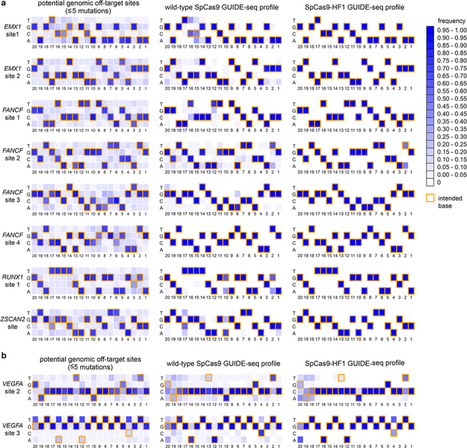
CRISPR–Cas9 nucleases are widely used for genome editing but can induce unwanted off-target mutations. Existing strategies for reducing genome-wide off-target effects of the widely used Streptococcus pyogenes Cas9 (SpCas9) are imperfect, possessing only partial or unproven efficacies and other limitations that constrain their use. Here we describe SpCas9-HF1, a high-fidelity variant harbouring alterations designed to reduce non-specific DNA contacts. SpCas9-HF1 retains on-target activities comparable to wild-type SpCas9 with >85% of single-guide RNAs (sgRNAs) tested in human cells. Notably, with sgRNAs targeted to standard non-repetitive sequences, SpCas9-HF1 rendered all or nearly all off-target events undetectable by genome-wide break capture and targeted sequencing methods. Even for atypical, repetitive target sites, the vast majority of off-target mutations induced by wild-type SpCas9 were not detected with SpCas9-HF1. With its exceptional precision, SpCas9-HF1 provides an alternative to wild-type SpCas9 for research and therapeutic applications. More broadly, our results suggest a general strategy for optimizing genome-wide specificities of other CRISPR-RNA-guided nucleases.
Bidirectional intercellular signaling is an essential feature of multicellular organisms, and the engineering of complex biological systems will require multiple pathways for intercellular signaling with minimal crosstalk. Natural quorum-sensing systems provide components for cell communication, but their use is often constrained by signal crosstalk. We have established new orthogonal systems for cell-cell communication using acyl homoserine lactone signaling systems. Quantitative measurements in contexts of differing receiver protein expression allowed us to separate different types of crosstalk between 3-oxo-C6- and 3-oxo-C12-homoserine lactones, cognate receiver proteins, and DNA promoters. Mutating promoter sequences minimized interactions with heterologous receiver proteins. We used experimental data to parameterize a computational model for signal crosstalk and to estimate the effect of receiver protein levels on signal crosstalk. We used this model to predict optimal expression levels for receiver proteins, to create an effective two-channel cell communication device. Establishment of a novel spatial assay allowed measurement of interactions between geometrically constrained cell populations via these diffusible signals. We built relay devices capable of long-range signal propagation mediated by cycles of signal induction, communication and response by discrete cell populations. This work demonstrates the ability to systematically reduce crosstalk within intercellular signaling systems and to use these systems to engineer complex spatiotemporal patterning in cell populations.
One of the goals of synthetic biology is to build regulatory circuits that control cell behavior, for both basic research purposes and biomedical applications. The ability to build transcriptional regulatory devices depends on the availability of programmable, sequence-specific, and effective synthetic transcription factors (TFs). The prokaryotic clustered regularly interspaced short palindromic repeat (CRISPR) system, recently harnessed for transcriptional regulation in various heterologous host cells, offers unprecedented ease in designing synthetic TFs. We review how CRISPR can be used to build synthetic gene circuits and discuss recent advances in CRISPR-mediated gene regulation that offer the potential to build increasingly complex, programmable, and efficient gene circuits in the future.
Nature has evolved an array of intricate protein assemblies that work together to perform the chemistry that maintains life. These protein machines function with exquisite specificity and coordination to accomplish their tasks, from DNA and RNA synthesis to protein folding and post-translational modifications. Despite their complexity, synthetic biologists have succeeded in redesigning many aspects of these molecular machines. For example, natural DNA polymerases have now been engineered to catalyze the synthesis of alternative genetic polymers called XNAs, orthogonal RNA polymerases and ribosomes have been engineered to enable the construction of genetic logic gates, and protein biogenesis machinery such as chaperonins and protein translocons have been repurposed to improve folding and expression of recombinant proteins. In this Review, we highlight the progress made in understanding, engineering, and repurposing bacterial protein machines for use in synthetic biology and biotechnology.
VisBOL is a Web-based application that allows the rendering of genetic circuit designs, enabling synthetic biologists to visually convey designs in SBOL visual format. VisBOL designs can be exported to formats including PNG and SVG images to be embedded in Web pages, presentations and publications. The VisBOL tool enables the automated generation of visualizations from designs specified using the Synthetic Biology Open Language (SBOL) version 2.0, as well as a range of well-known bioinformatics formats including GenBank and Pigeoncad notation. VisBOL is provided both as a user accessible website and as an open-source (BSD) JavaScript library that can be used to embed diagrams within other content and software.
A synthetic biology mooc sponsored by Mairie de Paris, Fondation Liliane Bettencourt Schueller, Citizen Cyberlab FP7 produced by mooc factory CRI Paris.
During this year's World Economic Forum in Davos, Switzerland, 3D printing is heavily featured in Neri Oxman's essay. By using modern technology like 3D printing in our digital age, she believes a fourth industrial revolution, what she calls the biological age, is fast approaching.
If you missed BIOFABRICATE you missed out! Researchers, artists, designers and entrepreneurs are growing building materials, packaging, and lighting products from mushrooms. They're painting with bacteria, dying cloth with microalgae and growing clothing from kombucha. Plus, get the scoop the programmable materials library being built with Autodesk's Project Cyborg and learn to GIY!
I have walked along many paths, even pathways, on my journey through life. Recently, I have come across new pathways, indeed two different types of pathways, which have made me curious and thoughtful.
I was sitting in a meeting on Responsible Research and Innovation (RRI) and synthetic biology the other day and heard a lot about ‘innovation pathways’, ‘commercial pathways’, ‘translational pathways’, ‘pathways to innovation’ and, of course, ‘pathways to impact’. Some weeks beforehand I had been sitting in various synthetic biology meetings surrounded by people who study ‘metabolic pathways’ (or as some call them, ‘paths of life’). In both cases I was puzzled, but in different ways. What are these pathways we are talking about? How do we journey along them or make others embark on them? How do we map what they are and where they go? How are they made and changed?
Of course, these pathways are very different, but as we shall see, they cross over (might even come into conflict) in the life of natural scientists (who explore metabolic pathways and are supposed to find pathways to [industrial] growth) and in the life of social scientists (who are tasked with embedding RRI into this process and “help avoid lock-in to innovation pathways that do not serve individual patient or public benefit”).
The lack of technology for such sustainable life support systems is a major factor underlying criticism of human space exploration. If long-term human presence on other worlds is the goal, than genetically altered organisms are the key.
Artificial intelligence can make numerous contributions to synthetic biology. I would like to suggest three that are related to the past, present and future of artificial intelligence. From the past, works in biology and artificial systems by Turing and von Neumann prove highly interesting to explore within the new framework of synthetic biology, especially with regard to the notions of self-modification and self-replication and their links to emergence and the bottom-up approach. The current epistemological inquiry into emergence and research on swarm intelligence, superorganisms and biologically inspired cognitive architecture may lead to new achievements on the possibilities of synthetic biology in explaining cognitive processes. Finally, the present-day discussion on the future of artificial intelligence and the rise of superintelligence may point to some research trends for the future of synthetic biology and help to better define the boundary of notions such as “life”, “cognition”, “artificial” and “natural”, as well as their interconnections in theoretical synthetic biology.
In response to the recent publication of “Hacking the President’s DNA,” I’ve been fielding a lot of general questions about synthetic biology. I thought I’d put together a little primer for my readers. For Those Who Like To Watch: For the quickest introduction to the science involved, “Synthetic Biology Explained,” an excellent [...]
Browsing on the multitude of entries for the recent BT Young Scientist & Technology Exhibition and noting, with pleasure, their many explorations of the natural world, I came upon the study entered from Marian College in Dublin. In the category for social and behavioural science, Dorian, Ewan and Dean had used “surveys to investigate misconceptions about GMOs among teenagers and adults, but also showing how scientifically proven benefits are poorly portrayed to the public”. Such a positive spin for genetic engineering would have gratified the agribusiness multinationals and the many Irish scientists frustrated by lack of domestic support for GM (genetic modification) field research. It could also speak for the independence of thought at the college, which has seven science teachers. And it took me on to explore the fortunes of GM’s even less widely understood and appreciated offspring, synthetic biology – “syn-bio” – or the shaping of new life. News about syn-bio’s arrival in Ireland was reserved for the business and technology pages, given its potential for enterprise and profit. “IndieBio kicks off with nine new synthetic biology startups: Cork-based accelerator teams early stage companies with mentors and support” ran a headings in this newspaper last July, when University College Cork provided laboratories for a three-month syn-bio development programme. How does syn-bio differ from GM ? Genetic engineering has been a cut-and-paste technique in which existing lengths of genetic information producing a useful characteristic are taken from one organism and pasted into another, thus developing a new breed of plant or animal. Synthetic biology designs and constructs new DNA sequences from scratch. Combining engineering, chemistry, computer science and molecular biology, it provides cheap, standardised, off-the-shelf “bricks” of DNA that build new forms of organism. To some, syn-bio is the postindustrial advance that lets humankind take over from evolution in the future shaping of life forms. For the arguments of this approach, read a 2009 New Yorker article, “A Life of Its Own” (at bit.ly/1RvVnuf), about Jay Keasling. He led the scientists who, with enormous funding from the Bill & Melinda Gates Foundation, used syn-bio to produce cheap, semi-synthetic artemisinin for the global treatment of malaria. Production of the drug, normally derived from sweet wormwood plants (Artemisia annua) grown by tropical farmers, began in Italy in 2013, to protests that it could make many third-world livelihoods redundant. Similar consequences have been feared from syn-bio manufacture of saffron and vanilla, valuable plant-derived flavourings. Syn-bio design of plants to accommodate climate change is being considered by the Global Alliance for Climate-Smart Agriculture, of which Ireland is a member. This has brought resistance from civil movements apprehensive of its monopoly by multinational corporations. Such weighty considerations seem trivialised by the incidental syn-bio production in the United States of pet fish in new fluorescent colours, new blue carnations and house plants that glow (not very brightly) in the dark. Real human benefits are the more common promise of syn-bio, along with helping threatened species of wildlife: synthesised horn to save rhinos, ambergris to save whales, synthesised blood of horseshoe crab for clinical use. Much idealism and excitement marked last summer’s three-month “start-up” programme in UCC laboratories. Gathered from Austria, Canada and France as well as Ireland, the projects included a peanut without allergens, a yogurt that helps people to live longer and an ocean-friendly fish-farming feed. Support came from financial investment, laboratory space and biotech mentors. Notable among them was Cathal Garvey of Cork, sometime PhD student in genetic cancer research, who switched track to become “a full-time biohacker”. Setting up his own syn-bio lab in a spare bedroom and using 3D computer printing in building a centrifuge and other cheap equipment, he proceeded to design new DNA chromosomes. He makes an engaging ambassador for synthetic biology, and his enthusiasm for making it cheaply and openly accessible, even as an independent “hobby”, runs through a videoed lecture to a 2014 indiebiotech.com, SynBio Future conference. Wider access to syn-bio technology, outside the control of even Monsanto, can be presented as enriching the world. In a fascinating, widely cited article in the New York Review of Books, the veteran scientist Freeman Dyson predicted: “Domesticated biotechnology, once it gets into the hands of housewives and children, will give us an explosion of diversity of new living creatures, rather than the monoculture crops that the big corporations prefer. New lineages will proliferate to replace those that monoculture farming and deforestation have destroyed. Designing genomes will be a personal thing, a new art form as creative as painting or sculpture.” That sounds fun – or is it? Many fear it could get out of control, or yield too much power to agribusiness. Others object to “playing God” with life, if not usurping natural evolution. But how soon, I wonder, will it be winning prizes at the BT Young Scientists exhibition?
To get content containing either thought or leadership enter:
To get content containing both thought and leadership enter:
To get content containing the expression thought leadership enter:
You can enter several keywords and you can refine them whenever you want. Our suggestion engine uses more signals but entering a few keywords here will rapidly give you great content to curate.


 Your new post is loading...


 Scoop.it!