Your new post is loading...

|
Scooped by
Gerd Moe-Behrens
February 17, 2016 7:29 PM
|
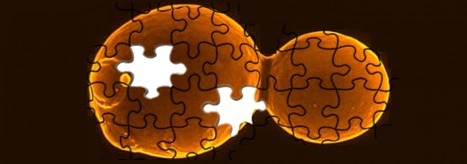
Synthetic biologists are learning to turn microbes and unicellular organisms into highly productive factories by re-engineering their metabolism to produce valued commodities such as fine chemicals, therapeutics and biofuels.
|
|
Scooped by
Gerd Moe-Behrens
February 17, 2016 8:06 AM
|
Biological phenomena, such as cellular differentiation and phagocytosis, are fundamental processes that enable cells to fulfill important physiological roles in multicellular organisms. In the field of synthetic biology, the study of these behaviors relies on the use of a broad range of molecular tools that enable the real-time manipulation and measurement of key components in the underlying signaling pathways. This Review will focus on a subset of synthetic biology tools known as bottom-up techniques, which use technologies such as optogenetics and chemically induced dimerization to reconstitute cellular behavior in cells. These techniques have been crucial not only in revealing causal relationships within signaling networks but also in identifying the minimal signaling components that are necessary for a given cellular function. We discuss studies that used these systems in a broad range of cellular and molecular phenomena, including the time-dependent modulation of protein activity in cellular proliferation and differentiation, the reconstitution of phagocytosis, the reconstitution of chemotaxis, and the regulation of actin reorganization. Finally, we discuss the potential contribution of synthetic biology to medicine.
|
|
Scooped by
Gerd Moe-Behrens
February 17, 2016 8:04 AM
|
|
|
Scooped by
Gerd Moe-Behrens
February 17, 2016 6:57 AM
|
While powerful examples have been reported in DNA nanotechnology, such systems are plagued by leakage - which limits network stability, sensitivity, and scalability.
|
|
Scooped by
Gerd Moe-Behrens
February 16, 2016 12:57 PM
|
Call for ban on germline genetic engineering of human beings
BERKELEY, CALIF. — On the eve of the U.S.
|
|
Scooped by
Gerd Moe-Behrens
February 16, 2016 10:03 AM
|
Recent efforts to design a synthetic extracellular matrix for cell culture, engineering, and therapies greatly contributed to addressing biological roles of types and spatial organization of cell adhesion ligands.
|
|
Scooped by
Gerd Moe-Behrens
February 14, 2016 5:54 PM
|
The Magic of Microbes: ONR Engineers Innovative Research in Synthetic Biology
|
|
Scooped by
Gerd Moe-Behrens
February 13, 2016 11:54 AM
|
Recent technologies that aimed to elucidate cellular function have revealed essential roles for RNA molecules in living systems. Our knowledge concerning functional and structural information of naturally occurring RNA and RNA-protein (RNP) complexes is increasing rapidly. RNA and RNP interaction motifs are structural units that function as building blocks to constitute variety of complex structures. RNA-central synthetic biology and nanotechnology are constructive approaches that employ the accumulated information and build synthetic RNA (RNP)-based circuits and nanostructures. Here, we describe how to design and construct synthetic RNA (RNP)-based devices and structures at the nanometer-scale for biological and future therapeutic applications. RNA/RNP nanostructures can also be utilized as the molecular scaffold to control the localization or interactions of target molecule(s). Moreover, RNA motifs recognized by RNA-binding proteins can be applied to make protein-responsive translational “switches” that can turn gene expression “on” or “off” depending on the intracellular environment. This “synthetic RNA and RNP world” will expand tools for nanotechnology and synthetic biology. In addition, these reconstructive approaches would lead to a greater understanding of building principle in naturally occurring RNA/RNP molecules and systems.
|
|
Scooped by
Gerd Moe-Behrens
February 12, 2016 8:44 AM
|
The Sixth Extinction is bringing death and destruction to ecosystems ranging from Brazilian rainforest to Siberian tundra. In terms of environmental devastation, it may be as catastrophic as the five previous global die-offs. The difference is that this one’s our fault. So what are we going to do about it?
Recommended by Forbes
This Groundbreaking Exhibit Shows How Hippie Modernism Can Make Technology Work...
This Brooklyn Museum Exhibit Shows Edward Snowden's Artistic Side -- And The...
Citizenfour Director Laura Poitras' Whitney Exhibit Exposes NSA Surveillance...
To See The Next Big Thing In Architecture, Visit The Brand-New Berkeley Art...
MOST POPULAR Photos: The Richest Person In Every State
TRENDING ON FACEBOOK Unless It Changes, Capitalism Will Starve Humanity By 2050
MOST POPULAR Photos: 15 Best Income And Growth Stocks For 2016
A British designer named Alexandra Daisy Ginsberg has a solution: Use the cutting-edge field of synthetic biology to create new organisms capable of absorbing toxins and treating diseases, compensating for species that are already gone and providing support for those that remain. Beginning this Friday, a selection of her bespoke organisms will be featured at the Cooper Hewitt Design Triennial alongside an attractive selection of furniture, jewelry and wallpaper. It’s a jarring juxtaposition – and a welcome endorsement of the burgeoning field of speculative design.
|
|
Scooped by
Gerd Moe-Behrens
February 11, 2016 6:04 PM
|
Biosensors are powerful tools in synthetic biology for engineering metabolic pathways or controlling synthetic and native genetic circuits in bacteria.
|
|
Scooped by
Gerd Moe-Behrens
February 11, 2016 7:11 AM
|
|
|
Scooped by
Gerd Moe-Behrens
February 11, 2016 7:07 AM
|
DNA assembly is the key technology of the emerging interdisciplinary field of synthetic biology. While the assembly of smaller DNA fragments is usually performed in vitro, high molecular weight DNA molecules are assembled in vivo via homologous recombination in the host cell. Escherichia coli, Bacillus subtilis and Saccharomyces cerevisiae are the main hosts used for DNA assembly in vivo. Progress in DNA assembly over the last few years has paved the way for the construction of whole genomes. This review provides an update on recent synthetic biology advances with particular emphasis on high molecular weight DNA assembly in vivo in E. coli, B. subtilis and S. cerevisiae. Special attention is paid to the assembly of whole genomes, such as those of the first synthetic cell, synthetic yeast and minimal genomes.
|
|
Scooped by
Gerd Moe-Behrens
February 10, 2016 6:51 PM
|
The United States' top intelligence official just added gene editing technology to a list of threats that includes North Korea's nukes and Syria's chemical weapons, MIT's Technology Review reported.
Director of National Intelligence James Clapper testified before the Senate Armed Services Committee on Tuesday about 2016's US Intelligence Community's Worldwide Threat Assessment.
Genome editing is a technology used to cut and paste DNA inside living cells.
In recent years, a technique known as CRISPR has been widely adopted because it is far easier and more precise than previous methods.
It has been touted for its potential to cure or eradicate diseases and modify crops, but critics worry it could lead to the creation of designer babies or rogue organisms.
|
|
|
Scooped by
Gerd Moe-Behrens
February 17, 2016 7:29 PM
|
Over the past year and a few months, I have seen PLOS Synbio grow into a vibrant community of scientists, social scientists, designers, biohackers, and the general public.
|
|
Scooped by
Gerd Moe-Behrens
February 17, 2016 8:05 AM
|
Meeting Report: Cold Spring Harbor Asia Synthetic Biology Meeting
|
|
Scooped by
Gerd Moe-Behrens
February 17, 2016 6:57 AM
|
ACS Synthetic BiologyDOI: 10.1021/acssynbio.5b00216
|
|
Scooped by
Gerd Moe-Behrens
February 16, 2016 5:57 PM
|
Imagine a hand-held environmental sensor that can instantly test water for lead, E. coli, and pesticides all at the same time, or a biosensor that can perform a complete blood workup from just a single drop. That’s the promise of nanoscale plasmonic interferometry, a technique that combines nanotechnology with plasmonics–the interaction between electrons in a metal and light.
Now researchers from Brown University’s School of Engineering have made an important fundamental advance that could make such devices more practical. The research team has developed a technique that eliminates the need for highly specialized external light sources that deliver coherent light, which the technique normally requires. The advance could enable more versatile and more compact devices.
“It has always been assumed that coherent light was necessary for plasmonic interferometry,” said Domenico Pacifici, a professor of engineering who oversaw the work with his postdoctoral researcher Dongfang Li, and graduate student Jing Feng. “But we were able to disprove that assumption.”
The research is described in Nature Scientific Reports.
Plasmonic interferometers make use of the interaction between light and surface plasmon polaritons, density waves created when light energy rattles free electrons in a metal. One type of interferometer looks like a bull’s-eye structure etched into a thin layer of metal. In the center is a hole poked through the metal layer with a diameter of about 300 nanometers–about 1,000 times smaller than the diameter of a human hair. The hole is encircled by a series of etched grooves, with diameters of a few micrometers. Thousands of these bulls-eyes can be placed on a chip the size of a fingernail.
When light from an external source is shown onto the surface of an interferometer, some of the photons go through the central hole, while others are scattered by the grooves. Those scattered photons generate surface plasmons that propagate through the metal inward toward the hole, where they interact with photons passing through the hole. That creates an interference pattern in the light emitted from the hole, which can be recorded by a detector beneath the metal surface.
When a liquid is deposited on top of an interferometer, the light and the surface plasmons propagate through that liquid before they interfere with each other. That alters the interference patterns picked up by the detector depending on the chemical makeup of the liquid or compounds present in it. By using different sizes of groove rings around the hole, the interferometers can be tuned to detect the signature of specific compounds or molecules. With the ability to put many differently tuned interferometers on one chip, engineers can hypothetically make a versatile detector.
Up to now, all plasmonic interferometers have required the use of highly specialized external light sources that can deliver coherent light–beams in which light waves are parallel, have the same wavelength, and travel in-phase (meaning the peaks and valleys of the waves are aligned). Without coherent light sources, the interferometers cannot produce usable interference patterns. Those kinds of light sources, however, tend to be bulky, expensive, and require careful alignment and periodic recalibration to obtain a reliable optical response.
But Pacifici and his group have come up with a way to eliminate the need for external coherent light. In the new method, fluorescent light-emitting atoms are integrated directly within the tiny hole in the center of the interferometer. An external light source is still necessary to excite the internal emitters, but it need not be a specialized coherent source.
“This is a whole new concept for optical interferometry,” Pacifici said, “an entirely new device.”
In this new device, incoherent light shown on the interferometer causes the fluorescent atoms inside the center hole to generate surface plasmons. Those plasmons propagate outward from the hole, bounce off the groove rings, and propagate back toward the hole after. Once a plasmon propagates back, it interacts with the atom that released it, causing an interference with the directly transmitted photon. Because the emission of a photon and the generation of a plasmon are indistinguishable, alternative paths originating from the same emitter, the process is naturally coherent and interference can therefore occur even though the emitters are excited incoherently.
“The important thing here is that this is a self-interference process,” Pacifici said. “It doesn’t matter that you’re using incoherent light to excite the emitters, you still get a coherent process.”
In addition to eliminating the need for specialized external light sources, the approach has several advantages, Pacifici said. Because the surface plasmons travel out from the hole and back again, they probe the sample on top of the interferometer surface twice. That makes the device more sensitive.
But that’s not the only advantage. In the new device, external light can be projected from underneath the metal surface containing the interferometers instead of from above. That eliminates the need for complex illumination architectures on top of the sensing surface, which could make for easier integration into compact devices.
The embedded light emitters also eliminate the need to control the amount of sample liquid deposited on the interferometer’s surface. Large droplets of liquid can cause lensing effects, a bending of light that can scramble the results from the interferometer. Most plasmonic sensors make use of tiny microfluidic channels to deliver a thin film of liquid to avoid lensing problems. But with internal light emitters excited from the bottom surface, the external light never comes in contact with the sample, so lensing effects are negated, as is the need for microfluidics.
Finally, the internal emitters produce a low intensity light. That’s good for probing delicate samples, such as proteins, than can be damaged by high-intensity light.
More work is required to get the system out of the lab and into devices, and Pacifici and his team plan to continue to refine the idea. The next step will be to try eliminating the external light source altogether. It might be possible, the researchers say, to eventually excite the internal emitters using tiny fiber optic lines, or perhaps electric current.
Still, this initial proof-of-concept is promising, Pacifici said.
“From a fundamental standpoint, we think this new device represents a significant step forward,” he said, “a first demonstration of plasmonic interferometry with incoherent light”.
|
|
Scooped by
Gerd Moe-Behrens
February 16, 2016 10:03 AM
|
A one-week residential summer school package in Edinburgh, UK consisting of a 5-day workshop & a 2-day major international conference. Suitable for people in research, industry, for students, DIYbio and more.
|
|
Scooped by
Gerd Moe-Behrens
February 15, 2016 8:33 AM
|
The small number of molecules, unevenly distributed within an isogenic cell population, makes gene expression a noisy process, and strategies have evolved to deal with this variability in protein concentration and to limit its impact on cellular behaviours. As translational efficiency has a major impact on biological noise, a possible strategy to control noise is to regulate gene expression processes at the post-transcriptional level. In this study, fluctuations in the concentration of a green fluorescent protein were compared, at the single cell level, upon transformation of an isogenic bacterial cell population with synthetic gene circuits implementing either a transcriptional or a post-transcriptional control of gene expression. Experimental measurements showed that protein variability is lower under post-transcriptional control, when the same average protein concentrations are compared. This effect is well reproduced by stochastic simulations, supporting the hypothesis that noise reduction is due to the control mechanism acting on the efficiency of translation. Similar strategies are likely to play a role in noise reduction in natural systems and to be useful for controlling noise in synthetic biology applications.
|
|
Scooped by
Gerd Moe-Behrens
February 14, 2016 5:49 PM
|
Synthetic biology uses natural molecules and assembles them into a system that acts unnaturally. The ability to control the transfer of molecules through cellular membranes is an important function in synthetic biology. However, building...
|
|
Scooped by
Gerd Moe-Behrens
February 13, 2016 8:46 AM
|
"It all started with wondering what I could learn about someone from a little piece ... they left behind," says artist Heather Dewey-Hagborg. Using discarded items like cigarette butts, chewing gum, and fingernails, she extracted traces of DNA to create masks based on the owner's genetic profile. While difficult to determine how closely these portraits match the original holder, they do put a human face on larger questions surrounding genetic surveillance. Filmmakers Veena Rao and Emily Sheskin present Dewey-Hagborg's "Stranger Visions" series and her counter-surveillance product Invisible, a set of sprays she claims erases the majority of one's DNA footprint.
The Short Film Showcase spotlights exceptional short videos created by filmmakers from around the web and selected by National Geographic editors. We look for work that affirms National Geographic's belief in the power of science, exploration, and storytelling to change the world. The filmmakers created the content presented, and the opinions expressed are their own, not those of the National Geographic Society.
Know of a great short film that should be part of our Showcase? Email SFS@ngs.org to submit a video for consideration.
|
|
Scooped by
Gerd Moe-Behrens
February 12, 2016 8:36 AM
|
Artists are now interested in synthetic biology to use cellular images to depict the inner workings of living organisms. They are also raising questions about what synthetic biologists should do or should not do.
Bio-art is a new discipline of the art of depicting varying manifestations of what is really possible with synthetic biology, a brand new field of modern biology. Synthetic biology started in the early 2000s when Craig Venter and his colleagues showed for the first time that they could assemble a new, though primitive bacterial cell by using cellular spare parts. The idea of synthetic biology as the name itself suggests is the ability to create a new organism either similar or identical to one that exists, or even a hitherto non-existent organism with unique properties.
This is asking to alter life not just at the genetic level, but at the cellular and organismic levels. Synthetic biology has also created new ways of creating modern medicines and machines, and even the very make-up of life as we know it. As much as this prospect excites a scientist, it also throws open limitless opportunities to do what was something not even imaginable all these years. It also raises the spectre of humans playing God and disturbing nature in possibly many irreversible ways. Such changes or modifications are bound to have discernible timely and spatial impacts on our world.
This worries a whole lot of people. For example, the latest technique of gene editing, scientists themselves have declared at a meeting of the US National Academy of Sciences in December 2015, should not be used on human embryos as some Chinese scientists had attempted earlier in the year.
It should be remembered that it was a group of scientists gathered at the Asilomar Conference Center in California in 1975 who imposed a voluntary code of conduct in dealing with the gene splicing technology or rDNA technology that resulted in the world famous National Institute of Health (NIH) rDNA voluntary guidelines that are followed throughout the world. This is the most responsible way of dealing with the organisms created by those technologies. Once non-scientists got involved, the rDNA technology came under the grips of people who were politically motivated, and the whole field became politicized beyond repair.
|
|
Scooped by
Gerd Moe-Behrens
February 11, 2016 9:34 AM
|
The ability to precisely modify genomes and regulate specific genes will greatly accelerate several medical and engineering applications. The CRISPR/Cas9 (Type II) system binds and cuts DNA using guide RNAs, though the variables that control its on-target and off-target activity remain poorly characterized. Here, we develop and parameterize a system-wide biophysical model of Cas9-based genome editing and gene regulation to predict how changing guide RNA sequences, DNA superhelical densities, Cas9 and crRNA expression levels, organisms and growth conditions, and experimental conditions collectively control the dynamics of dCas9-based binding and Cas9-based cleavage at all DNA sites with both canonical and non-canonical PAMs. We combine statistical thermodynamics and kinetics to model Cas9:crRNA complex formation, diffusion, site selection, reversible R-loop formation, and cleavage, using large amounts of structural, biochemical, expression, and next-generation sequencing data to determine kinetic parameters and develop free energy models. Our results identify DNA supercoiling as a novel mechanism controlling Cas9 binding. Using the model, we predict Cas9 off-target binding frequencies across the lambdaphage and human genomes, and explain why Cas9’s off-target activity can be so high. With this improved understanding, we propose several rules for designing experiments for minimizing off-target activity. We also discuss the implications for engineering dCas9-based genetic circuits.
|
|
Scooped by
Gerd Moe-Behrens
February 11, 2016 7:08 AM
|
Biological phenomena, such as cellular differentiation and phagocytosis, are fundamental processes that enable cells to fulfill important physiological roles in multicellular organisms. In the field of synthetic biology, the study of these behaviors relies on the use of a broad range of molecular tools that enable the real-time manipulation and measurement of key components in the underlying signaling pathways. This Review will focus on a subset of synthetic biology tools known as bottom-up techniques, which use technologies such as optogenetics and chemically induced dimerization to reconstitute cellular behavior in cells. These techniques have been crucial not only in revealing causal relationships within signaling networks but also in identifying the minimal signaling components that are necessary for a given cellular function. We discuss studies that used these systems in a broad range of cellular and molecular phenomena, including the time-dependent modulation of protein activity in cellular proliferation and differentiation, the reconstitution of phagocytosis, the reconstitution of chemotaxis, and the regulation of actin reorganization. Finally, we discuss the potential contribution of synthetic biology to medicine.
|
|
Scooped by
Gerd Moe-Behrens
February 11, 2016 6:59 AM
|
Natural products are among the most important sources of lead molecules for drug discovery. With the development of affordable whole-genome sequencing technologies and other ‘omics tools, the field of natural products research is currently undergoing a shift in paradigms. While, for decades, mainly analytical and chemical methods gave access to this group of compounds, nowadays genomics-based methods offer complementary approaches to find, identify and characterize such molecules. This paradigm shift also resulted in a high demand for computational tools to assist researchers in their daily work. In this context, this review gives a summary of tools and databases that currently are available to mine, identify and characterize natural product biosynthesis pathways and their producers based on ‘omics data. A web portal called Secondary Metabolite Bioinformatics Portal (SMBP at http://www.secondarymetabolites.org) is introduced to provide a one-stop catalog and links to these bioinformatics resources. In addition, an outlook is presented how the existing tools and those to be developed will influence synthetic biology approaches in the natural products field.
|


 Scoop.it!